

石油与天然气地质 ›› 2025, Vol. 46 ›› Issue (4): 1039-1054.doi: 10.11743/ogg20250402
庞雄奇1,2( ), 崔新璇1,2, 贾承造3(), 鲍李银1,2, 李才俊1,2, 黎茂稳4, 徐帜1,2, 肖惠译1,2, 郑定业4, 金玉洁1,2, 施砍园1,2, 张思佳1,2
收稿日期:2025-04-01
修回日期:2025-07-02
出版日期:2025-08-30
发布日期:2025-09-06
通讯作者:
贾承造
E-mail:pangxq@cup.edu.cn;jiacz@petrochina.com.cn
第一作者简介:庞雄奇(1961—),男,教授、博士研究生导师,油气藏形成机理与分布规律、油气资源评价与油气田勘探。E-mail: pangxq@cup.edu.cn。
基金项目:
Xiongqi PANG1,2(), Xinxuan CUI1,2, Chengzao JIA3(), Liyin BAO1,2, Caijun LI1,2, Maowen LI4, Zhi XU1,2, Huiyi XIAO1,2, Dingye ZHENG4, Yujie JIN1,2, Kanyuan SHI1,2, Sijia ZHANG1,2
Received:2025-04-01
Revised:2025-07-02
Online:2025-08-30
Published:2025-09-06
Contact:
Chengzao JIA
E-mail:pangxq@cup.edu.cn;jiacz@petrochina.com.cn
摘要:
全油气系统概念的提出以及常规和非常规油气藏有序分布模式的建立实现了油气地质理论的统一,为油气勘探开发提供了全新的理论和方法指导。全油气系统理论是基于全球普遍的地质条件建立的,在中国叠合盆地等复杂地质条件下的应用面临着4个方面挑战,主要表现在:①浮力成藏下限因缺少客观指标表征以及后期构造变动破坏,导致在实际工作中判别和预测困难; ②油气藏形成与分布受多动力-多期次-多要素复合作用控制,成藏动力和成藏类型判别困难;③碳酸盐岩和碎屑岩等储层因油气润湿性和界面张力不同,在实际地质条件下形成油气藏的最大埋深和有利富集油气的领域预测困难;④全油气系统演化过程中,油气运聚受动力类型、源-储间毛细管力差、烃类流体特性以及构造变动等多因素联合控制,富集模式建立困难。针对这些问题,利用全球已发现油气藏储层物性特征、产能变化特征和油气润湿性参数特征等资料展开多种方法和技术研究,提出了浮力成藏下限判识、油气成藏动力评价以及油气资源最大埋深预测等新方法,并建立了全油气系统富油气模式,为复杂地质条件下全油气系统理论完善、发展和应用开拓了新途径。
中图分类号:

图1
塔里木盆地南北向地质剖面及浮力成藏下限预测结果和碎屑岩孔-渗关系(据文献[9,16]修改)a.塔里木盆地南北向地质剖面;b.剖面位置;c.碎屑岩孔-渗关系"


图2
基于分布函数曲线法判别浮力成藏下限原理图a1—a3.分别为全油气系统浮力成藏下限对应临界条件(孔隙度、渗透率和孔喉半径)判别结果;b.全油气系统常规和非常规油气藏分布特征及其与浮力成藏下限之间的关联性(据文献[9]修改);c.自浅层(自由动力场)至深层(局限动力场)储层孔喉半径的变化特征及二者之间的浮力成藏下限对应的力平衡方程(据文献[9]修改)C1.常规背斜油气藏;C2.常规断块油气藏;C3.常规岩性油气藏;C4.常规地层油气藏;C5.常规复合油气藏;U1.致密常规油气藏(与源岩不接触);U2.致密深盆油气藏(与源岩接触);U3.其他类别致密油气藏;BHAD.浮力成藏下限pe.油气运移动力,MPa;pc.储层内油气毛细管力,MPa;pw.上覆水柱压力,MPa"


图3
准噶尔盆地常规与致密油气藏孔隙度、渗透率和孔喉半径分布特征及其与浮力成藏下限对应关系a1—a3 .分别为百口泉组孔隙度、渗透率和孔喉半径频率分布直方图;b1—b3 .分别为风城组孔隙度、渗透率和孔喉半径频率分布直方图"

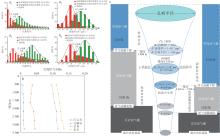
图4
全球碎屑岩和碳酸盐岩油气成藏浮力成藏下限判别结果与不同岩性储层控油气藏有序分布模式比较a1—a4 .全球碳酸盐岩和砂岩油气藏浮力成藏下限判别结果比较(据文献[20]修改),其中a1为碳酸盐岩孔隙度频率分布直方图,a2为碳酸盐岩渗透率频率分布直方图,a3为砂岩孔隙度频率分布直方图,a4为砂岩渗透率频率分布直方图;b.碎屑岩和碳酸盐岩主要矿物储集体毛细管力随埋深变化特征;c.碎屑岩和碳酸盐岩储层油气成藏动力边界差异性及其控常规和非常规油气藏有序分布发育模式差异性比较(据文献[20]修改)"


图5
准噶尔盆地风城组全油气系统多动力、多岩相和多期次成藏特征a.玛湖凹陷风城组常规和非常规油气藏有序分布大剖面,红色区域代表源上10亿吨级砂砾岩大油区,紫色区域代表源内10亿吨常-非共生大油区;b.百口泉组油气藏孔-渗关系及成藏动力识别图版;c.玛湖凹陷三叠系百口泉组一段沉积相平面分布(据文献[33]修改);d1—d4.准噶尔盆地百口泉组储层包裹体均一温度频率分布直方图,数据分别来自玛131井,玛006井,玛15井和达10井,GOI为含油包裹体颗粒指数,%"


图6
依据浮力成藏下限对应临界条件(孔隙度和渗透率)判别全油气系统油气藏成因动力与类型实例a.塔里木盆地库车坳陷碎屑岩高孔-高渗常规油气藏(Ⅰ型)(据文献[34]修改);b.鄂尔多斯盆地上古生界碎屑岩低孔-低渗致密类(Ⅱ型)油气藏(据文献[34]修改);c.准噶尔盆地百口泉组碎屑岩低孔-高渗应力改造类(Ⅲ1型)裂缝油气藏;d.四川盆地普光碳酸盐岩高孔-低渗流体改造类(Ⅲ2型)孔洞油气藏(黑色虚线为全油气系统油气藏成因动力类型判别边界;红色实线圈定的区域为油气藏成因动力对应类型分布区。)"


图7
四川盆地普光地区油气成藏动力判别与油气成藏类型预测图版a1—a3 .碳酸盐岩油气藏形成演化地质模式,分别为早期浮力主导阶段、储层压实致密化阶段、后期流体改造及构造应力改造阶段;b.碳酸盐岩油气藏储层孔隙度-渗透率关系;c. 4种油气成藏动力类型占比饼状图;d.普光地区油气成藏动力与成因类型占比随埋深变化条形图"

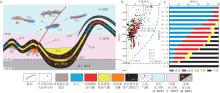
图8
全油气系统内油气动力边界和油气动力场联合控油气藏分布模式及油气藏最大埋深预测、评价方法原理a.动力边界和动力场联合控油气藏分布模式(据文献[8]修改);b.准噶尔盆地西北缘二叠系全油气系统油气钻探结果及其随埋深变化特征;c.全油气系统油气钻探结果随孔隙度变化条形图C1.常规背斜油气藏;C2.常规断块油气藏;C3.常规岩性油气藏;C4.常规地层油气藏;C5.常规复合油气藏;U1.致密常规油气藏;U2.致密深盆油气藏;U3.致密连续油气藏;U4.致密页岩油气藏;U5.致密煤层油气藏;R1.裂缝改造油气藏;R2.孔洞改造油气藏;R3.裂缝孔洞复合改造油气藏;R4.氧化改造稠油沥青藏;R5.高温裂解改造干气藏;BHAD.浮力成藏下限;HADL.油气成藏底限;ASDL.源岩供烃底限"


图9
准噶尔盆地二叠系全油气系统油气钻探结果随埋深变化特征与油气藏最大埋深预测、评价a1—a3.分别为基于200, 20和500 m间隔均值化处理的重烃含量、日产油量及油层钻遇率随埋深变化特征;b1—b3.分别为基于100,400和500 m间隔均值化处理的轻烃含量、日产气量及气层钻遇率随埋深变化特征"

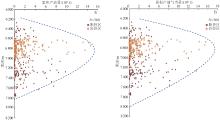
图10
塔里木盆地碳酸盐岩油气富集特征随埋深变化规律a. 累积产油量;b. 累积产油气当量"


图11
全油气系统内源-储间有效毛细管力差富集油气成藏的动力机制与物理模拟实验研究实例及其结果a.塔里木盆地碳酸盐岩富油气成藏钻探结果及其与源-储间毛细管力差和埋深关系(据文献[32]修改);b.实验条件下储集砂体与油源砂体(围岩)在有效毛细管力差作用下发生油-水交替现象(据文献[5]修改);c1—c4.不同粒径砂体置于相同粒径饱含油砂体之间开展有效毛细管力差驱动油气运聚成藏物理模拟实验;d1—d4.不同粒径储集砂体含油饱和度物理模拟实验结果,储集砂体粒径(D)分别为0.10,0.25,0.50和1.00 mm柱状图(据文献[32]修改)"


图12
准噶尔盆地风城组目的层含油气饱和度与源-储间孔喉半径和有效毛细管力差之间的关联性及其随埋深的变化规律a.含油饱和度与日产油量随埋深增大呈“大肚子”曲线变化特征;b.风城组源岩和储层最大孔喉半径随埋深变化特征及其差异性比较;c.风城组储层内、外毛细管力差随埋深变化特征及有效毛细管力差对油气富集成藏的控制作用(pc为毛细管力)"


图13
全油气系统油气富集成藏基本模式示意图"

| [1] | 贾承造, 郑民, 张永峰. 非常规油气地质学重要理论问题[J]. 石油学报, 2014, 35(1): 1-10. |
| JIA Chengzao, ZHENG Min, ZHANG Yongfeng. Four important theoretical issues of unconventional petroleum geology[J]. Acta Petrolei Sinica, 2014, 35(1): 1-10. | |
| [2] | 贾承造. 论非常规油气对经典石油天然气地质学理论的突破及意义[J]. 石油勘探与开发, 2017, 44(1): 1-11. |
| JIA Chengzao. Breakthrough and significance of unconventional oil and gas to classical petroleum geological theory[J]. Petroleum Exploration and Development, 2017, 44(1): 1-11. | |
| [3] | JIA Chengzao, PANG Xiongqi, SONG Yan. Whole petroleum system and ordered distribution pattern of conventional and unconventional oil and gas reservoirs[J]. Petroleum Science, 2023, 20(1): 1-19. |
| [4] | JIA Chengzao, PANG Xiongqi, SONG Yan. Basic principles of the whole petroleum system[J]. Petroleum Exploration and Development, 2024, 51(4): 780-794. |
| [5] | PANG Xiongqi, LIU Keyu, MA Zhongzhen, et al. Dynamic field division of hydrocarbon migration, accumulation and hydrocarbon enrichment rules in sedimentary basins[J]. Acta Geologica Sinica (English Edition), 2012, 86(6): 1559-1592. |
| [6] | PANG Xiongqi, JIA Chengzao, CHEN Junqing, et al. A unified model for the formation and distribution of both conventional and unconventional hydrocarbon reservoirs[J]. Geoscience Frontiers, 2021, 12(2): 695-711. |
| [7] | PANG Xiongqi. Introduction to quantitative evaluation of the whole petroleum system[M]. Singapore: Springer Nature Singapore, 2023: 1-48. |
| [8] | 庞雄奇, 贾承造, 郭秋麟, 等. 全油气系统理论用于常规和非常规油气资源评价的盆地模拟技术原理及应用[J]. 石油学报, 2023, 44(9): 1417-1433. |
| PANG Xiongqi, JIA Chengzao, GUO Qiulin, et al. Principle and application of basin modeling technology for evaluation of conventional and unconventional oil-gas resource based on whole petroleum system theory[J]. Acta Petrolei Sinica, 2023, 44(9): 1417-1433. | |
| [9] | PANG Xiongqi, JIA Chengzao, WANG Wenyang, et al. Buoyance-driven hydrocarbon accumulation depth and its implication for unconventional resource prediction[J]. Geoscience Frontiers, 2021, 12(4): 101133. |
| [10] | PANG Xiongqi, HU Tao, LARTER S, et al. Hydrocarbon accumulation depth limit and implications for potential resources prediction[J]. Gondwana Research, 2022, 103: 389-400. |
| [11] | PANG Xiongqi, JIA Chengzao, ZHANG Kun, et al. The dead line for oil and gas and implication for fossil resource prediction[J]. Earth System Science Data, 2020, 12(1): 577-590. |
| [12] | 崔明明, 李进步, 李莹, 等. 鄂尔多斯盆地苏里格气田西南部致密储层非均质性特征及对成藏的制约[J]. 地质学报, 2024, 98(1): 214-230. |
| CUI Mingming, LI Jinbu, LI Ying, et al. Heterogeneity characteristics and its constraints on accumulation of tight sandstone reservoirs in the southwestern Sulige gas field, Ordos basin[J]. Acta Geologica Sinica, 2024, 98(1): 214-230. | |
| [13] | 刘国勇, 张刘平, 金之钧. 深部流体活动对油气运移影响初探[J]. 石油实验地质, 2005, 27(3): 269-275. |
| LIU Guoyong, ZHANG Liuping, JIN Zhijun. Primary study on the effects of deep-sourced fluid’s movementon hydrocarbon migration[J]. Petroleum Geology & Experiment, 2005, 27(3): 269-275. | |
| [14] | 庞雄奇, 姜振学, 黄捍东, 等. 叠复连续油气藏成因机制、发育模式及分布预测[J]. 石油学报, 2014, 35(5): 795-828. |
| PANG Xiongqi, JIANG Zhenxue, HUANG Handong, et al. Formation mechanisms, distribution models, and prediction of superimposed, continuous hydrocarbon reservoirs[J]. Acta Petrolei Sinica, 2014, 35(5): 795-828. | |
| [15] | 庞雄奇, 金之钧, 姜振学, 等. 深盆气成藏门限及其物理模拟实验[J]. 天然气地球科学, 2003, 14(3): 157-166. |
| PANG Xiongqi, JIN Zhijun, JIANG Zhenxue, et al. Critical condition for gas accumulation in the deep basin trap and physical modeling[J]. Natural Gas Geoscience, 2003, 14(3): 157-166. | |
| [16] | 庞雄奇, 汪文洋, 汪英勋, 等. 含油气盆地深层与中浅层油气成藏条件和特征差异性比较[J]. 石油学报, 2015, 36(10): 1167-1187. |
| PANG Xiongqi, WANG Wenyang, WANG Yingxun, et al. Comparison of otherness on hydrocarbon accumulation conditions and characteristics between deep and middle-shallow in petroliferous basins[J]. Acta Petrolei Sinica, 2015, 36(10): 1167-1187. | |
| [17] | 万玲, 孙岩, 魏国齐. 确定储集层物性参数下限的一种新方法及其应用——以鄂尔多斯盆地中部气田为例[J]. 沉积学报, 1999, 17(3): 454-457. |
| WAN Ling, SUN Yan, WEI Guoqi. A new method used to determine the lower limit of the petrophysical parameters for reservoir and its application: A case study on Zhongbu Gas Field in Ordos Basin[J]. Acta Sedimentologica Sinica, 1999, 17(3): 454-457. | |
| [18] | 马中振. 深部致密砂岩油气藏形成的动力学机制与发育模式[D]. 北京: 中国石油大学(北京), 2008. |
| MA Zhongzhen. Dynamic mechanism and development model of the formation of deep tight sandstone oil and gas reservoirs[D]. Beijing: China University of Petroleum (Beijing), 2008. | |
| [19] | 郭迎春. 致密砂岩储层浮力作用下限的动力学机制研究及应用[D]. 北京: 中国石油大学(北京), 2013. |
| GUO Yingchun. Study on the dynamic mechanism and application of the lower limit of buoyancy action in tight sandstone reservoirs[D]. Beijing: China University of Petroleum (Beijing), 2013. | |
| [20] | 郑定业. 深层碳酸盐岩浮力成藏下限、主控因素及演化特征[D]. 北京: 中国石油大学(北京), 2022. |
| ZHENG Dingye. Buoyancy-driven hydrocarbon accumulation depth, main controlling factors and evolutionary characteristics in deep carbonate reservoirs[D]. Beijing: China University of Petroleum (Beijing), 2022. | |
| [21] | 庞雄奇, 林会喜, 郑定业, 等. 中国深层和超深层碳酸盐岩油气藏形成分布的基本特征与动力机制及发展方向[J]. 地质力学学报, 2020, 26(5): 673-695. |
| PANG Xiongqi, LIN Huixi, ZHENG Dingye, et al. Basic characteristics, dynamic mechanisms and development directions of the formation and distribution of deep and ultra-deep carbonate oil and gas reservoirs in China[J]. Journal of Geomechanics, 2020, 26(5): 673-695. | |
| [22] | GUO Xusheng, HU Dongfeng, LI Yuping, et al. Theoretical progress and key technologies of onshore ultra-deep oil/gas exploration[J]. Engineering, 2019, 5(3): 458-470. |
| [23] | 李相方, 冯东, 张涛, 等. 毛细管力在非常规油气藏开发中的作用及应用[J]. 石油学报, 2020, 41(12): 1719-1733. |
| LI Xiangfang, FENG Dong, ZHANG Tao, et al. The role and its application of capillary force in the development of unconventional oil and gas reservoirs and its application[J]. Acta Petrolei Sinica, 2020, 41(12): 1719-1733. | |
| [24] | CHEN Xiaolong, LI Yiqiang, LIAO Guangzhi, et al. Experimental investigation on stable displacement mechanism and oil recovery enhancement of oxygen-reduced air assisted gravity drainage[J]. Petroleum Exploration and Development, 2020, 47(4): 836-845. |
| [25] | 康德江, 姜丽娜, 张金友. 中国西部叠合盆地油气多期成藏模式及勘探有效性[J]. 沉积学报, 2012, 30(1): 166-178. |
| KANG Dejiang, JIANG Lina, ZHANG Jinyou. The model of the multi-stage of oil-gas formation and exploration effectiveness in superimposed basins in western China[J]. Acta Sedimentologica Sinica, 2012, 30(1): 166-178. | |
| [26] | 赵文智, 汪泽成, 李晓清, 等. 油气藏形成的三大要素[J]. 自然科学进展, 2005, 15(3): 304-312. |
| ZHAO Wenzhi, WANG Zecheng, LI Xiaoqing, et al. Three key elements for the formation of oil and gas reservoirs[J]. Progress in Natural Science, 2005, 15(3): 304-312. | |
| [27] | LI Jianzhong, TAO Xiaowan, BAI Bin, et al. Geological conditions, reservoir evolution and favorable exploration directions of marine ultra-deep oil and gas in China[J]. Petroleum Exploration and Development, 2021, 48(1): 60-79. |
| [28] | 雷文智, 陈冬霞, 王永诗, 等. 渤海湾盆地济阳坳陷东部深层砂砾岩多类型油气藏成藏机理及模式[J]. 石油与天然气地质, 2024, 45(1): 113-129. |
| LEI Wenzhi, CHEN Dongxia, WANG Yongshi, et al. Accumulation mechanism and model of multi-type deep coarse-grained siliciclastic reservoirs in the eastern Jiyang Depression, Bohai Bay Basin[J]. Oil & Gas Geology, 2024, 45(1): 113-129. | |
| [29] | 王永诗, 巩建强, 陈冬霞, 等. 渤海湾盆地东营凹陷盐家地区深层砂砾岩油气藏相态演化及成藏过程[J]. 石油与天然气地质, 2023, 44(5): 1159-1172. |
| WANG Yongshi, GONG Jianqiang, CHEN Dongxia, et al. Phase evolution and accumulation mode of hydrocarbons in deep coarse-grained clastic reservoirs in the Yanjia area, Dongying Sag, Bohai Bay Basin[J]. Oil & Gas Geology, 2023, 44(5): 1159-1172. | |
| [30] | 张宏国, 杨海风, 宿雯, 等. 源外层系油气运聚关键环节研究与评价方法——以渤海湾盆地渤中凹陷明化镇组下段为例[J]. 石油与天然气地质, 2024, 45(1): 281-292. |
| ZHANG Hongguo, YANG Haifeng, SU Wen, et al. Key stages in hydrocarbon migration and accumulation in layers outside source rocks and the evaluation methods related: A case study of the lower member of the Minghuazhen Formation, Bozhong Sag, Bohai Bay Basin[J]. Oil & Gas Geology, 2024, 45(1): 281-292. | |
| [31] | 周立宏, 陈长伟, 韩国猛, 等. 复杂断陷盆地深层煤岩气地质特征、有利成藏因素及发育模式——以渤海湾盆地大港探区为例[J]. 石油与天然气地质, 2024, 45(6): 1665-1677. |
| ZHOU Lihong, CHEN Changwei, HAN Guomeng, et al. Geological characteristics, favorable accumulation factors, and developmental models of deep coal-rock gas in complex fault-bounded basins: A case study of the Dagang exploration area in the Bohai Bay Basin[J]. Oil & Gas Geology, 2024, 45(6): 1665-1677. | |
| [32] | 史玉玲, 龙祖烈, 张向涛, 等. 珠江口盆地恩平凹陷恩平17洼油气动态成藏过程[J]. 石油与天然气地质, 2023, 44(5): 1279-1289. |
| SHI Yuling, LONG Zulie, ZHANG Xiangtao, et al. Exploring the dynamic hydrocarbon accumulation process of the Enping 17 sub-sag in the Enping Sag, Pearl River Mouth Basin[J]. Oil & Gas Geology, 2023, 44(5): 1279-1289. | |
| [33] | 张磊, 魏小松, 唐勇, 等. 准噶尔盆地玛湖凹陷中部地区多层系油气成藏条件及勘探前景[J]. 石油学报, 2024, 45(5): 771-786, 816. |
| ZHANG Lei, WEI Xiaosong, TANG Yong, et al. Multi-layer hydrocarbon accumulation conditions and exploration prospect in the central Mahu Sag, Junggar Basin[J]. Acta Petrolei Sinica, 2024, 45(5): 771-786, 816. | |
| [34] | PANG Bo, PANG Xiongqi, LI Caijun, et al. A novel method for quantitatively identifying driving forces and evaluating their contributions to oil and gas accumulation[J]. Geoscience Frontiers, 2024, 15(4): 101801. |
| [35] | PANG Xiongqi, SHAO Xinghe, LI Maowen, et al. Correlation and difference between conventional and unconventional reservoirs and their unified genetic classification[J]. Gondwana Research, 2021, 97: 73-100. |
| [36] | 庞礴, 董月霞, 陈迪, 等. 含油气盆地砂岩目的层油气富集主控因素与基本模式——以渤海湾盆地南堡凹陷新近系砂岩油气藏为例[J]. 石油学报, 2019, 40(5): 519-531. |
| PANG Bo, DONG Yuexia, CHEN Di, et al. Main controlling factors and basic model for hydrocarbon enrichment in the sandstone target layer of petroliferous basin: A case study of Neogene sandstone reservoirs in Nanpu sag, Bohai Bay Basin[J]. Acta Petrolei Sinica, 2019, 40(5): 519-531. | |
| [37] | 汪文洋. 叠合盆地深层碳酸盐岩储层孔渗演化及油藏赋存下限[D]. 北京: 中国石油大学(北京), 2020. |
| WANG Wenyang. Evolution of porosity and permeability of deep carbonate reservoirs in superimposed basins and the lower limit of oil accumulation[D]. Beijing: China University of Petroleum (Beijing), 2020. | |
| [38] | WANG Wenyang, PANG Xiongqi, CHEN Zhangxin, et al. Improved methods for determining effective sandstone reservoirs and evaluating hydrocarbon enrichment in petroliferous basins[J]. Applied Energy, 2020, 261: 114457. |
| [39] | JIANG Hang, PANG Xiongqi, JIANG Wenli, et al. Dynamics mechanism and quantitative evaluation of effective reservoirs in petroliferous basins[J]. Geoenergy Science and Engineering, 2023, 221: 111237. |
| [40] | 庞雄奇, 陈冬霞, 张俊, 等. 相―势―源复合控油气成藏机制物理模拟实验研究[J]. 古地理学报, 2013, 15(5): 575-592. |
| PANG Xiongqi, CHEN Dongxia, ZHANG Jun, et al. Physical simulation experimental study on mechanism for hydrocarbon accumulation controlled by facies-potential-source coupling[J]. Journal of Palaeogeography (Chinese Edition), 2013, 15(5): 575-592. | |
| [41] | JIANG Hang, PANG Xiongqi, YU Rui, et al. Lower limit of hydrocarbon accumulation in the Kuqa Depression, Tarim Basin, NW China[J]. Geological Journal, 2017, 52(1): 141-153. |
| [1] | 贾承造, 庞雄奇, 宋岩, 崔新璇, 胡耀, 徐帜, 姜林, 蒲庭玉, 姜福杰, 沈彬. 全油气系统的4种基本类型及其资源开发领域[J]. 石油与天然气地质, 2025, 46(4): 1019-1038. |
| [2] | 刘可禹, 张思佳, 刘建良, 赵振丞, 金玉洁, 张婷, 林昊. 全油气系统:油气地质学研究新方向和油气勘探新范式[J]. 石油与天然气地质, 2025, 46(4): 1055-1070. |
| [3] | 陈君青, 贾承造, 姜林, 庞宏, 火勋港, 陈冬霞, 施砍园, 胡涛, 杨晓斌, 冉钧. 全油气系统非常规油气成藏过程中自封闭作用的主要类型与定量表征[J]. 石油与天然气地质, 2025, 46(4): 1071-1091. |
| [4] | 肖惠译, 庞雄奇, 李才俊, 胡涛, 徐帜, 林孝飞, 胡耀, 王雷, 崔新璇, 施砍园, 蒲庭玉, 鲍李银. 全油气系统形成演化过程中常规与非常规油气藏转化机制及模式[J]. 石油与天然气地质, 2025, 46(4): 1092-1106. |
| [5] | 施砍园, 庞雄奇, 陈君青, 陈掌星, 王雷, 蒲庭玉, 鲍李银, 惠沙沙, 肖惠译, 崔新璇. 全油气系统中储层润湿性与界面张力等关键参数变化特征及其分子动力学模拟[J]. 石油与天然气地质, 2025, 46(4): 1107-1122. |
| [6] | 庞宏, 刘国勇, 贾承造, 姜福杰, 姜林, 王建伟, 马学峰, 陈迪, 陈君青. 陆相断陷盆地全油气系统成藏动力场特征与有序分布模式——以渤海湾盆地南堡凹陷为例[J]. 石油与天然气地质, 2025, 46(4): 1136-1151. |
| [7] | 徐田武, 李素梅, 陈湘飞, 马学峰, 邓硕, 张莹莹. 渤海湾盆地东濮凹陷全油气系统特征及其成藏模式[J]. 石油与天然气地质, 2025, 46(4): 1152-1168. |
| [8] | 胡涛, 熊智明, 肖惠译, 徐田武, 徐云龙, 李素梅, 姜福杰, 黎茂稳, 姜林. 断陷湖盆全油气系统油气藏有序分布特征及差异富集机制——以渤海湾盆地东濮凹陷古近系沙河街组为例[J]. 石油与天然气地质, 2025, 46(4): 1169-1182. |
| [9] | 李素梅, 刘佳, 马学峰, 庞秋菊, 赵知非. 渤海湾盆地辽河坳陷西部凹陷全油气系统特征与勘探潜力[J]. 石油与天然气地质, 2025, 46(4): 1183-1199. |
| [10] | 周能武, 初众, 卢双舫, 张鹏飞, 王民, 林子智, 王军杰, 姜新雨, 刘阳, 陈国辉, 李文镖. 致密气与页岩气耦合成藏机制及其定量评价——以松辽盆地徐家围子断陷白垩系沙河子组为例[J]. 石油与天然气地质, 2025, 46(4): 1200-1214. |
| [11] | 陈冬霞, 王翘楚, 熊亮, 王小娟, 杨映涛, 雷文智, 张玲, 潘珂, 庞宏. 川西—川中地区陆相层系全油气系统常规和非常规有效储层成因机制与分类评价[J]. 石油与天然气地质, 2025, 46(4): 1215-1232. |
| [12] | 康逊, 谭静强, 胡文瑄, 靳军, 胡瑞璞, 曹剑. 准噶尔盆地玛湖凹陷全油气系统成储机制差异性[J]. 石油与天然气地质, 2025, 46(4): 1250-1266. |
| [13] | 鲍李银, 庞雄奇, 邹亮, 陈宏飞, 林昊, 张婷, 沈彬, 王凯, 王睿. 全油气系统油气成藏动力判别与贡献量评价——以准噶尔盆地玛湖凹陷二叠系风城组为例[J]. 石油与天然气地质, 2025, 46(4): 1267-1280. |
| [14] | 胡耀, 贾承造, 庞雄奇, 宋永, 何文军, 陈宏飞, 鲍李银, 陈玮岩, 赵文, 肖惠译, 李才俊, 徐帜. 远源型致密油气藏运聚动力与成藏模式——以准噶尔盆地玛湖凹陷三叠系百口泉组砂砾岩油藏为例[J]. 石油与天然气地质, 2025, 46(4): 1281-1298. |
| [15] | 曹鹏, 赵振丞, 庞雄奇, 李才俊, 庞宏, 林会喜, 杨海军, 马奎友, 张思佳. 塔里木盆地台盆区下古生界全油气系统碳酸盐岩油气藏改造特征与成因模式[J]. 石油与天然气地质, 2025, 46(4): 1299-1315. |
| 阅读次数 | ||||||
|
全文 |
|
|||||
|
摘要 |
|
|||||
