

石油与天然气地质 ›› 2025, Vol. 46 ›› Issue (5): 1597-1613.doi: 10.11743/ogg20250513
李军1( ), 袁成灼1, 尚晓庆1, 吴涛2, 吾尔妮萨罕·麦麦提敏3, 许晨航1, 徐泽阳1, 徐会永4()
收稿日期:2025-07-28
修回日期:2025-08-15
出版日期:2025-10-30
发布日期:2025-10-30
通讯作者:
徐会永
E-mail:lijun@xsyu.edu.cn;xhy7714@upc.edu.cn
第一作者简介:李军(1982—),男,副教授,油气成藏地质学、非常规油气地质与勘探。E-mail: lijun@xsyu.edu.cn。
基金项目:
Jun LI1(), Chengzhuo YUAN1, Xiaoqing SHANG1, Tao WU2, Maimaitimin WUERNISAHAN3, Chenhang XU1, Zeyang XU1, Huiyong XU4()
Received:2025-07-28
Revised:2025-08-15
Online:2025-10-30
Published:2025-10-30
Contact:
Huiyong XU
E-mail:lijun@xsyu.edu.cn;xhy7714@upc.edu.cn
摘要:
深层超压致密油气是准噶尔盆地增储上产的重要资源类型之一。以盆地腹部地区为例,针对储层成因及主控因素不明等问题,基于储层分析化验、钻/测井及试油气资料,结合盆地模拟结果与地质综合解析,明确了储层机械压实与化学压实作用的特征及超压发育时序,探讨了半封闭-封闭成岩体系的形成机制,进而揭示了深层超压致密储层成因机制及其主控因素。研究结果表明:在埋深0 ~ 2 400 m阶段,储层以机械压实为主,压实作用导致的减孔率达70% ~ 90%,并形成半封闭-封闭成岩体系;在埋深2 400 m以深阶段,化学压实作用占主导,溶蚀产物迁移显著受阻,多以原地或就近沉淀胶结为主,若无其他建设性成岩作用参与,溶蚀作用增孔效应有限。不同成因超压对储层质量的改善效果存在差异,化学压实成因超压对原生孔隙的保护及次生孔隙形成的强化作用均较弱,而生烃及传导成因超压则可增强溶蚀作用,从而改善储层物性。总体而言,早期机械压实作用所决定的成岩体系开放程度,对晚期深埋阶段成岩演化路径、孔隙演化模式及优质储层(“甜点”)的形成具有重要控制作用。
中图分类号:

图1
准噶尔盆地腹部地区构造位置(a)、地层综合柱状图(b)和地层压力系数剖面(c)(据文献[27]修改)"


图2
砂岩(a)和泥岩(b)成岩及物性演化概念模型(a图中的A—D代表典型物性演化路径点。)"


图3
准噶尔盆地腹部地区碎屑岩成岩及孔隙演化剖面"


图4
准噶尔盆地腹部地区侏罗系储层压实作用及颗粒接触关系特征显微照片(铸体薄片,正交光)a. 凹凸接触和线接触,Pc2井,埋深5 249.00 m;b. 线接触和凹凸接触,M28井,埋深4 761.00 m;c. 线接触,M28井,埋深5 192.70 m;d. 凹凸接触和线接触,M21井,埋深5 083.65 m;e. 线接触和凹凸接触,Sq1井,埋深4 329.45 m;f. 线接触,Qs10井,埋深4 248.11 m"

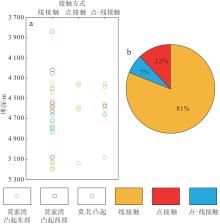
图5
准噶尔盆地腹部地区侏罗系储层颗粒接触关系特征a.不同颗粒接触类型随埋深变化关系;b.不同颗粒接触类型占比饼状图"


图6
准噶尔盆地腹部地区储层压实作用(a)和胶结作用减孔率(b)随深度变化关系"


图7
准噶尔盆地腹部地区侏罗系储层溶蚀作用特征显微照片a. 粒间溶蚀,长石沿解理不完全溶蚀,M28井,埋深5 136.45 m,铸体薄片,单偏光;b. 粒间、粒缘溶蚀孔,M28井,埋深5 193.70 m,铸体薄片,单偏光;c. 粒间及粒内不完全溶蚀,Qs10井,埋深4 248.11 m,铸体薄片,单偏光;d. 粒间溶蚀孔充填自生石英和伊利石,M28井,埋深5 135.41 m,扫描电镜;e. 长石沿解理溶蚀,溶蚀孔分布自生伊利石,M21井,埋深5 078.45 m,扫描电镜;f. 长石沿解理溶蚀,溶蚀孔分布自生伊利石和石英,Sq1井,埋深4 532.90 m,扫描电镜"


图8
准噶尔盆地腹部侏罗系储层不同类型孔隙空间随埋深变化特征"

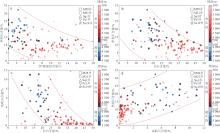
图9
准噶尔盆地腹部地区侏罗系储层泥岩不同矿物组分含量关系a. 伊利石含量与伊/蒙混层含量关系;b.伊利石含量与长石含量关系;c.高岭石含量与长石含量关系;d.伊利石含量与高岭石含量关系(图中红色虚线为趋势线;色柱中间小方块中的数值代表常压与超压过渡埋深范围在3 500 ~ 4 500 m。)"


图10
准噶尔盆地腹部地区侏罗系储层孔隙度与压力系数变化关系(图中红色虚线为趋势线。)"

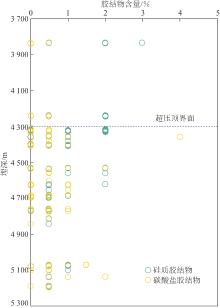
图11
准噶尔盆地腹部地区侏罗系储层胶结物含量随深度变化关系"


图12
准噶尔盆地腹部地区侏罗系储层成岩-成压耦合关系及演化史(据文献[27]修改)"

| [1] | 贾承造, 姜林, 赵文. 全油气系统中的致密油气: 成藏机理、富集规律与资源前景[J]. 石油学报, 2025, 46(1): 1-16, 47. |
| JIA Chengzao, JIANG Lin, ZHAO Wen. Tight oil and gas in Whole Petroleum System: Accumulation mechanism, enrichment regularity, and resource prospect[J]. Acta Petrolei Sinica, 2025, 46(1): 1-16, 47. | |
| [2] | 朱如凯, 李国欣, 崔景伟, 等. 中国致密油气形成地质条件与勘探前景[J]. 石油学报, 2025, 46(1): 17-32. |
| ZHU Rukai, LI Guoxin, CUI Jingwei, et al. Geological accumulation conditions and exploration prospects of tight oil and gas in China[J]. Acta Petrolei Sinica, 2025, 46(1): 17-32. | |
| [3] | 操应长, 远光辉, 杨海军, 等. 含油气盆地深层—超深层碎屑岩油气勘探现状与优质储层成因研究进展[J]. 石油学报, 2022, 43(1): 112-140. |
| CAO Yingchang, YUAN Guanghui, YANG Haijun, et al. Current situation of oil and gas exploration and research progress of the origin of high-quality reservoirs in deep-ultra-deep clastic reservoirs of petroliferous basins[J]. Acta Petrolei Sinica, 2022, 43(1): 112-140. | |
| [4] | 张兴文, 庞雄奇, 李才俊, 等. 深层—超深层高孔高渗碎屑岩油气藏地质特征、形成条件及成藏模式——以墨西哥湾盆地为例[J]. 石油学报, 2021, 42(4): 466-480. |
| ZHANG Xingwen, PANG Xiongqi, LI Caijun, et al. Geological characteristics, formation conditions and accumulation model of deep and ultra-deep, high-porosity and high-permeability clastic reservoirs: A case study of Gulf of Mexico Basin[J]. Acta Petrolei Sinica, 2021, 42(4): 466-480. | |
| [5] | 何登发, 贾承造, 赵文智, 等. 中国超深层油气勘探领域研究进展与关键问题[J]. 石油勘探与开发, 2023, 50(6): 1162-1172. |
| HE Dengfa, JIA Chengzao, ZHAO Wenzhi, et al. Research progress and key issues of ultra-deep oil and gas exploration in China[J]. Petroleum Exploration and Development, 2023, 50(6): 1162-1172. | |
| [6] | 孙靖, 尤新才, 薛晶晶, 等. 准噶尔盆地深层-超深层碎屑岩致密气储层特征及其控制因素[J]. 石油与天然气地质, 2024, 45(4): 1046-1063. |
| SUN Jing, YOU Xincai, XUE Jingjing, et al. Characteristics and controlling factors of deep to ultra-deep tight-gas clastic reservoirs in the Junggar Basin[J]. Oil & Gas Geology, 2024, 45(4): 1046-1063. | |
| [7] | 孙靖, 尤新才, 薛晶晶, 等. 准噶尔盆地异常压力特征及其对深层-超深层致密储层的影响[J]. 石油与天然气地质, 2023, 44(2): 350-365. |
| SUN Jing, YOU Xincai, XUE Jingjing, et al. Characteristics of abnormal pressure and its influence on deep and ultra-deep tight reservoirs in the Junggar Basin[J]. Oil & Gas Geology, 2023, 44(2): 350-365. | |
| [8] | 靳子濠, 远光辉, 操应长, 等. 含烃流体与方解石的相互作用模拟实验及其地质意义[J]. 中国科学(地球科学), 2022, 52(4): 714-731. |
| JIN Zihao, YUAN Guanghui, CAO Yingchang, et al. Interactions between hydrocarbon-bearing fluids and calcite in fused silica capillary capsules and geological implications for deeply-buried hydrocarbon reservoirs[J]. Science China Earth Sciences, 2022, 52(4): 714-731. | |
| [9] | 曾庆鲁, 莫涛, 赵继龙, 等. 7000 m以深优质砂岩储层的特征、成因机制及油气勘探意义——以库车坳陷下白垩统巴什基奇克组为例[J]. 天然气工业, 2020, 40(1): 38-47. |
| ZENG Qinglu, MO Tao, ZHAO Jilong, et al. Characteristics, genetic mechanism and oil & gas exploration significance of high-quality sandstone reservoirs deeper than 7000 m: A case study of the Bashijiqike Formation of Lower Cretaceous in the Kuqa Depression[J]. Natural Gas Industry, 2020, 40(1): 38-47. | |
| [10] | 陈思芮, 鲜本忠, 纪友亮, 等. 埋藏过程对深层-超深层碎屑岩成岩作用及优质储层发育的影响——以准噶尔盆地南缘下白垩统清水河组为例[J]. 石油勘探与开发, 2024, 51(2): 323-336. |
| CHEN Sirui, XIAN Benzhong, JI Youliang, et al. Influences of burial process on diagenesis and high-quality reservoir development of deep-ultra-deep clastic rocks: A case study of Lower Cretaceous Qingshuihe Formation in southern margin of Junggar Basin, NW China[J]. Petroleum Exploration and Development, 2024, 51(2): 323-336. | |
| [11] | AJDUKIEWICZ J M, LANDER R H. Sandstone reservoir quality prediction: The state of the art[J]. AAPG Bulletin, 2010, 94(8): 1083-1091. |
| [12] | TAYLOR T R, GILES M R, HATHON L A, et al. Sandstone diagenesis and reservoir quality prediction: Models, myths, and reality[J]. AAPG Bulletin, 2010, 94(8): 1093-1132. |
| [13] | CHUHAN F A, BJØRLYKKE K, LOWREY C J. Closed-system burial diagenesis in reservoir sandstones: Examples from the Garn formation at Haltenbanken area, offshore Mid-Norway[J]. Journal of Sedimentary Research, 2001, 71(1): 15-26. |
| [14] | CHUHAN F A, BJØRLYKKE K, LOWREY C. The role of provenance in illitization of deeply buried reservoir sandstones from Haltenbanken and North Viking Graben, offshore Norway[J]. Marine and Petroleum Geology, 2000, 17(6): 673-689. |
| [15] | 李军, 胡东风, 邹华耀, 等. 四川盆地元坝-通南巴地区须家河组致密砂岩储层成岩-成藏耦合关系[J]. 天然气地球科学, 2016, 27(7): 1164-1178. |
| LI Jun, HU Dongfeng, ZOU Huayao, et al. Coupling relationship between reservoir diagenesis and gas accumulation in Xujiahe Formation of Yuanba-Tongnanba area, Sichuan Basin, China[J]. Natural Gas Geoscience, 2016, 27(7): 1164-1178. | |
| [16] | 魏新善, 傅强, 淡卫东, 等. 鄂尔多斯盆地延长组成岩流体滞留效应与致密砂岩储层成因[J]. 石油学报, 2018, 39(8): 858-868. |
| WEI Xinshan, FU Qiang, DAN Weidong, et al. Diagenesis fluid stagnation effect and genesis of tight sandstone reservoir in Yanchang Formation, Ordos Basin[J]. Acta Petrolei Sinica, 2018, 39(8): 858-868. | |
| [17] | BJORLYKKE K. Clay mineral diagenesis in sedimentary basins; a key to the prediction of rock properties; examples from the North Sea Basin[J]. Clay Minerals, 1998, 33(1): 15-34. |
| [18] | GUO Xiaowen, LIU Keyu, JIA Chengzao, et al. Effects of early petroleum charge and overpressure on reservoir porosity preservation in the giant Kela-2 Gas Field, Kuqa Depression, Tarim Basin, northwest China[J]. AAPG Bulletin, 2016, 100(2): 191-192. |
| [19] | SATHAR S, JONES S. Fluid overpressure as a control on sandstone reservoir quality in a mechanical compaction dominated setting: Magnolia Field, Gulf of Mexico[J]. Terra Nova, 2016, 28(3): 155-162. |
| [20] | BLOCH S, LANDER R H, BONNELL L. Anomalously high porosity and permeability in deeply buried sandstone reservoirs: Origin and predictability[J]. AAPG Bulletin, 2002, 86(2): 301-328. |
| [21] | 赵靖舟, 李军, 徐泽阳. 沉积盆地超压成因研究进展[J]. 石油学报, 2017, 38(9): 973-998. |
| ZHAO Jingzhou, LI Jun, XU Zeyang. Advances in the origin of overpressures in sedimentary basins[J]. Acta Petrolei Sinica, 2017, 38(9): 973-998. | |
| [22] | LI Jun, ZHAO Jingzhou, HOU Zhiqiang, et al. Origins of overpressure in the central Xihu depression of the East China Sea shelf basin[J]. AAPG Bulletin, 2021, 105(8): 1627-1659. |
| [23] | LI Jun, TANG Yong, WU Tao, et al. Overpressure origin and its effects on petroleum accumulation in the conglomerate oil province in Mahu Sag, Junggar Basin, NW China[J]. Petroleum Exploration and Development, 2020, 47(4): 726-739. |
| [24] | 徐泽阳, 赵靖舟, 李军. 松辽盆地长垣地区白垩系青山口组一段有机质含量对超压分析的影响及校正方法[J]. 石油与天然气地质, 2019, 40(4): 938-946. |
| XU Zeyang, ZHAO Jingzhou, LI Jun. The impact of organic matter content on overpressure analysis and its correction method in the first member of Cretaceous Qingshankou Formation, Placanticline area, Songliao Basin[J]. Oil & Gas Geology, 2019, 40(4): 938-946. | |
| [25] | 宋永, 唐勇, 何文军, 等. 准噶尔盆地油气勘探新领域、新类型及勘探潜力[J]. 石油学报, 2024, 45(1): 52-68. |
| SONG Yong, TANG Yong, HE Wenjun, et al. New fields, new types and exploration potentials of oil-gas exploration in Junggar Basin[J]. Acta Petrolei Sinica, 2024, 45(1): 52-68. | |
| [26] | 孙靖, 薛晶晶, 曾德龙, 等. 准噶尔盆地腹部深层八道湾组致密储层特征及主控因素[J]. 东北石油大学学报, 2017, 41(1): 1-10. |
| SUN Jing, XUE Jingjing, ZENG Delong, et al. Deep tight reservoir characteristics and main controlling factors of Badaowan Formation in the central Junggar Basin[J]. Journal of Northeast Petroleum University, 2017, 41(1): 1-10. | |
| [27] | 吴涛, 李军, 闫文琦, 等. 准噶尔盆地腹部地区超压低饱和度油气成因机制与勘探意义[J]. 石油学报, 2024, 45(12): 1728-1742. |
| WU Tao, LI Jun, YAN Wenqi, et al. Genetic mechanism and exploration significance of overpressure and low-saturation oil and gas in the hinterland of Junggar Basin[J]. Acta Petrolei Sinica, 2024, 45(12): 1728-1742. | |
| [28] | 吾尔妮萨罕·麦麦提敏, 李军, 赵靖舟, 等. 准噶尔盆地莫索湾凸起侏罗系超压成因[J]. 天然气地球科学, 2024, 35(9): 1590-1600. |
| MAIMAITIMIN Wuernisahan, LI Jun, ZHAO Jingzhou, et al. Genesis of Jurassic overpressure in the Mosuowan uplift of the Junggar Basin[J]. Natural Gas Geoscience, 2024, 35(9): 1590-1600. | |
| [29] | 吴涛, 徐泽阳, 闫文琦, 等. 准噶尔盆地莫索湾地区侏罗系超压预测技术研究[J]. 地球科学进展, 2024, 39(4): 429-439. |
| WU Tao, XU Zeyang, YAN Wenqi, et al. Research on prediction technologies for overpressure in the Jurassic strata of the Mosuowan area, Junggar Basin[J]. Advances in Earth Science, 2024, 39(4): 429-439. | |
| [30] | 何文军, 王绪龙, 邹阳, 等. 准噶尔盆地石油地质条件、资源潜力及勘探方向[J]. 海相油气地质, 2019, 24(2): 75-84. |
| HE Wenjun, WANG Xulong, ZOU Yang, et al. The geological conditions, resource potential and exploration direction of oil in Junggar Basin[J]. Marine Origin Petroleum Geology, 2019, 24(2): 75-84. | |
| [31] | 刘惠民, 张关龙, 范婕, 等. 准噶尔盆地腹部征沙村地区征10井的勘探发现与启示[J]. 石油与天然气地质, 2023, 44(5): 1118-1128. |
| LIU Huimin, ZHANG Guanlong, FAN Jie, et al. Exploration discoveries and implications of Well Zheng 10 in the Zhengshacun area of the Junggar Basin[J]. Oil & Gas Geology, 2023, 44(5): 1118-1128. | |
| [32] | 赵永强, 宋振响, 王斌, 等. 准噶尔盆地油气资源潜力与中国石化常规—非常规油气一体化勘探策略[J]. 石油实验地质, 2023, 45(5): 872-881. |
| ZHAO Yongqiang, SONG Zhenxiang, WANG Bin, et al. Resource potential in Junggar Basin and SINOPEC's integrated exploration strategy for conventional and unconventional petroleum[J]. Petroleum Geology and Experiment, 2023, 45(5): 872-881. | |
| [33] | 李想, 丁雅洁, 李俊飞, 等. 前陆盆地系统中隆后盆地沉积特征——以准噶尔盆地腹部侏罗系三工河组为例[J]. 石油实验地质, 2024, 46(6): 1253-1264. |
| LI Xiang, DING Yajie, LI Junfei, et al. Sedimentary characteristics of post-uplift basins in foreland basin system: A case study of Jurassic Sangonghe Formation in hinterland of Junggar Basin[J]. Petroleum Geology & Experiment, 2024, 46(6): 1253-1264. | |
| [34] | 费李莹, 王仕莉, 苏昶, 等. 准噶尔盆地盆1井西凹陷东斜坡侏罗系三工河组油气成藏特征及控制因素[J]. 天然气地球科学, 2022, 33(5): 708-719. |
| FEI Liying, WANG Shili, SU Chang, et al. Characteristics of hydrocarbon accumulation and its controlling factors in Jurassic Sangonghe Formation in the east slope of Well Pen-1 Western Depression in Junggar Basin[J]. Natural Gas Geoscience, 2022, 33(5): 708-719. | |
| [35] | GOULTY N R, SARGENT C, ANDRAS P, et al. Compaction of diagenetically altered mudstones-Part 1: Mechanical and chemical contributions[J]. Marine and Petroleum Geology, 2016, 77: 703-713. |
| [36] | AAGAARD P, JAHREN J. Special issue introduction: Compaction processes-Porosity, permeability and rock properties evolution in sedimentary basins[J]. Marine and Petroleum Geology, 2010, 27(8): 1681-1683. |
| [37] | AJDUKIEWICZ J M, NICHOLSON P H, ESCH W L. Prediction of deep reservoir quality using early diagenetic process models in the Jurassic Norphlet Formation, Gulf of Mexico[J]. AAPG Bulletin, 2010, 94(8): 1189-1227. |
| [38] | BJØRLYKKE K, HØEG K. Effects of burial diagenesis on stresses, compaction and fluid flow in sedimentary basins[J]. Marine and Petroleum Geology, 1997, 14(3): 267-276. |
| [39] | DUTTA N C. Deepwater geohazard prediction using prestack inversion of large offset P-wave data and rock model[J]. The Leading Edge, 2002, 21(2): 193-198. |
| [40] | LAHANN R. Impact of smectite diagenesis on compaction modeling and compaction equilibrium[M]//HUFFMAN A R, BOWERS G L. Pressure Regimes in Sedimentary Basins and Their Prediction. Tulsa: American Association of Petroleum Geologists, 2001: 61-72. |
| [41] | 许晨航, 李军, 吴涛, 等. 准噶尔盆地腹部地区泥页岩成岩演化阶段及其对超压发育的影响[J]. 科学技术与工程, 2025, 25(17): 7080-7091. |
| XU Chenhang, LI Jun, WU Tao, et al. Diagenetic evolution stage of mud shale and its influence on overpressure development in the central Junggar Basin[J]. Science Technology and Engineering, 2025, 25(17): 7080-7091. | |
| [42] | HOUSEKNECHT D W. Assessing the relative importance of compaction processes and cementation to reduction of porosity in sandstones[J]. AAPG Bulletin, 1987, 71(6): 633-642. |
| [43] | 魏新善, 肖红平, 刘锐娥, 等. 热异常酸洗作用与鄂尔多斯盆地上古生界长石消失事件[J]. 地质学报, 2017, 91(9): 2139-2149. |
| WEI Xinshan, XIAO Hongping, LIU Ruie, et al. Pickling effect of the abnormal heat and its relation to disappearance of feldspar of the Upper Paleozoic in the Ordos Basin[J]. Acta Geologica Sinica, 2017, 91(9): 2139-2149. | |
| [44] | 曹江骏, 王继平, 张道锋, 等. 深层致密砂岩储层成岩演化对含气性的影响——以鄂尔多斯盆地西南部庆阳气田二叠系山1段为例[J]. 石油与天然气地质, 2024, 45(1): 169-184. |
| CAO Jiangjun, WANG Jiping, ZHANG Daofeng, et al. Effects of diagenetic evolution on gas-bearing properties of deep tight sandstone reservoirs: A case study of reservoirs in the 1st member of the Permian Shanxi Formation in the Qingyang Gas Field, southwestern Ordos Basin[J]. Oil & Gas Geology, 2024, 45(1): 169-184. | |
| [45] | 黄思静, 黄可可, 冯文立, 等. 成岩过程中长石、高岭石、伊利石之间的物质交换与次生孔隙的形成: 来自鄂尔多斯盆地上古生界和川西凹陷三叠系须家河组的研究[J]. 地球化学, 2009, 38(5): 498-506. |
| HUANG Sijing, HUANG Keke, FENG Wenli, et al. Mass exchanges among feldspar, kaolinite and illite and their influences on secondary porosity formation in clastic diagenesis——A case study on the Upper Paleozoic, Ordos Basin and Xujiahe Formation, Western Sichuan Depression[J]. Geochimica, 2009, 38(5): 498-506. | |
| [46] | 徐昉昊, 徐国盛, 刘勇, 等. 东海西湖凹陷中央反转构造带古近系花港组致密砂岩储集层控制因素[J]. 石油勘探与开发, 2020, 47(1): 98-109. |
| XU Fanghao, XU Guosheng, LIU Yong, et al. Factors controlling the development of tight sandstone reservoirs in the Huagang Formation of the central inverted structural belt in Xihu Sag, East China Sea Basin[J]. Petroleum Exploration and Development, 2020, 47(1): 98-109. | |
| [47] | 张向涛, 李军, 向绪洪, 等. 珠江口盆地深水区白云凹陷超压成因机制及其勘探意义[J]. 石油学报, 2022, 43(1): 41-57. |
| ZHANG Xiangtao, LI Jun, XIANG Xuhong, et al. Genetic mechanism of overpressure and its significance on petroleum exploration in Baiyun sag in the deep water zone of Pearl River Mouth Basin[J]. Acta Petrolei Sinica, 2022, 43(1): 41-57. | |
| [48] | 宋明水, 刘惠民, 王勇, 等. 济阳坳陷古近系页岩油富集规律认识与勘探实践[J]. 石油勘探与开发, 2020, 47(2): 225-235. |
| SONG Mingshui, LIU Huimin, WANG Yong, et al. Enrichment rules and exploration practices of Paleogene shale oil in Jiyang Depression, Bohai Bay Basin, China[J]. Petroleum Exploration and Development, 2020, 47(2): 225-235. | |
| [49] | 曾联波, 巩磊, 宿晓岑, 等. 深层-超深层致密储层天然裂缝分布特征及发育规律[J]. 石油与天然气地质, 2024, 45(1): 1-14. |
| ZENG Lianbo, GONG Lei, SU Xiaocen, et al. Natural fractures in deep to ultra-deep tight reservoirs: Distribution and development[J]. Oil & Gas Geology, 2024, 45(1): 1-14. | |
| [50] | JOHNSON H D, MACKAY T A, STEWART D J. The fulmar oil-field (central North sea): Geological aspects of its discovery, appraisal and development[J]. Marine and Petroleum Geology, 1986, 3(2): 99-125. |
| [51] | 李平平, 马倩倩, 邹华耀, 等. 团簇同位素的基本原理与地质应用[J]. 古地理学报, 2017, 19(4): 713-728. |
| LI Pingping, MA Qianqian, ZOU Huayao, et al. Basic principle of clumped isotopes and geological applications[J]. Journal of Palaeogeography (Chinese Edition), 2017, 19(4): 713-728. | |
| [52] | 朱光有, 艾依飞, 李婷婷, 等. 非常规同位素在石油地质学中的应用与油气地球化学新进展[J]. 石油学报, 2024, 45(4): 718-754. |
| ZHU Guangyou, AI Yifei, LI Tingting, et al. Application of unconventional isotopes in petroleum geology and new progress in petroleum geochemistry[J]. Acta Petrolei Sinica, 2024, 45(4): 718-754. | |
| [53] | 赵靖舟, 付金华, 曹青, 等. 致密油气成藏理论与评价技术[M]. 北京: 石油工业出版社, 2017: 538. |
| ZHAO Jingzhou, FU Jinhua, CAO Qing, et al. Tight oil and gas accumulation and evaluation: Geological theories and geophysical technologies[M]. Beijing: Petroleum Industry Press, 2017: 538. | |
| [54] | WU Heyuan, ZHAO Jingzhou, WU Weitao, et al. Formation and diagenetic characteristics of tight sandstones in closed to semi-closed systems: Typical example from the Permian Sulige Gas Field[J]. Journal of Petroleum Science and Engineering, 2021, 199: 108248. |
| [55] | 张武, 蒋一鸣, 肖晓光, 等. 东海陆架盆地西湖凹陷中北部花港组储层致密化过程分析[J]. 石油实验地质, 2021, 43(1): 86-95. |
| ZHANG Wu, JIANG Yiming, XIAO Xiaoguang, et al. Densification process of Huagang Formation in northern and central Xihu Sag of East China Sea Shelf Basin[J]. Petroleum Geology and Experiment, 2021, 43(1): 86-95. |
| [1] | 白玉彬, 任海姣, 张军, 陈绍蓉, 吴伟涛, 赵辛楣, 吴和源, 邹阳. 页岩油组分特征及可动性评价——以准噶尔盆地玛湖凹陷二叠系风城组为例[J]. 石油与天然气地质, 2025, 46(5): 1582-1596. |
| [2] | 徐泽阳, 李军, 吴涛, 党佳城, 赵子龙. 准噶尔盆地腹部差异剥蚀区侏罗系低饱和致密油藏压力分布预测及成因分析[J]. 石油与天然气地质, 2025, 46(5): 1614-1629. |
| [3] | 文龙, 罗冰, 张本健, 彭瀚霖, 李文正, 刘一锋, 沈安江, 张玺华, 袁海峰, 胡安平. 川中地区二叠系茅口组深层灰岩基质孔隙发育与保持机理[J]. 石油与天然气地质, 2025, 46(4): 1233-1249. |
| [4] | 康逊, 谭静强, 胡文瑄, 靳军, 胡瑞璞, 曹剑. 准噶尔盆地玛湖凹陷全油气系统成储机制差异性[J]. 石油与天然气地质, 2025, 46(4): 1250-1266. |
| [5] | 鲍李银, 庞雄奇, 邹亮, 陈宏飞, 林昊, 张婷, 沈彬, 王凯, 王睿. 全油气系统油气成藏动力判别与贡献量评价——以准噶尔盆地玛湖凹陷二叠系风城组为例[J]. 石油与天然气地质, 2025, 46(4): 1267-1280. |
| [6] | 胡耀, 贾承造, 庞雄奇, 宋永, 何文军, 陈宏飞, 鲍李银, 陈玮岩, 赵文, 肖惠译, 李才俊, 徐帜. 远源型致密油气藏运聚动力与成藏模式——以准噶尔盆地玛湖凹陷三叠系百口泉组砂砾岩油藏为例[J]. 石油与天然气地质, 2025, 46(4): 1281-1298. |
| [7] | 张学成, 蔡全升, 王伟, 胡潜伟, 任丽娟, 苏奥, 胡明毅, 胡忠贵, 邓庆杰. 中-深层优质碎屑岩储层差异发育特征及其主控因素[J]. 石油与天然气地质, 2025, 46(3): 876-893. |
| [8] | 谈明轩, 袁赛赛, 陈绵培, 孙浩南, 马宏霞, 章诚诚. 西秦岭洮河盆地上三叠统窄陆架型海底扇发育特征与输运机制[J]. 石油与天然气地质, 2025, 46(3): 894-909. |
| [9] | 薛一帆, 赵海涛, 黄亚浩, 文志刚, 刘宇坤, 张银涛, 乔占峰, 罗涛. 塔里木盆地深层奥陶系走滑断裂区与非走滑断裂区储层流体超压演化差异特征与成藏机制[J]. 石油与天然气地质, 2025, 46(3): 926-943. |
| [10] | 杨柳, 公飞, 姜晓宇, 刘朝阳, 董广涛, 蔡嘉伟. CO2-盐水-砂砾岩作用机理与矿物成分、流体赋存及孔隙变化特征[J]. 石油与天然气地质, 2025, 46(3): 967-982. |
| [11] | 苏楠, 陈竹新, 翟咏荷, 潘颖, 王丽宁, 任荣, 张宇轩, 谢武仁, 武赛军. 四川盆地北部前陆构造叠加区正断层成因机制[J]. 石油与天然气地质, 2025, 46(2): 478-490. |
| [12] | 杨柳, 姜晓宇, 董广涛, 公飞, 朱凯, 裴奕杰, 蔡嘉伟. 前置CO2压裂后砂砾岩CO2驱油的三维孔隙尺度模拟[J]. 石油与天然气地质, 2025, 46(2): 670-684. |
| [13] | 鲍李银, 庞雄奇, 崔新璇, 陈宏飞, 高军, 邹亮, 赵振丞, 王琛茜, 王雷, 李闻东, 刘利. 准噶尔盆地金龙油田二叠系佳木河组火山岩岩相组合及产能差异[J]. 石油与天然气地质, 2025, 46(1): 136-150. |
| [14] | 王继远, 王斌, 胡宗全, 商丰凯, 刘德志, 李振明, 邱岐, 宋振响, 胡志啟. 深层-超深层碎屑岩优质储层成因机理[J]. 石油与天然气地质, 2025, 46(1): 151-166. |
| [15] | 邓尚, 邱华标, 刘大卫, 韩俊, 汝智星, 彭威龙, 卞青, 黄诚. 克拉通内走滑断裂成因与控藏机制研究进展[J]. 石油与天然气地质, 2024, 45(5): 1211-1225. |
| 阅读次数 | ||||||
|
全文 |
|
|||||
|
摘要 |
|
|||||
