

石油与天然气地质 ›› 2025, Vol. 46 ›› Issue (5): 1522-1535.doi: 10.11743/ogg20250509
• 原摘要 • 上一篇
吴吉泽( ), 李华(), 何幼斌, 姜纯伟, 何一鸣, 姚凤南, 张显坤
收稿日期:2025-04-07
修回日期:2025-05-08
出版日期:2025-10-30
发布日期:2025-10-29
通讯作者:
李华
E-mail:2651144729@qq.com;501026@yangtzeu.edu.cn
第一作者简介:吴吉泽(2000—),男,硕士研究生,深水沉积学。E‑mail: 2651144729@qq.com。
基金项目:
Jize WU(), Hua LI(), Youbin HE, Chunwei JIANG, Yiming HE, Fengnan YAO, Xiankun ZHANG
Received:2025-04-07
Revised:2025-05-08
Online:2025-10-30
Published:2025-10-29
Contact:
Hua LI
E-mail:2651144729@qq.com;501026@yangtzeu.edu.cn
摘要:
为了明确等深流与重力流交互作用下的沉积特征、形成过程及主控因素,对研究区进行了岩性、古水流和粒度分析。研究区发育6种岩相及4种沉积类型:①粉砂质泥(页)岩相,属于深水原地沉积;②块状层理砾屑灰岩相,为碎屑流沉积;③粒序层理砂岩相,为浊流沉积;④波状层理砂岩相、透镜状层理砂岩相和双向交错层理砂岩相,为等深流改造重力流沉积。改造砂沉积具有5个特征:①分选系数更好(0.63 ~ 0.70)、次棱角状-次圆状,具有多个粒度次总体;②古水流方向为NW向和NE向,沿斜坡向下的浊流方向为NW向,等深流平行斜坡运动方向为NE向;③概率累积曲线可为一段式、两段式和三段式,具重力流和牵引流沉积特征;④沉积物由底部到顶部粒度变细,为正递变层理,层内部发育冲刷面、顶部多被侵蚀;⑤沉积构造丰富多样,以波状层理、透镜状层理和双向交错层理较为典型。研究区从下至上依次发育改造砂沉积、浊流沉积、改造砂沉积和碎屑流沉积。浊流顺斜坡向NW向运动,等深流大致呈NE向平行于斜坡运动。当浊流能量强于等深流时,以浊流沉积为主;当浊流能量弱于等深流时,等深流可对原始沉积物(浊流沉积等)进行搬运、改造和再沉积,从而形成改造砂。改造砂孔隙度为7.56%,渗透率为2.10 × 10⁻³ µm2;浊流沉积砂孔隙度为2.42%,渗透率为1.74 × 10⁻³ µm2。改造砂相比浊流沉积储集性能更好。深水原地沉积内发育较好的烃源岩,与改造砂互层沉积形成了有利于油气富集和保存的生-储-盖组合。
中图分类号:

图1
鄂尔多斯盆地西缘中奥陶世岩相古地理(a)及研究区地质简图(b)(底图来自 https://geocloud.cgs.gov.cn/, J-48-10阿拉善左旗幅1∶200 000区域地质图空间数据库。)"
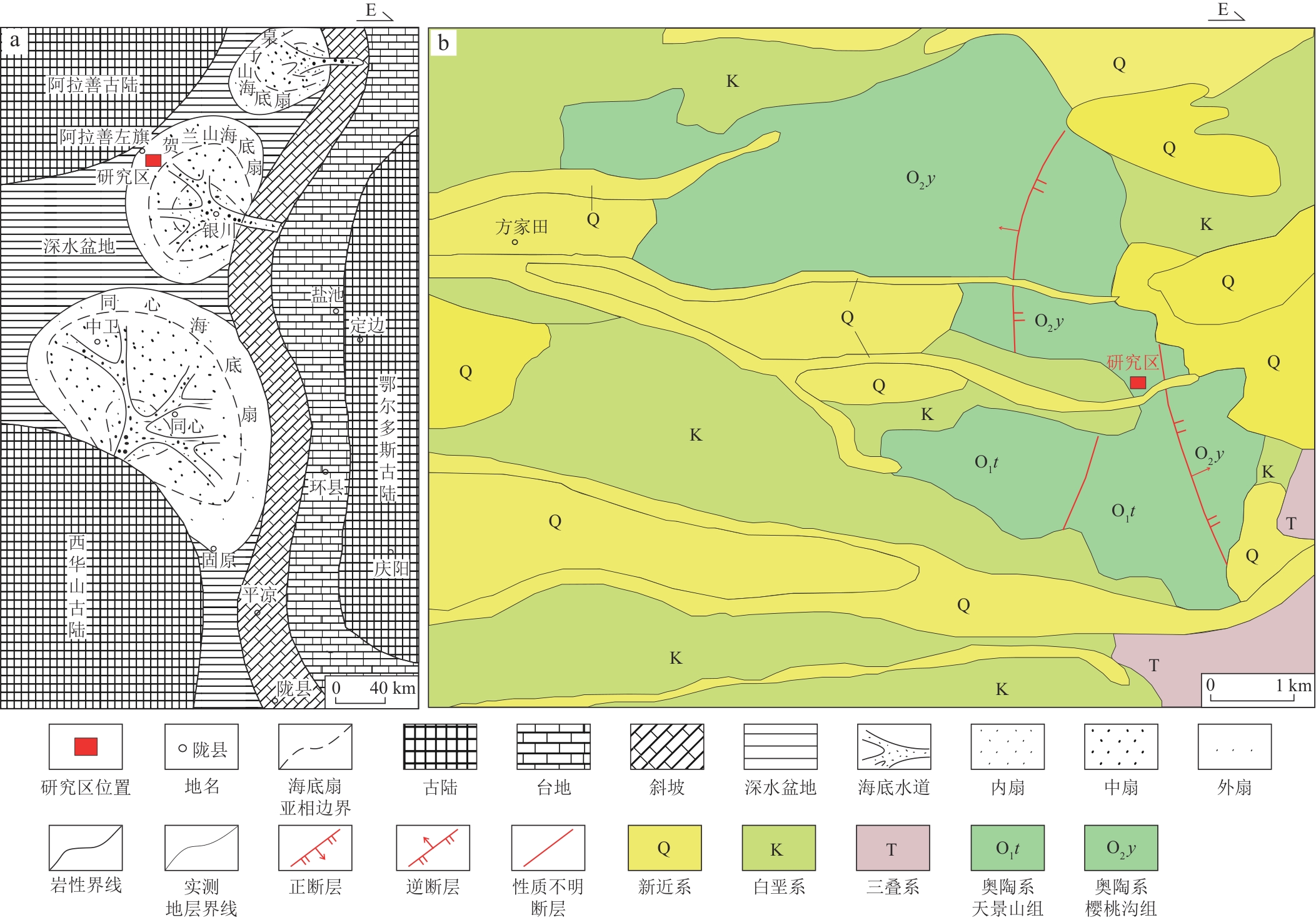
表1
鄂尔多斯盆地西缘奥陶系樱桃沟组深水原地沉积、碎屑流沉积、浊流沉积和改造砂沉积特征对比"
| 沉积类型 | 原地沉积 | 碎屑流沉积 | 浊流沉积 | 改造砂沉积 |
|---|---|---|---|---|
| 岩相 | 岩相1 | 岩相2 | 岩相3 | 岩相4、岩相5、岩相6 |
| 岩相组合 | 岩相组合一 | 岩相组合二 | 岩相组合三 | 岩相组合四 |
| 结构 | 黏土、粉砂 | 钙质、硅质胶结,分选、磨圆极差 | 石英颗粒为主,分选一般,钙质胶结为主,棱角状-次棱角状,粒径相对集中 | 石英颗粒为主,分选较好,钙质-硅质胶结,次棱角状-次圆状 |
| 概率累积曲线 | 无 | 无 | 一段式 | 一段式、两段式、三段式 |
| 沉积构造 | 水平层理 | 块状层理 | 平行层理、交错层理、变形层理、沟模和槽模 | 透镜状层理、波状层理、双向交错层理 |
| 生物遗迹化石 | 笔石 | 腹足类 | 无 | 笔石、生物扰动 |
| 沉积序列 | 无 | 无 | 正粒序、鲍马序列 | 正粒序,顶部和内部见侵蚀 |
| 古水流方向 | 无 | 无 | NW向 | NE向 |
| 地层产状 | 层状 | 层状、透镜状 | 层状 | 层状 |
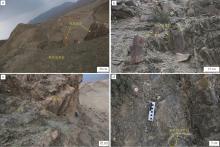
图2
鄂尔多斯盆地西缘奥陶系樱桃沟组深水原地沉积和碎屑流沉积特征(樱桃沟组剖面,野外照片)a.粉砂质泥岩与碎屑流沉积;b.粉砂质页岩与砂岩互层沉积;c.砾屑灰岩与下伏砂岩呈侵蚀接触;d.砾屑灰岩内含破碎块状砂岩"

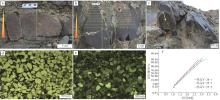
图3
鄂尔多斯盆地西缘奥陶系樱桃沟组浊流沉积特征a.正粒序层理砂岩,底部含砾石颗粒,樱桃沟组剖面,野外照片;b.正粒序砂岩顶部发育平行层理,樱桃沟组剖面,野外照片;c.底模构造,樱桃沟组剖面,野外照片;d.中-细砂岩,分选中等,棱角状-次棱角状,样品Y-25-1,樱桃沟组剖面,单偏光,普通薄片显微照片;e.石英颗粒为主,钙质胶结,样品Y-25-2,樱桃沟组剖面,正交光,普通薄片显微照片;f.概率累积曲线(一段式)(Ta为鲍马序列A段;Tb为鲍马序列B段。)"

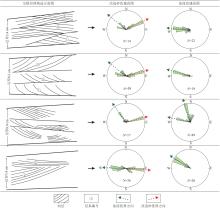
图4
鄂尔多斯盆地西缘奥陶系樱桃沟组古水流特征"

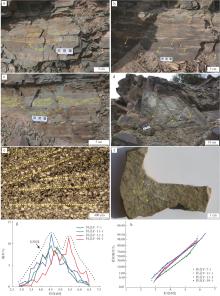
图5
鄂尔多斯盆地西缘奥陶系樱桃沟组改造砂沉积特征a.中-细砂岩,波状层理,发育冲刷面,樱桃沟组剖面,野外照片;b.中-细砂岩,透镜状层理、波状层理,樱桃沟组剖面,野外照片;c.中-细砂岩,双向交错层理,樱桃沟组剖面,野外照片;d.生物扰动,砂岩底部,樱桃沟组剖面,野外照片;e.石英颗粒为主,分选较好,次棱角状-次圆状,交错层理,含泥质条带,样品Y-39-1,樱桃沟组剖面,单偏光,普通薄片显微照片;f.细粒砂岩含笔石化石碎片,樱桃沟组剖面;g.颗粒粒径分布呈现双峰特征;h.概率累积曲线为两段式"

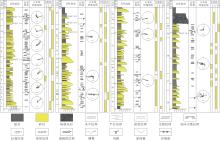
图6
鄂尔多斯盆地西缘奥陶系樱桃沟组沉积演化特征"

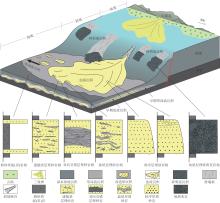
图7
鄂尔多斯西缘奥陶系樱桃沟组沉积模式示意图"

| [1] | SHANMUGAM G. Deep-marine tidal bottom currents and their reworked sands in modern and ancient submarine canyons[J]. Marine and Petroleum Geology, 2003, 20(5): 471-491. |
| [2] | FUHRMANN A, KANE I A, CLARE M A, et al. Hybrid turbidite-drift channel complexes: An integrated multiscale model[J]. Geology, 2020, 48(6): 562-568. |
| [3] | KNUTZ P C. Chapter 24 palaeoceanographic significance of contourite drifts[J]. Developments in Sedimentology, 2008, 60: 511-535. |
| [4] | MOSHER D C, CAMPBELL D C, GARDNER J V, et al. The role of deep-water sedimentary processes in shaping a continental margin: The Northwest Atlantic[J]. Marine Geology, 2017, 393: 245-259. |
| [5] | MIRAMONTES E, GARZIGLIA S, SULTAN N, et al. Morphological control of slope instability in contourites: A geotechnical approach[J]. Landslides, 2018, 15(6): 1085-1095. |
| [6] | 李华, 何幼斌. 鄂尔多斯盆地西南缘奥陶系平凉组改造砂沉积特征及意义[J]. 石油与天然气地质, 2018, 39(2): 384-397. |
| LI Hua, HE Youbin. Sedimentary characteristics and significance of reworked sands in the Ordovician Pingliang Formation, southwestern margin of Ordos Basin[J]. Oil & Gas Geology, 2018, 39(2): 384-397. | |
| [7] | READING H G, RICHARDS M. Turbidite systems in deep-water basin margins classified by grain size and feeder system[J]. AAPG Bulletin, 1994, 78(5): 792-822. |
| [8] | STOW D A V, MAYALL M. Deep-water sedimentary systems: New models for the 21st century[J]. Marine and Petroleum Geology, 2000, 17(2): 125-135. |
| [9] | HEEZEN B C, HOLLISTER C D, RUDDIMAN W F. Shaping of the continental rise by deep geostrophic contour currents[J]. Science, 1966, 152(3721): 502-508. |
| [10] | FAUGÈRES J C, STOW D A V. Bottom-current-controlled sedimentation: A synthesis of the contourite problem[J]. Sedimentary Geology, 1993, 82(1/4): 287-297. |
| [11] | STOW D, SMILLIE Z. Distinguishing between deep-water sediment facies: Turbidites, contourites and hemipelagites[J]. Geosciences, 2020, 10(2): 68. |
| [12] | GONG Chenglin, WANG Yingmin, REBESCO M, et al. How do turbidity flows interact with contour currents in unidirectionally migrating deep-water channels?[J]. Geology, 2018, 46(6): 551-554. |
| [13] | FONNESU M, PALERMO D, GALBIATI M, et al. A new world-class deep-water play-type, deposited by the syndepositional interaction of turbidity flows and bottom currents: The giant Eocene Coral Field in northern Mozambique[J]. Marine and Petroleum Geology, 2020, 111: 179-201. |
| [14] | MIRAMONTES E, EGGENHUISEN J T, JACINTO R S, et al. Channel-levee evolution in combined contour current-turbidity current flows from flume-tank experiments[J]. Geology, 2020, 48(4): 353-357. |
| [15] | 吴嘉鹏, 王英民, 王海荣, 等. 深水重力流与底流交互作用研究进展[J]. 地质论评, 2012, 58(6): 1110-1120. |
| WU Jiapeng, WANG Yingmin, WANG Hairong, et al. The interaction between deep-water turbidity and bottom currents: A review[J]. Geological Review, 2012, 58(6): 1110-1120. | |
| [16] | 李华, 何明薇, 邱春光, 等. 深水等深流与重力流交互作用沉积(2000—2022年)研究进展[J]. 沉积学报, 2023, 41(1): 18-36. |
| LI Hua, HE Mingwei, QIU Chunguang, et al. Research processes on deep-water interaction between contour current and gravity flow deposits, 2000 to 2022[J]. Acta Sedimentologica Sinica, 2023, 41(1): 18-36. | |
| [17] | LIU Y, DAI S, ZHOU Y, et al.Fault characteristics and their control on oil and gas accumulation in the southwestern Ordos Basin[J]. Energy Geoscience, 2024, 5(1): 100151. |
| [18] | HOVIKOSKI J, UCHMAN A, WEIBEL R, et al. Upper Cretaceous bottom current deposits, north-east Greenland[J]. Sedimentology, 2020, 67(7): 3619-3654. |
| [19] | DE WEGER W, HERNÁNDEZ‐MOLINA F J, MIGUEZ‐SALAS O, et al. Contourite depositional system after the exit of a strait: Case study from the late Miocene South Rifian Corridor, Morocco[J]. Sedimentology, 2021, 68(7): 2996-3032. |
| [20] | 梁岳立, 赵晓明, 张喜, 等.轨道周期约束下海-陆过渡相页岩层系高精度层序界面识别及其地质意义——以鄂尔多斯盆地东缘二叠系山西组23亚段为例[J]. 石油与天然气地质, 2023, 44(5): 1231-1242. |
| LIANG Yueli, ZHAO Xiaoming, ZHANG Xi, et al. Orbital forced high-resolution sequence boundary identification of marine-continental transitional shale and its geological significance: A case in Shan 23 sub-member at the eastern margin of Ordos Basin[J]. Oil & Gas Geology, 2023, 44(5): 1231-1242. | |
| [21] | 李文厚, 陈强, 李智超, 等. 鄂尔多斯地区早古生代岩相古地理[J]. 古地理学报, 2012, 14(1): 85-100. |
| LI Wenhou, CHEN Qiang, LI Zhichao, et al. Lithofacies palaeogeography of the Early Paleozoic in Ordos area[J]. Journal of Palaeogeography (Chinese Edition), 2012, 14(1): 85-100. | |
| [22] | 张春林, 邢凤存, 张月巧, 等. 鄂尔多斯盆地早古生代庆阳和乌审旗古隆起构造演化及其对寒武系岩相古地理的控制[J]. 石油与天然气地质, 2023, 44(1): 89-100. |
| ZHANG Chunlin, XING Fengcun, ZHANG Yueqiao, et al. Tectonic evolution of Qingyang and Wushenqi paleo-uplifts during the Early Paleozoic and its control on Cambrian lithofacies paleogeography in the Ordos Basin[J]. Oil & Gas Geology, 2023, 44(1): 89-100. | |
| [23] | 吴胜和, 冯增昭, 张吉森. 鄂尔多斯地区西缘及南缘中奥陶统平凉组重力流沉积[J]. 石油与天然气地质, 1994, 15(3): 226-234, 271. |
| WU Shenghe, FENG Zengzhao, ZHANG Jisen. Sedimentology of gravity flow deposits of Middle Ordovician Pingliang Formation in west and South margins of Ordos[J]. Oil & Gas Geology, 1994, 15(3): 226-234, 271. | |
| [24] | 周雁, 付斯一, 张涛, 等. 鄂尔多斯盆地下古生界构造-沉积演化、古地理重建及有利成藏区带划分[J]. 石油与天然气地质, 2023, 44(2): 264-275. |
| ZHOU Yan, FU Siyi, ZHANG Tao, et al. Tectono-sedimentary evolution, paleo-geographic reconstruction and play fairway delineation of the Lower Paleozoic, Ordos Basin[J]. Oil & Gas Geology, 2023, 44(2): 264-275. | |
| [25] | 郑昭昌, 李玉珍. 贺兰山奥陶系研究的新进展[J]. 现代地质, 1991, 5(2): 119-137. |
| ZHENG Zhaochang, LI Yuzhen. The new advances in the study of the Ordovician system in Hilanshan area[J]. Geoscience, 1991, 5(2): 119-137. | |
| [26] | 王振涛, 周洪瑞, 王训练, 等. 贺兰山地区中奥陶统樱桃沟组物源及构造背景分析[J]. 沉积学报, 2014, 32(2): 205-217. |
| WANG Zhentao, ZHOU Hongrui, WANG Xunlian, et al. Provenance and tectonic settings analysis of Yingtaogou Formation of Middle Ordovician in Helan Mountain area[J]. Acta Sedimentologica Sinica, 2014, 32(2): 205-217. | |
| [27] | 杨向阳. 贺兰构造带构造变形特征研究[D]. 西安: 西北大学, 2018. |
| YANG Xiangyang. The study of the deformation characteristic of the Helanshan Tectonic Belts[D]. Xi’an: Northwest University, 2018. | |
| [28] | WANG Zhen, FAN Ruoying, ZONG Ruiwen, et al. Composition and spatiotemporal evolution of the mixed turbidite-contourite systems from the Middle Ordovician, in western margin of the North China Craton[J]. Sedimentary Geology, 2021, 421: 105943. |
| [29] | 许强, 陈洪德, 赵俊兴, 等. 贺兰拗拉槽胡基台地区中奥陶统樱桃沟组深海重力流沉积特征[J]. 海相油气地质, 2010, 15(2): 14-19. |
| XU Qiang, CHEN Hongde, ZHAO Junxing, et al. The features of Middle Ordovician Yingtaogou deep-sea gravitational current deposits at Hujitai area in the Helan aulacogen, Ordos Basin[J]. Marine Origin Petroleum Geology, 2010, 15(2): 14-19. | |
| [30] | 董云鹏, 李玮, 张菲菲, 等. 南北构造带北段贺兰山的形成与演化[J]. 西北大学学报(自然科学版), 2021, 51(6): 951-968. |
| DONG Yunpeng, LI Wei, ZHANG Feifei, et al. Formation and evolution of the Helan Mountain in the northern section of the North-South Tectonic Belt[J]. Journal of Northwest University (Natural Science Edition), 2021, 51(6): 951-968. | |
| [31] | 屈红军, 梅志超, 李文厚, 等. 陕西富平地区中奥陶统等深流沉积的特征及其地质意义[J]. 地质通报, 2010, 29(9): 1304-1309. |
| QU Hongjun, MEI Zhichao, LI Wenhou, et al. The Middle Ordovician contour current deposits and its geological implication in Fuping region, Shaanxi Province, China[J]. Geological Bulletin of China, 2010, 29(9): 1304-1309. | |
| [32] | 何幼斌, 高振中, 罗顺社, 等. 陕西陇县地区平凉组三段发现内潮汐沉积[J]. 石油天然气学报, 2007, 29(4): 28-33. |
| HE Youbin, GAO Zhenzhong, LUO Shunshe, et al. Discovery of internal-tide deposits from the third member of Pingliang Formation in Longxian area, Shaanxi Province[J]. Journal of Oil and Gas Technology, 2007, 29(4): 28-33. | |
| [33] | 何发岐, 张威, 丁晓琪, 等. 鄂尔多斯盆地乌审旗古隆起对岩溶气藏的控制机理[J]. 石油与天然气地质, 2023, 44(2): 276-291. |
| HE Faqi, ZHANG Wei, DING Xiaoqi, et al.Controlling mechanism of Wushenqi paleo-uplift on paleo-karst gas reservoirs in Ordos Basin[J]. Oil & Gas Geology, 2023, 44(2): 276-291. | |
| [34] | 李华, 何幼斌, 谈梦婷, 等. 深水重力流水道-朵叶体系形成演化及储层分布——以鄂尔多斯盆地西缘奥陶系拉什仲组露头为例[J]. 石油与天然气地质, 2022, 43(4): 917-928. |
| LI Hua, HE Youbin, TAN Mengting, et al. Evolution of and reservoir distribution within deep-water gravity flow channel-lobe system: A case study of the Ordovician Lashenzhong Formation outcrop at western margin of Ordos Basin[J]. Oil & Gas Geology, 2022, 43(4): 917-928. | |
| [35] | 龚承林, 徐长贵, 尤丽, 等. 深海重力流与底流交互作用的沉积响应及其勘探意义[J]. 矿物岩石地球化学通报, 2024, 43(4): 721-733, 687. |
| GONG Chenglin, XU Changgui, YOU Li, et al. Depositional responses of the interaction between deep-marine gravity and bottom currents and their exploration significance[J]. Bulletin of Mineralogy, Petrology and Geochemistry, 2024, 43(4): 721-733, 687. | |
| [36] | SHANMUGAM G, SPALDING T D, ROFHEART D H. Process sedimentology and reservoir quality of deep-marine bottom-current reworked sands (sandy contourites): An example from the Gulf of Mexico[J]. AAPG Bulletin, 1993, 77(7): 1241-1259. |
| [37] | 李华, 杨朝强, 周伟, 等. 莺歌海盆地东方1-1气田中新统黄流组浅海多级海底扇形成机理及储层分布[J]. 石油与天然气地质, 2023, 44(2): 429-440. |
| LI Hua, YANG Zhaoqiang, ZHOU Wei, et al. Genetic mechanism and reservoir distribution of shallow-marine multi-stepped submarine fans in the Miocene Huangliu Formation of Dongfang 1-1 gas field, Yinggehai Basin[J]. Oil & Gas Geology, 2023, 44(2): 429-440. | |
| [38] | BAILEY W, MCARTHUR A, MCCAFFREY W. Sealing potential of contourite drifts in deep-water fold and thrust belts: Examples from the Hikurangi Margin, New Zealand[J]. Marine and Petroleum Geology, 2021, 123: 104776. |
| [39] | GONG Chenglin, WANG Yingmin, ZHENG Rongcai, et al. Middle Miocene reworked turbidites in the Baiyun Sag of the Pearl River Mouth Basin, northern South China Sea margin: Processes, genesis, and implications[J]. Journal of Asian Earth Sciences, 2016, 128: 116-129. |
| [40] | PANDOLPHO B T, FONTOURA KLEIN A H DA, DUTRA I, et al. Seismic record of a cyclic turbidite-contourite system in the Northern Campos Basin, SE Brazil[J]. Marine Geology, 2021, 434: 106422. |
| [41] | 师良, 范柏江, 李忠厚, 等. 鄂尔多斯盆地中部三叠系延长组7段烃组分的运移分异作用[J]. 石油与天然气地质, 2024, 45(1): 157-168. |
| SHI Liang, FAN Bojiang, LI Zhonghou, et al. Migration differentiation of hydrocarbon components in the 7th member of the Triassic Yanchang Formation, central Ordos Basin[J]. Oil & Gas Geology, 2024, 45(1): 157-168. | |
| [42] | 万俊雨, 朱建辉, 姚素平, 等. 鄂尔多斯盆地中、东部奥陶系马家沟组成烃生物及烃源岩地球生物学评价[J]. 石油与天然气地质, 2024, 45(2): 393-405. |
| WAN Junyu, ZHU Jianhui, YAO Suping, et al. Geobiological evaluation of hydrocarbon-generating organisms and source rocks in the Ordovician Majiagou Formation, east-central Ordos Basin[J]. Oil & Gas Geology, 2024, 45(2): 393-405. | |
| [43] | 席胜利, 李文厚, 黄正良, 等. 鄂尔多斯盆地奥陶系乌拉力克组沉积特征及其控源作用[J]. 西北大学学报(自然科学版), 2024, 54(6): 1013-1022. |
| XI Shengli, LI Wenhou, HUANG Zhengliang, et al. Sedimentary characteristics and controlling effect on source rocks in Wulalike Formation of Ordovician in Ordos Basin[J]. Journal of Northwest University (Natural Science Edition), 2024, 54(6): 1013-1022. | |
| [44] | 席胜利, 刘新社, 任军峰, 等. 鄂尔多斯盆地风险勘探领域油气成藏认识新进展与勘探潜力[J]. 中国石油勘探, 2023, 28(3): 34-48. |
| XI Shengli, LIU Xinshe, REN Junfeng, et al. New understanding of hydrocarbon accumulation and exploration potential in risk exploration field in Ordos Basin[J]. China Petroleum Exploration, 2023, 28(3): 34-48. | |
| [45] | 席胜利, 闫伟, 刘新社, 等. 鄂尔多斯盆地天然气勘探新领域、新类型及资源潜力[J]. 石油学报, 2024, 45(1): 33-51, 132. |
| XI Shengli, YAN Wei, LIU Xinshe, et al. New fields, new types and resource potentials of natural gas exploration in Ordos Basin[J]. Acta Petrolei Sinica, 2024, 45(1): 33-51, 132. | |
| [46] | 席胜利, 莫午零, 刘新社, 等. 鄂尔多斯盆地西缘奥陶系乌拉力克组页岩气勘探潜力——以忠平1井为例[J]. 天然气地球科学, 2021, 32(8): 1235-1246. |
| XI Shengli, MO Wuling, LIU Xinshe, et al. Shale gas exploration potential of Ordovician Wulalike Formation in the western margin of Ordos Basin: Case study of Well Zhongping 1[J]. Natural Gas Geoscience, 2021, 32(8): 1235-1246. | |
| [47] | 付锁堂, 付金华, 席胜利, 等. 鄂尔多斯盆地奥陶系海相页岩气地质特征及勘探前景[J]. 中国石油勘探, 2021, 26(2): 33-44. |
| FU Suotang, FU Jinhua, XI Shengli, et al. Geological characteristics of Ordovician marine shale gas in the Ordos Basin and its prospects[J]. China Petroleum Exploration, 2021, 26(2): 33-44. |
| [1] | 赵靖舟, 高振东, 孟选刚, 吴伟涛, 白玉彬, 曹磊, 赵子龙. 鄂尔多斯盆地陕北地区三叠系延长组长7—长9油层组重力流沉积致密油富集条件与勘探潜力——兼论拗陷型湖盆的石油勘探范式[J]. 石油与天然气地质, 2025, 46(5): 1367-1391. |
| [2] | 吴伟涛, 李天宇, 闫新智, 周凯, 殷露, 曹磊. 鄂尔多斯盆地定边—富县地区延长组长8油层组致密油富集因素与富集模式[J]. 石油与天然气地质, 2025, 46(5): 1392-1409. |
| [3] | 曹磊, 闫新智, 李辉, 吴伟涛, 白玉彬, 赵子龙. 鄂尔多斯盆地陕北地区延长组长8与长9油层组烃源岩分布与地球化学特征及页岩油资源潜力评价[J]. 石油与天然气地质, 2025, 46(5): 1410-1429. |
| [4] | 耳闯, 关宏博, 刘伟, 程妮, 白洁, 胡崇. 陆源物质输入对有机质类型的影响——以鄂尔多斯盆地三叠系延长组长73油层亚组页岩为例[J]. 石油与天然气地质, 2025, 46(5): 1430-1445. |
| [5] | 张军, 白玉彬, 张海, 赵靖舟, 徐宁. 鄂尔多斯盆地富县地区三叠系延长组长7油层组深水重力流致密砂岩成因与分布[J]. 石油与天然气地质, 2025, 46(5): 1446-1465. |
| [6] | 陈伟涛, 赵靖舟, 高振东, 李哲, 孟选刚, 闫新智, 董旭. 鄂尔多斯盆地志丹地区延长组长7—长9油层组深水重力流沉积特征及含油性[J]. 石油与天然气地质, 2025, 46(5): 1466-1484. |
| [7] | 李晓龙, 白玉彬, 陈珊珊, 张刚, 王聪娥. 三角洲与重力流砂体构型特征及其对油藏分布的控制——以鄂尔多斯盆地甘泉地区三叠系延长组长7油层组为例[J]. 石油与天然气地质, 2025, 46(5): 1485-1503. |
| [8] | 王琳茜, 赵靖舟, 高振东, 魏繁荣, 周世琪, 孟选刚, 闫新智, 徐宁. 深水重力流沉积类型及含油性对比——以鄂尔多斯盆地富县地区三叠系延长组长7—长9油层组为例[J]. 石油与天然气地质, 2025, 46(5): 1504-1521. |
| [9] | 丁蓉, 庞雄奇, 贾承造, 熊先钺, 邓泽, 田文广, 蒲庭玉, 王飞宇, 林浩, 陈雨萱. 鄂尔多斯盆地石炭纪—二叠纪煤系全油气系统天然气成藏特征与有序分布模式[J]. 石油与天然气地质, 2025, 46(4): 1333-1348. |
| [10] | 薛一帆, 赵海涛, 黄亚浩, 文志刚, 刘宇坤, 张银涛, 乔占峰, 罗涛. 塔里木盆地深层奥陶系走滑断裂区与非走滑断裂区储层流体超压演化差异特征与成藏机制[J]. 石油与天然气地质, 2025, 46(3): 926-943. |
| [11] | 田刚, 卢明德, 薛海军, 汶小岗, 马丽, 袁安龙, 宋立军, 蒲仁海, 贾会冲, 陈杰, 陈硕, 吴大林, 杨明慧. 鄂尔多斯盆地伊盟隆起南部构造边界厘定及其油气勘探意义[J]. 石油与天然气地质, 2025, 46(1): 108-122. |
| [12] | 云露, 曹自成, 耿锋, 汪洋, 丁勇, 刘永立. 塔里木盆地塔北台盆区奥陶系油气分布有序性[J]. 石油与天然气地质, 2025, 46(1): 15-30. |
| [13] | 何帅, 马安来, 云露, 曹自成, 李贤庆, 黄诚, 张国松, 胡松, 王铁一, 彭威龙, 朱志立, 崔福田. 塔里木盆地顺北地区上奥陶统恰尔巴克组烃源岩有机地球化学特征及勘探意义[J]. 石油与天然气地质, 2025, 46(1): 246-260. |
| [14] | 费世祥, 崔越华, 李小锋, 汪淑洁, 王晔, 张正涛, 孟培龙, 郑小鹏, 徐运动, 高建文, 罗文琴, 蒋婷婷. 鄂尔多斯盆地中、东部深层煤岩气水平井高效开发主控因素[J]. 石油与天然气地质, 2025, 46(1): 273-287. |
| [15] | 时保宏, 蔺嘉昊, 张涛, 王红伟, 张雷, 魏嘉怡, 李涵, 刘刚, 王蓉. 鄂尔多斯盆地西缘冲断带中段奥陶系克里摩里组高能滩隐伏构造成藏潜力[J]. 石油与天然气地质, 2025, 46(1): 78-90. |
| 阅读次数 | ||||||
|
全文 |
|
|||||
|
摘要 |
|
|||||
