

石油与天然气地质 ›› 2025, Vol. 46 ›› Issue (5): 1582-1596.doi: 10.11743/ogg20250512
• 油气地质 • 上一篇
白玉彬1,2( ), 任海姣3, 张军1,2, 陈绍蓉3, 吴伟涛1,2, 赵辛楣3, 吴和源1,2, 邹阳3
收稿日期:2025-06-10
修回日期:2025-08-21
出版日期:2025-10-30
发布日期:2025-10-29
第一作者简介:白玉彬(1981—),男,副教授、硕士研究生导师,致密油(页岩油)富集规律与甜点评价。E‑mail: baiyubin@xsyu.edu.cn。
基金项目:
Yubin BAI1,2(), Haijiao REN3, Jun ZHANG1,2, Shaorong CHEN3, Weitao WU1,2, Xinmei ZHAO3, Heyuan WU1,2, Yang ZOU3
Received:2025-06-10
Revised:2025-08-21
Online:2025-10-30
Published:2025-10-29
摘要:
中国陆相咸化湖盆混积型页岩油资源潜力大,勘探前景好,明确其产出油组分特征,可为页岩油可动性评价及提高页岩油产量奠定基础。以准噶尔盆地玛湖凹陷二叠系风城组混积型页岩油为例,通过产出油与滞留烃组分特征的对比,明确了页岩油具有组分流动的特点,并进一步探讨了可动油与产出油的关系。研究认为:①玛湖凹陷风城组页岩产出油与滞留溶剂抽提油相比,产出油具有高的烃类含量,并随着开采时间的延长,重烃含量增加,具有组分流动的特征;产出油饱和烃气相色谱以中-低碳数的正构烷烃为主,滞留烃中灰质/白云质页岩和混合质页岩中饱和烃低分子碳数化合物占比大,而长英质页岩中相对发育中-高分子量的饱和烃类化合物。②热解法经轻烃散失量校正和重烃量恢复后,计算出风城组页岩原地滞留烃量平均值为2.87 mg/g(范围1.39 ~ 14.25 mg/g),可动油含量平均值为1.60 mg/g,占比高达55.8%,页岩油可动性好。③从分子地球化学尺度对比了可动油与产出油,认为高含油饱和度指数(OSI)、高可动烃含量和低总有机碳含量(TOC)段,具有更好的页岩油勘探潜力。该研究对深化咸水湖盆页岩油可动性和可采性以及提高页岩油产量具有重要意义。
中图分类号:

图1
准噶尔盆地玛湖凹陷构造分布和地层综合柱状图[35-36]a. 玛湖凹陷地理位置;b. 玛湖凹陷构造单元划分;c. 风城组综合柱状图"

表1
玛湖凹陷风城组产层原油族组分特征"
| 井号 | 分析日期 (年/月/日) | 层位 | 顶深/m | 底深/m | 密度/(g/cm3) | 族组分含量/% | |||
|---|---|---|---|---|---|---|---|---|---|
| 饱和烃 | 芳香烃 | 非烃 | 沥青质 | ||||||
| 风南5 | 2010/06/12 | 风一段 | 4 394 | 4 445 | 0.864 | 81.00 | 7.02 | 7.31 | 4.67 |
| 风南5 | 2010/06/17 | 风一段 | 4 394 | 4 445 | 0.864 | 79.36 | 9.44 | 9.73 | 1.47 |
| 风南5 | 2010/07/23 | 风一段 | 4 418 | 4 446 | 0.861 | 77.66 | 12.30 | 8.42 | 1.62 |
| 风南14 | 2015/09/14 | 风一段 | 4 446 | 4 458 | 0.924 | 60.00 | 16.66 | 20.96 | 2.38 |
| 风南14 | 2015/10/09 | 风一段 | 4 391 | 4 458 | 0.897 | 55.55 | 22.53 | 16.67 | 5.25 |
| 风南14 | 2017/09/15 | 风二段 | 4 316 | 4 356 | 0.879 | 56.12 | 14.23 | 17.39 | 12.26 |
| 玛页1 | 2019/11/01 | 风一段 | 4 877 | 4 937 | 0.882 | 74.58 | 12.71 | 8.69 | 4.02 |
| 玛页1 | 2019/12/13 | 风一段—风三段 | 4 579 | 4 852 | 0.882 | 60.30 | 19.69 | 14.38 | 5.63 |
| 玛页1 | 2020/01/16 | 风一段—风三段 | 4 579 | 4 852 | 0.890 | 62.90 | 15.64 | 12.37 | 9.09 |
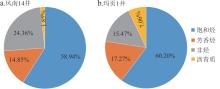
图2
玛湖凹陷风城组烃源岩抽提物族组分含量平面分布饼状图"

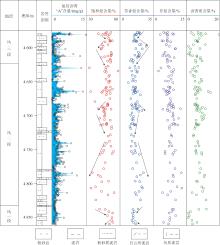
图3
玛湖凹陷玛页1井风城组烃源岩抽提物族组分纵向分布特征"

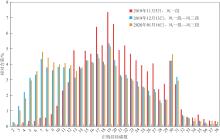
图4
玛湖凹陷玛页1井风城组产层原油不同时间气相色谱实测正构烷烃含量分布特征"

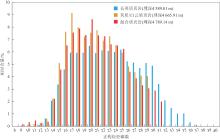
图5
玛湖凹陷玛页1井风城组不同岩性烃源岩抽提物饱和烃气相色谱实测正构烷烃含量分布特征"

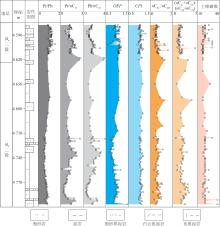
图6
玛湖凹陷玛页1井风城组烃源岩抽提物饱和烃气相色谱参数纵向分布特征Pr.姥鲛烷;Ph.植烷;OEP.奇偶优势比;CPI.碳优势指数"

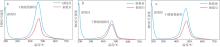
图7
玛湖凹陷玛页1井风城组不同岩性页岩溶剂抽提前、后热解图谱对比a. 长英质页岩,TOC = 1.23%,Tmax,抽提后 = 444 ℃,埋深4 778.81 m;b. 灰质/白云质页岩,TOC = 1.13%,Tmax,抽提后 = 441 ℃,埋深4 665.23 m;c. 混合质页岩,TOC = 1.21%,Tmax,抽提后 = 446 ℃,埋深4 789.86 mTmax,抽提后.抽提后最高热解峰温"
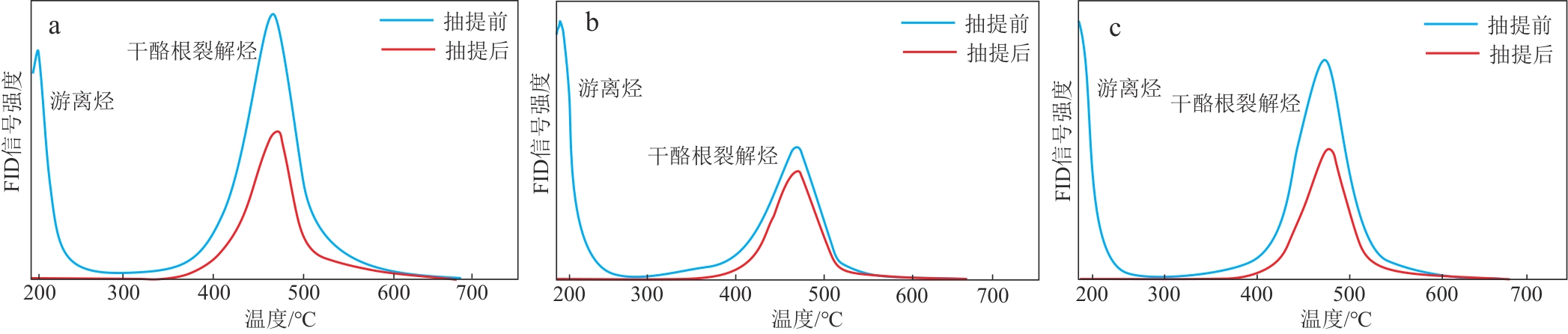
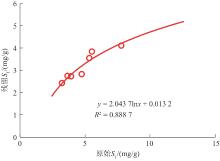
图8
江汉盆地潜江凹陷潜江组残留S1与原始S1关系(据文献[53]修改)S1.游离烃含量"
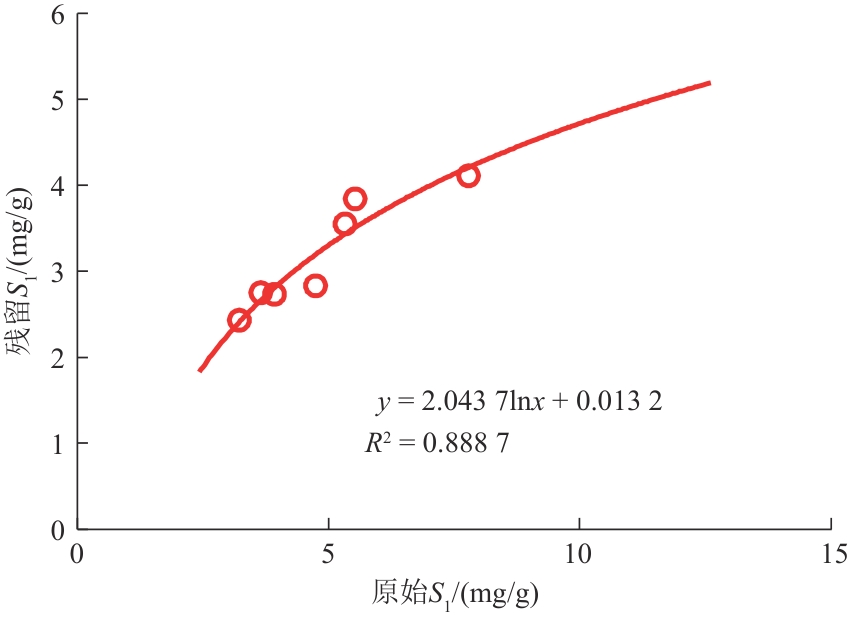

图9
玛湖凹陷玛页1井风城组重烃恢复系数(K重校)与成熟度指标(S1/S2)相关性拟合"
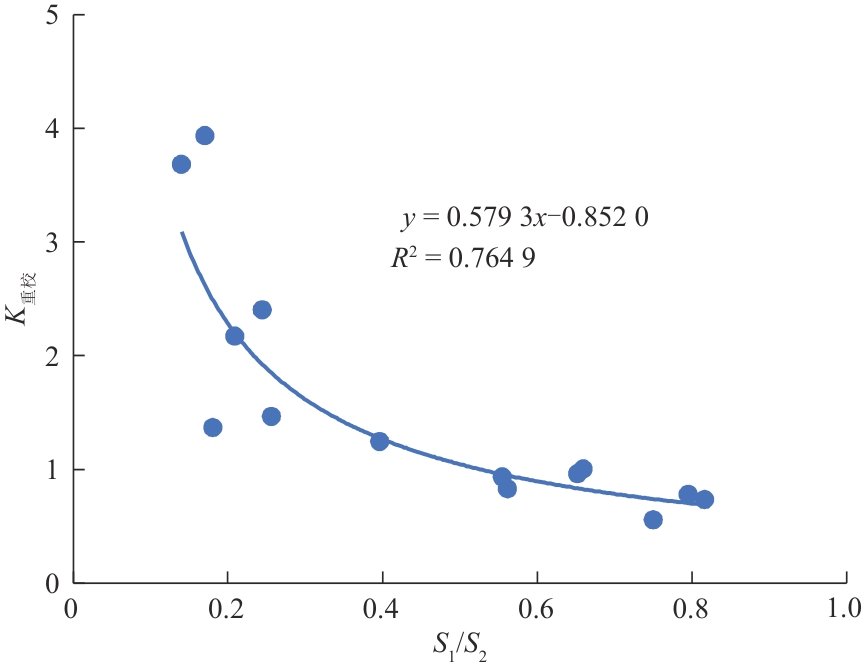
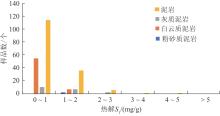
图10
玛湖凹陷风城组不同岩性烃源岩热解S1分布特征S1.游离烃含量"
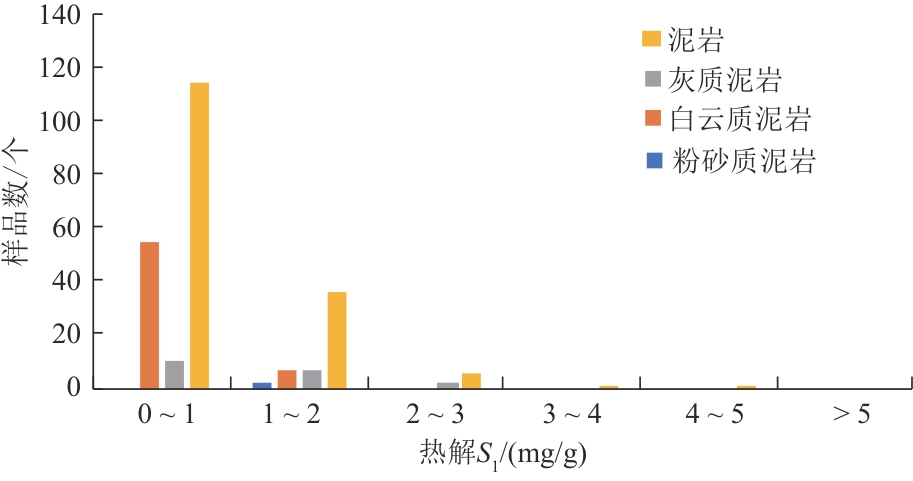
图11
玛湖凹陷风城组不同岩性烃源岩氯仿沥青“A”含量分布特征"

图12
玛湖凹陷玛页1井风城组储油岩热解烃类分布特征"
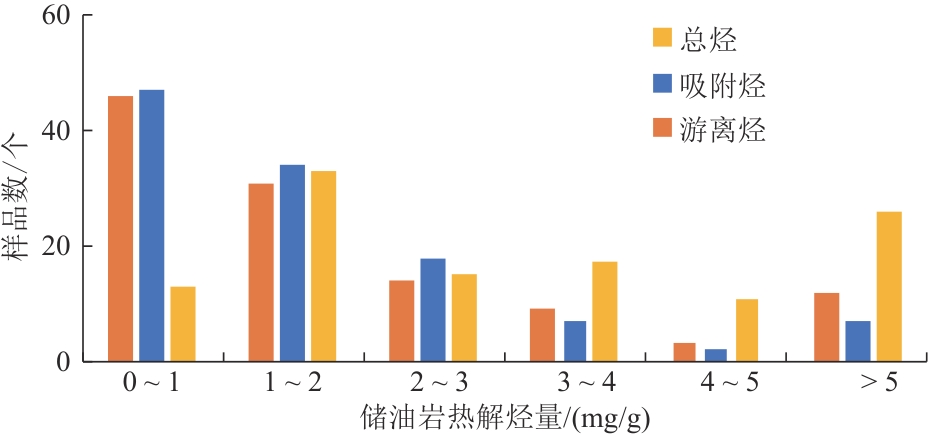
表2
玛湖凹陷玛页1井风城组不同岩性储油岩热解分析数据"
| 岩性 | 游离烃含量/(mg/g) | 吸附烃含量/(mg/g) | 游离烃占比/% |
|---|---|---|---|
| 砂质泥岩 | 0.53(2) | 0.75(2) | 43.46(2) |
| 灰质泥岩 | 3.15(6) | 6.75(6) | 39.86(6) |
| 白云质泥岩 | 1.34(25) | 1.21(25) | 46.35(25) |
| 泥岩 | 2.07(78) | 1.82(78) | 51.04(78) |
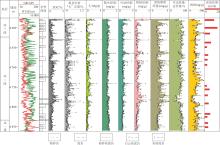
图13
玛湖凹陷玛页1井风城组不同赋存状态烃类纵向分布特征TOC.总有机碳含量;S1.游离烃含量;OSI.含油饱和度指数"

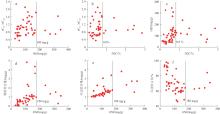
图14
玛湖凹陷玛页1井风城组页岩nC21-/nC22+,OSI,TOC和热解分析结果相关关系a. OSIvs.nC21-/nC22+;b. TOCvs.nC21-/nC22+;c. TOCvs.OSI;d. OSIvs. 吸附烃含量;e. OSIvs. 可动烃含量;f. OSIvs. 可动烃占比nC21-/nC22+.轻烃/重烃含量比值;TOC.总有机碳含量;OSI.含油饱和度指数"

| [1] | JARVIE D M. Shale resource systems for oil and gas: Part 2—shale-oil resource systems[M]//BREYER J A. Shale Reservoirs—Giant Resources for the 21st Century. Tulsa: American Association of Petroleum Geologists, 2012: 89-119. |
| [2] | EIA. Technically recoverable shale oil and shale gas resources: An assessment of 137 shale formations in 41countries outside the United States[R]. Washington, D.C.: US Energy Information Agency, 2013: 1-12. |
| [3] | BGR. BGR energy study 2017: Data and developments concerning German and global energy supplies[R]. Hannover: BGR, 2017: 1-184. |
| [4] | 贾承造, 邹才能, 李建忠, 等. 中国致密油评价标准、主要类型、基本特征及资源前景[J]. 石油学报, 2012, 33(3): 343-350. |
| JIA Chengzao, ZOU Caineng, LI Jianzhong, et al. Assessment criteria, main types, basic features and resource prospects of the tight oil in China[J]. Acta Petrolei Sinica, 2012, 33(3): 343-350. | |
| [5] | 张金川, 林腊梅, 李玉喜, 等. 页岩油分类与评价[J]. 地学前缘, 2012, 19(5): 322-331. |
| ZHANG Jinchuan, LIN Lamei, LI Yuxi, et al. Classification and evaluation of shale oil[J]. Earth Science Frontiers, 2012, 19(5): 322-331. | |
| [6] | 黎茂稳, 马晓潇, 蒋启贵, 等. 北美海相页岩油形成条件、富集特征与启示[J]. 油气地质与采收率, 2019, 26(1): 13-28. |
| LI Maowen, MA Xiaoxiao, JIANG Qigui, et al. Enlightenment from formation conditions and enrichment characteristics of marine shale oil in North America[J]. Petroleum Geology and Recovery Efficiency, 2019, 26(1): 13-28. | |
| [7] | 贾承造, 王祖纲, 姜林, 等. 中国页岩油勘探开发研究进展与科学技术问题[J]. 世界石油工业, 2024, 31(4): 1-11. |
| JIA Chengzao, WANG Zugang, JIANG Lin, et al. Progress and key scientific and technological problems of shale oil exploration and development in China[J]. World Petroleum Industry, 2024, 31(4): 1-11. | |
| [8] | 赵文智, 胡素云, 侯连华, 等. 中国陆相页岩油类型、资源潜力及与致密油的边界[J]. 石油勘探与开发, 2020, 47(1): 1-10. |
| ZHAO Wenzhi, HU Suyun, HOU Lianhua, et al. Types and resource potential of continental shale oil in China and its boundary with tight oil[J]. Petroleum Exploration and Development, 2020, 47(1): 1-10. | |
| [9] | 郭旭升, 马晓潇, 黎茂稳, 等. 陆相页岩油富集机理探讨[J]. 石油与天然气地质, 2023, 44(6): 1333-1349. |
| GUO Xusheng, MA Xiaoxiao, LI Maowen, et al. Mechanisms for lacustrine shale oil enrichment in Chinese sedimentary basins[J]. Oil & Gas Geology, 2023, 44(6): 1333-1349. | |
| [10] | 赵贤正, 周立宏, 蒲秀刚, 等. 湖相页岩滞留烃形成条件与富集模式——以渤海湾盆地黄骅坳陷古近系为例[J]. 石油勘探与开发, 2020, 47(5): 856-869. |
| ZHAO Xianzheng, ZHOU Lihong, PU Xiugang, et al. Formation conditions and enrichment model of retained petroleum in lacustrine shale: A case study of the Paleogene in Huanghua Depression, Bohai Bay Basin, China[J]. Petroleum Exploration and Development, 2020, 47(5): 856-869. | |
| [11] | 赵喆, 白斌, 刘畅, 等. 中国石油陆上中-高成熟度页岩油勘探现状、进展与未来思考[J]. 石油与天然气地质, 2024, 45(2): 327-340. |
| ZHAO Zhe, BAI Bin, LIU Chang, et al. Current status, advances, and prospects of CNPC’s exploration of onshore moderately to highly mature shale oil reservoirs[J]. Oil & Gas Geology, 2024, 45(2): 327-340. | |
| [12] | 支东明, 宋永, 何文军, 等. 准噶尔盆地中—下二叠统页岩油地质特征、资源潜力及勘探方向[J]. 新疆石油地质, 2019, 40(4): 389-401. |
| ZHI Dongming, SONG Yong, HE Wenjun, et al. Geological characteristics, resource potential and exploration direction of shale oil in Middle-Lower Permian, Junggar Basin[J]. Xinjiang Petroleum Geology, 2019, 40(4): 389-401. | |
| [13] | 李军亮, 王民, 秦峰, 等. 陆相富碳酸盐页岩纹层组合对页岩油富集的控制作用——以渤海湾盆地济阳坳陷古近系沙河街组页岩为例[J]. 石油与天然气地质, 2025, 46(2): 392-406. |
| LI Junliang, WANG Min, QIN Feng, et al. Controlling effects of lamina assemblages on shale oil enrichment for lacustrine carbonate-rich shales: A case study of shales in the Paleogene Shahejie Formation, Jiyang Depression, Bohai Bay Basin[J]. Oil & Gas Geology, 2025, 46(2): 392-406. | |
| [14] | 刘惠民. 济阳坳陷古近系页岩油地质特殊性及勘探实践——以沙河街组四段上亚段—沙河街组三段下亚段为例[J]. 石油学报, 2022, 43(5): 581-594. |
| LIU Huimin. Geological particularity and exploration practice of Paleogene shale oil in Jiyang Depression: A case study of the upper submember of member 4 to the lower submember of member 3 of Shahejie Formation[J]. Acta Petrolei Sinica, 2022, 43(5): 581-594. | |
| [15] | 王玉华, 梁江平, 张金友, 等. 松辽盆地古龙页岩油资源潜力及勘探方向[J]. 大庆石油地质与开发, 2020, 39(3): 20-34. |
| WANG Yuhua, LIANG Jiangping, ZHANG Jinyou, et al. Resource potential and exploration direction of Gulong shale oil in Songliao Basin[J]. Petroleum Geology & Oilfield Development in Daqing, 2020, 39(3): 20-34. | |
| [16] | 孙龙德, 王小军, 冯子辉, 等. 松辽盆地古龙页岩纳米孔缝形成机制与页岩油富集特征[J]. 石油与天然气地质, 2023, 44(6): 1350-1365. |
| SUN Longde, WANG Xiaojun, FENG Zihui, et al. Formation mechanisms of nano-scale pores/fissures and shale oil enrichment characteristics for Gulong shale, Songliao Basin[J]. Oil & Gas Geology, 2023, 44(6): 1350-1365. | |
| [17] | 李志明, 钱门辉, 黎茂稳, 等. 中-低成熟湖相富有机质泥页岩含油性及赋存形式——以渤海湾盆地渤南洼陷罗63井和义21井沙河街组一段为例[J]. 石油与天然气地质, 2017, 38(3): 448-456, 466. |
| LI Zhiming, QIAN Menhui, LI Maowen, et al. Oil content and occurrence in low-medium mature organic-rich lacustrine shales: A case from the 1st member of the Eocene-Oligocene Shahejie Formation in Well Luo-63 and Yi-21, Bonan subsag, Bohai Bay Basin[J]. Oil & Gas Geology, 2017, 38(3): 448-456, 466. | |
| [18] | 王民, 马睿, 李进步, 等. 济阳坳陷古近系沙河街组湖相页岩油赋存机理[J]. 石油勘探与开发, 2019, 46(4): 789-802. |
| WANG Min, MA Rui, LI Jinbu, et al. Occurrence mechanism of lacustrine shale oil in the Paleogene Shahejie Formation of Jiyang Depression, Bohai Bay Basin, China[J]. Petroleum Exploration and Development, 2019, 46(4): 789-802. | |
| [19] | 李俊乾, 卢双舫, 张婕, 等. 页岩油吸附与游离定量评价模型及微观赋存机制[J]. 石油与天然气地质, 2019, 40(3): 583-592. |
| LI Junqian, LU Shuangfang, ZHANG Jie, et al. Quantitative evaluation models of adsorbed and free shale oil and its microscopic occurrence mechanism[J]. Oil & Gas Geology, 2019, 40(3): 583-592. | |
| [20] | TANG Yong, CAO Jian, HE Wenjun, et al. Discovery of shale oil in alkaline lacustrine basins: The Late Paleozoic Fengcheng Formation, Mahu Sag, Junggar Basin, China[J]. Petroleum Science, 2021, 18(5): 1281-1293. |
| [21] | 何文军, 吴和源, 杨森, 等. 准噶尔盆地玛湖凹陷风城组页岩油储层岩相划分与类型评价[J]. 西北地质, 2023, 56(1): 217-231. |
| HE Wenjun, WU Heyuan, YANG Sen, et al. Lithofacies division and type evaluation of shale oil reservoir in Fengcheng Formation of Mahu Sag, Junggar Basin[J]. Northwestern Geology, 2023, 56(1): 217-231. | |
| [22] | 常佳琦, 姜振学, 高之业, 等. 玛湖凹陷风城组不同岩相页岩含油性及可动性特征[J]. 中南大学学报(自然科学版), 2022, 53(9): 3354-3367. |
| CHANG Jiaqi, JIANG Zhenxue, GAO Zhiye, et al. Oil bearing and mobility characteristics of different lithofacies shales in Fengcheng Formation, Mahu Sag[J]. Journal of Central South University(Science and Technology), 2022, 53(9): 3354-3367. | |
| [23] | 白玉彬, 李梦瑶, 朱涛, 等. 玛湖凹陷二叠系风城组烃源岩地球化学特征及页岩油“甜点”评价[J]. 岩性油气藏, 2024, 36(6): 110-121. |
| BAI Yubin, LI Mengyao, ZHU Tao, et al. Geochemical characteristics of source rocks and evaluation of shale oil “sweet spot” of Permian Fengcheng Formation in Mahu Sag[J]. Lithologic Reservoirs, 2024, 36(6): 110-121. | |
| [24] | TANG Yong, HE Wenjun, BAI Yubin, et al. Source rock evaluation and hydrocarbon generation model of a permian alkaline lakes—A case study of the Fengcheng Formation in the Mahu Sag, Junggar Basin[J]. Minerals, 2021, 11(6): 644. |
| [25] | 杨智峰, 唐勇, 郭旭光, 等. 准噶尔盆地玛湖凹陷二叠系风城组页岩油赋存特征与影响因素[J]. 石油实验地质, 2021, 43(5): 784-796. |
| YANG Zhifeng, TANG Yong, GUO Xuguang, et al. Occurrence states and potential influencing factors of shale oil in the Permian Fengcheng Formation of Mahu Sag, Junggar Basin[J]. Petroleum Geology and Experiment, 2021, 43(5): 784-796. | |
| [26] | 李嘉蕊, 杨智, 王兆云, 等. 准噶尔盆地玛湖凹陷二叠系风城组页岩油赋存定量表征及其主控因素[J]. 石油实验地质, 2023, 45(4): 681-692. |
| LI Jiarui, YANG Zhi, WANG Zhaoyun, et al. Quantitative characterization and main controlling factors of shale oil occurrence in Permian Fengcheng Formation, Mahu Sag, Junggar Basin[J]. Petroleum Geology and Experiment, 2023, 45(4): 681-692. | |
| [27] | 姜福杰, 胡美玲, 胡涛, 等. 准噶尔盆地玛湖凹陷风城组页岩油富集主控因素与模式[J]. 石油勘探与开发, 2023, 50(4): 706-718. |
| JIANG Fujie, HU Meiling, HU Tao, et al. Controlling factors and models of shale oil enrichment in Lower Permian Fengcheng Formation, Mahu Sag, Junggar Basin, NW China[J]. Petroleum Exploration and Development, 2023, 50(4): 706-718. | |
| [28] | LARTER S, HUANG Haiping, BENNETT B, et al. What don’t we know about self sourced oil reservoirs: Challenges and potential solutions[C]//SPE Canadian Unconventional Resources Conference, Calgary, 2012. Richardson: Society of Petroleum Engineers, 2012: SPE-162777-MS. |
| [29] | 朱日房, 张林晔, 李钜源, 等. 页岩滞留液态烃的定量评价[J]. 石油学报, 2015, 36(1): 13-18. |
| ZHU Rifang, ZHANG Linye, LI Juyuan, et al. Quantitative evaluation of residual liquid hydrocarbons in shale[J]. Acta Petrolei Sinica, 2015, 36(1): 13-18. | |
| [30] | LI Maowen, CHEN Zhuoheng, MA Xiaoxiao, et al. Shale oil resource potential and oil mobility characteristics of the Eocene-Oligocene Shahejie Formation, Jiyang super-depression, Bohai Bay Basin of China[J]. International Journal of Coal Geology, 2019, 204: 130-143. |
| [31] | 赵文智, 卞从胜, 李永新, 等. 陆相中高成熟页岩油“组分流动”条件及其在提高页岩油产量中的作用[J]. 石油勘探与开发, 2024, 51(4): 720-730. |
| ZHAO Wenzhi, BIAN Congsheng, LI Yongxin, et al. “Component flow” conditions and its effects on enhancing production of continental medium-to-high maturity shale oil[J]. Petroleum Exploration and Development, 2024, 51(4): 720-730. | |
| [32] | 隋风贵. 准噶尔盆地西北缘构造演化及其与油气成藏的关系[J]. 地质学报, 2015, 89(4): 779-793. |
| SUI Fenggui. Tectonic evolution and its relationship with hydrocarbon accumulation in the northwest margin of Junggar Basin[J]. Acta Geologica Sinica, 2015, 89(4): 779-793. | |
| [33] | 陈建平, 王绪龙, 邓春萍, 等. 准噶尔盆地烃源岩与原油地球化学特征[J]. 地质学报, 2016, 90(1): 37-67. |
| CHEN Jianping, WANG Xulong, DENG Chunping, et al. Geochemical features of source rocks and crude oil in the Junggar Basin, northwest China[J]. Acta Geologica Sinica, 2016, 90(1): 37-67. | |
| [34] | 曹剑, 雷德文, 李玉文, 等. 古老碱湖优质烃源岩: 准噶尔盆地下二叠统风城组[J]. 石油学报, 2015, 36(7): 781-790. |
| CAO Jian, LEI Dewen, LI Yuwen, et al. Ancient high-quality alkaline lacustrine source rocks discovered in the Lower Permian Fengcheng Formation, Junggar Basin[J]. Acta Petrolei Sinica, 2015, 36(7): 781-790. | |
| [35] | 支东明, 唐勇, 何文军, 等. 准噶尔盆地玛湖凹陷风城组常规-非常规油气有序共生与全油气系统成藏模式[J]. 石油勘探与开发, 2021, 48(1): 38-51. |
| ZHI Dongming, TANG Yong, HE Wenjun, et al. Orderly coexistence and accumulation models of conventional and unconventional hydrocarbons in Lower Permian Fengcheng Formation, Mahu Sag, Junggar Basin[J]. Petroleum Exploration and Development, 2021, 48(1): 38-51. | |
| [36] | 宋永, 杨智峰, 何文军, 等. 准噶尔盆地玛湖凹陷二叠系风城组碱湖型页岩油勘探进展[J]. 中国石油勘探, 2022, 27(1): 60-72. |
| SONG Yong, YANG Zhifeng, HE Wenjun, et al. Exploration progress of alkaline lake type shale oil of the Permian Fengcheng Formation in Mahu Sag, Junggar Basin[J]. China Petroleum Exploration, 2022, 27(1): 60-72. | |
| [37] | 胡涛, 姜福杰, 庞雄奇, 等. 页岩油微运移识别、评价及其石油地质意义[J]. 石油勘探与开发, 2024, 51(1): 114-126. |
| HU Tao, JIANG Fujie, PANG Xiongqi, et al. Identification and evaluation of shale oil micro-migration and its petroleum geological significance[J]. Petroleum Exploration and Development, 2024, 51(1): 114-126. | |
| [38] | 王然, 吴涛, 尤新才, 等. 玛湖凹陷二叠系风城组页岩油储层岩相特征及定量评价[J]. 石油学报, 2023, 44(7): 1085-1096. |
| WANG Ran, WU Tao, YOU Xincai, et al. Petrographic characteristics and quantitative comprehensive evaluation of shale oil reservoirs in Permian Fengcheng Formation, Mahu Sag[J]. Acta Petrolei Sinica, 2023, 44(7): 1085-1096. | |
| [39] | LI Jinbu, JIANG Chunqing, WANG Min, et al. Adsorbed and free hydrocarbons in unconventional shale reservoir: A new insight from NMR T1-T2 maps[J]. Marine and Petroleum Geology, 2020, 116: 104311. |
| [40] | 方锐, 蒋裕强, 杨长城, 等. 四川盆地侏罗系凉高山组不同岩性组合页岩油赋存状态及可动性[J]. 石油与天然气地质, 2024, 45(3): 752-769. |
| FANG Rui, JIANG Yuqiang, YANG Changcheng, et al. Occurrence states and mobility of shale oil in different lithologic assemblages in the Jurassic Lianggaoshan Formation, Sichuan Basin[J]. Oil & Gas Geology, 2024, 45(3): 752-769. | |
| [41] | LI Maowen, CHEN Zhuoheng, MA Xiaoxiao, et al. A numerical method for calculating total oil yield using a single routine Rock-Eval program: A case study of the Eocene Shahejie Formation in Dongying Depression, Bohai Bay Basin, China[J]. International Journal of Coal Geology, 2018, 191: 49-65. |
| [42] | 李俊乾, 宋兆京, 王民, 等. 页岩基质孔隙油微观赋存及可动性定量表征——以东营凹陷沙河街组为例[J]. 石油科学通报, 2024, 9(1): 1-20. |
| LI Junqian, SONG Zhaojing, WANG Min, et al. Quantitative characterization of microscopic occurrence and mobility of oil in shale matrix pores: A case study of the Shahejie Formation in the Dongying Sag[J]. Petroleum Science Bulletin, 2024, 9(1): 1-20. | |
| [43] | 李明, 王民, 张金友, 等. 中国典型盆地陆相页岩油组分评价及意义[J]. 石油与天然气地质, 2023, 44(6): 1479-1498. |
| LI Ming, WANG Min, ZHANG Jinyou, et al. Evaluation of the compositions of lacustrine shale oil in China’s typical basins and its implications[J]. Oil & Gas Geology, 2023, 44(6): 1479-1498. | |
| [44] | COOLES G P, MACKENZIE A S, QUIGLEY T M. Calculation of petroleum masses generated and expelled from source rocks[J]. Organic Geochemistry, 1986, 10(1/3): 235-245. |
| [45] | 薛海涛, 田善思, 王伟明, 等. 页岩油资源评价关键参数——含油率的校正[J]. 石油与天然气地质, 2016, 37(1): 15-22. |
| XUE Haitao, TIAN Shansi, WANG Weiming, et al. Correction of oil content—one key parameter in shale oil resource assessment[J]. Oil & Gas Geology, 2016, 37(1): 15-22. | |
| [46] | MICHAEL G E, PACKWOOD J, HOLBA A. Determination of in-situ hydrocarbon volumes in liquid rich shale plays[C]//SPE/AAPG/SEG Unconventional Resources Technology Conference, Denver, 2013. Richardson: Society of Petroleum Engineers, 2013: URTEC-1573030-MS. |
| [47] | CHEN Junqing, PANG Xiongqi, PANG Hong, et al. Hydrocarbon evaporative loss evaluation of lacustrine shale oil based on mass balance method: Permian Lucaogou Formation in Jimusaer Depression, Junggar Basin[J]. Marine and Petroleum Geology, 2018, 91: 422-431. |
| [48] | 谌卓恒, 黎茂稳, 姜春庆, 等. 页岩油的资源潜力及流动性评价方法——以西加拿大盆地上泥盆统Duvernay页岩为例[J]. 石油与天然气地质, 2019, 40(3): 459-468. |
| CHEN Zhuoheng, LI Maowen, JIANG Chunqing, et al. Shale oil resource potential and its mobility assessment:A case study of Upper Devonian Duvernay shale in Western Canada Sedimentary Basin[J]. Oil & Gas Geology, 2019, 40(3): 459-468. | |
| [49] | 郭秋麟, 王建, 陈晓明, 等. 页岩油原地量和可动油量评价方法与应用[J]. 石油与天然气地质, 2021, 42(6): 1451-1463. |
| GUO Qiulin, WANG Jian, CHEN Xiaoming, et al. Discussion on evaluation method of total oil and movable oil in-place[J]. Oil & Gas Geology, 2021, 42(6): 1451-1463. | |
| [50] | 宋国奇, 张林晔, 卢双舫, 等. 页岩油资源评价技术方法及其应用[J]. 地学前缘, 2013, 20(4): 221-228. |
| SONG Guoqi, ZHANG Linye, LU Shuangfang, et al. Resource evaluation method for shale oil and its application[J]. Geoscience Frontiers, 2013, 20(4): 221-228. | |
| [51] | JIANG Chunqing, CHEN Zhuoheng, MORT A, et al. Hydrocarbon evaporative loss from shale core samples as revealed by Rock-Eval and thermal desorption-gas chromatography analysis: Its geochemical and geological implications[J]. Marine and Petroleum Geology, 2016, 70: 294-303. |
| [52] | 中华人民共和国国家质量监督检验检疫总局, 中国国家标准化管理委员会. 岩石热解分析: [S]. 北京: 中国标准出版社, 2013. |
| General Administration of Quality Supervision, Inspection and Quarantine of the People’s Republic of China, Standardization Administration of the People’s Republic of China. Rock pyrolysis analysis: [S]. Beijing: Standards Press of China, 2013. | |
| [53] | 钱门辉, 黎茂稳, 蒋启贵, 等. 页岩岩心样品烃类散失特征与地质意义[J]. 石油实验地质, 2022, 44(3): 497-504, 514. |
| QIAN Menhui, LI Maowen, JIANG Qigui, et al. Evaluation of evaporative loss of hydrocarbon in shale samples and its geological implications[J]. Petroleum Geology and Experiment, 2022, 44(3): 497-504, 514. | |
| [54] | 刘惠民, 包友书, 黎茂稳, 等. 页岩油富集可动性地球化学评价参数探讨——以威利斯顿盆地Bakken组和渤海湾盆地济阳坳陷古近系沙河街组页岩为例[J]. 石油与天然气地质, 2024, 45(3): 622-636. |
| LIU Huimin, BAO Youshu, LI Maowen, et al. Geochemical parameters for evaluating shale oil enrichment and mobility: A case study of shales in the Bakken Formation, Williston Basin and the Shahejie Formation, Jiyang Depression[J]. Oil & Gas Geology, 2024, 45(3): 622-636. |
| [1] | 曹磊, 闫新智, 李辉, 吴伟涛, 白玉彬, 赵子龙. 鄂尔多斯盆地陕北地区延长组长8与长9油层组烃源岩分布与地球化学特征及页岩油资源潜力评价[J]. 石油与天然气地质, 2025, 46(5): 1410-1429. |
| [2] | 张一帆, 葸克来, 操应长, 张博, 王秀娟, 尤源, 马文忠, 王雨轩, 孙琦慧. 鄂尔多斯盆地三叠系延长组长73油层亚组页岩岩相及页岩油差异赋存与微观运聚特征[J]. 石油与天然气地质, 2025, 46(5): 1536-1553. |
| [3] | 张佳琦, 赵靖舟, 曹磊, 叶卿元. 鄂尔多斯盆地三叠系延长组长8-长9油层组泥页岩储层孔隙和微裂缝发育特征与页岩油勘探前景[J]. 石油与天然气地质, 2025, 46(5): 1554-1581. |
| [4] | 杨海风, 王飞龙, 胡安文, 关超, 滑彦岐. 渤海湾盆地页岩油勘探现状、进展及展望[J]. 石油与天然气地质, 2025, 46(4): 1123-1135. |
| [5] | 徐田武, 李素梅, 陈湘飞, 马学峰, 邓硕, 张莹莹. 渤海湾盆地东濮凹陷全油气系统特征及其成藏模式[J]. 石油与天然气地质, 2025, 46(4): 1152-1168. |
| [6] | 陈冬霞, 王翘楚, 熊亮, 王小娟, 杨映涛, 雷文智, 张玲, 潘珂, 庞宏. 川西—川中地区陆相层系全油气系统常规和非常规有效储层成因机制与分类评价[J]. 石油与天然气地质, 2025, 46(4): 1215-1232. |
| [7] | 康逊, 谭静强, 胡文瑄, 靳军, 胡瑞璞, 曹剑. 准噶尔盆地玛湖凹陷全油气系统成储机制差异性[J]. 石油与天然气地质, 2025, 46(4): 1250-1266. |
| [8] | 鲍李银, 庞雄奇, 邹亮, 陈宏飞, 林昊, 张婷, 沈彬, 王凯, 王睿. 全油气系统油气成藏动力判别与贡献量评价——以准噶尔盆地玛湖凹陷二叠系风城组为例[J]. 石油与天然气地质, 2025, 46(4): 1267-1280. |
| [9] | 胡耀, 贾承造, 庞雄奇, 宋永, 何文军, 陈宏飞, 鲍李银, 陈玮岩, 赵文, 肖惠译, 李才俊, 徐帜. 远源型致密油气藏运聚动力与成藏模式——以准噶尔盆地玛湖凹陷三叠系百口泉组砂砾岩油藏为例[J]. 石油与天然气地质, 2025, 46(4): 1281-1298. |
| [10] | 施振生, 周天琪, 汪鹏飞. 细粒沉积中内源组分的类型、分布及页岩油气甜点意义[J]. 石油与天然气地质, 2025, 46(3): 759-776. |
| [11] | 杨柳, 公飞, 姜晓宇, 刘朝阳, 董广涛, 蔡嘉伟. CO2-盐水-砂砾岩作用机理与矿物成分、流体赋存及孔隙变化特征[J]. 石油与天然气地质, 2025, 46(3): 967-982. |
| [12] | 李军亮, 王民, 秦峰, 王勇, 魏晓亮, 孟伟, 沈安超, 宋兆京, 余昌琦, 李俊乾, 刘嘉祺. 陆相富碳酸盐页岩纹层组合对页岩油富集的控制作用——以渤海湾盆地济阳坳陷古近系沙河街组页岩为例[J]. 石油与天然气地质, 2025, 46(2): 392-406. |
| [13] | 游祖辉, 赵建华, 蒲秀刚, 刘可禹, 张伟, 王志昊, 时战楠, 韩文中, 官全胜, 王纪扬. 渤海湾盆地黄骅坳陷歧北次凹古近系沙河街组三段一亚段页岩含油性控制因素与页岩油富集模式[J]. 石油与天然气地质, 2025, 46(2): 443-461. |
| [14] | 周德华, 杨勇, 王运海, 孙川翔, 郑永旺, 钟安海, 鲁明晶, 张珂. 超临界二氧化碳混合压裂技术机理及应用——以渤海湾盆地济阳坳陷页岩油为例[J]. 石油与天然气地质, 2025, 46(2): 575-585. |
| [15] | 杨柳, 姜晓宇, 董广涛, 公飞, 朱凯, 裴奕杰, 蔡嘉伟. 前置CO2压裂后砂砾岩CO2驱油的三维孔隙尺度模拟[J]. 石油与天然气地质, 2025, 46(2): 670-684. |
| 阅读次数 | ||||||
|
全文 |
|
|||||
|
摘要 |
|
|||||
