

Oil & Gas Geology ›› 2025, Vol. 46 ›› Issue (3): 719-739.doi: 10.11743/ogg20250303
• Petroleum Geology • Previous Articles Next Articles
Changgui XU1, Yangdong GAO2, Jun LIU3,4, Guangrong PENG3,4, Hongbo Li3,4, Xinwei Qiu3,4, Lin Ding3,4, Zulie Long3,4, Jinyun Zheng3,4, Dapeng Jiang3,4
Received:2025-02-07
Revised:2025-05-07
Online:2025-06-30
Published:2025-06-26
CLC Number:
Changgui XU, Yangdong GAO, Jun LIU, Guangrong PENG, Hongbo Li, Xinwei Qiu, Lin Ding, Zulie Long, Jinyun Zheng, Dapeng Jiang. Formation mechanisms of composite continental-margin basins and their control of hydrocarbon accumulation: A case study of the Pearl River Mouth Basin, northern South China Sea[J]. Oil & Gas Geology, 2025, 46(3): 719-739.
Add to citation manager EndNote|Reference Manager|ProCite|BibTeX|RefWorks
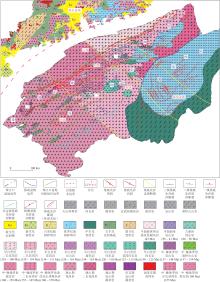
Fig.1
Geological overview of the basement and structural zoning of the Mesozoic continental-margin magmatic arcs in the PRMB"

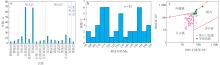
Fig.2
Basement overview of the PRMB"
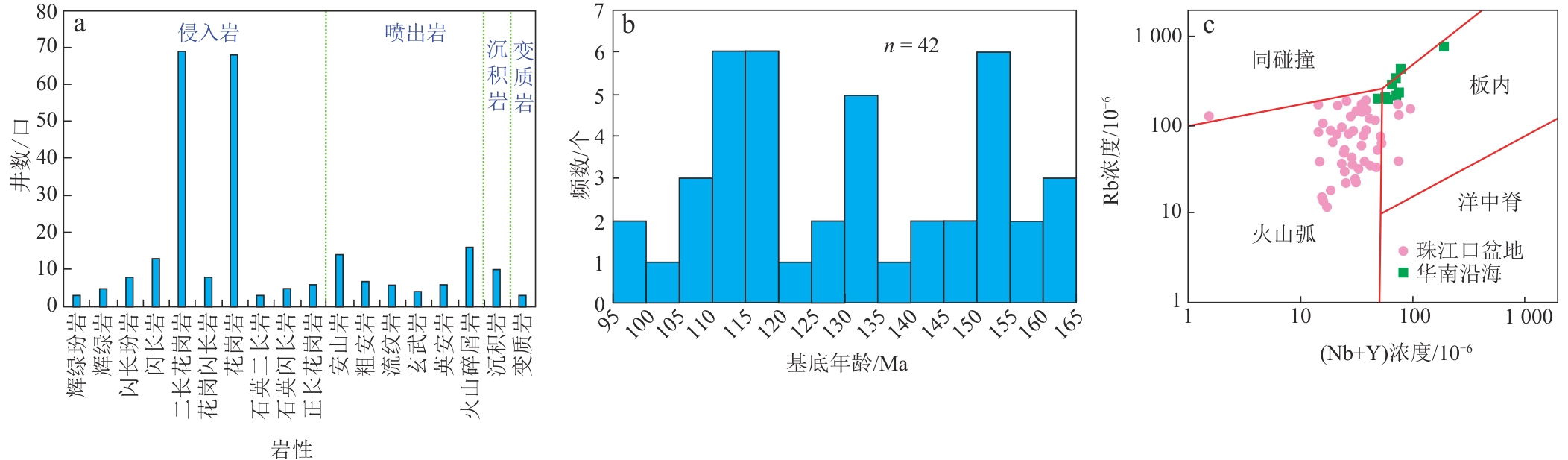
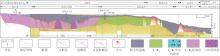
Fig.3
Interpretation of the seismic profile showing tectonic units along the continental margin of the northern South China Sea"

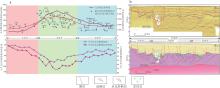
Fig.4
Structural characteristics of the various zones of magmatic arcs and developmental characteristics of the Cenozoic sub-sags in the PRMB"

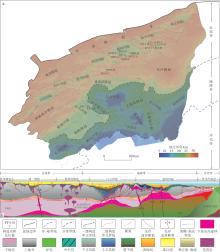
Fig.5
Planar distribution (a) and cross-sectional characteristics (b) of the ocean-continent system in the central section of the continental margin of the northern South China Sea"

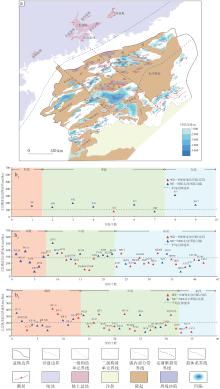
Fig.6
Distribution of sags and sub-sags in the PRMB and its adjacent areas (a) and the subsidence rates of the back-arc (b1), inner-arc (b2), and fore-arc (b3) zones of these sags and sub-sags during the deposition of the Wenchang Formation"

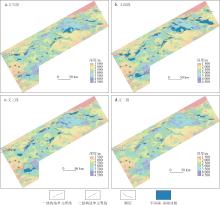
Fig.7
Regional distribution of semi-deep to deep lacustrine subfacies in the Eocene Wenchang Formation, PRMB, northern South China Sea"

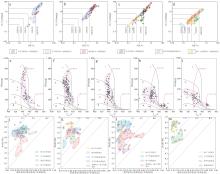
Fig.8
Comparison of the quality and kerogen types of source rocks at varying intervals of the Wenchang Formation and differences in the Eocene environments in different sub-sags within the PRMB"

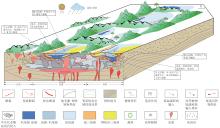
Fig.9
Schematic diagram showing differential hydrocarbon generation mechanisms in the setting of the PRMB, a composite continental-margin basin"

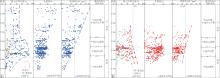
Fig.10
Clay mineral content and physical properties varying with depth in the western (a) and eastern (b) parts of the PRMB"

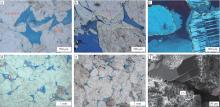
Fig.11
Micrographs showing the typical characteristics of high-quality reservoirs in the western (a—c) and eastern (d—f) parts of the PRMB"

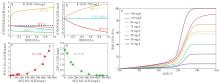
Fig.12
Simulation results of geochemical reaction pathways in the presence of potassium-rich and potassium-poor fluids in the western and eastern parts of the PRMB, respectively"


Fig.13
Genetic evolution models of rock-mineral assemblages and fluids in the western (a) and eastern (b) parts of the PRMB"

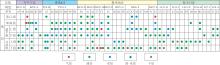
Fig.14
Cenozoic oil and gas shows in typical structures within key sub-sags of the PRMB"

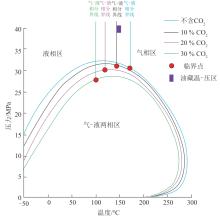
Fig. 15
Pressure-temperature (P-T) phase diagram of deep mixed fluids in the PRMB"
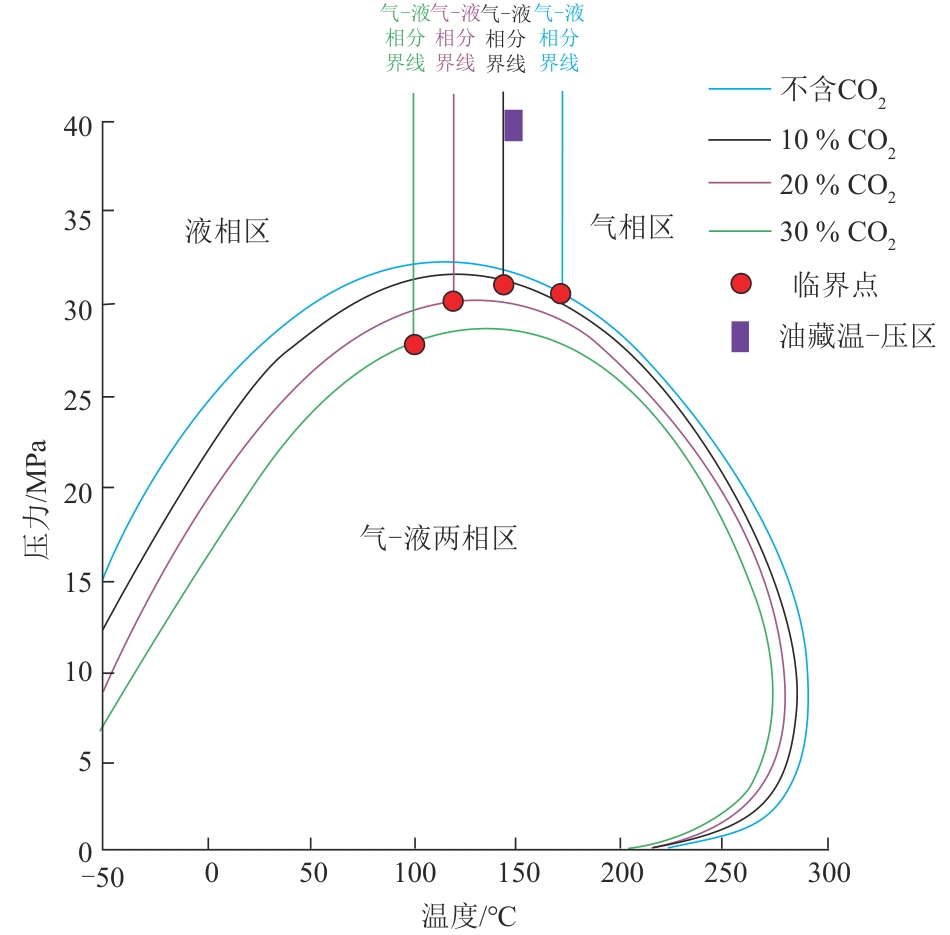
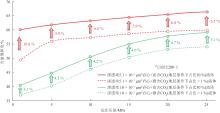
Fig.16
Dynamic evolution of the hydrocarbon charging efficiency in low-permeability reservoirs in the PRMB"

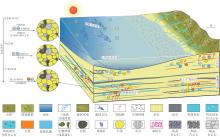
Fig.17
Schematic diagram showing the genetic model of dual cap rocks (i.e., transgressive calcareous sandstones and mudstones) for the Enping Formation, PRMB"

| 1 | FRANKE D. Rifting, lithosphere breakup and volcanism: Comparison of magma-poor and volcanic rifted margins[J]. Marine and Petroleum Geology, 2013, 43: 63-87. |
| 2 | ZHU Junjiang, QIU Xuelin, KOPP H, et al. Shallow anatomy of a continent-ocean transition zone in the northern South China Sea from multichannel seismic data[J]. Tectonophysics, 2012, 554/557: 18-29. |
| 3 | LARSEN H C, MOHN G, NIRRENGARTEN M, et al. Rapid transition from continental breakup to igneous oceanic crust in the South China Sea[J]. Nature Geoscience, 2018, 11(10): 782-789. |
| 4 | 孙珍, 李付成, 林间, 等. 被动大陆边缘张-破裂过程与岩浆活动: 南海的归属[J]. 地球科学, 2021, 46(3): 770-789. |
| SUN Zhen, LI Fucheng, LIN Jian, et al. The rifting-breakup process of the passive continental margin and its relationship with magmatism: The attribution of the South China Sea[J]. Earth Science, 2021, 46(3): 770-789. | |
| 5 | WANG Pinxian, HUANG Chiyue, LIN Jian, et al. The South China Sea is not a mini-Atlantic: plate-edge rifting vs intra-plate rifting[J]. National Science Review, 2019, 6(5): 902-913. |
| 6 | FAN Chaoyan, XIA Shaohong, CAO Jinghe, et al. Seismic constraints on a remnant Mesozoic forearc basin in the northeastern South China Sea[J]. Gondwana Research, 2022, 102: 77-94. |
| 7 | LI Fucheng, SUN Zhen, YANG Hongfeng. Possible spatial distribution of the Mesozoic volcanic arc in the present-day South China Sea continental margin and its tectonic implications[J]. Journal of Geophysical Research: Solid Earth, 2018, 123(8): 6215-6235. |
| 8 | SUO Yanhui, LI Sanzhong, JIN Chong, et al. Eastward tectonic migration and transition of the Jurassic-Cretaceous Andean-type continental margin along Southeast China[J]. Earth-Science Reviews, 2019, 196: 102884. |
| 9 | 高阳东, 张向涛, 张丽丽, 等. 珠江口盆地中生代陆缘岩浆弧地质特征及构造背景[J]. 地球科学, 2022, 47(7): 2317-2327. |
| GAO Yangdong, ZHANG Xiangtao, ZHANG Lili, et al. Geological characteristics and tectonic settings of Mesozoic continental margin magmatic arc in Pearl River Mouth Basin[J]. Earth Science, 2022, 47(7): 2317-2327. | |
| 10 | 张成晨, 许长海, 何敏, 等. 东海到南海晚中生代岩浆弧及陆缘汇聚体制综述[J]. 地球科学进展, 2019, 34(9): 950-961. |
| ZHANG Chengchen, XU Changhai, HE Min, et al. Late Mesozoic convergent continental margin with magmatic arc from east to South China Seas: A review[J]. Advances in Earth Science, 2019, 34(9): 950-961. | |
| 11 | 朱伟林, 徐旭辉, 王斌, 等. 华南晚中生代陆弧迁移与海域盆地演化[J]. 地学前缘, 2022, 29(6): 277-290. |
| ZHU Weilin, XU Xuhui, WANG Bin, et al. Late Mesozoic continental arc migration in southern China and its effects on the evolution of offshore forearc basins[J]. Earth Science Frontiers, 2022, 29(6): 277-290. | |
| 12 | 高阳东, 刘军, 彭光荣, 等. 珠江口盆地油气勘探新领域及资源潜力[J]. 石油学报, 2024, 45(1): 183-201. |
| GAO Yangdong, LIU Jun, PENG Guangrong, et al. New fields and resource potential of oil and gas exploration in Pearl River Mouth Basin[J]. Acta Petrolei Sinica, 2024, 45(1): 183-201. | |
| 13 | 刘军, 蔡哲, 庞雄奇, 等. 珠江口盆地陆丰凹陷古近系多动力-多期次-多要素复合成藏区定量预测与评价[J]. 地球科学, 2022, 47(7): 2481-2493. |
| LIU Jun, CAI Zhe, PANG Xiongqi, et al. Quantitative prediction and evaluation of Paleogene favorable hydrocarbon accumulation areas with multi-dynamic-stage-factor combination in Lufeng Sag, Pearl River Mouth Basin[J]. Earth Science, 2022, 47(7): 2481-2493. | |
| 14 | 王梓颐, 李洪博, 郑金云, 等. 珠江口盆地番禺27洼裂陷期构造演化及其对源-汇系统的控制[J]. 石油与天然气地质, 2023, 44(3): 626-636. |
| WANG Ziyi, LI Hongbo, ZHENG Jinyun, et al. Structural evolution and its control on source-to-sink system of Panyu 27 Sag in Pearl River Mouth Basin during rifting[J]. Oil & Gas Geology, 2023, 44(3): 626-636. | |
| 15 | 徐长贵, 高阳东, 刘军, 等. 南海东部富砂砾型大中型油气田发现与启示——以珠江口盆地惠州26洼古近系恩平组为例[J]. 石油勘探与开发, 2024, 51(1): 14-27. |
| XU Changgui, GAO Yangdong, LIU Jun, et al. Discovery and inspiration of large-and medium-sized glutenite-rich oil and gas fields in the eastern South China Sea: An example from Paleogene Enping Formation in Huizhou 26 subsag, Pearl River Mouth Basin[J]. Petroleum Exploration and Development, 2024, 51(1): 14-27. | |
| 16 | 徐长贵, 高阳东, 刘军, 等. 珠江口盆地开平南大型深水深层油田发现与认识创新[J]. 中国海上油气, 2024, 36(1): 1-13. |
| XU Changgui, GAO Yangdong, LIU Jun, et al. Discovery of large deep-water and deep-formation oilfield in South Kaiping Sag of Pearl River Mouth Basin and new geological understandings[J]. China Offshore Oil and Gas, 2024, 36(1): 1-13. | |
| 17 | 徐长贵, 高阳东, 刘军, 等. 珠江口盆地西江凹陷番禺4洼古近系勘探重大发现及其意义[J]. 石油学报, 2024, 45(7): 1031-1043. |
| XU Changgui, GAO Yangdong, LIU Jun, et al. Major discoveries and significance of hydrocarbon exploration in the Paleogene reservoirs of Panyu 4 subsag, Xijiang Sag, Pearl River Mouth Basin[J]. Acta Petrolei Sinica, 2024, 45(7): 1031-1043. | |
| 18 | LI Zhengxiang, LI Xianhua. Formation of the 1300-km-wide intracontinental orogen and postorogenic magmatic province in Mesozoic South China: A flat-slab subduction model[J]. Geology, 2007, 35(2): 179-182. |
| 19 | LI Zhengxiang, LI Xianhua, CHUNG S L, et al. Magmatic switch-on and switch-off along the South China continental margin since the Permian: Transition from an Andean-type to a Western Pacific-type plate boundary[J]. Tectonophysics, 2012, 532/535: 271-290. |
| 20 | XU Changhai, SHI Hesheng, BARNES C G, et al. Tracing a late Mesozoic magmatic arc along the southeast Asian margin from the granitoids drilled from the northern South China Sea[J]. International Geology Review, 2016, 58(1): 71-94. |
| 21 | XU Changhai, ZHANG Lu, SHI Hesheng, et al. Tracing an Early Jurassic magmatic arc from south to east China seas[J]. Tectonics, 2017, 36(3): 466-492. |
| 22 | CUI Yuchi, SHAO Lei, LI Zhengxiang, et al. A Mesozoic Andean-type active continental margin along coastal South China: New geological records from the basement of the northern South China Sea[J]. Gondwana Research, 2021, 99: 36-52. |
| 23 | 彭光荣,王绪诚,陈维涛,等. 珠江口盆地惠州26洼东南缘古近系恩平组上段断-拗转换期源-汇系统及勘探意义[J]. 石油与天然气地质, 2023, 44(3): 613-625. |
| PENG Guangrong, WANG Xucheng, CHEN Weitao, et al. Source-to-sink system during rifting-depression transition period and its exploration significance: A case study of the Upper Enping Formation at southeastern margin of Huizhou 26 sub-sag, Pearl River Mouth Basin[J]. Oil & Gas Geology, 2023, 44(3): 613-625. | |
| 24 | BUSBY C J, INGERSOLL R V. Tectonics of sedimentary basins[M]. Cambridge, Mass.: Blackwell Science, 1995. |
| 25 | YE Qing, MEI Lianfu, SHI Hesheng, et al. The Late Cretaceous tectonic evolution of the South China Sea area: An overview, and new perspectives from 3D seismic reflection data[J]. Earth-Science Reviews, 2018, 187: 186-204. |
| 26 | YE Qing, MEI Lianfu, SHI Hesheng, et al. The influence of pre-existing basement faults on the Cenozoic structure and evolution of the proximal domain, northern South China Sea rifted margin[J]. Tectonics, 2020, 39(3): e2019TC005845. |
| 27 | YAN Pin, ZHOU Di, LIU Zhaoshu. A crustal structure profile across the northern continental margin of the South China Sea[J]. Tectonophysics, 2001, 338(1): 1-21. |
| 28 | DENG Hongdan, REN Jianye, PANG Xiong, et al. South China sea documents the transition from wide continental rift to continental break up[J]. Nature Communications, 2020, 11(1): 4583. |
| 29 | SUN Zhen, LIN Jian, QIU Ning, et al. The role of magmatism in the thinning and breakup of the South China Sea continental margin: Special topic: The South China Sea ocean drilling[J]. National Science Review, 2019, 6(5): 871-876. |
| 30 | HAO Shihao, MEI Lianfu, PANG Xiong, et al. Rifted margin with localized detachment and polyphase magmatism: A new model of the northern South China Sea[J]. GSA Bulletin, 2022, 135(7/8): 1667-1687. |
| 31 | 吴克强, 解习农, 裴健翔, 等. 超伸展陆缘盆地深部结构及油气勘探意义——以琼东南盆地为例[J]. 石油与天然气地质, 2023, 44(3): 651-661. |
| WU Keqiang, XIE Xinong, PEI Jianxiang, et al. Deep architecture of hyperextended marginal basin and implications for hydrocarbon exploration: A case study of Qiongdongnan Basin[J]. Oil & Gas Geology, 2023, 44(3): 651-661. | |
| 32 | PONGWAPEE S, MORLEY C K, WON-IN K. Impact of pre-existing fabrics and multi-phase oblique extension on Cenozoic fault patterns, Wichianburi sub-basin of the Phetchabun rift, Thailand[J]. Journal of Structural Geology, 2019, 118: 340-361. |
| 33 | WILSON J T. Did the Atlantic close and then re-open?[J]. Nature, 1966, 211(5050): 676-681. |
| 34 | HUERTA A D, HARRY D L. Wilson cycles, tectonic inheritance, and rifting of the North American Gulf of Mexico continental margin[J]. Geosphere, 2012, 8(2): 374-385. |
| 35 | TOMMASI A, VAUCHEZ A. Continental rifting parallel to ancient collisional belts: An effect of the mechanical anisotropy of the lithospheric mantle[J]. Earth and Planetary Science Letters, 2001, 185(1/2): 199-210. |
| 36 | 施和生, 杜家元, 梅廉夫, 等. 珠江口盆地惠州运动及其意义[J]. 石油勘探与开发, 2020, 47(3): 447-461. |
| SHI Hesheng, DU Jiayuan, MEI Lianfu, et al. Huizhou movement and its significance in Pearl River Mouth Basin, China[J]. Petroleum Exploration and Development, 2020, 47(3): 447-461. | |
| 37 | 张光亚, 马锋, 梁英波, 等. 全球深层油气勘探领域及理论技术进展[J]. 石油学报, 2015, 36(9): 1156-1166. |
| ZHANG Guangya, MA Feng, LIANG Yingbo, et al. Domain and theory-technology progress of global deep oil & gas exploration[J]. Acta Petrolei Sinica, 2015, 36(9): 1156-1166. | |
| 38 | 张功成, 纪沫, 陈莹, 等. 琼东南盆地 “气聚集带” 的成藏特征与勘探潜力[J]. 石油学报, 2024, 45(1): 226-240. |
| ZHANG Gongcheng, JI Mo, CHEN Ying, et al. Accumulation characteristics and exploration potentials of gas accumulation belt in Qiongdongnan Basin[J]. Acta Petrolei Sinica, 2024, 45(1): 226-240. | |
| 39 | 史玉玲, 龙祖烈, 张向涛, 等. 珠江口盆地恩平凹陷恩平17洼油气动态成藏过程[J]. 石油与天然气地质, 2023, 44(5): 1279-1289. |
| SHI Yuling, LONG Zulie, ZHANG Xiangtao, et al. Exploring the dynamic hydrocarbon accumulation process of the Enping 17 sub-sag in the Enping Sag, Pearl River Mouth Basin[J]. Oil & Gas Geology, 2023, 44(5): 1279-1289. | |
| 40 | 马兵山. 南海北部珠江口盆地新生代构造特征及其演化[D]. 北京: 中国石油大学(北京), 2020. |
| MA Bingshan. The Cenozoic structural characteristics and tectonic evolution of the Pearl River Mouth Basin, northern South China Sea[D]. Beijing: China University of Petroleum(Beijing), 2020. | |
| 41 | PETERS K E. Guidelines for evaluating petroleum source rock using programmed pyrolysis[J]. AAPG Bulletin, 1986, 70(3): 318-329. |
| 42 | 朱俊章, 施和生, 舒誉, 等. 珠江口盆地烃源岩有机显微组分特征与生烃潜力分析[J]. 石油实验地质, 2007, 29(3): 301-306. |
| ZHU Junzhang, SHI Hesheng, SHU Yu, et al. Organic maceral characteristics and hydrocarbon-generating potentials of source rocks in the Pearl River Mouth Basin[J]. Petroleum Geology & Experiment, 2007, 29(3): 301-306. | |
| 43 | PETERS K E, WALTERS C C, MOLDOWAN J M. The biomarker guide. Volume 1, Biomarkers and isotopes in the environment and human history[M]. Cambridge: Cambridge University Press, 2005. |
| 44 | LIU Zhaoqian, MOLDOWAN J M, NEMCHENKO-ROVENSKAYA A, et al. Oil families and mixed oil of the North-Central West Siberian Basin, Russia[J]. AAPG Bulletin, 2016, 100(3): 319-343. |
| 45 | 刘豪, 徐长贵, 高阳东, 等. 断陷湖盆低勘探区源-汇系统与烃源岩预测——以珠江口盆地珠一坳陷北部洼陷区为例[J]. 石油与天然气地质, 2023, 44(3): 565-583. |
| LIU Hao, XU Changgui, GAO Yangdong, et al. Source-to-sink system and hydrocarbon source rock prediction of underexplored areas in rifted lacustrine basins: A case study on northern lows in Zhu Ⅰ Depression, Pearl River Mouth Basin[J]. Oil & Gas Geology, 2023, 44(3): 565-583. | |
| 46 | 操应长, 远光辉, 杨海军, 等. 含油气盆地深层—超深层碎屑岩油气勘探现状与优质储层成因研究进展[J]. 石油学报, 2022, 43(1): 112-140. |
| CAO Yingchang, YUAN Guanghui, YANG Haijun, et al. Current situation of oil and gas exploration and research progress of the origin of high-quality reservoirs in deep-ultra-deep clastic reservoirs of petroliferous basins[J]. Acta Petrolei Sinica, 2022, 43(1): 112-140. | |
| 47 | 唐晓音, 钟畅, 杨树春, 等. 中国海及邻区盆地现今地温场特征及其影响因素[J]. 地质学报, 2023, 97(3): 911-921. |
| TANG Xiaoyin, ZHONG Chang, YANG Shuchun, et al. Characteristics and influence factors of the present geothermal field for basins in China’s offshore and adjacent areas[J]. Acta Geologica Sinica, 2023, 97(3): 911-921. | |
| 48 | 远光辉, 彭光荣, 张丽丽, 等. 珠江口盆地白云凹陷古近系深层高变温背景下储层成岩作用与低渗致密化机制[J]. 石油与天然气地质, 2024, 45(1): 44-64. |
| YUAN Guanghui, PENG Guangrong, ZHANG Lili, et al. Diagenesis and low-permeability tightening mechanisms of the deep Paleogene reservoirs under high temperature and highly variable geothermal gradients in the Baiyun Sag, Pearl River Mouth Basin[J]. Oil & Gas Geology, 2024, 45(1): 44-64. | |
| 49 | NADEAU P H, SUN Shaoqing, EHRENBERG S N. The “Golden Zone” temperature distribution of oil and gas occurrence examined using a global empirical database[J]. Marine and Petroleum Geology, 2023, 158(Part A): 106507. |
| 50 | 马文睿. 丽水凹陷幔源CO2充注对油气成藏的影响[J]. 复杂油气藏, 2023, 16(3): 282-288. |
| MA Wenrui. Influence of mantle-source CO2 charging on hydrocarbon accumulation in Lishui Sag[J]. Complex Hydrocarbon Reservoirs, 2023, 16(3): 282-288. | |
| 51 | ZHU Dongya, LIU Quanyou, MENG Qingqiang, et al. Enhanced effects of large-scale CO2 transportation on oil accumulation in oil-gas-bearing basins—Implications from supercritical CO2 extraction of source rocks and a typical case study[J]. Marine and Petroleum Geology, 2018, 92: 493-504. |
| 52 | HOU Dali, JIA Ying, SHI Yunqing, et al. Experimental study on the effect of CO2 on phase behavior characteristics of condensate gas reservoir[J]. Journal of Chemistry, 2020, 2020(1): 6041081. |
| 53 | ZHANG Angang, FAN Zifei, ZHAO Lun. An investigation on phase behaviors and displacement mechanisms of gas injection in gas condensate reservoir[J]. Fuel, 2020, 268: 117373. |
| 54 | 李威, 窦立荣, 文志刚, 等. 幔源CO2对中非裂谷系油气成藏的影响:以Palogue油田为例[J]. 地球科学, 2024, 49(10): 3488-3498. |
| LI Wei, DOU Lirong, WEN Zhigang, et al. Effect of mantle-derived CO2 on hydrocarbon accumulation in Central African rift system: A case study of Palogue Oilfield[J]. Earth Science, 2024, 49(10): 3488-3498. | |
| 55 | 王璐, 张一帆, 刘逸盛, 等. 页岩储层原油赋存特征及CO2-原油竞争吸附机制分子动力学[J]. 中国石油大学学报(自然科学版), 2023, 47(4): 128-136. |
| WANG Lu, ZHANG Yifan, LIU Yisheng, et al. Molecular dynamics analysis on occurrence characteristics of shale oil and competitive adsorption mechanism of CO2 and oil[J]. Journal of China University of Petroleum (Edition of Natural Science), 2023, 47(4): 128-136. | |
| 56 | 许淑梅, 吴鹏, 张威, 等. 南海关键地质历史时期的古海岸线变化[J]. 海洋地质与第四纪地质, 2013, 33(1): 1-10. |
| XU Shumei, WU Peng, ZHANG Wei, et al. Paleo-coastline changes in South China Sea in some critical times[J]. Marine Geology & Quaternary Geology, 2013, 33(1): 1-10. | |
| 57 | 高阳东, 林鹤鸣, 汪旭东, 等. 幕式裂陷控洼背景下的烃源岩分布及岩浆改造——以珠一坳陷番禺4洼为例[J]. 海洋地质与第四纪地质, 2021, 41(3): 151-160. |
| GAO Yangdong, LIN Heming, WANG Xudong, et al. Source rock distribution pattern in an episodic rifting sag and later stage magmatiic reformation: A case from Panyu 4 Sag, Zhu I Depression[J]. Marine Geology & Quaternary Geology, 2021, 41(3): 151-160. |
| [1] | Xingxing WANG, Xing WAN, Yunlong HE, Qiling SUN. Impact of bottom currents in the northern South China Sea on deep-water depositional systems and their petroleum geological implications [J]. Oil & Gas Geology, 2025, 46(3): 827-845. |
| [2] | Xueyan LU, Zhe CAO, Guangqing YANG, Yuyin ZHANG, Jingjing LIU, Jin LI, Zhongmin ZHANG. Characteristics and formation mechanisms of the clastic reservoirs in the Paleozoic cratonic basins of North Africa [J]. Oil & Gas Geology, 2025, 46(3): 944-958. |
| [3] | Rui LI, Jiao YANG, Yukun CHAI, Hua WANG, Jianwen DAI, Yonghui DENG, Shuang SUN, Xiaolin MA, Tengfei TIAN. A novel sedimentary pattern of wave-induced sandbars under high-angle wave incidence [J]. Oil & Gas Geology, 2024, 45(2): 530-541. |
| [4] | Guanghui YUAN, Guangrong PENG, Lili ZHANG, Hui SUN, Shuhui CHEN, Hao LIU, Xiaoyang ZHAO. Diagenesis and low-permeability tightening mechanisms of the deep Paleogene reservoirs under high temperature and highly variable geothermal gradients in the Baiyun Sag, Pearl River Mouth Basin [J]. Oil & Gas Geology, 2024, 45(1): 44-64. |
| [5] | Yuling SHI, Zulie LONG, Xiangtao ZHANG, Huahua WEN, Xiaonan MA. Exploring the dynamic hydrocarbon accumulation process of the Enping 17 sub-sag in the Enping Sag, Pearl River Mouth Basin [J]. Oil & Gas Geology, 2023, 44(5): 1279-1289. |
| [6] | Guangrong PENG, Xucheng WANG, Weitao CHEN, Yaoyao JIN, Fei WANG, Wenyong WANG, Han QUAN. Source-to-sink system during rifting-depression transition period and its exploration significance: A case study of the Upper Enping Formation at southeastern margin of Huizhou 26 sub-sag, Pearl River Mouth Basin [J]. Oil & Gas Geology, 2023, 44(3): 613-625. |
| [7] | Jun LIU, Guangrong PENG, Jinyun ZHENG, Song CAI, Dingwei ZHU, Ziyi WANG. Sedimentary transformation and source-to-sink response to the Eocene rifting-detachment in the western Baiyun Sag, Pearl River Mouth Basin [J]. Oil & Gas Geology, 2023, 44(3): 600-612. |
| [8] | Yangdong GAO, Guangrong PENG, Xiangtao ZHANG, Xudong WANG, Hui SUN, Taixun LIU, Fengchun SUN. Characteristics and evolution of the source-to-sink system of the Paleogene Wenchang Formation in Baiyun Sag, Pearl River Mouth Basin [J]. Oil & Gas Geology, 2023, 44(3): 584-599. |
| [9] | Hao LIU, Changgui XU, Yangdong GAO, Heming LIN, Xinwei QIU, Yongtao JU, Xudong WANG, Lei LI, Jun MENG, Xiaoming QUE. Source-to-sink system and hydrocarbon source rock prediction of underexplored areas in rifted lacustrine basins: A case study on northern lows in Zhu Ⅰ Depression, Pearl River Mouth Basin [J]. Oil & Gas Geology, 2023, 44(3): 565-583. |
| [10] | Keqiang WU, Xinong XIE, Jianxiang PEI, Jianye REN, Li YOU, Tao JIANG, Yongbin QUAN. Deep architecture of hyperextended marginal basin and implications for hydrocarbon exploration:A case study of Qiongdongnan Basin [J]. Oil & Gas Geology, 2023, 44(3): 651-661. |
| [11] | Weitao Chen, Shaohua Xu, Zhen Sun, Min He, Jiali Yao, Yingmin Wang, Haiteng Zhuo. Application of standardized sequence stratigraphy theory in the shelf break-to-slope area: A case study of the Middle Miocene sedimentary sequence in the PRMB [J]. Oil & Gas Geology, 2021, 42(6): 1414-1422. |
| [12] | Dongdong Zhang, Wenhui Liu, Xiaofeng Wang, Houyong Luo, Qingtao Wang, Yining Li, Fengjiao Li. Genetic types and characteristics of deep oil and gas plays [J]. Oil & Gas Geology, 2021, 42(5): 1169-1180. |
| [13] | Meijun Li, Xiaoqiang Liu, Qiuya Han, Hong Xiao, Ronghui Fang, Daxiang He, Zhiwei Gao. Progress of molecular simulation application research in petroleum geochemistry [J]. Oil & Gas Geology, 2021, 42(4): 919-930. |
| [14] | Yi Tu, Zhenghe Yan, Jianwen Dai, Yahui Wang, YiDong Zhu, Yong Yang, Jiao Yang, Weifeng Wang. New understanding and tapping effect of remaining oil reservoirs in Xijiang oilfield, PRBM, South China Sea [J]. Oil & Gas Geology, 2021, 42(2): 522-532. |
| [15] | Ying Chen, Yinxue Han, Lizeng Bian, Qingbo Zeng, Shuai Guo, Mo Ji, Dongsheng Yang, Longying Wang. Difference between eastern and western Paleogene sedimentary systems in deep waters off the northern South China Sea continental margin and its effect on source rock distribution [J]. Oil & Gas Geology, 2020, 41(5): 1028-1037. |
| Viewed | ||||||
|
Full text |
|
|||||
|
Abstract |
|
|||||
