

Oil & Gas Geology ›› 2025, Vol. 46 ›› Issue (3): 1006-1018.doi: 10.11743/ogg20250321
• Methods and Technologies • Previous Articles Next Articles
Rui WANG1,2,3( ), Chuntong LIU1,2,3, Songye WU1,2,3, Hui HUA1,2,3
Received:2024-09-29
Revised:2024-12-26
Online:2025-06-30
Published:2025-06-26
CLC Number:
Rui WANG, Chuntong LIU, Songye WU, Hui HUA. Proxy of paleo-seawater pH reconstruction based on boron isotopes of marine carbonates and its applications[J]. Oil & Gas Geology, 2025, 46(3): 1006-1018.
Add to citation manager EndNote|Reference Manager|ProCite|BibTeX|RefWorks

Fig. 1
Distribution of boron isotopic composition in nature (modified after reference [39])"


Fig. 2
Boron cycling patterns (inputs and outputs) in oceans (modified after references [37, 40])"

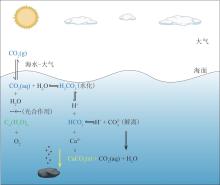
Fig. 3
Schematic diagram showing the regulation of seawater pH by the carbonate system"


Fig. 4
Relationships of boron occurrence forms and isotopic composition with seawater pH"

Table 1
Summary of methods for calculating the boron isotope fractionation coefficient"
| 方法 | 分馏系数(α4-3) | 特点 | 参考文献 |
|---|---|---|---|
| 分子轨道理论法 | 0.965 0 ~ 0.980 0 | 从微观角度深入理解,精确度高,但计算量大,成本高,对于参数的选择依赖性强 | [ |
| 水滴法 | 0.974 0 | 可准确模拟分子的不同溶液环境下的实际情况,但计算成本高,且可能不适用于复杂环境体系 | [ |
| 分光光度法 | 0.972 0 | 可直接测量,适合实际水样的分析计算,但对实验条件精确度要求高 | [ |
| 活体珊瑚测定法 | 0.978 8 | 对自然样品的硼同位素理解深入,但成本高,样品需求量大,且易受样品的选择和处理过程影响 | [ |
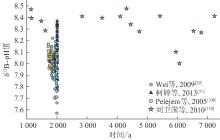
Fig. 5
Timeline of paleo-seawater pH reconstructed from corals[29, 31, 108, 110]"

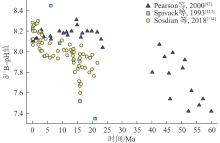
Fig. 6
Timeline of paleo-seawater pH reconstructed from foraminifer[93, 113, 114]"

| 1 | HALEVY I, BACHAN A. The geologic history of seawater pH[J]. Science, 2017, 355(6329): 1069-1071. |
| 2 | VENGOSH A, KOLODNY Y, STARINSKY A, et al. Coprecipitation and isotopic fractionation of boron in modern biogenic carbonates[J]. Geochimica et Cosmochimica Acta, 1991, 55(10): 2901-2910. |
| 3 | HEMMING N G, HANSON G N. Boron isotopic composition and concentration in modern marine carbonates[J]. Geochimica et Cosmochimica Acta, 1992, 56(1): 537-543. |
| 4 | ISHIKAWA T, NAKAMURA E. Boron isotope systematics of marine sediments[J]. Earth and Planetary Science Letters, 1993, 117(3/4): 567-580. |
| 5 | SANYAL A, HEMMING N G, HANSON G N, et al. Evidence for a higher pH in the glacial ocean from boron isotopes in foraminifera[J]. Nature, 1995, 373(6511): 234-236. |
| 6 | ROBERTS J, KACZMAREK K, LANGER G, et al. Lithium isotopic composition of benthic foraminifera: A new proxy for paleo-pH reconstruction[J]. Geochimica et Cosmochimica Acta, 2018, 236: 336-350. |
| 7 | VIGIER N, ROLLION-BARD C, LEVENSON Y, et al. Lithium isotopes in foraminifera shells as a novel proxy for the ocean dissolved inorganic carbon (DIC)[J]. Comptes Rendus Geoscience, 2015, 347(1): 43-51. |
| 8 | BIRKS H J B, BRAAK C J F T, LINE J M, et al. Diatoms and pH reconstruction[J]. Philosophical Transactions of the Royal Society of London. B, Biological Sciences, 1990, 327(1240): 263-278. |
| 9 | GINN B K, STEWART L J, CUMMING B F, et al. Surface-water acidification and reproducibility of sediment cores from Kejimkujik Lake, Nova Scotia, Canada[J]. Water, Air, and soil Pollution, 2007, 183(1): 15-24. |
| 10 | XIAO Wenjie, WANG Yinghui, ZHOU Shangzhe, et al. Ubiquitous production of branched glycerol dialkyl glycerol tetraethers (brGDGTs) in global marine environments: A new source indicator for brGDGTs[J]. Biogeosciences, 2016, 13(20): 5883-5894. |
| 11 | WANG Canfa, BENDLE J, YANG Yi, et al. Impacts of pH and temperature on soil bacterial 3-hydroxy fatty acids: Development of novel terrestrial proxies[J]. Organic Geochemistry, 2016, 94: 21-31. |
| 12 | 石鑫, 宋金明, 李学刚, 等. 海洋古pH重建的技术方法[J]. 海洋环境科学, 2019, 38(6): 954-962. |
| SHI Xin, SONG Jinming, LI Xuegang, et al. Methods for reconstruction of oceanic paleo-pH[J]. Marine Environmental Science, 2019, 38(6): 954-962. | |
| 13 | WANG Yijing, WEI Haizhen, JIANG Shaoyong, et al. Mechanism of boron incorporation into calcites and associated isotope fractionation in a steady-state carbonate-seawater system[J]. Applied Geochemistry, 2018, 98: 221-236. |
| 14 | ZHANG Shuang, HENEHAN M J, HULL P M, et al. Investigating controls on boron isotope ratios in shallow marine carbonates[J]. Earth and Planetary Science Letters, 2017, 458: 380-393. |
| 15 | TAYLOR S R, MCLENNAN S M. The continental crust: Its composition and evolution[M]. Oxford: Blackwell Scientific Publications, 1985. |
| 16 | GAILLARDET J, LEMARCHAND D. Boron in the weathering environment[M]//MARSCHALL H, FOSTER G. Boron Isotopes. Cham: Springer International Publishing, 2018: 163-188. |
| 17 | DEYHLE A, KOPF A. Deep fluids and ancient pore waters at the backstop: Stable isotope systematics (B, C, O) of mud-volcano deposits on the Mediterranean Ridge accretionary wedge[J]. Geology, 2001, 29(11): 1031-1034. |
| 18 | WILLIAMS L B, HERVIG R L. Boron isotope composition of coals: A potential tracer of organic contaminated fluids[J]. Applied Geochemistry, 2004, 19(10): 1625-1636. |
| 19 | HOGAN J F, BLUM J D. Boron and lithium isotopes as groundwater tracers: A study at the Fresh Kills Landfill, Staten Island, New York, USA[J]. Applied Geochemistry, 2003, 18(4): 615-627. |
| 20 | RYAN J G, LEEMAN W P, MORRIS J D, et al. The boron systematics of intraplate lavas: Implications for crust and mantle evolution[J]. Geochimica et Cosmochimica Acta, 1996, 60(3): 415-422. |
| 21 | 蒋少涌, 于际民, 凌洪飞, 等. 壳-幔演化和板块俯冲作用过程中的硼同位素示踪[J]. 地学前缘, 2000, 7(2): 391-399. |
| JIANG Shaoyong, YU Jimin, LING Hongfei, et al. Boron isotope as a tracer in the study of crust-mantle evolution and subduction processes[J]. Earth Science Frontiers, 2000, 7(2): 391-399. | |
| 22 | PALMER M R. Boron cycling in subduction zones[J]. Elements, 2017, 13(4): 237-242. |
| 23 | GUO Shun, ZHAO Kuidong, JOHN T, et al. Metasomatic flow of metacarbonate-derived fluids carrying isotopically heavy boron in continental subduction zones: Insights from tourmaline-bearing ultra-high pressure eclogites and veins (Dabie terrane, eastern China)[J]. Geochimica et Cosmochimica Acta, 2019, 253: 159-200. |
| 24 | LI Yinchuan, WEI Haizhen, PALMER M R, et al. Equilibrium boron isotope fractionation during serpentinization and applications in understanding subduction zone processes[J]. Chemical Geology, 2022, 609: 121047. |
| 25 | PALMER M R, SLACK J F. Boron isotopic composition of tourmaline from massive sulfide deposits and tourmalinites[J]. Contributions to Mineralogy and Petrology, 1989, 103(4): 434-451. |
| 26 | SU Zhikun, ZHAO Xinfu, LI Xiaochun, et al. Using elemental and boron isotopic compositions of tourmaline to trace fluid evolutions of IOCG systems: The worldclass Dahongshan FeCu deposit in SW China[J]. Chemical Geology, 2016, 441: 265-279. |
| 27 | CODEÇO M S, WEIS P, TRUMBULL R B, et al. Chemical and boron isotopic composition of hydrothermal tourmaline from the Panasqueira W-Sn-Cu deposit, Portugal[J]. Chemical Geology, 2017, 468: 1-16. |
| 28 | YANG Shuiyuan, JIANG Shaoyong, PALMER M R. Chemical and boron isotopic compositions of tourmaline from the Nyalam leucogranites, South Tibetan Himalaya: Implication for their formation from B-rich melt to hydrothermal fluids[J]. Chemical Geology, 2015, 419: 102-113. |
| 29 | WEI Gangjian, MCCULLOCH M T, MORTIMER G, et al. Evidence for ocean acidification in the Great Barrier Reef of Australia[J]. Geochimica et Cosmochimica Acta, 2009, 73(8): 2332-2346. |
| 30 | XIAO Jun, XIAO Yingkai, JIN Zhangdong, et al. Boron isotopic compositions in growing corals from the South China Sea[J]. Journal of Asian Earth Sciences, 2013, 62: 561-567. |
| 31 | 柯婷, 韦刚健, 刘颖, 等. 南海北部珊瑚高分辨率硼同位素组成及其对珊瑚礁海水pH变化的指示意义[J]. 地球化学, 2015, 44(1): 1-8. |
| KE Ting, WEI Gangjian, LIU Ying, et al. High resolution boron isotopic compositions of a coral from the northern South China Sea and their implications for reconstruction of seawater pH[J]. Geochimica, 2015, 44(1): 1-8. | |
| 32 | 裴健翔, 郭潇潇, 薛海涛, 等. 莺歌海盆地中新统海相烃源岩形成环境及控制因素[J]. 石油与天然气地质, 2023, 44(4): 937-945. |
| PEI Jianxiang, GUO Xiaoxiao, XUE Haitao, et al. Environment and controlling factors of the Miocene marine source rocks in the Yinggehai Basin[J]. Oil & Gas Geology, 2023, 44(4): 937-945. | |
| 33 | WEI Haizhen, ZHAO Yao, LIU Xi, et al. Evolution of paleo-climate and seawater pH from the Late Permian to postindustrial periods recorded by boron isotopes and B/Ca in biogenic carbonates[J]. Earth-Science Reviews, 2021, 215: 103546. |
| 34 | XIAO J, JIN Z D, XIAO Y K, et al. Controlling factors of the δ11B-pH proxy and its research direction[J]. Environmental Earth Sciences, 2014, 71(4): 1641-1650. |
| 35 | FARMER J R, HÖNISCH B, ROBINSON L F, et al. Effects of seawater-pH and biomineralization on the boron isotopic composition of deep-sea bamboo corals[J]. Geochimica et Cosmochimica Acta, 2015, 155: 86-106. |
| 36 | NIR O, VENGOSH A, HARKNESS J S, et al. Direct measurement of the boron isotope fractionation factor: Reducing the uncertainty in reconstructing ocean paleo-pH[J]. Earth and Planetary Science Letters, 2015, 414: 1-5. |
| 37 | GREENOP R, HAIN M P, SOSDIAN S M, et al. A record of Neogene seawater δ11B reconstructed from paired δ11B analyses on benthic and planktic foraminifera[J]. Climate of the Past, 2017, 13(2): 149-170. |
| 38 | 刘羿, 张春雷. 南海北部滨珊瑚硼同位素气候环境指示意义再研究[J]. 第四纪研究, 2017, 37(5): 1055-1063. |
| LIU Yi, ZHANG Chunlei. Revisiting paleoceanographic application of δ11B in coral Porites from the northern South China Sea[J]. Quaternary Sciences, 2017, 37(5): 1055-1063. | |
| 39 | 肖军, 肖应凯, 金章东, 等. 活体珊瑚微量元素对硼同位素组成影响及硼掺入珊瑚的形式[J]. 地球化学, 2012, 41(5): 401-410. |
| XIAO Jun, XIAO Yingkai, JIN Zhangdong, et al. The influence of trace elements on boron isotopic composition of living corals and the incorporation species of boron into corals[J]. Geochimica, 2012, 41(5): 401-410. | |
| 40 | LEMARCHAND D, GAILLARDET J, LEWIN E, et al. The influence of rivers on marine boron isotopes and implications for reconstructing past ocean pH[J]. Nature, 2000, 408(6815): 951-954. |
| 41 | LEMARCHAND D, GAILLARDET J, LEWIN É, et al. Boron isotope systematics in large rivers: Implications for the marine boron budget and paleo-pH reconstruction over the Cenozoic[J]. Chemical Geology, 2002, 190(1/4): 123-140. |
| 42 | ROSE E F, CHAUSSIDON M, FRANCE-LANORD C. Fractionation of boron isotopes during erosion processes: the example of Himalayan rivers[J]. Geochimica et Cosmochimica Acta, 2000, 64(3): 397-408. |
| 43 | CHETELAT B, GAILLARDET J. Boron isotopes in the Seine River, France: A probe of anthropogenic contamination[J]. Environmental Science & Technology, 2005, 39(8): 2486-2493. |
| 44 | SPIVACK A J, PALMER M R, EDMOND J M. The sedimentary cycle of the boron isotopes[J]. Geochimica et Cosmochimica Acta, 1987, 51(7): 1939-1949. |
| 45 | KOPF A, DEYHLE A. Back to the roots: Boron geochemistry of mud volcanoes and its implications for mobilization depth and global B cycling[J]. Chemical Geology, 2002, 192(3/4): 195-210. |
| 46 | PALMER M R, SPIVACK A J, EDMOND J M. Temperature and pH controls over isotopic fractionation during adsorption of boron on marine clay[J]. Geochimica et Cosmochimica Acta, 1987, 51(9): 2319-2323. |
| 47 | MEYBECK M. Global chemical weathering of surficial rocks estimated from river dissolved loads[J]. American Journal of Science, 1987, 287(5): 401-428. |
| 48 | SMITH H J, SPIVACK A J, STAUDIGEL H, et al. The boron isotopic composition of altered oceanic crust[J]. Chemical Geology, 1995, 126(2): 119-135. |
| 49 | HART S R, STAUDIGEL H. The control of alkalies and uranium in seawater by ocean crust alteration[J]. Earth and Planetary Science Letters, 1982, 58(2): 202-212. |
| 50 | YOU Chenfeng, SPIVACK A J, SMITH J H, et al. Mobilization of boron in convergent margins: Implications for the boron geochemical cycle[J]. Geology, 1993, 21(3): 207-210. |
| 51 | MARSCHALL H R. Boron isotopes in the ocean floor realm and the mantle[M]//MARSCHALL H, FOSTER G. Boron Isotopes. Cham: Springer International Publishing, 2018: 189-215. |
| 52 | YOU Cf, SPIVACK A J, GIESKES J M, et al. Experimental study of boron geochemistry: Implications for fluid processes in subduction zones[J]. Geochimica et Cosmochimica Acta, 1995, 59(12): 2435-2442. |
| 53 | SPIVACK A J, EDMOND J M. Boron isotope exchange between seawater and the oceanic crust[J]. Geochimica et Cosmochimica Acta, 1987, 51(5): 1033-1043. |
| 54 | SCHWARCZ H P, AGYEI E K, MCMULLEN C C. Boron isotopic fractionation during clay adsorption from sea-water[J]. Earth and Planetary Science Letters, 1969, 6(1): 1-5. |
| 55 | MARSCHALL H R, WANLESS V D, SHIMIZU N, et al. The boron and lithium isotopic composition of mid-ocean ridge basalts and the mantle[J]. Geochimica et Cosmochimica Acta, 2017, 207: 102-138. |
| 56 | FOSTER G L, POGGE VON STRANDMANN P A E, RAE J W B. Boron and magnesium isotopic composition of seawater[J]. Geochemistry, Geophysics, Geosystems, 2010, 11(8): Q08015. |
| 57 | JIANG Wanjun, SHENG Yizhi, WANG Guangcai, et al. Cl, Br, B, Li, and noble gases isotopes to study the origin and evolution of deep groundwater in sedimentary basins: A review[J]. Environmental Chemistry Letters, 2022, 20(2): 1497-1528. |
| 58 | DE HOOG J C M, SAVOV I P. Boron isotopes as a tracer of subduction zone processes[M]//MARSCHALL H, FOSTER G. Boron Isotopes. Cham: Springer International Publishing, 2018: 217-247. |
| 59 | COOPER G F, MACPHERSON C G, BLUNDY J D, et al. Variable water input controls evolution of the Lesser Antilles volcanic arc[J]. Nature, 2020, 582(7813): 525-529. |
| 60 | FURST M J. Boron in siliceous materials as a paleosalinity indicator[J]. Geochimica et Cosmochimica Acta, 1981, 45(1): 1-13. |
| 61 | HARDER H. Boron content of sediments as a tool in facies analysis[J]. Sedimentary Geology, 1970, 4(1/2): 153-175. |
| 62 | LERMAN A. Boron in clays and estimation of paleosalinities[J]. Sedimentology, 1966, 6(4): 267-286. |
| 63 | RAE J W B, FOSTER G L, SCHMIDT D N, et al. Boron isotopes and B/Ca in benthic foraminifera: Proxies for the deep ocean carbonate system[J]. Earth and Planetary Science Letters, 2011, 302(3/4): 403-413. |
| 64 | HEMMING N G, HANSON G N. A procedure for the isotopic analysis of boron by negative thermal ionization mass spectrometry[J]. Chemical Geology, 1994, 114(1/2): 147-156. |
| 65 | AL-AMMAR A, REITZNEROVÁ E, BARNES R M. Improving boron isotope ratio measurement precision with quadrupole inductively coupled plasma-mass spectrometry[J]. Spectrochimica Acta Part B: Atomic Spectroscopy, 2000, 55(12): 1861-1867. |
| 66 | LEMARCHAND D, GAILLARDET J, GÖPEL C, et al. An optimized procedure for boron separation and mass spectrometry analysis for river samples[J]. Chemical Geology, 2002, 182(2/4): 323-334. |
| 67 | AGGARWAL J K, MEZGER K, PERNICKA E, et al. The effect of instrumental mass bias on δ11B measurements: A comparison between thermal ionisation mass spectrometry and multiple-collector ICP-MS[J]. International Journal of Mass Spectrometry, 2004, 232(3): 259-263. |
| 68 | FOSTER G L. Seawater pH, pCO2 and [CO2-3] variations in the Caribbean Sea over the last 130 kyr: A boron isotope and B/Ca study of planktic foraminifera[J]. Earth and Planetary Science Letters, 2008, 271(1/4): 254-266. |
| 69 | GUERROT C, MILLOT R, ROBERT M, et al. Accurate and high-precision determination of boron isotopic ratios at low concentration by MC-ICP-MS (Neptune)[J]. Geostandards and Geoanalytical Research, 2011, 35(2): 275-284. |
| 70 | MCCULLOCH M T, HOLCOMB M, RANKENBURG K, et al. Rapid, high-precision measurements of boron isotopic compositions in marine carbonates[J]. Rapid Communications in Mass Spectrometry, 2014, 28(24): 2704-2712. |
| 71 | AGGARWAL S K, YOU Chenfeng. A review on the determination of isotope ratios of boron with mass spectrometry[J]. Mass Spectrometry Reviews, 2017, 36(4): 499-519. |
| 72 | CHAUSSIDON M, ROBERT F. Nucleosynthesis of 11B-rich boron in the pre-solar cloud recorded in meteoritic chondrules[J]. Nature, 1995, 374(6520): 337-339. |
| 73 | 苏喜平, 杜爱兵, 韩晓辉, 等. 快堆控制棒组件用高富集度碳化硼芯块的热物理性能研究[J]. 山东陶瓷, 2015, 38(4): 3-5. |
| SU Xiping, DU Aibing, HAN Xiaohui, et al. Study on thermophysical properties of B4C pellets used as control material in fast reactor[J]. Shandong Ceramics, 2015, 38(4): 3-5. | |
| 74 | 冯林秀, 李正辉, 曹秋香, 等. 硼同位素分析测试技术研究进展[J]. 岩矿测试, 2023, 42(1): 16-38. |
| FENG Linxiu, LI Zhenghui, CAO Qiuxiang, et al. A review on the development of boron isotope analytical techniques[J]. Rock and Mineral Analysis, 2023, 42(1): 16-38. | |
| 75 | RAMAKUMAR K L, PARAB A R, KHODADE P S, et al. Determination of isotopic composition of boron[J]. Journal of Radioanalytical and Nuclear Chemistry, 1985, 94(1): 53-61. |
| 76 | SWIHART G H. Instrumental techniques for boron isotope analysis[J]. Reviews in Mineralogy and Geochemistry, 1996, 33(1): 845-862. |
| 77 | ISHIKAWA T, NAGAISHI K. High-precision isotopic analysis of boron by positive thermal ionization mass spectrometry with sample preheating[J]. Journal of Analytical Atomic Spectrometry, 2011, 26(2): 359-365. |
| 78 | KASEMANN S, MEIXNER A, ROCHOLL A, et al. Boron and oxygen isotope composition of certified reference materials NIST SRM 610/612 and reference materials JB-2 and JR-2[J]. Geostandards Newsletter, 2001, 25(2/3): 405-416. |
| 79 | YOU Chenfeng. Chapter 7-Thermal ionization mass spectrometry techniques for boron isotopic analysis: A review[M]//DE GROOT P A. Handbook of Stable Isotope Analytical Techniques. Amsterdam: Elsevier, 2004: 142-152. |
| 80 | CLARKSON M O, KASEMANN S A, WOOD R A, et al. Ocean acidification and the Permo-Triassic mass extinction[J]. Science, 2015, 348(6231): 229-232. |
| 81 | FARMER J R, HÖNISCH B, UCHIKAWA J. Single laboratory comparison of MC-ICP-MS and N-TIMS Boron isotope analyses in marine carbonates[J]. Chemical Geology, 2016, 447: 173-182. |
| 82 | AGGARWAL S K, WANG B S, YOU Chenfeng, et al. Fractionation correction methodology for precise and accurate isotopic analysis of boron by negative thermal ionization mass spectrometry based on BO2 - ions and using the 18O/16O ratio from ReO4 - for internal normalization[J]. Analytical Chemistry, 2009, 81(17): 7420-7427. |
| 83 | AGGARWAL J K, SHEPPARD D, MEZGER K, et al. Precise and accurate determination of boron isotope ratios by multiple collector ICP-MS: Origin of boron in the Ngawha geothermal system, New Zealand[J]. Chemical Geology, 2003, 199(3/4): 331-342. |
| 84 | VANDERPOOL R A, HOFF D, JOHNSON P E. Use of inductively coupled plasma-mass spectrometry in boron-10 stable isotope experiments with plants, rats, and humans[J]. Environmental Health Perspectives, 1994, 102(S7): 13-20. |
| 85 | 贺茂勇, 邓丽, 逯海, 等. NaF消除硼记忆效应的快速、高精度MC-ICP-MS硼同位素测定方法[C]//中国矿物岩石地球化学学会第17届学术年会论文摘要集. 贵阳: 中国矿物岩石地球化学学会, 2019: 1018. |
| HE Maoyong, DENG Li, LU Hai, et al. Rapid and high-precision MC-ICP-MS boron isotope determination method for eliminating boron memory effect using NaF[C]//Abstract Collection of Papers from the 17th Annual Conference of the Chinese Society of Mineral, Rock and Geochemistry. Guiyang: Chinese Society for Mineralogy Petrology and Geochemistry, 2019: 1018. | |
| 86 | ROLLION-BARD C, CHAUSSIDON M, FRANCE-LANORD C. pH control on oxygen isotopic composition of symbiotic corals[J]. Earth and Planetary Science Letters, 2003, 215(1/2): 275-288. |
| 87 | BLAMART D, ROLLION-BARD C, MEIBOM A, et al. Correlation of boron isotopic composition with ultrastructure in the deep-sea coral Lophelia pertusa: Implications for biomineralization and paleo-pH[J]. Geochemistry, Geophysics, Geosystems, 2007, 8(12): Q12001. |
| 88 | KASEMANN S A, SCHMIDT D N, BIJMA J, et al. In situ boron isotope analysis in marine carbonates and its application for foraminifera and palaeo-pH[J]. Chemical Geology, 2009, 260(1/2): 138-147. |
| 89 | MARSCHALL H R, MONTELEONE B D. Boron isotope analysis of silicate glass with very low boron concentrations by secondary ion mass spectrometry[J]. Geostandards and Geoanalytical Research, 2015, 39(1): 31-46. |
| 90 | JACKSON S E, GÜNTHER D. The nature and sources of laser induced isotopic fractionation in laser ablation-multicollector-inductively coupled plasma-mass spectrometry[J]. Journal of Analytical Atomic Spectrometry, 2003, 18(3): 205-212. |
| 91 | 刘羿, 彭子成, 刘卫国, 等. 古海水pH值代用指标——海洋碳酸盐硼同位素研究进展[J]. 地球科学进展, 2007, 22(12): 1240-1250. |
| LIU Yi, PENG Zicheng, LIU Weiguo, et al. Advances in paleo-seawater pH proxy: Boron isotope in marine carbonates[J]. Advances in Earth Science, 2007, 22(12): 1240-1250. | |
| 92 | 肖军, 肖应凯, 刘丛强, 等. 海洋生物碳酸盐δ11B-pH技术影响因素[J]. 海洋地质与第四纪地质, 2010, 30(4): 215-222. |
| XIAO Jun, XIAO Yingkai, LIU Congqiang, et al. Study of influence factors on δ11B-PH technique for marine bio-carbonate deposits[J]. Marine Geology & Quaternary Geology, 2010, 30(4): 215-222. | |
| 93 | PEARSON P N, PALMER M R. Atmospheric carbon dioxide concentrations over the past 60 million years[J]. Nature, 2000, 406(6797): 695-699. |
| 94 | PAGANI M, LEMARCHAND D, SPIVACK A, et al. A critical evaluation of the boron isotope-pH proxy: The accuracy of ancient ocean pH estimates[J]. Geochimica et Cosmochimica Acta, 2005, 69(4): 953-961. |
| 95 | BRANSON O, KACZMAREK K, REDFERN S A T, et al. The coordination and distribution of B in foraminiferal calcite[J]. Earth and Planetary Science Letters, 2015, 416: 67-72. |
| 96 | OI T. Ab initio molecular orbital calculations of reduced partition function ratios of polyboric acids and polyborate anions[J]. Zeitschrift für Naturforschung A, 2000, 55(6/7): 623-628. |
| 97 | 陈敏. 化学海洋学[M]. 北京: 海洋出版社, 2009. |
| CHEN Min. Chemical oceanography[M]. Beijing: China Ocean Press, 2009. | |
| 98 | HERSHEY J P, FERNANDEZ M, MILNE P J, et al. The ionization of boric acid in NaCl, Na-Ca-Cl and Na-Mg-Cl solutions at 25°C[J]. Geochimica et Cosmochimica Acta, 1986, 50(1): 143-148. |
| 99 | SANYAL A, BIJMA J, SPERO H, et al. Empirical relationship between pH and the boron isotopic composition of Globigerinoides sacculifer: Implications for the boron isotope paleo-pH proxy[J]. Paleoceanography and Paleoclimatology, 2001, 16(5): 515-519. |
| 100 | KAKIHANA H, KOTAKA M, SATOH S, et al. Fundamental studies on the ion-exchange separation of boron isotopes[J]. Bulletin of the Chemical Society of Japan, 1977, 50(1): 158-163. |
| 101 | ZEEBE R E. Stable boron isotope fractionation between dissolved B(OH)3 and B(OH)4 - [J]. Geochimica et Cosmochimica Acta, 2005, 69(11): 2753-2766. |
| 102 | 周进高, 徐哲航, 黄世伟, 等. 碳酸盐岩沉积储层研究前沿与未来发展方向[J]. 石油与天然气地质, 2024, 45(4): 929-953. |
| ZHOU Jingao, XU Zhehang, HUAN Shiwei,et al. Frontiers and trends in the research on carbonate sedimentology and reservoir geology[J]. Oil & Gas Geology, 2024, 45(4): 929-953. | |
| 103 | LIU Yun, TOSSELL J A. Ab initio molecular orbital calculations for boron isotope fractionations on boric acids and borates[J]. Geochimica et Cosmochimica Acta, 2005, 69(16): 3995-4006. |
| 104 | BYRNE R H, YAO Wensheng, KLOCHKO K, et al. Experimental evaluation of the isotopic exchange equilibrium 10B(OH)3+11B(OH)4 -=11B(OH)3+10B(OH)4 - in aqueous solution[J]. Deep Sea Research Part I: Oceanographic Research Papers, 2006, 53(4): 684-688. |
| 105 | 吴双, 王峻, 张春光,等.普光地区下三叠统富锂钾卤水成因与分布规律[J]. 断块油气田, 2024, 31(1): 96-105. |
| WU Shuang, WANG Jun, ZHANG Chunguang, et al.Genesis and distribution law of rich lithium-potassium brine in the Lower Triassic of Puguang area[J]. Fault-Block Oil & Gas Field, 2024, 31(1): 96-105. | |
| 106 | DICKSON A G. Thermodynamics of the dissociation of boric acid in synthetic seawater from 273.15 to 318.15 K[J]. Deep Sea Research Part A. Oceanographic Research Papers, 1990, 37(5): 755-766. |
| 107 | ROY R N, ROY L N, LAWSON M, et al. Thermodynamics of the dissociation of boric acid in seawater at S = 35 from 0 to 55°C[J]. Marine Chemistry, 1993, 44(2/4): 243-248. |
| 108 | PELEJERO C, CALVO E, MCCULLOCH M T, et al. Preindustrial to modern interdecadal variability in coral reef pH[J]. Science, 2005, 309(5744): 2204-2207. |
| 109 | 秦大河. 南极冰盖表层雪内的现代环境气候记录研究(英)[J]. 冰川冻土, 1998, 20(4): 413-424. |
| QIN Dahe. A study of present climatic and environmental records in the surface snow of the Antarctic ice sheet[J]. Journal of Glaciology and Geocryology, 1998, 20(4): 413-424. | |
| 110 | 刘卫国, 肖军, HEMMING N G, 等. 冰雪融化导致海水pH值和海平面变化的硼同位素证据[J]. 地球环境学报, 2010, 1(1): 43-47. |
| LIU Weiguo, XIAO Jun, HEMMING N G, et al. Boron isotopic evidence for contribution of melting ice to ocean pH value and sea level during global warming[J]. Journal of Earth Environment, 2010, 1(1): 43-47. | |
| 111 | CHEN Xuefei, DENG Wenfeng, KANG Huiling, et al. A replication study on coral δ11B and B/Ca and their variation in modern and fossil Porites: Implications for coral calcifying fluid chemistry and seawater pH changes over the last millennium[J]. Paleoceanography and Paleoclimatology, 2021, 36(10): e2021PA004319. |
| 112 | TROTTER J, MONTAGNA P, MCCULLOCH M, et al. Quantifying the pH ‘vital effect’ in the temperate zooxanthellate coral Cladocora caespitosa: Validation of the boron seawater pH proxy[J]. Earth and Planetary Science Letters, 2011, 303(3/4): 163-173. |
| 113 | SPIVACK A J, YOU Chenfeng, SMITH H J. Foraminiferal boron isotope ratios as a proxy for surface ocean pH over the past 21 Myr[J]. Nature, 1993, 363(6425): 149-151. |
| 114 | SOSDIAN S M, GREENOP R, HAIN M P, et al. Constraining the evolution of Neogene ocean carbonate chemistry using the boron isotope pH proxy[J]. Earth and Planetary Science Letters, 2018, 498: 362-376. |
| 115 | HÖNISCH B, HEMMING N G. Surface ocean pH response to variations in pCO2 through two full glacial cycles[J]. Earth and Planetary Science Letters, 2005, 236(1/2): 305-314. |
| 116 | ZEEBE R E, BIJMA J, HÖNISCH B, et al. Vital effects and beyond: A modelling perspective on developing palaeoceanographical proxy relationships in foraminifera[J]. Geological Society, London, Special Publications, 2008, 303(1): 45-58. |
| 117 | PETIT J R, JOUZEL J, RAYNAUD D, et al. Climate and atmospheric history of the past 420,000 years from the Vostok ice core, Antarctica[J]. Nature, 1999, 399(6735): 429-436. |
| 118 | KRIEF S, HENDY E J, FINE M, et al. Physiological and isotopic responses of scleractinian corals to ocean acidification[J]. Geochimica et Cosmochimica Acta, 2010, 74(17): 4988-5001. |
| 119 | 宋茜薇, 秦秉斌, 唐正, 等. 南大洋南极带现代浮游有孔虫Neogloboquadrina pachyderma (sinistral)钙化作用受控于海水温度而非海洋酸化[J]. 中国科学: 地球科学, 2022, 52(11): 2152-2165. |
| SONG Qianwei, QIN Bingbin, TANG Zheng, et al. Calcification of planktonic foraminifer Neogloboquadrina pachyderma (sinistral) controlled by seawater temperature rather than ocean acidification in the Antarctic Zone of modern Sothern Ocean[J]. Science China Earth Sciences, 2022, 52(11): 2152-2165. |
| Viewed | ||||||
|
Full text |
|
|||||
|
Abstract |
|
|||||
