

Oil & Gas Geology ›› 2025, Vol. 46 ›› Issue (5): 1392-1409.doi: 10.11743/ogg20250502
• Petroleum Geology • Previous Articles
Weitao WU1,2,3( ), Tianyu LI1, Xinzhi YAN4, Kai ZHOU4, Lu YIN1, Lei CAO1,2,3
Received:2025-07-05
Revised:2025-08-29
Online:2025-10-30
Published:2025-10-29
CLC Number:
Weitao WU, Tianyu LI, Xinzhi YAN, Kai ZHOU, Lu YIN, Lei CAO. Enrichment factors and patterns of tight oil in the 8th oil group of the Yanchang Formation, Dingbian-Fuxian area, Ordos Basin[J]. Oil & Gas Geology, 2025, 46(5): 1392-1409.
Add to citation manager EndNote|Reference Manager|ProCite|BibTeX|RefWorks
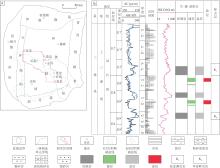
Fig. 1
Location map (a) and composite stratigraphic column of the Chang 7‒9 oil groups (b) of the Dingbian-Fuxian area, Ordos Basin"

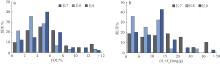
Fig. 2
Histograms of TOC content (a) and hydrocarbon generation capacity (b) of source rocks in the Chang 7‒9 oil groups, Dingbian-Fuxian area, Ordos Basin"
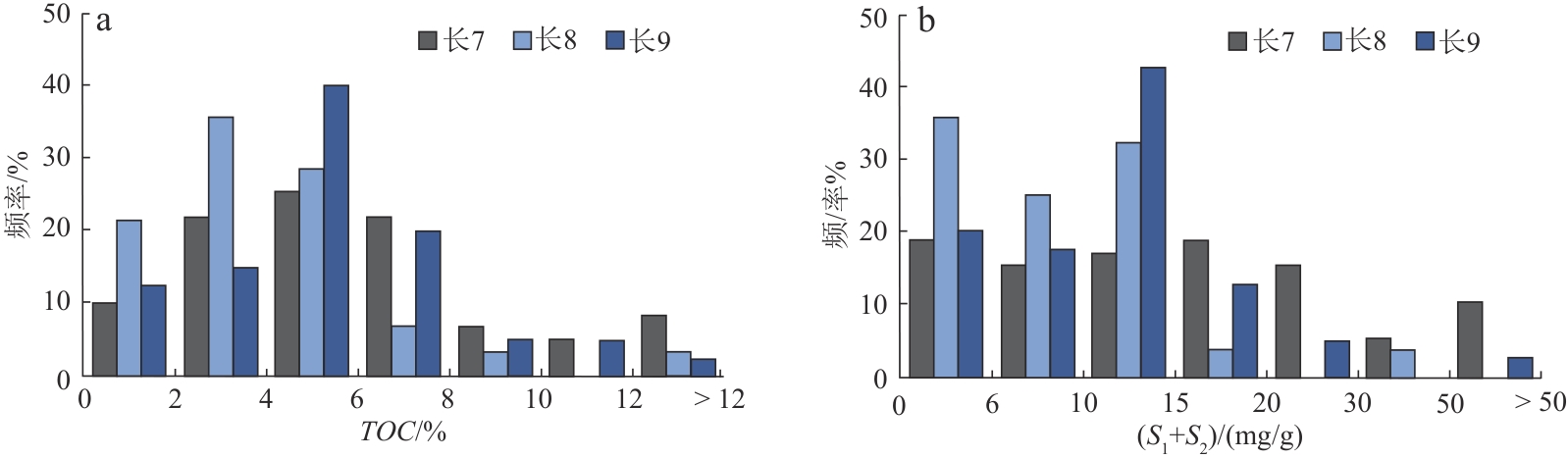

Fig. 3
Contour maps showing the thicknesses and hydrocarbon generation intensity of source rocks in the Chang 7‒9 oil groups, Dingbian-Fuxian area, Ordos Basin"

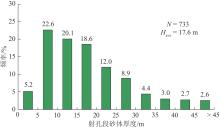
Fig.4
Histogram showing the sand body thickness in the Chang 8 oil group, Dingbian-Fuxian area, Ordos Basin"

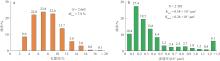
Fig. 5
Histograms showing the porosity and permeability of reservoirs in the Chang 8 oil group, Dingbian-Fuxian area, Ordos Basin, Ordos basin"
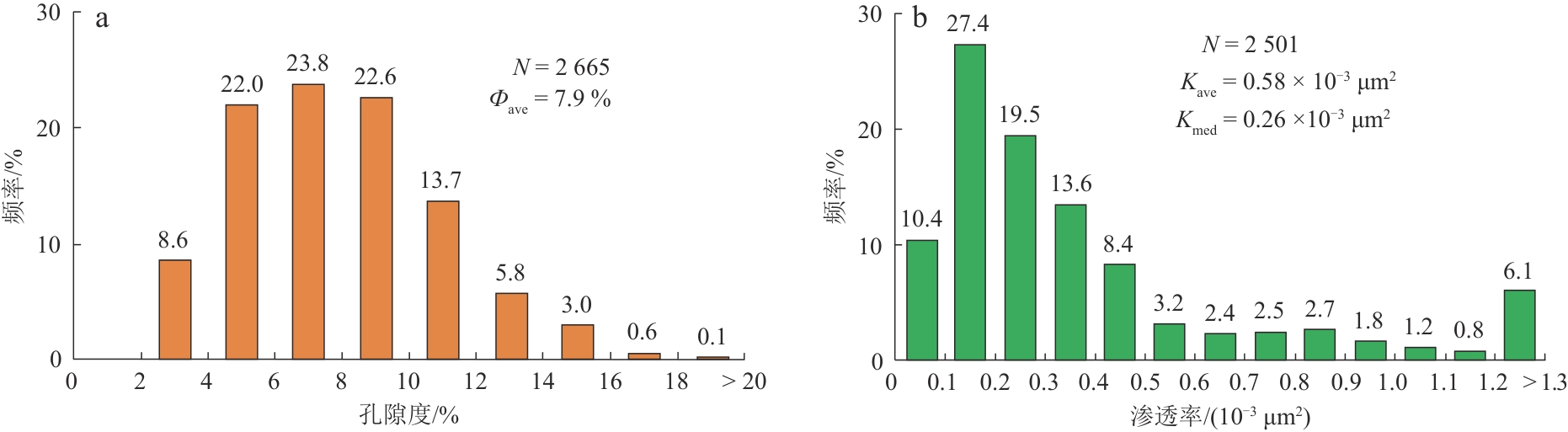
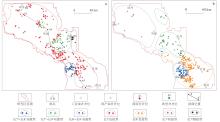
Fig. 6
Distribution maps of oil-producing wells and oil plays in the Chang 81 (a) and Chang 82 (b) oil sub-groups, Dingbian-Fuxian area, Ordos Basin"

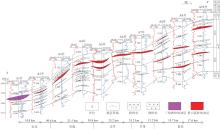
Fig.7
Well-correlation section crossing wells A1—A10 showing tight oil reservoirs in the Chang 8 oil group, Dingbian-Fuxian area, Ordos Basin"

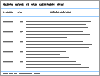
Table 1
Fluid parameters of oil reservoirs in the Chang 8 oil group, Dingbian-Fuxian area, Ordos Basin"
| 流体参数 | 地区 | ||||
|---|---|---|---|---|---|
| 富县 | 甘泉 | 志丹 | 吴起 | 定边 | |
| 密度/(g/cm3) | |||||
| 黏度(50 ℃)/(mPa·s) | — | ||||
| 凝固点/℃ | — | ||||
| 气/油比/(m3/m3) | |||||
| 地层水矿化度/(g/L) | |||||
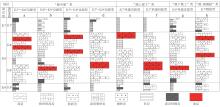
Fig.8
Oil play types of the Chang 81 and 82 oil sub-groups, Dingbian-Fuxian area, Ordos Basin"

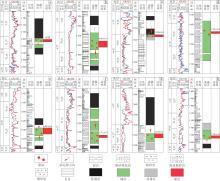
Fig.9
Columns showing oil plays in the Chang 8 oil group from representative wells in the Dingbian-Fuxian area, Ordos Basin"

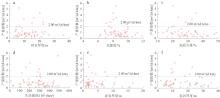
Fig.10
Cross plots showing the relationships between the production index of the Chang 81 and different parameters of the dual-source Chang 73 and 82 oil plays in the Dingbian-Fuxian area, Ordos Basin"
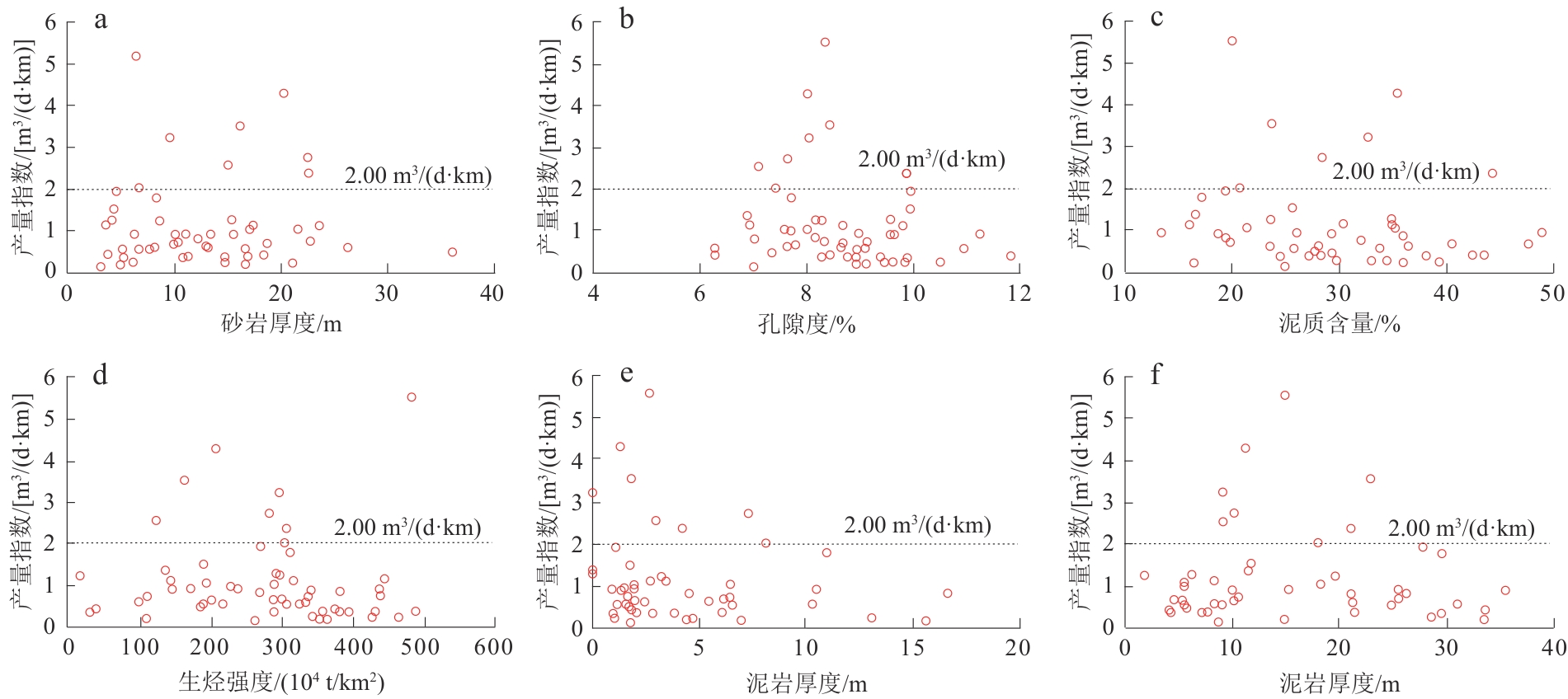
Fig.11
Cross plots showing the relationships between the production index of the Chang 81 on reservoir and different parameters of the dual-source Chang 73 and 91 oil play in the Dingbian-Fuxian area, Ordos Basin"


Fig.12
Cross plots showing the relationships between the production index of the Chang 81 on reservoir and different parameters of the single-source Chang 73 direct oil play in the Dingbian-Fuxian area, Ordos Basin"


Fig.13
Cross plots showing the relationships between the production index of the Chang 82 on reservoir and different parameters of the dual-source Chang 91 and 82 oil plays in the Dingbian-Fuxian area, Ordos Basin"


Fig.14
Cross plots showing the relationships between the production index of the Chang 82 on reservoir and different parameters of the dual-source Chang 73 and 91 oil plays in the Dingbian-Fuxian area, Ordos Basin"
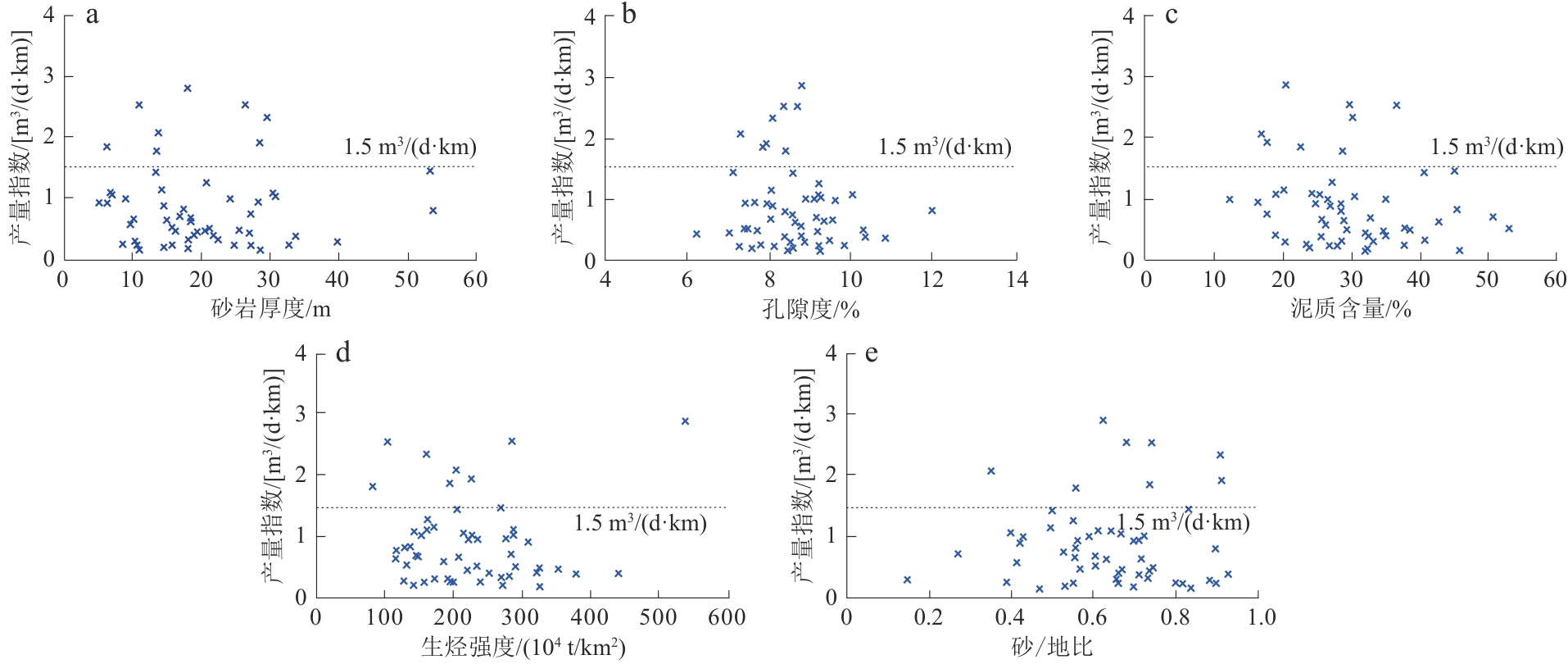

Fig.15
Cross plots showing the relationships between the production index of the Chang 82 oil reservoir and different parameters of the single-source direct oil play in the Chang 91, Dingbian-Fuxian area, Ordos Basin"


Fig. 16
Tight oil enrichment patterns in the Chang 8 oil group, Dingbian-Fuxian area, Ordos Basin"

| [1] | 贾承造, 姜林, 赵文. 全油气系统中的致密油气: 成藏机理、富集规律与资源前景[J]. 石油学报, 2025, 46(1): 1-16, 47. |
| JIA Chengzao, JIANG Lin, ZHAO Wen. Tight oil and gas in Whole Petroleum System: Accumulation mechanism, enrichment regularity, and resource prospect[J]. Acta Petrolei Sinica, 2025, 46(1): 1-16, 47. | |
| [2] | 付金华, 李士祥, 刘显阳. 鄂尔多斯盆地石油勘探地质理论与实践[J]. 天然气地球科学, 2013, 24(6): 1091-1101. |
| FU Jinhua, LI Shixiang, LIU Xianyang. Geological theory and practice of petroleum exploration in the Ordos Basin[J]. Natural Gas Geoscience, 2013, 24(6): 1091-1101. | |
| [3] | 张才利, 刘新社, 杨亚娟, 等. 鄂尔多斯盆地长庆油田油气勘探历程与启示[J]. 新疆石油地质, 2021, 42(3): 253-263. |
| ZHANG Caili, LIU Xinshe, YANG Yajuan, et al. Petroleum exploration history and enlightenment of Changqing Oilfield in Ordos Basin[J]. Xinjiang Petroleum Geology, 2021, 42(3): 253-263. | |
| [4] | 罗安湘, 喻建, 刘显阳, 等. 鄂尔多斯盆地中生界石油勘探实践及主要认识[J]. 新疆石油地质, 2022, 43(3): 253-260. |
| LUO Anxiang, YU Jian, LIU Xianyang, et al. Practices and cognitions of petroleum exploration in Mesozoic, Ordos Basin[J]. Xinjiang Petroleum Geology, 2022, 43(3): 253-260. | |
| [5] | 张文正, 杨华, 李剑锋, 等. 论鄂尔多斯盆地长7段优质油源岩在低渗透油气成藏富集中的主导作用——强生排烃特征及机理分析[J]. 石油勘探与开发, 2006, 33(3): 289-293. |
| ZHANG Wenzheng, YANG Hua, LI Jianfeng, et al. Leading effect of high-class source rock of Chang 7 in Ordos Basin on enrichment of low permeability oil-gas accumulation-hydrocarbon generation and expulsion mechanism[J]. Petroleum Exploration and Development, 2006, 33(3): 289-293. | |
| [6] | 吴伟涛, 邓静, 赵靖舟, 等. 鄂尔多斯盆地华庆地区长7油层组致密油成藏条件与成藏模式[J]. 石油与天然气地质, 2016, 37(6): 874-881. |
| WU Weitao, DENG Jing, ZHAO Jingzhou, et al. Accumulation conditions and models of tight oil reservoirs in Chang-7 of Huaqing area, the Ordos Basin[J]. Oil & Gas Geology, 2016, 37(6): 874-881. | |
| [7] | 姚泾利, 赵彦德, 刘广林, 等. 鄂尔多斯盆地三叠系长9段多源成藏模式[J]. 石油勘探与开发, 2018, 45(3): 373-384. |
| YAO Jingli, ZHAO Yande, LIU Guanglin, et al. Formation patterns of Chang 9 oil reservoir in Triassic Yanchang Formation, Ordos Basin, NW China[J]. Petroleum Exploration and Development, 2018, 45(3): 373-384. | |
| [8] | 高嘉洪, 金之钧, 梁新平, 等. 火山活动对鄂尔多斯盆地三叠系长7段淡水湖盆富营养化与沉积水体介质环境的影响[J]. 石油与天然气地质, 2023, 44(4): 887-898. |
| GAO Jiahong, JIN Zhijun, LIANG Xinping, et al. The impact of volcanism on eutrophication and water column in a freshwater lacustrine basin: A case study of Triassic Chang 7 Member in Ordos Basin[J]. Oil & Gas Geology, 2023, 44(4): 887-898. | |
| [9] | 陈义国, 封从军, 魏登峰, 等. 鄂尔多斯盆地东南部三叠系延长组6段致密油的形成、分布与勘探对策[J]. 石油学报, 2025, 46(2): 335-354. |
| CHEN Yiguo, FENG Congjun, WEI Dengfeng, et al. Formation, distribution, and exploration strategies of tight oil in the Member 6 of Triassic Yanchang Formation in southeastern Ordos Basin[J]. Acta Petrolei Sinica, 2025, 46(2): 335-354. | |
| [10] | 王香增, 贺永红, 张立宽, 等. 鄂尔多斯盆地吴起—志丹地区长10烃源岩特征与生烃潜力[J]. 天然气地球科学, 2013, 24(3): 461-469. |
| WANG Xiangzeng, HE Yonghong, ZHANG Likuan, et al. Geochemical characteristics and hydrocarbon generation potentials of Chang 10 source rock in Wuqi-Zhidan area, Ordos Basin[J]. Natural Gas Geoscience, 2013, 24(3): 461-469. | |
| [11] | 张云霞, 陈纯芳, 宋艳波, 等. 鄂尔多斯盆地南部中生界烃源岩特征及油源对比[J]. 石油实验地质, 2012, 34(2): 173-177. |
| ZHANG Yunxia, CHEN Chunfang, SONG Yanbo, et al. Features of Mesozoic source rocks and oil-source correlation in southern Ordos Basin[J]. Petroleum Geology and Experiment, 2012, 34(2): 173-177. | |
| [12] | 王起琮, 李文厚, 赵靖舟, 等. 鄂尔多斯盆地延长组长1段烃源岩有机地球化学特征[J]. 煤田地质与勘探, 2006, 34(1): 26-30. |
| WANG Qicong, LI Wenhou, ZHAO Jingzhou, et al. Organic geochemistry characteristics of hydrocarbon source rocks in the member 1 of Upper Triassic Yanchang Formation, in Ordos Basin[J]. Coal Geology & Exploration, 2006, 34(1): 26-30. | |
| [13] | 蒋杨, 弓虎军, 蒲仁海. 鄂尔多斯盆地甘泉—富县地区延长组长9—长7段烃源岩地球化学特征及长8致密油源对比[J]. 沉积与特提斯地质, 2024, 44(3): 656-670. |
| JIANG Yang, GONG Hujun, PU Renhai. Geochemical characteristics of source rocks in the Chang 9-Chang 7 members and their correlation with the tight oil sources of Chang 8 member in the Ganquan-Fuxian area, Ordos Basin[J]. Sedimentary Geology and Tethyan Geology, 2024, 44(3): 656-670. | |
| [14] | 许璟, 葛云锦, 贺永红, 等. 鄂尔多斯盆地延长探区长7油层组泥页岩孔隙结构定量表征与动态演化过程[J]. 石油与天然气地质, 2023, 44(2): 292-307. |
| XU Jing, GE Yunjin, HE Yonghong, et al. Quantitative characterization and dynamic evolution of pore structure in shale reservoirs of Chang 7 oil layer group in Yanchang area, Ordos Basin[J]. Oil & Gas Geology, 2023, 44(2): 292-307. | |
| [15] | 付金华, 刘显阳, 李士祥, 等. 鄂尔多斯盆地三叠系延长组长7段页岩油勘探发现与资源潜力[J]. 中国石油勘探, 2021, 26(5): 1-11. |
| FU Jinhua, LIU Xianyang, LI Shixiang, et al. Discovery and resource potential of shale oil of Chang 7 member, Triassic Yanchang Formation, Ordos Basin[J]. China Petroleum Exploration, 2021, 26(5): 1-11. | |
| [16] | 邓秀芹, 庞锦莲, 孙勃. 鄂尔多斯盆地三叠系延长组长10—长8段沉积演化特征[J]. 西北大学学报(自然科学版), 2024, 54(6): 1078-1090. |
| DENG Xiuqin, PANG Jinlian, SUN Bo. Evolution characteristics of Ordos Basin in sedimentary period of Chang 10-Chang 8 member of Yanchang Formation[J]. Journal of Northwest University (Natural Science Edition), 2024, 54(6): 1078-1090. | |
| [17] | 李文厚, 刘溪, 张倩, 等. 鄂尔多斯盆地中晚三叠世延长期沉积演化[J]. 西北大学学报(自然科学版), 2019, 49(4): 605-621. |
| LI Wenhou, LIU Xi, ZHANG Qian, et al. Deposition evolution of Middle-Late Triassic Yanchang Formation in Ordos Basin[J]. Journal of Northwest University (Natural Science Edition), 2019, 49(4): 605-621. | |
| [18] | 曹江骏, 王继平, 张道锋, 等. 深层致密砂岩储层成岩演化对含气性的影响——以鄂尔多斯盆地西南部庆阳气田二叠系山1段为例[J]. 石油与天然气地质, 2024, 45(1): 169-184. |
| CAO Jiangjun, WANG Jiping, ZHANG Daofeng, et al. Effects of diagenetic evolution on gas-bearing properties of deep tight sandstone reservoirs: A case study of reservoirs in the 1st member of the Permian Shanxi Formation in the Qingyang gas field, southwestern Ordos Basin[J]. Oil & Gas Geology, 2024, 45(1): 169-184. | |
| [19] | 刘迎宝, 李元昊, 翟文彬, 等. 极缓坡湖盆浅水三角洲前缘砂体类型及成因模式——以鄂尔多斯盆地郝滩地区三叠系长81亚段为例[J]. 岩性油气藏, 2025, 37(3): 140-152. |
| LIU Yingbao, LI Yuanhao, ZHAI Wenbin, et al. Types and genetic models of sand bodies in shallow water delta front of extremely gentle slope lake basin: A case study of Chang 81 submember of Triassic in Haotan area, Ordos Basin[J]. Lithologic Reservoirs, 2025, 37(3): 140-152. | |
| [20] | 杨桂林, 任战利, 何发岐, 等. 鄂尔多斯盆地西南缘镇泾地区断缝体发育特征及油气富集规律[J]. 石油与天然气地质, 2022, 43(6): 1382-1396. |
| YANG Guilin, REN Zhanli, HE Faqi, et al. Fault-fracture body growth and hydrocarbon enrichment of the Zhenjing area, the southwestern margin of the Ordos Basin[J]. Oil & Gas Geology, 2022, 43(6): 1382-1396. | |
| [21] | 杨鑫, 平宏伟, 雷涛, 等. 鄂尔多斯盆地泾河油田走滑断裂带油气成藏特征及控藏机制[J]. 地球科学, 2023, 48(6): 2324-2341. |
| YANG Xin, PING Hongwei, LEI Tao, et al. Hydrocarbon accumulation characteristics and controlling mechanism of strike-slip faults in Jinghe Oilfield, Ordos Basin[J]. Earth Science, 2023, 48(6): 2324-2341. | |
| [22] | 曹晶晶, 刚文哲, 杨尚儒, 等. 鄂尔多斯盆地西南缘平凉地区长8油藏油源对比及油气充注特征[J]. 天然气地球科学, 2024, 35(1): 149-163. |
| CAO Jingjing, GANG Wenzhe, YANG Shangru, et al. Oil-source correlation and hydrocarbon charging characteristics of Chang 8 reservoir in the Pingliang area, southwestern Ordos Basin[J]. Natural Gas Geoscience, 2024, 35(1): 149-163. | |
| [23] | 邵晓州, 王苗苗, 齐亚林, 等. 鄂尔多斯盆地平凉北地区长8油藏特征及成藏主控因素[J]. 岩性油气藏, 2021, 33(6): 59-69. |
| SHAO Xiaozhou, WANG Miaomiao, QI Yalin, et al. Characteristics and main controlling factors of Chang 8 reservoir in northern Pingliang area, Ordos Basin[J]. Lithologic Reservoirs, 2021, 33(6): 59-69. | |
| [24] | 牛小兵, 侯云超, 张晓磊, 等. 鄂尔多斯盆地西南缘洪德油田成藏条件及勘探开发关键技术[J]. 石油学报, 2025, 46(3): 633-648. |
| NIU Xiaobing, HOU Yunchao, ZHANG Xiaolei, et al. Hydrocarbon accumulation conditions and key technologies of exploration and development of Hongde Oilfield in southwestern Ordos Basin[J]. Acta Petrolei Sinica, 2025, 46(3): 633-648. | |
| [25] | 师良, 范柏江, 李忠厚, 等. 鄂尔多斯盆地中部三叠系延长组7段烃组分的运移分异作用[J]. 石油与天然气地质, 2024, 45(1): 157-168. |
| SHI Liang, FAN Bojiang, LI Zhonghou, et al. Migration differentiation of hydrocarbon components in the 7th member of the Triassic Yanchang Formation, central Ordos Basin[J]. Oil & Gas Geology, 2024, 45(1): 157-168. | |
| [26] | 尚婷, 张忠义, 李树同, 等. 鄂尔多斯盆地中生界低含油饱和度油藏成因分析——以山城-演武地区延长组长8段油藏为例[J/OL]. 矿物岩石: 1-17[2025-05-23]. . |
| SHANG Ting, ZHANG Zhongyi, LI Shutong, et al. The genetic analysis of low oil saturation reservoirs in the Mesozoic of the Ordos Basin: A case study of the Chang 8 reservoir of the Yanchang Formation in the Shancheng-Yanwu area[J/OL]. Mineralogy and Petrology: 1-17[2025-05-23]. . | |
| [27] | 伍岳, 夏东领, 郭秀娟. 鄂尔多斯盆地南缘长8致密砂岩储层裂缝发育特征及主控因素[J/OL]. 现代地质: 1-16[2025-05-23]. . |
| WU Yue, XIA Dongling, GUO Xiujuan. Development characteristics and main controlling factors of fractures in the Chang 8 tight sandstone reservoir in the southern margin of the Ordos Basin[J/OL]. Geoscience: 1-16[2025-05-23]. . | |
| [28] | 解馨慧, 邓虎成, 胡蓝霄, 等. 湖相细粒沉积岩颗粒微观力学特征及类型划分——以鄂尔多斯盆地上三叠统延长组7段页岩为例[J]. 石油与天然气地质, 2024, 45(4): 1079-1088. |
| XIE Xinhui, DENG Hucheng, HU Lanxiao, et al. Micromechanical characteristics and classification of the grains of lacustrine fine grained sedimentary rocks: A case study of shales in the 7th member of the Upper Triassic Yanchang Formation, Ordos Basin[J]. Oil & Gas Geology, 2024, 45(4): 1079-1088. | |
| [29] | 梁承春, 刘小虎, 林清申, 等. 红河油田长8致密油成藏机理及“甜点”模式[J]. 特种油气藏, 2016, 23(6): 26-30. |
| LIANG Chengchun, LIU Xiaohu, LIN Qingshen, et al. The formation mechanism and dessert mode of Chang 8 tight oil in Honghe Oilfield[J]. Special Oil & Gas Reservoirs, 2016, 23(6): 26-30. | |
| [30] | 陈奕阳, 杜贵超, 王凤琴, 等. 甘泉油田长8油层组储层孔隙发育特征及演化规律[J]. 西安石油大学学报(自然科学版), 2023, 38(1): 19-30, 44. |
| CHEN Yiyang, DU Guichao, WANG Fengqin, et al. Pore development characteristics and evolution law of Chang 8 oil-bearing formation in Ganquan Oilfield[J]. Journal of Xi'an Shiyou University (Natural Science Edition), 2023, 38(1): 19-30, 44. | |
| [31] | 刘丽萍, 白海涛, 王西强, 等. 鄂尔多斯盆地白豹油田长81储层水驱油特征及驱油效率影响因素[J]. 东北石油大学学报, 2022, 46(6): 63-74. |
| LIU Liping, BAI Haitao, WANG Xiqiang, et al. Water flooding characteristic sand influencing factors of oil displacement efficiency of Chang 81 reservoir in Baibao Oilfield, Ordos Basin[J]. Journal of Northeast Petroleum University, 2022, 46(6): 63-74. | |
| [32] | 国家能源局. 烃源岩地球化学评价方法: [S]. 北京: 石油工业出版社, 2019. |
| National Energy Administration. Geochemical method for source rock evaluation: [S]. Beijing: Petroleum Industry Press, 2019. | |
| [33] | 中华人民共和国国家市场监督管理总局, 中国国家标准化管理委员会. 油气矿产资源储量分类: [S]. 北京: 中国标准出版社, 2020. |
| State Administration for Market Regulation, Standardization Administration of the People's Republic of China. Classifications for petroleum resources and reserves: [S]. Beijing: Standards Press of China, 2020. | |
| [34] | 赵靖舟, 付金华, 曹青, 等. 致密油气成藏理论与评价技术[M]. 北京: 石油工业出版社, 2017. |
| ZHAO Jingzhou, FU Jinhua, CAO Qing, et al. Tight oil and gas accumulation and evaluation: Geological theories and geophysical technologies[M]. Beijing: Petroleum Industry Press, 2017. | |
| [35] | ZHAO J, LI J, CAO Q, et al. Quasi-continuous hydrocarbon accumulation: An alternative model for the formation of large tight oil and gas accumulations[J]. Journal of Petroleum Science and Engineering, 2019, 174: 25-39. |
| [36] | 中华人民共和国自然资源部. 石油天然气储量估算规范: [S]. 北京: 地质出版社, 2020. |
| Ministry of Natural Resources, People’s Republic of China. Regulation of petroleum reserves estimation: [S]. Beijing: Geological Publishing House, 2020. |
| Viewed | ||||||
|
Full text |
|
|||||
|
Abstract |
|
|||||
