

Oil & Gas Geology ›› 2025, Vol. 46 ›› Issue (5): 1410-1429.doi: 10.11743/ogg20250503
• Petroleum Geology • Previous Articles
Lei CAO1,2( ), Xinzhi YAN3, Hui LI4, Weitao WU1,2, Yubin BAI1,2, Zilong ZHAO1,2
Received:2025-07-31
Revised:2025-09-04
Online:2025-10-30
Published:2025-10-29
CLC Number:
Lei CAO, Xinzhi YAN, Hui LI, Weitao WU, Yubin BAI, Zilong ZHAO. Geochemical characteristics, distribution, and shale oil resource potential of source rocks in the 8th and 9th oil groups of the Yanchang Formation, northern Shaanxi, Ordos Basin[J]. Oil & Gas Geology, 2025, 46(5): 1410-1429.
Add to citation manager EndNote|Reference Manager|ProCite|BibTeX|RefWorks

Fig. 1
Distribution map of the Lijiapan shale in the Chang 9 oil group (a, modified after reference [20]) and stratigraphic column of the Yanchang Formation (b, modified after reference [19]) in the Ordos Basin"


Fig. 2
Evaluation of organic matter abundance in source rocks of different lithologies within the Chang 8 and Chang 9 oil groups, northern Shaanxi, Ordos Basin"

Table 1
Evaluation criteria for the organic matter abundance of mudstones[21]"
| 烃源岩等级 | TOC/% | (S1+S2)/(mg/g) |
|---|---|---|
| 非 | TOC < 0.5 | S1+S2 < 2 |
| 一般 | 0.5 ≤TOC < 1.0 | 2 ≤ S1+S2 < 6 |
| 好 | 1.0 ≤TOC < 2.0 | 6 ≤ S1+S2 < 20 |
| 优质 | TOC≥ 2.0 | S1 + S2≥ 20 |

Fig. 3
Cores photos of source rocks of different lithologies in the Chang 8 and Chang 9 oil groups, northern Shaanxi, Ordos Basin"


Fig. 4
Evaluation of organic matter abundance in source rocks at different horizons of the Chang 8 and Chang 9 oil groups, northern Shaanxi, Ordos Basin"


Fig. 5
Identification of organic matter types in source rocks at different horizons of the Chang 8 and Chang 9 oil groups, northern Shaanxi, Ordos Basin"

Fig. 6
Box plots showing the distributions of the Ro and Tmax values of source rocks across different horizons and areas in northern Shaanxi, Ordos Basin"


Fig. 7
Contour maps of Ro values for the middle Chang 8 oil group (a) and middle Chang 9 oil group (b), northern Shaanxi, Ordos Basin"

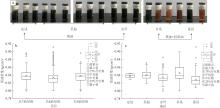
Fig.8
Color and density distributions of crude oil in the Chang 7‒9 oil groups, northern Shaanxi, Ordos Basin"


Fig. 9
Cross plots showing the relationships of (S1+S2)/TOC with Ro (a) and Tmax (b) for source rocks in the Chang 8 and Chang 9 oil groups, northern Shaanxi, Ordos Basin (after references [10-11])"


Fig. 10
Statistics of the average thickness of effective source rocks at different horizons across varying areas (a) and the thickness of Lijiapan shale in the Chang 9 oil group (b) in northern Shaanxi, Ordos Basin"
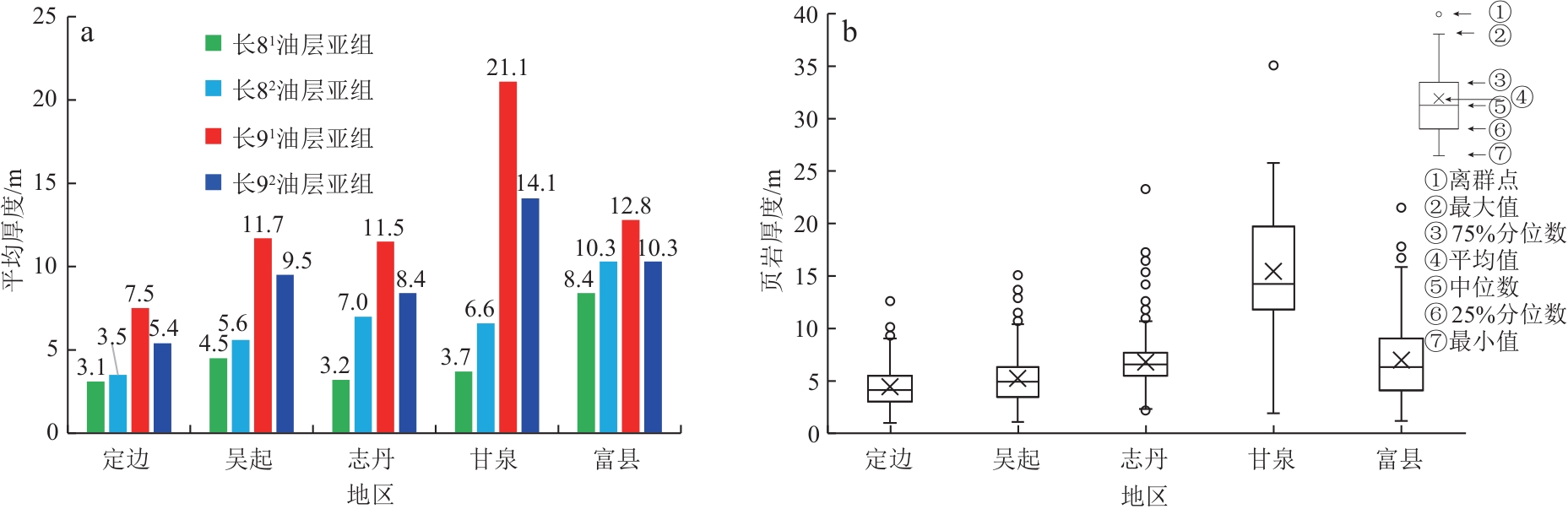
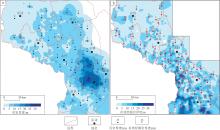
Fig. 11
Isopach maps of the Lijiapan shale in the Chang 9 oil group (a) and effective source rocks in the Chang 8 oil group (b) in northern Shaanxi, Ordos Basin"


Fig. 12
Single-well sections showing source rock assemblage types in the lower hydrocarbon play of the Yanchang Formation across different areas of northern Shaanxi, Ordos Basin"

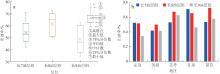
Fig. 13
Tested oil production rates of the Chang 7-9 oil groups (a) and different horizons across varying areas (b) in northern Shaanxi, Ordos Basin"


Fig. 14
Evaluation charts of shale oil mobility in source rocks of the Chang 8 and Chang 9 oil groups, northern Shaanxi, Ordos Basin"

Table 2
Statistics of experimental data for fresh samples of the Lijiapan shale in the Chang 9 oil group collected from the wellhead of well L, Ordos Basin"
| 样品编号 | 井口新鲜密封样品密闭热释烃含量/(mg/g) | 放置30 d后常规S1/(mg/g) | TOC/% | 密闭热释烃含量/常规S1 |
|---|---|---|---|---|
| L-15 | 4.99 | 1.78 | 5.9 | 2.80 |
| L-19 | 3.97 | 1.67 | 5.2 | 2.38 |
| L-23 | 5.36 | 1.67 | 6.6 | 3.21 |
| L-24 | 5.91 | 2.68 | 7.8 | 2.20 |
| L-25 | 12.65 | 3.27 | 2.7 | 3.87 |
| L-29 | 1.34 | 0.61 | 1.4 | 2.19 |
| L-30 | 1.29 | 0.35 | 1.4 | 3.68 |

Fig. 15
Bar charts showing the distribution of classes Ⅰ, Ⅱ, and Ⅲ shale oil resources among source rocks of the Chang 8 and Chang 9 oil groups, northern Shaanxi, Ordos Basin"

| [1] | 邓秀芹, 楚美娟, 王龙, 等. 中晚三叠世鄂尔多斯盆地两期沉降及其形成机制[J]. 石油勘探与开发, 2024, 51(3): 501-512. |
| DENG Xiuqin, CHU Meijuan, WANG Long, et al. Two stages of subsidence and its formation mechanisms in Mid-Late Triassic Ordos Basin, NW China[J]. Petroleum Exploration and Development, 2024, 51(3): 501-512. | |
| [2] | 赵文智, 卞从胜, 李永新, 等. 鄂尔多斯盆地三叠系长73亚段页岩有机质转化率、排烃效率与页岩油主富集类型[J]. 石油勘探与开发, 2023, 50(1): 12-23. |
| ZHAO Wenzhi, BIAN Congsheng, LI Yongxin, et al. Organic matter transformation ratio, hydrocarbon expulsion efficiency and shale oil enrichment type in Chang 73 shale of Upper Triassic Yanchang Formation in Ordos Basin, NW China[J]. Petroleum Exploration and Development, 2023, 50(1): 12-23. | |
| [3] | 李相博, 刘显阳, 周世新, 等. 鄂尔多斯盆地延长组下组合油气来源及成藏模式[J]. 石油勘探与开发, 2012, 39(2): 172-180. |
| LI Xiangbo, LIU Xianyang, ZHOU Shixin, et al. Hydrocarbon origin and reservoir forming model of the Lower Yanchang Formation, Ordos Basin[J]. Petroleum Exploration and Development, 2012, 39(2): 172-180. | |
| [4] | 付金华, 李士祥, 牛小兵, 等. 鄂尔多斯盆地三叠系长7段页岩油地质特征与勘探实践[J]. 石油勘探与开发, 2020, 47(5): 870-883. |
| FU Jinhua, LI Shixiang, NIU Xiaobing, et al. Geological characteristics and exploration of shale oil in Chang 7 Member of Triassic Yanchang Formation, Ordos Basin, NW China[J]. Petroleum Exploration and Development, 2020, 47(5): 870-883. | |
| [5] | 张文正, 杨华, 李善鹏. 鄂尔多斯盆地长9~1湖相优质烃源岩成藏意义[J]. 石油勘探与开发, 2008, 35(5): 557-562, 568. |
| ZHANG Wenzheng, YANG Hua, LI Shanpeng. Hydrocarbon accumulation significance of Chang9~1 high-quality lacustrine source rocks of Yanchang Formation, Ordos Basin[J]. Petroleum Exploration and Development, 2008, 35(5): 557-562, 568. | |
| [6] | 张文正, 杨华, 傅锁堂, 等. 鄂尔多斯盆地长91湖相优质烃源岩的发育机制探讨[J]. 中国科学(D辑: 地球科学), 2007, 37(): 33-38. |
| ZHANG Wenzheng, YANG Hua, FU Suotang, et al. Development mechanisms of high-quality lacustrine source rocks in the Chang 91 member, Ordos Basin[J]. Science China Earth Sciences, 2007, 37(S1): 33-38. | |
| [7] | 周新平, 惠潇, 邓秀芹, 等. 鄂尔多斯盆地陕北地区延长组长8暗色泥岩特征及其成藏意义[J]. 西北大学学报(自然科学版), 2017, 47(6): 866-876. |
| ZHOU Xinping, HUI Xiao, DENG Xiuqin, et al. Characteristics and hydrocarbon accumulation significance of Chang 8 dark mudstone in Northern Shaanxi area, Ordos Basin[J]. Journal of Northwest University (Natural Science Edition), 2017, 47(6): 866-876. | |
| [8] | 惠瑞瑞, 刘妍, 张志升, 等. 鄂尔多斯盆地安塞地区延长组长9段原油地球化学特征与油源对比[J]. 吉林大学学报(地球科学版), 2024, 54(5): 1468-1481. |
| HUI Ruirui, LIU Yan, ZHANG Zhisheng, et al. Oil geochemical characteristics and oil-source correlation of Chang 9 member of Yanchang Formation in Ansai area, Ordos Basin[J]. Journal of Jilin University (Earth Science Edition), 2024, 54(5): 1468-1481. | |
| [9] | 蒋杨, 弓虎军, 蒲仁海. 鄂尔多斯盆地甘泉—富县地区延长组长9—长7段烃源岩地球化学特征及长8致密油源对比[J]. 沉积与特提斯地质, 2024, 44(3): 656-670. |
| JIANG Yang, GONG Hujun, PU Renhai. Geochemical characteristics of source rocks in the Chang 9-Chang 7 members and their correlation with the tight oil sources of Chang 8 member in the Ganquan-Fuxian area, Ordos Basin[J]. Sedimentary Geology and Tethyan Geology, 2024, 44(3): 656-670. | |
| [10] | 马玲. 鄂尔多斯盆地长9黑色页岩有机质富集机理及发育模式[D]. 北京: 中国石油大学(北京), 2021. |
| MA Ling. The organic matter accumulation mechanism and formation model of Chang 9 black shales from the Ordos Basin[D]. Beijing: China University of Petroleum (Beijing), 2021. | |
| [11] | MA Ling, ZHANG Zhihuan, MENG Weiqiu. Climate-provenance effect on the organic matter enrichment of the Chang 9 source rocks in the central Ordos Basin, China[J]. Hindawi, 2021, 2021: 1233879. |
| [12] | 白玉彬, 赵靖舟, 高振东, 等. 鄂尔多斯盆地杏子川油田长9烃源岩特征及油气勘探意义[J]. 中国石油大学学报(自然科学版), 2013, 37(4): 38-45. |
| BAI Yubin, ZHAO Jingzhou, GAO Zhendong, et al. Characteristics of Chang 9 member source rocks and its significance of hydrocarbon exploration in Xingzichuan Oilfield, Ordos Basin[J]. Journal of China University of Petroleum (Edition of Natural Science), 2013, 37(4): 38-45. | |
| [13] | 师磊. 鄂尔多斯盆地延长组长9油层组生烃潜力评价[D]. 大庆: 东北石油大学, 2012. |
| SHI Lei. Evaluation of hydrocarbon generation potential from source rock of Chang 9 member, Yanchang Formation, Ordos Basin[D]. Daqing: Northeast Petroleum University, 2012. | |
| [14] | 朱必清, 陈世加, 白艳军, 等. 鄂尔多斯盆地甘泉地区延长组长8段原油地球化学特征及来源[J]. 现代地质, 2022, 36(2): 742-754. |
| ZHU Biqing, CHEN Shijia, BAI Yanjun, et al. Geochemical characteristics and source of crude oil in Chang 8 member of Yanchang Formation, Ganquan area, Ordos Basin[J]. Geoscience, 2022, 36(2): 742-754. | |
| [15] | 赵举举. 鄂尔多斯盆地吴起-志丹地区延长组下组合烃源岩特征及油源分析[D]. 青岛: 中国石油大学(华东), 2018. |
| ZHAO Juju. Characteristics of source rocks and oil source analysis in Yanchang group of Wuqi-Zhidan area in Ordos Basin[D]. Qingdao: China University of Petroleum (East China), 2018. | |
| [16] | 王香增, 任来义, 张丽霞, 等. 鄂尔多斯盆地吴起-定边地区延长组下组合油源对比研究[J]. 石油实验地质, 2013, 35(4): 426-431. |
| WANG Xiangzeng, REN Laiyi, ZHANG Lixia, et al. Oil and source rock correlation of lower assemblage of Yanchang Formation in Wuqi and Dingbian areas, Ordos Basin[J]. Petroleum Geology and Experiment, 2013, 35(4): 426-431. | |
| [17] | 李文厚, 刘溪, 张倩, 等. 鄂尔多斯盆地中晚三叠世延长期沉积演化[J]. 西北大学学报(自然科学版), 2019, 49(4): 605-621. |
| LI Wenhou, LIU Xi, ZHANG Qian, et al. Deposition evolution of Middle-Late Triassic Yanchang Formation in Ordos Basin[J]. Journal of Northwest University (Natural Science Edition), 2019, 49(4): 605-621. | |
| [18] | 赵靖舟, 付金华, 曹青, 等. 致密油气成藏理论与评价技术[M]. 北京: 石油工业出版社, 2017. |
| ZHAO Jingzhou, FU Jinhua, CAO Qing, et al. Tight oil and gas accumulation and evaluation: Geological theories and geophysical technologies[M]. Beijing: Petroleum Industry Press, 2017. | |
| [19] | 邓秀芹, 庞锦莲, 孙勃. 鄂尔多斯盆地三叠系延长组长10—长8段沉积演化特征[J]. 西北大学学报(自然科学版), 2024, 54(6): 1078-1090. |
| DENG Xiuqin, PANG Jinlian, SUN Bo. Evolution characteristics of Ordos Basin in sedimentary period of Chang 10-Chang 8 member of Yanchang Formation[J]. Journal of Northwest University (Natural Science Edition), 2024, 54(6): 1078-1090. | |
| [20] | 付金华, 李士祥, 徐黎明, 等. 鄂尔多斯盆地三叠系延长组长7段古沉积环境恢复及意义[J]. 石油勘探与开发, 2018, 45(6): 936-946. |
| FU Jinhua, LI Shixiang, XU Liming, et al. Paleo-sedimentary environmental restoration and its significance of Chang 7 Member of Triassic Yanchang Formation in Ordos Basin, NW China[J]. Petroleum Exploration and Development, 2018, 45(6): 936-946. | |
| [21] | 国家能源局. 烃源岩地球化学评价方法: [S]. 北京: 石油工业出版社, 2019. |
| National Energy Administration. Geochemical method for source rock evaluation: [S]. Beijing: Petroleum Industry Press, 2019. | |
| [22] | 吉利明, 吴涛, 李林涛. 鄂尔多斯盆地西峰地区延长组烃源岩干酪根地球化学特征[J]. 石油勘探与开发, 2007, 34(4): 424-428. |
| JI Liming, WU Tao, LI Lintao. Geochemical characteristics of kerogen in Yanchang Formation source rocks, Xifeng area, Ordos Basin[J]. Petroleum Exploration and Development, 2007, 34(4): 424-428. | |
| [23] | 侯读杰, 冯子辉. 油气地球化学[M]. 北京: 石油工业出版社, 2011: 1-414. |
| HOU Dujie, FENG Zihui. Oil and gas geochemistry[M]. Beijing: Petroleum Industry Press, 2011: 1-414. | |
| [24] | 赵振宇, 郭彦如, 王艳, 等. 鄂尔多斯盆地构造演化及古地理特征研究进展[J]. 特种油气藏, 2012, 19(5): 15-20. |
| ZHAO Zhenyu, GUO Yanru, WANG Yan, et al. Study progress in tectonic evolution and paleogeography of Ordos Basin[J]. Special Oil & Gas Reservoirs, 2012, 19(5): 15-20. | |
| [25] | TISSOT B P, WELTE D H. Petroleum formation and occurrence[M]. Berlin: Springer, 1984. |
| [26] | 陈建平, 孙永革, 钟宁宁, 等. 地质条件下湖相烃源岩生排烃效率与模式[J]. 地质学报, 2014, 88(11): 2005-2032. |
| CHEN Jianping, SUN Yongge, ZHONG Ningning, et al. The efficiency and model of petroleum expulsion from the lacustrine source rocks within geological frame[J]. Acta Geologica Sinica, 2014, 88(11): 2005-2032. | |
| [27] | 郭旭升, 马晓潇, 黎茂稳, 等. 陆相页岩油富集机理探讨[J]. 石油与天然气地质, 2023, 44(6): 1333-1349. |
| GUO Xusheng, MA Xiaoxiao, LI Maowen, et al. Mechanisms for lacustrine shale oil enrichment in Chinese sedimentary basins[J]. Oil & Gas Geology, 2023, 44(6): 1333-1349. | |
| [28] | 孙龙德, 王小军, 冯子辉, 等. 松辽盆地古龙页岩纳米孔缝形成机制与页岩油富集特征[J]. 石油与天然气地质, 2023, 44(6): 1350-1365. |
| SUN Longde, WANG Xiaojun, FENG Zihui, et al. Formation mechanisms of nano-scale pores/fissures and shale oil enrichment characteristics for Gulong shale, Songliao Basin[J]. Oil & Gas Geology, 2023, 44(6): 1350-1365. | |
| [29] | 李明, 王民, 张金友, 等. 中国典型盆地陆相页岩油组分评价及意义[J]. 石油与天然气地质, 2023, 44(6): 1479-1498. |
| LI Ming, WANG Min, ZHANG Jinyou, et al. Evaluation of the compositions of lacustrine shale oil in China’s typical basins and its implications[J]. Oil & Gas Geology, 2023, 44(6): 1479-1498. | |
| [30] | 金之钧, 张谦, 朱如凯, 等. 中国陆相页岩油分类及其意义[J]. 石油与天然气地质, 2023, 44(4): 801-819. |
| JIN Zhijun, ZHANG Qian, ZHU Rukai, et al. Classification of lacustrine shale oil reservoirs in China and its significance[J]. Oil & Gas Geology, 2023, 44(4): 801-819. | |
| [31] | 李娜, 李卉, 刘鸿, 等. 玛湖凹陷玛页1井风城组页岩油地质甜点优选[J]. 新疆石油地质, 2024, 45(3): 271-278. |
| LI Na, LI Hui, LIU Hong, et al. Optimization of geological sweet spots for shale oil in Fengcheng Formation in Well Maye-1, Mahu Sag[J]. Xinjiang Petroleum Geology, 2024, 45(3): 271-278. | |
| [32] | 刘惠民, 包友书, 黎茂稳, 等. 页岩油富集可动性地球化学评价参数探讨——以威利斯顿盆地Bakken组和渤海湾盆地济阳坳陷古近系沙河街组页岩为例[J]. 石油与天然气地质, 2024, 45(3): 622-636. |
| LIU Huimin, BAO Youshu, LI Maowen, et al. Geochemical parameters for evaluating shale oil enrichment and mobility: A case study of shales in the Bakken Formation, Williston Basin and the Shahejie Formation, Jiyang Depression[J]. Oil & Gas Geology, 2024, 45(3): 622-636. | |
| [33] | 李志明, 刘雅慧, 何晋译, 等. 陆相页岩油 "甜点" 段评价关键参数界限探讨[J]. 石油与天然气地质, 2023, 44(6): 1453-1467. |
| LI Zhiming, LIU Yahui, HE Jinyi, et al. Limits of critical parameters for sweet-spot interval evaluation of lacustrine shale oil[J]. Oil & Gas Geology, 2023, 44(6): 1453-1467. | |
| [34] | JARVIE D M. Shale resource systems for oil and gas: Part 2—shale-oil resource systems[M]//BREYER J A. Shale Reservoirs—Giant Resources for the 21st Century. Tulsa: American Association of Petroleum Geologists, 2012: 89-119. |
| [35] | 孙龙德, 贾承造, 张君峰, 等. 松辽盆地古龙页岩油重点地区资源潜力[J]. 石油学报, 2024, 45(12): 1699-1714. |
| SUN Longde, JIA Chengzao, ZHANG Junfeng, et al. Resource potential of Gulong shale oil in the key areas of Songliao Basin[J]. Acta Petrolei Sinica, 2024, 45(12): 1699-1714. |
| Viewed | ||||||
|
Full text |
|
|||||
|
Abstract |
|
|||||
