

Oil & Gas Geology ›› 2025, Vol. 46 ›› Issue (5): 1466-1484.doi: 10.11743/ogg20250506
• Petroleum Geology • Previous Articles
Weitao CHEN1,2( ), Jingzhou ZHAO1,2(), Zhendong GAO3, Zhe LI1,2, Xuangang MENG3, Xinzhi YAN3, Xu Dong3
Received:2025-06-11
Revised:2025-08-06
Online:2025-10-30
Published:2025-10-29
Contact:
Jingzhou ZHAO
E-mail:3218828010@qq.com;jzzhao@xsyu.edu.cn
CLC Number:
Weitao CHEN, Jingzhou ZHAO, Zhendong GAO, Zhe LI, Xuangang MENG, Xinzhi YAN, Xu Dong. Characteristics and oil-bearing properties of deep-water gravity-flow deposits in the 7th-9th oil groups of the Yanchang Formation, Zhidan area, Ordos Basin[J]. Oil & Gas Geology, 2025, 46(5): 1466-1484.
Add to citation manager EndNote|Reference Manager|ProCite|BibTeX|RefWorks

Fig.1
Geographic location (a) and well distribution (b) maps and composite stratigraphic column of the Yanchang Formation (c), Zhidan area, Ordos Basin[31]"

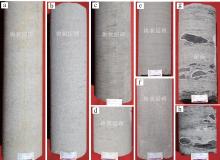
Fig.2
Core photos of sandy debris-flow deposits in the Chang 8‒9 oil groups from representative wells in the Zhidan area, Ordos Basin"

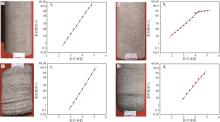
Fig.3
Core photos and grain-size cumulative probability curves of sandy debris-flow deposits and turbidity current deposits in the Yanchang Formation, Zhidan area, Ordos Basin"


Fig.4
Grain-size cumulative probability curves of representative wells and C-M diagram for sandy debris-flow deposits in the Chang 7‒9 oil groups, Zhidan area, Ordos Basin"


Fig.5
Core photos of turbidity current deposits in the Chang 8 oil groups from representative wells in the Zhidan area, Ordos Basin"


Fig.6
Grain-size cumulative probability curves of representative wells and C-M diagram for turbidity current deposits in the Chang 7‒9 oil groups, Zhidan area, Ordos Basin"

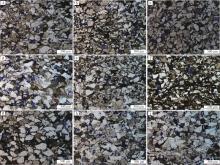
Fig.7
Microscopic images of thin sections of deep-water gravity-flow deposits in the Chang 7‒8 oil groups, Zhidan area, Ordos Basin"


Fig.8
Comparison of grain size parameters between sandy debris-flow deposits and turbidity current deposits in the Chang 7‒9 oil groups, Zhidan area, Ordos Basin"


Fig.9
Core photos of slide-slump deposits in the Chang 7‒9 oil groups from representative wells in the Zhidan area, Ordos Basin(Figs. i and j from reference [37])"


Fig.10
Typical single-well interpretations of deep-water gravity-flow deposits in the Chang 7‒9 oil groups, Zhidan area, Ordos Basin"


Fig.11
Well-correlation sections showing the sedimentary facies of deep-water gravity-flow deposits in the Chang 7‒9 oil groups, Zhidan area, Ordos Basin (see Fig. 1b for the section locations)"

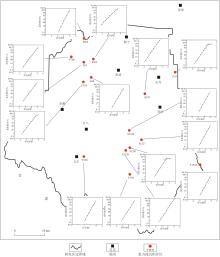
Fig.12
Maps of grain-size cumulative probability curves for deep-water gravity-flow deposits in the Chang 7 oil groups, Zhidan area, Ordos Basin"

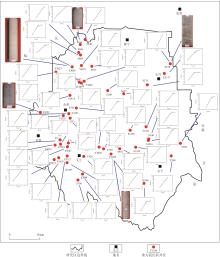
Fig.13
Maps of grain-size cumulative probability curves for deep-water gravity-flow deposits in the Chang 8 oil groups, Zhidan area,Ordos Basin"


Fig.14
Maps of grain-size cumulative probability curves for deep-water gravity-flow deposits in the Chang 9 oil groups, Zhidan area,Ordos Basin"


Fig.15
Maps showing the distribution of deep-water gravity-flow deposits in the Chang 7‒9 oil groups, Zhidan area, Ordos Basin"

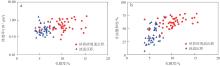
Fig.16
Cross plots showing the relationships of porosity with permeability and oil saturation for different types of deep-water gravity-flow deposits in the Chang 7‒9 oil groups, Zhidan area, Ordos Basin"

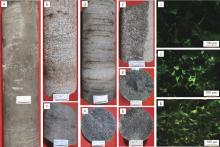
Fig.17
Core photos and fluorescence thin section images showing the oil-bearing properties of different types of deep-water gravity-flow deposits in the Chang 8‒9 oil groups, Zhidan area, Ordos Basin"

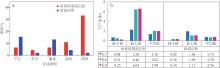
Fig.18
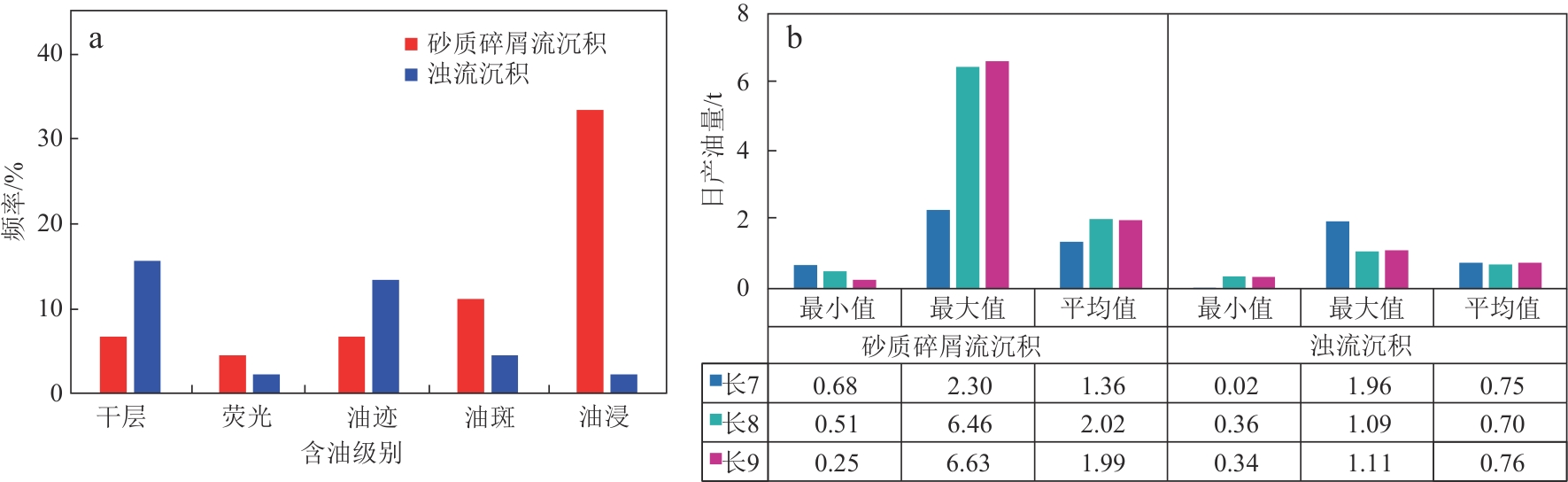
Comparison of the oil-bearing properties of different types of deep-water gravity-flow deposits in the Chang 7‒9 oil groups, Zhidan area, Ordos Basin"
| [1] | 耿军阳, 鲜本忠, 刘振献, 等. 深水重力流沉积模拟研究进展与展望[J]. 沉积学报, 2025, 43(3): 827-845. |
| GENG Junyang, XIAN Benzhong, LIU Zhenxian, et al. Progress and prospects for simulating deep-water gravity flow sedimentation[J]. Acta Sedimentologica Sinica, 2025, 43(3): 827-845. | |
| [2] | DOTT R H. Dynamics of subaqueous gravity depositional processes[J]. AAPG Bulletin, 1963, 47(1): 104-128. |
| [3] | MIDDLETON G V, HAMPTON M A. Sediment gravity flows: Mechanics of flow and deposition[M]//MIDDLETON G V, BOUMA A H. Turbidites and Deep-Water Sedimentation. Los Angeles: Pacific Section of S. E.P.M, 1973. |
| [4] | HAMPTON M. Competence of fine-grained debris flows[J]. Journal of Sedimentary Research, 1975, 45(4): 834-844. |
| [5] | NORMARK W R. Fan valleys, channels, and depositional lobes on modern submarine fans: Characters for recognition of sandy turbidite environments[J]. AAPG Bulletin, 1978, 62(6): 912-931. |
| [6] | 李相博, 陈启林, 刘化清, 等. 鄂尔多斯盆地延长组3种沉积物重力流及其含油气性[J]. 岩性油气藏, 2010, 22(3): 16-21. |
| LI Xiangbo, CHEN Qilin, LIU Huaqing, et al. Three types of sediment gravity flows and their petroliferous features of Yanchang Formation in Ordos Basin[J]. Lithologic Reservoirs, 2010, 22(3): 16-21. | |
| [7] | SHANMUGAM G. 50 Years of the turbidite paradigm (1950s—1990s): Deep-water processes and facies models—a critical perspective[J]. Marine and Petroleum Geology, 2000, 17(2): 285-342. |
| [8] | SHANMUGAM G. New perspectives on deep-water sandstones: Origin, recognition, initiation, and reservoir quality[M]. Amsterdam: Elsevier, 2012: 1-423. |
| [9] | SHANMUGAM G. A preliminary experimental study of turbidite fan deposits: Discussion[J]. Journal of Sedimentary Research, 2003, 73(5): 838-839. |
| [10] | LIU Junlong, ZHANG Xiangchun. Quantitative characterization of permeability heterogeneity of tight-sand reservoirs using nano-CT technology: A case study of the Yanchang Formation, Ordos Basin[J]. Energy Geoscience, 2025, 6(2): 100388. |
| [11] | 李相博, 刘化清, 完颜容, 等. 鄂尔多斯盆地三叠系延长组砂质碎屑流储集体的首次发现[J]. 岩性油气藏, 2009, 21(4): 19-21. |
| LI Xiangbo, LIU Huaqing, WANYAN Rong, et al. First discovery of the sandy debris flow from the Triassic Yanchang Formation, Ordos Basin[J]. Lithologic Reservoirs, 2009, 21(4): 19-21. | |
| [12] | 邹才能, 赵政璋, 杨华, 等. 陆相湖盆深水砂质碎屑流成因机制与分布特征——以鄂尔多斯盆地为例[J]. 沉积学报, 2009, 27(6): 1065-1075. |
| ZOU Caineng, ZHAO Zhengzhang, YANG Hua, et al. Genetic mechanism and distribution of sandy debris flows in terrestrial lacustrine basin[J]. Acta Sedimentologica Sinica, 2009, 27(6): 1065-1075. | |
| [13] | KUENEN P H, MIGLIORINI C I. Turbidity currents as a cause of graded bedding[J]. The Journal of Geology, 1950, 58(2): 91-127. |
| [14] | WANG Mingqian, LI Zhiyang, ZHANG Yuanyuan. Transport and depositional processes of mud in lacustrine environments: From sediment plumes to hyperpycnal flows[J]. Marine and Petroleum Geology, 2024, 170: 107150. |
| [15] | 张家强, 李士祥, 李宏伟, 等. 鄂尔多斯盆地延长组7油层组湖盆远端重力流沉积与深水油气勘探——以城页水平井区长73小层为例[J]. 石油学报, 2021, 42(5): 570-587. |
| ZHANG Jiaqiang, LI Shixiang, LI Hongwei, et al. Gravity flow deposits in the distal lacustrine basin of the 7th reservoir group of Yanchang Formation and deepwater oil and gas exploration in Ordos Basin: A case study of Chang 73 sublayer of Chengye horizontal well region[J]. Acta Petrolei Sinica, 2021, 42(5): 570-587. | |
| [16] | 高嘉洪, 金之钧, 梁新平, 等. 火山活动对鄂尔多斯盆地三叠系长7段淡水湖盆富营养化与沉积水体介质环境的影响[J]. 石油与天然气地质, 2023, 44(4): 887-898. |
| GAO Jiahong, JIN Zhijun, LIANG Xinping, et al. The impact of volcanism on eutrophication and water column in a freshwater lacustrine basin: A case study of Triassic Chang 7 Member in Ordos Basin[J]. Oil & Gas Geology, 2023, 44(4): 887-898. | |
| [17] | 文应初. 陕甘宁盆地晚三叠世的湖相重力流沉积及其含油性[J]. 西南石油大学学报(自然科学版), 1983, 5(2): 1-21. |
| WEN Yingchu. Late Triassic lacustrine gravity flow deposits and their hydrocarbon potential in the Shaanxi-Gansu-Ningxia Basin[J]. Journal of Southwest Petroleum University(Science & Technology Edition), 1983, 5(2): 1-21. | |
| [18] | 陈全红, 李文厚, 郭艳琴, 等. 鄂尔多斯盆地南部延长组浊积岩体系及油气勘探意义[J]. 地质学报, 2006, 80(5): 656-663. |
| CHEN Quanhong, LI Wenhou, GUO Yanqin, et al. Turbidite systems and the significance of petroleum exploration of Yanchang Formation in the southern Ordos Basin[J]. Acta Geologica Sinica, 2006, 80(5): 656-663. | |
| [19] | 付金华, 董国栋, 周新平, 等. 鄂尔多斯盆地油气地质研究进展与勘探技术[J]. 中国石油勘探, 2021, 26(3): 19-40. |
| FU Jinhua, DONG Guodong, ZHOU Xinping, et al. Research progress of petroleum geology and exploration technology in Ordos Basin[J]. China Petroleum Exploration, 2021, 26(3): 19-40. | |
| [20] | 王岚, 王秀娟, 李文厚, 等. 陆相坳陷湖盆深水重力流沉积类型、模式及控制因素分析——以鄂尔多斯盆地延长组长7段为例[J]. 西北大学学报(自然科学版), 2024, 54(6): 1091-1103. |
| WANG Lan, WANG Xiujuan, LI Wenhou, et al. Analysis of sedimentary types, patterns, and controlling factors of deep-water gravity flow in terrestrial depression lake basins: Takeing Chang 7 member of Yanchang Formation of Ordos Basin as an example[J]. Journal of Northwest University (Natural Science Edition), 2024, 54(6): 1091-1103. | |
| [21] | 尹虎, 屈红军, 孙晓晗, 等. 鄂尔多斯盆地东南部三叠系长7油层组深水沉积特征及演化规律[J]. 岩性油气藏, 2024, 36(5): 145-155. |
| YIN Hu, QU Hongjun, SUN Xiaohan, et al. Characteristics of deep-water deposits and evolution law of Triassic Chang 7 reservoir in southeastern Ordos Basin[J]. Lithologic Reservoirs, 2024, 36(5): 145-155. | |
| [22] | 许璟, 葛云锦, 贺永红, 等. 鄂尔多斯盆地延长探区长7油层组泥页岩孔隙结构定量表征与动态演化过程[J]. 石油与天然气地质, 2023, 44(2): 292-307. |
| XU Jing, GE Yunjin, HE Yonghong, et al. Quantitative characterization and dynamic evolution of pore structure in shale reservoirs of Chang 7 oil layer group in Yanchang area, Ordos Basin[J]. Oil & Gas Geology, 2023, 44(2): 292-307. | |
| [23] | 张国栋, 鲜本忠, 晁储志, 等. 鄂尔多斯盆地三水河剖面上三叠统块状砂岩的异重流成因——来自岩石结构的证据[J]. 沉积学报, 2019, 37(5): 934-944. |
| ZHANG Guodong, XIAN Benzhong, CHAO Chuzhi, et al. Flood-generated Massive Sandstones of the Sanshuihe Outcrop in the Triassic Ordos Basin: Evidence from sedimentary textural characteristics[J]. Acta Sedimentologica Sinica, 2019, 37(5): 934-944. | |
| [24] | 杨仁超, 金之钧, 孙冬胜, 等. 鄂尔多斯晚三叠世湖盆异重流沉积新发现[J]. 沉积学报, 2015, 33(1): 10-20. |
| YANG Renchao, JIN Zhijun, SUN Dongsheng, et al. New discovery of hyperpycnal flow deposits in the Late Triassic lacustrine Ordos Basin[J]. Acta Sedimentologica Sinica, 2015, 33(1): 10-20. | |
| [25] | 张军, 白玉彬, 闫新智, 等. 鄂尔多斯盆地富县地区长7段深水重力流沉积及勘探意义[J/OL]. 沉积学报: 1-21[2025-02-27]. . |
| ZHANG Jun, BAI Yubin, YAN Xinzhi, et al. Deep-water gravity flow deposits and exploration significance of the Chang 7 member in Fuxian area, Ordos Basin[J/OL]. Acta Sedimentologica Sinica: 1-21[2025-02-27]. . | |
| [26] | 何自新. 鄂尔多斯盆地演化与油气[M]. 北京: 石油工业出版社, 2003: 95-105. |
| HE Zixin. Evolution and hydrocarbon in Ordos Basin[M]. Beijing: Petroleum Industry Press, 2003: 95-105. | |
| [27] | 付金华. 鄂尔多斯盆地致密油勘探理论与技术[M]. 北京: 科学出版社, 2018: 43-81. |
| FU Jinhua. Theory and technology of tight oil exploration in the Ordos Basin[M]. Beijing: Science Press, 2018: 43-81. | |
| [28] | 张家强, 李士祥, 周新平, 等. 志丹地区长82砂层组缓坡浅水三角洲前缘砂体发育模式及成因[J]. 岩性油气藏, 2020, 32(1): 36-50. |
| ZHANG Jiaqiang, LI Shixiang, ZHOU Xinping, et al. Development pattern and genesis of gentle slope shallow water delta front sand bodies of Chang 82 sand set in Zhidan area, Ordos Basin[J]. Lithologic Reservoirs, 2020, 32(1): 36-50. | |
| [29] | 张译丹, 姜在兴, 杜克峰, 等. 鄂尔多斯盆地志丹—富县地区三叠系延长组长8油层组风暴沉积特征及意义[J]. 石油学报, 2019, 40(7): 813-822. |
| ZHANG Yidan, JIANG Zaixing, DU Kefeng, et al. Storm deposition characteristics and significance of the Triassic Chang 8 oil layer in Zhidan-Fuxian area, Ordos Basin[J]. Acta Petrolei Sinica, 2019, 40(7): 813-822. | |
| [30] | 李哲. 陕北志丹地区长8—长9储盖层评价及其控油性研究[D]. 西安: 西安石油大学, 2024. |
| LI Zhe. Study on the evaluation of Chang 8- Chang 9 reservoir-cap and its oil control in Zhidan area of northern Shaanxi[D]. Xi'an: Xi’an Shiyou University, 2024. | |
| [31] | 曹江骏, 王继平, 张道锋, 等. 深层致密砂岩储层成岩演化对含气性的影响——以鄂尔多斯盆地西南部庆阳气田二叠系山1段为例[J]. 石油与天然气地质, 2024, 45(1): 169-184. |
| CAO Jiangjun, WANG Jiping, ZHANG Daofeng, et al. Effects of diagenetic evolution on gas-bearing properties of deep tight sandstone reservoirs: A case study of reservoirs in the 1st member of the Permian Shanxi Formation in the Qingyang gas field, southwestern Ordos Basin[J]. Oil & Gas Geology, 2024, 45(1): 169-184. | |
| [32] | 朱筱敏. 沉积岩石学[M]. 4版. 北京: 石油工业出版社, 2008: 65-70. |
| ZHU Xiaomin. Sedimentary petrology[M]. 4th ed. Beijing: Petroleum Industry Press, 2008: 65-70. | |
| [33] | 胡英杰, 李晓光, 单俊峰, 等. 鄂尔多斯盆地南缘宁县—正宁地区延长组地层结构重建及页岩油富集模式探讨[J]. 中国石油勘探, 2024, 29(5): 91-106. |
| HU Yingjie, LI Xiaoguang, SHAN Junfeng, et al. Re-construction of stratigraphic structure and shale oil enrichment pattern in Yanchang Formation in Ningxian-Zhengning area, southern margin of Ordos Basin[J]. China Petroleum Exploration, 2024, 29(5): 91-106. | |
| [34] | 解馨慧, 邓虎成, 胡蓝霄, 等. 湖相细粒沉积岩颗粒微观力学特征及类型划分——以鄂尔多斯盆地上三叠统延长组7段页岩为例[J]. 石油与天然气地质, 2024, 45(4): 1079-1088. |
| XIE Xinhui, DENG Hucheng, HU Lanxiao, et al. Micromechanical characteristics and classification of the grains of lacustrine fine grained sedimentary rocks: A case study of shales in the 7th member of the Upper Triassic Yanchang Formation, Ordos Basin[J]. Oil & Gas Geology, 2024, 45(4): 1079-1088. | |
| [35] | 李相博, 刘化清, 潘树新, 等. 中国湖相沉积物重力流研究的过去、现在与未来[J]. 沉积学报, 2019, 37(5): 904-921. |
| LI Xiangbo, LIU Huaqing, PAN Shuxin, et al. The past, present and future of research on deep-water sedimentary gravity flow in lake basins of China[J]. Acta Sedimentologica Sinica, 2019, 37(5): 904-921. | |
| [36] | 赵俊兴, 李凤杰, 申晓莉, 等. 鄂尔多斯盆地南部长6和长7油层浊流事件的沉积特征及发育模式[J]. 石油学报, 2008, 29(3): 389-394. |
| ZHAO Junxing, LI Fengjie, SHEN Xiaoli, et al. Sedimentary characteristics and development pattern of turbidity event of Chang 6 and Chang 7 oil reservoirs in the southern Ordos Basin[J]. Acta Petrolei Sinica, 2008, 29(3): 389-394. | |
| [37] | 陈珊珊. 鄂尔多斯盆地定边-富县地区长7段沉积相及其控油性研究[D]. 西安:西安石油大学, 2024. |
| CHEN Shanshan. Sedimentary facies and their hydrocarbon control in the Chang 7 Member of Dingbian-Fuxian area, Ordos Basin [D]. Xi’an: Xi’an Shiyou University, 2024. | |
| [38] | Fan A, Yang R, Loon V, et al. Classification of gravity-flow deposits and their significance for unconventional petroleum exploration, with a case study from the Triassic Yanchang Formation (southern Ordos Basin, China)[J]. Journal of Asian Earth Sciences, 2018: 16157-73. |
| [39] | 付金华, 王龙, 陈修, 等. 鄂尔多斯盆地长7页岩油勘探开发新进展及前景展望[J]. 中国石油勘探, 2023, 28(5): 1-14. |
| FU Jinhua, WANG Long, CHEN Xiu, et al. Progress and prospects of shale oil exploration and development in the seventh member of Yanchang Formation in Ordos Basin[J]. China Petroleum Exploration, 2023, 28(5): 1-14. | |
| [40] | 朱如凯, 邹才能, 吴松涛, 等. 中国陆相致密油形成机理与富集规律[J]. 石油与天然气地质, 2019, 40(6): 1168-1184. |
| ZHU Rukai, ZOU Caineng, WU Songtao, et al. Mechanism for generation and accumulation of continental tight oil in China[J]. Oil & Gas Geology, 2019, 40(6): 1168-1184. | |
| [41] | 王秀娟, 辛红刚, 程党性, 等. 鄂尔多斯盆地华池地区长73亚段深水重力流砂体发育规模定量表征——以Y1-1、Y2-1水平井钻遇砂体为例[J]. 天然气地球科学, 2024, 35(12): 2142-2154. |
| WANG Xiujuan, XIN Honggang, CHENG Dangxing, et al. Quantitative characterization of deep-water gravity flow sand body in the Chang 73 submember in Huachi area, Ordos Basin: A case study of sandbodies encountered drilling of Y1-1 and Y2-1 horizontal wells[J]. Natural Gas Geoscience, 2024, 35(12): 2142-2154. | |
| [42] | 符勇, 李忠诚, 万谱, 等. 三角洲前缘滑塌型重力流沉积特征及控制因素——以松辽盆地大安地区青一段为例[J]. 岩性油气藏, 2021, 33(1): 198-208. |
| FU Yong, LI Zhongcheng, WAN Pu, et al. Sedimentary characteristics and controlling factors of slump gravity flow in delta front: A case study of Qing 1 member in Da’an area, Songliao Basin[J]. Lithologic Reservoirs, 2021, 33(1): 198-208. | |
| [43] | 冯有良, 杨智, 张洪, 等. 咸化湖盆细粒重力流沉积特征及其页岩油勘探意义——以准噶尔盆地玛湖凹陷风城组为例[J]. 地质学报, 2023, 97(3): 839-863. |
| FENG Youliang, YANG Zhi, ZHANG Hong, et al. Sedimentary characteristics of fine-grained gravity flow deposits in saline lacustrine basins and their implications for shale oil exploration: A case study of the Fengcheng Formation in the Mahu Sag, Junggar Basin[J]. Acta Geologica Sinica, 2023, 97(3): 839-863. | |
| [44] | 王冠民, 庞小军, 黄晓波, 等. 渤海海域辽中凹陷南部古近系东营组三段重力流砂岩优质储层特征及成因[J]. 石油与天然气地质, 2024, 45(1): 81-95. |
| WANG Guanmin, PANG Xiaojun, HUANG Xiaobo, et al. Characteristics and origin of high-quality gravity-flow sandstone reservoirs in the 3rd member of the Dongying Formation, southern Liaozhong Sag, Bohai Sea[J]. Oil & Gas Geology, 2024, 45(1): 81-95. | |
| [45] | 蒲秀刚, 赵贤正, 王家豪, 等. 渤海湾盆地滨海地区古近系沙河街组一段滑塌型湖底扇储集层特征及主控因素[J]. 石油勘探与开发, 2020, 47(5): 913-924. |
| PU Xiugang, ZHAO Xianzheng, WANG Jiahao, et al. Reservoirs properties of slump-type sub-lacustrine fans and their main control factors in first member of Paleogene Shahejie Formation in Binhai area, Bohai Bay Basin, China[J]. Petroleum Exploration and Development, 2020, 47(5): 913-924. | |
| [46] | 熊亮, 邓虎成, 吴冬, 等. 四川盆地及其周缘下寒武统筇竹寺组细粒沉积特征与影响因素[J]. 石油实验地质, 2023, 45(5): 857-871. |
| XIONG Liang, DENG Hucheng, WU Dong, et al. Fine-grained sedimentary characteristics and influencing factors of the Lower Cambrian Qiongzhusi Formation in Sichuan Basin and on its periphery[J]. Petroleum Geology and Experiment, 2023, 45(5): 857-871. |
| Viewed | ||||||
|
Full text |
|
|||||
|
Abstract |
|
|||||
