

Oil & Gas Geology ›› 2025, Vol. 46 ›› Issue (5): 1485-1503.doi: 10.11743/ogg20250507
• Petroleum Geology • Previous Articles
Xiaolong LI1,2( ), Yubin BAI1,2(), Shanshan CHEN3, Gang ZHANG4, Cong’e WANG5
Received:2025-06-07
Revised:2025-09-17
Online:2025-10-30
Published:2025-10-29
Contact:
Yubin BAI
E-mail:1326030435@qq.com;baiyubin@xsyu.edu.cn
CLC Number:
Xiaolong LI, Yubin BAI, Shanshan CHEN, Gang ZHANG, Cong’e WANG. The configuration characteristics of delta and gravity flow sand bodies and their control on reservoir distribution—Chang 7 of Triassic Yanchang Formation in Ganquan area of Ordos Basin Oil layer group as an example[J]. Oil & Gas Geology, 2025, 46(5): 1485-1503.
Add to citation manager EndNote|Reference Manager|ProCite|BibTeX|RefWorks

Fig.1
Structural unit division map of the Ordos Basin (a), as well as the structural map of the top surface (b) and the composite stratigraphic column (c) of the Chang 7 oil layer group, Ganquan area, Ordos Basin"

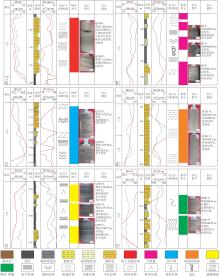
Fig.2
Interpretation templates for identifying the architectural elements of sand bodies in the Chang 7 oil layer group, Ganquan area, Ordos Basin"

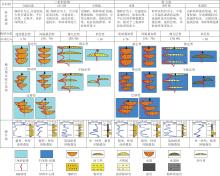
Fig.3
Architectural patterns of sand bodies in the Chang 7 oil layer group, Ganquan area, Ordos Basin"

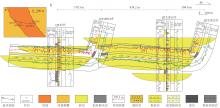
Fig.4
Map showing the positions of horizontal wells and adjacent vertical wells (a) and well-correlation section crossing wells QT32, QT32P14, QT32P13, and QT32P12 showing the architecture of individual sand bodies (b) in the Chang 7 oil layer group, Ganquan area, Ordos Basin (see section 1 in Fig. 1 for the section location)"


Fig.5
Lateral variation patterns of sand body architectures in the Chang 7 oil layer group, Ganquan area, Ordos Basin"

Table 1
Quantitative statistics of the scales of different sand body architecture types in the Chang 7 oil layer group, Ganquan area, Ordos Basin"
| 砂体构型 | 厚度/m | 宽度/m | 宽/厚比 | ||
|---|---|---|---|---|---|
| 分布范围 | 平均值 | 分布范围 | 平均值 | ||
| 平均值 | — | 5.3 | — | 1 015.0 | 191∶1 |
| 连续叠加型 | 3.5 ~ 12.6 | 8.6 | 620.0 ~ 1 940.0 | 1 310.0 | 152∶1 |
| 间隔叠加型 | 2.6 ~ 8.4 | 5.4 | 560.0 ~ 1 910.0 | 1 140.0 | 211∶1 |
| 薄互层型 | 1.5 ~ 5.8 | 3.7 | 470.0 ~ 1 320.0 | 650.0 | 175∶1 |
| 单层型 | 2.1 ~ 7.2 | 3.2 | 410.0 ~ 1 890.0 | 760.0 | 237∶1 |

Fig.6
Well-correlation section showing the vertical sand body architectures in the Chang 7 oil layer group, Ganquan area, Ordos Basin (see section 2 in Fig. 1 for the section location)"

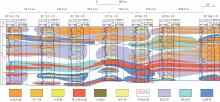
Fig.7
Well-correlation section showing the lateral sand body architectures in the Chang 7 oil layer group, Ganquan area, Ordos Basin (see section 2 in Fig. 1 for the section location)"


Fig.8
Planar distribution map of vertical sand body architectures in the Chang 7 oil layer group, Ganquan area, Ordos Basin"

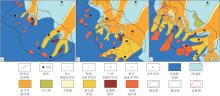
Fig.9
Planar distribution map of lateral sand body architectures in the Chang 7 oil layer group, Ganquan area, Ordos Basin"


Fig.10
Box plots showing the oil layer thickness (a) and porosity (b) of different sand body architectures in the Chang 7 oil layer group, Ganquan area, Ordos Basin"


Fig.11
Box plots showing the oil saturation (a) and corresponding oil layer production (b) of different sand body architectures in the Chang 7 oil layer group, Ganquan area, Ordos Basin"


Fig.12
Relationship between daily oil production and oil layer thickness across different sand body architectures in the Chang 7 oil layer group, Ganquan area, Ordos Basin"


Fig.13
Profile showing the sand body architectures in well QT32 within the Chang 7 oil layer group, Ganquan area, Ordos Basin"

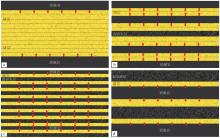
Fig.14
Source rock-reservoir configuration models of different sand body architectures in the Chang 7 oil layer group, Ganquan area, Ordos Basin"


Fig.15
Well-correlation section showing oil reservoir distribution patterns under the control of different sand body architectures in the Chang 7 oil layer group, Ganquan area, Ordos Basin (see section 3 in Fig.1 for the section location)"


Fig.16
Horizontal well drainage curves of different sand body configurations in Chang 7 reservoir group of Ganquan area, Ordos Basin"

| [1] | ALLEN J R L. Studies in fluviatile sedimentation: Bars, bar-complexes and sandstone sheets (low-sinuosity braided streams) in the brownstones (L. devonian), Welsh Borders[J]. Sedimentary Geology, 1983, 33(4): 237-293. |
| [2] | MIALL A D. Architectural-element analysis: A new method of facies analysis applied to fluvial deposits[J]. Earth-Science Reviews, 1985, 22(4): 261-308. |
| [3] | MIALL A D, JONES B G. Fluvial architecture of the Hawkesbury sandstone (Triassic), Near Sydney, Australia[J]. Journal of Sedimentary Research, 2003, 73(4): 531-545. |
| [4] | 封从军, 赵逸, 贾鹏, 等. 浅水湖盆三角洲储层构型模式探讨[J]. 地质科学, 2013, 48(4): 1234-1245. |
| FENG Congjun, ZHAO Yi, JIA Peng, et al. Reservoir architecture model of shallow lacustrine delta[J]. Chinese Journal of Geology (Scientia Geologica Sinica), 2013, 48(4): 1234-1245. | |
| [5] | 封从军, 鲍志东, 杨玲, 等. 三角洲前缘水下分流河道储集层构型及剩余油分布[J]. 石油勘探与开发, 2014, 48(3): 323-329. |
| FENG Congjun, BAO Zhidong, YANG Ling, et al. Reservoir architecture and remaining oil distribution of deltaic front underwater distributary channel[J]. Petroleum Exploration and Development, 2014, 48(3): 323-329. | |
| [6] | 何文祥, 吴胜和, 唐义疆, 等. 河口坝砂体构型精细解剖[J]. 石油勘探与开发, 2005, 32(5): 42-46. |
| HE Wenxiang, WU Shenghe, TANG Yijiang, et al. Detailed architecture analyses of debouch bar in Shengtuo Oilfield, Jiyang Depression[J]. Petroleum Exploration and Development, 2005, 32(5): 42-46. | |
| [7] | 岳大力, 吴胜和, 刘建民. 曲流河点坝地下储层构型精细解剖方法[J]. 石油学报, 2007, 28(4): 99-103. |
| YUE Dali, WU Shenghe, LIU Jianmin. An accurate method for anatomizing architecture of subsurface reservoir in point bar of meandering river[J]. Acta Petrolei Sinica, 2007, 28(4): 99-103. | |
| [8] | 吴胜和, 徐振华, 刘钊. 河控浅水三角洲沉积构型[J]. 古地理学报, 2019, 21(2): 202-215. |
| WU Shenghe, XU Zhenhua, LIU Zhao. Depositional architecture of fluvial-dominated shoal water delta[J]. Journal of Palaeogeography (Chinese Edition), 2019, 21(2): 202-215. | |
| [9] | 徐振华, 邓航, 吴胜和, 等. 河控浅水三角洲前缘树枝状沙坝沉积构型与形成机理[J]. 古地理学报, 2024, 26(6): 1338-1351. |
| XU Zhenhua, DENG Hang, WU Shenghe, et al. Depositional architecture and formative mechanism of dendritic bars within river-dominated shallow-water delta front[J]. Journal of Palaeogeography (Chinese Edition), 2024, 26(6): 1338-1351. | |
| [10] | POSAMENTIER H W, WALKER R G. Deep-water turbidites and submarine fans[M]//POSAMENTIER H W, WALKER R G. Facies Models Revisited. Tulsa: SEPM Society for Sedimentary Geology, 2006: 397-520. |
| [11] | MULDER T, ALEXANDER J. The physical character of subaqueous sedimentary density flows and their deposits[J]. Sedimentology, 2001, 48(2): 269-299. |
| [12] | SHANMUGAM G. 50 years of the turbidite paradigm (1950s—1990s): Deep-water processes and facies models—a critical perspective[J]. Marine and Petroleum Geology, 2000, 17(2): 285-342. |
| [13] | 吕奇奇, 付金华, 罗顺社, 等. 坳陷湖盆重力流水道-朵叶复合体沉积特征及模式——以鄂尔多斯盆地西南部三叠系延长组长7段为例[J]. 石油勘探与开发, 2022, 49(6): 1143-1156. |
| Qiqi LYU, FU Jinhua, LUO Shunshe, et al. Sedimentary characteristics and model of gravity flow channel-lobe complex in a depression lake basin: A case study of Chang 7 Member of Triassic Yanchang Formation in southwestern Ordos Basin, NW China[J]. Petroleum Exploration and Development, 2022, 49(6): 1143-1156. | |
| [14] | 朱卫红, 吴胜和, 尹志军, 等. 辫状河三角洲露头构型——以塔里木盆地库车坳陷三叠系黄山街组为例[J]. 石油勘探与开发, 2016, 43(3): 482-489. |
| ZHU Weihong, WU Shenghe, YIN Zhijun, et al. Braided river delta outcrop architecture: A case study of Triassic Huangshanjie Formation in Kuche depression, Tarim Basin, NW China[J]. Petroleum Exploration and Development, 2016, 43(3): 482-489. | |
| [15] | 王勃力. 定边东仁沟油区长7段致密储层砂体构型及水平井参数优化[D]. 成都: 成都理工大学, 2020. |
| WANG Boli. Sand body architecture and horizontal well parameter optimization of tight reservoir of Chang 7 member in Dongrengou oil block, Dingbian[D]. Chengdu: Chengdu University of Technology, 2020. | |
| [16] | 刘瑞璟, 岳大力, 白斌, 等. 鄂尔多斯盆地庆城油田Z211井区长6油组湖底扇多级次砂体构型表征[J]. 中国石油大学学报(自然科学版), 2025, 49(2): 42-55. |
| LIU Ruijing, YUE Dali, BAI Bin, et al. Multilevel sand architecture characterization of sub-lacustrine fan in Chang-6 member, Z211 area, Qingcheng Oilfield, Ordos Basin[J]. Journal of China University of Petroleum (Edition of Natural Science), 2025, 49(2): 42-55. | |
| [17] | 崔明明, 李进步, 王宗秀, 等. 辫状河三角洲前缘致密砂岩储层特征及优质储层控制因素——以苏里格气田西南部石盒子组8段为例[J]. 石油学报, 2019, 40(3): 279-294. |
| CUI Mingming, LI Jinbu, WANG Zongxiu, et al. Characteristics of tight sand reservoir and controlling factors of high-quality reservoir at braided delta front: A case study from Member 8 of Shihezi Formation in southwestern Sulige Gas Field[J]. Acta Petrolei Sinica, 2019, 40(3): 279-294. | |
| [18] | 童强. 鄂尔多斯盆地史家湾-堡子湾地区长82-长9砂体构型及多因素耦合储层综合评价[D]. 西安: 西北大学, 2021. |
| TONG Qiang. Reservoir architecture of Chang 82-Chang 9 and comprehensive reservoir evaluation with multi factors coupling in Shijiawan-Buziwan area, Ordos Basin[D]. Xi’an: Northwest University, 2021. | |
| [19] | 封从军, 鲍志东, 代春明, 等. 三角洲前缘水下分流河道单砂体叠置机理及对剩余油的控制——以扶余油田J19区块泉头组四段为例[J]. 石油与天然气地质, 2015, 36(1): 128-135. |
| FENG Congjun, BAO Zhidong, DAI Chunming, et al. Superimposition patterns of underwater distributary channel sands in deltaic front and its control on remaining oil distribution: A case study from K1q4 in J19 Block, Fuyu Oilfield[J]. Oil & Gas Geology, 2015, 36(1): 128-135. | |
| [20] | 吴胜和, 岳大力, 刘建民, 等. 地下古河道储层构型的层次建模研究[J]. 中国科学(D辑:地球科学), 2008, 38(): 111-121. |
| WU Shenghe, YUE Dali, LIU Jianmin, et al. Research on hierarchical modeling of underground ancient channel reservoir configuration[J]. Science China Earth Sciences, 2008, 38(S1): 111-121. | |
| [21] | 曾祥平. 储集层构型研究在油田精细开发中的应用[J]. 石油勘探与开发, 2010, 37(4): 483-489. |
| ZENG Xiangping. Application of reservoir structure research in the fine exploitation of oilfields[J]. Petroleum Exploration and Development, 2010, 37(4): 483-489. | |
| [22] | 万琼华, 吴胜和, 陈亮, 等. 基于深水浊积水道构型的流动单元分布规律[J]. 石油与天然气地质, 2015, 36(2): 306-313. |
| WAN Qionghua, WU Shenghe, CHEN Liang, et al. Analysis of flow unit distribution based on architecture of deep-water turbidite channel systems[J]. Oil & Gas Geology, 2015, 36(2): 306-313. | |
| [23] | 龙明, 徐怀民, 江同文, 等. 滨岸相碎屑岩储集层构型动态评价[J]. 石油勘探与开发, 2012, 39(6): 754-763. |
| LONG Ming, XU Huaimin, JIANG Tongwen, et al. Performance evaluation for littoral-facies clastic reservoir architecture[J]. Petroleum Exploration and Development, 2012, 39(6): 754-763. | |
| [24] | 印森林, 陈恭洋, 戴春明, 等. 河口坝内部储层构型及剩余油分布特征——以大港油田枣南断块长轴缓坡辫状河三角洲为例[J]. 石油与天然气地质, 2015, 36(4): 630-639. |
| YIN Senlin, CHEN Gongyang, DAI Chunming, et al. Reservoir architecture and remaining oil distribution in mouth bar—A case study on the braided delta of long-axis gentle slope in Zaonan fault block of Dagang Oilfield[J]. Oil & Gas Geology, 2015, 36(4): 630-639. | |
| [25] | 鲍志东, 李忠诚, 陈栗, 等. 成熟探区相控油藏储集体精细表征与产能劈分[J]. 中国石油勘探, 2022, 27(3): 61-77. |
| BAO Zhidong, LI Zhongcheng, CHEN Li, et al. Fine reservoir characterization and capacity splitting of facies controlled oil reservoir in mature petroleum exploration areas[J]. China Petroleum Exploration, 2022, 27(3): 61-77. | |
| [26] | 李宇鹏, 吴胜和. 储集层构型分级套合模拟方法[J]. 石油勘探与开发, 2013, 40(5): 630-635. |
| LI Yupeng, WU Shenghe. Hierarchical nested simulation approach in reservoir architecture modeling[J]. Petroleum Exploration and Development, 2013, 40(5): 630-635. | |
| [27] | 孙龙德, 邹才能, 贾爱林, 等. 中国致密油气发展特征与方向[J]. 石油勘探与开发, 2019, 46(6): 1015-1026. |
| SUN Longde, ZOU Caineng, JIA Ailin, et al. Development characteristics and orientation of tight oil and gas in China[J]. Petroleum Exploration and Development, 2019, 46(6): 1015-1026. | |
| [28] | 张军, 白玉彬, 闫新智, 等. 鄂尔多斯盆地富县地区长7段深水重力流沉积及勘探意义[J/OL]. 沉积学报: 1-21[2025-04-25]. . |
| ZHANG Jun, BAI Yubin, YAN Xinzhi, et al. Sedimentary characteristics of deep-water gravity flow in the Chang 7 member of the Yanchang Formation in the Fuxian area, Ordos Basin and its significance for petroleum exploration[J/OL]. Acta Sedimentologica Sinica: 1-21[2025-04-25]. . | |
| [29] | 付金华, 喻建, 徐黎明, 等. 鄂尔多斯盆地致密油勘探开发新进展及规模富集可开发主控因素[J]. 中国石油勘探, 2015, 20(5): 9-19. |
| FU Jinhua, YU Jian, XU Liming, et al. New progress in exploration and development of tight oil in Ordos Basin and main controlling factors of large-scale enrichment and exploitable capacity[J]. China Petroleum Exploration, 2015, 20(5): 9-19. | |
| [30] | 葛云锦, 任来义, 贺永红, 等. 鄂尔多斯盆地富县—甘泉地区三叠系延长组7油层组致密油富集主控因素[J]. 石油与天然气地质, 2018, 39(6): 1190-1200. |
| GE Yunjin, REN Laiyi, HE Yonghong, et al. Main factors controlling the tight oil enrichment in the 7th oil layer group of the Triassic Yanchang Formation in Fuxian-Ganquan area, Ordos Basin[J]. Oil & Gas Geology, 2018, 39(6): 1190-1200. | |
| [31] | 杨智, 付金华, 郭秋麟, 等. 鄂尔多斯盆地三叠系延长组陆相致密油发现、特征及潜力[J]. 中国石油勘探, 2017, 22(6): 9-15. |
| YANG Zhi, FU Jinhua, GUO Qiulin, et al. Discovery, characteristics and resource potential of continental tight oil in Triassic Yanchang Formation, Ordos Basin[J]. China Petroleum Exploration, 2017, 22(6): 9-15. | |
| [32] | 尹虎, 屈红军, 孙晓晗, 等. 鄂尔多斯盆地东南部三叠系长7油层组深水沉积特征及演化规律[J]. 岩性油气藏, 2024, 36(5): 145-155. |
| YIN Hu, QU Hongjun, SUN Xiaohan, et al. Characteristics of deep-water deposits and evolution law of Triassic Chang 7 reservoir in southeastern Ordos Basin[J]. Lithologic Reservoirs, 2024, 36(5): 145-155. | |
| [33] | 王永乐, 马俊生, 陈剑峰, 等. 鄂尔多斯盆地东南部山西组曲流河三角洲构型特征及沉积模式[J]. 东北石油大学学报, 2022, 46(5): 26-39. |
| WANG Yongle, MA Junsheng, CHEN Jianfeng, et al. Architectural characteristics and sedimentary model of meandering river delta of Shanxi Formation in the southeast of Ordos Basin[J]. Journal of Northeast Petroleum University, 2022, 46(5): 26-39. | |
| [34] | 徐潇, 赵俊兴, 解古巍, 等. 基准面升降变化控制下的湖泊三角洲前缘砂体构型耦合关系研究——以鄂尔多斯盆地东南部地区延长组长6-长8为例[J]. 矿物岩石, 2024, 44(4): 178-192. |
| XU Xiao, ZHAO Junxing, XIE Guwei, et al. Study on the coupling relationship between base level changes and sand body configuration of lake delta front: A case study of Chang 6 to Chang 8 of the Yanchang Formation in the southeastern Ordos Basin[J]. Mineralogy and Petrology, 2024, 44(4): 178-192. | |
| [35] | 刘池洋, 王建强, 张东东, 等. 鄂尔多斯盆地油气资源丰富的成因与赋存-成藏特点[J]. 石油与天然气地质, 2021, 42(5): 1011-1029. |
| LIU Chiyang, WANG Jianqiang, ZHANG Dongdong, et al. Genesis of rich hydrocarbon resources and their occurrence and accumulation characteristics in the Ordos Basin[J]. Oil & Gas Geology, 2021, 42(5): 1011-1029. | |
| [36] | 陈飞, 胡光义, 孙立春, 等. 鄂尔多斯盆地富县地区上三叠统延长组砂质碎屑流沉积特征及其油气勘探意义[J]. 沉积学报, 2012, 30(6): 1042-1052. |
| CHEN Fei, HU Guangyi, SUN Lichun, et al. Sedimentary characteristics and the significance of petroleum exploration of sandy debris flows of Yanchang Formation of the Upper Triassic, Fuxian area, Ordos Basin[J]. Acta Sedimentologica Sinica, 2012, 30(6): 1042-1052. | |
| [37] | 李威, 文志刚. 鄂尔多斯盆地西南地区延长组长7段细粒沉积物特征研究[J]. 地质学报, 2017, 91(5): 1120-1129. |
| LI Wei, WEN Zhigang. Characteristics of fine-grained sediments from the 7th member of the Yanchang Formation in the southwestern Ordos Basin[J]. Acta Geologica Sinica, 2017, 91(5): 1120-1129. | |
| [38] | 朱必清, 陈世加, 白艳军, 等. 鄂尔多斯盆地甘泉地区延长组长8段原油地球化学特征及来源[J]. 现代地质, 2022, 36(2): 742-754. |
| ZHU Biqing, CHEN Shijia, BAI Yanjun, et al. Geochemical characteristics and source of crude oil in Chang 8 member of Yanchang Formation, Ganquan area, Ordos Basin[J]. Geoscience, 2022, 36(2): 742-754. | |
| [39] | 杨俊杰. 鄂尔多斯盆地构造演化与油气分布规律[M]. 北京: 石油工业出版社, 2002: 130-181. |
| YANG Junjie. Tectonic evolution and oil-gas reservoirs distribution in ordos basin[M]. Beijing: Petroleum Industry Press, 2002: 130-181. | |
| [40] | 张佳佳, 吴胜和, 王瑞峰, 等. 东非鲁伍马盆地深水X气藏海底扇储层构型研究:重力流—底流交互作用的指示意义[J]. 古地理学报, 2023, 25(1): 163-179. |
| ZHANG Jiajia, WU Shenghe, WANG Ruifeng, et al. Submarine-fan reservoir architecture of deepwater gasfield X in Rovuma Basin offshore East Africa: Insights for the interaction between sediment gravity flows and bottom currents[J]. Journal of Palaeogeography (Chinese Edition), 2023, 25(1): 163-179. | |
| [41] | 马江波, 冯纪慧, 李刚, 等. 安塞油田黑山梁区长6油层组单砂体构型分析及平面展布特征[J]. 地质科学, 2024, 59(4): 1018-1033. |
| MA Jiangbo, FENG Jihui, LI Gang, et al. Configuration analysis and plane distribution characteristics of single sand body in Chang 6 reservoir formation of Heishanliang area, Ansai Oilfield[J]. Chinese Journal of Geology (Scientia Geologica Sinica), 2024, 59(4): 1018-1033. | |
| [42] | 胡光义, 范廷恩, 陈飞, 等. 复合砂体构型理论及其生产应用[J]. 石油与天然气地质, 2018, 39(1): 1-10. |
| HU Guangyi, FAN Tingen, CHEN Fei, et al. Theory of composite sand body architecture and its application to oilfield development[J]. Oil & Gas Geology, 2018, 39(1): 1-10. | |
| [43] | 陈义国, 封从军, 魏登峰, 等. 鄂尔多斯盆地东南部三叠系延长组6段致密油的形成、分布与勘探对策[J]. 石油学报, 2025, 46(2): 335-354. |
| CHEN Yiguo, FENG Congjun, WEI Dengfeng, et al. Formation, distribution, and exploration strategies of tight oil in the Member 6 of Triassic Yanchang Formation in southeastern Ordos Basin[J]. Acta Petrolei Sinica, 2025, 46(2): 335-354. | |
| [44] | 肖正录, 李勇, 喻健, 等. 致密油 “近源成藏” 关键地球化学证据——以鄂尔多斯盆地延长组近源组合为例[J]. 石油实验地质, 2023, 45(3): 517-527. |
| XIAO Zhenglu, LI Yong, YU Jian, et al. Key geochemical evidence of “near-source accumulation” of tight oil: A case study of near-source assemblage of Triassic Yanchang Formation in Ordos Basin[J]. Petroleum Geology and Experiment, 2023, 45(3): 517-527. | |
| [45] | 杨海风, 石文龙, 张中巧, 等. 莱州湾洼陷带浅层岩性油藏富集机理与亿吨级油田新发现——以垦利10-2油田为例[J]. 中国海上油气, 2024, 36(4): 23-36. |
| YANG Haifeng, SHI Wenlong, ZHANG Zhongqiao, et al. Enrichment mechanism of shallow lithologic reservoirs and newly discovered billion-ton oilfield in depression zone of Laizhou Bay Sag: A case study of KL10-2 Oilfield[J]. China Offshore Oil and Gas, 2024, 36(4): 23-36. | |
| [46] | 赵靖舟, 孟选刚, 韩载华. 近源成藏——来自鄂尔多斯盆地延长组湖盆东部“边缘”延长组6段原油的地球化学证据[J]. 石油学报, 2020, 41(12): 1513-1526. |
| ZHAO Jingzhou, MENG Xuangang, HAN Zaihua. Near-source hydrocarbon accumulation: Geochemical evidence of lacustrine crude oil from the member 6 of Yanchang Formation, eastern margin of Ordos Basin[J]. Acta Petrolei Sinica, 2020, 41(12): 1513-1526. | |
| [47] | 牟蜚声, 尹相东, 胡琮, 等. 鄂尔多斯盆地陕北地区三叠系长7段致密油分布特征及控制因素[J]. 岩性油气藏, 2024, 36(4): 71-84. |
| MOU Feisheng, YIN Xiangdong, HU Cong, et al. Distribution characteristics and controlling factors of tight oil of Triassic Chang 7 member in northern Shaanxi area, Ordos Basin[J]. Lithologic Reservoirs, 2024, 36(4): 71-84. | |
| [48] | 王福伟, 陈冬霞, 解广杰, 等. 鄂尔多斯盆地庆城地区延长组7段源-储结构控制下致密砂岩油的差异富集机制[J]. 石油学报, 2022, 43(7): 941-956, 976. |
| WANG Fuwei, CHEN Dongxia, XIE Guangjie, et al. Differential enrichment mechanism of tight sandstone oil under the control of the source-reservoir structures of Member 7 of Yanchang Formation in Qingcheng area, Ordos Basin[J]. Acta Petrolei Sinica, 2022, 43(7): 941-956, 976. | |
| [49] | 何发岐, 朱建辉, 齐荣, 等. 基于天文周期等时格架预测细粒沉积岩相展布——以鄂尔多斯盆地富县地区三叠系长7段为例[J]. 石油实验地质, 2024, 46(5): 927-940. |
| HE Faqi, ZHU Jianhui, QI Rong, et al. Prediction of fine-grained sedimentary lithofacies distribution based on astronomical cycle isochronous lattice: A case study of Triassic Chang 7 member of Fuxian area, Ordos Basin[J]. Petroleum Geology & Experiment, 2024, 46(5): 927-940. | |
| [50] | 李潮流, 王长胜, 张文静, 等. 陆相湖盆夹层型页岩油甜点分级测井评价方法研究——以鄂尔多斯盆地陕北吴起地区延长组长7段为例[J]. 中国石油勘探, 2024, 29(4): 156-165. |
| LI Chaoliu, WANG Changsheng, ZHANG Wenjing, et al. Logging evaluation method for sweet spots classification of the interlayered type shale oil in continental lake basin: A case study of the seventh member of Yanchang Formation in Wuqi area in Ordos Basin[J]. China Petroleum Exploration, 2024, 29(4): 156-165. | |
| [51] | 付锁堂, 姚泾利, 李士祥, 等. 鄂尔多斯盆地中生界延长组陆相页岩油富集特征与资源潜力[J]. 石油实验地质, 2020, 42(5): 698-710. |
| FU Suotang, YAO Jingli, LI Shixiang, et al. Enrichment characteristics and resource potential of continental shale oil in Mesozoic Yanchang Formation, Ordos Basin[J]. Petroleum Geology and Experiment, 2020, 42(5): 698-710. | |
| [52] | 高岗, 梁晓伟, 朱康乐, 等. 鄂尔多斯盆地长7段源储组合特征与油气成藏模式[J]. 西北地质, 2021, 54(3): 198-205. |
| GAO Gang, LIANG Xiaowei, ZHU Kangle, et al. Characteristics of source-reservoir assemblage and hydrocarbon accumulation model of Chang 7 member in Ordos Basin[J]. Northwestern Geology, 2021, 54(3): 198-205. | |
| [53] | 刘雨林, 范凌霄, 房大志, 等. 源—储分类新方法在川东地区页岩气井产量分析中的应用[J]. 油气藏评价与开发, 2022, 12(3): 429-436. |
| LIU Yulin, FAN Lingxiao, FANG Dazhi, et al. Application of a new source-reservoir classification method in production analysis of shale gas wells in eastern Sichuan[J]. Petroleum Reservoir Evaluation and Development, 2022, 12(3): 429-436. | |
| [54] | 郭旭升, 胡宗全, 申宝剑, 等. 中国页岩油气源-储耦合类型划分及勘探意义[J]. 石油学报, 2024, 45(11): 1565-1578. |
| GUO Xusheng, HU Zongquan, SHEN Baojian, et al. Classification and exploration significance of source-reservoir coupling types of shale oil and gas in China[J]. Acta Petrolei Sinica, 2024, 45(11): 1565-1578. | |
| [55] | 张凤奇, 张凤博, 钟红利, 等. 鄂尔多斯盆地甘泉南部地区延长组长7致密油富集主控因素[J]. 岩性油气藏, 2016, 28(3): 12-19. |
| ZHANG Fengqi, ZHANG Fengbo, ZHONG Hongli, et al. Main controlling factors of the enrichment of Chang 7 tight oil of Yanchang Formation in southern Ganquan area, Ordos Basin[J]. Lithologic Reservoirs, 2016, 28(3): 12-19. | |
| [56] | 陈义国, 贺永红, 王超, 等. 鄂尔多斯盆地三叠系延长组8段非常规油藏成因与成藏模式——以盆地东南部甘泉西区为例[J]. 石油学报, 2021, 42(10): 1270-1286. |
| CHEN Yiguo, HE Yonghong, WANG Chao, et al. Genesis and accumulation patterns of unconventional oil reservoir in member 8 of Triassic Yanchang Formation: A case study of the western Ganquan area, southeastern Ordos Basin[J]. Acta Petrolei Sinica, 2021, 42(10): 1270-1286. | |
| [57] | 钟红利, 卓自敏, 张凤奇, 等. 鄂尔多斯盆地甘泉地区长7页岩油储层非均质性及其控油规律[J]. 特种油气藏, 2023, 30(4): 10-18. |
| ZHONG Hongli, ZHUO Zimin, ZHANG Fengqi, et al. Heterogeneity of Chang 7 shale oil reservoir and its oil control law in Ganquan area, Ordos Basin[J]. Special Oil & Gas Reservoirs, 2023, 30(4): 10-18. | |
| [58] | 屈雪峰, 何右安, 尤源, 等. 鄂尔多斯盆地庆城油田页岩油开发技术探索与实践[J]. 大庆石油地质与开发, 2024, 43(4): 170-180. |
| QU Xuefeng, HE Youan, YOU Yuan, et al. Research and practice of shale oil development technology in Qingcheng Oilfield of Ordos Basin[J]. Petroleum Geology & Oilfield Development in Daqing, 2024, 43(4): 170-180. | |
| [59] | 邬德刚, 吴胜和, 刘常妮, 等. 基于平面相约束的三维砂体构型建模方法[J/OL]. 中国石油大学学报(自然科学版): 1-13[2025-07-28]. . |
| WU Degang, WU Shenghe, LIU Changni, et al. An intelligent 3D reservoir modeling method with constraint from planar distribution of sedimentary facies[J/OL]. Journal of China University of Petroleum (Edition of Natural Science): 1-13[2025-07-28]. . |
| Viewed | ||||||
|
Full text |
|
|||||
|
Abstract |
|
|||||
