

Oil & Gas Geology ›› 2025, Vol. 46 ›› Issue (5): 1504-1521.doi: 10.11743/ogg20250508
• Petroleum Geology • Previous Articles
Linxi WANG1,2( ), Jingzhou ZHAO1,2(), Zhendong GAO3, Fanrong WEI3, Shiqi ZHOU1,2, Xuangang MENG3, Xinzhi YAN3, Ning XU3
Received:2025-06-17
Revised:2025-08-14
Online:2025-10-30
Published:2025-10-29
Contact:
Jingzhou ZHAO
E-mail:1474153226@qq.com;jzzhao@xsyu.edu.cn
CLC Number:
Linxi WANG, Jingzhou ZHAO, Zhendong GAO, Fanrong WEI, Shiqi ZHOU, Xuangang MENG, Xinzhi YAN, Ning XU. Types of deep-water gravity-flow deposits and comparison of their oil-bearing properties: A case study of the 7th-9th oil groups in the Triassic Yanchang Formation, Fuxian area, Ordos Basin[J]. Oil & Gas Geology, 2025, 46(5): 1504-1521.
Add to citation manager EndNote|Reference Manager|ProCite|BibTeX|RefWorks
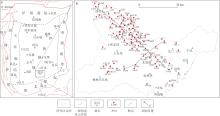
Fig. 1
Tectonic location (a) and well distribution (b) of the Fuxian area, Ordos Basin"

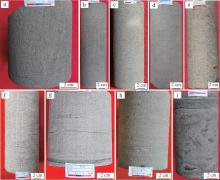
Fig. 2
Core photos of sandy debris-flow deposits in the Chang 7‒9 oil groups, Fuxian area (Fig.2 a—d and i from reference [31])"

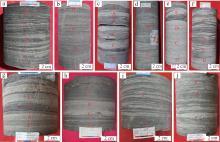
Fig. 3
Core photos of turbidite-flow deposits in the Chang 7‒9 oil groups, Fuxian area (Fig.3a and b from reference [31])"

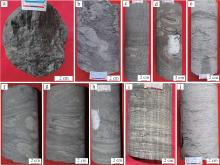
Fig. 4
Core photos of slide-slump deposits in the Chang 7‒9 oil groups, Fuxian area (Fig. 4a, c, and d from reference [31])"

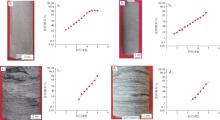
Fig.5
Core photos and corresponding grain-size cumulative probability curves of sandy debris-flow deposits and turbidite-flow deposits in the Fuxian area (Fig. 5a1 and a2 from reference [44])"

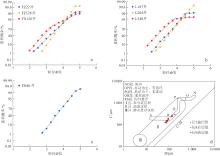
Fig. 6
Grain-size cumulative probability curves (a—c) and C-M diagram (d) for sandy debris-flow deposits in the Chang 7‒9 oil groups, Fuxian area"
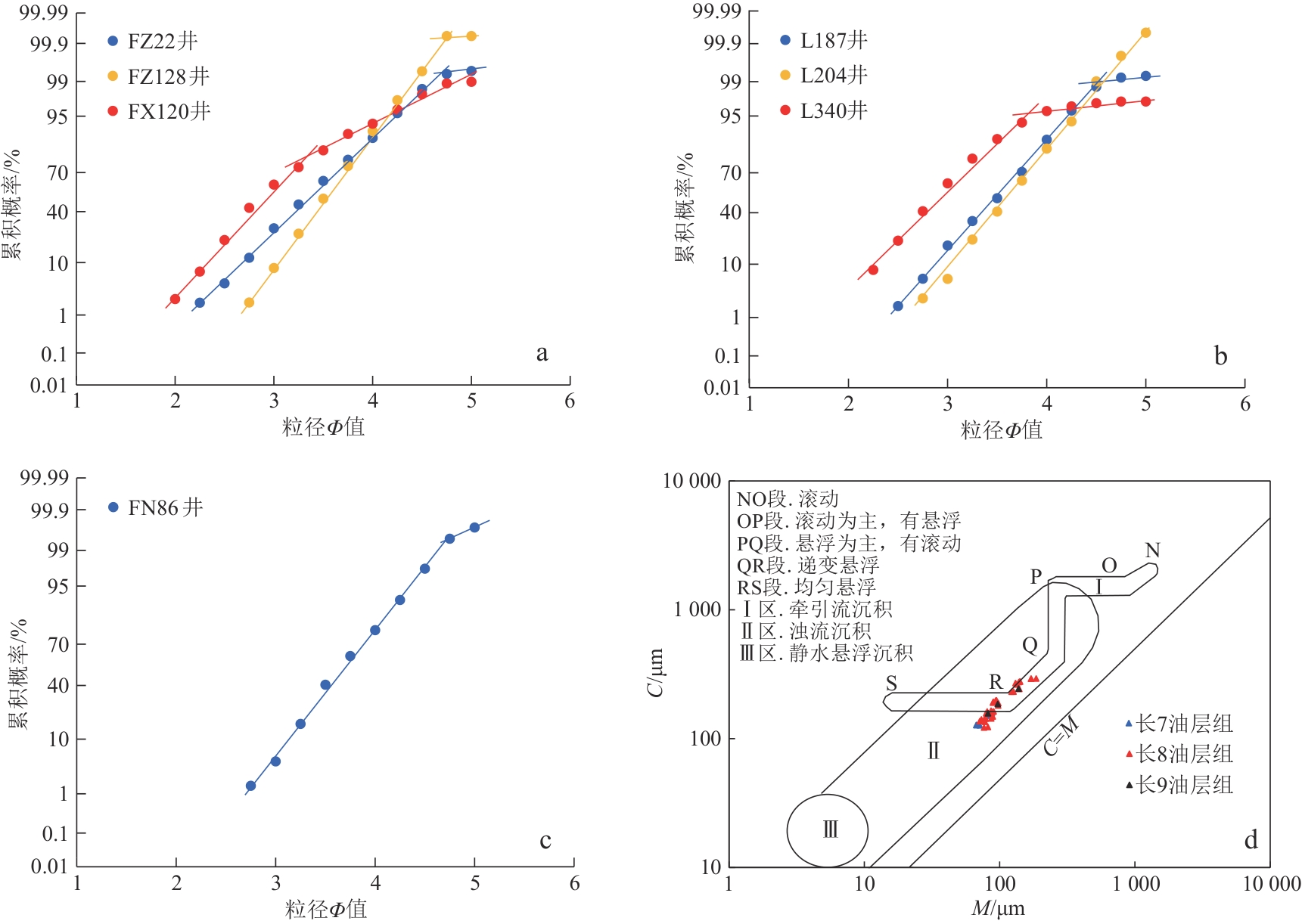
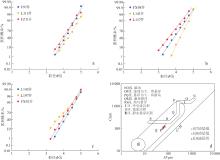
Fig. 7
Grain-size cumulative probability curves (a—c) and C-M diagram (d) for turbidite-flow deposits in the Chang 7‒9 oil groups, Fuxian area"

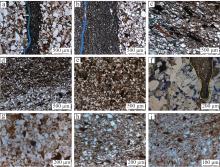
Fig. 8
Micrographs of casting thin sections of gravity-flow deposits in the Chang 7‒9 oil groups, Fuxian area"

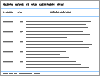
Table 1
Characteristic comparison of sandy debris-flow deposits and turbidite-flow deposits in the Fuxian area"
| 沉积类型 | 岩心特征 | 粒度特征 | 概率累积曲线类型 | 概率累积曲线起始段粒径Φ值 | 粒径Φ值 | 薄片特征 | |||||
|---|---|---|---|---|---|---|---|---|---|---|---|
| 平均粒径Φ值 | 标准偏差 | C/μm | M/μm | 偏度 | 尖度 | ||||||
| 砂质碎屑流沉积 | 块状层理、漂浮泥砾和泥岩撕裂屑 | 3.37 | 0.45 | 187.9 | 101.0 | 0.36 | 3.39 | 短尾二段式、一段式和高悬二段式 | 2 ~ 3 | 2 ~ 5 | 颗粒次棱角状-次圆状 |
| 浊流沉积 | 鲍玛序列 | 3.97 | 0.36 | 114.1 | 64.4 | 0.05 | 2.86 | 一段式 | ~ 3 | 3 ~ 5 | 颗粒次棱角状-次圆状 |
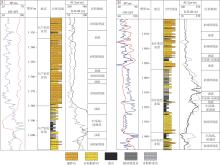
Fig. 9
Distributions of gravity-flow deposits in the Chang 7‒9 oil groups in individual wells L241 (a) and L271 (b), Fuxian area"

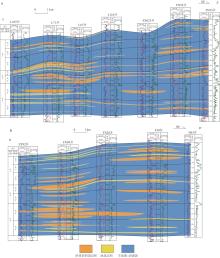
Fig. 10
S-E (a) and N-E (b) well-correlation sections showing the distribution of gravity-flow deposits in the Chang 7‒9 oil groups, Fuxian area (see Fig. 1b for the section locations)"

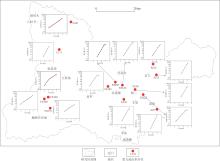
Fig. 11
Map of grain-size cumulative probability curves for gravity-flow deposits in the Chang 7 oil group, Fuxian area"

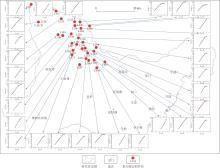
Fig. 12
Map of grain-size cumulative probability curves for gravity-flow deposits in the Chang 8 oil group, Fuxian area"
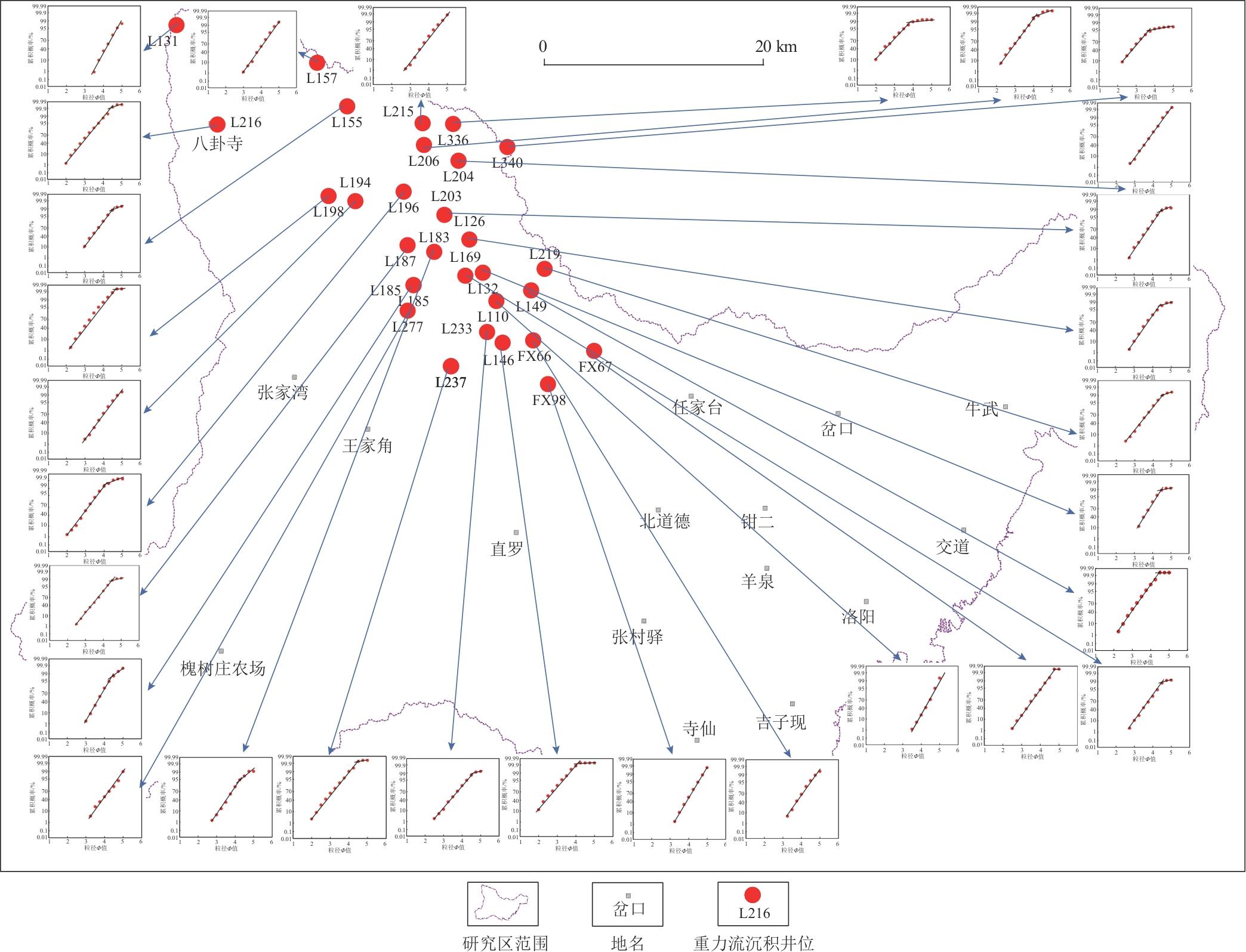
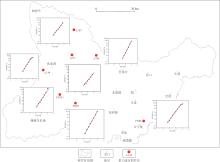
Fig. 13
Map of grain-size cumulative probability curves for gravity-flow deposits in the Chang 9 oil group, Fuxian area"

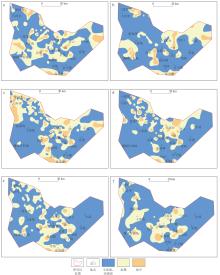
Fig. 14
Maps showing the distributions of gravity-flow deposits in the Chang 7‒9 oil groups, Fuxian area"

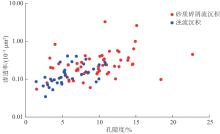
Fig. 15
Porosity vs. permeability cross plot for gravity-flow deposits in the Chang 7‒9 oil groups, Fuxian area"
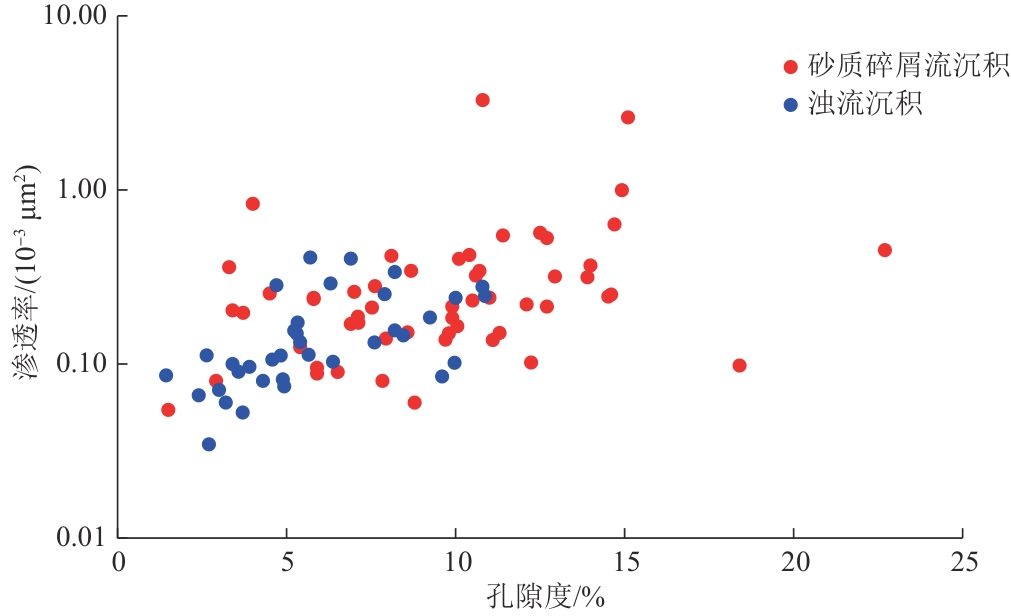
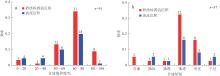
Fig. 16
Histogram showing the frequency distribution of oil saturation (a) and bar chart illustrating oil-bearing grades (b) for different types of gravity-flow deposits in the Chang 7‒9 oil groups, Fuxian area"
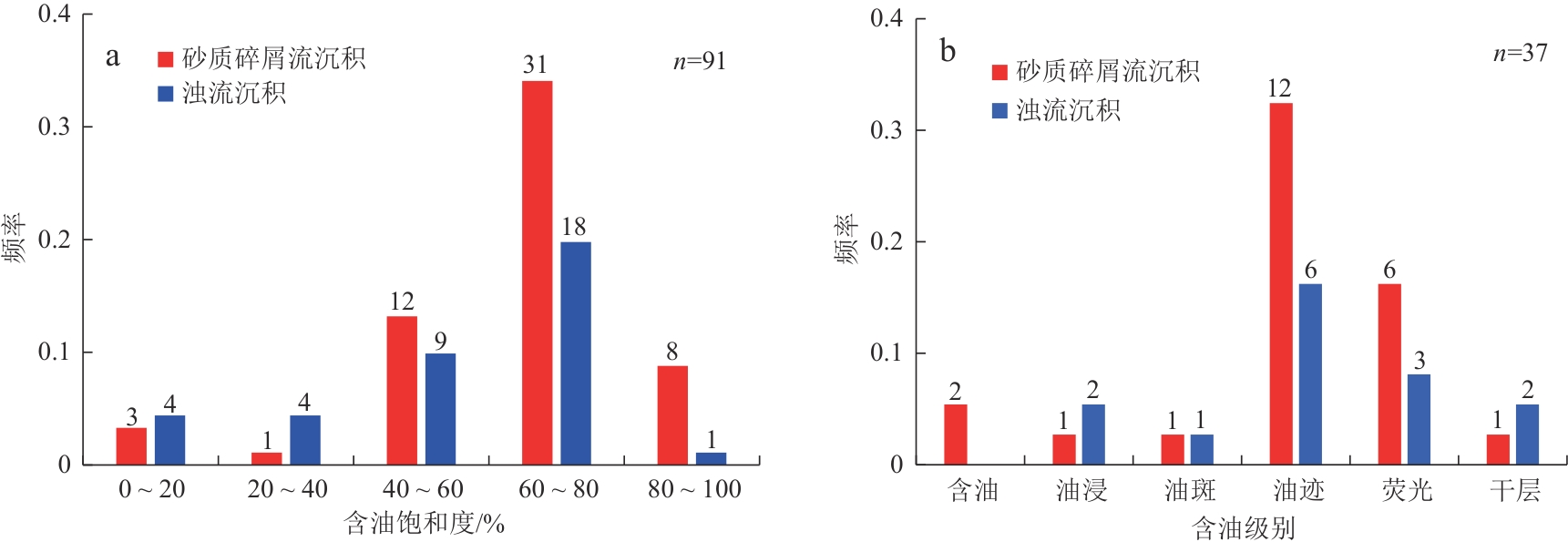
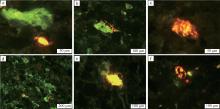
Fig. 17
Micrographs of fluorescence thin sections showing the oil-bearing properties of sandstones in gravity-flow deposits in the Chang 8‒9 oil groups, Fuxian area"

"
| [1] | KUENEN P H, MIGLIORINI C I. Turbidity currents as a cause of graded bedding[J]. The Journal of Geology, 1950, 58(2): 91-127. |
| [2] | BOUMA A H. Sedimentology of some flysch deposits: A graphic approach to facies interpretation[M]. Amsterdam: Elsevier, 1962: 1-168. |
| [3] | MIDDLETON G V, HAMPTON M A. Sediment gravity flows: Mechanics of flow and deposition[C]//MIDDLETON G V, BOUMA A H. Turbidites and Deep Sea Sedimentation: Short Course Lecture Notes Part Ⅰ Califotnia: Los Angeles, 1973: 1-38. |
| [4] | LOWE D R. Sediment gravity flows; II, Depositional models with special reference to the deposits of high-density turbidity currents[J]. Journal of Sedimentary Research, 1982, 52(1): 279-297. |
| [5] | SHANMUGAM G. High-density turbidity currents; are they sandy debris flows?[J]. Journal of Sedimentary Research, 1996, 66(1): 2-10. |
| [6] | 李相博, 刘化清, 完颜容, 等. 鄂尔多斯盆地三叠系延长组砂质碎屑流储集体的首次发现[J]. 岩性油气藏, 2009, 21(4): 19-21. |
| LI Xiangbo, LIU Huaqing, WANYAN Rong, et al. First discovery of the sandy debris flow from the Triassic Yanchang Formation, Ordos Basin[J]. Lithologic Reservoirs, 2009, 21(4): 19-21. | |
| [7] | 李相博, 付金华, 陈启林, 等. 砂质碎屑流概念及其在鄂尔多斯盆地延长组深水沉积研究中的应用[J]. 地球科学展, 2011, 26(3): 286-294. |
| LI Xiangbo, FU Jinhua, CHEN Qilin, et al. The concept of sandy debris flow and its application in the Yanchang Formation deep water sedimentation of the Ordos Basin[J]. Advances in Earth Science, 2011, 26(3): 286-294. | |
| [8] | 鲜本忠, 安思奇, 施文华. 水下碎屑流沉积: 深水沉积研究热点与进展[J]. 地质论评, 2014, 60(1): 39-51. |
| XIAN Benzhong, AN Siqi, SHI Wenhua. Subaqueous debris flow: Hotspots and advances of deep-water sedimentation[J]. Geological Review, 2014, 60(1): 39-51. | |
| [9] | 杨仁超, 金之钧, 孙冬胜, 等. 鄂尔多斯晚三叠世湖盆异重流沉积新发现[J]. 沉积学报, 2015, 33(1): 10-20. |
| YANG Renchao, JIN Zhijun, SUN Dongsheng, et al. Discovery of hyperpycnal flow deposits in the Late Triassic lacustrine Ordos Basin[J]. Acta Sedimentologica Sinica, 2015, 33(1): 10-20. | |
| [10] | 操应长, 杨田, 王艳忠, 等. 超临界沉积物重力流形成演化及特征[J]. 石油学报, 2017, 38(6): 607-621. |
| CAO Yingchang, YANG Tian, WANG Yanzhong, et al. Formation, evolution and sedimentary characteristics of supercritical sediment gravity-flow[J]. Acta Petrolei Sinica, 2017, 38(6): 607-621. | |
| [11] | 潘树新. 大型坳陷湖盆深水重力流研究——以松辽盆地青山口组为例[D]. 成都: 成都理工大学, 2012: 45-80. |
| PAN Shuxin. Deep-water gravity deposits in Songliao terrestrial basin[D]. Chengdu: Chengdu University of Technology, 2012: 45-80. | |
| [12] | 刘化清, 冯明, 郭精义, 等. 坳陷湖盆斜坡区深水重力流水道地震响应及沉积特征——以松辽盆地LHP地区嫩江组一段为例[J]. 岩性油气藏, 2021, 33(3): 1-12. |
| LIU Huaqing, FENG Ming, GUO Jingyi, et al. Seismic reflection and sedimentary characteristics of deep-water gravity flow channels on the slope of lacustrine depression basin: First member of Nenjiang Formation in LHP area, Songliao Basin[J]. Lithologic Reservoirs, 2021, 33(3): 1-12. | |
| [13] | 王冠民, 庞小军, 黄晓波, 等. 渤海海域辽中凹陷南部古近系东营组三段重力流砂岩优质储层特征及成因[J]. 石油与天然气地质, 2024, 45(1): 81-95. |
| WANG Guanmin, PANG Xiaojun, HUANG Xiaobo, et al. Characteristics and origin of high-quality gravity-flow sandstone reservoirs in the 3rd member of the Dongying Formation, southern Liaozhong Sag, Bohai Sea[J]. Oil & Gas Geology, 2024, 45(1): 81-95. | |
| [14] | 耿军阳, 鲜本忠, 刘振献, 等. 深水重力流沉积模拟研究进展与展望[J]. 沉积学报, 2025, 43(3): 827-845. |
| GENG Junyang, XIAN Benzhong, LIU Zhenxian, et al. Progress and prospects for simulating deep-water gravity flow sedimentation[J]. Acta Sedimentologica Sinica, 2025, 43(3): 827-845. | |
| [15] | 孙宁亮, 钟建华, 王书宝, 等. 鄂尔多斯盆地南部三叠系延长组深水重力流沉积特征及其石油地质意义[J]. 古地理学报, 2017, 19(2): 299-314. |
| SUN Ningliang, ZHONG Jianhua, WANG Shubao, et al. Sedimentary characteristics and petroleum geologic significance of deep-water gravity flow of the Triassic Yanchang Formation in southern Ordos Basin[J]. Journal of Palaeogeography (Chinese Edition), 2017, 19(2): 299-314. | |
| [16] | 冉逸轩, 周翔. 鄂尔多斯盆地西南部延长组6段重力流沉积特征及其油气地质意义[J]. 沉积学报, 2020, 38(3): 571-579. |
| RAN Yixuan, ZHOU Xiang. Sedimentary characteristics and petroleum geological significance of the Chang 6 gravity flow in the southwest Ordos Basin[J]. Acta Sedimentologica Sinica, 2020, 38(3): 571-579. | |
| [17] | 祝海华, 张秋霞, 董国栋, 等. 鄂尔多斯盆地长7段重力流砂岩长石溶蚀特征及控制因素[J]. 石油勘探与开发, 2024, 51(1): 102-113. |
| ZHU Haihua, ZHANG Qiuxia, DONG Guodong, et al. Characteristics and control factors of feldspar dissolution in gravity flow sandstone of Chang 7 Member, Triassic Yanchang Formation, Ordos Basin, NW China[J]. Petroleum Exploration and Development, 2024, 51(1): 102-113. | |
| [18] | 徐黎明, 郭芪恒, 刘元博, 等. 鄂尔多斯盆地长73亚段深水重力流砂岩储层特征及控制因素——以华池地区CY1井为例[J]. 天然气地球科学, 2021, 32(12): 1797-1809. |
| XU Liming, GUO Qiheng, LIU Yuanbo, et al. Characteristics and controlling factors of deep-water gravity flow sandstone reservoir in the Chang 73 sub-member in Ordos Basin: Case study of Well CY1 in Huachi area[J]. Natural Gas Geoscience, 2021, 32(12): 1797-1809. | |
| [19] | 张家强, 李士祥, 李宏伟, 等. 鄂尔多斯盆地延长组7油层组湖盆远端重力流沉积与深水油气勘探——以城页水平井区长73小层为例[J]. 石油学报, 2021, 42(5): 570-587. |
| ZHANG Jiaqiang, LI Shixiang, LI Hongwei, et al. Gravity flow deposits in the distal lacustrine basin of the 7th reservoir group of Yanchang Formation and deepwater oil and gas exploration in Ordos Basin: A case study of Chang 73 sublayer of Chengye horizontal well region[J]. Acta Petrolei Sinica, 2021, 42(5): 570-587. | |
| [20] | 张倚安, 李士祥, 田景春, 等. 鄂尔多斯盆地上三叠统延长组长7段深水重力流沉积类型[J]. 沉积学报, 2021, 39(2): 297-309. |
| ZHANG Yian, LI Shixiang, TIAN Jingchun, et al. Sedimentation types of deep-water gravity flow, Chang 7 member, Upper Triassic Yanchang Formation, Ordos Basin[J]. Acta Sedimentologica Sinica, 2021, 39(2): 297-309. | |
| [21] | 霍宏亮, 刘成林, 李闻达, 等. 沉积和成岩作用对湖相重力流致密砂岩储层质量的影响——以鄂尔多斯盆地合水地区长7段为例[J]. 地质论评, 2024, 70(6): 2411-2427. |
| HUO Hongliang, LIU Chenglin, LI Wenda, et al. Effect of sedimentation and diagenesis on the quality of lacustral gravity flow tight sandstone reservoirs—A case study of the Chang-7 Member in Heshui area, Ordos Basin[J]. Geological Review, 2024, 70(6): 2411-2427. | |
| [22] | 蒋文琦, 冯有良, 邹才能, 等. 鄂尔多斯盆地陇东地区延长组长73亚段细粒重力流沉积特征及其主要影响因素[J]. 地球科学, 2025, 50(6): 2209-2226. |
| JIANG Wenqi, FENG Youliang, ZOU Caineng, et al. Depositional character and influencing factors of fine-grained gravity flow of Chang 73 submember in Longdong area of Ordos Basin[J]. Earth Science, 2025, 50(6): 2209-2226. | |
| [23] | 肖文华, 杨军, 严宝年, 等. 鄂尔多斯盆地环庆地区三叠系长8致密砂岩储层特征及成藏主控因素[J]. 岩性油气藏, 2025, 37(3): 23-32. |
| XIAO Wenhua, YANG Jun, YAN Baonian, et al. Characteristics and main controlling factors of Triassic Chang 8 tight sandstone reservoir in Huanqing area, Ordos Basin[J]. Lithologic Reservoirs, 2025, 37(3): 23-32. | |
| [24] | 邓秀芹, 庞锦莲, 孙勃. 鄂尔多斯盆地三叠系延长组长10—长8段沉积演化特征[J]. 西北大学学报(自然科学版), 2024, 54(6): 1078-1090. |
| DENG Xiuqin, PANG Jinlian, SUN Bo. Evolution characteristics of Ordos Basin in sedimentary period of Chang 10-Chang 8 member of Yanchang Formation[J]. Journal of Northwest University (Natural Science Edition), 2024, 54(6): 1078-1090. | |
| [25] | 王林, 吕奇奇, 张严, 等. 鄂尔多斯盆地西南部长7油层组深水重力流沉积岩相特征及分布模式[J]. 沉积学报, 2025, 43(1): 154-168. |
| WANG Lin, Qiqi LYU, ZHANG Yan, et al. Lithofacies characteristics and distribution patterns of deep water gravity flow deposits in the Chang 7 oil member in the southwest Ordos Basin[J]. Acta Sedimentologica Sinica, 2025, 43(1): 154-168. | |
| [26] | 张龙飞, 白玉彬, 闫新智, 等. 吴起—定边地区延长组长7段深水沉积特征及沉积模式[J]. 西安石油大学学报(自然科学版), 2025, 40(3): 12-25. |
| ZHANG Longfei, BAI Yubin, YAN Xinzhi, et al. Deep-water sedimentary characteristics and sedimentary model of Chang 7 member of Yanchang Formation in Wuqi-Dingbian area[J]. Journal of Xi’an Shiyou University (Natural Science Edition), 2025, 40(3): 12-25. | |
| [27] | 姜龙燕, 钱门辉, 何发岐, 等. 鄂尔多斯盆地富县地区三叠系延长组长7页岩油特征及其主控因素[J]. 石油实验地质, 2024, 46(5): 941-953. |
| JIANG Longyan, QIAN Menhui, HE Faqi, et al. Characteristics and main controlling factors of Chang 7 shale oil in Triassic Yanchang Formation, Fuxian area, Ordos Basin[J]. Petroleum Geology & Experiment, 2024, 46(5): 941-953. | |
| [28] | 何发岐, 朱建辉, 齐荣, 等. 基于天文周期等时格架预测细粒沉积岩相展布——以鄂尔多斯盆地富县地区三叠系长7段为例[J]. 石油实验地质, 2024, 46(5): 927-940. |
| HE Faqi, ZHU Jianhui, QI Rong, et al. Prediction of fine-grained sedimentary lithofacies distribution based on astronomical cycle isochronous lattice: A case study of Triassic Chang 7 member of Fuxian area, Ordos Basin[J]. Petroleum Geology & Experiment, 2024, 46(5): 927-940. | |
| [29] | 陈飞, 胡光义, 孙立春, 等. 鄂尔多斯盆地富县地区上三叠统延长组砂质碎屑流沉积特征及其油气勘探意义[J]. 沉积学报, 2012, 30(6): 1042-1052. |
| CHEN Fei, HU Guangyi, SUN Lichun, et al. Sedimentary characteristics and the significance of petroleum exploration of sandy debris flows of Yanchang Formation of the Upper Triassic, Fuxian area, Ordos Basin[J]. Acta Sedimentologica Sinica, 2012, 30(6): 1042-1052. | |
| [30] | 田媛, 钟建华, 王书宝, 等. 鄂尔多斯盆地富县探区三叠系延长组震积岩及其地质意义[J]. 古地理学报, 2015, 17(4): 541-552. |
| TIAN Yuan, ZHONG Jianhua, WANG Shubao, et al. Seismites and their geological significances of the Triassic Yanchang Formation in Fuxian exploration area, Ordos Basin[J]. Journal of Palaeogeography (Chinese Edition), 2015, 17(4): 541-552. | |
| [31] | 张军, 白玉彬, 闫新智, 等. 鄂尔多斯盆地富县地区长7段深水重力流沉积及勘探意义[J/OL]. 沉积学报: 1-21[2025-05-29]. . |
| ZHANG Jun, BAI Yubin, YAN Xinzhi, et al. Deep-water gravity flow sedimentation and exploration significance of Chang 7 member in Fuxian area, Ordos Basin[J/OL]. Acta Sedimentologica Sinica: 1-21[2025-05-29]. . | |
| [32] | 周世琪. 陕北富县地区长8-长9储盖层评价及其控油性研究[D]. 西安: 西安石油大学, 2024. |
| ZHOU Shiqi. Study on the evaluation of Chang 8-Chang 9 reservoir-cap and its oil control in Fuxian area of northern Shaanxi[D]. Xi’an: Xi’an Shiyou University, 2024. | |
| [33] | 朱筱敏. 沉积岩石学[M]. 4版. 北京: 石油工业出版社, 2008: 1-479. |
| ZHU Xiaomin. Sedimentary petrology[M]. 4th ed. Beijing: Petroleum Industry Press, 2008: 1-479. | |
| [34] | 尹虎, 屈红军, 孙晓晗, 等. 鄂尔多斯盆地东南部三叠系长7油层组深水沉积特征及演化规律[J]. 岩性油气藏, 2024, 36(5): 145-155. |
| YIN Hu, QU Hongjun, SUN Xiaohan, et al. Characteristics of deep-water deposits and evolution law of Triassic Chang 7 reservoir in southeastern Ordos Basin[J]. Lithologic Reservoirs, 2024, 36(5): 145-155. | |
| [35] | 何自新. 鄂尔多斯盆地演化与油气[M]. 北京: 石油工业出版社, 2003: 95-105. |
| HE Zixin. Evolution and hydrocarbon in Ordos Basin[M]. Beijing: Petroleum Industry Press, 2003: 95-105. | |
| [36] | 许璟, 葛云锦, 贺永红, 等. 鄂尔多斯盆地延长探区长7油层组泥页岩孔隙结构定量表征与动态演化过程[J]. 石油与天然气地质, 2023, 44(2): 292-307. |
| XU Jing, GE Yunjin, HE Yonghong, et al. Quantitative characterization and dynamic evolution of pore structure in shale reservoirs of Chang 7 oil layer group in Yanchang area, Ordos Basin[J]. Oil & Gas Geology, 2023, 44(2): 292-307. | |
| [37] | 蒋杨, 弓虎军, 蒲仁海. 鄂尔多斯盆地甘泉—富县地区延长组长9—长7段烃源岩地球化学特征及长8致密油源对比[J]. 沉积与特提斯地质, 2024, 44(3): 656-670. |
| JIANG Yang, GONG Hujun, PU Renhai. Geochemical characteristics of source rocks in the Chang 9-Chang 7 members and their correlation with the tight oil sources of Chang 8 member in the Ganquan-Fuxian area, Ordos Basin[J]. Sedimentary Geology and Tethyan Geology, 2024, 44(3): 656-670. | |
| [38] | 黄彦杰, 耿继坤, 白玉彬, 等. 鄂尔多斯盆地富县地区延长组长6、长7段原油地球化学特征及油源对比[J]. 石油实验地质, 2020, 42(2): 281-288. |
| HUANG Yanjie, GENG Jikun, BAI Yubin, et al. Geochemical characteristics and oil-source correlation of crude oils in 6th and 7th members of Yanchang Formation, Fuxian area, Ordos Basin[J]. Petroleum Geology and Experiment, 2020, 42(2): 281-288. | |
| [39] | 孙建博, 石彬, 郭超, 等. 鄂尔多斯盆地富县地区三叠系延长组长73亚段页岩油储层特征与勘探前景[J]. 中国石油勘探, 2023, 28(4): 79-91. |
| SUN Jianbo, SHI Bin, GUO Chao, et al. Characteristics of shale oil reservoir and exploration prospects in the third sub-member of the seventh member of the Triassic Yanchang Formation in Fuxian area, Ordos Basin[J]. China Petroleum Exploration, 2023, 28(4): 79-91. | |
| [40] | 姜辉. 浊流沉积的动力学机制与响应[J]. 石油与天然气地质, 2010, 31(4): 428-435. |
| JIANG Hui. Dynamical mechanism and depositional responses of turbidity current sedimentation[J]. Oil & Gas Geology, 2010, 31(4): 428-435. | |
| [41] | 葛毓柱, 钟建华, 李勇, 等. 鄂尔多斯盆地富县地区三叠系延长组长8-长6油层组类眼状构造成因探讨[J]. 古地理学报, 2015, 17(6): 797-804. |
| GE Yuzhu, ZHONG Jianhua, LI Yong, et al. Genetic discussion about eye-like structure of the Chang 8-6 intervals of Triassic Yanchang Formation in Fuxian area, Ordos Basin[J]. Journal of Palaeogeography (Chinese Edition), 2015, 17(6): 797-804. | |
| [42] | SHANMUGAM G. New perspectives on deep-water sandstones: Implications[J]. Petroleum Exploration and Development, 2013, 40(3): 316-324. |
| [43] | 李智勇, 徐云泽, 邓静, 等. 陆相湖泊深水砂质碎屑流与浊流的微观沉积特征及区分方法——以鄂尔多斯盆地延长组长7段为例[J]. 石油实验地质, 2021, 43(3): 415-423. |
| LI Zhiyong, XU Yunze, DENG Jing, et al. Microscale sedimentary characteristics and distinguishing methods for deep-water sandy debris flow and turbidity flow in continental lakes: A case study of seventh member of Yanchang Formation, Ordos Basin[J]. Petroleum Geology and Experiment, 2021, 43(3): 415-423. | |
| [44] | 陈伟涛, 赵靖舟, 高振东, 等. 鄂尔多斯盆地志丹地区三叠系延长组长7-长9深水重力流沉积的发现及其控油性分析[待刊]. |
| CHEN Weitao, ZHAO Jingzhou, GAO Zhendong, et al. Discovery of deep-water gravity flow deposits and their hydrocarbon control in the Triassic Chang 7-Chang 9 intervals of Yanchang Formation, Zhidan area, Ordos Basin [in press]. | |
| [45] | 何一鸣, 何幼斌, 李华, 等. 深水斜坡区重力流水道沉积形成机理分析: 以鄂尔多斯盆地西北缘乌海地区拉什仲组为例[J/OL]. 地质学报: 1-17[2025-06-10]. . |
| HE Yiming, HE Youbin, LI Hua, et al. Formation mechanism of gravity flow channel deposits in deep-water slope area: A case study of the Lashizhong Formation in Wuhai area, northwestern margin of Ordos Basin[J/OL]. Acta Geologica Sinica: 1-17[2025-06-10]. . | |
| [46] | FOLK R L, WARD W C. Brazos River bar: a study in the significance of grain size parameters[J]. Journal of Sedimentary Research, 1957, 27(1): 3-26. |
| Viewed | ||||||
|
Full text |
|
|||||
|
Abstract |
|
|||||
