

Oil & Gas Geology ›› 2025, Vol. 46 ›› Issue (5): 1554-1581.doi: 10.11743/ogg20250511
• Petroleum Geology • Previous Articles
Jiaqi ZHANG1,2( ), Jingzhou ZHAO1,3(), lei CAO1,3, Qingyuan YE2
Received:2025-06-30
Revised:2025-09-17
Online:2025-10-30
Published:2025-10-29
Contact:
Jingzhou ZHAO
E-mail:1061862954@qq.com;jzzhao@xsyu.edu.cn
CLC Number:
Jiaqi ZHANG, Jingzhou ZHAO, lei CAO, Qingyuan YE. Pore and microfracture characteristics and shale oil exploration prospects of shale reservoirs in the 8th to 9th oil groups of the Triassic Yanchang Formation, Ordos Basin[J]. Oil & Gas Geology, 2025, 46(5): 1554-1581.
Add to citation manager EndNote|Reference Manager|ProCite|BibTeX|RefWorks

Fig. 1
Location of the study area in the Ordos Basin (a) and composite stratigraphic column of the Chang 8‒9 oil groups in the study area (b)"


Fig. 2
Cross plots of the hydrogen index (HI) vs. Tmax (a) and S1+S2vs. TOC content (b) of organic matter in the Chang 8‒9 oil groups, Wuqi-Fuxian area, Ordos Basin"

Table 1
Geochemical characteristics of the shales in the Chang 8‒9 oil groups across different regions, Wuqi-Fuxian area, Ordos Basin"
| 地区 | TOC/% | Ro/% | ||||||
|---|---|---|---|---|---|---|---|---|
| 最大值 | 最小值 | 平均值 | 样品数/个 | 最大值 | 最小值 | 平均值 | 样品数/个 | |
| 吴起 | 5.16 | 0.38 | 3.13 | 6 | 1.08 | 0.89 | 0.96 | 4 |
| 志丹 | 4.96 | 0.96 | 3.28 | 8 | 1.32 | 1.28 | 1.30 | 5 |
| 甘泉 | 7.09 | 0.95 | 4.28 | 6 | 1.56 | 0.74 | 1.13 | 5 |
| 富县 | 8.75 | 0.51 | 4.60 | 33 | 1.29 | 1.49 | 1.40 | 9 |
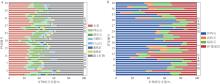
Fig. 3
Bar charts showing the whole-rock mineral (a) and clay mineral (b) compositions of the shales in the Chang 8‒9 oil groups, Wuqi-Fuxian area, Ordos Basin"

Table 2
Mineral composition of shales in the Chang 8-9 oil groups across different regions, Wuqi-Fuxian area, Ordos Basin"
| 地区 | 样品数/个 | 矿物组分平均含量/% | |||||||||
|---|---|---|---|---|---|---|---|---|---|---|---|
| 石英 | 钾长石 | 钠长石 | 碳酸盐矿物 | 黄铁矿 | 黏土矿物 | 伊利石 | 高岭石 | 绿泥石 | 伊/蒙混层 | ||
| 吴起 | 6 | 28.6 | 5.1 | 15.7 | 3.3 | 1.5 | 45.5 | 35.8 | 14.8 | 19.4 | 30.0 |
| 志丹 | 5 | 31.3 | 3.8 | 10.2 | 4.0 | 0.8 | 50.0 | 31.4 | 7.0 | 20.2 | 41.4 |
| 甘泉 | 6 | 26.1 | 6.2 | 12.1 | 4.6 | 2.0 | 50.0 | 47.7 | 5.9 | 15.5 | 30.9 |
| 富县 | 22 | 25.2 | 6.4 | 11.8 | 6.4 | 2.9 | 47.2 | 64.0 | 1.7 | 11.8 | 22.5 |
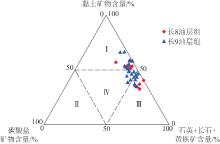
Fig. 4
Ternary diagram showing the lithofacies classification of the Chang 8‒9 oil groups, Wuqi-Fuxian area, Ordos Basin"
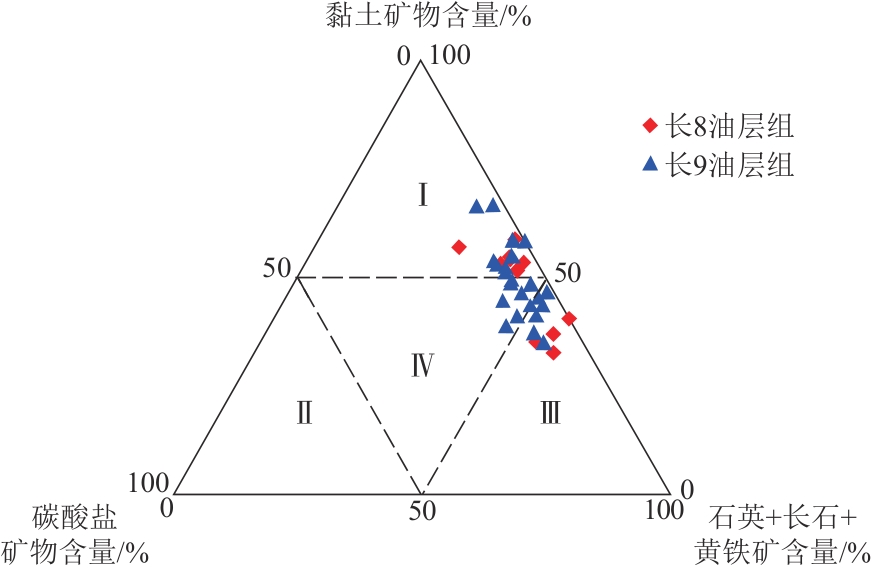

Fig. 5
Geochemistry-lithofacies column of the Chang 8 oil group in well L271, Wuqi-Fuxian area, Ordos Basin"


Fig. 6
Geochemistry-lithofacies column of the Chang 9 oil group in well L256, Wuqi-Fuxian area, Ordos Basin"

Table 3
Brittleness indices of varying shale lithofacies in the Chang 8-9 oil groups, Wuqi-Fuxian area, Ordos Basin"
| 层位 | 岩相 | 脆性指数/% | 黏土矿物含量/% | 样品数/个 | ||
|---|---|---|---|---|---|---|
| 最大值 | 最小值 | 平均值 | ||||
| 长8油层组 | 长英质黏土页岩 | 48.6 | 38.9 | 45.2 | 52.7 | 8 |
| 黏土质长英页岩 | 65.8 | 62.7 | 64.5 | 34.1 | 3 | |
| 长9油层组 | 长英质黏土页岩 | 65.3 | 46.5 | 57.0 | 53.9 | 8 |
| 黏土质长英页岩 | 85.0 | 65.2 | 75.1 | 40.8 | 6 | |
| 黏土-长英混合页岩 | 77.1 | 62.4 | 69.2 | 44.7 | 7 | |
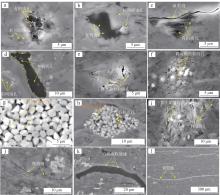
Fig. 7
Argon ion milling-FE-SEM images of typical pore types in shales in the Chang 8‒9 oil groups, Wuqi-Fuxian area, Ordos Basin"

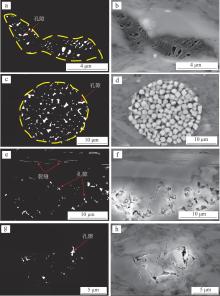
Fig. 8
SEM images of pores in shales in the Wuqi-Fuxian area, Ordos Basin derived from the processing and analysis using the ImageJ software"

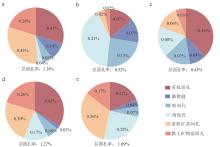
Fig. 9
Pie charts showing the thin-section porosity proportions of varying shale lithofacies in the Chang 8‒9 oil groups, Wuqi-Fuxian area, Ordos Basin"
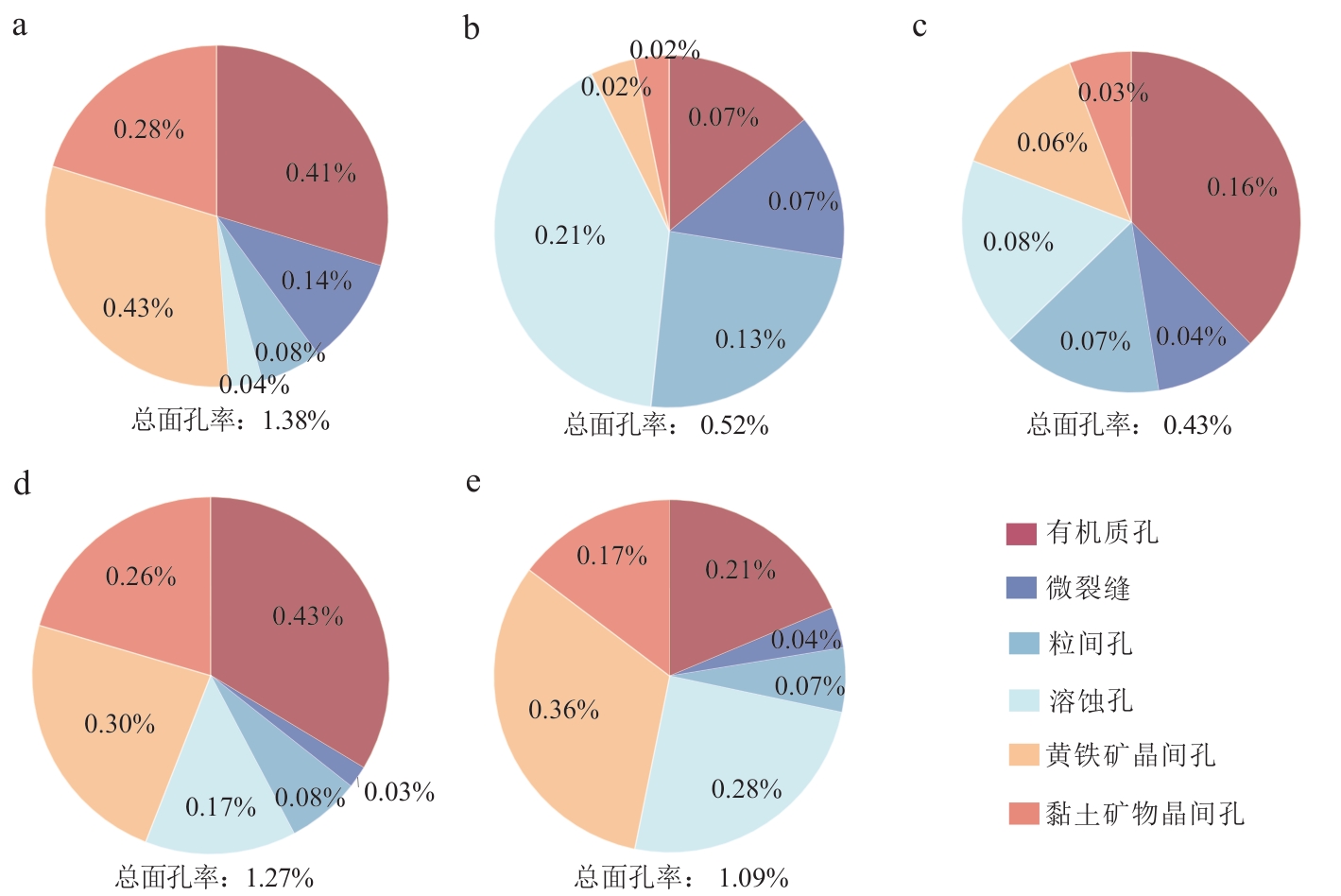
Table 4
Pore structure parameters of shales in the Chang 8-9 oil groups, Wuqi-Fuxian area, Ordos Basin, characterized using focused ion beam-scanning electron microscopy (FIB-SEM)"
| 样品编号 | 层位 | 孔隙类型 | 孔隙度/% | 面孔率/% | 总面孔率/% | 配位数 |
|---|---|---|---|---|---|---|
| B-9 | 长9油层组 | 有机质孔 | 0.100 | 80.70 | 0.12 | 0.04 |
| 无机质孔 | 0.020 | 18.70 | ||||
| 黄铁矿晶间孔 | 0.001 | 0.60 | ||||
| 6-13 | 长9油层组 | 有机质孔 | 0.400 | 36.80 | 1.11 | 0.13 |
| 无机质孔 | 0.700 | 62.50 | ||||
| 黄铁矿晶间孔 | 0.010 | 0.70 | ||||
| 6-3 | 长8油层组 | 有机质孔 | 0.200 | 58.10 | 0.31 | 0.03 |
| 无机质孔 | 0.100 | 41.80 | ||||
| 黄铁矿晶间孔 | — | 0.08 | ||||
| 2-11 | 长8油层组 | 有机质孔 | 0.400 | 98.90 | 0.48 | 0.16 |
| 无机质孔 | 0.080 | 1.10 | ||||
| 黄铁矿晶间孔 | — | 0.02 |

Fig. 10
Pore type models and pore-connectivity ball-and-stick models of four samples from the Chang 8‒9 oil groups, Wuqi-Fuxian area, Ordos Basin"

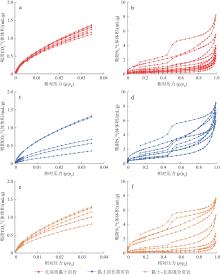
Fig. 11
Gas adsorption curves of varying shale lithofacies in the Chang 8‒9 oil groups, Wuqi-Fuxian area, Ordos Basin"

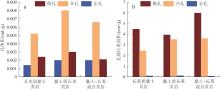
Fig. 12
Bar charts showing the pore volumes and specific surface areas of varying shale lithofacies in the Chang 8‒9 oil groups, Wuqi-Fuxian area, Ordos Basin"

Table 5
HPMI-derived parameters of shale samples from the Chang 8-9 oil groups, Wuqi-Fuxian area, Ordos Basin"
样品 编号 | 地区 | 层位 | 埋深/m | 孔隙度/% | 渗透率/(10-3 μm2) | 排驱压力/MPa | 中值压力/MPa | 最大汞饱和度/% | 最大孔喉半径/μm | 中值孔喉半径/μm | 平均孔喉半径/μm | 退汞效率/% | 曲线类型 |
|---|---|---|---|---|---|---|---|---|---|---|---|---|---|
| 7-4 | 吴起 | 长8油层组 | 2 145 | 0.5 | 0.003 0 | 13.8 | 13.8 | 86.7 | 0.05 | 0.007 | 0.011 | 71.5 | Ⅰ类 |
| B-8 | 富县 | 长9油层组 | 1 482 | 1.0 | 0.000 3 | 13.8 | 13.8 | 90.9 | 0.05 | 0.007 | 0.011 | 80.6 | Ⅰ类 |
| B-10 | 富县 | 长9油层组 | 1 484 | 1.3 | 0.010 2 | 8.3 | 114.6 | 89.9 | 0.09 | 0.006 | 0.013 | 81.6 | Ⅰ类 |
| 5-1 | 志丹 | 长9油层组 | 2 011 | 2.2 | 0.001 2 | 23.5 | — | 44.0 | 0.05 | — | 0.100 | 79.4 | Ⅱ类 |
| 5-3 | 志丹 | 长9油层组 | 1 801 | 2.3 | 0.001 1 | 20.6 | — | 45.0 | 0.04 | — | 0.009 | 51.0 | Ⅱ类 |
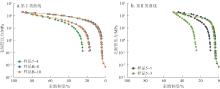
Fig. 13
Capillary pressure curves of five shale samples from the Chang 8‒9 oil groups, Wuqi-Fuxian area, Ordos Basin"
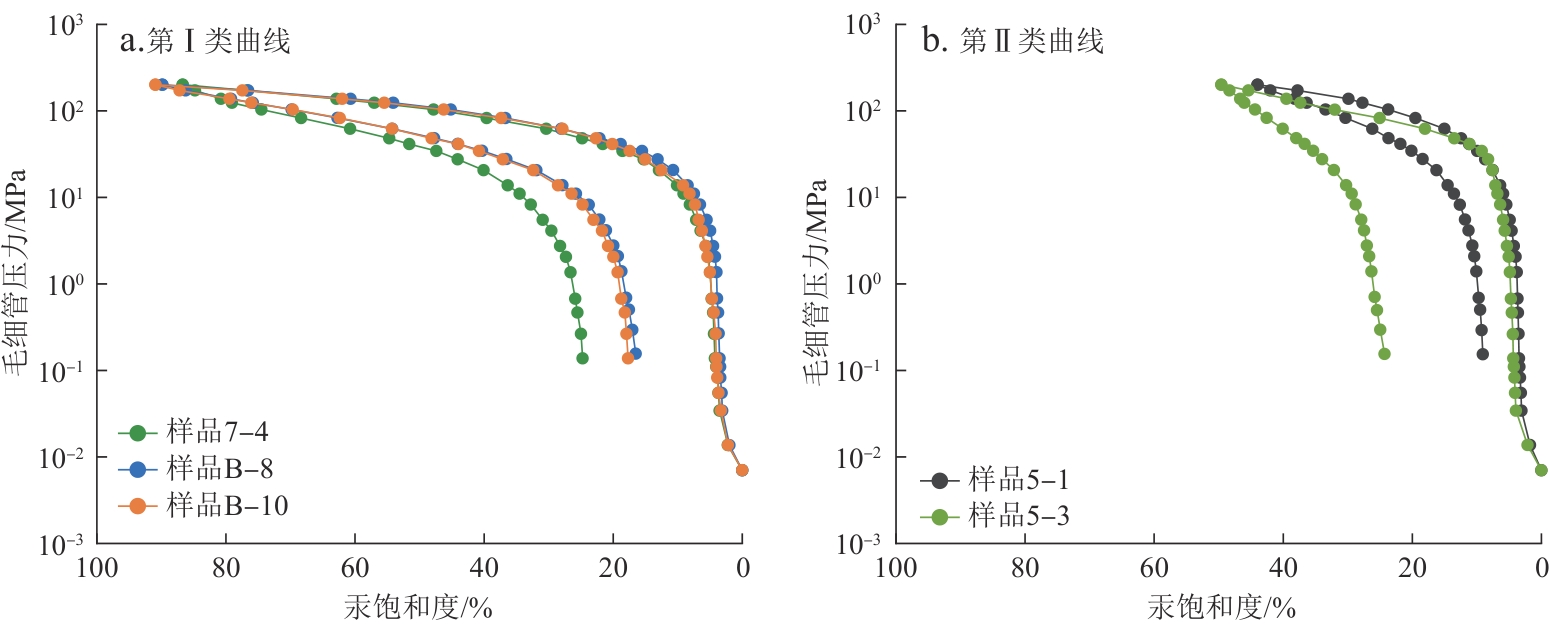
Table 6
HPMI-derived pore volumes and specific surface areas of shale samples from the Chang 8-9 oil groups, Wuqi-Fuxian area, Ordos Basin"
| 样品编号 | 孔体积/(mL/g) | 孔隙比表面积/(m2/g) | ||||
|---|---|---|---|---|---|---|
| 介孔 | 宏孔 | 总孔 | 介孔 | 宏孔 | 总孔 | |
| B-8 | 0.003 2 | 0.000 6 | 0.003 8 | 0.380 0 | 0.030 0 | 0.450 0 |
| B-10 | 0.007 7 | 0.001 3 | 0.009 0 | 0.385 0 | 0.068 0 | 0.453 0 |
| 7-4 | 0.001 4 | 0.000 3 | 0.001 7 | 0.382 0 | 0.070 0 | 0.452 0 |
| 5-1 | 0.003 2 | 0.000 8 | 0.004 0 | 0.720 0 | 0.090 0 | 0.810 0 |
| 5-3 | 0.003 8 | 0.000 8 | 0.004 5 | 0.498 0 | 0.022 0 | 0.520 0 |
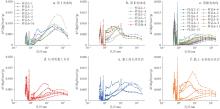
Fig. 14
Pore volume change rate (dV/dlogD) vs. pore size curves of various shale lithofacies in the Chang 8‒9 oil groups, Wuqi-Fuxian area, Ordos Basin (derived from gas adsorption)"


Fig. 15
Pore volume vs. pore size curves of shales in the Chang 8‒9 oil groups, Wuqi-Fuxian area, Ordos Basin (derived from HPMI and gas adsorption)"
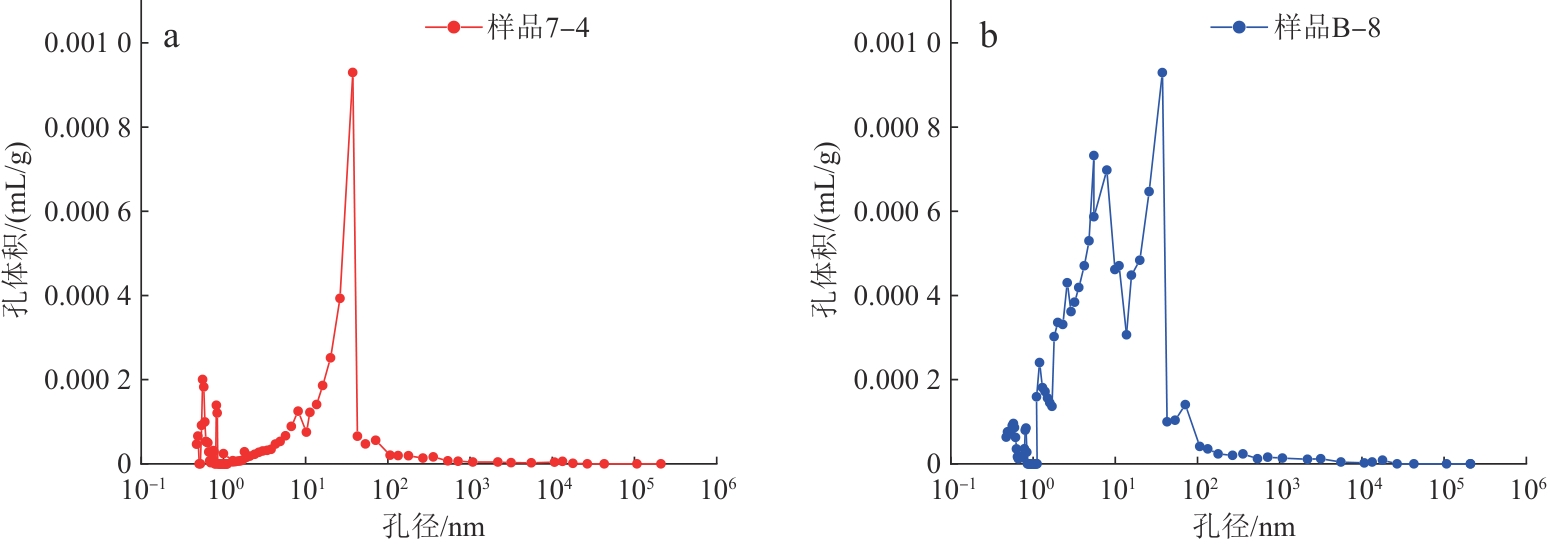
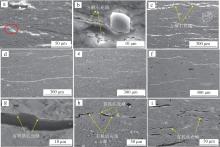
Fig. 16
SEM images of various types of microfractures in shales in the Chang 8‒9 oil groups, Wuqi-Fuxian area, Ordos Basin"

Table 7
Microfracture parameters of shales in the Chang 8-9 oil groups, Wuqi-Fuxian area, Ordos Basin"
| 层位 | 缝密度/(条/m) | 平均缝长/μm | 缝宽/μm | 样品数/个 |
|---|---|---|---|---|
| 长8油层组 | 14 808 | 239 | 0.88 | 14 |
| 长9油层组 | 11 889 | 238 | 0.60 | 15 |
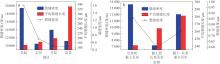
Fig. 17
Bar charts showing the density, length, and width of micro-fractures across different regions (a) and in varying shale lithofacies (b), Wuqi-Fuxian area, Ordos Basin"
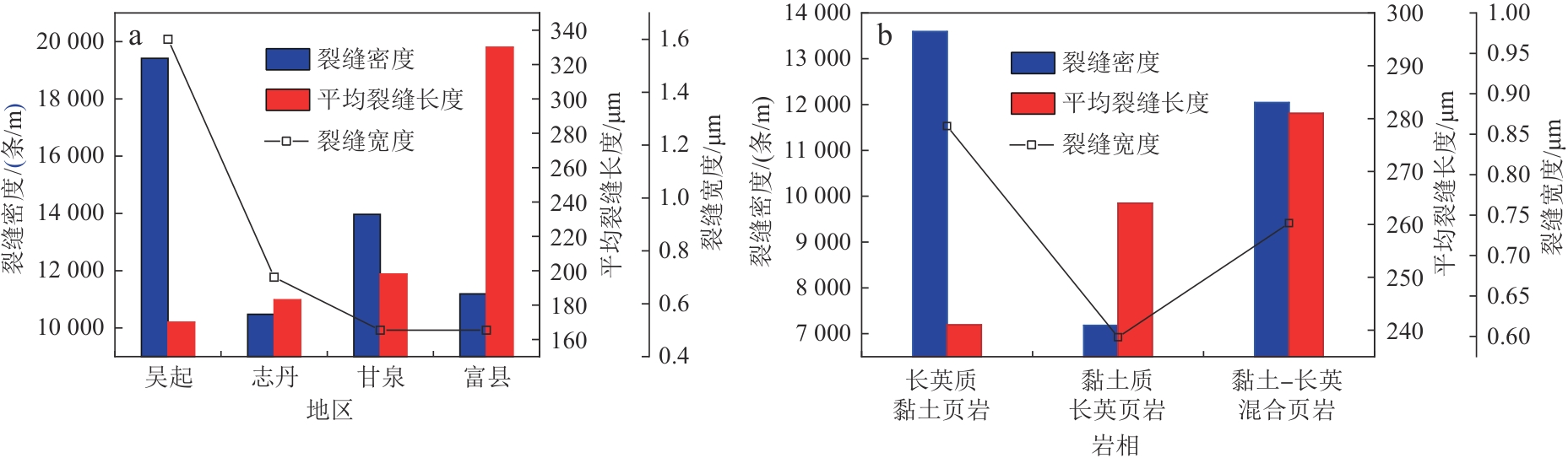
Fig. 18
Frequency histograms showing the distribution of porosity and permeability (a,b) and porosity vs. permeability cross plot (c) of shales in the Chang 8‒9 oil groups, Wuqi-Fuxian area, Ordos Basin"
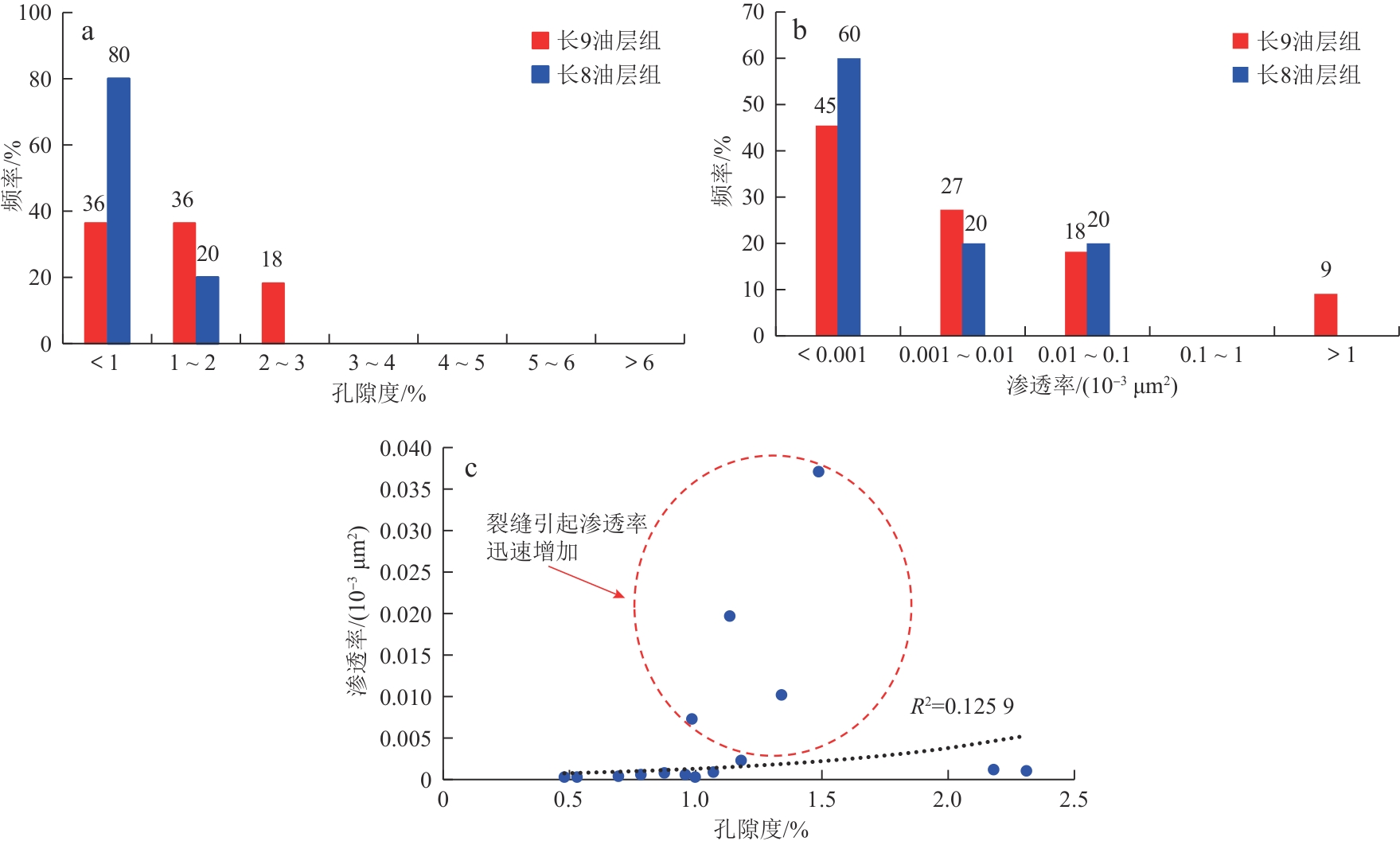
Fig. 19
TOC content vs. pore structure cross plots of shales in the Chang 8‒9 oil groups, Wuqi-Fuxian area, Ordos Basin"
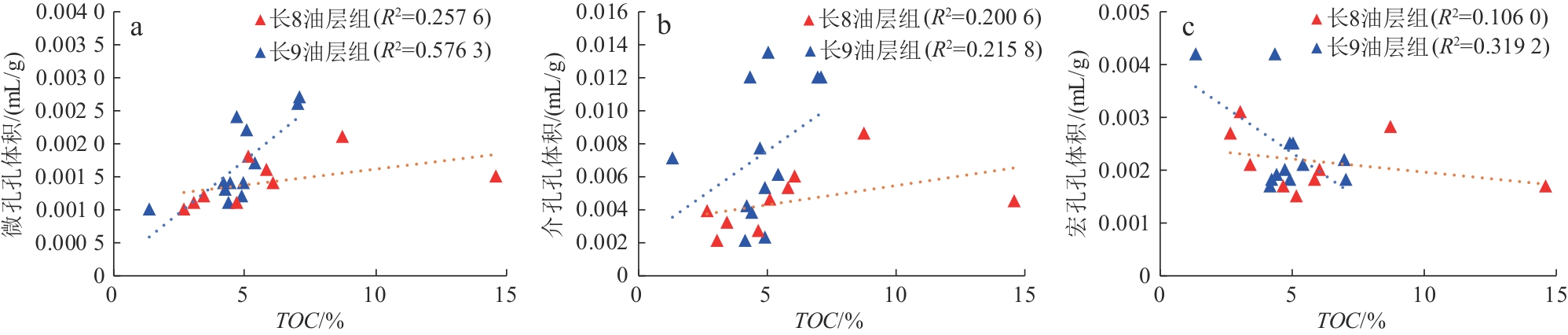
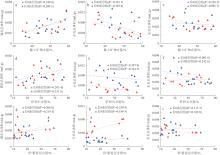
Fig. 20
Clay mineral content vs. pore structure cross plots of shales in the Chang 8‒9 oil groups, Wuqi-Fuxian area, Ordos Basin"

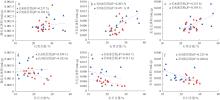
Fig. 21
Quartz and feldspar contents vs. pore structure cross plots of shales in the Chang 8‒9 oil groups, Wuqi-Fuxian area, Ordos Basin"

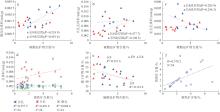
Fig. 22
Carbonate mineral content vs. pore structure cross plots of shales in the Chang 8‒9 oil groups, Wuqi-Fuxian area, Ordos Basin"

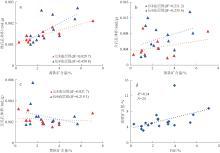
Fig. 23
Cross plots showing the relationships of pyrite content with pore structure and TOC content for shales in the Chang 8‒9 oil groups, Wuqi-Fuxian area, Ordos Basin"

Fig. 24
Cross plots showing the relationships between microfracture density and the influential factors of microfracture development for shales in the Chang 8‒9 oil groups, Wuqi-Fuxian area, Ordos Basin"

Fig. 25
Cross plots of TOC content vs. S1 values of shales in the Chang 8‒9 oil groups, Wuqi-Fuxian area, Ordos Basin"
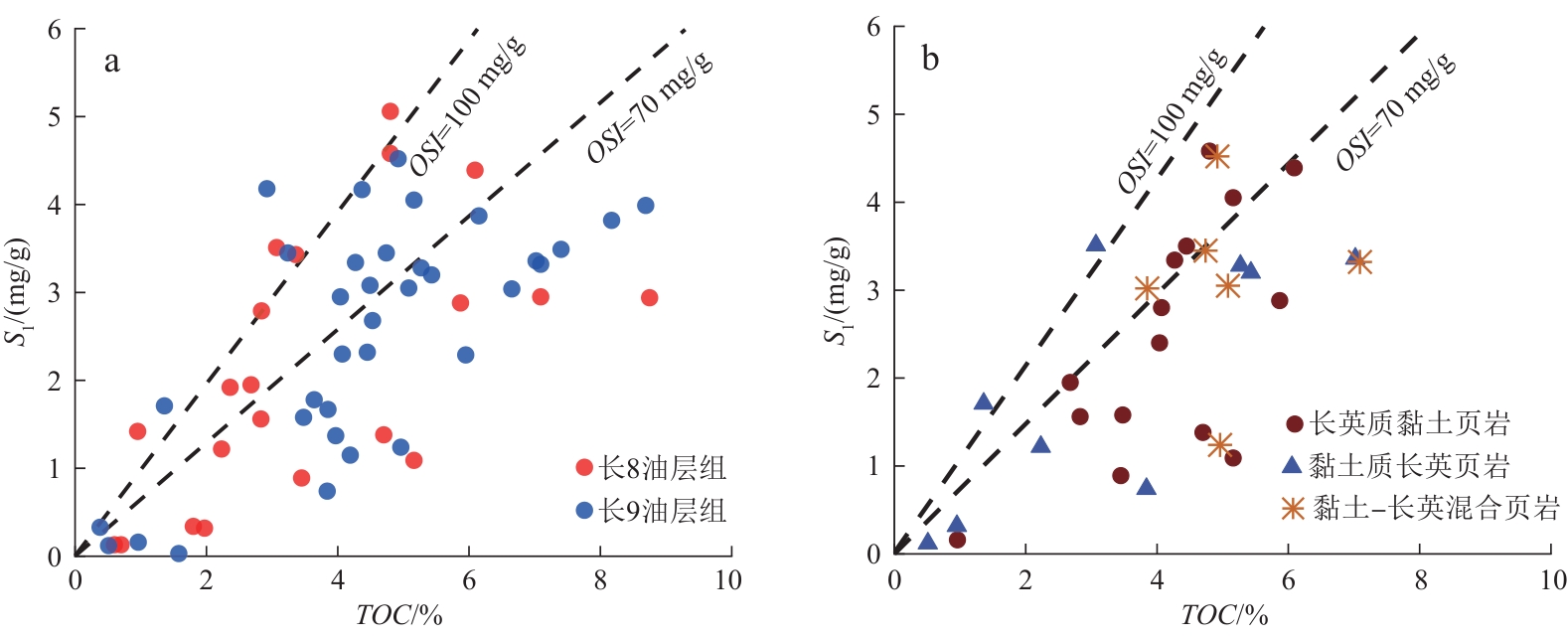

Fig. 26
Cross plots of factors influencing shale oil mobility in the Chang 8‒9 oil groups, Wuqi-Fuxian area, Ordos Basin"

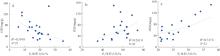
Fig. 27
Cross plots showing the relationships of OSI with the volume proportions of micropores, mesopores, and macropores in the Chang 8‒9 oil groups, Wuqi-Fuxian area, Ordos Basin"

Table 8
Classification assessment of shale oil sweet spots in the Chang 8‒9 oil groups, Wuqi-Fuxian area, Ordos Basin"
| 甜点类型 | Ⅰ类 | Ⅱ类 | Ⅲ类 |
|---|---|---|---|
| 石英+长石含量/% | > 55 | 50 ~ 55 | < 50 |
| 黏土矿物含量/% | < 40 | 40 ~ 45 | > 45 |
| 缝密度/(10⁴条/m) | > 2.4 | 1.6 ~ 2.4 | < 1.6 |
| 孔隙度/% | > 4.5 | 3.0 ~ 4.5 | < 3.0 |
| OSI/mg/g | > 100 | 70 ~ 100 | < 70 |
| TOC/% | < 3 | 3 ~ 4 | > 4 |
| S1/(mg/g) | > 4 | 3 ~ 4 | < 3 |
| Ro/% | > 1.4 | 1.4 ~ 1.2 | < 1.2 |
| Tmax/℃ | > 460 | 460 ~ 455 | < 455 |
| 岩相 | 黏土质长英页岩 | 长英质黏土页岩、黏土-长英混合页岩 | 长英质黏土页岩、黏土-长英混合页岩 |
| [1] | MCMAHON T P, LARSON T E, ZHANG T, 等. 美国页岩油气地质特征及勘探开发进展[J]. 石油勘探与开发, 2024, 51(4): 807-828. |
| MCMAHON T P, LARSON T E, ZHANG T, et al. Geologic characteristics, exploration and production progress of shale oil and gas in the United States: An overview[J]. Petroleum Exploration and Development, 2024, 51(4): 807-828. | |
| [2] | 张廷山, 彭志, 杨巍, 等. 美国页岩油研究对我国的启示[J]. 岩性油气藏, 2015, 27(3): 1-10. |
| ZHANG Tingshan, PENG Zhi, YANG Wei, et al. Enlightenments of American shale oil research towards China[J]. Lithologic Reservoirs, 2015, 27(3): 1-10. | |
| [3] | 何文渊, 蒙启安, 冯子辉, 等. 松辽盆地古龙页岩油原位成藏理论认识及勘探开发实践[J]. 石油学报, 2022, 43(1): 1-14. |
| HE Wenyuan, MENG Qi’an, FENG Zihui, et al. In-situ accumulation theory and exploration & development practice of Gulong shale oil in Songliao Basin[J]. Acta Petrolei Sinica, 2022, 43(1): 1-14. | |
| [4] | 孙龙德, 贾承造, 张君峰, 等. 松辽盆地古龙页岩油重点地区资源潜力[J]. 石油学报, 2024, 45(12): 1699-1714. |
| SUN Longde, JIA Chengzao, ZHANG Junfeng, et al. Resource potential of Gulong shale oil in the key areas of Songliao Basin[J]. Acta Petrolei Sinica, 2024, 45(12): 1699-1714. | |
| [5] | 金之钧, 张谦, 朱如凯, 等. 中国陆相页岩油分类及其意义[J]. 石油与天然气地质, 2023, 44(4): 801-819. |
| JIN Zhijun, ZHANG Qian, ZHU Rukai, et al. Classification of lacustrine shale oil reservoirs in China and its significance[J]. Oil & Gas Geology, 2023, 44(4): 801-819. | |
| [6] | 郭旭升, 马晓潇, 黎茂稳, 等. 陆相页岩油富集机理探讨[J]. 石油与天然气地质, 2023, 44(6): 1333-1349. |
| GUO Xusheng, MA Xiaoxiao, LI Maowen, et al. Mechanisms for lacustrine shale oil enrichment in Chinese sedimentary basins[J]. Oil & Gas Geology, 2023, 44(6): 1333-1349. | |
| [7] | 白斌, 戴朝成, 侯秀林, 等. 松辽盆地白垩系青山口组页岩层系非均质地质特征与页岩油甜点评价[J]. 石油与天然气地质, 2023, 44(4): 846-856. |
| BAI Bin, DAI Chaocheng, HOU Xiulin, et al. Geological heterogeneity of shale sequence and evaluation of shale oil sweet spots in the Qingshankou Formation, Songliao Basin[J]. Oil & Gas Geology, 2023, 44(4): 846-856. | |
| [8] | 赵文智, 卞从胜, 李永新, 等. 鄂尔多斯盆地三叠系长73亚段页岩有机质转化率、排烃效率与页岩油主富集类型[J]. 石油勘探与开发, 2023, 50(1): 12-23. |
| ZHAO Wenzhi, BIAN Congsheng, LI Yongxin, et al. Organic matter transformation ratio, hydrocarbon expulsion efficiency and shale oil enrichment type in Chang 73 shale of Upper Triassic Yanchang Formation in Ordos Basin, NW China[J]. Petroleum Exploration and Development, 2023, 50(1): 12-23. | |
| [9] | 付金华, 刘显阳, 李士祥, 等. 鄂尔多斯盆地三叠系延长组长7段页岩油勘探发现与资源潜力[J]. 中国石油勘探, 2021, 26(5): 1-11. |
| FU Jinhua, LIU Xianyang, LI Shixiang, et al. Discovery and resource potential of shale oil of Chang 7 member, Triassic Yanchang Formation, Ordos Basin[J]. China Petroleum Exploration, 2021, 26(5): 1-11. | |
| [10] | 赵喆, 白斌, 刘畅, 等. 中国石油陆上中-高成熟度页岩油勘探现状、进展与未来思考[J]. 石油与天然气地质, 2024, 45(2): 327-340. |
| ZHAO Zhe, BAI Bin, LIU Chang, et al. Current status, advances, and prospects of CNPC’s exploration of onshore moderately to highly mature shale oil reservoirs[J]. Oil & Gas Geology, 2024, 45(2): 327-340. | |
| [11] | 许璟, 葛云锦, 贺永红, 等. 鄂尔多斯盆地延长探区长7油层组泥页岩孔隙结构定量表征与动态演化过程[J]. 石油与天然气地质, 2023, 44(2): 292-307. |
| XU Jing, GE Yunjin, HE Yonghong, et al. Quantitative characterization and dynamic evolution of pore structure in shale reservoirs of Chang 7 oil layer group in Yanchang area, Ordos Basin[J]. Oil & Gas Geology, 2023, 44(2): 292-307. | |
| [12] | 王哲, 李贤庆, 祁帅, 等. 川南地区筇竹寺组页岩微观孔隙结构特征及其影响因素[J]. 高校地质学报, 2018, 24(2): 273-284. |
| WANG Zhe, LI Xianqing, QI Shuai, et al. Characteristics of microscopic pore structures and its influencing factors of the qiongzhusi formation shales in the southern Sichuan basin[J]. Geological Journal of China Universities, 2018, 24(2): 273-284. | |
| [13] | XIA Debin, YANG Zhengming, GAO Tiening, et al. Characteristics of micro- and nano-pores in shale oil reservoirs[J]. Journal of Petroleum Exploration and Production, 2021, 11(1): 157-169. |
| [14] | 邹才能, 朱如凯, 吴松涛, 等. 常规与非常规油气聚集类型、特征、机理及展望——以中国致密油和致密气为例[J]. 石油学报, 2012, 33(2): 173-187. |
| ZOU Caineng, ZHU Rukai, WU Songtao, et al. Types, characteristics, genesis and prospects of conventional and unconventional hydrocarbon accumulations: Taking tight oil and tight gas in China as an instance[J]. Acta Petrolei Sinica, 2012, 33(2): 173-187. | |
| [15] | GAO Hui, CAO Jie, WANG Chen, et al. Comprehensive characterization of nano-pore system for Chang 7 shale oil reservoir in Ordos Basin[J]. Energy Exploration & Exploitation, 2020, 39(1): 180-200. |
| [16] | 曹琰, 金之钧, 朱如凯, 等. 富有机质泥页岩孔隙结构研究进展及展望[J]. 沉积与特提斯地质, 2024, 44(2): 231-252. |
| CAO Yan, JIN Zhijun, ZHU Rukai, et al. Progress and prospects in the research on pore structures of organic-rich mud shales[J]. Sedimentary Geology and Tethyan Geology, 2024, 44(2): 231-252. | |
| [17] | 王晓琦, 金旭, 李建明, 等. 聚焦离子束扫描电镜在石油地质研究中的综合应用[J]. 电子显微学报, 2019, 38(3): 303-319. |
| WANG Xiaoqi, JIN Xu, LI Jianming, et al. FIB-SEM applications in petroleum geology research[J]. Journal of Chinese Electron Microscopy Society, 2019, 38(3): 303-319. | |
| [18] | 刘显阳, 李士祥, 周新平, 等. 鄂尔多斯盆地石油勘探新领域、新类型及资源潜力[J]. 石油学报, 2023, 44(12): 2070-2090. |
| LIU Xianyang, LI Shixiang, ZHOU Xinping, et al. New domains, types, and resource potential of petroleum exploration in the Ordos Basin[J]. Acta Petrolei Sinica, 2023, 44(12): 2070-2090. | |
| [19] | RYBACKI E, REINICKE A, MEIER T, et al. What controls the mechanical properties of shale rocks?-Part I: Strength and Young’s modulus[J]. Journal of Petroleum Science and Engineering, 2015, 135: 702-722. |
| [20] | 赵圣贤, 夏自强, 李海, 等. 页岩储层天然裂缝定量评价及发育主控因素——以泸州地区五峰组—龙马溪组深层页岩为例[J]. 沉积学报, 2025, 43(1): 212-225. |
| ZHAO Shengxian, XIA Ziqiang, LI Hai, et al. Quantitative evaluation and main controlling factors of natural fractures in a shale reservoir: A case study of the deep shale of the Wufeng Formation-Longmaxi Formation in Luzhou[J]. Acta Sedimentologica Sinica, 2025, 43(1): 212-225. | |
| [21] | RICKMAN R, MULLEN M, PETRE E, et al. A Practical Use of Shale Petrophysics for Stimulation Design Optimization: All Shale Plays are Not Clones of the Barnett Shale[C]//SPE Annual Technical Conference and Exhibition. Richardson: Society of Petroleum Engineers, 2008: SPE-115258-MS. |
| [22] | PANG Xiaojiao, WANG Guiwen, KUANG Lichun, et al. Insights into the pore structure and oil mobility in fine-grained sedimentary rocks: The Lucaogou Formation in Jimusar Sag, Junggar Basin, China[J]. Marine and Petroleum Geology, 2022, 137: 105492. |
| [23] | KUANG Lichun, HOU Lianhua, WU Songtao, et al. Organic matter occurrence and pore-forming mechanisms in lacustrine shales in China[J]. Petroleum Science, 2022, 19(4): 1460-1472. |
| [24] | ROSS D J K, MARC BUSTIN R. The importance of shale composition and pore structure upon gas storage potential of shale gas reservoirs[J]. Marine and Petroleum Geology, 2009, 26(6): 916-927. |
| [25] | KO L T, LOUCKS R G, ZHANG Tongwei, et al. Pore and pore network evolution of Upper Cretaceous Boquillas (Eagle Ford-equivalent) mudrocks: Results from gold tube pyrolysis experiments[J]. AAPG Bulletin, 2016, 100(11): 1693-1722. |
| [26] | LOUCKS R G, REED R M. Scanning-electron-microscope petrographic evidence for distinguishing organic-matter pores associated with depositional organic matter versus migrated organic matter in mudrocks[J]. Gulf Coast Association of Geological Societies Transactions, 2014, 64: 713. |
| [27] | SING K S W. Reporting physisorption data for gas/solid systems with special reference to the determination of surface area and porosity (Recommendations 1984)[J]. Pure and Applied Chemistry, 1985, 57(4): 603-619. |
| [28] | 曹茜. 鄂尔多斯盆地延长组长7段富有机质泥页岩储层微孔隙特征及表征技术[D]. 成都: 成都理工大学, 2016. |
| CAO Qian. Characterization and techniques of micropores in organic-rich shale of Chang 7th of Yanchang Formation, Ordos Basin[D]. Chengdu: Chengdu University of Technology, 2016. | |
| [29] | ROUQUEROL J, AVNIR D, FAIRBRIDGE C W, et al. Recommendations for the characterization of porous solids (Technical Report)[J]. Pure and Applied Chemistry, 1994, 66(8): 1739-1758. |
| [30] | 张洋洋. 陆相页岩储层孔隙结构多尺度表征方法研究[D]. 北京: 中国石油大学(北京), 2022. |
| ZHANG Yangyang. Study on the multi-scale characterization of pore structure in continental shale reservoir[D]. Beijing: China University of Petroleum (Beijing), 2022. | |
| [31] | ZHANG Quanpei, YANG Chen, GU Ye, et al. Microscopic pore-throat structure and fluid mobility of tight sandstone reservoirs in multi-provenance systems, Triassic Yanchang Formation, Jiyuan area, Ordos Basin[J]. Energy Geoscience, 2025, 6(2): 100407. |
| [32] | 丁文龙, 王垚, 王生晖, 等. 页岩储层非构造裂缝研究进展与思考[J]. 地学前缘, 2024, 31(1): 297-314. |
| DING Wenlong, WANG Yao, WANG Shenghui, et al. Research progress and insight on non-tectonic fractures in shale reservoirs[J]. Earth Science Frontiers, 2024, 31(1): 297-314. | |
| [33] | 杨超, 贺永红, 雷裕红, 等. 鄂南三叠系延长组自生成岩矿物成因及期次[J]. 西南石油大学学报(自然科学版), 2019, 41(4): 45-54. |
| YANG Chao, HE Yonghong, LEI Yuhong, et al. The genesis and period of authigenic diagenetic mineral in Triassic Yanchang Formation, the southern Ordos Basin[J]. Journal of Southwest Petroleum University(Science & Technology Edition), 2019, 41(4): 45-54. | |
| [34] | 徐同台, 王行信, 张有渝, 等. 中国含油气盆地粘土矿物[M]. 北京: 石油工业出版社, 2003: 422-456. |
| XU Tongtai, WANG Xingxin, Zhang Youyu, et al. Clay minerals of petroliferous basins in China[M]. Beijing: Petroleum Industry Press, 2003: 422-456. | |
| [35] | HU Haiyan, HAO Fang, LIN Junfeng, et al. Organic matter-hosted pore system in the Wufeng-Longmaxi (O3w-S11) shale, Jiaoshiba area, eastern Sichuan Basin, China[J]. International Journal of Coal Geology, 2017, 173: 40-50. |
| [36] | 陈杨, 金鑫, 黄一舟, 等. 鄂尔多斯盆地Toarcian大洋缺氧事件时期菱铁矿的成因及其地质意义[J/OL]. 沉积学报: 1-25[2025-05-26]. . |
| CHEN Yang, JIN Xin, HUANG Yizhou, et al. Origin and geological significance of siderite during the Toarcian Oceanic Anoxic Event in the Ordos Basin[J/OL]. Acta Sedimentologica Sinica: 1-25[2025-05-26]. . | |
| [37] | 曾联波, 马诗杰, 田鹤, 等. 富有机质页岩天然裂缝研究进展[J]. 地球科学, 2023, 48(7): 2427-2442. |
| ZENG Lianbo, MA Shijie, TIAN He, et al. Research progress of natural fractures in organic rich shale[J]. Earth Science, 2023, 48(7): 2427-2442. | |
| [38] | MATHIA E J, REXER T F T, THOMAS K M, et al. Influence of clay, calcareous microfossils, and organic matter on the nature and diagenetic evolution of pore systems in mudstones[J]. Journal of Geophysical Research: Solid Earth, 2019, 124(1): 149-174. |
| [39] | SLATT R M, O’BRIEN N R. Pore types in the Barnett and Woodford gas shales: Contribution to understanding gas storage and migration pathways in fine-grained rocks[J]. AAPG Bulletin, 2011, 95(12): 2017-2030. |
| [40] | BIAN Ruikang. The formation and evolutionary characteristics of organic matter and pyrites in the continental shales of the 3rd submember of Chang 7 Member, Yanchang formation, Ordos Basin, China[J]. Energy Geoscience, 2024, 5(2): 100250. |
| [41] | XU Xiang, ZENG Lianbo, TIAN He, et al. Controlling factors of lamellation fractures in marine shales: A case study of the Fuling Area in eastern Sichuan Basin, China[J]. Journal of Petroleum Science and Engineering, 2021, 207: 109091. |
| [42] | EMMANUEL S, ELIYAHU M, DAY-STIRRAT R J, et al. Impact of thermal maturation on nano-scale elastic properties of organic matter in shales[J]. Marine and Petroleum Geology, 2016, 70: 175-184. |
| [43] | CURTIS J B. Fractured shale-gas systems[J]. AAPG Bulletin, 2002, 86(11): 1921-1938. |
| [44] | YUAN Bin, WANG Yongqing, WEI Nan. The effects of fracturing fluid retention on permeability of shale reservoirs[J]. Energy Procedia, 2019, 158: 5934-5939. |
| [45] | JARVIE D M. Shale resource systems for oil and gas: Part 2—shale-oil resource systems[M]//BREYER J A. Shale Reservoirs—Giant Resources for the 21st Century. Tulsa: American Association of Petroleum Geologists, 2012: 89-119. |
| [46] | 黄振凯, 郝运轻, 李双建, 等. 鄂尔多斯盆地长7段泥页岩层系含油气性与页岩油可动性评价——以H317井为例[J]. 中国地质, 2020, 47(1): 210-219. |
| HUANG Zhenkai, HAO Yunqing, LI Shuangjian, et al. Oil-bearing potential, mobility evaluation and significance of shale oil in Chang 7 shale system in the Ordos Basin: A case study of Well H317[J]. Geology in China, 2020, 47(1): 210-219. | |
| [47] | ZHANG Cunjian, HU Qinhong, WANG Qiming, et al. Effects of solvent extraction on pore structure properties and oil distribution in shales of alkaline lacustrine basins[J]. Marine and Petroleum Geology, 2025, 171: 107207. |
| [48] | ZHANG Cunjian, HU Qinhong, YANG Shengyu, et al. Hierarchical cluster and principal component analyses of multi-scale pore structure and shale components in the Upper Triassic Chang 7 Member in the Ordos Basin of northern China[J]. Journal of Asian Earth Sciences, 2024, 261: 106001. |
| [49] | YANG Feng, NIE Sijia, JIANG Shu, et al. Occurrence characteristics of mobile hydrocarbons in lacustrine shales: Insights from solvent extraction and petrophysical characterization[J]. Energy & Fuels, 2024, 38(1): 374-386. |
| [50] | WANG Xiaojun, SONG Yong, GUO Xuguang, et al. Pore-throat structure characteristics of tight reservoirs of the Middle Permian Lucaogou formation in the Jimsar Sag, Junggar Basin, northwest China[J]. Journal of Petroleum Science and Engineering, 2022, 208(Part A): 109245. |
| Viewed | ||||||
|
Full text |
|
|||||
|
Abstract |
|
|||||
