

Oil & Gas Geology ›› 2025, Vol. 46 ›› Issue (5): 1614-1629.doi: 10.11743/ogg20250514
• Petroleum Geology • Previous Articles
Zeyang XU1,2( ), Jun LI1,2, Tao WU3, Jiacheng DANG3, Zilong ZHAO1,2
Received:2025-05-30
Revised:2025-09-15
Online:2025-10-30
Published:2025-10-29
CLC Number:
Zeyang XU, Jun LI, Tao WU, Jiacheng DANG, Zilong ZHAO. Pressure distribution prediction and genetic mechanism analysis of the Jurassic undersaturated tight oil reservoirs in an area with differential denudation in the hinterland of the Junggar Basin[J]. Oil & Gas Geology, 2025, 46(5): 1614-1629.
Add to citation manager EndNote|Reference Manager|ProCite|BibTeX|RefWorks

Fig.1
Geological overview of the Mosuowan area, Junggar Basin"

Fig.2
Schematic diagrams showing differences in pressure evolutionary pathways within denudation areas"
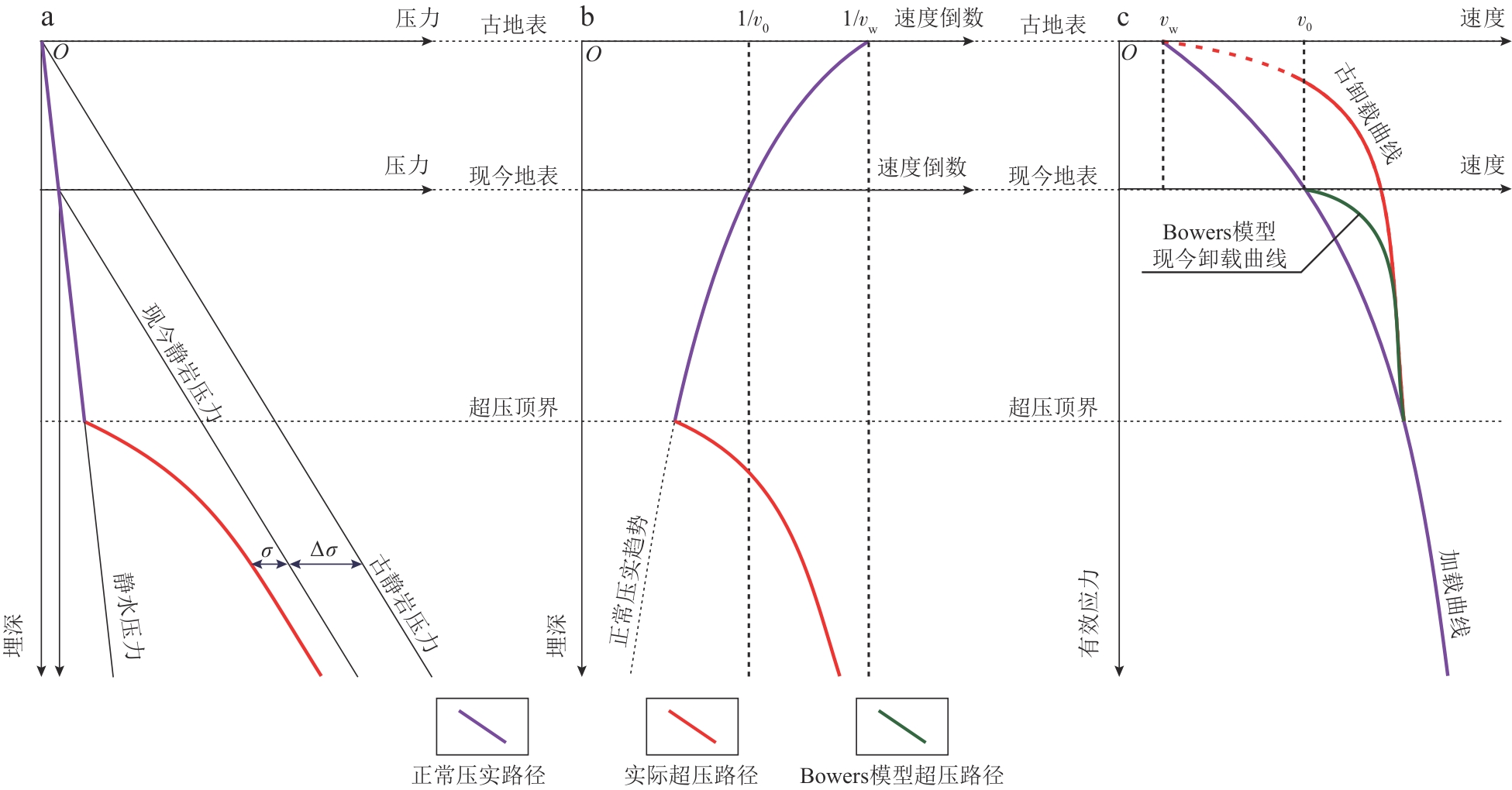

Fig.3
Chart boards for determining the loading model parameters for the Mosuowan area, Junggar Basin"

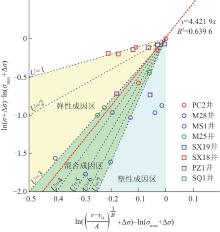
Fig.4
Chart board for determining unloading model parameters and identifying the overpressure origins for the Mosuowan area, Junggar Basin"

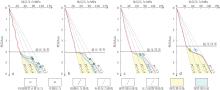
Fig.5
Predicted pressure of representative wells in the Mosuowan area, Junggar Basin"

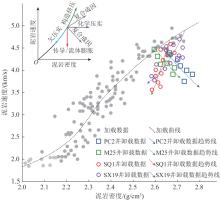
Fig.6
Velocity vs. density cross plot of mudstones for identifying overpressure origins in the Mosuowan area, Junggar Basin"
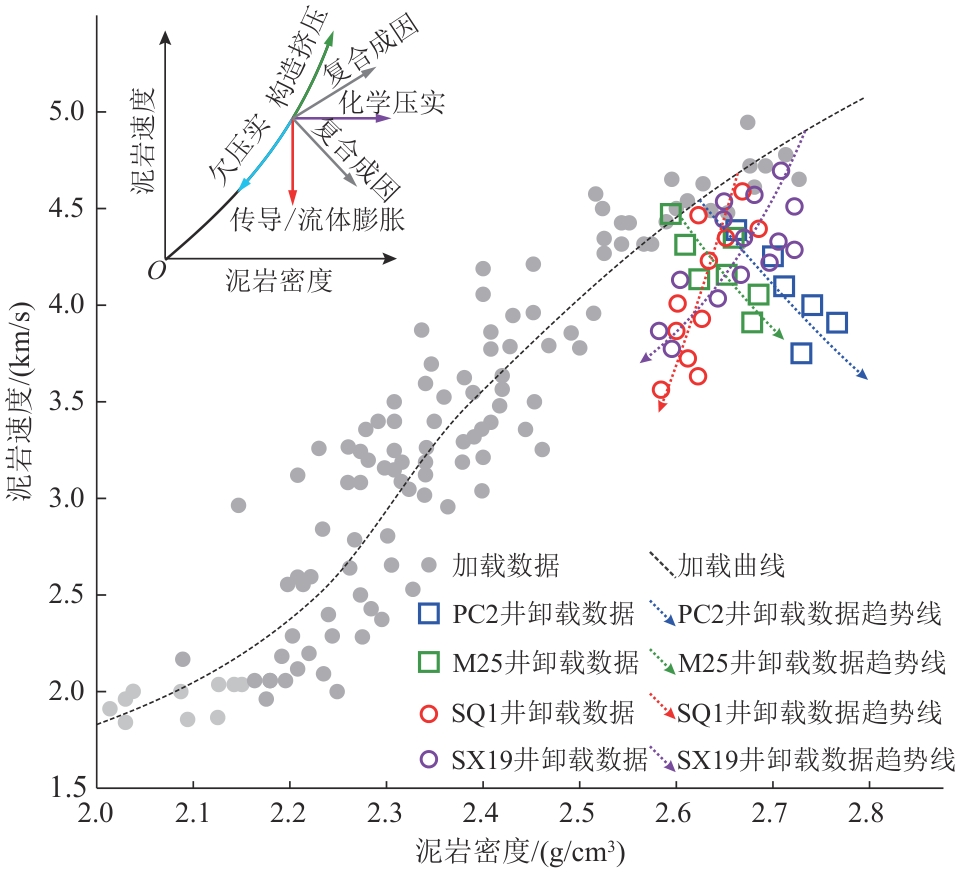

Fig.7
Porosity distribution of the Jurassic sandstones in the Mosuowan area, Junggar Basin"
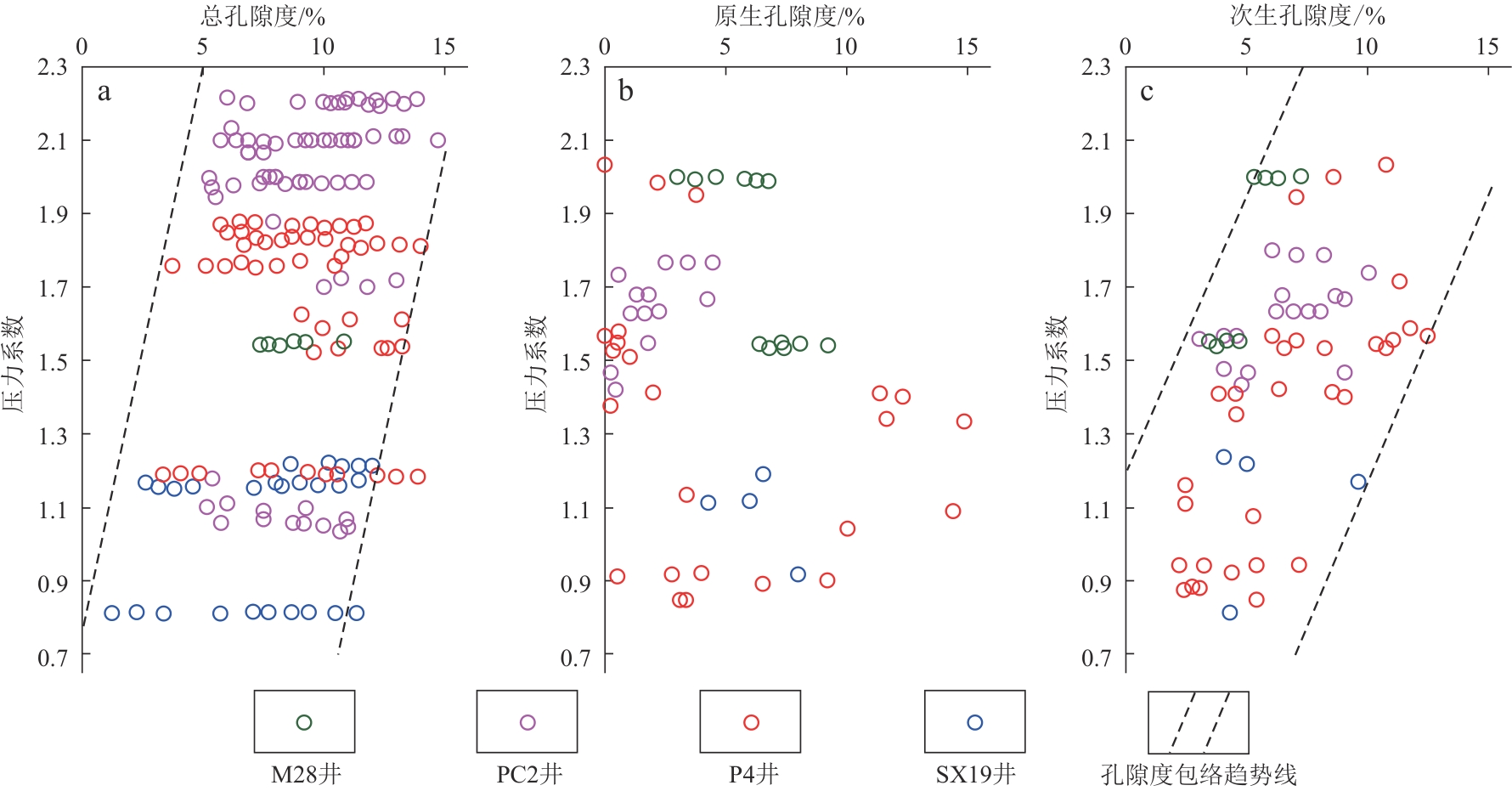
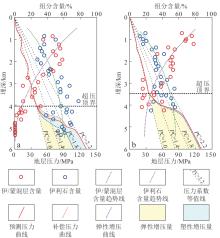
Fig.8
Variations in clay mineral content with burial depth in representative wells in the Mosuowan area, Junggar Basin"

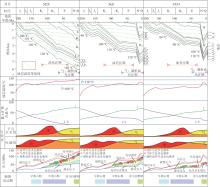
Fig.9
Pressure evolutionary processes in representative wells in the Mosuowan area, Junggar Basin"

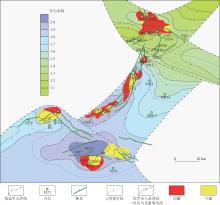
Fig.10
Map showing the planar distribution of hydrocarbon reservoirs and pressure in the Jurassic strata in the Mosuowan area, Junggar Basin"

| [1] | XIAO Zhenglu, LU Jungang, LI Yong, et al. Oil generated overpressure of shale and its effect on tight sandstone oil enrichment: A case study of Yanchang Formation in the Ordos Basin, China[J]. Journal of Petroleum Science and Engineering, 2022, 219: 111120. |
| [2] | ZHU Rukai, ZOU Caineng, MAO Zhiguo, et al. Characteristics and distribution of continental tight oil in China[J]. Journal of Asian Earth Sciences, 2019, 178: 37-51. |
| [3] | DUAN Zhengxin, LIU Yifeng, LOU Zhanghua, et al. Tight gas accumulation caused by overpressure: Insights from three-dimensional seismic data in the western Sichuan Basin, southwest China[J]. Geoenergy Science and Engineering, 2023, 223: 211589. |
| [4] | 吴远坤, 刘成林, 于春勇. 松辽盆地双城断陷深层原油成藏模式[J]. 吉林大学学报(地球科学版), 2024, 54(5): 1443-1456. |
| WU Yuankun, LIU Chenglin, YU Chunyong. Main controlling factors and accumulation mode of deep oil in Shuangcheng fault depression of Songliao Basin[J]. Journal of Jilin University(Earth Science Edition), 2024, 54(5): 1443-1456. | |
| [5] | 田巍, 李中超, 余传谋, 等. 低渗储层启动压力特征及动用半径的确定[J]. 石油与天然气地质, 2025, 46(3): 959-966. |
| TIAN Wei, LI Zhongchao, YU Chuanmou, et al. Threshold pressure gradient characteristics and drainage radius determination of low-permeability reservoirs[J]. Oil & Gas Geology, 2025, 46(3): 959-966. | |
| [6] | 范彩伟, 刘爱群, 吴云鹏, 等. 莺歌海盆地乐东10区新近系黄流组储层天然气充注与超压演化史[J]. 石油与天然气地质, 2022, 43(6): 1370-1381. |
| FAN Caiwei, LIU Aiqun, WU Yunpeng, et al. Gas charging and overpressure evolution history of the Neogene Huangliu Formation reservoir in Ledong 10 area, Yinggehai Basin[J]. Oil & Gas Geology, 2022, 43(6): 1370-1381. | |
| [7] | 刘惠民, 张关龙, 范婕, 等. 准噶尔盆地腹部征沙村地区征10井的勘探发现与启示[J]. 石油与天然气地质, 2023, 44(5): 1118-1128. |
| LIU Huimin, ZHANG Guanlong, FAN Jie, et al. Exploration discoveries and implications of Well Zheng 10 in the Zhengshacun area of the Junggar Basin[J]. Oil & Gas Geology, 2023, 44(5): 1118-1128. | |
| [8] | 李勇, 朱治同, 吴鹏, 等. 鄂尔多斯盆地东缘上古生界致密储层含气系统压力演化[J]. 石油与天然气地质, 2023, 44(6): 1568-1581. |
| LI Yong, ZHU Zhitong, WU Peng, et al. Pressure evolution of gas-bearing systems in the Upper Paleozoic tight reservoirs at the eastern margin of the Ordos Basin[J]. Oil & Gas Geology, 2023, 44(6): 1568-1581. | |
| [9] | 杨小艺, 刘成林, 王飞龙, 等. 渤海湾盆地渤中凹陷西南洼古近系东营组超压分布特征及成因[J]. 石油与天然气地质, 2024, 45(1): 96-112. |
| YANG Xiaoyi, LIU Chenglin, WANG Feilong, et al. Distribution and origin of overpressure in the Paleogene Dongying Formation in the southwestern sub-sag, Bozhong Sag, Bohai Bay Basin[J]. Oil & Gas Geology, 2024, 45(1): 96-112. | |
| [10] | 孙靖, 尤新才, 薛晶晶, 等. 准噶尔盆地异常压力特征及其对深层-超深层致密储层的影响[J]. 石油与天然气地质, 2023, 44(2): 350-365. |
| SUN Jing, YOU Xincai, XUE Jingjing, et al. Characteristics of abnormal pressure and its influence on deep and ultra-deep tight reservoirs in the Junggar Basin[J]. Oil & Gas Geology, 2023, 44(2): 350-365. | |
| [11] | ZOU Caineng, YANG Zhi, HOU Lianhua, et al. Geological characteristics and “sweet area” evaluation for tight oil[J]. Petroleum Science, 2015, 12(4): 606-617. |
| [12] | 庞雄奇, 崔新璇, 贾承造, 等. 全油气系统理论在实用中面临的几个问题与解决方法[J]. 石油与天然气地质, 2025, 46(4): 1039-1054. |
| PANG Xiongqi, CUI Xinxuan, JIA Chengzao, et al. Challenges and solutions in the application of the whole petroleum system theory[J]. Oil & Gas Geology, 2025, 46(4): 1039-1054. | |
| [13] | FILLIPPONE W R. On the prediction of abnormally pressured sedimentary rocks from seismic data[C]//Offshore Technology Conference, Houston, 1979. Richardson: SPE, 1979: OTC-3662-MS. |
| [14] | 樊洪海, 张传进. 复杂地层地层孔隙压力求取新技术[J]. 石油钻探技术, 2005, 33(5): 40-43. |
| FAN Honghai, ZHANG Chuanjin. New methods for calculation of pore pressure in complex geologic environment[J]. Petroleum Drilling Techniques, 2005, 33(5): 40-43. | |
| [15] | OGBU A D, IWE K A, OZOWE W, et al. Advances in machine learning-driven pore pressure prediction in complex geological settings[J]. Computer Science & IT Research Journal, 2024, 5(7): 1648-1665. |
| [16] | YU Hao, CHEN Guoxiong, GU Hanming. A machine learning methodology for multivariate pore-pressure prediction[J]. Computers & Geosciences, 2020, 143: 104548. |
| [17] | FARSI M, MOHAMADIAN N, GHORBANI H, et al. Predicting formation pore-pressure from well-log data with hybrid machine-learning optimization algorithms[J]. Natural Resources Research, 2021, 30(5): 3455-3481. |
| [18] | ZHANG Guodao, DAVOODI S, BAND S S, et al. A robust approach to pore pressure prediction applying petrophysical log data aided by machine learning techniques[J]. Energy Reports, 2022, 8: 2233-2247. |
| [19] | ATASHBARI V. Origin of overpressure and pore pressure prediction in carbonate reservoirs of the Abadan Plain Basin[D]. Adelaide: The University of Adelaide, 2016. |
| [20] | Das G, Maiti S. A machine learning approach for the prediction of pore pressure using well log data of Hikurangi Tuaheni Zone of IODP Expedition 372, New Zealand[J]. Energy Geoscience, 2024, 5(2): 229-235. |
| [21] | LIU Yukun, HE Zhiliang, HE Sheng, et al. A new quantitative model and application for overpressure prediction in carbonate formation[J]. Journal of Petroleum Science and Engineering, 2021, 198: 108145. |
| [22] | WANG Zizhen, WANG Ruihe. Pore pressure prediction using geophysical methods in carbonate reservoirs: Current status, challenges and way ahead[J]. Journal of Natural Gas Science and Engineering, 2015, 27(Part 2): 986-993. |
| [23] | ELMAHDY M, FARAG A E, TARABEES E, et al. Pore pressure prediction in unconventional carbonate reservoir[C]//SPE Kingdom of Saudi Arabia Annual Technical Symposium and Exhibition, Dammam, 2018. Richardson: Society of Petroleum Engineers, 2018: SPE-194224-MS. |
| [24] | SHARIFI J, HAFEZI MOGHADDAS N, KHOSHDEL H, et al. Feasibility study of pore-pressure prediction in carbonate rocks[J]. Geophysics, 2023, 88(6): MR323-MR332. |
| [25] | MAGARA K. Importance of aquathermal pressuring effect in Gulf Coast: Geologic note[J]. AAPG Bulletin, 1975, 59(10): 2037-2045. |
| [26] | EATON B A. The effect of overburden stress on geopressure prediction from well logs[J]. Journal of Petroleum Technology, 1972, 24(8): 929-934. |
| [27] | BOWERS G L. Pore pressure estimation from velocity data: Accounting for overpressure mechanisms besides undercompaction[J]. SPE Drilling & Completion, 1995, 10(2): 89-95. |
| [28] | 许玉强, 何保伦, 王䶮舒, 等. 深度学习与Eaton法联合驱动的地层孔隙压力预测方法[J]. 中国石油大学学报(自然科学版), 2023, 47(6): 50-59. |
| XU Yuqiang, HE Baolun, WANG Yanshu, et al. A novel prediction method of formation pore pressure driven by deep learning and Eaton method[J]. Journal of China University of Petroleum (Edition of Natural Science), 2023, 47(6): 50-59. | |
| [29] | 杨朝洪, 司马立强, 王亮, 等. 准噶尔盆地莫索湾凸起八道湾组低饱和度油藏成因分析[J]. 特种油气藏, 2022, 29(5): 42-48, 56. |
| YANG Chaohong, SIMA Liqiang, WANG Liang, et al. Genesis analysis of low saturation oil reservoirs in Badaowan Formation of Mosuowan Bulge in Junggar Basin[J]. Special Oil & Gas Reservoirs, 2022, 29(5): 42-48, 56. | |
| [30] | 单祥, 郭华军, 陈希光, 等. 低渗致密砂岩储集层致密化成因——以准噶尔盆地莫北—莫索湾凸起下侏罗统八道湾组为例[J]. 新疆石油地质, 2021, 42(1): 29-37. |
| SHAN Xiang, GUO Huajun, CHEN Xiguang, et al. Genesis of densification of low-permeability tight sandstone reservoirs: A case study of lower Jurassic Badaowan Formation in Mobei-Mosuowan Swell, Junggar Basin[J]. Xinjiang Petroleum Geology, 2021, 42(1): 29-37. | |
| [31] | 吴海生, 郑孟林, 何文军, 等. 准噶尔盆地腹部地层压力异常特征与控制因素[J]. 石油与天然气地质, 2017, 38(6): 1135-1146. |
| WU Haisheng, ZHENG Menglin, HE Wenjun, et al. Formation pressure anomalies and controlling factors in central Juggar Basin[J]. Oil & Gas Geology, 2017, 38(6): 1135-1146. | |
| [32] | 何登发, 陈新发, 况军, 等. 准噶尔盆地车排子-莫索湾古隆起的形成演化与成因机制[J]. 地学前缘, 2008, 15(4): 42-55. |
| HE Dengfa, CHEN Xinfa, KUANG Jun, et al. Development and genetic mechanism of Chepaizi-Mosuowan Uplift in Junggar Basin[J]. Earth Science Frontiers, 2008, 15(4): 42-55. | |
| [33] | 吴涛, 李军, 闫文琦, 等. 准噶尔盆地腹部地区超压低饱和度油气成因机制与勘探意义[J]. 石油学报, 2024, 45(12): 1728-1742. |
| WU Tao, LI Jun, YAN Wenqi, et al. Genetic mechanism and exploration significance of overpressure and low-saturation oil and gas in the hinterland of Junggar Basin[J]. Acta Petrolei Sinica, 2024, 45(12): 1728-1742. | |
| [34] | 吴涛, 王彬, 费李莹, 等. 准噶尔盆地凝析气藏成因与分布规律[J]. 石油学报, 2021, 42(12): 1640-1653. |
| WU Tao, WANG Bin, FEI Liying, et al. Origin and distribution law of condensate gas reservoirs in Junggar Basin[J]. Acta Petrolei Sinica, 2021, 42(12): 1640-1653. | |
| [35] | 王琼. 准噶尔盆地莫西庄-永进地区白垩系清水河组沉积特征研究[D]. 北京: 中国地质大学(北京), 2021. |
| WANG Qiong. Study on sedimentary characteristics of Qingshuihe Formation of Cretaceous in Moxizhuang-Yongjin area, Junggar Basin[D]. Beijing: China University of Geosciences (Beijing), 2021. | |
| [36] | 唐勇, 宋永, 何文军, 等. 准噶尔叠合盆地复式油气成藏规律[J]. 石油与天然气地质, 2022, 43(1): 132-148. |
| TANG Yong, SONG Yong, HE Wenjun, et al. Characteristics of composite hydrocarbon accumulation in a superimposed basin, Junggar Basin[J]. Oil & Gas Geology, 2022, 43(1): 132-148. | |
| [37] | 何登发, 张磊, 吴松涛, 等. 准噶尔盆地构造演化阶段及其特征[J]. 石油与天然气地质, 2018, 39(5): 845-861. |
| HE Dengfa, ZHANG Lei, WU Songtao, et al. Tectonic evolution stages and features of the Junggar Basin[J]. Oil & Gas Geology, 2018, 39(5): 845-861. | |
| [38] | 吴涛, 徐泽阳, 闫文琦, 等. 准噶尔盆地莫索湾地区侏罗系超压预测技术研究[J]. 地球科学进展, 2024, 39(4): 429-439. |
| WU Tao, XU Zeyang, YAN Wenqi, et al. Research on prediction technologies for overpressure in the Jurassic Strata of the Mosuowan area, Junggar Basin[J]. Advances in Earth Science, 2024, 39(4): 429-439. | |
| [39] | 徐泽阳, 赵靖舟, 李军. 松辽盆地长垣地区白垩系青山口组一段有机质含量对超压分析的影响及校正方法[J]. 石油与天然气地质, 2019, 40(4): 938-946. |
| XU Zeyang, ZHAO Jingzhou, LI Jun. The impact of organic matter content on overpressure analysis and its correction method in the first member of Cretaceous Qingshankou Formation, Placanticline area, Songliao Basin[J]. Oil & Gas Geology, 2019, 40(4): 938-946. | |
| [40] | XU Zeyang, LIU Zhen, ZHAO Jingzhou, et al. Introducing novel correction methods to calculate sedimentary basin overpressure and its application in predicting pressure value and origin[J]. Energies, 2023, 16(14): 5416. |
| [41] | 赵靖舟, 李军, 徐泽阳. 沉积盆地超压成因研究进展[J]. 石油学报, 2017, 38(9): 973-998. |
| ZHAO Jingzhou, LI Jun, XU Zeyang. Advances in the origin of overpressures in sedimentary basins[J]. Acta Petrolei Sinica, 2017, 38(9): 973-998. | |
| [42] | 黄越, 常健, 邱楠生, 等. 松辽盆地齐家—古龙凹陷青山口组压力场特征和超压成因[J]. 石油学报, 2024, 45(12): 1800-1817. |
| HUANG Yue, CHANG Jian, QIU Nansheng, et al. Pressure field characteristics and overpressure geneses of Qingshankou Formation in Qijia-Gulong sag, Songliao Basin[J]. Acta Petrolei Sinica, 2024, 45(12): 1800-1817. | |
| [43] | 张向涛, 李军, 向绪洪, 等. 珠江口盆地深水区白云凹陷超压成因机制及其勘探意义[J]. 石油学报, 2022, 43(1): 41-57. |
| ZHANG Xiangtao, LI Jun, XIANG Xuhong, et al. Genetic mechanism of overpressure and its significance on petroleum exploration in Baiyun sag in the deep water zone of Pearl River Mouth Basin[J]. Acta Petrolei Sinica, 2022, 43(1): 41-57. | |
| [44] | BOWERS G L. Determining an appropriate pore-pressure estimation strategy[C]//Offshore Technology Conference, Houston, 2001. Richardson: Society of Petroleum Engineers, 2001: OTC-13042-MS. |
| [45] | LAHANN R W, LAHANN W, MCCARTY D K, et al. Influence of clay diagenesis on shale velocities and fluid-pressure[C]//Offshore Technology Conference, Houston, 2001. Richardson: Society of Petroleum Engineers, 2001: OTC-13046-MS. |
| [46] | LAHANN R W, SWARBRICK R E. Overpressure generation by load transfer following shale framework weakening due to smectite diagenesis[J]. Geofluids, 2011, 11(4): 362-375. |
| [47] | BOWERS G L, KATSUBE T J. The role of shale pore structure on the sensitivity of wire-line logs to overpressure[M]//HUFFMAN A R, BOWERS G L. Pressure Regimes in Sedimentary Basins and Their Prediction. Tulsa: American Association of Petroleum Geologists, 2001: 43-60. |
| [48] | 田安琦, 陈石, 余一欣, 等. 准噶尔盆地莫索湾凸起西缘走滑断裂分层变形特征及形成机理[J]. 现代地质, 2023, 37(2): 296-306. |
| TIAN Anqi, CHEN Shi, YU Yixin, et al. Layered deformation characteristics, formation mechanism of strike-slip faults on the western margin of Mosuowan uplift, Junggar Basin[J]. Geoscience, 2023, 37(2): 296-306. | |
| [49] | 范佳怡. 油源断裂输导性能与源外成藏关系——以莫索湾地区为例[D]. 西安: 西安石油大学, 2024. |
| FAN Jiayi. The relationship between the conductivity of oil source fault and hydrocarbon accumulation outside the source—A case study of Mosuowan area[D]. Xi’an: Xi’an Shiyou University, 2024. | |
| [50] | 李啸, 董雪梅, 陈建平, 等. 准噶尔盆地莫索湾凸起盆5井油气藏凝析油成因与成藏过程[J]. 地质学报, 2025, 99(7): 2367-2389. |
| LI Xiao, DONG Xuemei, CHEN Jianping, et al. Genesis of condensate and accumulation process of the Well Pen-5 oil and gas reservoir in the Mosowan uplift of the Junggar Basin[J]. Acta Geologica Sinica, 2025, 99(7): 2367-2389. | |
| [51] | 李二庭, 陈俊, 曹剑, 等. 准噶尔盆地莫索湾地区原油地球化学特征及成因分析[J]. 石油实验地质, 2022, 44(1): 112-120. |
| LI Erting, CHEN Jun, CAO Jian, et al. Geochemical characteristics and genetic analysis of crude oils in Mosuowan area, Junggar Basin[J]. Petroleum Geology and Experiment, 2022, 44(1): 112-120. | |
| [52] | 饶松, 朱亚珂, 胡迪, 等. 准噶尔盆地热史恢复及其对早—中二叠世时期盆地构造属性的约束[J]. 地质学报, 2018, 92(6): 1176-1195. |
| RAO Song, ZHU Yake, HU Di, et al. The thermal history of Junggar Basin: Constraints on the tectonic attribute of the Early-Middle Permian Basin[J]. Acta Geologica Sinica, 2018, 92(6): 1176-1195. |
| [1] | Yubin BAI, Haijiao REN, Jun ZHANG, Shaorong CHEN, Weitao WU, Xinmei ZHAO, Heyuan WU, Yang ZOU. Component characteristics and mobility assessment of shale oil: A case study of the Permian Fengcheng Formation, Mahu Sag, Junggar Basin [J]. Oil & Gas Geology, 2025, 46(5): 1582-1596. |
| [2] | Xun KANG, Jingqiang TAN, Wenxuan HU, Jun JIN, Ruipu HU, Jian CAO. Differences in reservoir formation mechanisms across the whole petroleum system in the Mahu Sag, Junggar Basin [J]. Oil & Gas Geology, 2025, 46(4): 1250-1266. |
| [3] | Liyin BAO, Xiongqi PANG, Liang ZOU, Hongfei CHEN, Hao LIN, Ting ZHANG, Bin SHEN, Kai WANG, Rui WANG. Identification and contribution assessment of hydrocarbon accumulation dynamics in the whole petroleum system: A case study of the Permian Fengcheng Formation, Mahu Sag, Junggar Basin [J]. Oil & Gas Geology, 2025, 46(4): 1267-1280. |
| [4] | Yao HU, Chengzao JIA, Xiongqi PANG, Yong SONG, Wenjun HE, Hongfei CHEN, Liyin BAO, Weiyan CHEN, Wen ZHAO, Huiyi XIAO, Caijun LI, Zhi XU. Hydrocarbon migration and accumulation dynamics and model of distal tight hydrocarbon reservoirs: A case study of sandy conglomerate oil reservoirs in the Triassic Baikouquan Formation, Mahu Sag, Junggar Basin [J]. Oil & Gas Geology, 2025, 46(4): 1281-1298. |
| [5] | Liu YANG, Fei GONG, Xiaoyu JIANG, Zhaoyang LIU, Guangtao DONG, Jiawei CAI. Mechanisms behind CO2-brine-Sandy Conglomerate interactions and resulting variations in mineral components, fluid occurrence, and pores: A case study of the Mahu Sag, Junggar Basin [J]. Oil & Gas Geology, 2025, 46(3): 967-982. |
| [6] | Liu YANG, Xiaoyu JIANG, Guangtao DONG, Fei GONG, Kai ZHU, Yijie PEI, Jiawei CAI. 3D pore-scale simulations of CO2 flooding after pre-flushing CO2 fracturing in glutenite reservoirs [J]. Oil & Gas Geology, 2025, 46(2): 670-684. |
| [7] | Liyin BAO, Xiongqi PANG, Xinxuan CUI, Hongfei CHEN, Jun GAO, Liang ZOU, Zhencheng ZHAO, Chenxi WANG, Lei WANG, Wendong LI, Li LIU. Lithofacies assemblages and differential productivity of volcanic rocks in the Jiamuhe Formation, Jinlong oilfield, Junggar Basin [J]. Oil & Gas Geology, 2025, 46(1): 136-150. |
| [8] | Jiyuan WANG, Bin WANG, Zongquan HU, Fengkai SHANG, Dezhi LIU, Zhenming LI, Qi QIU, Zhenxiang SONG, Zhiqi HU. Genetic mechanisms of high-quality deep to ultra-deep clastic reservoirs: A case study of the Permian-Triassic strata in the hinterland of the Junggar Basin [J]. Oil & Gas Geology, 2025, 46(1): 151-166. |
| [9] | Fan SONG, Qingyuan KONG, Xuecai ZHANG, Haifang CAO, Guohua JIAO, Yue YANG. Sedimentary characteristics and models of shallow-water deltas in arid settings: A case study of the Jurassic Qigu Formation in the Yongjin area within the hinterland of the Junggar Basin [J]. Oil & Gas Geology, 2024, 45(5): 1275-1288. |
| [10] | Dehao FENG, Chenglin LIU, Haibo YANG, Yang HAN, Xiaoyi YANG, Jiajia SU, Guoxiong LI, Jingkun ZHANG. Gas-generating potential of the Middle Permian saline lacustrine source rocks and significance for natural gas exploration in the eastern Junggar Basin [J]. Oil & Gas Geology, 2024, 45(5): 1289-1304. |
| [11] | Jing SUN, Xincai YOU, Jingjing XUE, Menglin ZHENG, Qiusheng CHANG, Tao WANG. Characteristics and controlling factors of deep to ultra-deep tight-gas clastic reservoirs in the Junggar Basin [J]. Oil & Gas Geology, 2024, 45(4): 1046-1063. |
| [12] | Xiaoyu DU, Zhijun JIN, Lianbo ZENG, Guoping LIU, Sen YANG, Xinping LIANG, Guoqing LU. Evaluation of natural fracture effectiveness in deep lacustrine shale oil reservoirs based on formation microresistivity imaging logs [J]. Oil & Gas Geology, 2024, 45(3): 852-865. |
| [13] | Hong PAN, Qingsen YU, Xiaoshan LI, Junqiang SONG, Zhibin JIANG, Li WANG, Guanxing LUO, Wenxiu XU, Haoyu YOU. Recognition of the Carboniferous strata in the Hongche fault zone, Junggar Basin and its hydrocarbon accumulation characteristics [J]. Oil & Gas Geology, 2024, 45(1): 215-230. |
| [14] | Xuan CHEN, Xin TAO, Jianhua QIN, Changfu XU, Yingyan LI, Yuan DENG, Yang GAO, Taiju YIN. Hyperpycnal flow deposits of the Permian Lucaogou Formation in the Jimusaer Sag and its peripheries, Junggar Basin [J]. Oil & Gas Geology, 2023, 44(6): 1530-1545. |
| [15] | Huimin LIU, Guanlong ZHANG, Jie FAN, Zhiping ZENG, Ruichao GUO, Yajun GONG. Exploration discoveries and implications of well Zheng 10 in the Zhengshacun area of the Junggar Basin [J]. Oil & Gas Geology, 2023, 44(5): 1118-1128. |
| Viewed | ||||||
|
Full text |
|
|||||
|
Abstract |
|
|||||
