

Oil & Gas Geology ›› 2025, Vol. 46 ›› Issue (1): 261-272.doi: 10.11743/ogg20250118
• Methods and Technologies • Previous Articles Next Articles
Zhongqun LIU1,2( ), Ying JIA1(), Bin LIANG3, Chong CHEN3, Jun NIU1, Yabing GUO1, Qingyan YU1, Qian LI1
Received:2024-09-04
Revised:2024-12-31
Online:2025-02-28
Published:2025-03-03
Contact:
Ying JIA
E-mail:liuzq.syky@sinopec.com;jiaying.syky@sinopec.com
CLC Number:
Zhongqun LIU, Ying JIA, Bin LIANG, Chong CHEN, Jun NIU, Yabing GUO, Qingyan YU, Qian LI. Microscopic analysis of gas and water retention mechanisms and CO2 injection for enhanced gas recovery of tight sandstones: A case study of the Daniudi gas field, Ordos Basin[J]. Oil & Gas Geology, 2025, 46(1): 261-272.
Add to citation manager EndNote|Reference Manager|ProCite|BibTeX|RefWorks
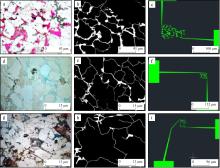
Fig.1
CT scanning results and visualized physical models for different types of core samples from the Daniudi gas field"

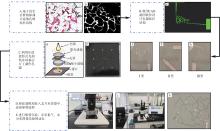
Fig.2
Silicon-based microfluidic chip manufacturing and gas/water flow visualization experiment workflow"

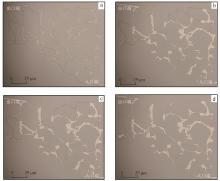
Fig.3
High-temperature, high-pressure microfluidic experiment results of tight sandstone on silicon-based chip samples from the Daniudi gas field (Class Ⅰ pore throats)"
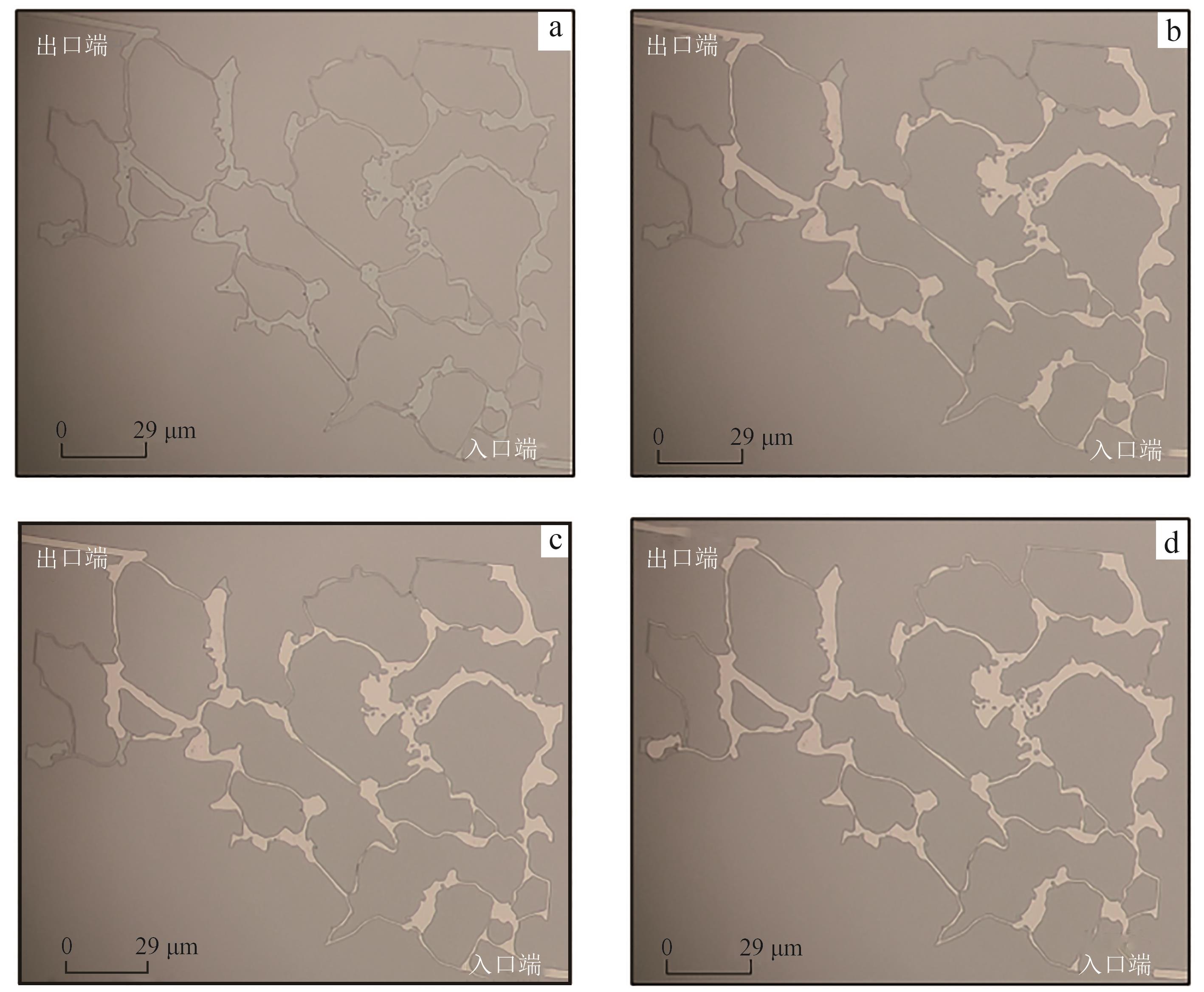
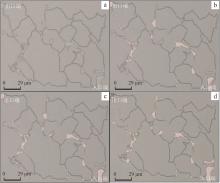
Fig.4
High-temperature, high-pressure microfluidic experiment results of tight sandstone on silicon-based chip samples from the Daniudi gas field (Class Ⅱ pore throats)"

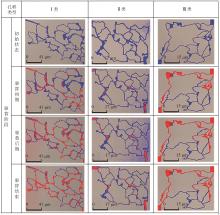
Fig. 5
Schematic diagram showing the reservoir formation process under gas-water displacement simulation in the Daniudi gas field"

Table 1
Formation water occurrence patterns and their characteristics in the Daniudi gas field"
| 地层水赋存模式 | 主要影响因素 | 形成机理 | 赋存类型 | 示意图(微流控实验) |
|---|---|---|---|---|
| 孔道壁面上残余水膜 | 毛细管力 | 流动通道窄,毛管阻力大,残余水膜较厚 | 毛管水(次生可动水) | 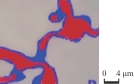 |
| 狭长孔道处残余水柱 | 毛细管力 | 孔道狭长细小,毛管阻力大,驱替压力不足,滞留形成水柱 | 毛管水(次生可动水) | 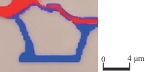 |
| 狭窄喉道处残余水柱 | 贾敏效应 | 喉道尺寸小,毛管阻力极大,贾敏现象严重,卡断形成水柱 | 束缚水 | 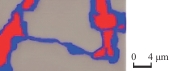 |
| 盲端-角隅处残余水滴 | 通道连通性 | 通道连通性差,被气体压力封闭 | 束缚水 | 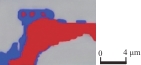 |
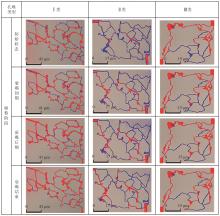
Fig. 6
Schematic diagram showing the simulation experiment of the Daniudi gas field depletion"

Table 2
Trapped gas occurrence patterns and displacement mechanisms for CO2 flooding for different types of trapped gas in the Daniudi gas field"
| 滞留气类型 | 主要影响因素 | 形成机理 | 驱替机理 | 示意图(微流控实验) |
|---|---|---|---|---|
| 盲端-角隅处滞留气 | 通道连通性 | 无有效通道沟通,气体被压缩封闭 | 剥离水膜, 传质扩散置换甲烷 | 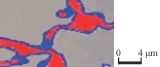 |
| 绕流形成滞留气 | 毛细管力和 驱替压力 | 驱替压差较低,毛细管力为动力,驱替小孔道,封闭大孔道;驱替压差较高,驱替压力为动力,驱替大孔道,封闭小孔道 | 剥离水膜, 驱替作用滞留气 | 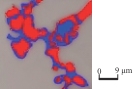 |
| 卡断形成滞留气 | 贾敏效应 | 喉道狭窄,贾敏效应产生附加毛管阻力;喉道处水膜增厚,产生水锁现象,缩小喉道直径,加剧贾敏效应,增大气流阻力 | 驱替作用释放滞留气 | 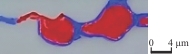 |
| “H型”孔道处滞留气 | 毛细管力 | 毛管指进优先通过孔隙2条“边路”向前突破;水依靠模型亲水性进入“H型”孔道的“桥”,压缩“桥”上的气体形成封闭气 | 束缚水的运移与重新分布, 驱替作用滞留气 | 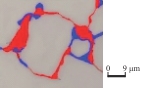 |
Fig. 7
Distributions of CO2, gas, and water in the three classes of pore throats after CO2 flooding in the Daniudi gas field"
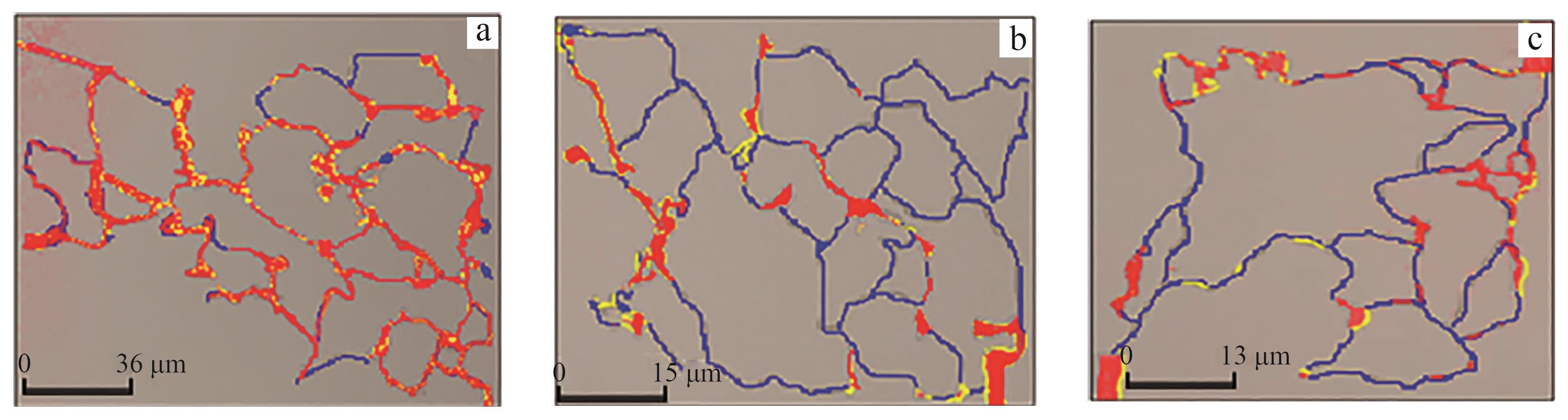
Fig. 8
Analysis of the residual water production of class Ⅰ pore throats in the Daniudi gas field (NMR, T2 spectra)"
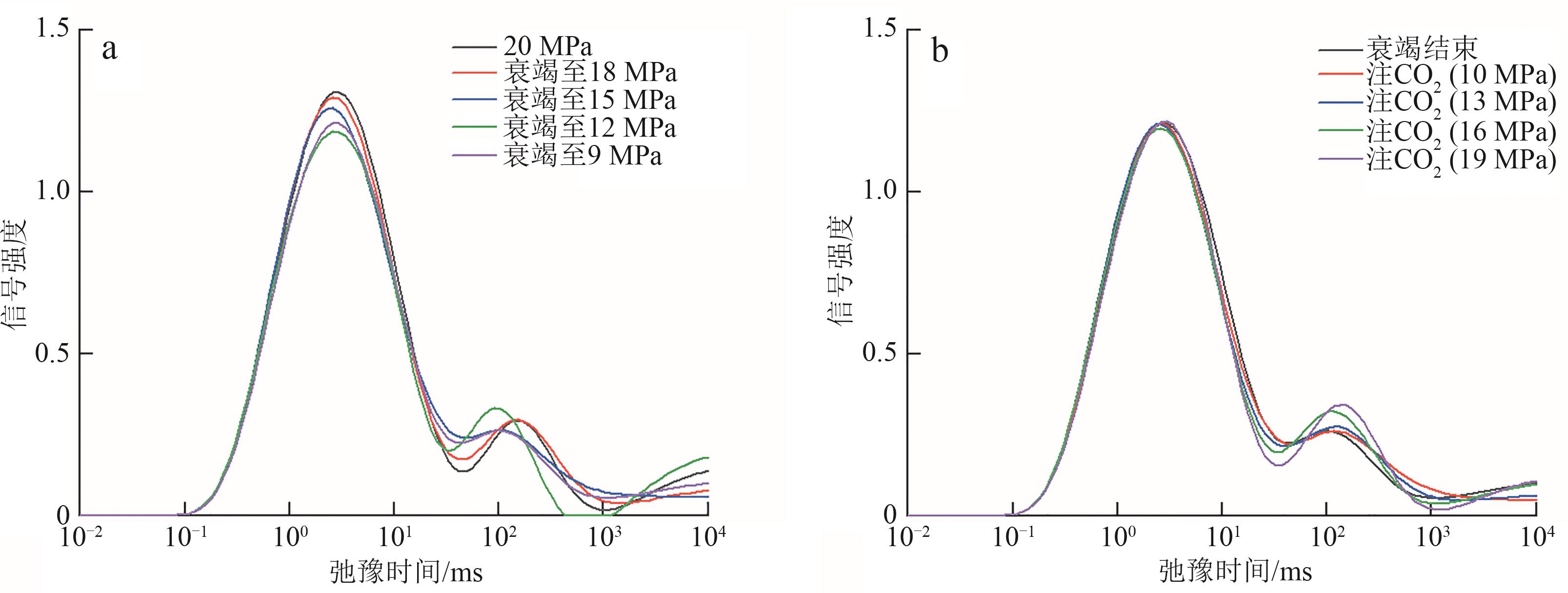
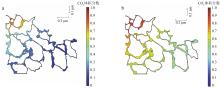
Fig.9
Micro- and nano-scale simulation model of CO2 flooding for natural gas recovery of the Daniudi gas field (Class Ⅰ pore throats)"

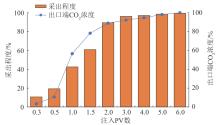
Fig.10
CO2 injection PV vs. recovery degree of the Daniudi gas field(Class Ⅰ pore throats)"
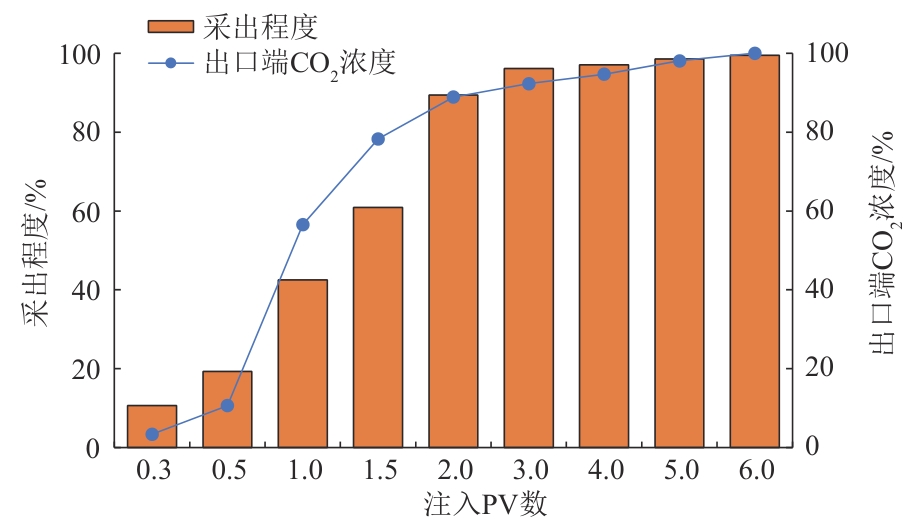
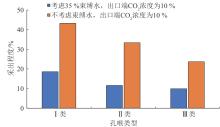
Fig. 11
Comparison of recovery degree after CO2 injection for the three classes of pore throats in the Daniudi gas field"
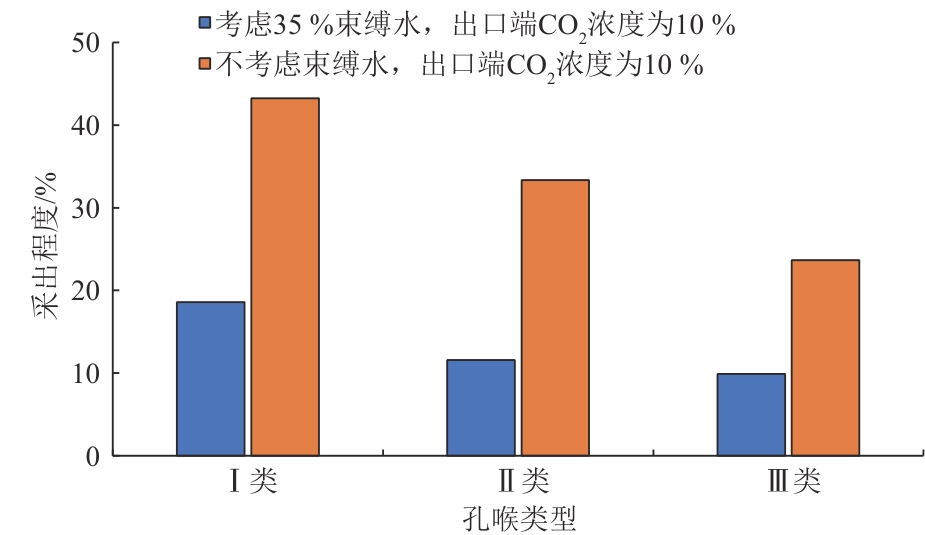
Fig.12
CO2 injection vs. natural gas recovery degree at varying temperatures and different time for rock samples from the Daniudi gas field (only with diffusion considered)"
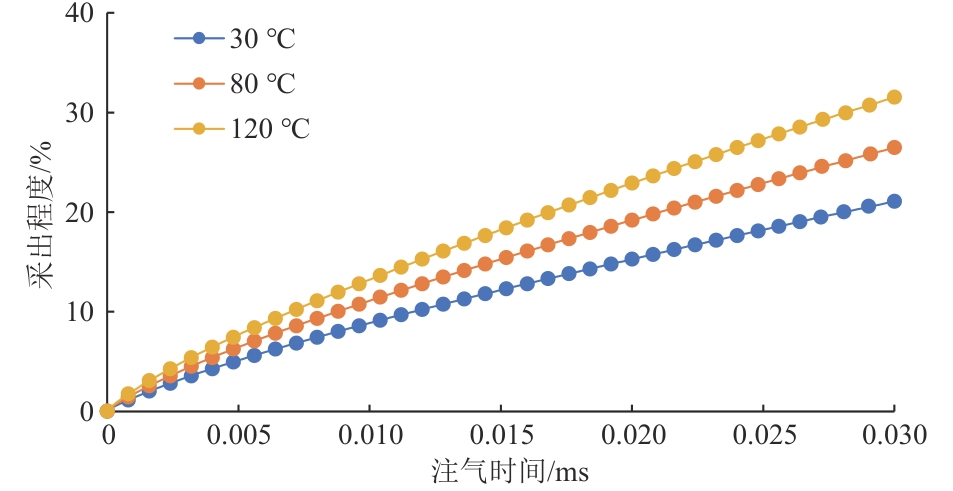
Fig.13
CO2 injection vs. natural gas recovery degree at varying temperatures and different time for rock samples from the Daniudi gas field (CO2 injection rate: 5 μm2/s)"
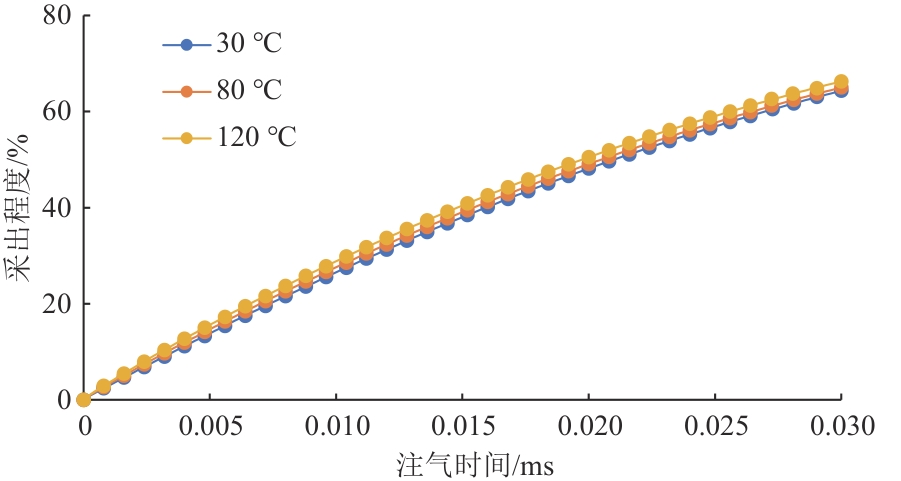
Fig. 14
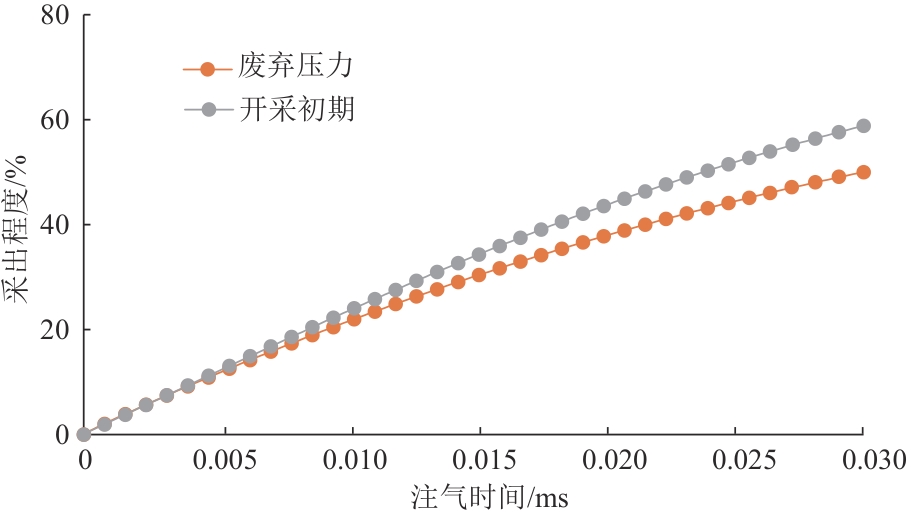
CO2 injection vs. natural gas recovery degree at varying displacement pressures and different time for rock samples from the Daniudi gas field"
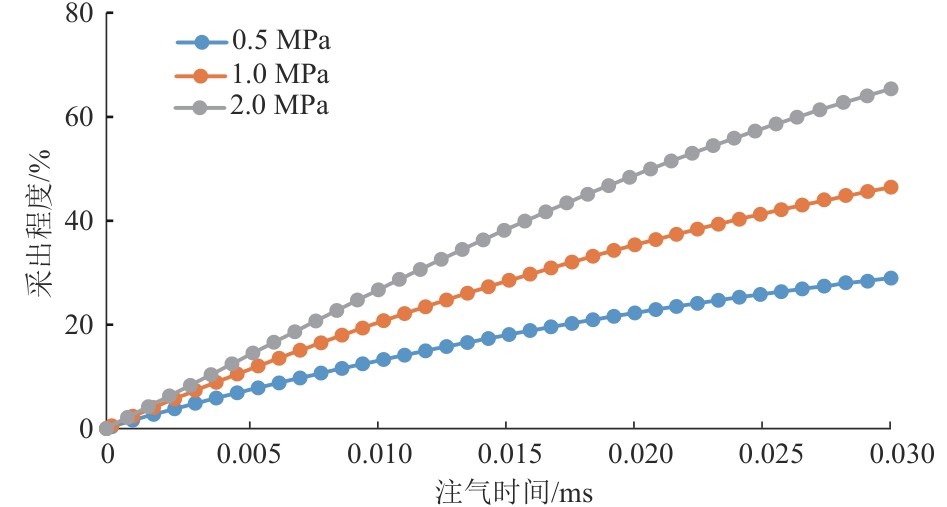
Fig. 15
CO2 injection at different time vs. natural gas recovery degree for rock samples from the Daniudi gas field"
| 1 | 李士伦. 天然气工程[M]. 北京: 石油工业出版社, 2000: 8. |
| LI Shilun. Natural gas engineering[M]. Beijing: Petroleum Industry Press, 2000: 8. | |
| 2 | 贾爱林, 位云生, 郭智, 等. 中国致密砂岩气开发现状与前景展望[J]. 天然气工业, 2022, 42(1): 83-92. |
| JIA Ailin, WEI Yunsheng, GUO Zhi, et al. Development status and prospect of tight sandstone gas in China[J]. Natural Gas Industry, 2022, 42(1): 83-92. | |
| 3 | SUN W, TANG G Q. Visual study of water injection in low permeable sandstone[J]. Journal of Canadian Petroleum Technology, 2006, 45(11): 21-26. |
| 4 | 黄延章, 于大森. 微观渗流实验力学及其应用[M]. 北京: 石油工业出版社, 2001: 45-48. |
| HUANG Yanzhang, YU Dasen. Microscopic seepage mechanics and its applications[M]. Beijing: Petroleum Industry Press, 2001: 45-48. | |
| 5 | 郭平, 苑志旺, 易敏, 等. 低渗低压油藏真实岩心薄片微观水驱试验研究[J]. 石油天然气学报, 2009, 31(4): 100-105. |
| GUO Ping, YUAN Zhiwang, YI Min, et al. Experimental study of microscopic water displacement in low-permeability and low-pressure reservoirs by using sandstone slice[J]. Journal of Oil and Gas Technology, 2009, 31(4): 100-105. | |
| 6 | DULLIEN F A L. Porous media: Fluid transport and pore structure[M]. 2nd ed. San Diego: Academic Press, 1979. |
| 7 | 王晓梅, 赵靖舟, 刘新社. 苏里格地区致密砂岩地层水赋存状态和产出机理探讨[J]. 石油实验地质, 2012, 34(4): 400-405. |
| WANG Xiaomei, ZHAO Jingzhou, LIU Xinshe. Occurrence state and production mechanism of formation water in tight sandstone reservoirs of Sulige area, Ordos Basin[J]. Petroleum Geology and Experiment, 2012, 34(4): 400-405. | |
| 8 | 支鑫. 苏西致密砂岩气藏储层产水机理及预测[D]. 廊坊: 中国科学院研究生院(渗流流体力学研究所), 2015. |
| ZHI Xin. Study on the water production rule of Sulige tight sandstone gas reservoir[D]. Langfang: Institute of Porous Flow and Fluid Mechanics, University of Chinese Academy of Sciences, 2015. | |
| 9 | 郭平, 黄伟岗, 姜贻伟, 等. 致密气藏束缚与可动水研究[J]. 天然气工业, 2006, 26(10): 99-101. |
| GUO Ping, HUANG Weigang, JIANG Yiwei, et al. Research on the irreducible and movable water of tight sandstone gas reservoir[J]. Natural Gas Industry, 2006, 26(10): 99-101. | |
| 10 | 张浩, 康毅力, 陈一健, 等. 致密砂岩气藏超低含水饱和度形成地质过程及实验模拟研究[J]. 天然气地球科学, 2005, 16(2): 186-189. |
| ZHANG Hao, KANG Yili, CHEN Yijian, et al. The study of geology course and experiment simulation for forming ultra-low water saturation in tight sandstones gas reservoirs[J]. Natural Gas Geoscience, 2005, 16(2): 186-189. | |
| 11 | 高树生, 叶礼友, 熊伟, 等. 大型低渗致密含水气藏渗流机理及开发对策[J]. 石油天然气学报, 2013, 35(7): 93-99. |
| GAO Shusheng, YE Liyou, XIONG Wei, et al. Seepage mechanism and strategy for development of large and low permeability and tight sandstone gas reservoirs with water content[J]. Journal of Oil and Gas Technology, 2013, 35(7): 93-99. | |
| 12 | 张烈辉, 熊伟, 赵玉龙, 等. 衰竭底水气藏注CO2提高天然气采收率与碳封存机理[J]. 天然气工业, 2024, 44(4): 25-38. |
| ZHANG Liehui, XIONG Wei, ZHAO Yulong, et al. Mechanism of CO2 injection to enhance gas recovery and carbon storage in depleted bottom-water gas reservoirs[J]. Natural Gas Industry, 2024, 44(4): 25-38. | |
| 13 | AL-HASHAMI A, REN S R, TOHIDI B. CO2 injection for enhanced gas recovery and geo-storage: Reservoir simulation and economics[C]//SPE Europec/EAGE Annual Conference. Houston: Society of Petroleum Engineers, 2005: SPE-94129-MS. |
| 14 | POOLADI-DARVISH M, HONG Huifang, THEYS S, et al. CO2 injection for enhanced gas recovery and geological storage of CO2 in the long coulee glauconite F pool, Alberta[C]//SPE Annual Technical Conference and Exhibition. Houston: Society of Petroleum Engineers, 2008: SPE-115789-MS. |
| 15 | MAMORA D D, SEO J G. Enhanced gas recovery by carbon dioxide sequestration in depleted gas reservoirs[C]//SPE Annual Technical Conference and Exhibition. Houston: Society of Petroleum Engineers, 2002: SPE-77347-MS. |
| 16 | 史云清, 贾英, 潘伟义, 等. 致密低渗透气藏注CO2提高采收率潜力评价[J]. 天然气工业, 2017, 37(3): 62-69. |
| SHI Yunqing, JIA Ying, PAN Weiyi, et al. Potential evaluation on CO2-EGR in tight and low-permeability reservoirs[J]. Natural Gas Industry, 2017, 37(3): 62-69. | |
| 17 | OLDENBURG C M, PRUESS K, BENSON S M. Process modeling of CO2 injection into natural gas reservoirs for carbon sequestration and enhanced gas recovery[J]. Energy and Fuels, 2001, 15(2): 293-298. |
| 18 | SEO J G, MAMORA D D. Experimental and simulation studies of sequestration of supercritical carbon dioxide in depleted gas reservoirs[C]//SPE/EPA/DOE Exploration and Production Environmental Conference. Houston: Society of Petroleum Engineers, 2003: SPE-81200-MS. |
| 19 | WANG Lu, ZHANG Yifan, ZOU Rui, et al. A systematic review of CO2 injection for enhanced oil recovery and carbon storage in shale reservoirs[J]. International Journal of Hydrogen Energy, 2023, 48(95): 37134-37165. |
| 20 | WANG Wendong, WEN Jiayi, WANG Chengwei, et al. Current status and development trends of CO2 storage with enhanced natural gas recovery (CS-EGR)[J]. Fuel, 2023, 349: 128555. |
| 21 | ABDULLAH N, HASAN N. Effects of miscible CO2 injection on production recovery[J]. Journal of Petroleum Exploration and Production Technology, 2021, 11(9): 3543-3557. |
| 22 | 李奇贤, 许江, 彭守建, 等. 多压力系统气藏合采物理模拟研究进展评述[J]. 煤炭科学技术, 2023, 51(9): 149-159. |
| LI Qixian, XU Jiang, PENG Shoujian, et al. Review on the progress for physical simulation for gas reservoirs co-production in multi-pressure system[J]. Coal Science and Technology, 2023, 51(9): 149-159. | |
| 23 | 曹成, 陈星宇, 张烈辉, 等. 气藏注CO2提高采收率及封存评价方法研究进展[J]. 科学技术与工程, 2024, 24(18): 7463-7475. |
| CAO Cheng, CHEN Xingyu, ZHANG Liehui, et al. Review of gas reservoir CO2 injection for enhanced recovery and sequestration evaluation methods[J]. Science Technology and Engineering, 2024, 24(18): 7463-7475. | |
| 24 | 曾溅辉, 张亚雄, 张在振, 等. 致密砂岩气藏复杂气-水关系形成和分布主控因素及分布模式[J]. 石油与天然气地质, 2023, 44(5): 1067-1083. |
| ZENG Jianhui, ZHANG Yaxiong, ZHANG Zaizhen, et al. Complex gas-water contacts in tight sandstone gas reservoirs: Distribution pattern and dominant factors controlling their formation and distribution[J]. Oil & Gas Geology, 2023, 44(5): 1067-1083. | |
| 25 | 关晓东, 郭磊. 深层—超深层油气成藏研究新进展及展望[J]. 石油实验地质, 2023, 45(2): 203-209. |
| 26 | 孙焕泉, 杨勇, 方吉超, 等. 提高油气田采收率技术协同方法与应用[J]. 石油与天然气地质, 2024, 45(3): 600-608. |
| SUN Huanquan, YANG Yong, FANG Jichao, et al. Technological synergy for enhancing hydrocarbon recovery and its applications[J]. Oil & Gas Geology, 2024, 45(3): 600-608. | |
| 27 | 姚振杰, 李剑, 陈芳萍, 等. 延长油田CO2驱扩大波及体积矿场实践[J]. 石油地质与工程, 2024, 38(5): 84-88. |
| 28 | YU Qingyan, JIA Ying, LIU Pengcheng, et al. Rate transient analysis methods for water-producing gas wells in tight reservoirs with mobile water[J]. Energy Geoscience, 2024, 5(1). |
| 29 | WANG Fanliao, LIU Shucheng, Ying Jia, et al. Production forecasting methods for different types of gas reservoirs[J]. Energy Geoscience, 2024, 5(3). |
| 30 | WANG Ai, LIU Junlong, LIU Zhongqun, et al. Genetic mechanisms of high-quality tight siliciclastic reservoirs: A case study from the Upper Triassic Xujiahe Formation in the Yuanba area, Sichuan Basin, China[J]. Energy Geoscience, 2024, 5(3). |
| 31 | 柏明星, 张志超, 陈巧珍, 等. 二氧化碳置换法开采天然气水合物研究进展[J]. 石油与天然气地质, 2024, 45(2): 553-564. |
| BAI Mingxing, ZHANG Zhichao, CHEN Qiaozhen, et al. Advances in research on CO2 replacement for natural gas hydrate exploitation[J]. Oil & Gas Geology, 2024, 45(2): 553-564. |
| Viewed | ||||||
|
Full text |
|
|||||
|
Abstract |
|
|||||
