

Oil & Gas Geology ›› 2025, Vol. 46 ›› Issue (2): 654-669.doi: 10.11743/ogg20250221
• Methods and Technologies • Previous Articles Next Articles
Yu XIONG1( ), Quanfeng NIU1(), Zewei SUN1, Jun JIANG2, Chun ZHANG2
Received:2024-12-01
Revised:2025-02-26
Online:2025-04-30
Published:2025-04-27
Contact:
Quanfeng NIU
E-mail:xiongyu-swpi@126.com;8721888215@qq.com
CLC Number:
Yu XIONG, Quanfeng NIU, Zewei SUN, Jun JIANG, Chun ZHANG. Impact of gas production rate on water invasion dynamics in carbonate gas reservoirs with varying storage spaceson: A case study of the Sinian Dengying Formation in the Sichuan Basin[J]. Oil & Gas Geology, 2025, 46(2): 654-669.
Add to citation manager EndNote|Reference Manager|ProCite|BibTeX|RefWorks
Table 1
Reservoir parameter statistics of different types of rock samples taken from the Dengying Formation, Sichuan Basin"
| 岩样类型 | 总孔隙度/% | 孔隙体积/cm3 | 小孔占比/% | 裂缝占比/% | 溶洞占比/% | 连通孔隙占比/% | 岩样储量/mL |
|---|---|---|---|---|---|---|---|
| 孔洞型 | 2.05 | 368 | 69 | 13 | 18 | 0.21 | 41 352.1 |
| 裂缝型 | 9.32 | 1 678 | 18 | 73 | 9 | 0.37 | 162 023.9 |
| 缝洞型 | 18.35 | 3 303 | 22 | 47 | 31 | 0.57 | 380 130.8 |
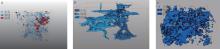
Fig.1
CT scanning results of different types of large-scale rock samples involved in the 3D physical simulation experiments on water invasion"

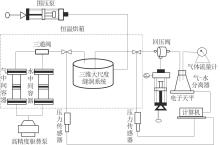
Fig.2
Flow chart of the 3D physical simulation experiment for water invasion in large-scale rock samples"
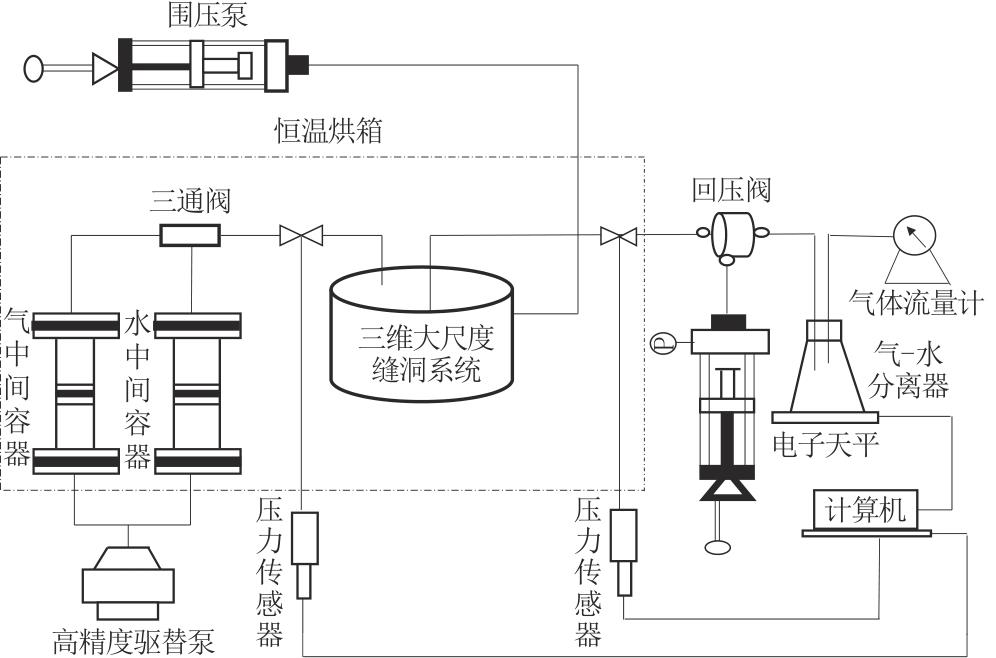

Fig.3
Diagrams showing water-invasion flow fields along wellbore sections under different injection pore volume multiples or gas production rates for vuggy rock samples from the Dengying Formation, Sichuan Basin"

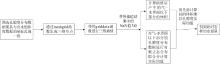
Fig.4
Flow chart of the computer program for calculating water invasion volume in a 3D large-scale core"
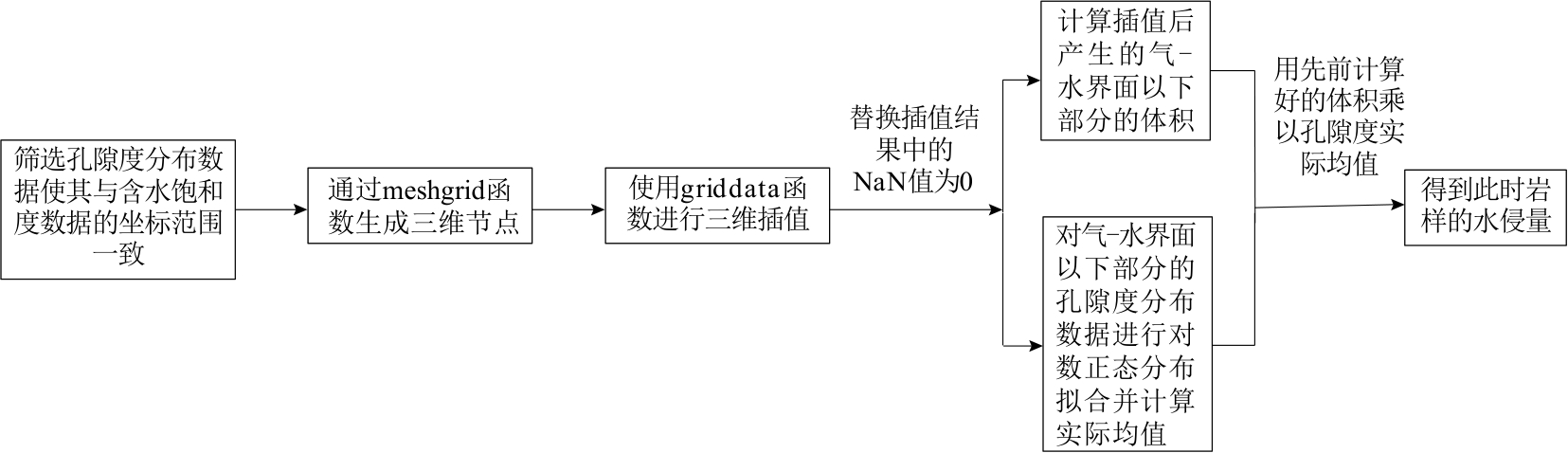
Table 2
Comparison of calculated water invasion volumes and expansion volumes under different conditions for vuggy rock samples from the Dengying Formation, Sichuan Basin"
| 水体倍数 | 采气速度/(mL/min) | 计算水侵量/mL | 膨胀体积/mL |
|---|---|---|---|
| 2 | 100 | 32.83 | 33.28 |
| 400 | 19.25 | 20.13 | |
| 4 | 100 | 57.62 | 59.46 |
| 400 | 33.81 | 35.51 |
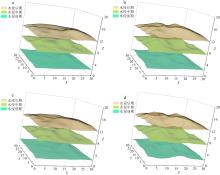
Fig.5
Diagrams showing water-invasion flow fields along wellbore sections under different injection pore volume multiples or gas production rates for fractured rock samples from the Dengying Formation, Sichuan Basin"

Table 3
Comparison of calculated water invasion volumes and expansion volumes under different conditions for fractured rock samples from the Dengying Formation, Sichuan Basin"
| 水体倍数 | 采气速度/(mL/min) | 计算水侵量/mL | 膨胀体积/mL |
|---|---|---|---|
| 2 | 100 | 164.27 | 170.68 |
| 400 | 189.70 | 197.35 | |
| 4 | 100 | 311.52 | 328.42 |
| 400 | 376.54 | 385.90 |
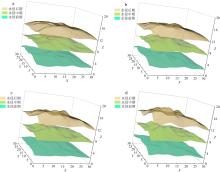
Fig.6
Diagrams showing water-invasion flow fields along wellbore sections under different injection pore volume multiples or gas production rates for fractured-vuggy rock samples from the Dengying Formation, Sichuan Basin"

Table 4
Comparison of calculated water invasion volumes and expansion volumes under different conditions for fractured-vuggy rock samples from the Dengying Formation, Sichuan Basin"
| 水体倍数 | 采气速度/(mL/min) | 计算水侵量/mL | 膨胀体积/mL |
|---|---|---|---|
| 2 | 100 | 477.83 | 498.21 |
| 400 | 548.62 | 564.73 | |
| 4 | 100 | 509.33 | 528.42 |
| 400 | 656.24 | 685.90 |

Fig.7
Comparison of the relationship between the water invasion volume coefficient (ω) and the gas production degree (R) for fractured rock samples from the Dengying Formation, Sichuan Basin"
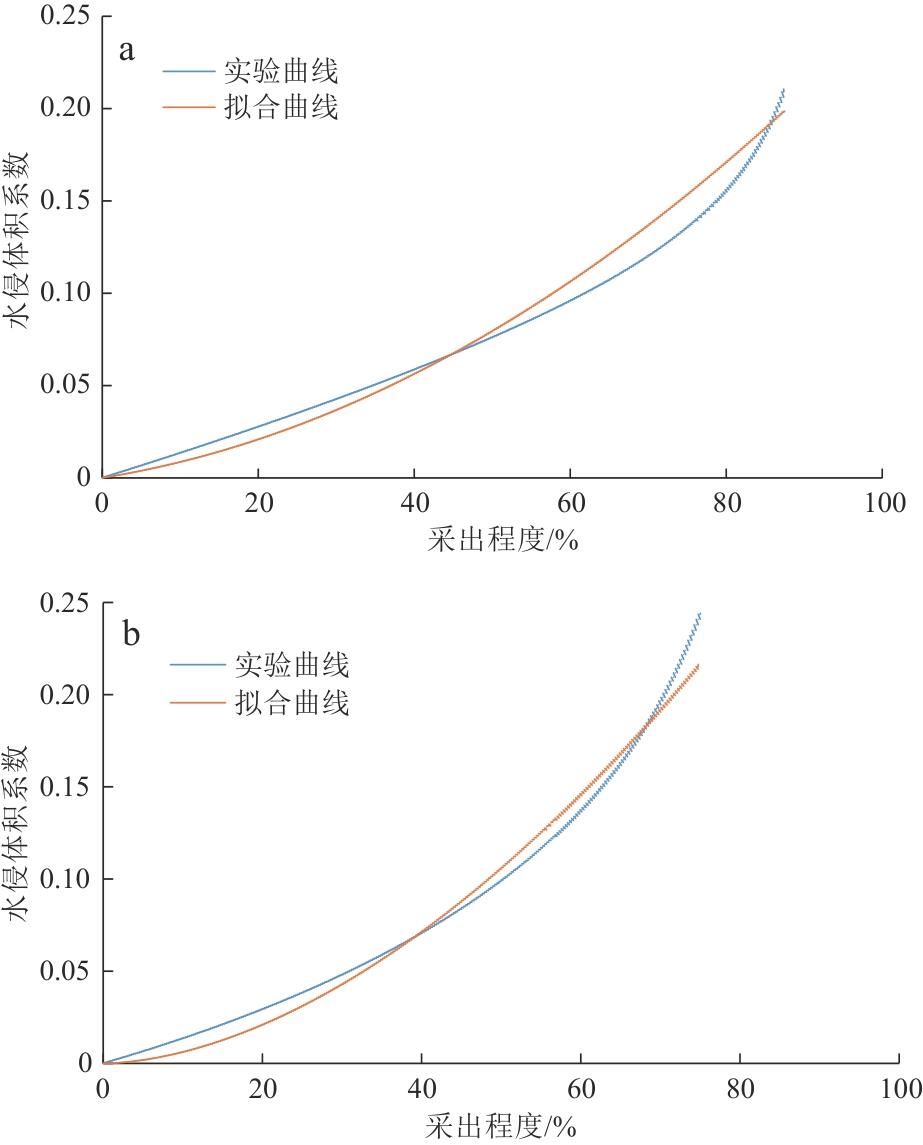
Table 5
Fitted equations for fractured rock samples from the Dengying Formation, Sichuan Basin under different gas production rates in an injection pore volume multiple of two"
| 采气速度/(mL/min) | 拟合公式 |
|---|---|
| 100 | |
| 200 | |
| 300 | |
| 400 |
Fig.8
ωvs. R in an injection pore volume multiple of four and at a gas production rate of 400 mL/min for fractured rock samples from the Dengying Formation, Sichuan Basin"
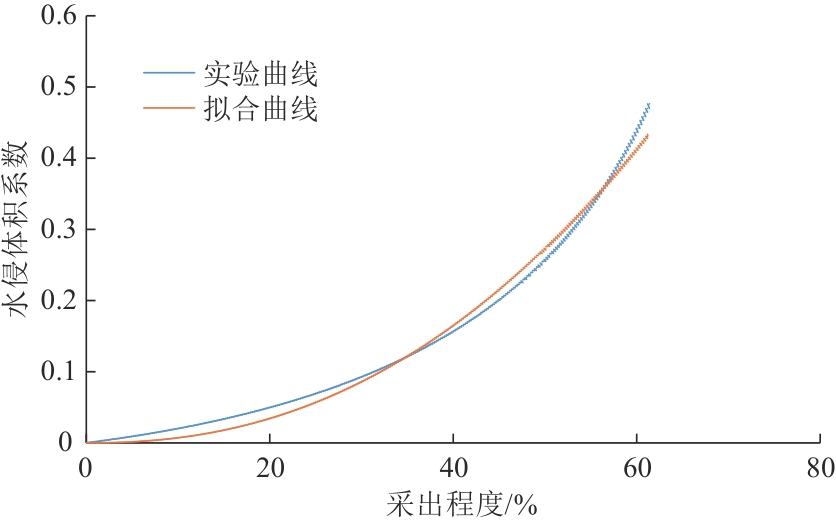
Table 6
Fitted equations for fractured rock samples from the Dengying Formation, Sichuan Basin under different gas production rates in an injection pore volume multiple of four"
| 采气速度/(mL/min) | 拟合公式 |
|---|---|
| 100 | |
| 200 | |
| 300 | |
| 400 |
Table 7
Comparison of parameter values under different injection pore volume multiples for fractured rock samples from the Dengying Formation, Sichuan Basin"
| 采气速度/(mL/min) | 2倍水体 | 4倍水体 | ||||||
|---|---|---|---|---|---|---|---|---|
| A | B | 水侵量/mL | 水驱动用储量/mL | A | B | 水侵量/mL | 水驱动用储量/mL | |
| 100 | 0.000 27 | 1.95 | 170.68 | 155 904 | 0.000 25 | 1.82 | 328.42 | 152 197 |
| 200 | 0.000 21 | 1.73 | 178.34 | 156 170 | 0.000 19 | 1.60 | 345.86 | 147 850 |
| 300 | 0.000 16 | 1.58 | 188.72 | 155 211 | 0.000 14 | 1.37 | 362.21 | 149 986 |
| 400 | 0.000 10 | 1.42 | 197.68 | 154 121 | 0.000 08 | 1.23 | 385.90 | 147 485 |
Fig. 9
ω vs. R in an injection pore volume multiple of tow and at a gas production rate of 400 mL/min for fractured-vuggy rock samples from the Dengying Formation, Sichuan Basin"
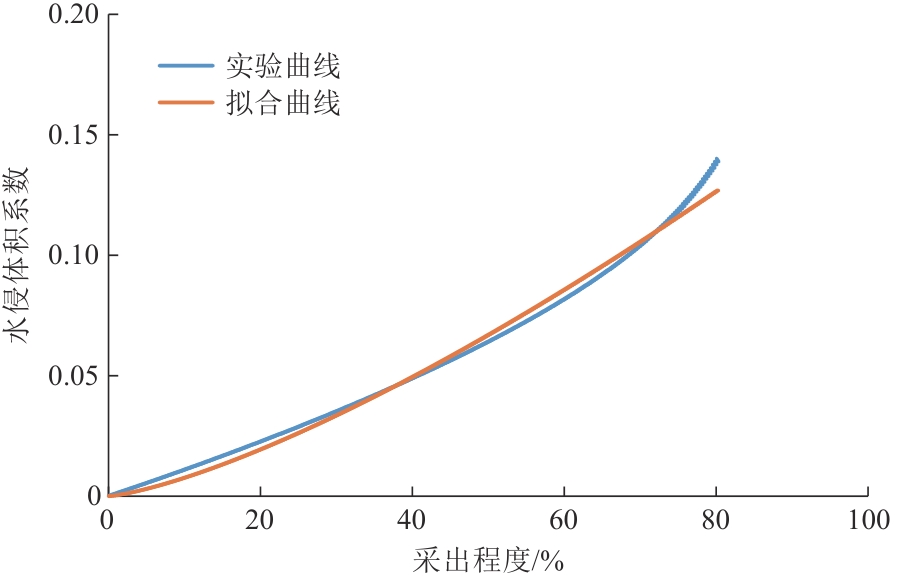
Table 8
Comparison of fitted equations for fractured and fractured-vuggy rock samples from the Dengying Formation, Sichuan Basin in an injection pore volume multiple of two and at a gas production rate of 400 mL/minn"
| 岩样类型 | 拟合公式 |
|---|---|
| 裂缝型 | |
| 缝洞型 |
Table 9
Comparison of parameter values of fractured and fractured-vuggy rock samples from the Dengying Formation, Sichuan Basin under identical experimental conditions"
| 岩样类型 | A | B | 水侵量/mL | 水驱动用储量/mL |
|---|---|---|---|---|
| 裂缝型 | 0.000 101 3 | 1.42 | 197.68 | 154 121 |
| 缝洞型 | 0.000 062 8 | 1.32 | 564.73 | 383 810 |
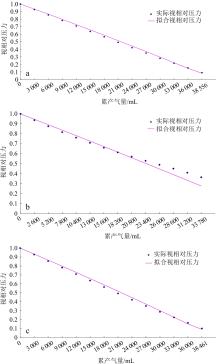
Fig.10
Comparison of actual and fitted apparent relative pressures under varying experimental conditions for vuggy rock samples from the Dengying Formation, Sichuan Basin"

Table 10
Comparison of parameter values under different injection pore volume multiples and gas production rates for vuggy rock samples from the Dengying Formation, Sichuan Basin"
| 水体倍数 | 采气速度/(mL/min) | A | B | 封隔气量/mL | 实际水侵量/mL | 拟合水侵量/mL | 水驱动用储量/mL |
|---|---|---|---|---|---|---|---|
| 2 | 100 | 0.032 0 | 4.80 | 2 352.72 | 32.83 | 30.28 | 41 811 |
| 400 | 0.037 0 | 2.10 | 1 689.79 | 19.15 | 17.59 | 46 320 | |
| 4 | 100 | 0.028 0 | 4.01 | 2 428.41 | 57.62 | 54.47 | 42 098 |
| 400 | 0.036 0 | 1.87 | 1 613.44 | 33.81 | 31.63 | 46 176 |

Fig.11
Comparison of actual and fitted apparent relative pressures under varying experimental conditions for fractured rock samples from the Dengying Formation, Sichuan Basin"
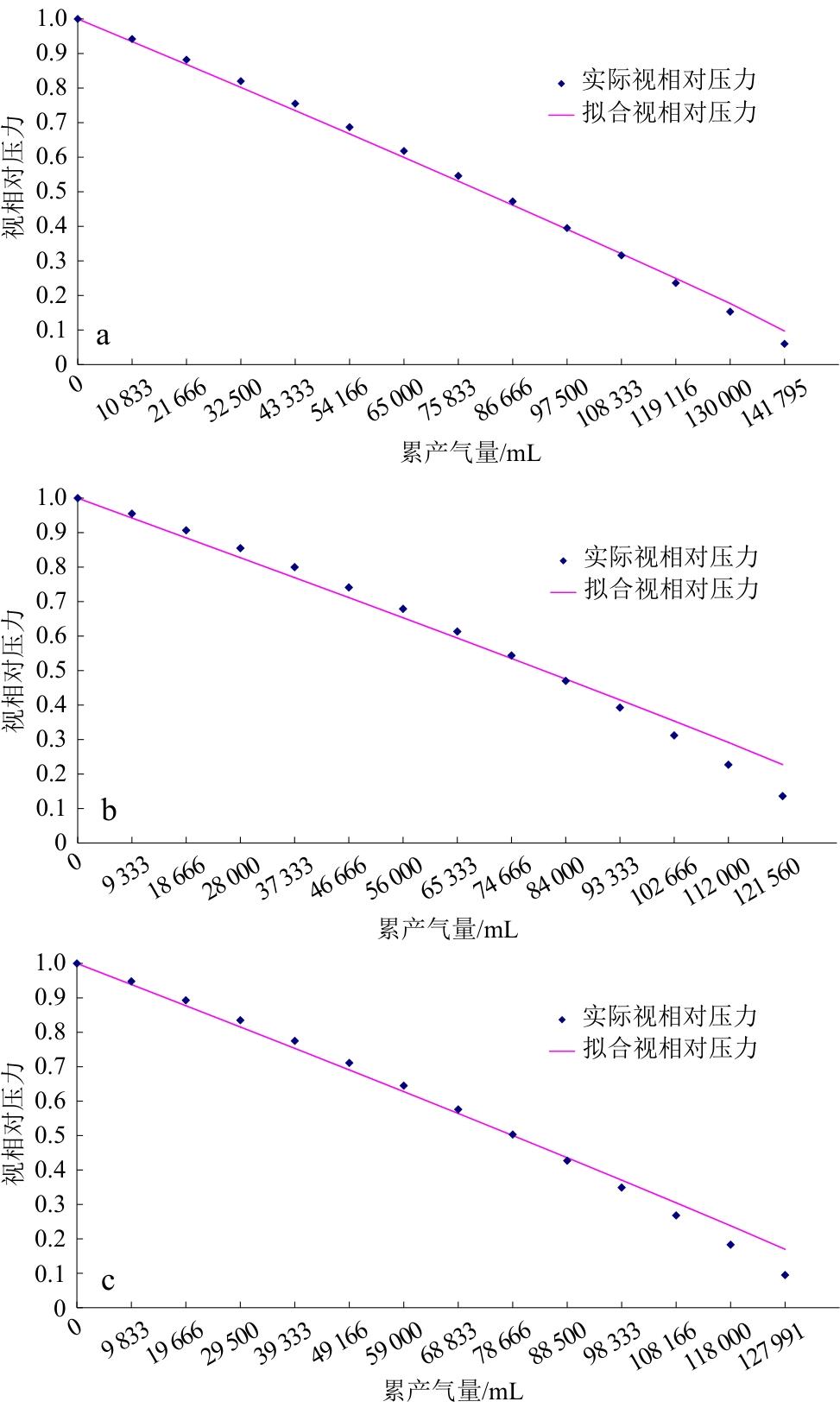
Table 11
Comparison of parameter values under different injection pore volume multiples and gas production rates for fractured rock samples from the Dengying Formation, Sichuan Basin"
| 水体倍数 | 采气速度/(mL/min) | A | B | 封隔气量/mL | 实际水侵量/mL | 拟合水侵量/mL | 水驱动用储量/mL |
|---|---|---|---|---|---|---|---|
| 2 | 100 | 0.007 5 | 2.75 | 12 066.27 | 164.27 | 171.42 | 155 904 |
| 400 | 0.006 9 | 1.84 | 22 459.85 | 189.7 | 196.52 | 141 121 | |
| 4 | 100 | 0.005 5 | 2.44 | 15 575.01 | 311.52 | 325.11 | 152 197 |
| 400 | 0.004 1 | 1.40 | 38 068.33 | 376.54 | 383.92 | 147 485 |
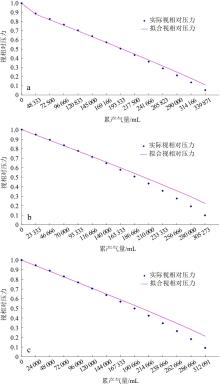
Fig.12
Comparison of actual and fitted apparent relative pressures under varying experimental conditions for fractured-vuggy rock samples from the Dengying Formation, Sichuan Basin"
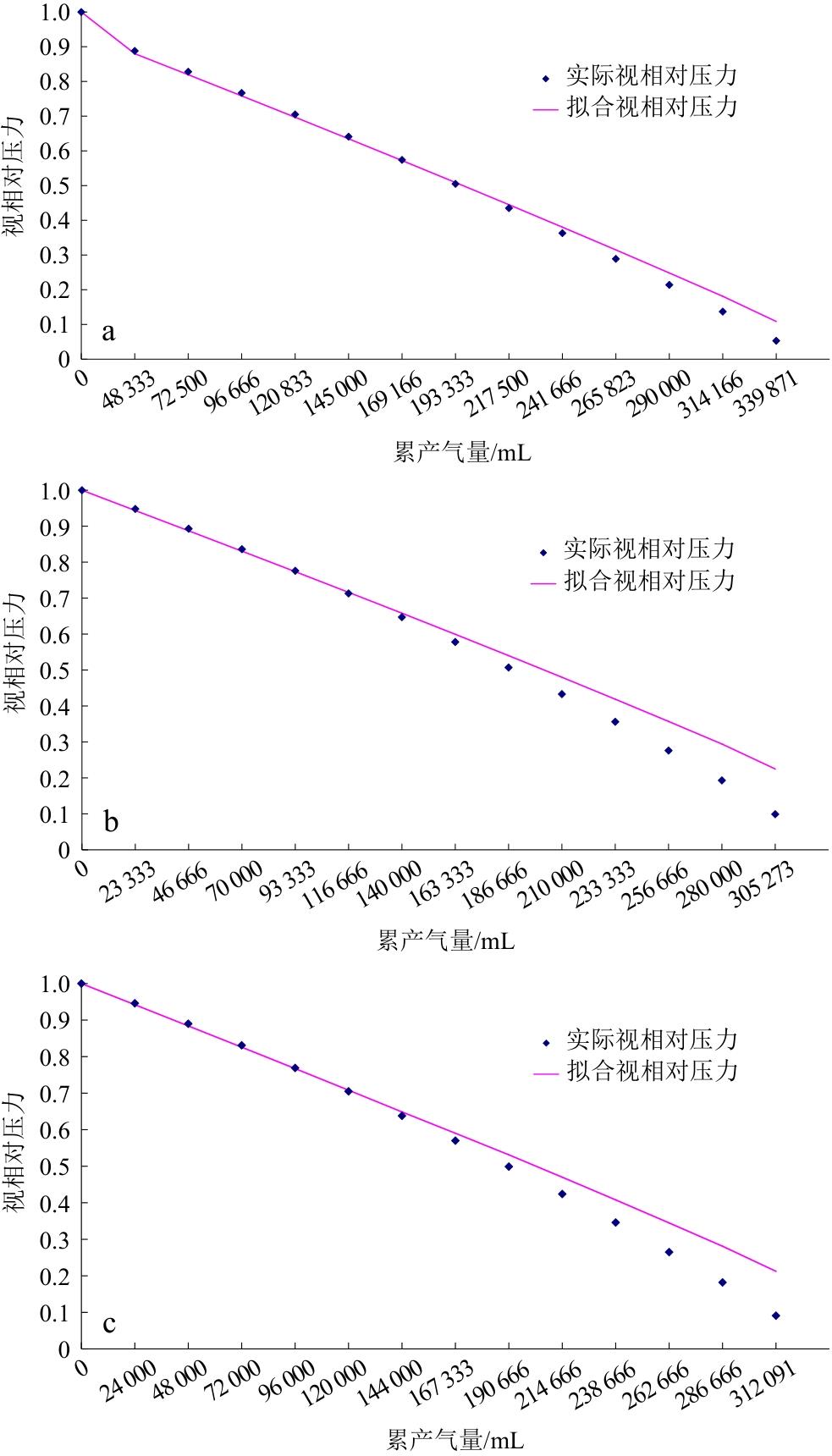
Table 12
Comparison of parameter values under different injection pore volume multiples and gas production rates for fractured-vuggy rock samples from the Dengying Formation, Sichuan Basin"
| 水体倍数 | 采气速度/(mL/min) | A | B | 封隔气量/mL | 实际水侵量/mL | 拟合水侵量/mL | 水驱动用储量/mL |
|---|---|---|---|---|---|---|---|
| 2 | 100 | 0.006 5 | 1.79 | 21 584.37 | 477.83 | 496.52 | 377 603 |
| 400 | 0.002 0 | 1.48 | 32 548.75 | 548.62 | 567.88 | 360 810 | |
| 4 | 100 | 0.003 0 | 1.62 | 29 154.32 | 509.33 | 525.36 | 365 981 |
| 400 | 0.001 2 | 1.25 | 51 247.68 | 656.24 | 674.29 | 350 481 |
Table 13
Comparison of A and B values of carbonate gas reservoirs with varying degrees of heterogeneity under different exploitation conditions"
| 岩样类型 | 水体倍数 | 采气速度/(mL/min) | A | B | 封隔气量/mL | 拟合水侵量/mL |
|---|---|---|---|---|---|---|
| 孔洞型 | 2 | 100 | 0.032 0 | 4.80 | 2 352.72 | 30.28 |
| 400 | 0.037 0 | 2.10 | 1 689.79 | 17.59 | ||
| 4 | 100 | 0.028 0 | 4.01 | 2 428.41 | 54.47 | |
| 400 | 0.036 0 | 1.87 | 1 613.44 | 31.63 | ||
| 裂缝型 | 2 | 100 | 0.007 5 | 2.75 | 12 066.27 | 171.42 |
| 400 | 0.006 9 | 1.84 | 22 459.85 | 196.52 | ||
| 4 | 100 | 0.005 5 | 2.44 | 15 575.01 | 325.11 | |
| 400 | 0.004 1 | 1.40 | 38 068.33 | 383.92 | ||
| 缝洞型 | 2 | 100 | 0.006 5 | 1.79 | 21 584.37 | 496.52 |
| 400 | 0.002 0 | 1.48 | 32 548.75 | 567.88 | ||
| 4 | 100 | 0.003 0 | 1.62 | 29 154.32 | 525.36 | |
| 400 | 0.001 2 | 1.25 | 51 247.68 | 674.29 |
Table 14
Assessment index (B) value ranges for both experimental and on-site water invasion activities"
| 测试条件 | 活跃型 | 中等活跃型 | 不活跃型 |
|---|---|---|---|
| 模拟实验 | 1.1 ~ 1.5 | 1.5 ~ 2.5 | |
| 现场 | 1.0 ~ 1.7 | 1.7 ~ 2.4 |
| 1 | 李明强, 马梓珂, 唐松, 等. 四川盆地磨溪地区龙王庙组碳酸盐岩气藏水侵规律[J]. 天然气地球科学, 2024, 35(2): 366-378. |
| LI Mingqiang, MA Zike, TANG Song, et al. Water invasion law of carbonate gas reservoir of Longwangmiao Formation in Moxi area, Sichuan Basin[J]. Natural Gas Geoscience, 2024, 35(2): 366-378. | |
| 2 | ZHANG Tao, ZHOU Houjie, ZHANG Liehui, et al. Pore-scale investigation of bottom water invasion dynamics in carbonate gas reservoirs with different interlayer distributions[J]. Natural Gas Industry B, 2024, 11(2): 140-153. |
| 3 | 冯曦, 彭先, 李隆新, 等. 碳酸盐岩气藏储层非均质性对水侵差异化的影响[J]. 天然气工业, 2018, 38(6): 67-75. |
| FENG Xi, PENG Xian, LI Longxin, et al. Influence of reservoir heterogeneity on water invasion differentiation in carbonate gas reservoirs[J]. Natural Gas Industry, 2018, 38(6): 67-75. | |
| 4 | 冯异勇, 贺胜宁. 裂缝性底水气藏气井水侵动态研究[J]. 天然气工业, 1998, 18(3): 53-57, 8. |
| FENG Yiyong, HE Shengning. A research on water invasion performance of the gas wells in fractured bottom water reservoir[J]. Natural Gas Industry, 1998, 18(3): 53-57, 8. | |
| 5 | 高树生, 胡志明, 安为国, 等. 四川盆地龙王庙组气藏白云岩储层孔洞缝分布特征[J]. 天然气工业, 2014, 34(3): 103-109. |
| GAO Shusheng, HU Zhiming, AN Weiguo, et al. Distribution characteristics of dolomite reservoir pores and caves of Longwangmiao Fm gas reservoirs in the Sichuan Basin[J]. Natural Gas Industry, 2014, 34(3): 103-109. | |
| 6 | 熊钰, 杨水清, 乐宏, 等. 裂缝型底水气藏水侵动态分析方法[J]. 天然气工业, 2010, 30(1): 61-64. |
| XIONG Yu, YANG Shuiqing, YUE Hong, et al. A new method of water influx performance analysis on fracture gas reservoirs with bottom water[J]. Natural Gas Industry, 2010, 30(1): 61-64. | |
| 7 | 樊怀才, 钟兵, 李晓平, 等. 裂缝型产水气藏水侵机理研究[J]. 天然气地球科学, 2012, 23(6): 1179-1184. |
| FAN Huaicai, ZHONG Bing, LI Xiaoping, et al. Studies on water invasion mechanism of fractured-watered gas reservoir[J]. Natural Gas Geoscience, 2012, 23(6): 1179-1184. | |
| 8 | 成友友, 穆龙新, 朱恩永, 等. 碳酸盐岩气藏气井出水机理分析——以土库曼斯坦阿姆河右岸气田为例[J]. 石油勘探与开发, 2017, 44(1): 89-96. |
| CHENG Youyou, MU Longxin, ZHU Enyong, et al. Water producing mechanisms of carbonate reservoirs gas wells: A case study of the Right Bank Field of Amu Darya, Turkmenistan[J]. Petroleum Exploration and Development, 2017, 44(1): 89-96. | |
| 9 | 谭晓华, 彭港珍, 李晓平, 等. 考虑水封气影响的有水气藏物质平衡法及非均匀水侵模式划分[J]. 天然气工业, 2021, 41(3): 97-103. |
| TAN Xiaohua, PENG Gangzhen, LI Xiaoping, et al. Material balance method and classification of non-uniform water invasion mode for gas reservoirs with water considering the effect of water sealed gas[J]. Natural Gas Industry, 2021, 41(3): 97-103. | |
| 10 | 熊钰, 雷婷婷, 孙泽威, 等. 灯影组气藏不同尺度储集空间定量相渗及水驱特征研究[J]. 水动力学研究与进展A辑, 2024, 39(4): 626-637. |
| XIONG Yu, LEI Tingting, SUN Zewei, et al. Quantitative phase infiltration and water drive characteristics of different scale reservoir space in Dengying formation gas reservoir[J]. Chinese Journal of Hydrodynamics, 2024, 39(4): 626-637. | |
| 11 | 徐少立, 马奎, 杨强, 等. 四川盆地蓬莱气区震旦系灯影组二段储层特征及其控制因素[J]. 特种油气藏, 2024, 31(2): 47-56. |
| XU Shaoli, MA Kui, YANG Qiang, et al. Reservoir characteristics of the second member of Sinian Dengying formation in Penglai gas area of Sichuan Basin and their controlling factors[J]. Special Oil & Gas Reservoirs, 2024, 31(2): 47-56. | |
| 12 | MIAO Miaoqing, SUN Zhichao, XUE Zongan, et al. The Lower Cambrian Xiaoerbulake Formation in the Tarim Basin as a potential carbonate source rock[J]. Energy Geoscience, 2024, 5(2): 100238. |
| 13 | 常媛, 贾鹏飞. 塔里木盆地塔中地区连续型碳酸盐岩油气藏地质特征及形成原因[J]. 大庆石油地质与开发, 2022, 41(2): 11-15. |
| CHANG Yuan, JIA Pengfei. Geological characteristics and forming cause of the continuous[J]. Petroleum Geology & Oilfield Development in Daqing, 2022, 41(2): 11-15. | |
| 14 | 张亚蒲, 杨正明, 黄延章, 等. 低渗孔隙型碳酸盐岩油藏储层特征及剩余油分布规律[J]. 吉林大学学报(地球科学版), 2021, 51(3): 659-668. |
| ZHANG Yapu, YANG Zhengming, HUANG Yanzhang, et al. Study on reservoir characteristics and remaining oil distribution of low permeability pore type carbonate rock[J]. Journal of Jilin University (Earth Science Edition), 2021, 51(3): 659-668. | |
| 15 | 闫正和, 石军太, 秦峰, 等. 水驱气藏动态储量和水侵量计算新方法[J]. 中国海上油气, 2021, 33(1): 93-103. |
| YAN Zhenghe, SHI Juntai, QIN Feng, et al. A new method for calculating dynamic reserves and water influx of water drive gas reservoirs[J]. China Offshore Oil and Gas, 2021, 33(1): 93-103. | |
| 16 | 屈海洲, 郭新宇, 徐伟, 等. 碳酸盐岩微孔隙的分类、成因及对岩石物理性质的影响[J]. 石油与天然气地质, 2023, 44(5): 1102-1117. |
| QU Haizhou, GUO Xinyu, XU Wei, et al. Classification and origin of micropores in carbonates and their effects on physical properties of rocks[J]. Oil & Gas Geology, 2023, 44(5): 1102-1117. | |
| 17 | 李文涛, 涂利辉, 鲁明宇, 等. 基于数字岩心的碳酸盐岩复杂孔隙特征研究——以普光气田飞仙关组储层为例[J]. 断块油气田, 2024, 31(1): 114-122. |
| LI Wentao, TU Lihui, LU Mingyu, et al. Study on complex pore characteristics of carbonate reservoirs based on digital core: A case study of Feixianguan Formation in Puguang Gas Field[J]. Fault-Block Oil and Gas Field, 2024, 31(1): 114-122. | |
| 18 | 李映涛, 汝智星, 邓尚, 等. 塔里木盆地顺北特深碳酸盐岩储层天然裂缝实验评价及油气意义[J]. 石油实验地质, 2023, 45(3): 422-433. |
| LI Yingtao, RU Zhixing, DENG Shang, et al. Experimental evaluation and hydrocarbon significance of natural fractures in Shunbei ultra-deep carbonate reservoir, Tarim Basin[J]. Petroleum Geology and Experiment, 2023, 45(3): 422-433. | |
| 19 | 史今雄, 赵向原, 潘仁芳, 等. 川中地区震旦系灯影组碳酸盐岩天然裂缝特征及其对气井产能影响[J]. 石油与天然气地质, 2023, 44(2): 393-405. |
| SHI Jinxiong, ZHAO Xiangyuan, PAN Renfang, et al. Characteristics of natural fractures in carbonate reservoirs and their impacts on well productivity in the Sinian Dengying Formation, central Sichuan Basin[J]. Oil & Gas Geology, 2023, 44(2): 393-405. | |
| 20 | AMIRSARDARI M, AFSARI K. Pore-to-field scale modeling of residual gas trapping in tight carbonate underground gas reservoirs[J]. Energy, 2024, 298: 131305. |
| 21 | 张伦友, 孙家征. 变容物质平衡方法及其在气田开发中的应用[J]. 天然气工业, 1991, 11(5): 58-63, 9. |
| ZHANG Lunyou, SUN Jiazheng. Variable volume material balance method and its application to gas field development[J]. Natural Gas Industry, 1991, 11(5): 58-63, 9. | |
| 22 | 邓惠, 杨胜来, 刘义成, 等. 缝洞型碳酸盐岩底水气藏水侵规律预测新方法[J]. 天然气勘探与开发, 2023, 46(2): 37-43. |
| DENG Hui, YANG Shenglai, LIU Yicheng, et al. A new method for predicting water-invasion laws in fractured-vuggy carbonate gas reservoirs with bottom water[J]. Natural Gas Exploration and Development, 2023, 46(2): 37-43. | |
| 23 | 唐洪, 谢琳, 苏波, 等. 塔中奥陶系碳酸盐岩储层缝洞特征[J]. 中国石油大学学报(自然科学版), 2013, 37(2): 7-13. |
| TANG Hong, XIE Lin, SU Bo, et al. Fracture and vug character of Ordovician carbonate reservoir in Tazhong Oilfield[J]. Journal of China University of Petroleum (Edition of Natural Science), 2013, 37(2): 7-13. | |
| 24 | 吴婷婷, 朱华, 李隆新, 等. 超深层多断裂碳酸盐岩气藏水侵模式及治水对策[J]. 天然气勘探与开发, 2023, 46(3): 49-58. |
| WU Tingting, ZHU Hua, LI Longxin, et al. Water-invasion patterns and ways to deal with water in ultra-deep carbonate gas reservoirs with multiple fractures[J]. Natural Gas Exploration and Development, 2023, 46(3): 49-58. | |
| 25 | 邹才能, 谢增业, 李剑, 等. 典型碳酸盐岩大气田规模聚集差异性及其主控因素——以四川盆地安岳气田和鄂尔多斯盆地靖边气田为例[J]. 石油与天然气地质, 2023, 44(1): 1-15. |
| ZOU Caineng, XIE Zengye, LI Jian, et al. Differences and main controlling factors of large-scale gas accumulations in typical giant carbonate gas fields: A case study on Anyue gas field in the Sichuan Basin and Jingbian gas field in the Ordos Basin[J]. Oil & Gas Geology, 2023, 44(1): 1-15. | |
| 26 | FANG Feifei, SHEN Weijun, LI Xizhe, et al. Experimental study on water invasion mechanism of fractured carbonate gas reservoirs in Longwangmiao Formation, Moxi block, Sichuan Basin[J]. Environmental Earth Sciences, 2019, 78(10): 316. |
| 27 | 谢鹏, 陈鹏羽, 赵海龙, 等. 碳酸盐岩裂缝-孔隙型储集层水侵特征及残余气分布规律[J]. 新疆石油地质, 2023, 44(5): 583-591. |
| XIE Peng, CHEN Pengyu, ZHAO Hailong, et al. Water invasion characteristics and residual gas distribution in fractured-porous carbonate reservoirs[J]. Xinjiang Petroleum Geology, 2023, 44(5): 583-591. | |
| 28 | 邹瑞, 王璐, 罗瑞兰, 等. 深层碳酸盐岩气藏不同类型储层全尺寸孔径分布及其分形特征——以四川盆地高磨地区震旦系灯四段为例[J]. 中国矿业大学学报, 2024, 53(6): 1218-1236. |
| ZOU Rui, WANG Lu, WANG Ruilan, et al.Full-range pore throat radius distribution and fractal characteristics of different types of reservoirs in deep carbonate gas reservoirs: A case study of Deng-4 Member in Gaoshiti-Moxi Area,Sichuan Basin[J]. Journal of China University of Mining & Technology, 2024, 53(6): 1218-1236. | |
| 29 | FANG Feifei, SHEN Weijun, GAO Shusheng, et al. Experimental study on the physical simulation of water invasion in carbonate gas reservoirs[J]. Applied Sciences, 2017, 7(7): 697. |
| 30 | 张冰岩, 陈小凡, 乐平. 水侵缝洞型碳酸盐岩底水油藏弹性驱动单元开采研究[J]. 油气藏评价与开发, 2020, 10(2): 71-75. |
| ZHANG Bingyan, CHEN Xiaofan, YUE Ping. Research on unit mining by elastic drive of fractured-vuggy carbonate reservoir with bottom water by water intrusion[J]. Petroleum Reservoir Evaluation and Development, 2020, 10(2): 71-75. | |
| 31 | 郑玲丽, 朱冰倩, 张宇豪, 等. 缝洞型碳酸盐岩油藏水驱特征曲线类型及适应性——以塔河油田为例[J]. 油气藏评价与开发, 2024, 14(6): 899-907. |
| ZHENG Lingli, ZHU Bingqian, ZHANG Yuhao, et al. Types and applicability of waterflooding characteristic curves in fractured-cavity carbonate reservoirs: A case study of Tahe Oilfield[J]. Petroleum Reservoir Evaluation and Development, 2024, 14(6): 899-907. | |
| 32 | 李江龙, 张宏方. 物质平衡方法在缝洞型碳酸盐岩油藏能量评价中的应用[J]. 石油与天然气地质, 2009, 30(6): 773-778, 785. |
| LI Jianglong, ZHANG Hongfang. Application of the material balance method to the energy evaluation of fractured-vuggy carbonate reservoirs[J]. Oil & Gas Geology, 2009, 30(6): 773-778, 785. | |
| 33 | GUO Jianlin, NING Bo, YAN Haijun, et al. Production performance analysis for deviated wells in carbonate gas reservoirs with multiple heterogeneous layers[J]. Frontiers in Energy Research, 2022, 10: 861780. |
| [1] | Xinhua Ma, Haijun Yan, Jingyuan Chen, Dongbo He, Wei Xu. Development patterns and constraints of superimposed karst reservoirs in Sinian Dengying Formation, Anyue gas field, Sichuan Basin [J]. Oil & Gas Geology, 2021, 42(6): 1281-1294, 1333. |
| [2] | Liu Linyu, Liu Yiqun, Li Wenhou, Chen Gang. Analysis of water production characteristics of carbonate gas reservoirs: taking Su 4 gas reservoir in Huabei oilfield as an example [J]. Oil & Gas Geology, 2004, 25(3): 324-327,332. |
| [3] | Wang Xu, Wu Yunlong, Qin Xiaoqing, Su Fuyi. Prospects for exploration and development of coalbed methane in Yizikong basin in Liupanshui area [J]. Oil & Gas Geology, 2004, 25(3): 309-313. |
| Viewed | ||||||
|
Full text |
|
|||||
|
Abstract |
|
|||||
