

Oil & Gas Geology ›› 2025, Vol. 46 ›› Issue (1): 91-107.doi: 10.11743/ogg20250107
• Petroleum Geology • Previous Articles Next Articles
Hongtao LI( )
)
Received:2024-08-03
Revised:2024-12-18
Online:2025-02-28
Published:2025-03-03
CLC Number:
Hongtao LI. Microfacies analysis of braided river deposits based on seismic-to-well ties: A case study of the Jin-77 well block in the Dongsheng gas field, Ordos Basin[J]. Oil & Gas Geology, 2025, 46(1): 91-107.
Add to citation manager EndNote|Reference Manager|ProCite|BibTeX|RefWorks
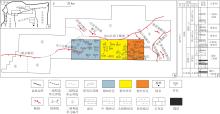
Fig.1
Map showing structures and study area location and the stratigraphic column of the Upper Paleozoic strata in the Hangjinqi area, northern Ordos Basin (after reference [31])"

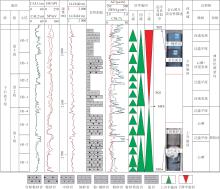
Fig.2
Single-well (high-frequency) sequences and sedimentary facies of the Lower Shihezi Formation in the Jin-77 well block within the Dongsheng gas field, Hangjinqi area, northern Ordos Basin"

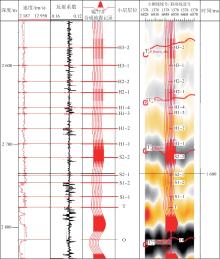
Fig.3
Synthetic seismograms of well Jin-77 in the Dongsheng gas field, Hangjinqi area, northern Ordos Basin"

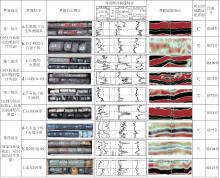
Fig.4
Core, logging, and seismic response characteristics and division of the Upper Paleozoic sequence boundaries in the Jin-77 well block and its adjacent area in the Dongsheng gas field, Hangjinqi area, northern Ordos Basin"

Fig.5
Sequence correlation cross-section with well-to-seismic calibration crossing wells J77P5-Jin6-Jin75-Jin77-Jin122 in the Dongsheng gas field, Hangjinqi area, northern Ordos Basin (see Fig. 1 for the location of section AB)"
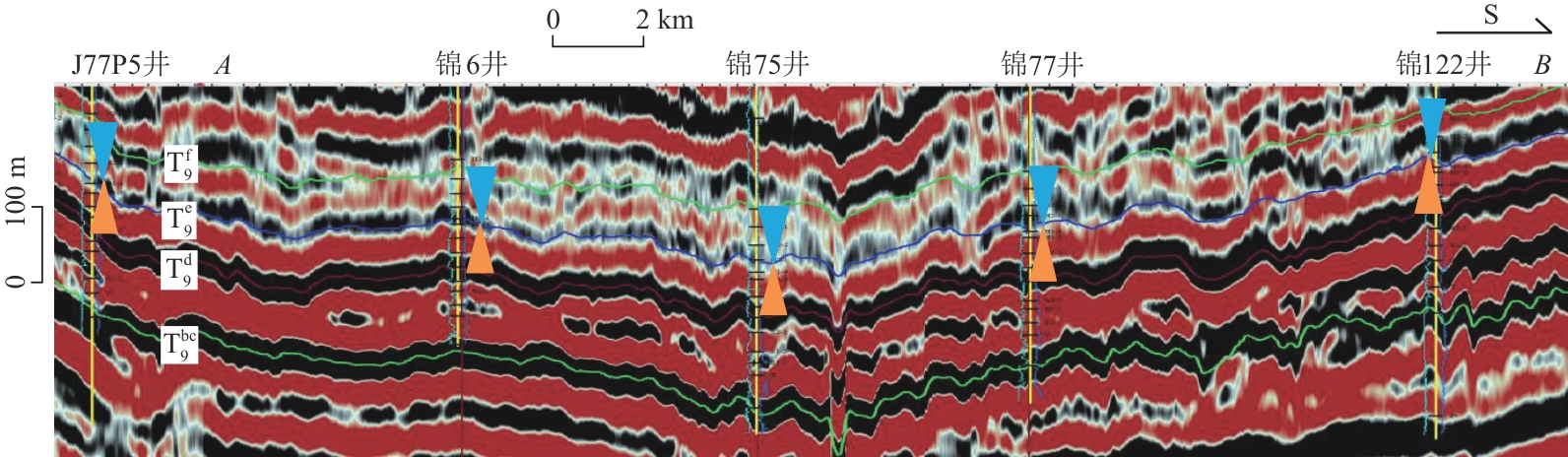
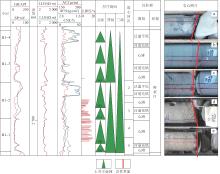
Fig.6
Core and logging curve characteristics for the identification of high-frequency sequence boundaries in well Jin-77 in the Dongsheng gas field, Hangjinqi area, northern Ordos Basin"

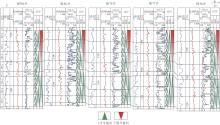
Fig.7
Cross-well correlation of (high-frequency) sequences in the Lower Shihezi Formation, Dongsheng gas field, Hangjinqi area, northern Ordos Basin (see Fig. 1b for the location of section)"

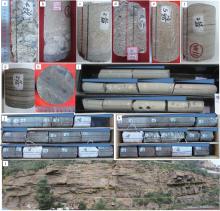
Fig.8
Pictures showing the lithofacies characteristics of the He 1 Member in the Jin-77 well block within the Dongsheng gas field, Hangjinqi area, northern Ordos Basin"

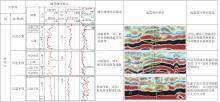
Fig. 9
Logging curve patterns and seismic response characteristics reflecting the sedimentary microfacies of the He 1 Member in the Jin-77 well block within the Dongsheng gas field, Hangjinqi area, northern Ordos Basin"

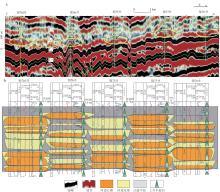
Fig.10
Correlation of cross-well seismic section (a) and sedimentary microfacies (b) for the He 1 Member in the Dongsheng gas field, Hangjinqi area, northern Ordos Basin (see Fig. 1 for the location of section CD)"

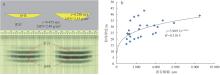
Fig. 11
Forward modeling results of the geological model of varying sand-body thicknesses (a) and the relationship between sand body thickness and the maximum trough amplitude (b) for the He 1 Member in the Dongsheng gas field, Hangjinqi area, northern Ordos Basin"

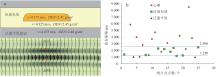
Fig.12
Forward modeling results of the geological model of varying sedimentary microfacies (a) and the relationship between sedimentary microfacies and the maximum trough amplitude (b) for the He 1 Member in the Dongsheng gas field, Hangjinqi area, northern Ordos Basin"
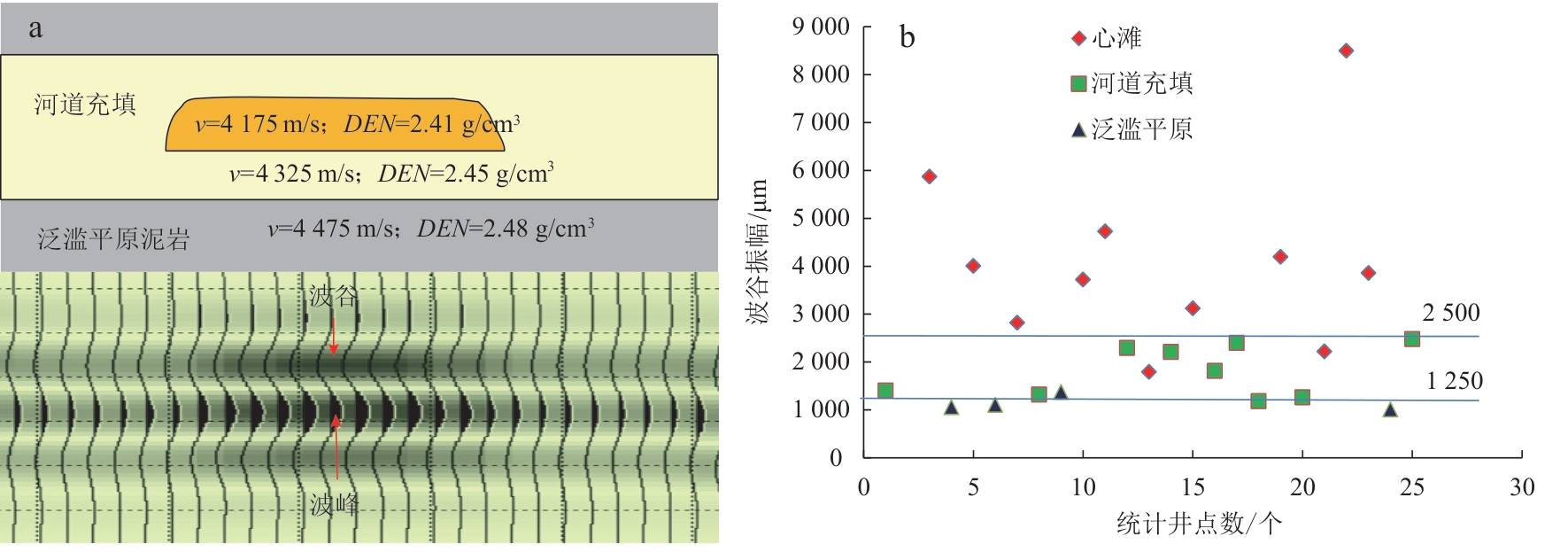
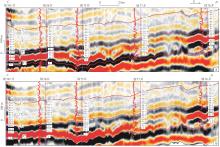
Fig.13
Characteristic comparison between and stratal slicing setting for zero-phase (a) and converted 90°-phase (b) seismic sections crossing wells from Jin-701 to Jin 76 in the Dongsheng gas field, Hangjinqi area, northern Ordos Basin (see Fig. 1 for the location of section C—D)"

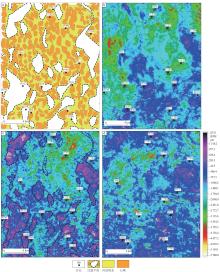
Fig.14
Planar distributions of the seismic attributes (a) and sedimentary microfacies (b) of the H1-2 sublayer and the attributes of H1-1 (c) and H1-3 (d) sublayers in the Dongsheng gas field, Hangjinqi area, northern Ordos Basin"

| 1 | 郝蜀民, 李良, 张威, 等. 鄂尔多斯盆地北缘石炭系-二叠系大型气田形成条件[J]. 石油与天然气地质, 2016, 37(2): 149-154. |
| HAO Shumin, LI Liang, ZHANG Wei, et al. Forming conditions of large-scale gas fields in Permo-Carboniferous in the northern Ordos Basin[J]. Oil & Gas Geology, 2016, 37(2): 149-154. | |
| 2 | 何发岐, 王付斌, 张威, 等. 鄂尔多斯盆地北缘勘探思路转变与天然气领域重大突破[J]. 中国石油勘探, 2020, 25(6): 39-49. |
| HE Faqi, WANG Fubin, ZHANG Wei, et al. Transformation of exploration ideas and major breakthrough in natural gas discovery in the northern margin of the Ordos Basin[J]. China Petroleum Exploration, 2020, 25(6): 39-49. | |
| 3 | 齐荣, 李良, 秦雪霏. 鄂尔多斯盆地北缘近源砂砾质辫状河砂体构型与含气性[J]. 石油实验地质, 2019, 41(5): 682-690. |
| QI Rong, LI Liang, QIN Xuefei. Sand body configuration and gas-bearing properties of near source sand-gravel braided river on the northern margin of Ordos Basin[J]. Petroleum Geology and Experiment, 2019, 41(5): 682-690. | |
| 4 | 张威, 何发岐, 闫相宾, 等. 大型辫状河席状复合河道岩性圈闭识别描述方法及应用[J]. 石油实验地质, 2021, 43(3): 432-442. |
| ZHANG Wei, HE Faqi, YAN Xiangbin, et al. Study and application of identification and description methods for lithologic traps in large braided river sheet composite channels[J]. Petroleum Geology and Experiment, 2021, 43(3): 432-442. | |
| 5 | 郭旭升, 周德华, 赵培荣, 等. 鄂尔多斯盆地石炭系-二叠系煤系非常规天然气勘探开发进展与攻关方向[J]. 石油与天然气地质, 2022, 43(5): 1013-1023. |
| GUO Xusheng, ZHOU Dehua, ZHAO Peirong, et al. Progresses and directions of unconventional natural gas exploration and development in the Carboniferous-Permian coal measure strata, Ordos Basin[J]. Oil & Gas Geology, 2022, 43(5): 1013-1023. | |
| 6 | 李宏涛, 马立元, 史云清, 等. 基于井-震结合的水下分流河道砂岩储层展布分析与评价——以什邡气藏JP35砂组为例[J]. 岩性油气藏, 2020, 32(2): 78-89. |
| LI Hongtao, MA Liyuan, SHI Yunqing, et al. Distribution and evaluation of underwater distributary channel sandstone reservoir based on well-seismic combination: A case study of JP35 sand group in Shifang gas reservoir[J]. Lithologic Reservoirs, 2020, 32(2): 78-89. | |
| 7 | 李婕, 赵俊兴, 孔祥超, 等. 鄂北杭锦旗地区下石盒子组沉积相演化及控制因素[J]. 山东科技大学学报(自然科学版), 2013, 32(2): 34-42. |
| LI Jie, ZHAO Junxing, KONG Xiangchao, et al. Sedimentary facies evolution and controlling factors of Lower Shihezi Formation in Hangjinqi area, north Ordos Basin[J]. Journal of Shandong University of Science and Technology(Natural Science), 2013, 32(2): 34-42. | |
| 8 | 周家林. 东胜气田锦58井区盒1段岩相特征及沉积模式研究[J]. 石油地质与工程, 2018, 32(4): 1-5. |
| ZHOU Jialin. Lithofacies characteristics and sedimentary models for He1 member in Jin 58 well block of Dongsheng gas field[J]. Petroleum Geology and Engineering, 2018, 32(4): 1-5. | |
| 9 | 曹桐生. 杭锦旗地区锦72井区盒1段沉积特征[J]. 天然气技术与经济, 2019, 13(4): 8-16. |
| CAO Tongsheng. Depositional characteristics of Shihezi 1 Member, Jin 72 well block of Hangjinqi area, Ordos Basin[J]. Natural Gas Technology and Economy, 2019, 13(4): 8-16. | |
| 10 | 刘钰铭, 陈儒贤, 赵丁丁, 等. 东胜气田锦72井区下石盒子组砾质辫状河沉积特征[J]. 石油科学通报, 2022, 7(4): 457-474. |
| LIU Yuming, CHEN Ruxian, ZHAO Dingding, et al. Sedimentary characteristics of gravelly braided rivers of the Lower Shihezi Formation in the Jin 72 well area, Dongsheng Gas Field[J]. Petroleum Science Bulletin, 2022, 7(4): 457-474. | |
| 11 | 韩兴刚, 肖峰, 张伟, 等. 辫状河沉积储层小层精细划分对比——以苏里格气田苏X加密井区为例[J]. 中国海洋大学学报(自然科学版), 2018, 48(1): 76-84. |
| HAN Xinggang, XIAO Feng, ZHANG Wei, et al. Stratigraphic division and correlation of braid river reservoir—An example from Su X dense well area, Sulige Gas Filed[J]. Periodical of Ocean University of China, 2018, 48(1): 76-84. | |
| 12 | 刘晓晨, 陆永潮, 杜学斌, 等. 层序格架约束下的地质统计学反演在薄砂体预测中的应用[J]. 地质科技通报, 2020, 39(3): 99-109. |
| LIU Xiaochen, LU Yongchao, DU Xuebin, et al. Application of geostatistical inversion constrained by sequence framework in thin-bedded sandbody prediction[J]. Bulletin of Geological Science and Technology, 2020, 39(3): 99-109. | |
| 13 | NUNES R, SOARES A, AZEVEDO L, et al. Geostatistical seismic inversion with direct sequential simulation and co-simulation with multi-local distribution functions[J]. Mathematical Geosciences, 2017, 49(5): 583-601. |
| 14 | VAIL P R, TODD R G, SANGREE J B. Seismic stratigraphy and global changes of sea level, part 5: Chronostratigraphic significance of seismic reflections[M]//PAYTON C E. Seismic Stratigraphy—Applications to Hydrocarbon Exploration. Tulsa: American Association of Petroleum Geologists, 1977: 99-116. |
| 15 | MITCHUM R M, Jr, VAN WAGONER J C. High-frequency sequences and their stacking patterns: Sequence-stratigraphic evidence of high-frequency eustatic cycles[J]. Sedimentary Geology, 1991, 70(2/4): 131-160. |
| 16 | 游李伟, 彭军, 汪彦, 等. 高频层序研究在碳酸盐岩储层对比中的应用——以塔河油田TK625井区鹰山组上部储层为例[J]. 新疆地质, 2006, 24(1): 59-63. |
| YOU Liwei, PENG Jun, WANG Yan, et al. Application of high-frequency sequence study in the correlation of carbonate reservoirs—Illustration in Upper Yingshan Formation around TK625 Well in Tahe Oil Field[J]. Xinjiang Geology, 2006, 24(1): 59-63. | |
| 17 | 梅冥相, 徐德斌, 周洪瑞. 米级旋回层序的成因类型及其相序组构特征[J]. 沉积学报, 2000, 18(1): 43-49, 62. |
| MEI Mingxiang, XU Debin, ZHOU Hongrui. Genetic types of meter-scale cyclic sequences and their fabric features of facies-succession[J]. Acta Sedimentologica Sinica, 2000, 18(1): 43-49, 62. | |
| 18 | 李宏涛, 史云清, 肖开华, 等. 元坝气田须三段气藏层序沉积与储层特征[J]. 天然气工业, 2016, 36(9): 20-34. |
| LI Hongtao, SHI Yunqing, XIAO Kaihua, et al. Sequence, sedimentary and reservoir characteristics of Xu 3 gas reservoir in the Yuanba Gasfield, NE Sichuan Basin[J]. Natural Gas Industry, 2016, 36(9): 20-34. | |
| 19 | 曾洪流, 朱筱敏, 朱如凯, 等. 陆相坳陷型盆地地震沉积学研究规范[J]. 石油勘探与开发, 2012, 39(3): 275-284. |
| ZENG Hongliu, ZHU Xiaomin, ZHU Rukai, et al. Guidelines for seismic sedimentologic study in non-marine postrift basins[J]. Petroleum Exploration and Development, 2012, 39(3): 275-284. | |
| 20 | 朱筱敏, 董艳蕾, 曾洪流, 等. 沉积地质学发展新航程——地震沉积学[J]. 古地理学报, 2019, 21(2): 189-201. |
| ZHU Xiaomin, DONG Yanlei, ZENG Hongliu, et al. New development trend of sedimentary geology: Seismic sedimentology[J]. Journal of Palaeogeography(Chinese Edition), 2019, 21(2): 189-201. | |
| 21 | GALLOWAY W E, HOBDAY D K. Terrigenous clastic depositional systems: Applications to petroleum, coal, and uranium exploration[M]. New York: Springer-Verlag, 1983: 1-423. |
| 22 | 岳大力, 李伟, 杜玉山, 等. 河流相储层地震属性优选与融合方法综述[J]. 地球科学, 2022, 47(11): 3929-3943. |
| YUE Dali, LI Wei, DU Yushan, et al. Review on optimization and fusion of seismic attributes for fluvial reservoir characterization[J]. Earth Science, 2022, 47(11): 3929-3943. | |
| 23 | 印森林, 章彤, 唐文军, 等. 井震结合表征曲流型河道储层叠置样式: 以准噶尔盆地东部阜东5井区侏罗系头屯河组为例[J]. 地球科学, 2022, 47(11): 4060-4074. |
| YIN Senlin, ZHANG Tong, TANG Wenjun, et al. Reservoir superposed pattern characterization of well-logging and seismic data calibration with meandering channels: A case study of Jurassic Toutunhe Formation in Fudong No.5 Well area, eastern Junggar Basin[J]. Earth Science, 2022, 47(11): 4060-4074. | |
| 24 | 黄文松. 三维地震约束辫状河储层的多点统计建模研究: 以委内瑞拉M区块为例[J]. 地球科学, 2022, 47(11): 4033-4045. |
| HUANG Wensong. Multiple-point geostatistical modeling of braided channel reservoir with constraints by 3D seismic data: A case study of M Block in Venezuela[J]. Earth Science, 2022, 47(11): 4033-4045. | |
| 25 | 刘震, 王大伟, 吴辉, 等. 利用地震资料进行陆相储层小层等时对比的方法研究——以绥中36-1油田为例[J]. 地学前缘, 2008, 15(1): 133-139. |
| LIU Zhen, WANG Dawei, WU Hui, et al. Research on isochronic subzone correlation of non-marine reservoir by seismic data: A case study in SZ36-1 oil-field, Bohai Bay Basin[J]. Earth Science Frontiers, 2008, 15(1): 133-139. | |
| 26 | 罗开平, 杨帆, 陆永德, 等. 鄂尔多斯盆地杭锦旗地区关键构造期与二叠系致密气成藏响应[J]. 石油实验地质, 2021, 43(4): 557-568. |
| LUO Kaiping, YANG Fan, LU Yongde, et al. Key structural periods and Permian tight gas accumulation response in Hangjinqi area, Ordos Basin[J]. Petroleum Geology and Experiment, 2021, 43(4): 557-568. | |
| 27 | 曹桐生, 罗龙, 谭先锋, 等. 致密砂岩储层成因及其孔隙演化过程——以杭锦旗十里加汗地区下石盒子组为例[J]. 断块油气田, 2021, 28(5): 598-603. |
| CAO Tongsheng, LUO Long, TAN Xianfeng, et al. Genesis and pore evolution of tight sandstone reservoir: Taking Lower Shihezi Formation in the Shilijiahan Block of Hangjinqi area as an example[J]. Fault-Block Oil and Gas Field, 2021, 28(5): 598-603. | |
| 28 | 郭顺, 闫继福, 郭兰, 等. 鄂北杭锦旗地区太原组沉积微相分析[J]. 西北大学学报(自然科学版), 2009, 39(2): 283-287. |
| GUO Shun, YAN Jifu, GUO Lan, et al. The sedimentary microfacies of Taiyuan formation in the Hangjinqi area, the North of Ordos Basin[J]. Journal of Northwest University(Natural Science Edition), 2009, 39(2): 283-287. | |
| 29 | 赵明胜, 田景春, 张翔, 等. 储层特征及其主控因素分析——以鄂北十里加汗地区下二叠统山西组为例[J]. 断块油气田, 2020, 27(2): 155-159. |
| ZHAO Mingsheng, TIAN Jingchun, ZHANG Xiang, et al. Reservoir characteristics and main controlling factor analysis: Taking Lower Permian Shanxi Formation in Shilijiahan area of north Ordos Basin as an example[J]. Fault-Block Oil and Gas Field, 2020, 27(2): 155-159. | |
| 30 | 陈安清, 陈洪德, 徐胜林, 等. 鄂尔多斯盆地北部晚古生代沉积充填与兴蒙造山带“软碰撞”的耦合[J]. 吉林大学学报(地球科学版), 2011, 41(4): 953-965. |
| CHEN Anqing, CHEN Hongde, XU Shenglin, et al. Sedimentary filling of north Ordos and their implications for the soft collision process of Hing Gan Mts.-Mongolia orogenic belt in Late Paleozoic[J]. Journal of Jilin University(Earth Science Edition), 2011, 41(4): 953-965. | |
| 31 | 李智, 叶加仁, 曹强, 等. 鄂尔多斯盆地杭锦旗独贵加汗区带下石盒子组储层特征及孔隙演化[J]. 地质科技通报, 2021, 40(4): 49-60. |
| LI Zhi, YE Jiaren, CAO Qiang, et al. Reservoir characteristics and pore evolution of the Lower Shihezi Formation in Duguijiahan zone, Hangjinqi area, Ordos Basin[J]. Bulletin of Geological Science and Technology, 2021, 40(4): 49-60. | |
| 32 | 石巨业, 金之钧, 刘全有, 等. 基于米兰科维奇理论的湖相细粒沉积岩高频层序 定量划分[J]. 石油与天然气地质, 2019, 40(6): 1205-1214. |
| SHI Juye, JIN Zhijun, LIU Quanyou, et al. Quantitative classification of high-frequency sequences in fine-grained lacustrine sedimentary rocks based on Milankovitch theory[J]. Oil & Gas Geology, 2019, 40(6): 1205-1214. | |
| 33 | 梁岳立, 赵晓明, 张喜, 等. 轨道周期约束下海-陆过渡相页岩层系高精度层序界面识别及其地质意义——以鄂尔多斯盆地东缘二叠系山西组23亚段为例[J]. 石油与天然气地质, 2023, 44(5): 1231-1242. |
| LIANG Yueli, ZHAO Xiaoming, ZHANG Xi, et al. Orbital forced high-resolution sequence boundary identification of marine-continental transitional shale and its geological significance: A case in Shan 23 sub-member at the eastern margin of Ordos Basin[J]. Oil & Gas Geology, 2023, 44(5): 1231-1242. | |
| 34 | 刘成龙, 王艳忠, 杨怀宇, 等. 高精度层序约束下三角洲-滩坝沉积体系精细刻画与岩性圈闭分布规律——以渤海湾盆地济阳坳陷东营凹陷南坡东段沙河街组四段上亚段为例[J]. 石油与天然气地质, 2024, 45(4): 1121-1141. |
| LIU Chenglong, WANG Yanzhong, YANG Huaiyu, et al. Fine characterization and lithologic trap distribution patterns of delta-beach bar sedimentary system under high-precision sequence constraints: A case study of the upper submember of the 4th member of the Shahejie Formation in the eastern segment of the southern gentle slope of Dongying Sag, Jiyang Depression, Bohai Bay Basin[J]. Oil & Gas Geology, 2024, 45(4): 1121-1141. | |
| 35 | 王敏, 穆龙新, 赵国良, 等. 分汊与游荡型辫状河储层构型研究: 以苏丹FN油田为例[J]. 地学前缘, 2017, 24(2): 246-256. |
| WANG Min, MU Longxin, ZHAO Guoliang, et al. Architecture analysis of reservoirs in branching-and wandering-based braided rivers: Taking FN field, Sudan as an example[J]. Earth Science Frontiers, 2017, 24(2): 246-256. | |
| 36 | EATON B C, MILLAR R G, DAVIDSON S. Channel patterns: Braided, anabranching, and single-thread[J]. Geomorphology, 2010, 120(3/4): 353-364. |
| 37 | 于兴河, 马兴祥, 穆龙新, 等. 辫状河储层地质模式及层次界面分析[M]. 北京: 石油工业出版社, 2004. |
| YU Xinghe, MA Xingxiang, MU Longxin, et al. Geology model and hierarchy interlace analysis of braid river[M]. Beijing: Petroleum Industry Press, 2004. | |
| 38 | 雷涛, 任广磊, 李晓慧, 等. 砂质辫状河心滩沉积演化规律与沉积构型特征——基于沉积数值模拟的认识[J]. 石油与天然气地质, 2023, 44(6): 1595-1608. |
| LEI Tao, REN Guanglei, LI Xiaohui, et al. Sedimentary evolution pattern and architectural characteristics of mid-channel bars in sandy braided rivers: Understanding based on sedimentary numerical simulation[J]. Oil & Gas Geology, 2023, 44(6): 1595-1608. | |
| 39 | 夏世强, 刘景彦, 邓纪梅, 等. 井间河道砂体的井震结合法精细解剖刻画[J]. 西南石油大学学报(自然科学版), 2013, 35(4): 59-68. |
| XIA Shiqiang, LIU Jingyan, DENG Jimei, et al. River channel sand body prediction by integrating well log and seismic attributes analysis in dense well pattern[J]. Journal of Southwest Petroleum University(Science & Technology Edition), 2013, 35(4): 59-68. | |
| 40 | 惠晓宇, 凌云, 孙德胜, 等. 油田开发阶段叠后地震反演影响因素研究[J]. 中国海上油气, 2009, 21(5): 308-312. |
| HUI Xiaoyu, LING Yun, SUN Desheng, et al. A research on the factors to influence post-stack seismic inversion during oilfield production[J]. China Offshore Oil and Gas, 2009, 21(5): 308-312. | |
| 41 | 李操, 姜岩, 樊晓东, 等. 大庆长垣油田开发地震沉积学研究[J]. 石油地球物理勘探, 2022, 57(4): 916-925. |
| LI Cao, JIANG Yan, FAN Xiaodong, et al. Seismic sedimentology for development of Daqing Changyuan Oilfield[J]. Oil Geophysical Prospecting, 2022, 57(4): 916-925. | |
| 42 | 谢玉洪. 基于地震构形的相控储层预测方法[J]. 石油物探, 2021, 60(5): 784-793. |
| XIE Yuhong. Facies-controlled reservoir prediction based on the seismic configuration[J]. Geophysical Prospecting for Petroleum, 2021, 60(5): 784-793. | |
| 43 | ZENG Hongliu, AMBROSE W A, VILLALTA E. Seismic sedimentology and regional depositional systems in Mioceno Norte, Lake Maracaibo, Venezuela[J]. The Leading Edge, 2001, 20(11): 1260-1269. |
| 44 | 韩喜, 高兴友, 车廷信, 等. 利用地震属性沿层分析方法研究河流相沉积环境[J]. 石油地球物理勘探, 2007, 42(1): 120-124. |
| HAN Xi, GAO Xingyou, CHE Tingxin, et al. Using analysis of seismic attributes along horizons to study sedimentary environment of fluvial facies[J]. Oil Geophysical Prospecting, 2007, 42(1): 120-124. | |
| 45 | 陈波, 段冬平, 刘英辉, 等. 西湖凹陷中深层河流相砂体地震沉积学解释与沉积演化分析[J]. 中国海上油气, 2019, 31(3): 117-126. |
| CHEN Bo, DUAN Dongping, LIU Yinghui, et al. Seismic sedimentary interpretation and sedimentary evolution analysis on middle-deep fluvial facies sandbodies in Xihu sag, East China Sea Basin[J]. China Offshore Oil and Gas, 2019, 31(3): 117-126. | |
| 46 | 归平军, 范玲玲, 李灿. 相对等时面在东胜气田盒2+3段河道识别中的应用[J]. 石油地质与工程, 2020, 34(4): 24-30. |
| GUI Pingjun, FAN Lingling, LI Can. Application of relative isochronous surface in channel identification of He2+3 members in Dongsheng gas field[J]. Petroleum Geology and Engineering, 2020, 34(4): 24-30. |
| [1] | Gang TIAN, Mingde LU, Haijun XUE, Xiaogang WEN, Li MA, Anlong YUAN, Lijun SONG, Renhai PU, Huichong JIA, Jie CHEN, Shuo CHEN, Dalin WU, Minghui YANG. Delineation of the southern structural boundary of the Yimeng Uplift in the Ordos Basin and its implications for hydrocarbon exploration [J]. Oil & Gas Geology, 2025, 46(1): 108-122. |
| [2] | Shixiang FEI, Yuehua CUI, Xiaofeng LI, Shujie WANG, Ye WANG, Zhengtao ZHANG, Peilong MENG, Xiaopeng ZHENG, Yundong XU, Jianwen GAO, Wenqin LUO, Tingting JIANG. Main factors controlling the efficient production of horizontal wells for deep coal-rock gas in the eastern and central Ordos Basin [J]. Oil & Gas Geology, 2025, 46(1): 273-287. |
| [3] | Baohong SHI, Jiahao LIN, Tao ZHANG, Hongwei WANG, Lei ZHANG, Jiayi WEI, Han LI, Gang LIU, Rong WANG. Hydrocarbon accumulation potential of concealed structures in the high-energy shoals of the Ordovician Kelimoli Formation in the central section of the thrust zone along the western margin of the Ordos Basin [J]. Oil & Gas Geology, 2025, 46(1): 78-90. |
| [4] | Dameng LIU, Zihao WANG, Jiaming CHEN, Feng QIU, Kai ZHU, Lingjie GAO, Keyu ZHOU, Shaobo XU, Fengrui SUN. Classification of macerals and microfractures in deep coal seams based on ResNet: A case study of the No.8 coal seam of the Carboniferous Benxi Formation in the Ordos Basin [J]. Oil & Gas Geology, 2024, 45(6): 1524-1536. |
| [5] | Yahui LI. Exploration practices of and recent production breakthroughs in deep middle-rank coalbed methane in the Daniudi gas field,Ordos Basin [J]. Oil & Gas Geology, 2024, 45(6): 1555-1566. |
| [6] | Faqi HE, Tao LEI, Rong QI, Bingwei XU, Xiaohui LI, Ru ZHANG. Breakthroughs and key technology in deep coalbed methane exploration in the Daniudi gas field in the Ordos Basin [J]. Oil & Gas Geology, 2024, 45(6): 1567-1576. |
| [7] | Xiaobing NIU, Hui ZHANG, Huaichang WANG, Jianling HU, Chenjun WU, Weibo ZHAO, Bo PAN. Characteristics and genesis of vertical heterogeneity in a coal seam of the Carboniferous Benxi Formation, eastern Ordos Basin: A case study of well M172 [J]. Oil & Gas Geology, 2024, 45(6): 1577-1589. |
| [8] | Mingrui LI, Yunhe SHI, Liyong FAN, Xianduo DAI, Xueyuan JING, Yi ZHANG. Comparison of main reservoir characteristics between deep coal-rock gas of the No. 8 coal seam of the Upper Paleozoic Benxi Formation and tight sand gas reservoirs, Ordos Basin [J]. Oil & Gas Geology, 2024, 45(6): 1590-1604. |
| [9] | Yuting HOU, Guoxiao ZHOU, Daojun HUANG, Yanqing WANG, Pengshuai JIAO. Geological characteristics of coal-rock gas accumulation in the Nalinhe area, Ordos Basin [J]. Oil & Gas Geology, 2024, 45(6): 1605-1616. |
| [10] | Daojun HUANG, Guoxiao ZHOU, Zhaobiao YANG, Junyu GU, Xueyuan JING, Jianan WANG. Geochemical characterization of gas-water output from deep coalrock methane wells in the Ordos Basin and its geological responses [J]. Oil & Gas Geology, 2024, 45(6): 1617-1627. |
| [11] | Shihu ZHAO, Zengqin LIU, Baojian SHEN, Bing LUO, Gang CHEN, Xinjun CHEN, Jiaqi ZHANG, Junyu WAN, Ziyi LIU, Youxiang LIU. Geological characteristics and exploration potential of deep coalbed methane in the slope area of the northeastern Ordos Basin [J]. Oil & Gas Geology, 2024, 45(6): 1628-1639. |
| [12] | Pengwei MOU, Peijie LI, Yanbin YAO, Dameng LIU, Limin MA, Xiaoxiao SUN, Yongkai QIU. In-situ stress in deep coal seams and its control on reservoir physical properties in the Jiaxian area, Ordos Basin [J]. Oil & Gas Geology, 2024, 45(6): 1640-1652. |
| [13] | Ping CHEN, Wei LI, Yijun ZHOU, Wenrui PEI, Xiaowei YU, Wei HAN, Guoping LIANG, Pengcheng LU, Lei WANG. Formation and evolution of the Wushenqi and Central paleo-uplifts, Ordos Basin and their control on hydrocarbon accumulation [J]. Oil & Gas Geology, 2024, 45(6): 1653-1664. |
| [14] | Duo WANG, Zhidi LIU, Chengwang WANG, Tianding LIU, Gaojie CHEN, Jinmei HAO, Bowen SUN. Logging-based evaluation for geological-engineering sweet spots in deep coal reservoirs of the DJ block, Ordos Basin [J]. Oil & Gas Geology, 2024, 45(6): 1772-1788. |
| [15] | Zhou YU, Jingao ZHOU, Xiaorong LUO, Yongzhou LI, Xiaowei YU, Xiucheng TAN, Dongxu WU. Discovery and implications for hydrocarbon exploration of the Shenmu-Zhidan low paleo-uplift in the 4th member of the Ordovician Majiagou Formation, eastern Ordos Basin [J]. Oil & Gas Geology, 2024, 45(5): 1383-1399. |
| Viewed | ||||||
|
Full text |
|
|||||
|
Abstract |
|
|||||
