

Oil & Gas Geology ›› 2025, Vol. 46 ›› Issue (4): 1250-1266.doi: 10.11743/ogg20250415
• Petroleum Geology • Previous Articles Next Articles
Xun KANG1( ), Jingqiang TAN1, Wenxuan HU2, Jun JIN3, Ruipu HU1,2, Jian CAO2
Received:2025-05-20
Revised:2025-07-11
Online:2025-08-30
Published:2025-09-06
CLC Number:
Xun KANG, Jingqiang TAN, Wenxuan HU, Jun JIN, Ruipu HU, Jian CAO. Differences in reservoir formation mechanisms across the whole petroleum system in the Mahu Sag, Junggar Basin[J]. Oil & Gas Geology, 2025, 46(4): 1250-1266.
Add to citation manager EndNote|Reference Manager|ProCite|BibTeX|RefWorks
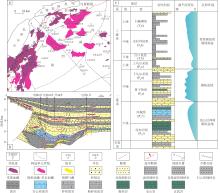
Fig. 1
Map showing the distribution of crude oil (a), representative geological section (b), and composite stratigraphic column (c) of the Mahu Sag, Junggar Basin"


Fig. 2
Microscope images of cast thin sections showing the petrologic features of the Triassic strata from the Baikouquan to Baijiantan formations, Mahu Sag"

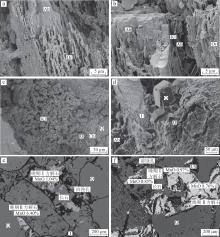
Fig.3
Dissolution characteristics and the occurrences of associated minerals for alkali feldspar in the Baikouquan Formation of the Triassic System in the Mahu Sag, Junggar Basin[17]"

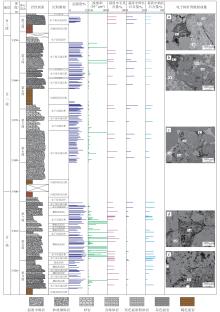
Fig. 4
Column showing the lithologies, physical properties, and mineral contents of the Triassic Baikouquan Formation in well Ma 18, Mahu Sag[17]"


Fig.5
Back-scattered electron (BSE) images of typical rock samples from the Upper Permian Urho Formation, Mahu Sag[19]"

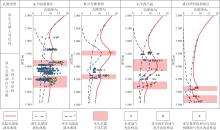
Fig.6
Curves showing depth-varying porosity of the Upper Permian Urho Formation across different zones of the Mahu Sag"


Fig.7
Distribution of major elements and carbon-oxygen isotopes in secondary calcite within the Triassic strata, Mahu Sag"


Fig.8
Conceptual diagram illustrating the thermal oxidation of hydrocarbons in the deeply buried clastic layers within a sedimentary basin (modified after reference [31])"
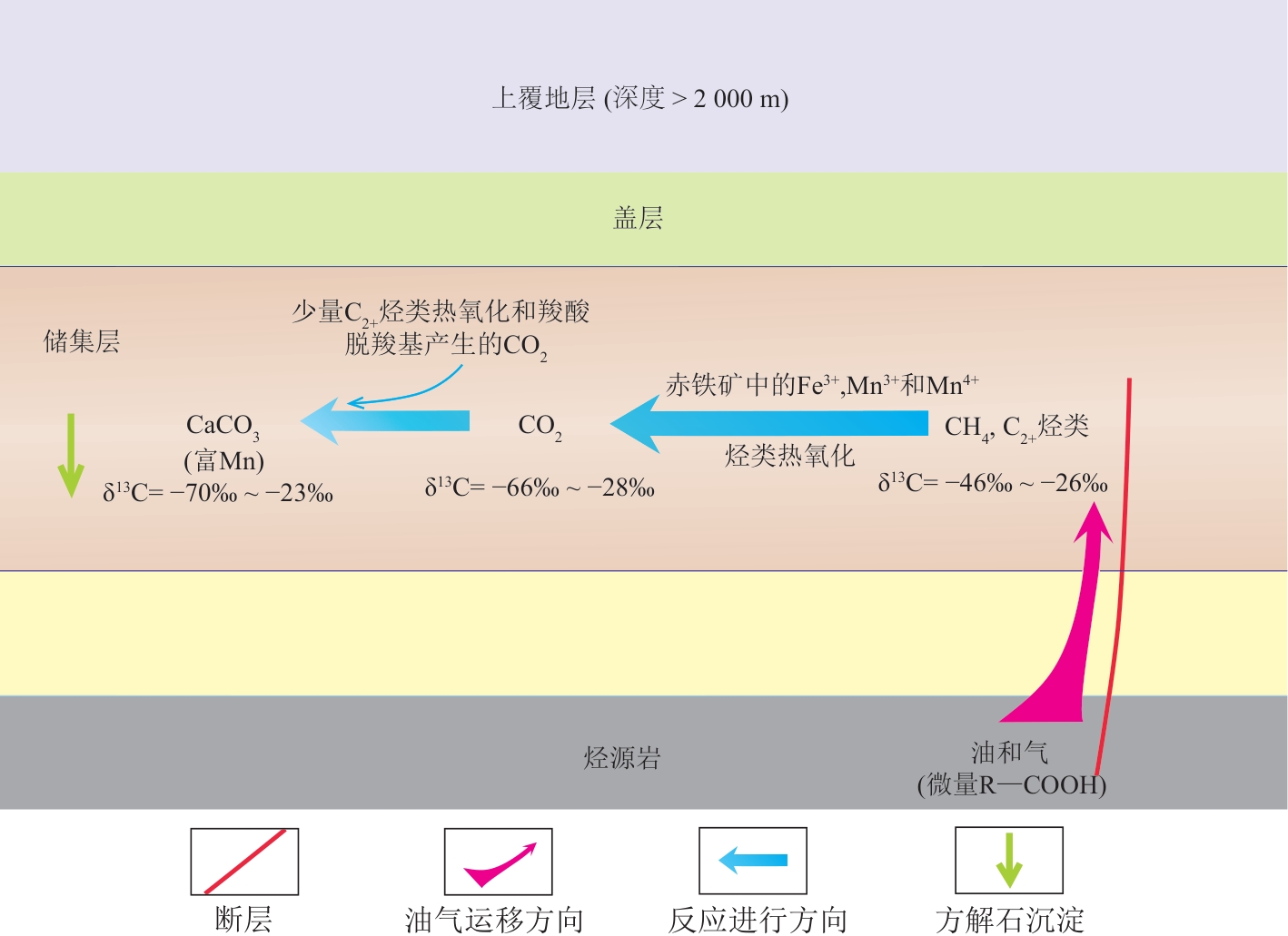
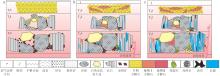
Fig.9
Comparison of reservoir formation mechanisms across different Triassic formations, Mahu Sag[13]"

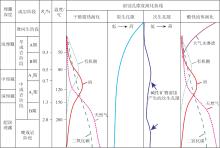
Fig.10
Curves showing the depth-varying porosity of organic-rich fine-grained sedimentary rocks under the constraint of the coupling of diagenesis and hydrocarbon generation (modified after references [41-42])"

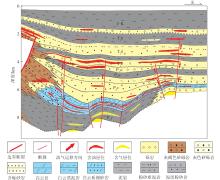
Fig.11
Hydrocarbon accumulation patterns of the WPS in the Mahu Sag"

| [1] | MAGOON L B, DOW W G. The petroleum system—from source to trap[M]. Tulsa: American Association of Petroleum Geologists, 1994. |
| [2] | 宋岩, 贾承造, 姜林, 等. 全油气系统内涵与研究思路[J]. 石油勘探与开发, 2024, 51(6): 1199-1210, 1226. |
| SONG Yan, JIA Chengzao, JIANG Lin, et al. Connotation and research strategy of the whole petroleum system[J]. Petroleum Exploration and Development, 2024, 51(6): 1199-1210, 1226. | |
| [3] | 邹才能, 张国生, 杨智, 等. 非常规油气概念、特征、潜力及技术——兼论非常规油气地质学[J]. 石油勘探与开发, 2013, 40(4): 385-399, 454. |
| ZOU Caineng, ZHANG Guosheng, YANG Zhi, et al. Geological concepts, characteristics, resource potential and key techniques of unconventional hydrocarbon: On unconventional petroleum geology[J]. Petroleum Exploration and Development, 2013, 40(4): 385-399, 454. | |
| [4] | 贾承造, 庞雄奇, 宋岩. 论非常规油气成藏机理: 油气自封闭作用与分子间作用力[J]. 石油勘探与开发, 2021, 48(3): 437-452. |
| JIA Chengzao, PANG Xiongqi, SONG Yan. The mechanism of unconventional hydrocarbon formation: Hydrocarbon self-containment and intermolecular forces[J]. Petroleum Exploration and Development, 2021, 48(3): 437-452. | |
| [5] | 贾承造, 庞雄奇, 宋岩. 全油气系统理论基本原理[J]. 石油勘探与开发, 2024, 51(4): 679-691. |
| JIA Chengzao, PANG Xiongqi, SONG Yan. Basic principles of the whole petroleum system[J]. Petroleum Exploration and Development, 2024, 51(4): 679-691. | |
| [6] | 庞雄奇, 贾承造, 宋岩, 等. 全油气系统定量评价: 方法原理与实际应用[J]. 石油学报, 2022, 43(6): 727-759. |
| PANG Xiongqi, JIA Chengzao, SONG Yan, et al. Quantitative evaluation of whole petroleum system: Principle and application[J]. Acta Petrolei Sinica, 2022, 43(6): 727-759. | |
| [7] | 支东明, 唐勇, 何文军, 等. 准噶尔盆地玛湖凹陷风城组常规-非常规油气有序共生与全油气系统成藏模式[J]. 石油勘探与开发, 2021, 48(1): 38-51. |
| ZHI Dongming, TANG Yong, HE Wenjun, et al. Orderly coexistence and accumulation models of conventional and unconventional hydrocarbons in Lower Permian Fengcheng Formation, Mahu sag, Junggar Basin[J]. Petroleum Exploration and Development, 2021, 48(1): 38-51. | |
| [8] | 曹剑, 雷德文, 李玉文, 等. 古老碱湖优质烃源岩: 准噶尔盆地下二叠统风城组[J]. 石油学报, 2015, 36(7): 781-790. |
| CAO Jian, LEI Dewen, LI Yuwen, et al. Ancient high-quality alkaline lacustrine source rocks discovered in the Lower Permian Fengcheng Formation, Junggar Basin[J]. Acta Petrolei Sinica, 2015, 36(7): 781-790. | |
| [9] | 陈建平, 王绪龙, 邓春萍, 等. 准噶尔盆地烃源岩与原油地球化学特征[J]. 地质学报, 2016, 90(1): 37-67. |
| CHEN Jianping, WANG Xulong, DENG Chunping, et al. Geochemical features of source rocks and crude oil in the Junggar Basin, northwest China[J]. Acta Geologica Sinica, 2016, 90(1): 37-67. | |
| [10] | 支东明, 唐勇, 郑孟林, 等. 玛湖凹陷源上砾岩大油区形成分布与勘探实践[J]. 新疆石油地质, 2018, 39(1): 1-8, 22. |
| ZHI Dongming, TANG Yong, ZHENG Menglin, et al. Discovery, distribution and exploration practice of large oil provinces of above-source conglomerate in Mahu Sag[J]. Xinjiang Petroleum Geology, 2018, 39(1): 1-8, 22. | |
| [11] | 唐勇, 郭文建, 王霞田, 等. 玛湖凹陷砾岩大油区勘探新突破及启示[J]. 新疆石油地质, 2019, 40(2): 127-137. |
| TANG Yong, GUO Wenjian, WANG Xiatian, et al. A new breakthrough in exploration of large conglomerate oil province in Mahu Sag and its implications[J]. Xinjiang Petroleum Geology, 2019, 40(2): 127-137. | |
| [12] | CARROLL A R, LIANG Yunhai, GRAHAM S A, et al. Junggar Basin, northwest China: Trapped Late Paleozoic ocean[J]. Tectonophysics, 1990, 181(1/4): 1-14. |
| [13] | HU Ruipu, KANG Xun, TAN Jingqiang, et al. Multi-origin authigenic calcite controlled by the depositional environment and fluid-rock interactions in the Triassic siliciclastic strata, Junggar Basin, NW China[J]. Marine and Petroleum Geology, 2023, 148: 106076. |
| [14] | KANG Xun, HU Wenxuan, CAO Jian, et al. Controls on reservoir quality in fan-deltaic conglomerates: Insight from the Lower Triassic Baikouquan Formation, Junggar Basin, China[J]. Marine and Petroleum Geology, 2019, 103: 55-75. |
| [15] | 唐勇, 徐洋, 瞿建华, 等. 玛湖凹陷百口泉组扇三角洲群特征及分布[J]. 新疆石油地质, 2014, 35(6): 628-635. |
| TANG Yong, XU Yang, QU Jianhua, et al. Fan-delta group characteristics and its distribution of the Triassic Baikouquan reservoirs in Mahu Sag of Junggar Basin[J]. Xinjiang Petroleum Geology, 2014, 35(6): 628-635. | |
| [16] | 齐雯, 潘建国, 王国栋, 等. 准噶尔盆地玛湖凹陷斜坡区百口泉组储层流体包裹体特征及油气充注史[J]. 天然气地球科学, 2015, 26(): 64-71. |
| QI Wen, PAN Jianguo, WANG Guodong, et al. Fluid inclusion and hydrocarbon charge history for the reservoir of Baikouquan Formation in the Mahu Sag, Junggar Basin[J]. Natural Gas Geoscience, 2015, 26(S1): 64-71. | |
| [17] | KANG Xun, HU Wenxuan, CAO Jian, et al. Selective dissolution of alkali feldspars and its effect on Lower Triassic sandy conglomerate reservoirs in the Junggar Basin, northwestern China[J]. Geological Journal, 2018, 53(2): 475-499. |
| [18] | 尹路, 许多年, 乐幸福, 等. 准噶尔盆地玛湖凹陷三叠系百口泉组储层特征及油气成藏规律[J]. 岩性油气藏, 2024, 36(1): 59-68. |
| YIN Lu, XU Duonian, YUE Xingfu, et al. Reservoir characteristics and hydrocarbon accumulation rules of Triassic Baikouquan Formation in Mahu Sag, Junggar Basin[J]. Lithologic Reservoirs, 2024, 36(1): 59-68. | |
| [19] | ZHI Dongming, KANG Xun, QIN Zhijun, et al. Fluid-rock interactions and porosity genesis in deep clastic reservoirs: A perspective of differential oil charge intensity[J]. Marine and Petroleum Geology, 2022, 137: 105508. |
| [20] | 王宏博, 马存飞, 曹铮, 等. 基于岩相的致密砂岩差异成岩作用及其储层物性响应——以准噶尔盆地莫西庄地区下侏罗统三工河组为例[J]. 石油与天然气地质, 2023, 44(4): 976-992. |
| WANG Hongbo, MA Cunfei, CAO Zheng, et al. Differential diagenesis and reservoir physical property responses of tight sandstone based on lithofacies: A case study on the Lower Jurassic Sangonghe Formation in Moxizhuang area, Junggar Basin[J]. Oil & Gas Geology, 2023, 44(4): 976-992. | |
| [21] | 刘佳庚, 王艳忠, 操应长, 等. 渤海湾盆地东营凹陷民丰洼陷陡坡带深层-超深层碎屑岩优质储层控制因素[J]. 石油与天然气地质, 2023, 44(5): 1203-1217. |
| LIU Jiageng, WANG Yanzhong, CAO Yingchang, et al. Factors controlling the development of deep and ultra-deep coarse-grained siliciclastic reservoirs with high quality in the steep slope zone of the Minfeng sub-sag, Dongying Sag, Bohai Bay Basin[J]. Oil & Gas Geology, 2023, 44(5): 1203-1217. | |
| [22] | 左如斯, 曾翔, 曹忠祥, 等. 沉积岩中沸石类矿物成岩演化特征及其意义[J]. 新疆石油地质, 2023, 44(5): 543-553. |
| ZUO Rusi, ZENG Xiang, CAO Zhongxiang, et al. Diagenetic evolution and its significance of zeolites in sedimentary rocks[J]. Xinjiang Petroleum Geology, 2023, 44(5): 543-553. | |
| [23] | 刘惠民, 张关龙, 范婕, 等. 准噶尔盆地腹部征沙村地区征10井的勘探发现与启示[J]. 石油与天然气地质, 2023, 44(5): 1118-1128. |
| LIU Huimin, ZHANG Guanlong, FAN Jie, et al. Exploration discoveries and implications of Well Zheng 10 in the Zhengshacun area of the Junggar Basin[J]. Oil & Gas Geology, 2023, 44(5): 1118-1128. | |
| [24] | 王然, 吴涛, 尤新才, 等. 玛湖凹陷二叠系风城组页岩油储层岩相特征及定量评价[J]. 石油学报, 2023, 44(7): 1085-1096. |
| WANG Ran, WU Tao, YOU Xincai, et al. Petrographic characteristics and quantitative comprehensive evaluation of shale oil reservoirs in Permian Fengcheng Formation, Mahu Sag[J]. Acta Petrolei Sinica, 2023, 44(7): 1085-1096. | |
| [25] | GUO Pei, WEN Huaguo, GIBERT L, et al. Deposition and diagenesis of the Early Permian volcanic-related alkaline playa-lake dolomitic shales, NW Junggar Basin, NW China[J]. Marine and Petroleum Geology, 2021, 123: 104780. |
| [26] | 唐勇, 贾承造, 陈方文, 等. 准噶尔盆地玛湖凹陷二叠系风城组全粒序储层孔喉结构与原油可动性关系[J]. 石油勘探与开发, 2025, 52(1): 99-111. |
| TANG Yong, JIA Chengzao, CHEN Fangwen, et al. Relationship between pore throat structure and crude oil mobility of full particle sequence reservoirs in Permian Fengcheng Formation, Mahu Sag, Junggar Basin, NW China[J]. Petroleum Exploration and Development, 2025, 52(1): 99-111. | |
| [27] | 单祥, 何文军, 郭华军, 等. 准噶尔盆地玛湖凹陷二叠系风城组页岩油储层储集空间与成岩作用[J]. 海相油气地质, 2022, 27(3): 325-336. |
| SHAN Xiang, HE Wenjun, GUO Huajun, et al. Pore space characterisctics and diagenesis of shale oil reservoir of the Permian Fengcheng Formation in Mahu Sag, Junggar Basin[J]. Marine Origin Petroleum Geology, 2022, 27(3): 325-336. | |
| [28] | 李长志, 郭佩, 许景红, 等. 碱湖页岩酸碱性差异对页岩成岩演化及储集层的影响[J]. 石油勘探与开发, 2024, 51(1): 88-101. |
| LI Changzhi, GUO Pei, XU Jinghong, et al. Influences of different alkaline and acidic diagenetic environments on diagenetic evolution and reservoir quality of alkaline lake shales[J]. Petroleum Exploration and Development, 2024, 51(1): 88-101. | |
| [29] | IRWIN H, CURTIS C, COLEMAN M. Isotopic evidence for source of diagenetic carbonates formed during burial of organic-rich sediments[J]. Nature, 1977, 269(5625): 209-213. |
| [30] | CURTIS C. Mineralogical consequences of organic matter degradation in sediments: Inorganic/organic diagenesis[M]//LEGGETT J K, ZUFFA G G. Marine Clastic Sedimentology. Dordrecht: Springer, 1987: 108-123. |
| [31] | HU Wenxuan, KANG Xun, CAO Jian, et al. Thermochemical oxidation of methane induced by high-valence metal oxides in a sedimentary basin[J]. Nature Communications, 2018, 9(1): 5131. |
| [32] | KROUSE H R, VIAU C A, ELIUK L S, et al. Chemical and isotopic evidence of thermochemical sulphate reduction by light hydrocarbon gases in deep carbonate reservoirs[J]. Nature, 1988, 333(6172): 415-419. |
| [33] | BEAL E J, HOUSE C H, ORPHAN V J. Manganese- and iron-dependent marine methane oxidation[J]. Science, 2009, 325(5937): 184-187. |
| [34] | KIYOSU Y, IMAIZUMI S. Carbon and hydrogen isotope fractionation during oxidation of methane by metal oxides at temperatures from 400° to 530°C[J]. Chemical Geology, 1996, 133(1/4): 279-287. |
| [35] | KANG Xun, TAN Jingqiang, SCHULZ H M, et al. Clumped and in situ carbon and oxygen isotopes of calcite as tracers for oxidation of hydrocarbons in deep siliciclastic strata[J]. GSA Bulletin, 2024, 136(11/12): 4689-4704. |
| [36] | BARTH T, BJØRLYKKE K. Organic acids from source rock maturation: Generation potentials, transport mechanisms and relevance for mineral diagenesis[J]. Applied Geochemistry, 1993, 8(4): 325-337. |
| [37] | WU Haiguang, HU Wenxuan, TANG Yong, et al. The impact of organic fluids on the carbon isotopic compositions of carbonate-rich reservoirs: Case study of the Lucaogou Formation in the Jimusaer Sag, Junggar Basin, NW China[J]. Marine and Petroleum Geology, 2017, 85: 136-150. |
| [38] | 孙龙德, 王小军, 冯子辉, 等. 松辽盆地古龙页岩纳米孔缝形成机制与页岩油富集特征[J]. 石油与天然气地质, 2023, 44(6): 1350-1365. |
| SUN Longde, WANG Xiaojun, FENG Zihui, et al. Formation mechanisms of nano-scale pores/fissures and shale oil enrichment characteristics for Gulong shale, Songliao Basin[J]. Oil & Gas Geology, 2023, 44(6): 1350-1365. | |
| [39] | 胡宗全, 王濡岳, 路菁, 等. 陆相页岩及其夹层储集特征对比与差异演化模式[J]. 石油与天然气地质, 2023, 44(6): 1393-1404. |
| HU Zongquan, WANG Ruyue, LU Jing, et al. Storage characteristic comparison of pores between lacustrine shales and their interbeds and differential evolutionary patterns[J]. Oil & Gas Geology, 2023, 44(6): 1393-1404. | |
| [40] | 胡文瑄, 姚素平, 陆现彩, 等. 典型陆相页岩油层系成岩过程中有机质演化对储集性的影响[J]. 石油与天然气地质, 2019, 40(5): 947-956, 1047. |
| HU Wenxuan, YAO Suping, LU Xiancai, et al. Effects of organic matter evolution on oil reservoir property during diagenesis of typical continental shale sequences[J]. Oil & Gas Geology, 2019, 40(5): 947-956, 1047. | |
| [41] | SCHMIDT V, MCDONALD D A. The role of secondary porosity in the course of sandstone diagenesis[M]//SCHOLLE P A, SCHLUGER P R. Aspects of Diagenesis. Tulsa: SEPM Society for Sedimentary Geology, 1979: 175-207. |
| [42] | SEEWALD J S. Organic-inorganic interactions in petroleum-producing sedimentary basins[J]. Nature, 2003, 426(6964): 327-333. |
| [43] | 陈永波, 潘建国, 张寒, 等. 准噶尔盆地玛湖凹陷斜坡区断裂演化特征及对三叠系百口泉组成藏意义[J]. 天然气地球科学, 2015, 26(): 11-24. |
| CHEN Yongbo, PAN Jianguo, ZHANG Han, et al. Characteristics of fault evolution in Mahu slope area of Junggar Basin and its implications to the reservoirs in the Triassic Bakouquan Formation[J]. Natural Gas Geoscience, 2015, 26(S1): 11-24. |
| [1] | Chengzao JIA, Xiongqi PANG, Yan SONG, Xinxuan CUI, Yao HU, Zhi XU, Lin JIANG, Tingyu PU, Fujie JIANG, Bin SHEN. Four basic types of whole petroleum systems and their major plays [J]. Oil & Gas Geology, 2025, 46(4): 1019-1038. |
| [2] | Xiongqi PANG, Xinxuan CUI, Chengzao JIA, Liyin BAO, Caijun LI, Maowen LI, Zhi XU, Huiyi XIAO, Dingye ZHENG, Yujie JIN, Kanyuan SHI, Sijia ZHANG. Challenges and solutions in the application of the whole petroleum system theory [J]. Oil & Gas Geology, 2025, 46(4): 1039-1054. |
| [3] | Keyu LIU, Sijia ZHANG, Jianliang LIU, Zhencheng ZHAO, Yujie JIN, Ting ZHANG, Hao LIN. The whole petroleum system: An emerging direction for petroleum geology and an innovative paradigm for oil and gas exploration [J]. Oil & Gas Geology, 2025, 46(4): 1055-1070. |
| [4] | Junqing CHEN, Chengzao JIA, Lin JIANG, Hong PANG, Xungang HUO, Dongxia CHEN, Kanyuan SHI, Tao HU, Xiaobin YANG, Jun RAN. Major types and quantitative characterization of self-sealing during the accumulation of unconventional hydrocarbons in the whole petroleum system [J]. Oil & Gas Geology, 2025, 46(4): 1071-1091. |
| [5] | Huiyi XIAO, Xiongqi PANG, Caijun LI, Tao HU, Zhi XU, Xiaofei LIN, Yao HU, Lei WANG, Xinxuan CUI, Kanyuan SHI, Tingyu PU, Liyin BAO. Mechanisms and models of conversion between conventional and unconventional hydrocarbon reservoirs during the formation and evolution of the whole petroleum system [J]. Oil & Gas Geology, 2025, 46(4): 1092-1106. |
| [6] | Kanyuan SHI, Xiongqi PANG, Junqing CHEN, Zhangxing CHEN, Lei WANG, Tingyu PU, Liyin BAO, Shasha HUI, Huiyi XIAO, Xinxuan CUI. Variation characteristics and molecular dynamics simulation of key parameters including reservoir wettability and interfacial tension in the whole petroleum system [J]. Oil & Gas Geology, 2025, 46(4): 1107-1122. |
| [7] | Hong PANG, Guoyong LIU, Chengzao JIA, Fujie JIANG, Lin JIANG, Jianwei WANG, Xuefeng MA, Di CHEN, Junqing CHEN. Characteristics of accumulation dynamic fields and orderly distribution pattern of hydrocarbon reservoirs in the whole petroleum system of a continental faulted basin: A case study of the Nanpu Sag in the Bohai Bay Basin [J]. Oil & Gas Geology, 2025, 46(4): 1136-1151. |
| [8] | Tianwu XU, Sumei LI, Xiangfei CHEN, Xuefeng MA, Shuo DENG, Yingying ZHANG. Characteristics and hydrocarbon accumulation models of the whole petroleum system in the Dongpu Sag, Bohai Bay Basin [J]. Oil & Gas Geology, 2025, 46(4): 1152-1168. |
| [9] | Tao HU, Zhiming XIONG, Huiyi XIAO, Tianwu XU, Yunlong XU, Sumei LI, Fujue JIANG, Maowen LI, Lin JIANG. Ordered distribution and differential hydrocarbon enrichment mechanisms of hydrocarbon reservoirs in the whole petroleum system of lacustrine rift basin: A case study of the Paleogene Shahejie Formation, Dongpu Sag, Bohai Bay Basin [J]. Oil & Gas Geology, 2025, 46(4): 1169-1182. |
| [10] | Sumei LI, Jia LIU, Xuefeng MA, Qiuju PANG, Zhifei ZHAO. Characteristics and exploration potential of the whole petroleum system in the Western Sag, Liaohe Depression, Bohai Bay Basin [J]. Oil & Gas Geology, 2025, 46(4): 1183-1199. |
| [11] | Nengwu ZHOU, Zhong CHU, Shuangfang LU, Pengfei ZHANG, Min WANG, Zizhi LIN, Junjie WANG, Xinyu JIANG, Yang LIU, Guohui CHEN, Wenbiao LI. Coupled accumulation mechanisms and quantitative evaluation of tight and shale gases: A case study of the Cretaceous Shahezi Formation, Xujiaweizi Fault Depression, Songliao Basin [J]. Oil & Gas Geology, 2025, 46(4): 1200-1214. |
| [12] | Dongxia CHEN, Qiaochu WANG, Liang XIONG, Xiaojuan WANG, Yingtao YANG, Wenzhi LEI, Ling ZHANG, Ke PAN, Hong PANG. Genetic mechanisms and classified evaluation of conventional and unconventional effective reservoirs in the whole petroleum system of continental sequences, western-central Sichuan Basin [J]. Oil & Gas Geology, 2025, 46(4): 1215-1232. |
| [13] | Liyin BAO, Xiongqi PANG, Liang ZOU, Hongfei CHEN, Hao LIN, Ting ZHANG, Bin SHEN, Kai WANG, Rui WANG. Identification and contribution assessment of hydrocarbon accumulation dynamics in the whole petroleum system: A case study of the Permian Fengcheng Formation, Mahu Sag, Junggar Basin [J]. Oil & Gas Geology, 2025, 46(4): 1267-1280. |
| [14] | Yao HU, Chengzao JIA, Xiongqi PANG, Yong SONG, Wenjun HE, Hongfei CHEN, Liyin BAO, Weiyan CHEN, Wen ZHAO, Huiyi XIAO, Caijun LI, Zhi XU. Hydrocarbon migration and accumulation dynamics and model of distal tight hydrocarbon reservoirs: A case study of sandy conglomerate oil reservoirs in the Triassic Baikouquan Formation, Mahu Sag, Junggar Basin [J]. Oil & Gas Geology, 2025, 46(4): 1281-1298. |
| [15] | Peng CAO, Zhencheng ZHAO, Xiongqi PANG, Caijun LI, Hong PANG, Huixi LIN, Haijun YANG, Kuiyou MA, Sijia ZHANG. Transformations and genetic models of the Lower Paleozoic carbonate reservoirs interpreted by the whole petroleum system in the platform-basin area, Tarim Basin [J]. Oil & Gas Geology, 2025, 46(4): 1299-1315. |
| Viewed | ||||||
|
Full text |
|
|||||
|
Abstract |
|
|||||
