

石油与天然气地质 ›› 2025, Vol. 46 ›› Issue (4): 1349-1366.doi: 10.11743/ogg20250421
刘开逍1,2( ), 王俊辉1,2(), 阴国锋3, 陈锦霖1,2, 武洋1,2, 李勇霖1,2, 代正明1,2, 姚文娇1,2, 姜在兴4, 徐杰5
收稿日期:2024-12-24
修回日期:2025-03-31
出版日期:2025-08-30
发布日期:2025-09-06
通讯作者:
王俊辉
E-mail:2023210043@student.cup.edu.cn;wangjunhui@cup.edu.cn
第一作者简介:刘开逍(2001—),男,博士研究生,岩石学与储层地质学。E-mail: 2023210043@student.cup.edu.cn。
基金项目:
Kaixiao LIU1,2(), Junhui WANG1,2(), Guofeng YIN3, Jinlin CHEN1,2, Yang WU1,2, Yonglin LI1,2, Zhengming DAI1,2, Wenjiao YAO1,2, Zaixing JIANG4, Jie XU5
Received:2024-12-24
Revised:2025-03-31
Online:2025-08-30
Published:2025-09-06
Contact:
Junhui WANG
E-mail:2023210043@student.cup.edu.cn;wangjunhui@cup.edu.cn
摘要:
为了明确西湖凹陷平湖斜坡带宝武地区平湖组石英溶蚀的成岩环境、特征、机制及其对储层的影响,综合利用岩石薄片、扫描电镜、烃源岩地球化学参数、X射线衍射和重矿物等分析测试资料,研究了相关的成岩环境及其演化规律。研究表明:①研究区存在酸性和碱性两种石英溶蚀作用,其溶蚀机理存在显著差异。酸性环境下石英在碱金属离子作用下与有机酸络合形成络合物导致溶蚀,碱性环境下石英直接与OH-离子反应生成HSiO3-离子而发生溶蚀。成岩环境演化影响石英的溶蚀,根据溶蚀边界特征可将其划分为交代型溶蚀和增孔型溶蚀两种类型。②高岭石交代型溶蚀是碱金属离子作用下有机酸溶蚀的结果。伊利石、绿泥石和碳酸盐矿物交代型溶蚀是碱性溶蚀的结果。增孔型溶蚀在酸性和碱性环境中均可发生。石英溶蚀程度呈现明显的环境分异性,溶蚀强度从碱性环境—酸性环境—酸-碱过渡环境—弱酸性环境依次减弱。石英溶蚀程度与晶体扭曲面的数量、温度和碱金属离子含量呈正相关关系。③石英增孔型溶蚀的演化序列为扭曲面溶蚀—平坦面(雨痕状)溶蚀—平坦面(蜂窝状)溶蚀—石英颗粒部分缺失;交代型溶蚀的演化序列为高岭石交代溶蚀—碳酸盐矿物交代溶蚀—伊利石交代溶蚀—绿泥石交代溶蚀。粒缘溶蚀、次生加大边溶蚀和自生石英溶蚀改善孔隙结构,增加渗透率。黏土矿物交代溶蚀石英颗粒形成粒间及晶间溶孔对形成储层孔隙贡献较大。
中图分类号:

图1
东海陆架盆地西湖凹陷地质概况(据文献[22-23]修改)a. 区域构造位置;b. 平湖构造带T40(平湖组底部)构造等T0图;c. 平湖组综合柱状图"

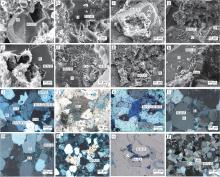
图2
西湖凹陷宝武地区平湖组石英镜下溶蚀特征照片a.雨痕状溶蚀,埋深4 511.0 m,A3井,扫描电镜;b.凹凸状溶蚀,埋深3 654.5 m,A3井,扫描电镜;c.港湾状溶蚀,埋深4 122.0 m,A5-1井,扫描电镜;d.蜂窝状溶蚀,埋深4 025.0 m,A5井,扫描电镜;e.伊利石交代溶蚀,埋深4 054.4 m,A2井,扫描电镜;f.绿泥石交代溶蚀,并见右下角雨痕状溶蚀,埋深4 565.0 m,A4井,扫描电镜;g.高岭石交代溶蚀,埋深4 233.5 m,A5井,扫描电镜;h.铁白云石交代溶蚀,埋深4 128.4 m,A5-1井,扫描电镜;i.见长石、岩屑、石英及其次生加大边溶蚀,A4井,正交光,埋深4 327.0 m,铸体薄片;j.岩屑溶蚀,石英粒内溶孔和港湾状溶蚀,埋深4 183.7 m,A1井,正交光,铸体薄片;k.石英次生加大边呈蚕食状溶蚀,埋深4 206.3 m,B4井,单偏光,铸体薄片;l.高岭石交代溶蚀,埋深4 161.0 m,A3井,正交光,铸体薄片;m.自生伊蒙混层矿物交代溶蚀,埋深4 666.0 m,A3井,正交光,铸体薄片;n.白云石交代溶蚀,埋深3 920.0 m,A5井,正交光,铸体薄片;o.铁方解石交代溶蚀,埋深4 560.0 m,A4井,单偏光,铸体薄片;p.铁白云石交代溶蚀,埋深4 254.0 m,A4井,正交光,普通薄片Q. 石英;I. 伊利石;Ch. 绿泥石;K. 高岭石;DO. 白云石;Fe-Ca. 铁方解石;Ank. 铁白云石"

表1
西湖凹陷宝武地区平湖组石英溶蚀形态特征"
| 形态特征 | 边界特征 | 特征描述 | 举例 | 溶蚀类型 |
|---|---|---|---|---|
| 雨痕状 | 边界光滑、清晰 | 扫描电镜下,石英颗粒表面存在许多溶蚀凹坑,呈雨痕状 | 增孔型 | |
| 凹凸状 | 边界光滑、清晰 | 扫描电镜下,石英颗粒溶蚀边界清晰,呈凹凸状 | 增孔型 | |
| 港湾状 | 边界清晰 | 偏光显微镜和扫描电镜下,石英及其加大边溶蚀边界清晰,呈港湾状 | 增孔型 | |
| 蜂窝状 | 边界清晰 | 扫描电镜下,石英颗粒边界清晰,呈蜂窝状 | 增孔型 | |
| 蚕食状 | 边缘模糊、不规则 | 偏光显微镜下,石英加大边溶蚀边界模糊不规则,呈蚕食状 | 增孔型 | |
| 粒内溶孔 | 颗粒内部溶蚀 | 偏光显微镜下,石英颗粒内部缺失 | 增孔型 | |
| 锯齿状 | 边界模糊 | 偏光显微镜和扫描电镜下,石英溶蚀边界参差,呈锯齿状 | 交代型 |
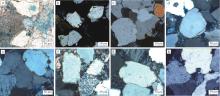
图3
西湖凹陷宝武地区平湖组石英溶蚀量分析镜下照片(铸体薄片)a.埋深4 183.7 m,A1井,单偏光;b.埋深4 061.8 m,A2井,正交光;c.埋深4 160.0 m,A3井,正交光;d.埋深3 710.0 m A4井,正交光;e.埋深4 327.0 m,A4井,正交光;f.埋深3 973.8 m,A5井,正交光;g.埋深4 127.2 m,A5-1井,正交光;h.埋深4 047.0 m,B4井,正交光(图中红线为颗粒原始边缘界限;绿线为颗粒溶蚀后界限。)"


图4
西湖凹陷宝武地区平湖组不同矿物溶蚀-胶结作用垂向演化a. 石英溶蚀比例;b. 硅质胶结物含量;c. 长石溶蚀比例;d. 岩屑溶蚀比例;e. 高岭石含量;f. 伊利石含量;g. 绿泥石含量;h 含铁碳酸盐矿物含量(图中数值代表不同成岩环境下相应特征参数的平均值。)"

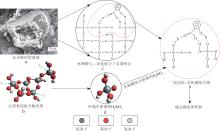
图5
水杨酸酯与二氧化硅分子形成络合物分子过程示意图(据文献[7]修改)a. 石英溶蚀特征扫描电镜照片;b. 石英表面配合物类型示意图;c. 水杨酸与石英表面反应分子结构示意图;d. 环境中游离的二氧化硅分子结构示意图;e. 二氧化硅-水杨酸络合物分子结构示意图"
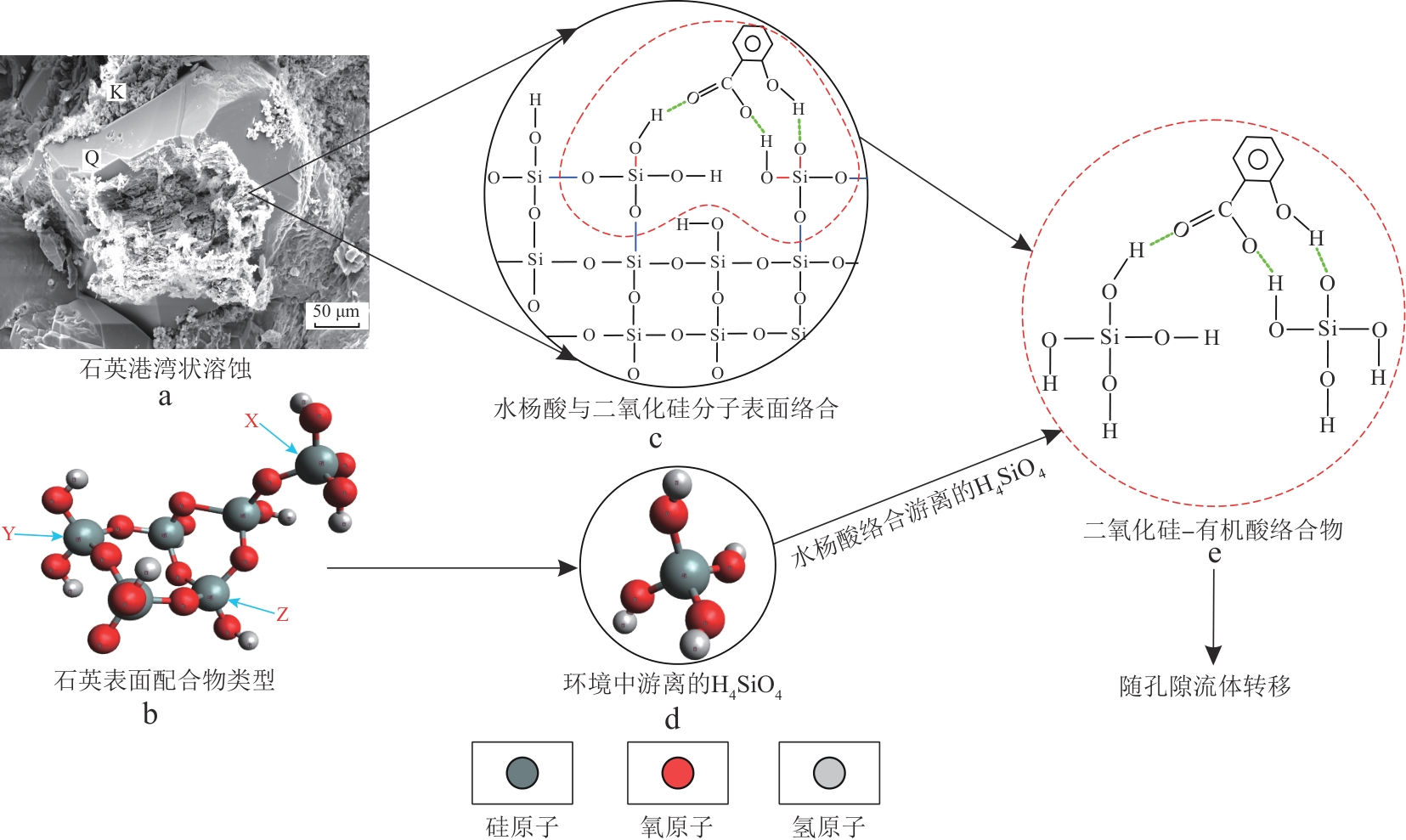
表2
西湖凹陷宝武地区平湖组埋深4 400 m以浅深度段11口井烃源岩有机地化数据统计"
| 井号 | 埋深/m | 样品类型 | 干酪根类型 | TOC/% | Ro/% |
|---|---|---|---|---|---|
| A5-1 | 4 130.0 | 煤 | Ⅱ2型 | 7.73 | 0.63 |
| A5-1 | 4 130.2 | 煤 | Ⅱ2型 | 2.86 | 0.63 |
| C2 | 4 035.0 | 煤 | Ⅱ2型 | 46.40 | 0.60 |
| A3 | 4 453.5 | 煤 | Ⅱ2型 | 2.31 | 0.78 |
| A4 | 3 975.0 | 煤 | Ⅱ2型 | 2.80 | 0.64 |
| B5 | 3 800.0 | 泥岩 | Ⅱ2型 | 21.99 | 0.55 |
| A2 | 3 966.0 | 煤 | Ⅲ型 | 60.70 | 0.60 |
| A5 | 4 341.5 | 煤 | Ⅱ2型 | 5.28 | 0.63 |
图6
西湖凹陷宝武地区平湖组长石及岩屑溶蚀镜下特征照片a.长石溶蚀形成粒内溶孔,埋深3 850.0 m,A5-1井,单偏光,铸体薄片;b.长石溶蚀形成粒内溶孔,埋深4 051.2 m,A2井,单偏光,铸体薄片;c.长石溶蚀,残余部分发亮蓝色光,埋深3 624.0 m,A5井,阴极发光,铸体薄片;d.岩屑溶蚀形成粒内溶孔,埋深4 128.8 m,A5-1井,单偏光,铸体薄片;e.钾长石沿解理溶蚀,埋深4 123.0 m,A5-1井,扫描电镜;f.钾长石沿解理溶蚀,埋深4 307.0 m,A4井,扫描电镜;g.钠长石淋滤溶蚀,埋深3 481.0 m,A2井,扫描电镜;h.岩屑溶蚀形成次生孔,埋深4 374.0 m,A1井,扫描电镜"

图7
西湖凹陷宝武地区平湖组气/油比(a)与凝析油含量(b)随埋深的变化"
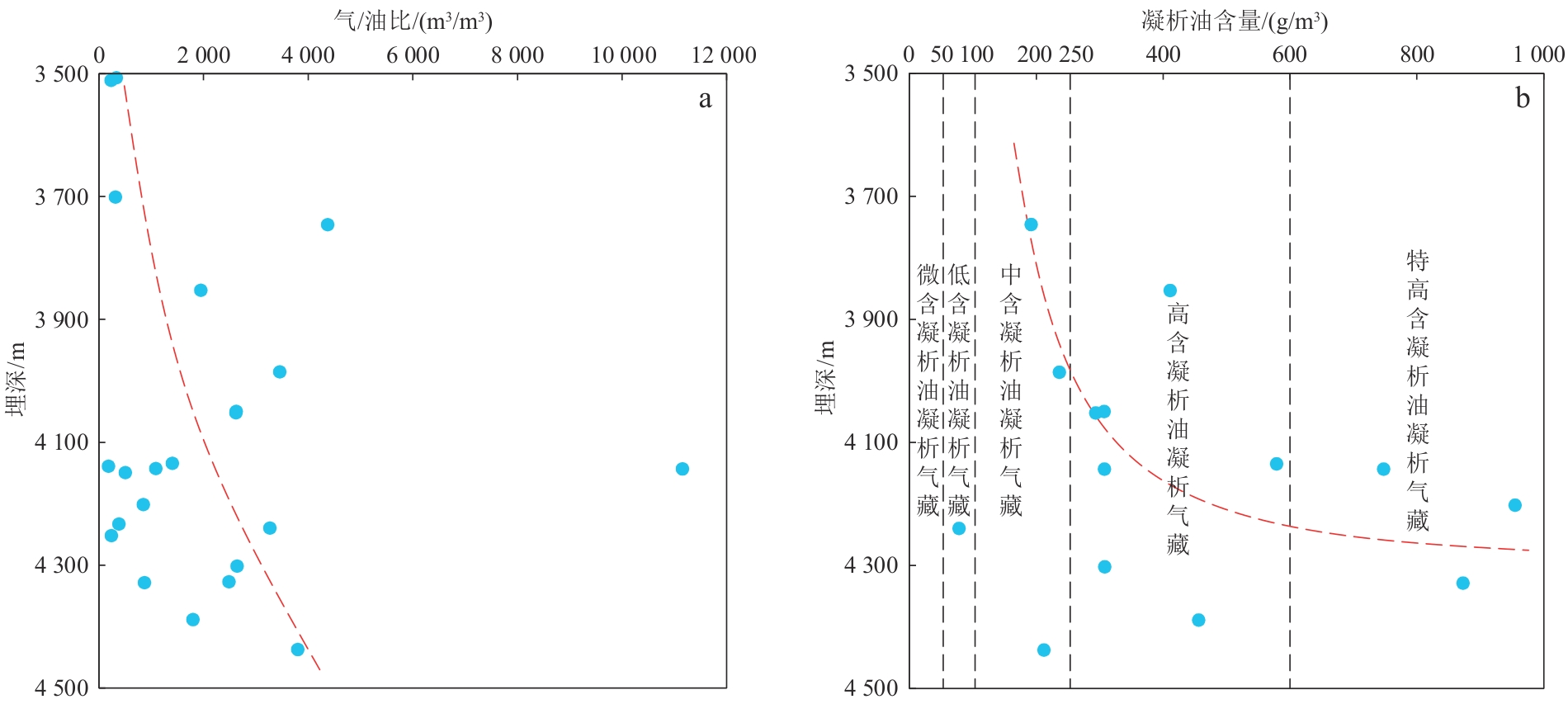
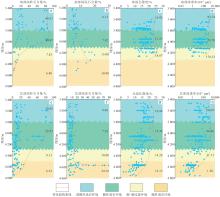
图8
西湖凹陷宝武地区南部与北部黏土矿物含量和储层质量垂向演化a. 南部高岭石含量;b. 南部绿泥石含量;c. 南部孔隙度;d. 南部渗透率;e. 北部高岭石含量;f. 北部绿泥石含量;g. 北部孔隙度;h 北部渗透率(图中数值代表不同成岩环境下相应特征参数的平均值。)"

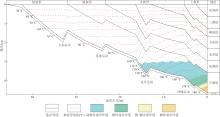
图9
西湖凹陷宝武地区平湖组埋藏史与成岩环境划分"

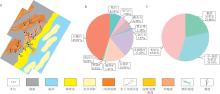
图10
西湖凹陷宝武地区平湖组重矿物组成分析a. SQ1高位域沉积相平面图;b. 重矿物含量占比;c. 物源母岩类型占比"

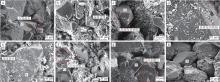
图11
西湖凹陷宝武地区平湖组石英扭曲面溶蚀扫描电镜照片a. 自生石英的晶尖溶蚀,埋深4 368.4 m,A3井;b.石英晶体边缘溶蚀,埋深4 055.0 m,A2井;c.晶体发育缺陷处溶蚀,埋深4 060.0 m,A2井;d.石英晶体发育缺陷处溶蚀,埋深3 810.0 m,A4井;e.晶面条纹溶蚀,埋深3 724.0 m,A5-1井;f.贝壳状断口处溶蚀,埋深3 790.0 m,A2井;g.石英表面贝壳状断口处溶蚀,埋深4 560.5 m,A4井;h.石英颗粒裂纹处溶蚀,埋深4 183.5 m,A1井"

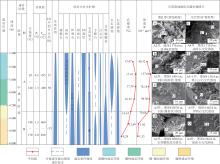
图12
西湖凹陷宝武地区平湖组成岩序列及石英溶蚀演化Ⅱ. 二级次生加大; Ⅲ. 三级次生加大; Q. 石英; I. 伊利石; Ch. 绿泥石; K. 高岭石; Ank. 铁白云石"

| [1] | 李盛谦, 曾溅辉, 刘亚洲, 等. 东海盆地西湖凹陷孔雀亭地区古近系平湖组储层成岩作用及孔隙演化[J]. 岩性油气藏, 2023, 35(5): 49-61. |
| LI Shengqian, ZENG Jianhui, LIU Yazhou, et al. Reservoir diagenesis and pore evolution of Paleogene Pinghu Formation in Kongqueting area of Xihu Sag, East China Sea Basin[J]. Lithologic Reservoirs, 2023, 35(5): 49-61. | |
| [2] | 肖晓光, 侯国伟, 张武, 等. 西湖凹陷平湖组低渗储层成岩环境及孔隙演化[J]. 海相油气地质, 2021, 26(1): 60-70. |
| XIAO Xiaoguang, HOU Guowei, ZHANG Wu, et al. Diagenetic environment and pore evolution of the low permeability reservoir of Pinghu Formation in Xihu Sag[J]. Marine Origin Petroleum Geology, 2021, 26(1): 60-70. | |
| [3] | 李志远, 黄志龙, 马崇林, 等. 西湖凹陷西次凹平湖组储层质量控制因素与孔隙演化[J]. 中国海上油气, 2023, 35(5): 47-60. |
| LI Zhiyuan, HUANG Zhilong, MA Chonglin, et al. Reservoir quality control factors and pore evolution of Pinghu Formation in the western sub-sag of Xihu Sag[J]. China Offshore Oil and Gas, 2023, 35(5): 47-60. | |
| [4] | 郑宇超, 林小兵, 刘莉萍, 等. 石英颗粒边界溶蚀类型特征及成因探讨[J/OL]. 沉积学报: 1-18[2024-12-01]. . |
| ZHENG Yuchao, LIN Xiaobing, LIU Liping, et al. Discussion of the characteristics and causes of different types of quartz grain boundary dissolution[J/OL]. Acta Sedimentologica Sinica: 1-18[2024-12-01]. . | |
| [5] | 于雯泉, 陈勇, 杨立干, 等. 酸性环境致密砂岩储层石英的溶蚀作用[J]. 石油学报, 2014, 35(2): 286-293. |
| YU Wenquan, CHEN Yong, YANG Ligan, et al. Dissolution of quartz in tight sandstone reservoirs in an acidic environment[J]. Acta Petrolei Sinica, 2014, 35(2): 286-293. | |
| [6] | NANGIA S, GARRISON B J. Reaction rates and dissolution mechanisms of quartz as a function of pH[J]. The Journal of Physical Chemistry A, 2008, 112(10): 2027-2033. |
| [7] | BENNETT P C, MELCER M E, SIEGEL D I, et al. The dissolution of quartz in dilute aqueous solutions of organic acids at 25 °C[J]. Geochimica et Cosmochimica Acta, 1988, 52(6): 1521-1530. |
| [8] | 赵立平, 李祖兵, 付亮亮, 等. 鄂尔多斯盆地苏75区块中部盒8段储层特征及主控因素[J]. 断块油气田, 2025, 32(1): 88-95. |
| ZHAO Liping, LI Zubing, FU Liangliang, et al. Characteristics and main controlling factors of He 8 Member reservoir in the middle of Block Su 75, Ordos Basin[J]. Fault-Block Oil and Gas Field, 2025, 32(1): 88-95. | |
| [9] | 钟大康, 朱筱敏, 周新源, 等. 初论塔里木盆地砂岩储层中SiO2的溶蚀类型及其机理[J]. 地质科学, 2007, 42(2): 403-414. |
| ZHONG Dakang, ZHU Xiaomin, ZHOU Xinyuan, et al. An approach to categories and mechanisms of SiO2 dissolution in sandstone reservoirs in the Tarim Basin[J]. Geoscience, 2007, 42(2): 403-414. | |
| [10] | 万友利, 丁晓琪, 白晓亮, 等. 塔中地区志留系海相碎屑岩储层石英溶蚀成因及影响因素分析[J]. 沉积学报, 2014, 32(1): 138-147. |
| WAN Youli, DING Xiaoqi, BAI Xiaoliang, et al. Quartz dissolution causes and influencing factors in the Silurian marine clastic reservoir rocks in central Tarim Basin[J]. Acta Sedimentologica Sinica, 2014, 32(1): 138-147. | |
| [11] | 张思亭, 刘耘. 石英溶解机理的研究进展[J]. 矿物岩石地球化学通报, 2009, 28(3): 294-300. |
| ZHANG Siting, LIU Yun. Progress review of quartz dissolution models[J]. Bulletin of Mineralogy, Petrology and Geochemistry, 2009, 28(3): 294-300. | |
| [12] | 邱隆伟, 徐宁宁, 周涌沂, 等. 鄂尔多斯盆地大牛地地区致密砂岩石英溶解作用及其对优质储集层的影响[J]. 矿物岩石地球化学通报, 2015, 34(1): 38-44. |
| QIU Longwei, XU Ningning, ZHOU Yongyi, et al. Dissolution of quartz in tight sandstones of the Daniudi area, Ordos Basin, and its influence to high quality reservoirs[J]. Bulletin of Mineralogy, Petrology and Geochemistry, 2015, 34(1): 38-44. | |
| [13] | 邱隆伟, 潘耀. 柯克亚凝析气田石英的溶解现象及其成因[J]. 矿物学报, 2005, 25(2): 183-190. |
| QIU Longwei, PAN Yao. A study on direct dissolution of quartz and its genesis in the kekeya gas condensate[J]. Acta Mineralogica Sinica, 2005, 25(2): 183-190. | |
| [14] | 邱隆伟, 姜在兴, 操应长, 等. 泌阳凹陷碱性成岩作用及其对储层的影响[J]. 中国科学: 地球科学, 2001, 31(9): 752-759. |
| QIU Longwei, JIANG Zaixing, CAO Yingchang, et al. Alkaline diagenesis of the Yuyang Depression and its effect on reservoirs[J]. Science China Earth Sciences, 2001, 31(9): 752-759. | |
| [15] | 张胜斌, 王琪, 李小燕, 等. 川中南河包场须家河组砂岩沉积-成岩作用[J]. 石油学报, 2009, 30(2): 225-231. |
| ZHANG Shengbin, WANG Qi, LI Xiaoyan, et al. Depositional-diagenetic coupling complex of Xujiahe sandstone in Hebaochang Block in the south part of the Central Sichuan Basin[J]. Acta Petrolei Sinica, 2009, 30(2): 225-231. | |
| [16] | 肖晓光. 西湖凹陷深层有效储层形成机理及深度下限研究[J]. 高校地质学报, 2023, 29(4): 630-643. |
| XIAO Xiaoguang. Study on genetic mechanism and lower limit of deep effective reservoirs in the Xihu sag[J]. Geological Journal of China Universities, 2023, 29(4): 630-643. | |
| [17] | 徐波, 胡碧瑶, 顾智鹏, 等. 西湖凹陷平湖斜坡带平湖组微量元素和稀土元素地球化学特征及其地质意义[J]. 西安石油大学学报(自然科学版), 2021, 36(2): 28-37, 49. |
| XU Bo, HU Biyao, GU Zhipeng, et al. Geochemical characteristics of trace elements and rare earth elements of Pinghu Formation in Pinghu slope belt of Xihu Sag and their geological significance[J]. Journal of Xi’an Shiyou University(Natural Science Edition), 2021, 36(2): 28-37, 49. | |
| [18] | 蔡华, 秦兰芝, 刘英辉. 西湖凹陷平北斜坡带海陆过渡相源-汇系统差异性及其耦合模式[J]. 地球科学, 2019, 44(3): 880-897. |
| CAI Hua, QIN Lanzhi, LIU Yinghui. Differentiation and coupling model of source-to-sink systems with transitional facies in Pingbei slope of Xihu Sag[J]. Earth Science, 2019, 44(3): 880-897. | |
| [19] | 余浪, 余一欣, 蒋一鸣, 等. 东海陆架盆地西湖凹陷天台斜坡构造变换带发育特征及形成机理[J]. 石油与天然气地质, 2023, 44(3): 753-763. |
| YU Lang, YU Yixin, JIANG Yiming, et al. Characteristics and forming mechanisms of transform zone in the Tiantai slope, Xihu Sag, East China Sea Shelf Basin[J]. Oil & Gas Geology, 2023, 44(3): 753-763. | |
| [20] | 许婷. 东海盆地西湖凹陷油气成藏系统分析[D]. 北京: 中国地质大学(北京), 2014. |
| XU Ting. Hydrocarbon accumulation system analysis in Xihu depression, East China Sea Basin[D]. Beijing: China University of Geosciences(Beijing), 2014. | |
| [21] | 徐东浩, 秦兰芝, 李帅, 等. 西湖凹陷平北斜坡平湖组潮坪环境砂体沉积模式及控制因素[J]. 中国海上油气, 2024, 36(5): 57-67. |
| XU Donghao, QIN Lanzhi, LI Shuai, et al. Sedimentary models and controlling factors of sand bodies in tidal flat environment of Pinghu Formation on Pingbei Slope of Xihu Sag[J]. China Offshore Oil and Gas, 2024, 36(5): 57-67. | |
| [22] | 赵洪, 蒋一鸣, 常吟善, 等. 西湖凹陷平湖组基于沉积相标志的沉积特征研究[J]. 上海国土资源, 2018, 39(1): 88-92. |
| ZHAO Hong, JIANG Yiming, CHANG Yinshan, et al. Study on sedimentary characteristics of the Pinghu Formation based on sedimentary facies markers in Xihu Sag, East China Sea Basin[J]. Shanghai Land & Resources, 2018, 39(1): 88-92. | |
| [23] | 赵谦. 东海陆架盆地西湖凹陷西部斜坡带平湖组潮河联控沉积体系研究[D]. 武汉: 中国地质大学(武汉), 2022. |
| ZHAO Qian. Tidal and river joint-dominated sedimentary system analysis of the Pinghu Formation in the west slope belt of Xihu Depression, East China Sea Shelf Basin[D]. Wuhan: China University of Geosciences (Wuhan), 2022. | |
| [24] | 田夏荷, 屈红军, 刘新社, 等. 鄂尔多斯盆地东部上古生界致密气储层石英溶蚀及其机理探讨[J]. 天然气地球科学, 2016, 27(11): 2005-2012, 2069. |
| TIAN Xiahe, QU Hongjun, LIU Xinshe, et al. Discussion on quartz dissolution and its mechanisms of the Upper Paleozoic tight gas reservoirs in the eastern Ordos Basin[J]. Natural Gas Geoscience, 2016, 27(11): 2005-2012, 2069. | |
| [25] | 田建锋, 喻建, 张志国. 砂岩中碱性溶蚀研究进展[J]. 地质科技通报, 2022, 41(5): 83-93, 100. |
| TIAN Jianfeng, YU Jian, ZHANG Zhiguo. Advance in alkaline dissolution of sandstone[J]. Bulletin of Geological Science and Technology, 2022, 41(5): 83-93, 100. | |
| [26] | 曹天宇, 钟大康, 牛胜利, 等. 惠州凹陷东部珠海组储层碱性成岩作用及孔隙演化[J]. 沉积学报, 2020, 38(6): 1327-1337. |
| CAO Tianyu, ZHONG Dakang, NIU Shengli, et al. Alkaline diagenesis and porosity evolution of Zhuhai formation reservoirs in eastern Huizhou Sag[J]. Acta Sedimentologica Sinica, 2020, 38(6): 1327-1337. | |
| [27] | 曲希玉, 陈修, 邱隆伟, 等. 石英溶解型次生孔隙的成因及其对储层的影响——以大牛地气田上古生界致密砂岩储层为例[J]. 石油与天然气地质, 2015, 36(5): 804-813. |
| QU Xiyu, CHEN Xiu, QIU Longwei, et al. Genesis of secondary pore of quartz dissolution type and its influences on reservoir: Taking the tight sandstone reservoir in the Upper Paleozoic of Daniudi Gas Field as an example[J]. Oil & Gas Geology, 2015, 36(5): 804-813. | |
| [28] | 陈修. 大牛地气田上古生界致密砂岩储层石英溶解作用及对储层质量的影响[D]. 青岛: 中国石油大学(华东), 2016. |
| CHEN Xiu. Quartz dissolution and its influence on reservoir quality in the Upper Paleozoic tight sandstone reservoir of Daniudi Gas Field[D]. Qingdao: China University of Petroleum(East China), 2016. | |
| [29] | 刘金库, 彭军, 石岩, 等. 致密砂岩储层石英溶蚀成因及对孔隙发育的影响——以川中—川南过渡带须家河组为例[J]. 石油学报, 2015, 36(9): 1090-1097. |
| LIU Jinku, PENG Jun, SHI Yan, et al. The genesis of quartz dissolution in tight sand reservoirs and its impact on pore development: A case study of Xujiahe Formation in the transitional zone of Central-Southern Sichuan Basin[J]. Acta Petrolei Sinica, 2015, 36(9): 1090-1097. | |
| [30] | 韩登林, 李忠, 李维锋. 库车坳陷白垩系砂岩储层石英溶蚀非均质性特征及其主控因素[J]. 地质学报, 2011, 85(2): 256-261. |
| HAN Denglin, LI Zhong, LI Weifeng. Heterogeneous features of quartz grain dissolution of Cretaceous sandstone reservoir in the Kuqa Depression and its major controlling factors[J]. Acta Geologica Sinica, 2011, 85(2): 256-261. | |
| [31] | 张英男, 白青林, 束青林, 等. 鄂尔多斯盆地西南缘浅埋藏储层致密化成因[J]. 中国石油大学学报(自然科学版), 2024, 48(2): 24-36. |
| ZHANG Yingnan, BAI Qinglin, SHU Qinglin, et al. Mechanism of tight sandstone reservoirs with shallow burial in southwest of Ordos Basin[J]. Journal of China University of Petroleum (Edition of Natural Science), 2024, 48(2): 24-36. | |
| [32] | 高彦杰, 甘军, 胡潜伟, 等. 琼东南盆地深水西区梅山组储层成岩-孔隙协同演化机制[J]. 吉林大学学报(地球科学版), 2024, 54(6): 2014-2028. |
| GAO Yanjie, GAN Jun, HU Qianwei, et al. Reservoir diagenesis-pore co-evolution mechanism of Meishan Formation in deepwater west zone of Qiongdongnan Basin[J]. Journal of Jilin University(Earth Science Edition), 2024, 54(6): 2014-2028. | |
| [33] | 远光辉, 彭光荣, 张丽丽, 等. 珠江口盆地白云凹陷古近系深层高变温背景下储层成岩作用与低渗致密化机制[J]. 石油与天然气地质, 2024, 45(1): 44-64. |
| YUAN Guanghui, PENG Guangrong, ZHANG Lili, et al. Diagenesis and low-permeability tightening mechanisms of the deep Paleogene reservoirs under high temperature and highly variable geothermal gradients in the Baiyun Sag, Pearl River Mouth Basin[J]. Oil & Gas Geology, 2024, 45(1): 44-64. | |
| [34] | MARLEY N A, BENNETT P, JANECKY D R, et al. Spectroscopic evidence for organic diacid complexation with dissolved silica in aqueous systems—I. Oxalic acid[J]. Organic Geochemistry, 1989, 14(5): 525-528. |
| [35] | BLAKE R E, WALTER L M. Kinetics of feldspar and quartz dissolution at 70-80 °C and near-neutral pH: Effects of organic acids and NaCl[J]. Geochimica et Cosmochimica Acta, 1999, 63(13/14): 2043-2059. |
| [36] | DOVE P M. The dissolution kinetics of quartz in aqueous mixed cation solutions[J]. Geochimica et Cosmochimica Acta, 1999, 63(22): 3715-3727. |
| [37] | 张生, 李统锦. 石英溶解动力学研究进展[J]. 世界地质, 1996, 15(4): 8-13. |
| ZHANG Sheng, LI Tongjin. Research advance in dissolution kinetics of quartz[J]. World Geology, 1996, 15(4): 8-13. | |
| [38] | 王威, 刘珠江, 魏富彬, 等. 川东北地区二叠系大隆组页岩储层特征及其主控因素[J]. 石油与天然气地质, 2024, 45(5): 1355-1367. |
| WANG Wei, LIU Zhujiang, WEI Fubin, et al. Characteristics and determinants of shale reservoir development in the Permian Dalong Formation, northeastern Sichuan Basin[J]. Oil & Gas Geology, 2024, 45(5): 1355-1367. | |
| [39] | 朱筱敏, 王晓琳, 张美洲, 等. 中国典型陆相盆地细粒沉积环境和岩相特征[J]. 石油与天然气地质, 2024, 45(4): 873-892. |
| ZHU Xiaomin, WANG Xiaolin, ZHANG Meizhou, et al. Sedimentary environments and lithofacies characteristics of fine-grained sediments in typical continental basins in China[J]. Oil & Gas Geology, 2024, 45(4): 873-892. | |
| [40] | 秦德超, 汤济广, 胡美玲, 等. 渤海湾盆地南堡凹陷沙河街组一段泥页岩微观孔隙特征及其主控因素[J]. 大庆石油地质与开发, 2023, 42(5): 47-56. |
| QIN Dechao, TANG Jiguang, HU Meiling, et al. Micro-pore characteristics and its main controlling factors of shale in Sha 1 Member of Shahejie Formation in Nanpu Sag of Bohai Bay Basin[J]. Petroleum Geology & Oilfield Development in Daqing, 2023, 42(5): 47-56. | |
| [41] | 韦敏, 于世娜, 佟欢, 等. 济阳坳陷桩海地区碎屑岩优质储层特征及成因机制[J]. 特种油气藏, 2024, 31(3): 27-36. |
| WEI Min, YU Shina, TONG Huan, et al. Characteristics and genesis mechanism of high-quality clastic reservoirs in Zhuanghai area of Jiyang Depression[J]. Special Oil & Gas Reservoirs, 2024, 31(3): 27-36. | |
| [42] | 陈鑫, 钟建华, 袁静, 等. 渤南洼陷深层碎屑岩储集层中的黏土矿物特征及油气意义[J]. 石油学报, 2009, 30(2): 201-207. |
| CHEN Xin, ZHONG Jianhua, YUAN Jing, et al. Characteristics of clay mineral and its hydrocarbon significance in Paleogene clastic reservoir of Bonan Sag[J]. Acta Petrolei Sinica, 2009, 30(2): 201-207. | |
| [43] | 窦立荣, 侯读杰, 程顶胜, 等. 高酸值原油的成因与分布[J]. 石油学报, 2007, 28(1): 8-13. |
| DOU Lirong, HOU Dujie, CHENG Dingsheng, et al. Origin and distribution of high-acidity oils[J]. Acta Petrolei Sinica, 2007, 28(1): 8-13. | |
| [44] | 郜晓勇, 王春梅, 王庆东, 等. 西湖凹陷古近系砂岩储层有机酸溶解作用机制探讨[J]. 内蒙古石油化工, 2007(11): 252-255. |
| GAO Xiaoyong, WANG Chunmei, WANG Qingdong, et al. The discuss about organic acid dissolution of sandstone reservoirs of Paleogene strata in Xihu Sag[J]. Inner Mongolia Petrochemical Industry, 2007(11): 252-255. | |
| [45] | 阮壮, 徐睿, 王杰, 等. 柴达木盆地马海东地区古近系砂岩储层微观孔隙结构特征及微观致密区成因[J]. 石油与天然气地质, 2024, 45(4): 1032-1045. |
| RUAN Zhuang, XU Rui, WANG Jie, et al. Micro-pore structure characteristics of the Paleogene sandstone reservoirs and genesis of microscopic tight zones in the Mahaidong area, Qaidam Basin[J]. Oil & Gas Geology, 2024, 45(4): 1032-1045. | |
| [46] | 张晓丽, 王小娟, 张航, 等. 川东北五宝场地区侏罗系沙溪庙组储层特征及主控因素[J]. 岩性油气藏, 2024, 36(5): 87-98. |
| ZHANG Xiaoli, WANG Xiaojuan, ZHANG Hang, et al. Reservoir characteristics and main controlling factors of Jurassic Shaximiao Formation in Wubaochang area, northeastern Sichuan Basin[J]. Lithologic Reservoirs, 2024, 36(5): 87-98. | |
| [47] | 张迎朝, 邹玮, 陈忠云, 等. 东海陆架盆地西湖凹陷中央反转构造带古近系花港组气藏“先汇后聚”机制及地质意义[J]. 石油与天然气地质, 2023, 44(5): 1256-1269. |
| ZHANG Yingzhao, ZOU Wei, CHEN Zhongyun, et al. The mechanism of “convergence ahead of accumulation” and its geological significance for gas reservoirs in Paleogene Huagang Formation across the central inverted structural zone of Xihu Depression, East China Sea Shelf Basin[J]. Oil & Gas Geology, 2023, 44(5): 1256-1269. | |
| [48] | 曹剑, 张义杰, 胡文瑄, 等. 油气储层自生高岭石发育特点及其对物性的影响[J]. 矿物学报, 2005, 25(4): 367-373. |
| CAO Jian, ZHANG Yijie, HU Wenxuan, et al. Developing characteristics of kaolinite in Central Junggar Basin and their effect on the reservoir quality[J]. Acta Mineralogica Sinica, 2005, 25(4): 367-373. | |
| [49] | 刘春锋, 蒋一鸣, 李宁, 等. 西湖凹陷西次凹古近系花港组—平湖组深层油气成藏过程[J]. 地质学报, 2024, 98(1): 231-246. |
| LIU Chunfeng, JIANG Yiming, LI Ning, et al. Hydrocarbon accumulation process in the deep of Paleogene Huagang Formation and Pinghu Formation in the western subsag of Xihu Sag[J]. Acta Geologica Sinica, 2024, 98(1): 231-246. | |
| [50] | 张建培, 葛和平, 漆滨汶. 西湖凹陷砂岩自生高岭石发育特征及其对储层物性的影响[J]. 海洋石油, 2009, 29(1): 1-8. |
| ZHANG Jianpei, GE Heping, QI Binwen. Characteristics of authigenic kaolinite in sandstones of Xihu Sag and it’s impact on reservoir physical properties[J]. Offshore Oil, 2009, 29(1): 1-8. | |
| [51] | 刘金库, 彭军, 刘建军, 等. 绿泥石环边胶结物对致密砂岩孔隙的保存机制——以川中-川南过渡带包界地区须家河组储层为例[J]. 石油与天然气地质, 2009, 30(1): 53-58. |
| LIU Jinku, PENG Jun, LIU Jianjun, et al. Pore-preserving mechanism of chlorite rims in tight sandstone-an example from the T3x Formation of Baojie area in the transitional zone from the central to southern Sichuan Basin[J]. Oil & Gas Geology, 2009, 30(1): 53-58. | |
| [52] | 孟万斌, 吕正祥, 冯明石, 等. 致密砂岩自生伊利石的成因及其对相对优质储层发育的影响——以川西地区须四段储层为例[J]. 石油学报, 2011, 32(5): 783-790. |
| MENG Wanbin, Zhengxiang LYU, FENG Mingshi, et al. The origin of authigenic illite in tight sandstones and its effect on the formation of relatively high-quality reservoirs: A case study on sandstones in the 4th member of Xujiahe Formation, western Sichuan Basin[J]. Acta Petrolei Sinica, 2011, 32(5): 783-790. | |
| [53] | 倪智勇, 张紫东, 李思澎, 等. 西湖凹陷平湖斜坡构造带油藏成藏期次厘定[J]. 石油科学通报, 2022, 7(3): 281-293. |
| NI Zhiyong, ZHANG Zidong, LI Sipeng, et al. The oil accumulation period in the Pinghu slope tectonic belt of the Xihu Sag[J]. Petroleum Science Bulletin, 2022, 7(3): 281-293. | |
| [54] | STEWART J H. Origin of sedimentary rocks. Harvey Blatt, Gerard Middleton, Raymond Murray[J]. The Journal of Geology, 1974, 82(6): 816-817. |
| [55] | 陈修, 曲希玉, 邱隆伟, 等. 石英溶解特征及机理的水热实验研究[J]. 矿物岩石地球化学通报, 2015, 34(5): 1027-1033. |
| CHEN Xiu, QU Xiyu, QIU Longwei, et al. Hydrothermal experiment research on characteristics and mechanisms of quartz dissolution[J]. Bulletin of Mineralogy, Petrology and Geochemistry, 2015, 34(5): 1027-1033. | |
| [56] | DOVE P M, CRERAR D A. Kinetics of quartz dissolution in electrolyte solutions using a hydrothermal mixed flow reactor[J]. Geochimica et Cosmochimica Acta, 1990, 54(4): 955-969. |
| [57] | DAS B K, HAAKE B G. Geochemistry of Rewalsar Lake sediment, Lesser Himalaya, India: Implications for source-area weathering, provenance and tectonic setting[J]. Geosciences Journal, 2003, 7(4): 299-312. |
| [58] | BHATIA M R, CROOK K A W. Trace element characteristics of graywackes and tectonic setting discrimination of sedimentary basins[J]. Contributions to Mineralogy and Petrology, 1986, 92(2): 181-193. |
| [59] | 李宁, 汤睿, 赵洪, 等. 西湖凹陷平湖构造带物源特征分析[J]. 海洋石油, 2017, 37(2): 21-26. |
| LI Ning, TANG Rui, ZHAO Hong, et al. Provenance characteristics of Pinghu tectonic zone in Xihu Sag[J]. Offshore Oil, 2017, 37(2): 21-26. | |
| [60] | 吴柘锟, 李琦, 张迎朝, 等. 东海陆架盆地丽水凹陷古新统物源分析及地质意义[J]. 石油实验地质, 2023, 45(1): 122-134. |
| WU Zhekun, LI Qi, ZHANG Yingzhao, et al. Provenance analysis and geological significance of Paleocene in Lishui Sag, East China Sea Shelf Basin[J]. Petroleum Geology and Experiment, 2023, 45(1): 122-134. | |
| [61] | 何玉春, 何志斌, 李帅, 等. 基于成像测井的西湖凹陷古近系花港组及平湖组物源分析[J]. 地球物理学进展, 2024, 39(2): 839-850. |
| HE Yuchun, HE Zhibin, LI Shuai, et al. Provenance analysis of Huagang Formation of central belt and Pinghu Formation of Pingbei area in Xihu Sag based on image logging[J]. Progress in Geophysics, 2024, 39(2): 839-850. | |
| [62] | 苗清, 苗苗. 西湖凹陷平北区平湖组岩浆岩物源条件分析[J]. 中国石油和化工标准与质量, 2023, 43(11): 148-151. |
| MIAO Qing, MIAO Miao. Analysis of source conditions of magmatic rocks of Pinghu Formation in Pingbei District,Xihu Depression[J]. China Petroleum and Chemical Standard and Quality, 2023, 43(11): 148-151. | |
| [63] | 张生. 石英表面配合物与溶解动力学模型[J]. 地质地球化学, 1997, 25(4): 33-39. |
| ZHANG Sheng. Quartz-surface complexes and kinetic models of dissolution[J]. Geology-Geochemistry, 1997, 25(4): 33-39. | |
| [64] | 周东悦. 高岭石吸附Th(Ⅳ)的机理研究[D]. 抚州: 东华理工大学, 2021. |
| ZHOU Dongyue. Study on mechanism of kaolinite adsorbing of Th(IV)[D]. Fuzhou: East China University of Technology, 2021. | |
| [65] | 包书景, 何生. 泌阳凹陷地质流体对砂岩储集层中黏土矿物形成和分布的控制作用[J]. 地质科技情报, 2005, 24(2): 51-56. |
| BAO Shujing, HE Sheng. Geofluids control of the formation and distribution of clay minerals within the sandstone reservoir in Biyang Depression[J]. Bulletin of Geological Science and Technology, 2005, 24(2): 51-56. | |
| [66] | BERGER G, CADORE E, SCHOTT J, et al. Dissolution rate of quartz in lead and sodium electrolyte solutions between 25 and 300 °C: Effect of the nature of surface complexes and reaction affinity[J]. Geochimica et Cosmochimica Acta, 1994, 58(2): 541-551. |
| [67] | GAUTIER J M, OELKERS E H, SCHOTT J. Are quartz dissolution rates proportional to B.E.T. surface areas?[J]. Geochimica et Cosmochimica Acta, 2001, 65(7): 1059-1070. |
| [68] | 于海鹏. 长石和石英复合矿物溶蚀作用的数值模拟及动力学探究[D]. 青岛: 中国石油大学(华东), 2021. |
| YU Haipeng. Numerical simulation and kinetic study on dissolution of feldspar and quartz complex minerals[D]. Qingdao: China University of Petroleum(East China), 2021. | |
| [69] | WADOOD B, KHAN S, WAGREICH M, et al. Diagenetic history and porosity evolution of the Middle Permian clastic-carbonate mixed system, Indus Basin, Pakistan: Implications for reservoir development[J]. Energy Geoscience, 2024, 5(4): 100317. |
| [70] | 肖佃师, 郭雪燚, 王猛, 等. 砂岩夹层储层分级评价及展布特征——以松辽盆地长岭凹陷大情字井地区青山口组一段为例[J]. 油气藏评价与开发, 2024, 14(5): 714-726, 740. |
| XIAO Dianshi, GUO Xueyi, WANG Meng, et al. Classification evaluation and distribution characteristics of sandstone interlayer reservoirs: A case study of the first member of Qingshankou Formation in Daqingzijing area, Changling Sag, Songliao Basin[J]. Petroleum Reservoir Evaluation and Development, 2024, 14(5): 714-726, 740. | |
| [71] | 张关龙, 王继远, 王斌, 等. 准噶尔盆地腹部深层—超深层碎屑岩储层发育特征与孔隙演化定量表征[J]. 石油实验地质, 2023, 45(4): 620-631. |
| ZHANG Guanlong, WANG Jiyuan, WANG Bin, et al. Development characteristics and quantitative characterization of pore evolution of deep and ultra-deep clastic reservoirs in the hinterland of the Junggar Basin[J]. Petroleum Geology and Experiment, 2023, 45(4): 620-631. | |
| [72] | 郭刚, 苏圣民, 徐建永, 等. 东海盆地西湖凹陷平湖斜坡油气差异富集特征及主控因素[J/OL]. 石油实验地质: 1-14[2024-12-01]. . |
| GUO Gang, SU Shengmin, XU Jianyong, et al. Differential characteristics and main controlling factors of hydrocarbon enrichment in Pinghu slope, Xihu Sag, East China Sea Basin[J/OL]. Petroleum Geology & Experiment: 1-14[2024-12-01]. . | |
| [73] | 庄建建. 东海西湖凹陷砂岩硅质胶结物成因机制探讨[J]. 海洋石油, 2018, 38(1): 9-16. |
| ZHUANG Jianjian. Discussion on the formation mechanism of siliceous cement in the sandstone of Xihu Sag East China Sea[J]. Offshore Oil, 2018, 38(1): 9-16. | |
| [74] | 刘佳庚, 王艳忠, 操应长, 等. 渤海湾盆地东营凹陷民丰洼陷陡坡带深层-超深层碎屑岩优质储层控制因素[J]. 石油与天然气地质, 2023, 44(5): 1203-1217. |
| LIU Jiageng, WANG Yanzhong, CAO Yingchang, et al. Factors controlling the development of deep and ultra-deep coarse-grained siliciclastic reservoirs with high quality in the steep slope zone of the Minfeng sub-sag, Dongying Sag, Bohai Bay Basin[J]. Oil & Gas Geology, 2023, 44(5): 1203-1217. | |
| [75] | 章顺利, 杨映涛, 张玲, 等. 川西坳陷须二段次生石英形成机理及其对储集层物性的影响[J]. 新疆石油地质, 2023, 44(1): 25-32. |
| ZHANG Shunli, YANG Yingtao, ZHANG Ling, et al. Formation mechanism of secondary quartz and its influence on physical properties of Xu 2 member reservoir in western Sichuan Depression[J]. Xinjiang Petroleum Geology, 2023, 44(1): 25-32. | |
| [76] | 田建锋, 高永利, 张蓬勃, 等. 鄂尔多斯盆地合水地区长7致密油储层伊利石成因[J]. 石油与天然气地质, 2013, 34(5): 700-707. |
| TIAN Jianfeng, GAO Yongli, ZHANG Pengbo, et al. Genesis of illite in Chang 7 tight oil reservoir in Heshui area, Ordos Basin[J]. Oil & Gas Geology, 2013, 34(5): 700-707. |
| [1] | 张学成, 蔡全升, 王伟, 胡潜伟, 任丽娟, 苏奥, 胡明毅, 胡忠贵, 邓庆杰. 中-深层优质碎屑岩储层差异发育特征及其主控因素[J]. 石油与天然气地质, 2025, 46(3): 876-893. |
| [2] | 王辉, 秦兰芝, 徐靖琦, 陈永军, 张威, 代勇, 陈贺贺. 中国东海陆架盆地西湖凹陷西部斜坡带古近系宝石组沉积充填特征[J]. 石油与天然气地质, 2025, 46(3): 910-925. |
| [3] | 唐贤君, 朱虹浩, 李宁, 余一欣, 钟荣全, 余浪. 东海陆架盆地西湖凹陷宁波构造带反转背斜分段差异变形及其油气地质意义[J]. 石油与天然气地质, 2025, 46(1): 167-177. |
| [4] | 董鑫旭, 周兴海, 李昆, 蒲仁海, 王爱国, 关蕴文, 张鹏. 海上稀疏井区高精度地层格架约束下的地震沉积学刻画[J]. 石油与天然气地质, 2024, 45(1): 293-308. |
| [5] | 张迎朝, 邹玮, 陈忠云, 蒋一鸣, 刁慧. 东海陆架盆地西湖凹陷中央反转构造带古近系花港组气藏“先汇后聚”机制及地质意义[J]. 石油与天然气地质, 2023, 44(5): 1256-1269. |
| [6] | 朱珍君, 李琦, 陈贺贺, 李剑, 张卫平, 杨丰繁, 张迎朝, 覃军, 李风勋, 单帅强. 东海陆架盆地丽水凹陷古新统源-汇系统耦合及时-空演化[J]. 石油与天然气地质, 2023, 44(3): 735-752. |
| [7] | 余浪, 余一欣, 蒋一鸣, 邹玮, 陈石, 唐贤君, 梁鑫鑫, 何新建, 陈冬霞. 东海陆架盆地西湖凹陷天台斜坡构造变换带发育特征及形成机理[J]. 石油与天然气地质, 2023, 44(3): 753-763. |
| [8] | 刘贤, 葛家旺, 赵晓明, 阴国峰, 周雪松, 王建伟, 代茂林, 孙莉, 范廷恩. 东海陆架盆地西湖凹陷渐新统花港组年代标尺及层序界面定量识别[J]. 石油与天然气地质, 2022, 43(4): 990-1004. |
| [9] | 李天军, 黄志龙, 郭小波, 赵静, 蒋一鸣, 谭思哲. 东海盆地西湖凹陷平北斜坡带平湖组煤系原油地球化学特征与油-源精细对比[J]. 石油与天然气地质, 2022, 43(2): 432-444. |
| [10] | 陈哲, 张昌民, 侯国伟, 冯文杰, 徐清海. 东海陆架盆地西湖凹陷平湖组断层组合样式及其控砂机制[J]. 石油与天然气地质, 2020, 41(4): 824-837. |
| [11] | 徐陈杰, 叶加仁, 刘金水, 曹强, 盛溢勇, 余汉文. 东海西湖凹陷平湖组Ⅲ型干酪根暗色泥岩生排烃模拟[J]. 石油与天然气地质, 2020, 41(2): 359-366. |
| [12] | 朱毅秀, 黄导武, 王欢, 何贤科, 师源, 佘亚明. 东海西湖凹陷A气田渐新统花港组三段厚层砂岩沉积环境[J]. 石油与天然气地质, 2019, 40(6): 1226-1235. |
| [13] | 林建力, 张宪国, 林承焰, 段冬平, 黄鑫, 孙小龙, 董春梅. 岩相约束下的深层致密砂岩气藏储层演化特征[J]. 石油与天然气地质, 2019, 40(4): 886-899. |
| [14] | 许红, 张威威, 季兆鹏, 王黎, 王晴, 苏大鹏, 雷宝华, 杨艳秋. 东海陆架盆地大春晓油气田成藏动力学特征及成藏模式[J]. 石油与天然气地质, 2019, 40(1): 1-11. |
| [15] | 赵仲祥, 董春梅, 林承焰, 张宪国, 段冬平, 黄鑫, 曾芳. 西湖凹陷深层低渗-致密气藏“甜点”类型划分及成因探讨[J]. 石油与天然气地质, 2018, 39(4): 778-790. |
| 阅读次数 | ||||||
|
全文 |
|
|||||
|
摘要 |
|
|||||
