

Oil & Gas Geology ›› 2025, Vol. 46 ›› Issue (1): 123-135.doi: 10.11743/ogg20250109
• Petroleum Geology • Previous Articles Next Articles
Liangjun WANG( ), Liansheng LI(), Yan ZHU, Yanran LI
Received:2024-09-20
Revised:2024-12-23
Online:2025-03-03
Published:2025-03-03
Contact:
Liansheng LI
E-mail:wanglj389.hnyt@sinopec.com;llsby.hnyt@ sinopec.com
CLC Number:
Liangjun WANG, Liansheng LI, Yan ZHU, Yanran LI. Enrichment conditions and exploration potential of shale oil in continental faulted freshwater lacustrine basins: A case study of the Paleogene Hetaoyuan Formation in the Nanyang Sag, Nanxiang Basin[J]. Oil & Gas Geology, 2025, 46(1): 123-135.
Add to citation manager EndNote|Reference Manager|ProCite|BibTeX|RefWorks

Fig. 1
Structural map superimposed on sedimentary facies map of the Nanyang Sag (a) and the lithologic column of the Hetaoyuan Formation in the sag (b)"

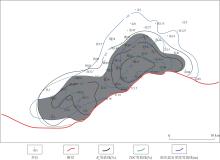
Fig. 2
Superimposition map of the TOC content, dark mudstone thickness, and Ro contours of the He 3 Member, Nanyang Sag"


Fig. 3
Ternary diagram showing the whole-rock composition of shales in the Hetaoyuan Formation, Nanyang Sag"


Fig. 4
Micrographs showing lithofacies features of the Hetaoyuan Formation in well ZY1, Nanyang Sag"

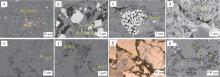
Fig. 5
Micrographs showing typical pore types in the Hetaoyuan Formation, Nanyang Sag"

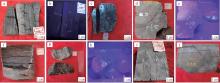
Fig. 6
Typical core photos of the Hetaoyuan Formation, Nanyang Sag"

Table 1
Comparison of shale layer characteristics in typical continental faulted basins in East China"
| 关键参数 | 南襄盆地南阳凹陷 | 南襄盆地泌阳凹陷 | 苏北盆地 | 渤海湾盆地济阳凹陷 |
|---|---|---|---|---|
| 盆地性质 | 淡水 | 半咸水 | 半咸水-咸水 | 半咸水-咸水 |
| 岩相类型 | 长英质-黏土质 混积页岩 | 云灰质-长英质 混积页岩 | 富灰质 混积页岩 | 云灰质-长英质 混积页岩 |
| 有机质类型 | Ⅰ,Ⅱ1 | Ⅰ,Ⅱ1 | Ⅱ,Ⅲ | Ⅰ,Ⅱ1 |
| TOC/% | 0.84 | 2.30 | 0.50 ~ 2.40 | 1.50 ~ 3.50 |
| Ro/% | 0.5 ~ 1.0 | 0.7 | 0.8 ~ 1.1 | 0.7 ~ 1.4 |
| 孔隙度/% | 砂岩4.6,泥岩3.1 | 3.3 | 4.2 | 5.5 |
| 纹层线密度/(条/m) | 200 ~ 1 500 | 430 ~ 1 700 | 22 ~ 350 | 400 ~ 2 200 |
| 黏土矿物含量/% | 37.0 | 30.0 | 29.5 | 22.5 |
| 脆性矿物含量/% | 63.0 | 70.0 | 70.0 | 71.2 |
| S1/(mg/g) | 0.15 ~ 1.23/0.46(平均值) | 0.14 ~ 9.08/2.30(平均值) | >1.50 | >2.00 |
| 压力系数 | 0.92 ~ 1.02 | 0.90 ~ 1.00 | 1.20 ~ 1.30 | 1.20 ~ 1.80 |
| 埋深/m | 2 000 ~ 3 200 | 2 740 ~ 3 100 | 3 800 ~ 4 000 | 3 000 ~ 4 500 |
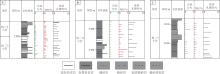
Fig. 7
The source-reservoir configuration types of shale layers in the Nanyang Sag"


Fig. 8
Microscopic images showing shale oil occurrence characteristics in the Nanyang Sag"

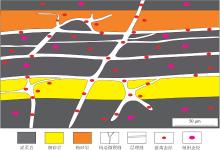
Fig. 9
Occurrence mode of shale oil in the Hetaoyuan Formation, Nanyang Sag"


Fig. 10
Typical micrographs of shale samples from the Hetaoyuan Formation in the Nanyang Sag and the depth-varying organic matter indicators of shale samples in well ZY1"


Fig. 11
Simulation experiments on hydrocarbon generation and expulsion of the mixed shales interbedded with thinly laminated siltstone in the lower and upper parts of the Hetaoyuan Formation, Nanyang Sag"


Fig. 12
Depth-varying S1 content in different shale lithofacies assemblages in the Hetaoyuan Formation, Nanyang Sag"

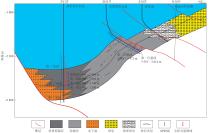
Fig. 13
Shale oil enrichment mode of the Hetaoyuan Formation, Nanyang Sag"

| 1 | 郭旭升. 我国陆上未来油气勘探领域探讨与攻关方向[J]. 地球科学, 2022, 47(10): 3511-3523. |
| GUO Xusheng. Discussion and research direction of future onshore oil and gas exploration in China[J]. Earth Science, 2022, 47(10): 3511-3523. | |
| 2 | 马永生, 蔡勋育, 赵培荣, 等. 中国陆相页岩油地质特征与勘探实践[J]. 地质学报, 2022, 96(1): 155-171. |
| MA Yongsheng, CAI Xunyu, ZHAO Peirong, et al. Geological characteristics and exploration practices of continental shale oil in China[J]. Acta Geologica Sinica, 2022, 96(1): 155-171. | |
| 3 | 杜金虎, 胡素云, 庞正炼, 等. 中国陆相页岩油类型、潜力及前景[J]. 中国石油勘探, 2019, 24(5): 560-568. |
| DU Jinhu, HU Suyun, PANG Zhenglian, et al. The types, potentials and prospects of continental shale oil in China[J]. China Petroleum Exploration, 2019, 24(5): 560-568. | |
| 4 | 王濡岳, 胡宗全, 董立, 等. 页岩气储层表征评价技术进展与思考[J]. 石油与天然气地质, 2021, 42(1): 54-65. |
| WANG Ruyue, HU Zongquan, DONG Li, et al. Advancement and trends of shale gas reservoir characterization and evaluation[J]. Oil & Gas Geology, 2021, 42(1): 54-65. | |
| 5 | 王建, 郭秋麟, 赵晨蕾, 等. 中国主要盆地页岩油气资源潜力及发展前景[J]. 石油学报, 2023, 44(12): 2033-2044. |
| WANG Jian, GUO Qiulin, ZHAO Chenlei, et al. Potentials and prospects of shale oil-gas resources in major basins of China[J]. Acta Petrolei Sinica, 2023, 44(12): 2033-2044. | |
| 6 | 侯读杰, 吴克强, 尤丽, 等. 琼东南盆地陆源海相烃源岩有机质富集机理[J]. 石油与天然气地质, 2024, 45(1): 31-43. |
| HOU Dujie, WU Keqiang, YOU Li, et al. Organic matter enrichment mechanisms of terrigenous marine source rocks in the Qiongdongnan Basin[J]. Oil & Gas Geology, 2024, 45(1): 31-43. | |
| 7 | 柳波, 蒙启安, 付晓飞, 等. 松辽盆地白垩系青山口组一段页岩生、排烃组分特征及页岩油相态演化[J]. 石油与天然气地质, 2024, 45(2): 406-419. |
| LIU Bo, MENG Qi’an, FU Xiaofei, et al. Composition of generated and expelled hydrocarbons and phase evolution of shale oil in the 1st member of Qingshankou Formation, Songliao Basin[J]. Oil & Gas Geology, 2024, 45(2): 406-419. | |
| 8 | CAO Huairen, ZOU Yanrong, LEI Yan, et al. Shale oil assessment for the Songliao Basin, northeastern China, using oil generation-sorption method[J]. Energy & Fuels, 2017, 31(5): 4826-4842. |
| 9 | LIANG Chao, CAO Yingchang, JIANG Zaixing, et al. Shale oil potential of lacustrine black shale in the Eocene Dongying Depression: Implications for geochemistry and reservoir characteristics[J]. AAPG Bulletin, 2017, 101(11): 1835-1858. |
| 10 | CHEN Guohui, LU Shuangfang, ZHANG Junfang, et al. Estimation of enriched shale oil resource potential in E2s4 L of Damintun Sag in Bohai Bay Basin, China[J]. Energy & Fuels, 2017, 31(4): 3635-3642. |
| 11 | 高玉巧, 蔡潇, 夏威, 等. 苏北盆地古近系阜宁组二段页岩油储集空间特征及甜点段评价——以溱潼凹陷QY1井为例[J]. 石油实验地质, 2024, 46(5): 916-926. |
| GAO Yuqiao, CAI Xiao, XIA Wei, et al. Characteristics of reservoir space and sweet spot evaluation of shale oil in the second member of Paleogene Funing Formation in Subei Basin: a case study of well QY1 in Qintong Sag[J]. PETROLEUM GEOLOGY & EXPERIMENT, 2024, 46(5): 916-926. | |
| 12 | CUI Jingwei, LI Sen, MAO Zhiguo. Oil-bearing heterogeneity and threshold of tight sandstone reservoirs: A case study on Triassic Chang 7 member, Ordos Basin[J]. Marine and Petroleum Geology, 2019, 104: 180-189. |
| 13 | JIANG Shu, CHEN Lei, WU Yue, et al. Hybrid plays of Upper Triassic Chang 7 lacustrine source rock interval of Yanchang Formation, Ordos Basin, China[J]. Journal of Petroleum Science and Engineering, 2017, 159: 182-196. |
| 14 | WANG Xiao, HE Sheng, GUO Xiaowen, et al. The resource evaluation of Jurassic shale in North Fuling area, eastern Sichuan Basin, China[J]. Energy & Fuels, 2018, 32(2): 1213-1222. |
| 15 | ZHANG Guoyin, WANG Zhizhang, GUO Xuguang, et al. Characteristics of lacustrine dolomitic rock reservoir and accumulation of tight oil in the Permian Fengcheng Formation, the western slope of the Mahu Sag, Junggar Basin, NW China[J]. Journal of Asian Earth Sciences, 2019, 178: 64-80. |
| 16 | 王濡岳, 聂海宽, 胡宗全, 等. 压力演化对页岩气储层的控制作用——以四川盆地五峰组—龙马溪组为例[J]. 天然气工业, 2020, 40(10): 1-11. |
| WANG Ruyue, NIE Haikuan, HU Zongquan, et al. Controlling effect of pressure evolution on shale gas reservoirs: A case study of the Wufeng-Longmaxi Formation in the Sichuan Basin[J]. Natural Gas Industry, 2020, 40(10): 1-11. | |
| 17 | 刘惠民, 包友书, 黎茂稳, 等. 页岩油富集可动性地球化学评价参数探讨——以威利斯顿盆地Bakken组和渤海湾盆地济阳坳陷古近系沙河街组页岩为例[J]. 石油与天然气地质, 2024, 45(3): 622-636. |
| LIU Huimin, BAO Youshu, LI Maowen, et al. Geochemical parameters for evaluating shale oil enrichment and mobility: A case study of shales in the Bakken Formation, Williston Basin and the Shahejie Formation, Jiyang Depression[J]. Oil & Gas Geology, 2024, 45(3): 622-636. | |
| 18 | 蒲秀刚, 董姜畅, 柴公权, 等. 渤海湾盆地沧东凹陷古近系孔店组二段页岩高丰度有机质富集模式[J]. 石油与天然气地质, 2024, 45(3): 696-709. |
| PU Xiugang, DONG Jiangchang, CHAI Gongquan, et al. Enrichment model of high-abundance organic matter in shales in the 2nd member of the Paleogene Kongdian Formation, Cangdong Sag, Bohai Bay Basin[J]. Oil & Gas Geology, 2024, 45(3): 696-709. | |
| 19 | 刘惠民. 济阳坳陷古近系页岩油地质特殊性及勘探实践——以沙河街组四段上亚段—沙河街组三段下亚段为例[J]. 石油学报, 2022, 43(5): 581-594. |
| LIU Huimin. Geological particularity and exploration practice of Paleogene shale oil in Jiyang Depression: A case study of the upper submember of member 4 to the lower submember of member 3 of Shahejie Formation[J]. Acta Petrolei Sinica, 2022, 43(5): 581-594. | |
| 20 | 付金华, 牛小兵, 李明瑞, 等. 鄂尔多斯盆地延长组7段3亚段页岩油风险勘探突破与意义[J]. 石油学报, 2022, 43(6): 760-769, 787. |
| FU Jinhua, NIU Xiaobing, LI Mingrui, et al. Breakthrough and significance of risk exploration in the 3rd sub-member, 7th member of Yanchang Formation in Ordos Basin[J]. Acta Petrolei Sinica, 2022, 43(6): 760-769, 787. | |
| 21 | 支东明, 唐勇, 杨智峰, 等. 准噶尔盆地吉木萨尔凹陷陆相页岩油地质特征与聚集机理[J]. 石油与天然气地质, 2019, 40(3): 524-534. |
| ZHI Dongming, TANG Yong, YANG Zhifeng, et al. Geological characteristics and accumulation mechanism of continental shale oil in Jimusaer Sag, Junggar Basin[J]. Oil & Gas Geology, 2019, 40(3): 524-534. | |
| 22 | 李嘉蕊, 杨智, 王兆云, 等. 准噶尔盆地玛湖凹陷二叠系风城组页岩油赋存定量表征及其主控因素[J]. 石油实验地质, 2023, 45(4): 681-692. |
| LI Jiarui, YANG Zhi, WANG Zhaoyun, et al. Quantitative characterization and main controlling factors of shale oil occurrence in Permian Fengcheng Formation, Mahu Sag, Junggar Basin[J]. Petroleum Geology & Experiment, 2023, 45(4): 681-692. | |
| 23 | 何文渊, 柳波, 张金友, 等. 松辽盆地古龙页岩油地质特征及关键科学问题探索[J]. 地球科学, 2023, 48(1): 49-62. |
| HE Wenyuan, LIU Bo, ZHANG Jinyou, et al. Geological characteristics and key scientific and technological problems of Gulong shale oil in Songliao Basin[J]. Earth Science, 2023, 48(1): 49-62. | |
| 24 | 倪良田, 杜玉山, 蒋龙, 等. 渤海湾盆地济阳坳陷陆相断陷湖盆中-低成熟度页岩“富烃-成储-富集-高产”的理论认识与开发实践[J]. 石油与天然气地质, 2024, 45(5): 1417-1430. |
| NI Liangtian, DU Yushan, JIANG Long, et al. Medium-to-low maturity shales in the faulted lacustrine basin in Jiyang Depression, Bohai Bay Basin: Theoretical understanding of their hydrocarbon generation, reservoir formation, and shale oil enrichment and high-yield nature and exploitation practices[J]. Oil & Gas Geology, 2024, 45(5): 1417-1430. | |
| 25 | 王威, 刘珠江, 魏富彬, 等. 川东北地区二叠系大隆组页岩储层特征及其主控因素[J]. 石油与天然气地质, 2024, 45(5): 1355-1367. |
| WANG Wei, LIU Zhujiang, WEI Fubin, et al. Characteristics and determinants of shale reservoir development in the Permian Dalong Formation, northeastern Sichuan Basin[J]. Oil & Gas Geology, 2024, 45(5): 1355-1367. | |
| 26 | 段宏亮, 孙雅雄, 杨保良. 苏北盆地高邮凹陷古近系阜宁组二段页岩油富集主控因素[J]. 石油实验地质, 2024, 46(3): 441-450. |
| DUAN Hongliang, SUN Yaxiong, YANG Baoliang. Main controlling factors of shale oil enrichment in second member of Paleogene Funing Formation in Gaoyou Sag of Subei Basin[J]. Petroleum Geology & Experiment, 2024, 46(3): 441-450. | |
| 27 | 赵贤正, 周立宏, 蒲秀刚, 等. 歧口凹陷歧北次凹沙河街组三段页岩油地质特征与勘探突破[J]. 石油学报, 2020, 41(6): 643-657. |
| ZHAO Xianzheng, ZHOU Lihong, PU Xiugang, et al. Geological characteristics and exploration breakthrough of shale oil in Member 3 of Shahejie Formation of Qibei subsag, Qikou Sag[J]. Acta Petrolei Sinica, 2020, 41(6): 643-657. | |
| 28 | 蒲秀刚, 时战楠, 韩文中, 等. 陆相湖盆细粒沉积区页岩层系石油地质特征与油气发现——以黄骅坳陷沧东凹陷孔二段为例[J]. 油气地质与采收率, 2019, 26(1): 46-58. |
| PU Xiugang, SHI Zhannan, HAN Wenzhong, et al. Petroleum geological characteristics and hydrocarbon discovery of shale system in fine-grained sedimentary area of lacustrine basin: A case study of Kong 2 Member in Cangdong Sag, Huanghua Depression[J]. Petroleum Geology and Recovery Efficiency, 2019, 26(1): 46-58. | |
| 29 | 王道军, 陈超, 刘珠江, 等. 四川盆地复兴地区侏罗系纹层型页岩油气富集主控因素[J]. 石油实验地质, 2024, 46(2): 319-332. |
| WANG Daojun, CHEN Chao, LIU Zhujiang, et al. Main controlling factors for oil and gas enrichment in Jurassic laminated shale in Fuxing area of Sichuan Basin[J]. Petroleum Geology & Experiment, 2024, 46(2): 319-332. | |
| 30 | 王濡岳, 胡宗全, 周彤, 等. 四川盆地及其周缘五峰组-龙马溪组页岩裂缝发育特征及其控储意义[J]. 石油与天然气地质, 2021, 42(6): 1295-1306. |
| WANG Ruyue, HU Zongquan, ZHOU Tong, et al. Characteristics of fractures and their significance for reservoirs in Wufeng-Longmaxi shale, Sichuan Basin and its periphery[J]. Oil & Gas Geology, 2021, 42(6): 1295-1306. | |
| 31 | 金之钧, 王冠平, 刘光祥, 等. 中国陆相页岩油研究进展与关键科学问题[J]. 石油学报, 2021, 42(7): 821-835. |
| JIN Zhijun, WANG Guanping, LIU Guangxiang, et al. Research progress and key scientific issues of continental shale oil in China[J]. Acta Petrolei Sinica, 2021, 42(7): 821-835. | |
| 32 | 孙龙德, 赵文智, 刘合, 等. 页岩油 “甜点” 概念及其应用讨论[J]. 石油学报, 2023, 44(1): 1-13. |
| SUN Longde, ZHAO Wenzhi, LIU He, et al. Concept and application of “sweet spot” in shale oil[J]. Acta Petrolei Sinica, 2023, 44(1): 1-13. | |
| 33 | 宋明水. 济阳坳陷页岩油勘探实践与现状[J]. 油气地质与采收率, 2019, 26(1): 1-12. |
| SONG Mingshui. Practice and current status of shale oil exploration in Jiyang Depression[J]. Petroleum Geology and Recovery Efficiency, 2019, 26(1): 1-12. | |
| 34 | 刘惠民. 济阳坳陷页岩油勘探实践与前景展望[J]. 中国石油勘探, 2022, 27(1): 73-87. |
| LIU Huimin. Exploration practice and prospect of shale oil in Jiyang Depression[J]. China Petroleum Exploration, 2022, 27(1): 73-87. | |
| 35 | 张美洲, 朱筱敏, 姜振学, 等. 陆相淡水湖盆页岩有机质富集主控因素研究: 以四川盆地东北部侏罗系自流井组为例[J]. 古地理学报, 2023, 25(4): 806-822. |
| ZHANG Meizhou, ZHU Xiaomin, JIANG Zhenxue, et al. Main controlling factors of organic matter enrichment in continental freshwater lacustrine shale: A case study of the Jurassic Ziliujing Formation in northeastern Sichuan Basin[J]. Journal of Palaeogeography (Chinese Edition), 2023, 25(4): 806-822. | |
| 36 | 付金华, 李士祥, 郭芪恒, 等. 鄂尔多斯盆地陆相页岩油富集条件及有利区优选[J]. 石油学报, 2022, 43(12): 1702-1716. |
| FU Jinhua, LI Shixiang, GUO Qiheng, et al. Enrichment conditions and favorable area optimization of continental shale oil in Ordos Basin[J]. Acta Petrolei Sinica, 2022, 43(12): 1702-1716. | |
| 37 | 夏东领, 胡望水. 南襄盆地中、新生代构造沉降史分析与构造演化[J]. 石油天然气学报, 2010, 32(1): 17-21. |
| XIA Dongling, HU Wangshui. Mesozoic-Cenozoic tectonic subsidence history and tectonic revolution of Nanxiang Basin[J]. Journal of Oil and Gas Technology, 2010, 32(1): 17-21. | |
| 38 | 付志方, 张本书, 昝新, 等. 南阳凹陷层序地层学研究[J]. 石油物探, 2004, 43(3): 283-287. |
| FU Zhifang, ZHANG Benshu, ZAN Xin, et al. A study of sequence stratigraphy at Nanyang Depression[J]. Geophysical Prospecting for Petroleum, 2004, 43(3): 283-287. | |
| 39 | 刘雅利, 张顺, 刘惠民, 等. 断陷盆地陡坡带富有机质页岩基本特征及勘探前景——以济阳坳陷为例[J]. 中国矿业大学学报, 2021, 50(6): 1108-1118. |
| LIU Yali, ZHANG Shun, LIU Huimin, et al. Basic characteristics and exploration prospect of shale in steep slope belt of continental faulted basin: A case study of Jiyang Depression[J]. Journal of China University of Mining & Technology, 2021, 50(6): 1108-1118. | |
| 40 | 黄振凯, 刘全有, 黎茂稳, 等. 鄂尔多斯盆地长7段泥页岩层系排烃效率及其含油性[J]. 石油与天然气地质, 2018, 39(3): 513-521, 600. |
| HUANG Zhenkai, LIU Quanyou, LI Maowen, et al. Hydrocarbon expulsion efficiency and oil-bearing property of the shale system in Chang 7 Member, Ordos Basin[J]. Oil & Gas Geology, 2018, 39(3): 513-521, 600. | |
| 41 | 林一鹏, 韩登林, 邓远, 等. 成藏动力对页岩油气聚集的影响——以准噶尔盆地吉木萨尔凹陷芦草沟组为例[J/OL]. 沉积学报: 1-17[2024-11-01]. . |
| LIN Yipeng, HAN Denglin, DENG Yuan, et al. Influence of reservoir forming dynamics on shale oil and gas accumulation: A case study of Lucaogou Formation in Jimusar Sag, the Junggar Basin[J/OL]. Acta Sedimentologica Sinica: 1-17[2024-11-01]. . | |
| 42 | 姜福杰, 胡美玲, 胡涛, 等. 准噶尔盆地玛湖凹陷风城组页岩油富集主控因素与模式[J]. 石油勘探与开发, 2023, 50(4): 706-718. |
| JIANG Fujie, HU Meiling, HU Tao, et al. Controlling factors and models of shale oil enrichment in Lower Permian Fengcheng Formation, Mahu Sag, Junggar Basin, NW China[J]. Petroleum Exploration and Development, 2023, 50(4): 706-718. |
| [1] | Xusheng GUO, Baojian SHEN, Pengwei WANG, Longfei LU, Qianwen LI, Guanping WANG, Jiaqi CHANG, Weixin LIU, Chuxiong LI, Jinyi HE. A new approach to the evaluation and optimal selection of shale oil and gas sweet-spot intervals based on source rock-reservoir units [J]. Oil & Gas Geology, 2025, 46(1): 1-14. |
| [2] | Duo WANG, Zhidi LIU, Chengwang WANG, Tianding LIU, Gaojie CHEN, Jinmei HAO, Bowen SUN. Logging-based evaluation for geological-engineering sweet spots in deep coal reservoirs of the DJ block, Ordos Basin [J]. Oil & Gas Geology, 2024, 45(6): 1772-1788. |
| [3] | Hong ZHANG, Youliang FENG, Chang LIU, Zhi YANG, Kunyu WU, Guohui LONG, Jianhuan YAO, Bowen MENG, Haoting XING, Wenqi JIANG, Xiaoni WANG, Qizhao WEI. Dominant lithofacies and factors controlling reservoir formation of the shale sequence in the upper member of the Paleogene Lower Ganchaigou Formation, Ganchaigou area, Qaidam Basin [J]. Oil & Gas Geology, 2024, 45(5): 1305-1320. |
| [4] | Qin ZHANG, Zhen QIU, Qun ZHAO, Dazhong DONG, Wen LIU, Weiliang KONG, Zhenglian PANG, Wanli GAO, Guangyin CAI, Yongzhou LI, Xingtao LI, Wenji LIN. Different characteristics and formation mechanisms of transitional and marine shale gas sweet spots [J]. Oil & Gas Geology, 2024, 45(5): 1400-1416. |
| [5] | Liangtian NI, Yushan DU, Long JIANG, Hongxia SUN, Ziyan CHENG, Zupeng LIU, Jianhua ZHONG, Zenghui CAO, Cunfei MA. Medium-to-low maturity shales in the faulted lacustrine basin in Jiyang Depression,Bohai Bay Basin: Theoretical understanding of their hydrocarbon generation, reservoir formation, and shale oil enrichment and high-yield nature and exploitation practices [J]. Oil & Gas Geology, 2024, 45(5): 1417-1430. |
| [6] | Guoyong LIU, Jianqin XUE, Songtao WU, Kunyu WU, Boce ZHANG, Haoting XING, Na ZHANG, Peng PANG, Chao ZHU. Petroleum geology and ring-shaped distribution of the Paleogene-Neogene hydrocarbon resources in western Qaidam Depression,Qaidam Basin [J]. Oil & Gas Geology, 2024, 45(4): 1007-1017. |
| [7] | Xiaomin ZHU, Xiaolin WANG, Meizhou ZHANG, Xingyue LIN, Qin ZHANG. Sedimentary environments and lithofacies characteristics of fine-grained sediments in typical continental basins in China [J]. Oil & Gas Geology, 2024, 45(4): 873-892. |
| [8] | Zongquan HU, Zhongbao LIU, Qianwen LI, Zhoufan WU. Exploring source rock-reservoir coupling mechanisms in lacustrine shales based on varying-scale lithofacies assemblages: A case study of the Jurassic shale intervals in the Sichuan Basin [J]. Oil & Gas Geology, 2024, 45(4): 893-909. |
| [9] | Xiaojiao PANG, Guiwen WANG, Dali YUE, Dong LI, Hongbin LI, Chongyang WANG, Lichun KUANG, Jin LAI. Advances in well log-based assessments of fine-grained sedimentary rocks [J]. Oil & Gas Geology, 2024, 45(4): 954-978. |
| [10] | Huimin LIU, Youshu BAO, Maowen LI, Zheng LI, Lianbo WU, Rifang ZHU, Dayang WANG, Xin WANG. Geochemical parameters for evaluating shale oil enrichment and mobility: A case study of shales in the Bakken Formation, Williston Basin and the Shahejie Formation, Jiyang Depression [J]. Oil & Gas Geology, 2024, 45(3): 622-636. |
| [11] | Xiugang PU, Jiangchang DONG, Gongquan CHAI, Shunyao SONG, Zhannan SHI, Wenzhong HAN, Wei ZHANG, Delu XIE. Enrichment model of high-abundance organic matter in shales in the 2nd member of the Paleogene Kongdian Formation, Cangdong Sag, Bohai Bay Basin [J]. Oil & Gas Geology, 2024, 45(3): 696-709. |
| [12] | Rui FANG, Yuqiang JIANG, Changcheng YANG, Haibo DENG, Chan JIANG, Haitao HONG, Song TANG, Yifan GU, Xun ZHU, Shasha SUN, Guangyin CAI. Occurrence states and mobility of shale oil in different lithologic assemblages in the Jurassic Lianggaoshan Formation, Sichuan Basin [J]. Oil & Gas Geology, 2024, 45(3): 752-769. |
| [13] | Ning LI, Ruilei LI, He MIAO, Kaifang CAO, Jun TIAN. Stepwise identification of favorable facies belts and reservoir sweet spots of deep intermediate-basic volcanic rocks in the Songliao Basin [J]. Oil & Gas Geology, 2024, 45(3): 801-815. |
| [14] | Jun LI, Youlong ZOU, Jing LU. Well-log-based assessment of movable oil content in lacustrine shale oil reservoirs: A case study of the 2nd member of the Paleogene Funing Formation, Subei Basin [J]. Oil & Gas Geology, 2024, 45(3): 816-826. |
| [15] | Xiaoyu DU, Zhijun JIN, Lianbo ZENG, Guoping LIU, Sen YANG, Xinping LIANG, Guoqing LU. Evaluation of natural fracture effectiveness in deep lacustrine shale oil reservoirs based on formation microresistivity imaging logs [J]. Oil & Gas Geology, 2024, 45(3): 852-865. |
| Viewed | ||||||
|
Full text |
|
|||||
|
Abstract |
|
|||||
