

Oil & Gas Geology ›› 2025, Vol. 46 ›› Issue (4): 1233-1249.doi: 10.11743/ogg20250414
• Petroleum Geology • Previous Articles Next Articles
Long WEN1( ), Bing LUO1, Benjian ZHANG1, Hanlin PENG1, Wenzheng LI2,3,4, Yifeng LIU5, Anjiang SHEN2,3,4(), Xihua ZHANG1, Haifeng YUAN1, Anping HU2,3,4
Received:2024-07-05
Revised:2025-02-17
Online:2025-08-30
Published:2025-09-06
Contact:
Anjiang SHEN
E-mail:wenlong@petrochina.com.cn;shenaj_hz@petrochina.com.cn
CLC Number:
Long WEN, Bing LUO, Benjian ZHANG, Hanlin PENG, Wenzheng LI, Yifeng LIU, Anjiang SHEN, Xihua ZHANG, Haifeng YUAN, Anping HU. Formation and preservation mechanisms of matrix pores in deep limestones: A case study of the Maokou Formation, central Sichuan Basin, China[J]. Oil & Gas Geology, 2025, 46(4): 1233-1249.
Add to citation manager EndNote|Reference Manager|ProCite|BibTeX|RefWorks
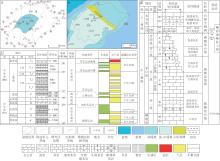
Fig.1
Regional geological setting map of the Sichuan Basin[20]"

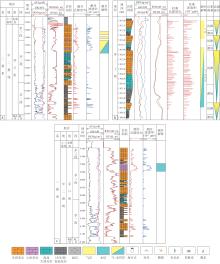
Fig.2
Distribution of porous bioclastic limestone reservoirs in the Mao 2 Member, central Sichuan Basin"


Fig.3
Types and characteristics of pores in bioclastic limestones in the Mao 2 Member, central Sichuan Basin"

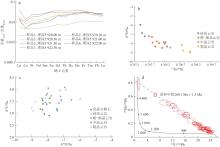
Fig.4
Geochemical characteristics of calcite cements in the middle-upper part of bioclastic limestones within the shoaling cycle in the Maokou Formation,central Sichuan Basin"


Fig.5
Assessment results of the physical properties of bioclastic limestone reservoirs in the Mao 2 Member, central Sichuan Basin"

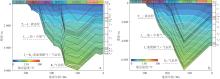
Fig.6
Profiles showing the tectonic and burial histories of the Permian strata, central Sichuan Basin"


Fig 7
Pores and their bitumen-filling characteristics in bioclastic limestones in the Mao 2 Member, central Sichuan Basin"

Table 1
Thermodynamic calculation results of anomalous overpressure in the shoals of the Maokou Formation, central Sichuan Basin"
成岩系统 封闭起始温度/℃ | 温度/℃ | 对应地层埋深/m | 计算地层压力/MPa(压力系数1.5) | 实测地层压力/MPa | 热力学计算异常 超压/MPa |
|---|---|---|---|---|---|
| 35 | 35 a | 400 | 6.00 | — | 6.00 |
| 50 | 1 000 | 15.00 | — | 20.80 | |
| 75 | 2 000 | 30.00 | — | 57.35 | |
| 100 | 3 000 | 45.00 | — | 93.90 | |
| 125 | 4 000 | 66.00 | 72.90 | 140.40 | |
| 150 | 5 000 | 75.00 | 90.66 | 186.90 | |
| 175 | 6 000 | 90.00 | 108.21 | 239.25 | |
| 200 | 7 000 | 105.00 | — | 291.60 | |
| 50 | 50 a | 1 000 | 15.00 | — | 15.00 |
| 75 | 2 000 | 30.00 | — | 45.20 | |
| 100 | 3 000 | 45.00 | — | 84.50 | |
| 125 | 4 000 | 66.00 | 72.90 | 130.55 | |
| 150 | 5 000 | 75.00 | 90.66 | 176.60 | |
| 175 | 6 000 | 90.00 | 108.21 | 228.40 | |
| 200 | 7 000 | 105.00 | — | 280.20 | |
| 75 | 75 a | 2 000 | 30.00 | — | 30.00 |
| 100 | 3 000 | 45.00 | — | 60.50 | |
| 125 | 4 000 | 60.00 | 72.90 | 105.35 | |
| 150 | 5 000 | 75.00 | 90.66 | 150.20 | |
| 175 | 6 000 | 90.00 | 108.21 | 200.75 | |
| 200 | 7 000 | 105.00 | — | 251.30 |

Fig.8
Comparison of thermodynamic calculation results of and a profile for anomalous overpressure in the Permian strata, central Sichuan Basin"

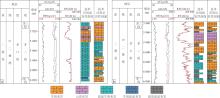
Fig.9
Profiles showing the well-tied seismic identification of bioclastic shoals in the Mao 2 Member, Sichuan Basin"


Fig.10
Planar distribution map of bioclastic shoals and porous limestone reservoirs in the Mao 2 Member, Sichuan Basin"

| [1] | 庞雄奇, 林会喜, 郑定业, 等. 中国深层和超深层碳酸盐岩油气藏形成分布的基本特征与动力机制及发展方向[J]. 地质力学学报, 2020, 26(5): 673-695. |
| PANG Xiongqi, LIN Huixi, ZHENG Dingye, et al. Basic characteristics, dynamic mechanism and development direction of the formation and distribution of deep and ultra-deep carbonate reservoirs in China[J]. Journal of Geomechanics, 2020, 26(5): 673-695. | |
| [2] | 贾承造, 张水昌. 中国海相超深层油气形成[J]. 地质学报, 2023, 97(9): 2775-2801. |
| JIA Chengzao, ZHANG Shuichang. The formation of marine ultra-deep petroleum in China[J]. Acta Geologica Sinica, 2023, 97(9): 2775-2801. | |
| [3] | 杜金虎, 邹才能, 徐春春, 等. 川中古隆起龙王庙组特大型气田战略发现与理论技术创新[J]. 石油勘探与开发, 2014, 41(3): 268-277. |
| DU Jinhu, ZOU Caineng, XU Chunchun, et al. Theoretical and technical innovations in strategic discovery of a giant gas field in Cambrian Longwangmiao Formation of central Sichuan paleo-uplift, Sichuan Basin[J]. Petroleum Exploration and Development, 2014, 41(3): 268-277. | |
| [4] | 马永生, 蔡勋育, 云露, 等. 塔里木盆地顺北超深层碳酸盐岩油气田勘探开发实践与理论技术进展[J]. 石油勘探与开发, 2022, 49(1): 1-17. |
| MA Yongsheng, CAI Xunyu, YUN Lu, et al. Practice and theoretical and technical progress in exploration and development of Shunbei ultra-deep carbonate oil and gas field, Tarim Basin, NW China[J]. Petroleum Exploration and Development, 2022, 49(1): 1-17. | |
| [5] | 杨雨, 姜鹏飞, 张本健, 等. 龙门山山前复杂构造带双鱼石构造栖霞组超深层整装大气田的形成[J]. 天然气工业, 2022, 42(3): 1-11. |
| YANG Yu, JIANG Pengfei, ZHANG Benjian, et al. Formation of ultra-deep integrated giant gas field in Qixia Formation of Shuangyushi structure in the foothill complex structural belt of Longmen Mountain[J]. Natural Gas Industry, 2022, 42(3): 1-11. | |
| [6] | 韩剑发, 王彭, 朱光有, 等. 塔里木盆地超深层千吨井油气地质与高效区分布规律[J]. 天然气地球科学, 2023, 34(5): 735-748. |
| HAN Jianfa, WANG Peng, ZHU Guangyou, et al. Petroleum geology and distribution law of high efficiency areas in ultra-deep kiloton wells in Tarim Basin[J]. Natural Gas Geoscience, 2023, 34(5): 735-748. | |
| [7] | 王大鹏, 白国平, 徐艳, 等. 全球古生界海相碳酸盐岩大油气田特征及油气分布[J]. 古地理学报, 2016, 18(1): 80-92. |
| WANG Dapeng, BAI Guoping, XU Yan, et al. Characteristics and hydrocarbon distribution of the Paleozoic giant marine carbonate rock oil-gas fields in the world[J]. Journal of Palaeogeography (Chinese Edition), 2016, 18(1): 80-92. | |
| [8] | 余宽宏, 金振奎, 潘怡, 等. 全球显生宇碳酸盐岩储层及油气资源量分布特征[J]. 天然气地球科学, 2012, 23(4): 748-755. |
| YU Kuanhong, JIN Zhenkui, PAN Yi, et al. Phanerozoic carbonate reservoir characteristics and petroleum resource distribution in the world[J]. Natural Gas Geoscience, 2012, 23(4): 748-755. | |
| [9] | 沈安江, 赵文智, 胡安平, 等. 海相碳酸盐岩储集层发育主控因素[J]. 石油勘探与开发, 2015, 42(5): 545-554. |
| SHEN Anjiang, ZHAO Wenzhi, HU Anping, et al. Major factors controlling the development of marine carbonate reservoirs[J]. Petroleum Exploration and Development, 2015, 42(5): 545-554. | |
| [10] | 郑兴平, 沈安江, 寿建峰, 等. 埋藏岩溶涧穴垮塌深度定量图版及其在碳酸盐岩缝洞型储层地质评价预测中的意义[J]. 海相油气地质, 2009, 14(4): 55-59. |
| ZHENG Xingping, SHEN Anjiang, SHOU Jianfeng, et al. A quantitative plate of collapsed karst cave depth and its application in geological prediction and evaluation of carbonate reservoir[J]. Marine Origin Petroleum Geology, 2009, 14(4): 55-59. | |
| [11] | 何登发, 李德生, 张国伟, 等. 四川多旋回叠合盆地的形成与演化[J]. 地质科学, 2011, 46(3): 589-606. |
| HE Dengfa, LI Desheng, ZHANG Guowei, et al. Formation and evolution of multi-cycle superposed Sichuan Basin, China[J]. Chinese Journal of Geology, 2011, 46(3): 589-606. | |
| [12] | 彭金宁, 杜崇娇, 李龙龙, 等. 四川盆地中二叠世岩相古地理及其油气地质意义[J]. 石油实验地质, 2023, 45(1): 49-59. |
| PENG Jinning, DU Chongjiao, LI Longlong, et al. Lithofacies palaeogeography of Middle Permian in the Sichuan Basin and its petroleum geological significance[J]. Petroleum Geology and Experiment, 2023, 45(1): 49-59. | |
| [13] | 杨帅, 陈安清, 张玺华, 等. 四川盆地二叠纪栖霞—茅口期古地理格局转换及勘探启示[J]. 沉积学报, 2021, 39(6): 1466-1477. |
| YANG Shuai, CHEN Anqing, ZHANG Xihua, et al. Paleogeographic transition of the Permian Chihsia-Maokou period in the Sichuan Basin and indications for oil-gas exploration[J]. Acta Sedimentologica Sinica, 2021, 39(6): 1466-1477. | |
| [14] | 文龙, 张本健, 陈骁, 等. 四川盆地二叠、三叠系构造—沉积特征及有利勘探区带[J]. 天然气勘探与开发, 2023, 46(4): 1-12. |
| WEN Long, ZHANG Benjian, CHEN Xiao, et al. Permian and Triassic in Sichuan Basin: tectono-sedimentary characteristics and favorable exploration belts[J]. Natural Gas Exploration and Development, 2023, 46(4): 1-12. | |
| [15] | 冯许魁, 杨雨, 朱亚东, 等. 四川盆地二叠纪礁滩体发育特征、分布模式及有利勘探区带[J]. 沉积与特提斯地质, 2024, 44(2): 278-294. |
| FENG Xukui, YANG Yu, ZHU Yadong, et al. Development characteristics, distribution patterns and favorable exploration zones of Permian reef shoals in Sichuan Basin[J]. Sedimentary Geology and Tethyan Geology, 2024, 44(2): 278-294. | |
| [16] | 武赛军, 魏国齐, 杨威, 等. 四川盆地关键构造变革期不整合特征及其油气地质意义[J]. 科技导报, 2015, 33(10): 93-100. |
| WU Saijun, WEI Guoqi, YANG Wei, et al. Unconformity characteristics and its petroleum geological implication in key tectonic change stages, Sichuan Basin[J]. Science & Technology Review, 2015, 33(10): 93-100. | |
| [17] | 武赛军, 魏国齐, 杨威, 等. 四川盆地桐湾运动及其油气地质意义[J]. 天然气地球科学, 2016, 27(1): 60-70. |
| WU Saijun, WEI Guoqi, YANG Wei, et al. Tongwan movement and its geologic significances in Sichuan Basin[J]. Natural Gas Geoscience, 2016, 27(1): 60-70. | |
| [18] | 汪泽成, 姜华, 王铜山, 等. 四川盆地桐湾期古地貌特征及成藏意义[J]. 石油勘探与开发, 2014, 41(3): 305-312. |
| WANG Zecheng, JIANG Hua, WANG Tongshan, et al. Paleo-geomorphology formed during Tongwan tectonization in Sichuan Basin and its significance for hydrocarbon accumulation[J]. Petroleum Exploration and Development, 2014, 41(3): 305-312. | |
| [19] | 白晓亮, 郗诚, 和源, 等. 四川盆地中二叠统栖霞组层序地层特征及沉积演化模式[J]. 东北石油大学学报, 2020, 44(6): 33-42. |
| BAI Xiaoliang, XI Cheng, HE Yuan, et al. Sequence stratigraphic characteristics and sedimentary evolution model of the Middle Permian Qixia Formation in the Sichuan Basin[J]. Journal of Northeast Petroleum University, 2020, 44(6): 33-42. | |
| [20] | 文龙, 罗冰, 张本健, 等. 深层灰岩孔隙发育与保持机理——以四川盆地中部上二叠统长兴组为例[J]. 石油勘探与开发, 2025, 52(2): 292-305. |
| WEN Long, LUO Bing, ZHANG Benjian, et al. Formation and preservation of pores in deep limestone reservoirs: A case study of Upper Permian Changxing Formation, central Sichuan Basin, SW China[J]. Petroleum Exploration and Development, 2025, 52(2): 292-305. | |
| [21] | 张亚, 陈双玲, 张晓丽, 等. 四川盆地茅口组岩溶古地貌刻画及油气勘探意义[J]. 岩性油气藏, 2020, 32(3): 44-55. |
| ZHANG Ya, CHEN Shuangling, ZHANG Xiaoli, et al. Restoration of paleokarst geomorphology of Lower Permian Maokou Formation and its petroleum exploration implication in Sichuan Basin[J]. Lithologic Reservoirs, 2020, 32(3): 44-55. | |
| [22] | 何金海, 李国蓉, 彭博. 碳酸盐岩地震地貌学研究与应用——以四川盆地东北部上二叠统长兴组为例[J]. 海相油气地质, 2014, 19(4): 45-49. |
| HE Jinhai, LI Guorong, PENG Bo. Research and application of seismic geomorphology: A case of Changxing carbonate depositional system in the northeast of Sichuan Basin[J]. Marine Origin Petroleum Geology, 2014, 19(4): 45-49. | |
| [23] | 梁东星, 胡素云, 谷志东, 等. 四川盆地开江古隆起形成演化及其对天然气成藏的控制作用[J]. 天然气工业, 2015, 35(9): 35-41. |
| LIANG Dongxing, HU Suyun, GU Zhidong, et al. Formation and evolution process of Kaijiang paleohigh in the Sichuan Basin and its controlling effects on gas pool formation[J]. Natural Gas Industry, 2015, 35(9): 35-41. | |
| [24] | 韩应钧. 龙门山中南段地区印支运动和天然气勘探目标研究[J]. 天然气地球科学, 2002, 13(5/6): 66-73. |
| HAN Yingjun. Study on Indochinese movement and natural gas exploration targets in the south-central section of Longmen mountains[J]. Natural Gas Geoscience, 2002, 13(5/6): 66-73. | |
| [25] | 陈蟒蛟, 谭开俊, 文龙, 等. 四川盆地中二叠统天然气成藏特征及巨大勘探前景[J]. 地学前缘, 2023, 30(1): 11-19. |
| CHEN Mangjiao, TAN Kaijun, WEN Long, et al. Natural gas accumulation characteristics and great exploration potential of the Middle Permian in the Sichuan Basin[J]. Earth Science Frontiers, 2023, 30(1): 11-19. | |
| [26] | 汪泽成, 江青春, 黄士鹏, 等. 四川盆地中二叠统茅口组天然气大面积成藏的地质条件[J]. 天然气工业, 2018, 38(1): 30-38. |
| WANG Zecheng, JIANG Qingchun, HUANG Shipeng, et al. Geological conditions for massive accumulation of natural gas in the Mid-Permian Maokou Fm of the Sichuan Basin[J]. Natural Gas Industry, 2018, 38(1): 30-38. | |
| [27] | 白晓亮, 陈燕萍, 彭思桥, 等. 川中高磨地区中二叠统栖霞组天然气成藏条件及过程[J]. 天然气勘探与开发, 2023, 46(4): 80-90. |
| BAI Xiaoliang, CHEN Yanping, PENG Siqiao, et al. Geological conditions and process of gas accumulation in Middle Permian Qixia Formation, Gaoshiti-Moxi area, central Sichuan Basin[J]. Natural Gas Exploration and Development, 2023, 46(4): 80-90. | |
| [28] | 赵文智, 沈安江, 乔占峰, 等. 中国碳酸盐岩沉积储层理论进展与海相大油气田发现[J]. 中国石油勘探, 2022, 27(4): 1-15. |
| ZHAO Wenzhi, SHEN Anjiang, QIAO Zhanfeng, et al. Theoretical progress in carbonate reservoir and discovery of large marine oil and gas fields in China[J]. China Petroleum Exploration, 2022, 27(4): 1-15. | |
| [29] | 沈安江, 陈娅娜, 蒙绍兴, 等. 中国海相碳酸盐岩储层研究进展及油气勘探意义[J]. 海相油气地质, 2019, 24(4): 1-14. |
| SHEN Anjiang, CHEN Yana, MENG Shaoxing, et al. The research progress of marine carbonate reservoirs in China and its significance for oil and gas exploration[J]. Marine Origin Petroleum Geology, 2019, 24(4): 1-14. | |
| [30] | 赵文智, 沈安江, 胡素云, 等. 中国碳酸盐岩储集层大型化发育的地质条件与分布特征[J]. 石油勘探与开发, 2012, 39(1): 1-12. |
| ZHAO Wenzhi, SHEN Anjiang, HU Suyun, et al. Geological conditions and distributional features of large-scale carbonate reservoirs onshore China[J]. Petroleum Exploration and Development, 2012, 39(1): 1-12. | |
| [31] | 肖钦仁, 袁海锋, 谌辰, 等. 川中北部地区茅口组白云岩成因分析——来自岩石学、原位地球化学及年代学证据[J]. 天然气地球科学, 2024, 35(7): 1160-1186. |
| XIAO Qinren, YUAN Haifeng, CHEN Chen, et al. Analysis of dolomite genesis in the Maokou Formation, northern slope area of central Sichuan, China: Petrologic, in situ geochemical, and chronological evidence[J]. Natural Gas Geoscience, 2024, 35(7): 1160-1186. | |
| [32] | 王帅, 王甘露, 秦政, 等. 黔北地区茅口组古岩溶储层 稀土元素地球化学特征[J]. 天然气地球科学, 2019, 30(1): 143-150. |
| WANG Shuai, WANG Ganlu, QIN Zheng, et al. Geochemical characteristics of rare earth elements in karst reservoirs in Maokou Formation, northern Guizhou Province[J]. Natural Gas Geoscience, 2019, 30(1): 143-150. | |
| [33] | 王良军, 李红, 曾韬, 等. 四川盆地东部茅口组白云岩成因: 来自岩石学、矿物学和地球化学的证据[J]. 古地理学报, 2022, 24(5): 989-1016. |
| WANG Liangjun, LI Hong, ZENG Tao, et al. Origins of dolostones of the Maokou Formation in eastern Sichuan Basin: Evidence from lithology, mineralogy, and geochemistry[J]. Journal of Palaeogeography(Chinese Edition), 2022, 24(5): 989-1016. | |
| [34] | 丁婷, 袁苗, 刘成林, 等. 四川盆地东部地区早中三叠世蒸发岩的锶同位素特征及其地质意义[J]. 岩石矿物学杂志, 2023, 42(6): 868-877. |
| DING Ting, YUAN Miao, LIU Chenglin, et al. Characteristics of strontium isotope and the significance for the evaporites of Early and Middle Triassic in the eastern region of Sichuan Basin[J]. Acta Petrologica et Mineralogica, 2023, 42(6): 868-877. | |
| [35] | 张军涛, 武重阳, 杨佳奇, 等. 富硅质碳酸盐岩储层地球化学特征及成因——以四川盆地泰来地区茅口组为例[J]. 断块油气田, 2023, 30(5): 790-798, 807. |
| ZHANG Juntao, WU Zhongyang, YANG Jiaqi, et al. Geochemical characteristics and origin of silicon-rich carbonate reservoirs: A case study of Maokou Formation in Tailai area, Sichuan Basin[J]. Fault-Block Oil and Gas Field, 2023, 30(5): 790-798, 807. | |
| [36] | 王珏博, 谷一凡, 陶艳忠, 等. 川中地区茅口组两期流体叠合控制下的白云石化模式[J]. 沉积学报, 2016, 34(2): 236-249. |
| WANG Juebo, GU Yifan, TAO Yanzhong, et al. The model of dolomitization jointly controlled by two-episode fluids in Maokou Formation in central Sichuan Basin[J]. Acta Sedimentologica Sinica, 2016, 34(2): 236-249. | |
| [37] | SHEN Chen, YUAN Haifeng, KUANG Mingzhi, et al. Sources of natural gas in the Middle-Permian carbonate succession in the central-northern Sichuan Basin, Southwest China[J]. Journal of Asian Earth Sciences, 2024, 268: 106164. |
| [38] | 廖芸, 张建勇, 鲁鹏达, 等. 川中北斜坡中二叠统茅口组多期流体活动与成藏过程[J]. 天然气地球科学, 2023, 34(11): 1927-1940. |
| LIAO Yun, ZHANG Jianyong, LU Pengda, et al. Multi-stage fluid activity and accumulation process of the Middle Permian Maokou Formation in the northern slope of central Sichuan Basin[J]. Natural Gas Geoscience, 2023, 34(11): 1927-1940. | |
| [39] | BARKER C. Aquathermal pressuring—role of temperature in development of abnormal-pressure zones: geological notes[J]. AAPG Bulletin, 1972, 56(10): 2068-2071. |
| [40] | REDLICH O, KWONG J N S. On the thermodynamics of solutions; an equation of state; fugacities of gaseous solutions[J]. Chemical Reviews, 1949, 44(1): 233-244. |
| [41] | SOAVE G. Equilibrium constants from a modified Redlich-Kwong equation of state[J]. Chemical Engineering Science, 1972, 27(6): 1197-1203. |
| [42] | DE SANTIS R, BREEDVELD G J F, PRAUSNITZ J M. Thermodynamic properties of aqueous gas mixtures at advanced pressures[J]. Industrial & Engineering Chemistry Process Design and Development, 1974, 13(4): 374-377. |
| [43] | KERRICK D M, JACOBS G K. A modified Redlich-Kwong equation for H2O, CO2, and H2O-CO2 mixtures at elevated pressures and temperatures[J]. American Journal of Science, 1981, 281(6): 735-767. |
| [44] | DRIESNER T. The system H2O-NaCl. Part Ⅱ: Correlations for molar volume, enthalpy, and isobaric heat capacity from 0 to 1000 ℃, 1 to 5 000 bar, and 0 to 1 XNaCl [J]. Geochimica et Cosmochimica Acta, 2007, 71(20): 4902-4919. |
| [45] | MAO Shide, DUAN Zhenhao. The P,V,T,x properties of binary aqueous chloride solutions up to T=573 K and 100 MPa[J]. The Journal of Chemical Thermodynamics, 2008, 40(7): 1046-1063. |
| [46] | MAO Shide, DUAN Zhenhao. The P,V,T,x properties of binary aqueous chloride solutions up to T=573 K and 100 MPa[J]. The Journal of Chemical Thermodynamics, 2008, 40(7): 1046-1063. |
| [47] | 熊鹰, 谭秀成, 伍坤宇, 等. 碳酸盐岩储集层成岩作用中 “孔隙尺寸控制沉淀” 研究进展、地质意义及鄂尔多斯盆地实例[J]. 古地理学报, 2020, 22(4): 744-760. |
| XIONG Ying, TAN Xiucheng, WU Kunyu, et al. Research advances, geological implication and application in Ordos Basin of the “pore-size controlled precipitation” in diagenesis of carbonate rock reservoir[J]. Journal of Palaeogeography(Chinese Edition), 2020, 22(4): 744-760. | |
| [48] | 伍坤宇, 熊鹰, 谭秀成, 等. 储层孔隙系统 “水—岩” 反应结晶动力学研究进展[J]. 沉积学报, 2022, 40(4): 996-1009. |
| WU Kunyu, XIONG Ying, TAN Xiucheng, et al. Study of the crystallization kinetics for “water-rock” interactions in the reservoir pore-system: An overview[J]. Acta Sedimentologica Sinica, 2022, 40(4): 996-1009. | |
| [49] | 谭秀成, 罗冰, 李卓沛, 等. 川中地区磨溪气田嘉二段砂屑云岩储集层成因[J]. 石油勘探与开发, 2011, 38(3): 268-274. |
| TAN Xiucheng, LUO Bing, LI Zhuopei, et al. Jia-2 member doloarenite reservoir in the Moxi gas field, middle Sichuan Basin[J]. Petroleum Exploration and Development, 2011, 38(3): 268-274. | |
| [50] | WANG Xiaolin, HU Wenxuan, QIU Ye, et al. Fluid inclusion evidence for extreme overpressure induced by gas generation in sedimentary basins[J]. Geology, 2022, 50(7): 765-770. |
| [51] | BRADLEY J S, POWLEY D E. Pressure compartments in sedimentary basins: A review[M]//ORTOLEVA P J. Basin Compartments and Seals. Tulsa: American Association of Petroleum Geologists, 1994: 3-26. |
| [52] | 周兴熙. 封存箱辨义及主要类型[J]. 石油实验地质, 2006, 28(5): 424-429. |
| ZHOU Xingxi. Discuss on meaning and mostly type of compartment[J]. Petroleum Geology and Experiment, 2006, 28(5): 424-429. | |
| [53] | LIU Yifeng, QIU Nansheng, XIE Zengye, et al. Overpressure compartments in the central paleo-uplift, Sichuan Basin, southwest China[J]. AAPG Bulletin, 2016, 100(5): 867-888. |
| [54] | 李伟, 谢武仁, 王雪珂. 四川盆地中西部区域性超压特征与天然气大规模聚集的关系[J]. 天然气工业, 2023, 43(12): 1-13. |
| LI Wei, XIE Wuren, WANG Xueke. Relationship between regional overpressure characteristics and large-scale natural gas accumulation in the central and western Sichuan Basin[J]. Natural Gas Industry, 2023, 43(12): 1-13. | |
| [55] | WANG Qiaochu, CHEN Dongxia, WANG Fuwei, et al. Origin and distribution of an under-pressured tight sandstone reservoir: The Shaximiao Formation, Central Sichuan Basin[J]. Marine and Petroleum Geology, 2021, 132: 105208. |
| [56] | 刘一锋, 邱楠生, 谢增业, 等. 川中古隆起寒武系超压形成与保存[J]. 天然气地球科学, 2016, 27(8): 1439-1446. |
| LIU Yifeng, QIU Nansheng, XIE Zengye, et al. The formation and preservation of overpressure in old formations: Taking the Cambrian in the central of Sichuan Basin as an instance[J]. Natural Gas Geoscience, 2016, 27(8): 1439-1446. | |
| [57] | 刘一锋, 邱楠生, 谢增业, 等. 川中古隆起震旦系—下寒武统温压演化及其对天然气成藏的影响[J]. 沉积学报, 2014, 32(3): 601-610. |
| LIU Yifeng, QIU Nansheng, XIE Zengye, et al. Characteristics and effects on gas accumulation of the Sinian-Lower Cambrian temperature-pressure field in the central paleo-uplift, Sichuan Basin[J]. Acta Sedimentologica Sinica, 2014, 32(3): 601-610. | |
| [58] | 苏成鹏, 李蓉, 石国山, 等. 四川盆地及周缘中二叠统茅口组一段储集层特征及对油气勘探的启示[J]. 石油勘探与开发, 2021, 48(6): 1150-1161. |
| SU Chengpeng, LI Rong, SHI Guoshan, et al. Reservoir characteristics of the first member of Middle Permian Maokou Formation in Sichuan Basin and its periphery and inspirations to petroleum exploration, SW China[J]. Petroleum Exploration and Development, 2021, 48(6): 1150-1161. | |
| [59] | 田雨, 张兴阳, 何幼斌, 等. 四川盆地晚二叠世吴家坪期岩相古地理[J]. 古地理学报, 2010, 12(2): 164-176. |
| TIAN Yu, ZHANG Xingyang, HE Youbin, et al. Lithofacies palaeogeography of the Late Permian Wujiaping age of Sichuan Basin[J]. Journal of Palaeogeography(Chinese Edition), 2010, 12(2): 164-176. | |
| [60] | 张守春, 张林晔, 王宇蓉, 等. 开放、封闭两种体系对比模拟确定深层烃源岩成烃机制——以东营凹陷沙四段烃源岩为例[J]. 天然气工业, 2010, 30(9): 15-18. |
| ZHANG Shouchun, ZHANG Linye, WANG Yurong, et al. A study of hydrocarbon generation mechanism of deep source rocks based on the comparison of experimental simulations in open and closed systems: A case study from the Es4 member in the Dongying Sag[J]. Natural Gas Industry, 2010, 30(9): 15-18. | |
| [61] | HUNT J M. Generation and migration of petroleum from abnormally pressured fluid compartments[J]. AAPG Bulletin, 1990, 74(1): 1-12. |
| [62] | POWLEY D E. Pressures and hydrogeology in petroleum basins[J]. Earth-Science Reviews, 1990, 29(1/4): 215-226. |
| Viewed | ||||||
|
Full text |
|
|||||
|
Abstract |
|
|||||
