

石油与天然气地质 ›› 2025, Vol. 46 ›› Issue (5): 1646-1663.doi: 10.11743/ogg20250516
• 油气地质 • 上一篇
赵俊威1( ), 周健2, 邹俭巍3, 孙海航4, 郑晓丽1, 张明晨1
收稿日期:2024-08-07
修回日期:2025-06-06
出版日期:2025-10-30
发布日期:2025-10-29
第一作者简介:赵俊威(1988—),男,博士、副教授、硕士研究生导师,油气藏开发地质、储层沉积学、油藏建模。E-mail:zhaojunwei0201@126.com。
基金项目:
Junwei ZHAO1(), Jian ZHOU2, Jianwei ZOU3, Haihang SUN4, Xiaoli ZHENG1, Mingchen ZHANG1
Received:2024-08-07
Revised:2025-06-06
Online:2025-10-30
Published:2025-10-29
摘要:
河口坝砂体是三角洲沉积体系的重要油气储层,受限于露头、现代沉积及地下储层资料维度、尺度及分辨率,其内部沉积演化过程及构型特征的系统表征一直面临挑战。利用沉积数值模拟技术与现代沉积相结合的方法,分析了典型河口坝的沉积演化过程,建立了河口坝内部构型模式,并深入探讨了发育区的水动力数学模型与机制。研究结果表明:①典型河口坝的沉积演化过程可划分为垂向加积期、前积期、侧向加积期、稳定期及复合河口坝形成期,不同演化阶段的河口坝形态特征存在差异,依次呈现小型长舌状、近菱形状、三角状或“V”状、心滩状和长椭圆状等形态。②河口坝沉积演化过程受水动力变化特征控制,在射流、盆底摩擦力及水体浮力的综合作用下,形成了不同的加积方式与河口坝平面形态。③水动力条件的差异还导致河口坝内部构型模式的分异,其内部加积方式可分为垂积式、前积式及侧积式,单一河口坝不同部位内部构型发育模式具有空间分异性,中心部位以垂向加积为主,前端表现为前积特征,侧翼则呈现侧向披覆及侧向加积特征。本研究为河控三角洲内部河口坝内部构型的精细表征提供了理论依据,对地下河口坝储层构型解析具有一定指导意义。
中图分类号:

图1
河口坝沉积数值模拟的水深变化及边界分布模型(X和Y分别代表模型的横坐标和纵坐标。)"
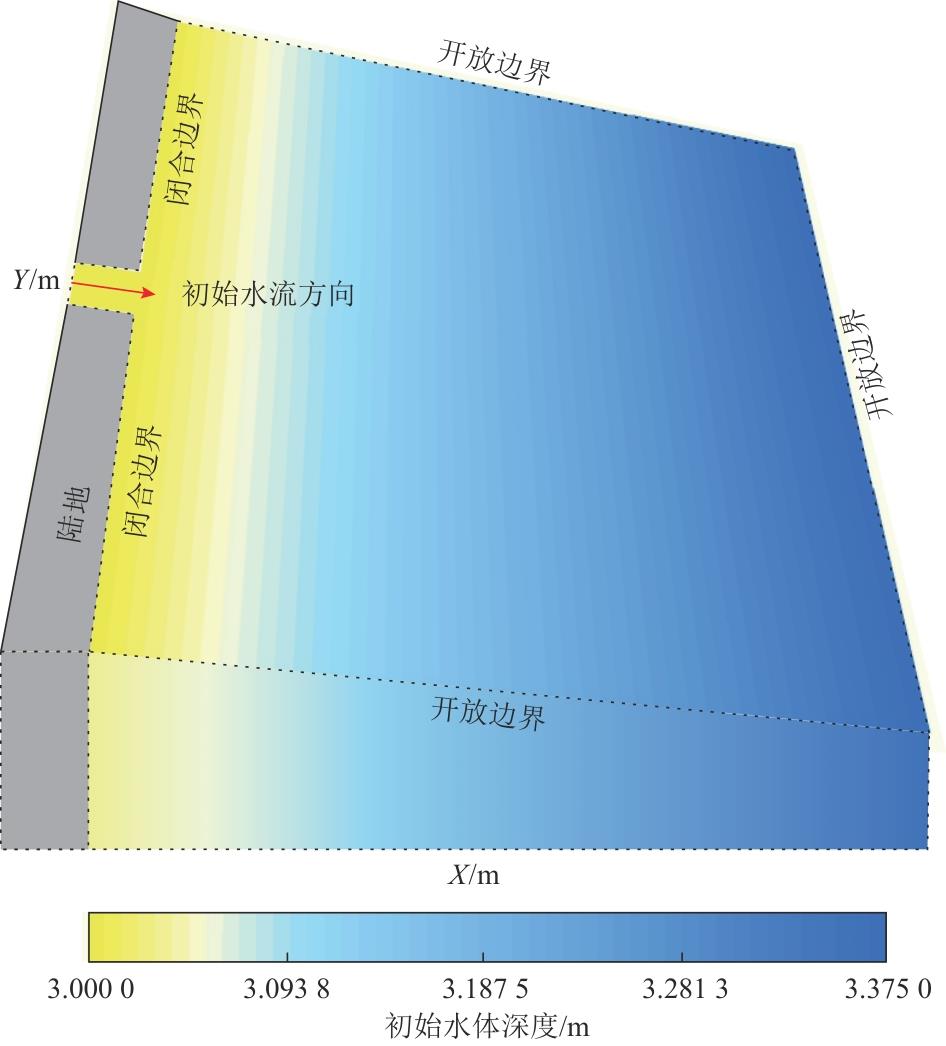

图2
典型现代沉积边界条件参考区a. 加拿大南部Mossy三角洲,粒径中值为0.125 mm,砂/泥比为10∶2 ~ 10∶1;b. 加拿大东部Goose三角洲,粒径中值为0.300 ~ 0.400 mm,砂/泥比为10∶2 ~ 10∶1"

表1
河口坝沉积数值模拟的关键边界条件"
| 边界参数 | 参数值 |
|---|---|
| 开放边界水位 | 0 m |
| 沉积物厚度变化记录下限 | 0.1 m |
| 单次模拟时间步长 | 0.2 min |
| 地貌加速因子 | 96 |
| 地貌形态更新前的时间间隔 | 720 min |
| 粗糙度 | 45 m1/2s-1 |
| 背景水平涡流黏度和扩散率 | 0.000 1 m2/s |
| 砂质沉积物干容量 | 1 650 kg/m3 |
| 泥质沉积物干容量 | 500 kg/m3 |
| 黏性沉积物侵蚀临界剪切应力 | 1 N/m2 |
| 黏性沉积物沉积临界剪切应力 | 1 000 N/m2 |

图3
沉积数值模拟中河口坝垂向加积期沉积演化特征及水动力定量分布a. 水体深度平面分布;b. 沉积物厚度平面分布;c. 水体流速平面分布;d. 沉积演化横剖面;e. 沉积演化纵剖面"


图4
沉积数值模拟中河口坝向前进积期沉积演化特征及水动力定量分布a. 水体深度平面分布;b. 沉积物厚度平面分布;c. 水体流速平面分布;d. 沉积演化纵剖面"


图5
美国墨西哥湾Atchafalaya三角洲河口坝沉积演化过程(修改自文献[21,36])a. 1984年,发育局部可见的舌状坝;b. 1986年,可见舌状坝相前进积;c. 1987年,可见舌状坝向前进积;d. 1989年,近菱形状坝,坝体明显增宽;e. 1994年,坝体明显增宽;f. 1999年,分流河道发生小规模侧积;g. 2004年,海平面上升导致加积方式可能发生变化;h. 2006年,海平面上升导致加积方式可能发生变化;i. 2007年,单一河口坝趋于稳定;j. 2011年,“V”状河口坝;k. 2015年,不规则形态的复合河口坝;l. 2016年,复合河口坝内部分流成因及决口成因的分流河道"


图6
沉积数值模拟中河口坝侧向加积期沉积演化特征及水动力定量分布a—c. 沉积厚度平面分布,模拟步长分别为250,500和600;d—f. 水体流速平面分布,模拟步长分别为250,500和600;g. 沉积演化横剖面"


图7
沉积数值模拟中河口坝趋于稳定期沉积演化特征及水动力定量分布a—c. 沉积厚度平面分布,模拟步长分别为650,750和900;d—f. 水体流速平面分布,模拟步长分别为650,750和900;g—i. 水体深度平面分布,模拟步长分别为650,750和900;j—m. 沉积演化横剖面,分别为图7c中所示剖面A—剖面D"


图8
江西省北部鄱阳湖河口坝现代沉积a. 三角状河口坝与舌状河口坝;b. 三角状河口坝;c. “V”状河口坝;d. 长椭圆状河口坝;e. 长椭圆状河口坝;f. 复合河口坝"


图9
沉积数值模拟中复合河口坝沉积演化特征及水动力定量分布a. 沉积物厚度平面分布;b. 水体流速平面分布;c. 水体深度平面分布;d. 沉积演化横剖面"


图10
沉积数值模拟中典型河口坝构型剖面特征示意图a. 舌状坝时期,加积阶段;b. 舌状坝长度增加,前积阶段;c. 三角状坝宽度增加,侧向披覆加积阶段;d. “V”状坝宽度增加,侧向加积阶段;e. 复合坝阶段;f. 舌状坝时期,加积阶段,横剖面A;g. 舌状坝时期,加积阶段,纵剖面B;h. 舌状坝长度增加,前积阶段,纵剖面C;i. 三角状坝,侧向披覆加积阶段,横剖面D;j. “V”状坝,侧向加积阶段,横剖面E;k. 复合坝阶段,横剖面F"

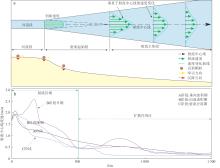
图11
射流中心线速度变化与沉积数值模拟中演化方式a.河口动力场及水动力运动模式;b.实验模拟不同阶段射流中心线速度变化特征"


图12
沉积数值模拟中不同坡度条件下河口坝内部沉积过程对比a.缓坡条件,坡降为1∶4 000;b. 坡度增大条件,坡降为1∶250"

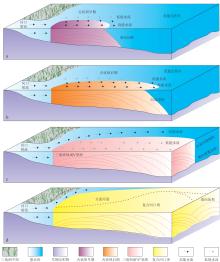
图13
基于沉积数值模拟及现代沉积的典型河口坝沉积演化与构型模式a. 垂向加积;b. 前积;c. 侧向披覆加积、分流河道侧积;d. 复合坝内部多种加积方式分区发育"

| [1] | 张昌民, 尹太举, 朱永进, 等. 浅水三角洲沉积模式[J]. 沉积学报, 2010, 28(5): 933-944. |
| ZHANG Changmin, YIN Taiju, ZHU Yongjin, et al. Shallow-water deltas and models[J]. Acta Sedimentologica Sinica, 2010, 28(5): 933-944. | |
| [2] | 于兴河, 李胜利, 李顺利. 三角洲沉积的结构—成因分类与编图方法[J]. 沉积学报, 2013, 31(5): 782-797. |
| YU Xinghe, LI Shengli, LI Shunli. Texture-genetic classifications and mapping methods for deltaic deposits[J]. Acta Sedimentologica Sinica, 2013, 31(5): 782-797. | |
| [3] | 吴胜和, 徐振华, 刘钊. 河控浅水三角洲沉积构型[J]. 古地理学报, 2019, 21(2): 202-215. |
| WU Shenghe, XU Zhenhua, LIU Zhao. Depositional architecture of fluvial-dominated shoal water delta[J]. Journal of Palaeogeography (Chinese Edition), 2019, 21(2): 202-215. | |
| [4] | 朱筱敏, 刘媛, 方庆, 等. 大型坳陷湖盆浅水三角洲形成条件和沉积模式: 以松辽盆地三肇凹陷扶余油层为例[J]. 地学前缘, 2012, 19(1): 89-99. |
| ZHU Xiaomin, LIU Yuan, FANG Qing, et al. Formation and sedimentary model of shallow delta in large-scale lake: Example from Cretaceous Quantou Formation in Sanzhao Sag, Songliao Basin[J]. Earth Science Frontiers, 2012, 19(1): 89-99. | |
| [5] | 刘宗堡, 李雪, 郑荣华, 等. 浅水三角洲前缘亚相储层沉积特征及沉积模式——以大庆长垣萨北油田北二区萨葡高油层为例[J]. 岩性油气藏, 2022, 34(1): 1-13. |
| LIU Zongbao, LI Xue, ZHENG Ronghua, et al. Sedimentary characteristics and models of shallow water delta front subfacies reservoirs: A case study of Sapugao oil layer in north-Ⅱ block of Sabei oilfield, Daqing placanticline[J]. Lithologic Reservoirs, 2022, 34(1): 1-13. | |
| [6] | 李志鹏, 林承焰, 董波, 等. 河控三角洲水下分流河道砂体内部建筑结构模式[J]. 石油学报, 2012, 33(1): 101-105. |
| LI Zhipeng, LIN Chengyan, DONG Bo, et al. An internal structure model of subaqueous distributary channel sands of the fluvial-dominated delta[J]. Acta Petrolei Sinica, 2012, 33(1): 101-105. | |
| [7] | 王旭影, 姜在兴, 岳大力, 等. 河控三角洲河口坝储层内部隔夹层分布样式研究[J]. 西南石油大学学报(自然科学版), 2017, 39(2): 9-17. |
| WANG Xuying, JIANG Zaixing, YUE Dali, et al. Patterns of barrier-interlayers in mouth bar of fluvial dominated delta reservoirs[J]. Journal of Southwest Petroleum University (Science & Technology Edition), 2017, 39(2): 9-17. | |
| [8] | 张友, 侯加根, 曹彦清, 等. 基于构型单元的储层质量分布模式——以胜坨油田二区沙二段8砂组厚层河口坝砂体为例[J]. 石油与天然气地质, 2015, 36(5): 862-872. |
| ZHANG You, HOU Jiagen, CAO Yanqing, et al. Distribution patterns of reservoir quality based on configuration unit of mouth bar sandbody: A case study from the 8th sand group of the 2nd member of the Shahejie Formation in Shenger Block of Shengtuo Oilfield, East China[J]. Oil & Gas Geology, 2015, 36(5): 862-872. | |
| [9] | 宋璠, 孔庆圆, 张学才, 等. 干旱型浅水三角洲沉积特征及沉积模式——以准噶尔盆地腹部永进地区侏罗系齐古组为例[J]. 石油与天然气地质, 2024, 45(5): 1275-1288. |
| SONG Fan, KONG Qingyuan, ZHANG Xuecai, et al. Sedimentary characteristics and models of shallow-water deltas in arid settings: A case study of the Jurassic Qigu Formation in the Yongjin area within the hinterland of the Junggar Basin[J]. Oil & Gas Geology, 2024, 45(5): 1275-1288. | |
| [10] | 范璎宁, 李胜利, 梁星如, 等. 浅水湖泊河口坝型三角洲前缘沉积特征与模式——以文安斜坡西5井区沙河街组三段为例[J]. 东北石油大学学报, 2017, 41(4): 43-52, 98. |
| FAN Yingning, LI Shengli, LIANG Xingru, et al. Sedimentary characteristics and pattern of mouth-bar delta front in the shallow lacustrine: A case of the 3rd member of Shahejie formation in Well X5 area in Wen’an slope of Baxian[J]. Journal of Northeast Petroleum University, 2017, 41(4): 43-52, 98. | |
| [11] | 印森林, 陈恭洋, 戴春明, 等. 河口坝内部储层构型及剩余油分布特征——以大港油田枣南断块长轴缓坡辫状河三角洲为例[J]. 石油与天然气地质, 2015, 36(4): 630-639. |
| YIN Senlin, CHEN Gongyang, DAI Chunming, et al. Reservoir architecture and remaining oil distribution in mouth bar—A case study on the braided delta of long-axis gentle slope in Zaonan fault block of Dagang Oilfield[J]. Oil & Gas Geology, 2015, 36(4): 630-639. | |
| [12] | 刘成龙, 王艳忠, 杨怀宇, 等. 高精度层序约束下三角洲-滩坝沉积体系精细刻画与岩性圈闭分布规律——以渤海湾盆地济阳坳陷东营凹陷南坡东段沙河街组四段上亚段为例[J]. 石油与天然气地质, 2024, 45(4): 1121-1141. |
| LIU Chenglong, WANG Yanzhong, YANG Huaiyu, et al. Fine characterization and lithologic trap distribution patterns of delta-beach bar sedimentary system under high-precision sequence constraints: A case study of the upper submember of the 4th member of the Shahejie Formation in the eastern segment of the southern gentle slope of Dongying Sag, Jiyang Depression, Bohai Bay Basin[J]. Oil & Gas Geology, 2024, 45(4): 1121-1141. | |
| [13] | 武毅, 李蔓, 崔洁. 河口坝厚层砂体内隔夹层对剩余油的控制作用[J]. 长江大学学报(自然科学版), 2011, 8(3): 58-60, 11, 10. |
| WU Yi, LI Man, CUI Jie. Effect of interbeds within the thick debouch bar sandbody on remaining oil distribution[J]. Journal of Yangtze University (Natural Science Edition), 2011, 8(3): 58-60, 11, 10. | |
| [14] | 国景星, 张勇. 梁11断块沙河街组二段河口坝砂岩体夹层特征[J]. 中国石油大学学报(自然科学版), 2010, 34(5): 7-11. |
| GUO Jingxing, ZHANG Yong. Interlayer characteristics of estuary dam reservoir of the 2nd member of Shahejie Formation in L11 fault block[J]. Journal of China University of Petroleum (Edition of Natural Science), 2010, 34(5): 7-11. | |
| [15] | 辛治国. 河控三角洲河口坝构型分析[J]. 地质论评, 2008, 54(4): 527-531, 581. |
| XIN Zhiguo. Architecture analyses of debouch bar of fluvial dominated Delta[J]. Geological Review, 2008, 54(4): 527-531, 581. | |
| [16] | LEONARDI N, CANESTRELLI A, SUN Tao, et al. Effect of tides on mouth bar morphology and hydrodynamics[J]. Journal of Geophysical Research: Oceans, 2013, 118(9): 4169-4183. |
| [17] | NARDIN W, FAGHERAZZI S. The effect of wind waves on the development of river mouth bars[J]. Geophysical Research Letters, 2012, 39(12): L12607. |
| [18] | NARDIN W, MARIOTTI G, EDMONDS D A, et al. Growth of river mouth bars in sheltered bays in the presence of frontal waves[J]. Journal of Geophysical Research: Earth Surface, 2013, 118(2): 872-886. |
| [19] | EDMONDS D A, SLINGERLAND R L. Mechanics of river mouth bar formation: Implications for the morphodynamics of delta distributary networks[J]. Journal of Geophysical Research: Earth Surface, 2007, 112(F2): F02034. |
| [20] | ESPOSITO C R, GEORGIOU I Y, KOLKER A S. Hydrodynamic and geomorphic controls on mouth bar evolution[J]. Geophysical Research Letters, 2013, 40(8): 1540-1545. |
| [21] | 张阳, 邱隆伟, 杨保良, 等. 河控三角洲河口坝沉积特征及其形成过程中受水位变化的影响[J]. 天然气地球科学, 2016, 27(5): 809-819. |
| ZHANG Yang, QIU Longwei, YANG Baoliang, et al. Research on sedimentary characteristics of river dominated delta mouth bar and influences affected by water level fluctuations during the formation[J]. Natural Gas Geoscience, 2016, 27(5): 809-819. | |
| [22] | 李少华, 胡晓玲, 王军, 等. 单一河口坝砂体规模的定量表征[J]. 岩性油气藏, 2015, 27(5): 1-5. |
| LI Shaohua, HU Xiaoling, WANG Jun, et al. Quantitative characterization of single mouth bar[J]. Lithologic Reservoirs, 2015, 27(5): 1-5. | |
| [23] | 朱金起, 杨朝强, 杨燕, 等. 海上稀疏井网油田储层连通性研究——以北部湾盆地涠西南凹陷A油田涠三段为例[J]. 石油实验地质, 2025, 47(3): 680-692. |
| ZHU Jinqi, YANG Zhaoqiang, YANG Yan, et al. Reservoir connectivity of offshore oilfields with a sparse well pattern: A case study of the third member of Weizhou Formation of oilfield A in Weixinan Sag, Beibuwan Basin[J]. Oil & Gas Geology, 2025, 47(3): 680-692. | |
| [24] | 李想, 丁雅洁, 李俊飞, 等. 前陆盆地系统中隆后盆地沉积特征——以准噶尔盆地腹部侏罗系三工河组为例[J]. 石油实验地质, 2024, 46(6): 1253-1264. |
| LI Xiang, DING Yajie, LI Junfei, et al. Sedimentary characteristics of post-uplift basins in foreland basin system: A case study of Jurassic Sangonghe Formation in hinterland of Junggar Basin[J]. Oil & Gas Geology, 2024, 46(6): 1253-1264. | |
| [25] | 张春生, 刘忠保, 施冬, 等. 三角洲分流河道及河口坝形成过程的物理模拟[J]. 地学前缘, 2000, 7(3): 168-176. |
| ZHANG Chunsheng, LIU Zhongbao, SHI Dong, et al. Physical simulation of formation process in distributary channels and debouch bars in delta[J]. Earth Science Frontiers, 2000, 7(3): 168-176. | |
| [26] | 王俊辉, 姜在兴, 张元福, 等. 三角洲沉积的物理模拟[J]. 石油与天然气地质, 2013, 34(6): 758-764. |
| WANG Junhui, JIANG Zaixing, ZHANG Yuanfu, et al. Physical simulation of deltaic deposits[J]. Oil & Gas Geology, 2013(6): 758-764. | |
| [27] | CALDWELL R L, EDMONDS D A. The effects of sediment properties on deltaic processes and morphologies: A numerical modeling study[J]. Journal of Geophysical Research: Earth Surface, 2014, 119(5): 961-982. |
| [28] | BURPEE A P, SLINGERLAND R L, EDMONDS D A, et al. Grain-size controls on the morphology and internal geometry of river-dominated deltas[J]. Journal of Sedimentary Research, 2015, 85(6): 699-714. |
| [29] | 雷涛, 任广磊, 李晓慧, 等. 砂质辫状河心滩沉积演化规律与沉积构型特征——基于沉积数值模拟的认识[J]. 石油与天然气地质, 2023, 44(6): 1595-1608. |
| LEI Tao, REN Guanglei, LI Xiaohui, et al. Sedimentary evolution pattern and architectural characteristics of mid-channel bars in sandy braided rivers: Understanding based on sedimentary numerical simulation[J]. Oil & Gas Geology, 2023, 44(6): 1595-1608. | |
| [30] | EDMONDS D A, SLINGERLAND R L. Significant effect of sediment cohesion on delta morphology[J]. Nature Geoscience, 2010, 3(2): 105-109. |
| [31] | 赵俊威, 孙海航, 张东伟, 等. 典型海相砂质临滨坝沉积演化过程及成因机制[J]. 石油与天然气地质, 2024, 45(1): 65-80. |
| ZHAO Junwei, SUN Haihang, ZHANG Dongwei, et al. Sedimentary evolution and genetic mechanisms of typical marine nearshore sandbars[J]. Oil & Gas Geology, 2024, 45(1): 65-80. | |
| [32] | 冯文杰, 吴胜和, 张可, 等. 曲流河浅水三角洲沉积过程与沉积模式探讨——沉积过程数值模拟与现代沉积分析的启示[J]. 地质学报, 2017, 91(9): 2047-2064. |
| FENG Wenjie, WU Shenghe, ZHANG Ke, et al. Depositional process and sedimentary model of meandering-river shallow delta: Insights from numerical simulation and modern deposition[J]. Acta Geologica Sinica, 2017, 91(9): 2047-2064. | |
| [33] | 林承焰, 陈柄屹, 任丽华, 等. 沉积数值模拟研究现状及实例[J]. 地质学报, 2023, 97(8): 2756-2773. |
| LIN Chengyan, CHEN Bingyi, REN Lihua, et al. A review of depositional numerical simulation and a case study[J]. Acta Geologica Sinica, 2023, 97(8): 2756-2773. | |
| [34] | 杜威, 纪友亮, 张艺楼, 等. 湖泊缓坡带细粒河控三角洲沉积演化和形态特征——沉积正演数值模拟和现代沉积实例的启示[J]. 石油学报, 2021, 42(1): 33-44. |
| DU Wei, JI Youliang, ZHANG Yilou, et al. Depositional evolution and geometrical features of lacustrine fine-grained river-dominated deltas at the gentle slope zone: Insights from sedimentary forward numerical modeling and modern case analyses[J]. Acta Petrolei Sinica, 2021, 42(1): 33-44. | |
| [35] | CALDWELL R L, EDMONDS D A. Delft3D-flow: Simulation of multi-dimensional hydrodynaminc flows and transport phenomena, including sediments-user manual[J]. Journal of Geophysical Research: Earth Surface, 2014, 119: 961-982. |
| [36] | NASA. World of change: Growing deltas in Atchafalaya Bay[EB/OL]. [网络访问日期缺失]. . |
| [37] | 段冬平, 侯加根, 刘钰铭, 等. 河控三角洲前缘沉积体系定量研究——以鄱阳湖三角洲为例[J]. 沉积学报, 2014, 32(2): 270-277. |
| DUAN Dongping, HOU Jiagen, LIU Yuming, et al. Quantitative research of fluvial-dominated delta front sedimentary system: A case study of Poyang Lake delta[J]. Acta Sedimentologica Sinica, 2014, 32(2): 270-277. | |
| [38] | BATES C C. Rational theory of delta formation[J]. AAPG Bulletin, 1953, 37(9): 2119-2162. |
| [39] | 齐亚林, 赵彦德, 邵晓州, 等. 河控三角洲生长的动力和沉积模式[J]. 沉积学报, 2021, 39(2): 374-382. |
| QI Yalin, ZHAO Yande, SHAO Xiaozhou, et al. Dynamic and sedimentary models of river-dominated delta growth[J]. Acta Sedimentologica Sinica, 2021, 39(2): 374-382. | |
| [40] | 楼章华, 兰翔, 卢庆梅, 等. 地形、气候与湖面波动对浅水三角洲沉积环境的控制作用——以松辽盆地北部东区葡萄花油层为例[J]. 地质学报, 1999, 73(1): 83-92. |
| LOU Zhanghua, LAN Xiang, LU Qingmei, et al. Controls of the topography, climate and lake level fluctuation on the depositional environment of a shallow-water delta——A case study of the Cretaceous Putaohua reservoir in the northern part of Songliao Basin[J]. Acta Geologica Sinica, 1999, 73(1): 83-92. |
| [1] | 宋璠, 孔庆圆, 张学才, 曹海防, 焦国华, 杨悦. 干旱型浅水三角洲沉积特征及沉积模式[J]. 石油与天然气地质, 2024, 45(5): 1275-1288. |
| [2] | 刘成龙, 王艳忠, 杨怀宇, 操应长, 王淑萍, 郭超凡, 郭豪, 陈兆祥, 宋林坤, 黄歆媛. 高精度层序约束下三角洲-滩坝沉积体系精细刻画与岩性圈闭分布规律[J]. 石油与天然气地质, 2024, 45(4): 1121-1141. |
| [3] | 侯读杰, 吴克强, 尤丽, 张自鸣, 李雅君, 熊小峰, 徐敏, 严夏泽, 陈威合, 程熊. 琼东南盆地陆源海相烃源岩有机质富集机理[J]. 石油与天然气地质, 2024, 45(1): 31-43. |
| [4] | 赵俊威, 孙海航, 张东伟, 王恒. 典型海相砂质临滨坝沉积演化过程及成因机制[J]. 石油与天然气地质, 2024, 45(1): 65-80. |
| [5] | 雷涛, 任广磊, 李晓慧, 冯文杰, 孙华超. 砂质辫状河心滩沉积演化规律与沉积构型特征[J]. 石油与天然气地质, 2023, 44(6): 1595-1608. |
| [6] | 陈贺贺, 朱筱敏, 施瑞生, 张自力, 李琪, 朱珍君, 阎泽昊. 断陷盆地缓坡带物源转换与沉积响应[J]. 石油与天然气地质, 2023, 44(3): 689-706. |
| [7] | 余一欣, 王涛, 陈占坤, 苏玉山, 张纪新, 吴世祥. 尼日尔三角洲里奥-德雷盆地泥底辟变形与形成演化特征[J]. 石油与天然气地质, 2021, 42(6): 1435-1439, 1474. |
| [8] | 宫越, 冯志强, 邬长武, 田纳新, 马天碧, 王大鹏, 陶崇智, 高蔚原. 西非北部塞内加尔盆地白垩系陆源碎屑沉积体系及其控制因素[J]. 石油与天然气地质, 2020, 41(6): 1244-1256. |
| [9] | 陈莹, 韩银学, 边立曾, 曾清波, 郭帅, 纪沫, 杨东升, 王龙颖. 南海北部深水区古近系沉积体系的东西差异及对烃源岩分布的影响[J]. 石油与天然气地质, 2020, 41(5): 1028-1037. |
| [10] | 邓庆杰, 康德江, 胡明毅, 沈娇, 雷鸣. 松辽盆地三肇凹陷南部泉头组四段浅水三角洲河道储层构型特征[J]. 石油与天然气地质, 2020, 41(3): 513-524. |
| [11] | 胡向阳, 郑文波, 游瑜春, 刘国萍. 四川盆地元坝长兴组礁滩相气藏概率体约束地质建模[J]. 石油与天然气地质, 2020, 41(1): 157-163. |
| [12] | 朱毅秀, 黄导武, 王欢, 何贤科, 师源, 佘亚明. 东海西湖凹陷A气田渐新统花港组三段厚层砂岩沉积环境[J]. 石油与天然气地质, 2019, 40(6): 1226-1235. |
| [13] | 杨金秀, 宋朋霖, 何巍巍, 王红亮, 王民, 肖佃师. 尼日尔三角洲前缘挤压带的古今BSRs分布特征[J]. 石油与天然气地质, 2019, 40(6): 1295-1307. |
| [14] | 贺婷婷, 段太忠, 赵磊, 刘彦锋. 塔里木盆地塔河油田T区三叠纪沉积模式[J]. 石油与天然气地质, 2019, 40(4): 822-834. |
| [15] | 姜静, 张忠涛, 李浩, 罗祎, 田洪训, 刘汉尧. 珠江口盆地东北陆架边缘斜坡带晚中新世—第四纪层序模式与单向迁移水道[J]. 石油与天然气地质, 2019, 40(4): 864-874. |
| 阅读次数 | ||||||
|
全文 |
|
|||||
|
摘要 |
|
|||||
