

Oil & Gas Geology ›› 2025, Vol. 46 ›› Issue (2): 550-566.doi: 10.11743/ogg20250214
• Petroleum Geology • Previous Articles Next Articles
Hongyu YANG1( ), Mingyi HU1(), Quansheng CAI1, Zhihong CHEN2, Wei LIU2
Received:2024-08-28
Revised:2025-01-08
Online:2025-04-30
Published:2025-04-27
Contact:
Mingyi HU
E-mail:yanghycjdx@163.com;humingyi65@163.com
CLC Number:
Hongyu YANG, Mingyi HU, Quansheng CAI, Zhihong CHEN, Wei LIU. Sedimentary characteristics and models of submarine fans in the Meishan Formation on the north slope of the Ledong Sag, Qiongdongnan Basin[J]. Oil & Gas Geology, 2025, 46(2): 550-566.
Add to citation manager EndNote|Reference Manager|ProCite|BibTeX|RefWorks
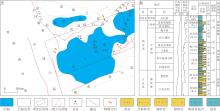
Fig.1
Structural division (a) and composite stratigraphic column (b) of the Qiongdongnan Basin"

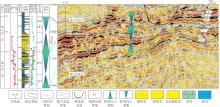
Fig.2
Stratigraphic sequence column and framework in well Y1 of the Meishan Formation on the north slope of the Ledong Sag, Qiongdongnan Basin"


Fig.3
Seismic sections of the western- (a) and northern provenance area-sourced (b) submarine fans in the Meishan Formation on the north slope of the Ledong Sag, Qiongdongnan Basin"

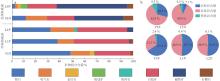
Fig.4
Heavy mineral assemblages and provenance analysis of sandstones in the Meishan Formation on the north slope of the Ledong Sag, Qiongdongnan Basin"

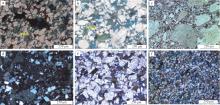
Fig.5
Micrographs of rock samples from the Meishan Formation on the north slope of the Ledong Sag, Qiongdongnan Basin (cast thin sections)"


Fig.6
C-M diagram of submarine fans in the Meishan Formation on the north slope of the Ledong Sag, Qiongdongnan Basin"
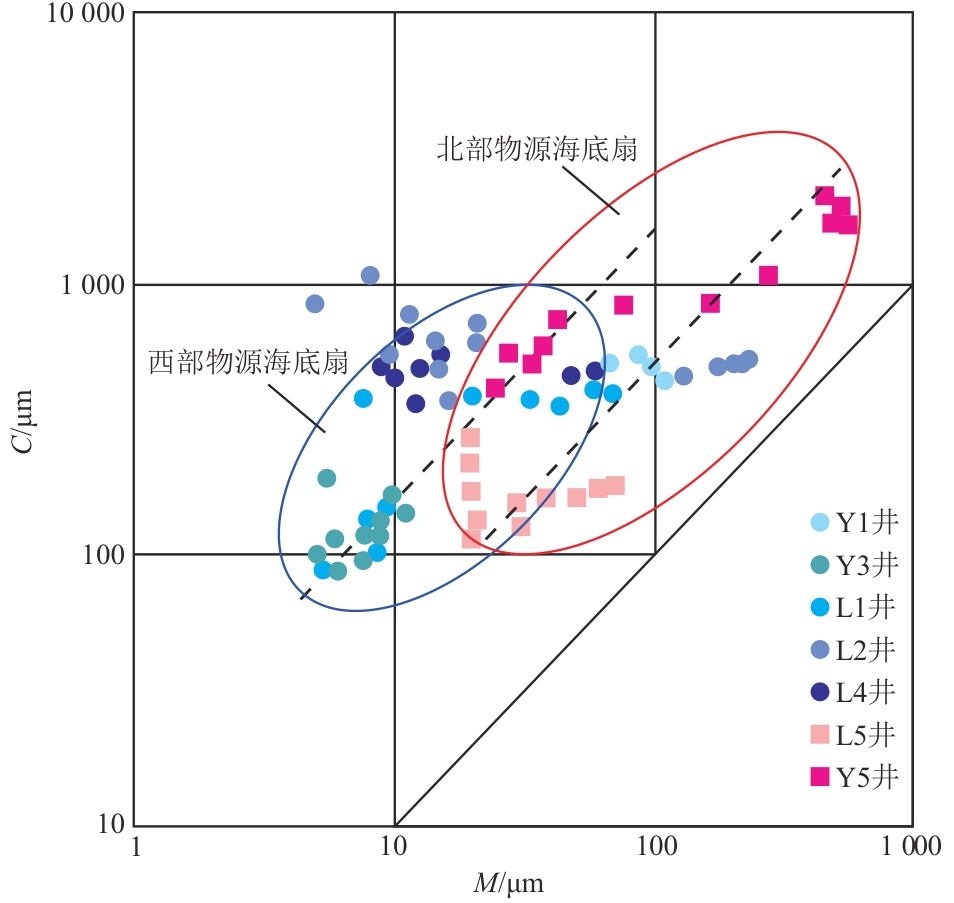
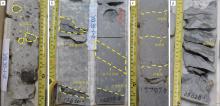
Fig.7
Sedimentary structure characteristics seen from cores from the Meishan Formation on the north slope of the Ledong Sag in well Y3, Qiongdongnan Basin"


Fig.8
Logging response characteristics of the western (a) and northern provenance area-sourced (b, c) submarine fans in the Meishan Formation on the north slope of the Ledong Sag, Qiongdongnan Basin"

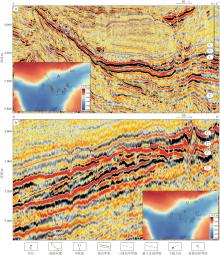
Fig.9
Seismic response characteristics of the distal ends of the western (a) and northern provenance area-sourced (b) submarine fans in the Meishan Formation on the north slope of the Ledong Sag, Qiongdongnan Basin"

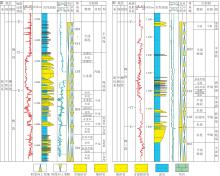
Fig.10
Typical sedimentary sequences of submarine fans in the Meishan Formation on the north slope of the Ledong Sag, Qiongdongnan Basin"


Fig.11
Seismic response characteristics and distribution of submarine fans in the Meishan Formation on the north slope of the Ledong Sag, Qiongdongnan Basin"


Fig.12
Sedimentary characteristics and differences of confined and unconfined submarine fans in the Meishan Formation on the north slope of the Ledong Sag, Qiongdongnan Basin"


Fig.13
Development model of the submarine fan in the Meishan Formation on the north slope of the Ledong Sag, Qiongdongnan Basin"

| 1 | SHEW R D, ROLLINS D R, TILLER G M, et al. Characterization and modeling of thin-bedded turbidite deposits from the Gulf of Mexico using detailed subsurface and analog data[M]//WEIMER P, BOUMA A H, PERKINS B F. Submarine Fans and Turbidite Systems—Sequence Stratigraphy, Reservoir Architecture and Production Characteristics Gulf of Mexico and International. Tulsa: SEPM Society for Sedimentary Geology, 1994: 349-356. |
| 2 | RICHARDS M, BOWMAN M, READING H. Submarine-fan systems i: Characterization and stratigraphic prediction[J]. Marine and Petroleum Geology, 1998, 15(7): 689-717. |
| 3 | WEIMER P, SLATT R M, DROMGOOLE P, et al. Developing and managing turbidite reservoirs: Case histories and experiences: Results of the 1998 EAGE/AAPG research conference[J]. AAPG Bulletin, 2000, 84(4): 453-465. |
| 4 | 王英民, 徐强, 李冬, 等. 南海西北部晚中新世的红河海底扇[J]. 科学通报, 2011, 56(10): 781-787. |
| WANG Yingmin, XU Qiang, LI Dong, et al. Late Miocene Red River submarine fan, northwestern South China Sea[J]. Chinese Science Bulletin, 2011, 56(10): 781-787. | |
| 5 | 孙辉. 南海西北部深水区重力流沉积体系特征及其控制因素分析[D]. 武汉: 中国地质大学, 2015: 29-54. |
| SUN Hui. Characteristics and controlling factors on gravity flow sedimentary systems development in deep water A rea, northwestern South China Sea[D]. Wuhan: China University of Geosciences, 2015: 29-54. | |
| 6 | 郑胜, 吕成福, 陈国俊, 等. 南海西北部晚中新世红河海底扇储集层特征[J]. 中南大学学报(自然科学版), 2015, 46(5): 1754-1762. |
| ZHENG Sheng, Chengfu LYU, CHEN Guojun, et al. Reservoir characteristics of Late Miocene Red River submarine fan, northwestern South China Sea[J]. Journal of Central South University(Science and Technology), 2015, 46(5): 1754-1762. | |
| 7 | 左倩媚, 张道军, 王亚辉, 等. 琼东南盆地深水区新近系海底扇沉积特征与资源潜力[J]. 海洋学报, 2016, 38(11): 105-116. |
| ZUO Qianmei, ZHANG Daojun, WANG Yahui, et al. Sedimentary characteristics and exploration potential of Neogene submarine fan in the deepwater area of the Qiongdongnan Basin[J]. Acta Oceanologica Sinica, 2016, 38(11): 105-116. | |
| 8 | 李安琪, 胡林, 王真真, 等. 琼东南盆地乐东凹陷梅山组海底扇沉积演化及油气地质意义[J]. 油气地质与采收率, 2021, 28(2): 76-84. |
| LI Anqi, HU Lin, WANG Zhenzhen, et al. Sedimentary evolution of Meishan Formation submarine fan in Ledong Sag, Qiongdongnan Basin and its significance in hydrocarbon exploration[J]. Petroleum Geology and Recovery Efficiency, 2021, 28(2): 76-84. | |
| 9 | 李胜勇, 胡林, 杨希冰, 等. 琼东南盆地梅山组海底扇成因演化特征与勘探建议[J]. 海洋地质前沿, 2023, 39(1): 18-30. |
| LI Shengyong, HU Lin, YANG Xibing, et al. Genetic evolution and exploration strategy of submarine fan in the Meishan Formation, Qiongdongnan Basin[J]. Marine Geology Frontiers, 2023, 39(1): 18-30. | |
| 10 | 姚兴宗. 琼东南盆地陵水15-2区块梅山组地震沉积学及成藏条件研究[D]. 西安: 西北大学, 2021: 36-49. |
| YAO Xingzong. Study on seismic sedimentology and accumulation conditions of Meishan Formation in Lingshui 15-2 Block, Qiongdongnan Basin[D]. Xi’an: Northwestern University, 2021: 36-49. | |
| 11 | 甘军, 梁刚, 李兴, 等. 琼东南盆地梅山组海底扇天然气成因类型及成藏模式[J]. 地质学报, 2022, 96(3): 1069-1078. |
| GAN Jun, LIANG Gang, LI Xing, et al. Genetic types and accumulation model of submarine fan gas in the Meishan Formation, Qiongdongnan Basin[J]. Acta Geologica Sinica, 2022, 96(3): 1069-1078. | |
| 12 | 朱沛苑, 尤丽, 元庆涛, 等. 乐东—陵水凹陷梅山组海底扇储层物性与孔喉结构[J]. 天然气技术与经济, 2018, 12(5): 1-4, 64. |
| ZHU Peiyuan, YOU Li, YUAN Qingtao, et al. Petrophysical property and pore-throat structure of submarine-fan reservoirs in Meishan Formation, Ledong-Lingshui Sag[J]. Natural Gas Technology and Economy, 2018, 12(5): 1-4, 64. | |
| 13 | 罗泉源, 焦祥燕, 刘昆, 等. 乐东-陵水凹陷梅山组海底扇识别及沉积模式[J]. 海洋地质与第四纪地质, 2020, 40(2): 90-99. |
| LUO Quanyuan, JIAO Xi angyan, LIU Kun, et al. Identification of submarine fan in the Meishan Formation of the Ledong-Lingshui Sag in the Qiongdongnan Basin and its depositional model[J]. Marine Geology & Quaternary Geology, 2020, 40(2): 90-99. | |
| 14 | 李建平, 熊连桥, 黄琪斐, 等. 琼东南盆地梅山组浊积扇分类及其勘探意义[J]. 油气地质与采收率, 2023, 30(6): 1-12. |
| LI Jianping, XIONG Lianqiao, HUANG Qifei, et al. Classification of turbidite fans of Meishan Formation in Qiongdongnan Basin and their exploration significance[J]. Petroleum Geology and Recovery Efficiency, 2023, 30(6): 1-12. | |
| 15 | 李华, 王英民, 徐强, 等. 莺-琼盆地中新统限制型海底扇沉积特征及模式[C]//中国石油学会石油地质专业委员会, 北京石油学会. 第八届中国含油气系统与油气藏学术会议论文摘要汇编. 武汉: 长江大学地球科学学院, 2015: 46-47. |
| LI Hua, WANG Yingmin, XU Qiang, et al. Sedimentary characteristics and mode of sino-new restricted submarine fans in Ying-Qiong Basin[C]//Petroleum Geology Professional Committee of China Petroleum Society, Beijing Petroleum Society. Abstract Compilation of the 8th China Conference on Oil and Gas Development Systems and Reservoir. Wuhan: College of Earth Sciences, Changjiang University, 2015: 46-47. | |
| 16 | 田纳新, 龚承林, 吴高奎, 等. 转换陆缘海底扇的沉积特征与沉积模式——以赤道大西洋漂移晚期陆缘为例[J]. 沉积学报, 2023, 41(6): 1798-1809. |
| TIAN Naxin, GONG Chenglin, WU Gaokui, et al. Depositional characteristics and models of submarine Fans on transform margins: A case study from the late drift stage of the equatorial Atlantic margin[J]. Acta Sedimentologica Sinica, 2023, 41(6): 1798-1809. | |
| 17 | 谈明轩, 吴峰, 马皓然, 等. 海底扇沉积相模式、沉积过程及其沉积记录的指示意义[J]. 沉积学报, 2022, 40(2): 435-449. |
| TAN Mingxuan, WU Feng, MA Haoran, et al. Facies model, sedimentary process and depositional record of submarine fans, and their implications[J]. Acta Sedimentologica Sinica, 2022, 40(2): 435-449. | |
| 18 | 尤丽, 江汝锋, 龚宇, 等. 琼东南盆地深水海底扇岩性圈闭成藏主控因素与勘探突破[J]. 地球科学, 2024, 49(2): 749-758. |
| YOU Li, JIANG Rufeng, GONG Yu, et al. Main controlling factors of accumulation and exploration breakthrough of deep-water submarine fan lithologic trap in the Qiongdongnan Basin[J]. Earth Science, 2024, 49(2): 749-758. | |
| 19 | 吴克强, 解习农, 裴健翔, 等. 超伸展陆缘盆地深部结构及油气勘探意义——以琼东南盆地为例[J]. 石油与天然气地质, 2023, 44(3): 651-661. |
| WU Keqiang, XIE Xinong, PEI Jianxiang, et al. Deep architecture of hyperextended marginal basin and implications for hydrocarbon exploration: A case study of Qiongdongnan Basin[J]. Oil & Gas Geology, 2023, 44(3): 651-661. | |
| 20 | 王根发, 吴冲龙, 周江羽, 等. 琼东南盆地第三系层序地层分析[J]. 石油实验地质, 1998, 20(2): 124-128. |
| WANG Genfa, WU Chonglong, ZHOU Jiangyu, et al. Sequence stratigraphic analysis of the Tertiary in the Qiongdongnan Basin[J]. Petroleum Geology & Experiment, 1998, 20(2): 124-128. | |
| 21 | 杨希冰, 傅恒, 何小胡, 等. 琼东南盆地南部隆起带新生界沉积体系 及其构造-沉积演化[J]. 沉积与特提斯地质, 2019, 39(3): 1-10. |
| YANG Xibing, FU Heng, HE Xiaohu, et al. Cenozoic sedimentary systems and their tectonic-sedimentary evolution in southern uplift zone of the Qiongdongnan Basin[J]. Sedimentary Geology and Tethyan Geology, 2019, 39(3): 1-10. | |
| 22 | 陈宏言, 孙志鹏, 翟世奎, 等. 琼东南盆地井震地层对比分析及区域地层格架的建立[J]. 海洋学报, 2015, 37(5): 1-14. |
| CHEN Hongyan, SUN Zhipeng, ZHAI Shikui, et al. Analysis of well-seismic stratigraphic correlation and establishment of regional stratigraphic framework in the Qiongdongnan Basin of northern South China Sea[J]. Acta Oceanologica Sinica, 2015, 37(5): 1-14. | |
| 23 | 尹娜, 杨海长, 马明, 等. 琼东南盆地上中新统—上新统中央峡谷沉积物来源[J]. 天然气地球科学, 2017, 28(10): 1582-1592. |
| YIN Na, YANG Haichang, MA Ming, et al. Provenance of central canyon in the Upper Miocene to the Pliocene in the Qiongdongnan Basin[J]. Natural Gas Geoscience, 2017, 28(10): 1582-1592. | |
| 24 | 尤丽, 江汝锋, 徐守立, 等. 琼东南盆地深水区乐东-陵水凹陷梅山组天然气成藏特征与勘探潜力[J]. 中国海上油气, 2021, 33(5): 24-31. |
| YOU Li, JIANG Rufeng, XU Shouli, et al. Accumulation characteristics and exploration potential of Meishan Formation gas in Ledong-Lingshui sag, deep water area of Qiongdongnan basin[J]. China Offshore Oil and Gas, 2021, 33(5): 24-31. | |
| 25 | 尤丽, 刘才, 钟佳, 等. 琼东南盆地西区梅山组海底扇岩相-地球化学特征及源区意义[J]. 地球科学, 2017, 42(9): 1531-1540. |
| YOU Li, LIU Cai, ZHONG Jia, et al. Petrography-geochemistry and source significance of submarine fan from west area of Qiongdongnan Basin[J]. Earth Science, 2017, 42(9): 1531-1540. | |
| 26 | 裴健翔, 郭潇潇, 薛海涛, 等. 莺歌海盆地中新统海相烃源岩形成环境及控制因素[J]. 石油与天然气地质, 2023, 44(4): 937-945. |
| PEI Jianxiang, GUO Xiaoxiao, XUE Haitao, et al. Environment and controlling factors of the Miocene marine source rocks in the Yinggehai Basin[J]. Oil & Gas Geology, 2023, 44(4): 937-945. | |
| 27 | 龚胜利, 闫琢玉, 李百强, 等. 琼东南盆地中中新统海底扇碎屑岩锆石U-Pb年龄特征及物源分析[J]. 地质科技通报, 2024, 43(5): 45-54. |
| GONG Shengli, YAN Zhuoyu, LI Baiqiang, et al. U-Pb age characteristics of detrital zircon and provenance analysis of a Middle Miocene submarine fan in the Qiongdongnan Basin[J]. Bulletin of Geological Science and Technology, 2024, 43(5): 45-54. | |
| 28 | 李冬, 徐强, 王永凤, 等. 南海晚中新世—上新世红河沉积体系研究[J]. 沉积学报, 2013, 31(1): 32-37. |
| LI Dong, XU Qiang, WANG Yongfeng, et al. Research on Red River sedimentary system of late Miocene-Early Pliocene, South China sea[J]. Acta Sedimentologica Sinica, 2013, 31(1): 32-37. | |
| 29 | 王策, 梁新权, 童传新, 等. 莺歌海盆地东北部邻区7条主要入海河流重砂矿物特征及其地质意义[J]. 沉积学报, 2014, 32(2): 228-237. |
| WANG Ce, LIANG Xinquan, TONG Chuanxin, et al. Characteristics and geological implications of heavy minerals from seven rivers in adjacent areas of northeastern Yinggehai Basin[J]. Acta Sedimentologica Sinica, 2014, 32(2): 228-237. | |
| 30 | 李冬, 王英民, 王永凤, 等. 晚中新世红河海底扇物质来源分析[C]//中国矿物岩石地球化学学会. 中国矿物岩石地球化学学会第13届学术年会论文集. 北京: 中国石油大学(北京)地球科学学院, 2011: 562. |
| LI Dong, WANG Yingmin, WANG Yongfeng, et al. Analysis of material sources of the Late Miocene Red River submarine fan[C]//Chinese Society form Mineralogy Petrology and Geochemistry. Proceedings of the 13th Annual Meeting of the Chinese Society of Mineralogy, Petrology and Geochemistry. Beijing: School of Earth Sciences, China University of Petroleum (Beijing), 2011: 562. | |
| 31 | 徐强, 李冬, 朱伟林, 等. 晚中新世红河海底扇碎屑锆石SHRIMP U-Pb年龄: 物源区制约及红河袭夺事件探讨[J]. 沉积与特提斯地质, 2020, 40(3): 20-30. |
| XU Qiang, LI Dong, ZHU Weilin, et al. SHRIMP U-Pb ages of detrital zircons: Discussions on provenance control and the Red River Capture Event[J]. Sedimentary Geology and Tethyan Geology, 2020, 40(3): 20-30. | |
| 32 | 董晓芳, 曲希玉, 尤丽, 等. 乐东—陵水凹陷古近系黄流组峡谷水道碎屑岩的源区分析[J]. 海洋地质前沿, 2018, 34(10): 12-22. |
| DONG Xiaofang, QU Xiyu, YOU Li, et al. Provenance analysis of the canyon channel fillings of Huangliu Formation in the Ledong-Lingshui Sag[J]. Marine Geology Frontiers, 2018, 34(10): 12-22. | |
| 33 | BOUMA A H. Sedimentology of some flysch deposits: A graphic approach to facies interpretation[M]. Amsterdam: Elsevier, 1962: 168. |
| 34 | SHANMUGAM G, ZIMBRICK G. Core-based evidence for sandy slump and sandy debris flow facies in the Pliocene and Pleistocene of the Gulf of Mexico: Implications for submarine fan models[C]//AAPG Convention and Exhibition 19-22 May 1996, San Diego, 1996. Tulsa: AAPG, 1996: 91019. |
| 35 | 高红灿, 郑荣才, 魏钦廉, 等. 碎屑流与浊流的流体性质及沉积特征研究进展[J]. 地球科学进展, 2012, 27(8): 815-827. |
| GAO Hongcan, ZHENG Rongcai, WEI Qinlian, et al. Reviews on fluid properties and sedimentary characteristics of debris flows and turbidity currents[J]. Progress in Earth Science, 2012, 27(8): 815-827. | |
| 36 | 李利阳. 浊流沉积研究的新进展: 鲍马序列、海底扇的重新审视[J]. 沉积与特提斯地质, 2015, 35(4): 106-112. |
| LI Liyang. Current advances in the research of turbidity current deposits: Reinterpretation of the Bouma sequence and submarine fan deposits[J]. Sedimentary Geology and Tethyan Geology, 2015, 35(4): 106-112. | |
| 37 | 裴羽, 何幼斌, 李华, 等. 高密度浊流和砂质碎屑流关系的探讨[J]. 地质论评, 2015, 61(6): 1281-1292. |
| PEI Yu, HE Youbin, LI Hua, et al. Discuss about relationship between high-density turbidity current and sandy debris flow[J]. Geological Review, 2015, 61(6): 1281-1292. | |
| 38 | 李安琪, 叶绮, 王真真, 等. 琼东南盆地陵水凹陷北部梅山组砂质碎屑流沉积特征及油气地质意义[J]. 地质科技通报, 2021, 40(1): 110-118. |
| LI Anqi, YE Qi, WANG Zhenzhen, et al. Sedimentary characteristics and significance in hydrocarbon exploration of sandy debris flow in Meishan Formation of the northern Lingshui Sag, Qiongdongnan Basin[J]. Bulletin of Geological Science and Technology, 2021, 40(1): 110-118. | |
| 39 | SHANMUGAM G. Deep-water processes and facies models: Implications for sandstone petroleum reservoirs[M]. Amsterdam: Elsevier, 2006. |
| 40 | 傅焓埔, 刘群, 胡修棉. 水下沉积物重力流与海底扇相模式研究进展[J]. 地球科学进展, 2020, 35(2): 124-136. |
| FU Hanbu, LIU Qun, HU Xiumian. Review on subaqueous sediment gravity flow and submarine fan[J]. Advances in Earth Science, 2020, 35(2): 124-136. | |
| 41 | 李华, 杨朝强, 周伟, 等. 莺歌海盆地东方1-1气田中新统黄流组浅海多级海底扇形成机理及储层分布[J]. 石油与天然气地质, 2023, 44(2): 429-440. |
| LI Hua, YANG Zhaoqiang, ZHOU Wei, et al. Genetic mechanism and reservoir distribution of shallow-marine multi-stepped submarine fans in the Miocene Huangliu Formation of Dongfang 1-1 gas field, Yinggehai Basin[J]. Oil & Gas Geology, 2023, 44(2): 429-440. | |
| 42 | 陈杨, 张道军, 黄灿, 等. 莺歌海盆地莺东斜坡南段梅山组大型海底扇沉积特征及控制因素[J]. 东北石油大学学报, 2019, 43(4): 40-49, 7. |
| CHEN Yang, ZHANG Daojun, HUANG Can, et al. Controlling factors and sedimentary characteristics of the large submarine fan in Meishan Formation in the South parts of the Yingdong Slope area, Yinggehai Basin[J]. Journal of Northeast Petroleum University, 2019, 43(4): 40-49, 7. | |
| 43 | 田纳新, 龚承林, 吴高奎, 等. 重力流与海底地貌动态相互作用下深水沉积体系发育演化——以大西洋赤道段菩提瓜尔盆地为例[J]. 石油与天然气地质, 2024, 45(1): 15-30. |
| TIAN Naxin, GONG Chenglin, WU Gaokui, et al. Development of submarine depositional systems under dynamic interplays between sediment gravity flows and seafloor topography: A case study of the Potiguar Basin on the equatorial Atlantic Ocean[J]. Oil & Gas Geology, 2024, 45(1): 15-30. | |
| 44 | 王敏, 张佳佳, 王瑞峰, 等. 东非鲁伍马盆地深水海底扇储集层质量差异及主控因素[J]. 石油勘探与开发, 2022, 49(3): 491-501. |
| WANG Min, ZHANG Jiajia, WANG Ruifeng, et al. Quality variations and controlling factors of deepwater submarine-fan reservoirs, Rovuma Basin, East Africa[J]. Petroleum Exploration and Development, 2022, 49(3): 491-501. | |
| 45 | 王宏语, 张峰, 杨雄兵. 塞内加尔盆地北部次盆白垩系被动大陆边缘深海扇演化特征及主控因素[J]. 地学前缘, 2021, 28(2): 362-375. |
| WANG Hongyu, ZHANG Feng, YANG Xiongbing. Evolutionary characteristics and controlling factors of deep-sea fans in Cretaceous passive continental margin basin, Northern Subbasin, Senegal Basin[J]. Earth Science Frontiers, 2021, 28(2): 362-375. | |
| 46 | 杨朝强, 周伟, 王玉, 等. 莺歌海盆地东方区黄流组一段小层划分及海底扇沉积演化主控因素[J]. 中国海上油气, 2022, 34(1): 55-65. |
| YANG Zhaoqiang, ZHOU Wei, WANG Yu, et al. Subdivision of the first member of Huangliu Formation in Dongfang area of Yinggehai Basin and the main factors controlling the sedimentary evolution of submarine fan[J]. China Offshore Oil and Gas, 2022, 34(1): 55-65. | |
| 47 | JAMIL M, SIDDIQUI N A, AHMED N, et al. Facies analysis and sedimentary architecture of hybrid event beds in submarine lobes: Insights from the Crocker Fan, NW Borneo, Malaysia[J]. Journal of Marine Science and Engineering, 2021, 9(10): 1133. |
| 48 | 李建平, 贾万丽, 李宏义, 等. 物源—地貌双控背景下海底扇沉积储层特征及勘探意义: 以琼东南盆地梅山组为例[J]. 地质科学, 2024, 59(1): 148-165. |
| LI Jianping, JIA Wanli, LI Hongyi, et al. Sedimentary reservoir characteristics and exploration significance of submarine fan under the dual control of provenance and geomorphology: Taking the Meishan Formation in Qiongdongnan Basin as an example[J]. Chinese Journal of Geology, 2024, 59(1): 148-165. | |
| 49 | 谢玉洪, 范彩伟, 周家雄, 等. 琼东南盆地中中新世重力流海底扇沉积特征及控制因素[J]. 天然气地球科学, 2016, 27(2): 220-228. |
| XIE Yuhong, FAN Caiwei, ZHOU Jiaxiong, et al. Sedimentary features and controlling factors of the gravity flows in submarine fan of Middle Miocene in the Qiongdongnan Basin[J]. Natural Gas Geoscience, 2016, 27(2): 220-228. | |
| 50 | LI Chao, CHEN Guojun, ZHOU Qianshan, et al. Seismic geomorphology of three types of deepwater fans and their relationship with slope morphology: Qiongdongnan Basin, northern South China Sea[J]. Marine and Petroleum Geology, 2021, 124: 104814. |
| 51 | MOHRIG D, ELLIS C, PARKER G, et al. Hydroplaning of subaqueous debris flows[J]. GSA Bulletin, 1998, 110(3): 387-394. |
| 52 | LOWE D R. Sediment gravity flows; II, Depositional models with special reference to the deposits of high-density turbidity currents[J]. Journal of Sedimentary Research, 1982, 52(1): 279-297. |
| 53 | KNELLER B, NASR‐AZADANI M M, RADHAKRISHNAN S, et al. Long-range sediment transport in the world’s oceans by stably stratified turbidity currents[J]. Journal of Geophysical Research: Oceans, 2016, 121(12): 8608-8620. |
| 54 | KANE I A, PONTEN A S M. Submarine transitional flow deposits in the Paleogene Gulf of Mexico[J]. Geology, 2012, 40(12): 1119-1122. |
| 55 | 骆帅兵, 张莉, 雷振宇, 等. 陆坡盆地体系深水重力流形成机制、沉积模式及应用实例探讨[J]. 石油实验地质, 2017, 39(6): 747-754. |
| LUO Shuaibing, ZHANG Li, LEI Zhenyu, et al. Formation mechanism, sedimentary model and typical example of a deep-water gravity flow in continental slope-basin systems[J]. Petroleum Geology & Experiment, 2017, 39(6): 747-754. | |
| 56 | 周荔青, 江东辉, 杨鹏程, 等. 琼东南盆地陵水北坡LS13-2区勘探思路与突破方向[J]. 石油与天然气地质, 2024, 45(3): 673-683. |
| ZHOU Liqing, JIANG Donghui, YANG Pengcheng, et al. Philosophy and potential breakthroughs for hydrocarbon exploration in Block LS13-2 on the northern slope of the Lingshui Sag, Qiongdongnan Basin[J]. Oil & Gas Geology, 2024, 45(3): 673-683. | |
| 57 | 付超, 谢玉洪, 赵雨初, 等. 深水峡谷上游复合浊积砂岩储层类型及其展布规律——以琼东南盆地中央峡谷陵水气田为例[J]. 石油与天然气地质, 2024, 45(2): 516-529. |
| FU Chao, XIE Yuhong, ZHAO Yuchu, et al. Types and distribution patterns of complex turbidite sandstone reservoirs in the upper reaches of deep-water canyons—A case study of the Lingshui Gas Field in the Central Canyon of Qiongdongnan Basin[J]. Oil & Gas Geology, 2024, 45(2): 516-529. | |
| 58 | TALLING P J, MASSON D G, SUMNER E J, et al. Subaqueous sediment density flows: Depositional processes and deposit types[J]. Sedimentology, 2012, 59(7): 1937-2003. |
| 59 | VAIL P R, MITCHUM R M, Jr, THOMPSON S III. Seismic stratigraphy and global changes of sea level, part 3: Relative changes of sea level from coastal onlap[M]//PAYTON C E. Seismic Stratigraphy—Applications to Hydrocarbon Exploration. Tulsa: American Association of Petroleum Geologists, 1977: 63-81. |
| 60 | LI Dongwei, GONG Chenglin, GE Daoyao, et al. Stratigraphic architecture and distribution patterns of submarine fan-reservoir elements: Insights derived from the Pliocene and Pleistocene Bengal Fan[J]. Journal of Sedimentary Research, 2023, 93(7): 469-487. |
| 61 | YAO Yue, GUO Shaobin, ZHU Hongtao, et al. Source-to-sink characteristics of the channelized submarine fan system of the Huangliu Formation in the Dongfang block, Yinggehai Basin, South China Sea[J]. Journal of Petroleum Science and Engineering, 2021, 206: 109009. |
| 62 | LI Hua, LOON A J (TOM) VAN, XU Yanxia, et al. Reservoir characteristics and potential of a shallow-marine multi-level fan in the Miocene Huangliu Fm. within the DF1-1 gas field (Yinggehai Basin, S China)[J]. Geoenergy Science and Engineering, 2023, 230: 212202. |
| Viewed | ||||||
|
Full text |
|
|||||
|
Abstract |
|
|||||
