

Oil & Gas Geology ›› 2025, Vol. 46 ›› Issue (3): 894-909.doi: 10.11743/ogg20250313
• Petroleum Geology • Previous Articles Next Articles
Mingxuan TAN1( ), Saisai YUAN1, Mianpei CHEN1, Haonan SUN1, Hongxia MA2, Chengcheng ZHANG3
Received:2024-06-27
Revised:2024-11-28
Online:2025-06-30
Published:2025-06-26
CLC Number:
Mingxuan TAN, Saisai YUAN, Mianpei CHEN, Haonan SUN, Hongxia MA, Chengcheng ZHANG. Developmental characteristics and transport mechanisms of the Upper Triassic submarine fans controlled by narrow shelf in the Taohe Basin, West Qinling Orogenic Belt[J]. Oil & Gas Geology, 2025, 46(3): 894-909.
Add to citation manager EndNote|Reference Manager|ProCite|BibTeX|RefWorks

Fig. 1
Regional geology of the Taohe Basin, WQOB (modified after references [27,31])"

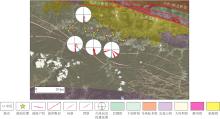
Fig.2
Relative locations, attitudes, and paleocurrent characteristics of major outcrops in the Lintan-Zhuoni areas, Taohe Basin (base map modified after reference [19])"


Fig. 3
Photomicrographs of rock thin sections from major sedimentary assemblages in the Upper Triassic submarine fans within the Taohe Basin, WQOB"

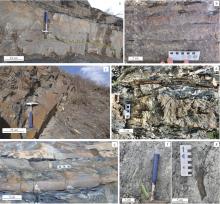
Fig. 4
Pictures showing the outcrop characterization of turbidites, hybrid event beds, and hyperpycnites in the Upper Triassic submarine fans of the Taohe Basin, WQOB"


Fig.5
Pictures showing the outcrop characterization of reflected turbidites in the Upper Triassic submarine fans of the Taohe Basin, West Qinling Orogenic Belt"

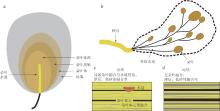
Fig. 6
Conceptual model and sedimentary units of a lobe system in a typical submarine fan and its cross-section (modified after references [54‒55])"


Fig. 7
Pictures showing outcrop characterization of lobe channels in the Upper Triassic submarine fans of the Taohe Basin, WQOB"


Fig.8
Pichtures showing the outcrop characterization of lobes in the Upper Triassic submarine fans of the Taohe Basin, WQOB"

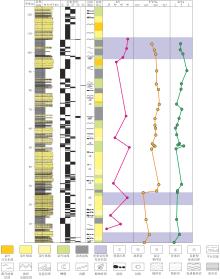
Fig. 9
Composite stratigraphic column of the Upper Triassic submarine fan deposits in the Panyuan section within the Taohe Basin, WQOB"

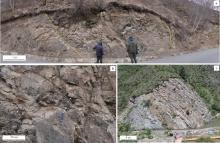
Fig. 10
Pictures showing the outcrop characterization of the Upper Triassic deep-water slides and slumps in the Taohe Basin, WQOB"


Fig.11
Schematic model showing the depositional processes and development of the Upper Triassic narrow shelf-controlled submarine fans in the Taohe Basin, WQOB"

| 1 | SHANMUGAM G, MOIOLA R J. Submarine fans: Characteristics, models, classification, and reservoir potential[J]. Earth-Science Reviews, 1988, 24(6): 383-428. |
| 2 | 田纳新, 吴高奎, 刘静静, 等. 中大西洋被动陆缘盆地结构特征与勘探领域[J]. 石油实验地质, 2023, 45(3): 486-496. |
| TIAN Naxin, WU Gaokui, LIU Jingjing, et al. Structural characteristics and exploration fields in passive continental margin basins of Central Atlantic [J]. Petroleum Geology & Experiment. 2023, 45(3): 486-496. | |
| 3 | 张懿, 郑求根, 胡琴, 等. 南大西洋两岸被动陆缘盆地地质特征及其对勘探的影响[J]. 特种油气藏, 2023, 30(5): 1-10. |
| ZHANG Yi, ZHENG Qiugen, HU Qin, et al. Geologic Characteristics of Passive Continental Margin Basin on Both Sides of the South Atlantic Ocean and Its Impact on Exploration[J]. Special Oil & Gas Reservoirs, 2023, 30(5): 1-10. | |
| 4 | SHANMUGAM G. Submarine fans: A critical retrospective (1950-2015)[J]. Journal of Palaeogeography, 2016, 5(2): 110-184. |
| 5 | REDIN T. Oil and gas production from submarine fans of the Los Angeles Basin[C].Biddle, K. T., ed., Active margin basin, AAPG Memoir 52, Cincinnati, Ohio: American Association of Petroleum Geologists, 1991: 239-260. |
| 6 | REYNOLDS T. Quantitative analysis of submarine fans in the Tertiary of the North Sea Basin[J]. Marine and Petroleum Geology, 1994, 11(2): 202-207. |
| 7 | 刘子玉, 吕明, 卢景美, 等. 东非鲁伍马盆地窄陆架背景下的深水沉积体系[J]. 海相油气地质, 2017, 22(4): 27-34. |
| LIU Ziyu, Ming LYU, LU Jingmei, et al. Deepwater depositional system in the background of narrow shelf in the Ruvuma Basin, eastern Africa[J]. Marine Origin Petroleum Geology, 2017, 22(4): 27-34. | |
| 8 | 于星, 赵红岩, 邱春光, 等. 东非海岸盆地第四系深水沉积特征、过程及沉积模式[J]. 断块油气田, 2024, 31(2): 257-265. |
| YU Xing, ZHAO Hongyan, QIU Chunguang, et al. Quaternary deep-water deposition in coastal basins of East Africa: characteristics,processes,and depositional model[J]. Fault Block Oil & Gas Field, 2024, 31(2): 257-265. | |
| 9 | 张青林, 张向涛, 李洪博, 等. 南海北部狭窄陆架-断裂陆坡控制的大型深水扇体系[J]. 地球科学, 2022, 47(7): 2421-2432. |
| ZHANG Qinglin, ZHANG Xiangtao, LI Hongbo, et al. Large submarine fan system controlled by narrow continental shelf-faulted continental slope in northern South China Sea[J]. Earth Science, 2022, 47(7): 2421-2432. | |
| 10 | 卫哲, 向绪洪, 谢世文, 等. 珠江口盆地白云凹陷古近系源-汇系统耦合及时-空演化[J]. 吉林大学学报(地球科学版), 2024, 54(6): 1927-1939. |
| WEI Zhe, XIANG Xuhong, XIE Shiwen, et al. Source-to-Sink System Coupling and Time-Space Evolution of Paleogene in Baiyun Sag,Pearl River Mouth Basin[J]. Journal of Jilin University (Earth Science Edition), 2024, 54(6): 1927-1939. | |
| 11 | COVAULT J A, GRAHAM S A. Submarine fans at all sea-level stands: Tectono-morphologic and climatic controls on terrigenous sediment delivery to the deep sea[J]. Geology, 2010, 38(10): 939-942. |
| 12 | COVAULT J A, NORMARK W R, ROMANS B W, et al. Highstand fans in the California borderland: The overlooked deep-water depositional systems[J]. Geology, 2010, 35(9): 783-786. |
| 13 | COVAULT J A, ROMANS B W, FILDANI A, et al. Rapid climatic signal propagation from source to sink in a southern California sediment-routing system[J]. The Journal of Geology, 2010, 118(3): 247-259. |
| 14 | SURYA T T, MD A I, Mohamed R S. Reservoir quality evaluation using sedimentological and petrophysical characterization of deep-water turbidites: A case study of Tariki Sandstone Member, Taranaki Basin, New Zealand[J]. Energy Geoscience, 2023, 4(1): 13-32. |
| 15 | WU Gaokai, KONG Fanjun, TIAN Naxin, et al. Structural characteristics and deep-water hydrocarbon accumulation model of the Scotian Basin, Eastern Canada[J]. Energy Geoscience, 2023, 4(3): 100152. |
| 16 | JOERGER S T, SMITH M E, BUSCOMBE D, et al. Evidence for littoral convergence and sediment delivery to Mattole submarine canyon, Northern California[J]. Frontiers in Earth Science, 2024, 12: 1377997. |
| 17 | 李华, 杨朝强, 周伟, 等. 莺歌海盆地东方1-1气田中新统黄流组浅海多级海底扇形成机理及储层分布[J]. 石油与天然气地质, 2023, 44(2): 429-440. |
| LI Hua, YAN Zhaoqiang, ZHOU Wei, et al. Genetic mechanism and reservoir distribution of shallow-marine multi-stepped submarine fans in the Miocene Huangliu Formation of Dongfang 1-1 gas field, Yinggehai Basin[J]. Oil & Gas Geology, 2023, 44(2): 429-440. | |
| 18 | WEISLOGEL A L, GRAHAM S A, CHANG E Z. Accumulation of the Middle to Upper Triassic Songpan-Ganzi turbidite complex, China[C]. T. H. Nilsen, R. D. Shew, G. S. Steffens, & J. R. J.Studlick Eds., Atlas of deep-water outcrops, AAPG Studies in Geology, Tulsa, Oklahoma: American Association of Petroleum Geologists, 2007,56: 1-20. |
| 19 | TAN Mingxuan, SUN Haonan, FU Yilin, et al. Hybrid event bed characteristics and its role in high-frequency facies change of the Upper Triassic submarine fan in the West Qinling area of NE Tibetan Plateau[J]. Marine and Petroleum Geology, 2022, 146: 105937. |
| 20 | 范丽娜. 西秦岭洮河复向斜地质构造基本特征与油气远景预测[D]. 北京: 中国地质大学(北京), 2009. |
| FAN Lina. Features of geological structure and potential prediction of oil and gas in the Taohe Syncline of Western Qinling[D]. Beijing: China University of Geosciences (Beijing), 2009. | |
| 21 | 李祥辉, 王成善, 刘树根, 等. 西秦岭南部白龙江隆起中三叠统光盖山组岩相及盆地分析意义[J]. 地球科学: 中国地质大学学报, 2012, 37(4): 679-692. |
| LI Xianghui, WANG Chengshan, LIU Shugen, et al. Lithofacies of the Upper Middle Triassic Guanggaishan Formation in both sides of the Bailongjiang uplift, southwestern Qinling orogenic belt: Implications to the basin analysis[J]. Earth Science-Journal of China University of Geosciences, 2012, 37(4): 679-692. | |
| 22 | 殷鸿福, 杨逢清, 黄其胜, 等. 秦岭及邻区三叠系[M]. 武汉: 中国地质大学出版社, 1992. |
| YIN Hongfu, YANG Fengqing, HUANG Qisheng, et al. The Triassic of Qinling mountains and neighboring areas[M]. Wuhan: China University of Geosciences Press, 1992. | |
| 23 | 张晓宝, 方国庆, 何海清. 西秦岭上三叠统海底扇沉积环境特征与模式[J]. 地质科学, 1996, 31(2): 154-162, 210. |
| ZHANG Xiaobao, FANG Guoqing, HE Haiqing. Features and model of sedimentary environments of Upper Triassic seafloor fans in west Qinling Mts[J]. Chinese Journal of Geology, 1996, 31(2): 154-162, 210. | |
| 24 | 晋慧娟, 李育慈. 西秦岭造山带中三叠统复理石相研究[J]. 沉积学报, 2001, 19(3): 321-326. |
| JIN Huijuan, LI Yuci. A study on Middle Triassic flysch facies in West Qinling orogenic belt[J]. Acta Sedimentologica Sinica, 2001, 19(3): 321-326. | |
| 25 | TAN Mingxuan, SUN Haonan, FU Yilin, et al. High-frequency temporal variability of provenance signal in the submarine fan with the narrow shelf: Insights from sediment delivery and formation of late Triassic Zhuoni fan in the northeastern Paleo-Tethys Ocean[J]. Basin Research, 2024, 36(1): e12835. |
| 26 | YAN Zhen, FU Changlei, AITCHISON J C, et al. Triassic turbidites in the West Qinling mountains, NW China: Part of the collisional Songpan-Ganzi Basin or an active forearc basin?[J]. Journal of Asian Earth Sciences, 2020, 194: 104366. |
| 27 | MENG Qingren, QU Hongjie, HU Jianmin. Triassic deep-marine sedimentation in the western Qinling and Songpan terrane[J]. Science in China Series D: Earth Sciences, 2007, 50(S2): 246-263. |
| 28 | 梁国冰. 西秦岭临潭地区三叠纪地层地质特征与物源分析[D]. 西安: 长安大学, 2019. |
| LIANG Guobing. Geological characteristics and source analysis of the Triassic strata in the Linta area, western Qinling[D]. Xi’an: Xi’an University, 2019. | |
| 29 | 赖旭龙, 杨逢清, 杜远生, 等. 川西北若尔盖一带三叠系层序及沉积环境分析[J]. 中国区域地质, 1997, 16(2): 193-199, 204. |
| LAI Xulong, YANG Fengqing, DU Yuansheng, et al. Triassic stratigraphic sequence and depositional environment in the Nanping Zoige area northwestern Sichuan[J]. Regional Geology of China, 1997, 16(2): 193-199, 204. | |
| 30 | 晋慧娟, 李育慈. 西秦岭二叠纪-三叠纪遗迹化石及其环境意义[J]. 地质科学, 1995, 30(4): 321-328. |
| JIN Huijuan, LI Yuci. Trace fossils and their environmental significance of Permian-Triassic, western Qinling mountains[J]. Chinese Journal of Geology, 1995, 30(4): 321-328. | |
| 31 | 王志鹏. 松潘-阿坝和西秦岭三叠系砂岩组分特征及其构造意义[J]. 成都理工大学学报(自然科学版), 2009, 36(5): 465-474. |
| WANG Zhipeng. Triassic sandstone compositions in the northern Songpan-Ganzi fold belt and West Qinling, China: Implication for tectonic setting[J]. Journal of Chengdu University of Technology (Science & Technology Edition), 2009, 36(5): 465-474. | |
| 32 | LOWE D R. Sediment gravity flows; II, Depositional models with special reference to the deposits of high-density turbidity currents[J]. Journal of Sedimentary Research, 1982, 52(1): 279-297. |
| 33 | 谈明轩, 朱筱敏, 耿名扬, 等. 沉积物重力流流体转化沉积—混合事件层[J]. 沉积学报, 2016, 34(6): 1108-1119. |
| TAN Mingxuan, ZHU Xiaomin, GENG Mingyang, et al. The flow transforming deposits of sedimentary gravity flow-hybrid event bed[J]. Acta Sedimentologica Sinica, 2016, 34(6): 1108-1119. | |
| 34 | 操应长, 杨田, 王艳忠, 等. 深水碎屑流与浊流混合事件层类型及成因机制[J]. 地学前缘, 2017, 24(3): 234-248. |
| CAO Yingchang, YANG Tian, WANG Yanzhong, et al. Types and genesis of deep-water hybrid event beds comprising debris flow and turbidity current[J]. Earth Science Frontiers, 2017, 24(3): 234-248. | |
| 35 | ZAVALA C, PONCE J J, ARCURI M, et al. Ancient lacustrine hyperpycnites: A depositional model from a case study in the Rayoso Formation (Cretaceous) of west-central Argentina[J]. Journal of Sedimentary Research, 2006, 76(1): 41-59. |
| 36 | 熊亮, 曹勤明, 张玲, 等. 细粒沉积岩岩相划分类型及其油气勘探意义——以四川盆地川西坳陷须家河组五段为例[J]. 油气藏评价与开发, 2023, 13(5): 548-558. |
| XIONG Liang, CAO Qinming, ZHANG Ling, et al. Types of fine-grained sedimentary rocks assemblage and its significance for shale oil exploration: A case study of the fifth member of Xujiahe Formation in western Sichuan Depression, Sichuan Basin[J]. Petroleum Reservoir Evaluation and Development, 2023, 13(5): 548-558. | |
| 37 | 李振明, 熊伟, 王斌, 等. 准噶尔盆地哈山地区二叠系风城组细粒沉积特征与演化模式[J]. 石油实验地质, 2023, 45(4): 693-704. |
| LI Zhenming, XIONG Wei, WANG Bin, et al. Fine-grained sedimentary characteristics and evolution model of Permian Fengcheng Formation in Hashan area,Junggar Basin[J].Petroleum Geology & Experiment, 2023, 45(4): 693-704. | |
| 38 | MULDER T, SYVITSKI J P M, MIGEON S, et al. Marine hyperpycnal flows: Initiation, behavior and related deposits. A review[J]. Marine and Petroleum Geology, 2003, 20(6/8): 861-882. |
| 39 | 陈轩, 陶鑫, 覃建华, 等. 准噶尔盆地吉木萨尔凹陷及周缘二叠系芦草沟组异重流沉积[J]. 石油与天然气地质, 2023, 44(6): 1530-1545. |
| CHEN Xuan, TAO Xin, QIN Jianhua, et al. Hyperpycnal flow deposits of the Permian Lucaogou Formation in the Jimusaer Sag and its peripheries, Junggar Basin[J]. Oil & Gas Geology, 2023, 44(6): 1530-1545. | |
| 40 | 施振生, 周天琪. 海相细粒沉积成因机制与有机质富集模式研究进展[J]. 石油与天然气地质, 2024, 45(4): 910-928. |
| SHI Zhensheng, ZHOU Tianqi. Advances and perspectives in the study of the genetic mechanism and organic matter enrichment models of marine fine-grained sediment[J]. Oil & Gas Geology, 2024, 45(4): 910-928. | |
| 41 | 仲米虹, 唐武. 塔北地区三叠纪拗陷湖盆异重流沉积特征及主控因素[J]. 新疆石油地质, 2023, 44(1): 1-8. |
| ZHONG Mihong, TANG Wu. Sedimentary Characteristics and Controlling Factors of Hyperpycnal Flow in Triassic Depressed Lake Basin,Northern Tarim Basin[J]. Xinjiang Petroleum Geology, 2023, 44(1): 1-8. | |
| 42 | EDWARDS D A, LEEDER M R, BEST J L, et al. On experimental reflected density currents and the interpretation of certain turbidites[J]. Sedimentology, 1994, 41(3): 437-461. |
| 43 | KNELLER B, EDWARDS D, MCCAFFREY W, et al. Oblique reflection of turbidity currents[J]. Geology, 1991, 19(3): 250-252. |
| 44 | PICKERING K T, HISCOTT R N. Contained (reflected) turbidity currents from the Middle Ordovician Cloridorme Formation, Quebec, Canada: An alternative to the antidune hypothesis[J]. Sedimentology, 1985, 32(3): 373-394. |
| 45 | 葛智渊, 许鸿翔. 浊流对复杂构造地貌的水动力和沉积响应[J]. 古地理学报, 2023, 25(5): 1090-1117. |
| GE Zhiyuan, XU Hongxiang. Hydraulic and sedimentary responses of turbidity current to structurally-controlled topography[J]. Journal of Palaeogeography (Chinese Edition), 2023, 25(5): 1090-1117. | |
| 46 | 田纳新, 龚承林, 吴高奎, 等. 重力流与海底地貌动态相互作用下深水沉积体系发育演化——以大西洋赤道段菩提瓜尔盆地为例[J]. 石油与天然气地质, 2024, 45(1): 15-30. |
| TIAN Naxin, GONG Chenglin, WU Gaokui, et al. Development of submarine depositional systems under dynamic interplays between sediment gravity flows and seafloor to pography: A case study of the Potiguar Basin on the equatorial Atlantic Ocean[J]. Oil & Gas Geology, 2024, 45(1): 15-30. | |
| 47 | PATACCI M, HAUGHTON P D W, MCCAFFREY W D. Flow behavior of ponded turbidity currents[J]. Journal of Sedimentary Research, 2015, 85(8): 885-902. |
| 48 | TINTERRI R, MAZZA T, MAGALHAES P M. Contained-reflected megaturbidites of the Marnoso-arenacea Formation (Contessa key bed) and Helminthoid flysches (northern Apennines, Italy) and Hecho Group (south-western Pyrenees)[J]. Frontiers in Earth Science, 2022, 10: 817012. |
| 49 | TINTERRI R, MUZZI MAGALHAES P, TAGLIAFERRI A, et al. Convolute laminations and load structures in turbidites as indicators of flow reflections and decelerations against bounding slopes. Examples from the Marnoso-arenacea Formation (northern Italy) and Annot Sandstones (South eastern France)[J]. Sedimentary Geology, 2016, 344: 382-407. |
| 50 | MATTERN F. Ancient sand-rich submarine fans: Depositional systems, models, identification, and analysis[J]. Earth-Science Reviews, 2005, 70(3/4): 167-202. |
| 51 | 张磊夫, 王红亮, 李英烈, 等. 砂体融合的定量表征及其对储集层连通性的控制[J]. 石油勘探与开发, 2017, 44(2): 205-212. |
| ZHANG Leifu, WANG Hongliang, LI Yinglie, et al. Quantitative characterization of sandstone amalgamation and its impact on reservoir connectivity[J]. Petroleum Exploration and Development, 2017, 44(2): 205-212. | |
| 52 | 谈明轩, 吴峰, 马皓然, 等. 海底扇沉积相模式、沉积过程及其沉积记录的指示意义[J]. 沉积学报, 2022, 40(2): 435-449. |
| TAN Mingxuan, WU Feng, MA Haoran, et al. Facies model, sedimentary process and depositional record of submarine fans, and their implications[J]. Acta Sedimentologica Sinica, 2022, 40(2): 435-449. | |
| 53 | 李华, 何幼斌, 谈梦婷, 等. 深水重力流水道-朵叶体系形成演化及储层分布——以鄂尔多斯盆地西缘奥陶系拉什仲组露头为例[J]. 石油与天然气地质, 2022, 43(4): 917-928. |
| LI Hua, HE Youbin, TAN Mengting, et al. Evolution of and reservoir distribution within deep-water gravity flow channel-lobe system: A case study of the Ordovician Lashenzhong Formation outcrop at western margin of Ordos Basin[J]. Oil & Gas Geology, 2022, 43(4): 917-928. | |
| 54 | SAPARDINA D W. The role of Froude supercritical flow in active margin basin-floor fans[D]. Golden: Colorado School of Mines, 2023. |
| 55 | ZHANG Leifu, PAN Mao, LI Zhaoliang. 3D modeling of deepwater turbidite lobes: A review of the research status and progress[J]. Petroleum Science, 2020, 17(2): 317-333. |
| 56 | 张磊夫, 李易隆. 深水浊积朵叶体构型特征——以爱尔兰克莱尔盆地石炭系露头为例[J]. 石油勘探与开发, 2020, 47(5): 925-934. |
| ZHANG Leifu, LI Yilong. Architecture of deepwater turbidite lobes: A case study of Carboniferous turbidite outcrop in the Clare Basin, Ireland[J]. Petroleum Exploration and Development, 2020, 47(5): 925-934. | |
| 57 | NAUTON-FOURTEU M, TYRRELL S, MORTON A. Heavy mineral variations in mid-Carboniferous deltaic sandstones: Records of a pre-depositional sediment history?[J]. The Depositional Record, 2021, 7(1): 52-63. |
| 58 | HURST A, MORTON A. Provenance models: The role of sandstone mineral-chemical stratigraphy[J]. Geological Society, London, Special Publications, 2013, 386(1): 7-26. |
| 59 | GAO Yi, JIANG Zaixing, BEST J L, et al. Soft-sediment deformation structures as indicators of tectono-volcanic activity during evolution of a lacustrine basin: A case study from the Upper Triassic Ordos Basin, China[J]. Marine and Petroleum Geology, 2020, 115: 104250. |
| 60 | TIAN Jingchun, LIANG Qingshao, WANG Feng, et al. Sedimentary records of seismic events in a lacustrine basin of continental depression: A case study of the Triassic Yanchang Formation in the Ordos Basin, Northern China[J]. Journal of Asian Earth Sciences, 2022, 228: 105128. |
| 61 | LI Hanxiao, WANG Miaoyan, ZHANG Muhui, et al. First records of Late Triassic conodont fauna and δ13Ccarb from the Dengdengqiao section, Dangchang county, Gansu Province, northwestern China[J]. Journal of Earth Science, 2021, 32(3): 646-656. |
| 62 | 孙浩南, 谈明轩, 付亦霖, 等. 西秦岭卓尼地区晚三叠世细粒重力流沉积过程及成因机制研究[J]. 古地理学报, 2023, 25(6): 1315-1329. |
| SUN Haonan, TAN Mingxuan, FU Yilin, et al. Sedimentary processes and genetic mechanisms of the Late Triassic fine-grained gravity flows in Zhuoni area of West Qinling orogenic belt[J]. Journal of Palaeogeography (Chinese Edition), 2023, 25(6): 1315-1329. | |
| 63 | 晋慧娟, 李育慈, 方国庆. 西秦岭古代地层记录中内波、内潮汐沉积及其成因解释[J]. 沉积学报, 2002, 20(1): 80-84. |
| JIN Huijuan, LI Yuci, FANG Guoqing. Internal-wave and internal-tide deposits in the paleostratigraphic record of the western Qinling mountains and their origin[J]. Acta Sedimentologica Sinica, 2002, 20(1): 80-84. | |
| 64 | MARINI M, FELLETTI F, MILLI S, et al. The thick-bedded tail of turbidite thickness distribution as a proxy for flow confinement: Examples from tertiary basins of central and northern Apennines (Italy)[J]. Sedimentary Geology, 2016, 341: 96-118. |
| 65 | HOU Pengfei, JOBE Z R, WOOD L J. Statistical characterization of a confined submarine fan system: The Pennsylvanian Lower Atoka Formation, Ouachita mountains, USA[J]. Sedimentology, 2022, 69(2): 775-797. |
| Viewed | ||||||
|
Full text |
|
|||||
|
Abstract |
|
|||||
