

Oil & Gas Geology ›› 2025, Vol. 46 ›› Issue (2): 478-490.doi: 10.11743/ogg20250210
• Petroleum Geology • Previous Articles Next Articles
Nan SU1,2( ), Zhuxin CHEN1,2, Yonghe ZHAI3, Ying PAN1,4, Lining WANG1,2, Rong REN1,2, Yuxuan ZHANG5, Wuren XIE1, Saijun WU1
Received:2024-11-24
Revised:2025-01-15
Online:2025-04-30
Published:2025-04-27
CLC Number:
Nan SU, Zhuxin CHEN, Yonghe ZHAI, Ying PAN, Lining WANG, Rong REN, Yuxuan ZHANG, Wuren XIE, Saijun WU. Genetic mechanisms of normal faults in the superimposed structural zone in the foreland area of the northern Sichuan Basin[J]. Oil & Gas Geology, 2025, 46(2): 478-490.
Add to citation manager EndNote|Reference Manager|ProCite|BibTeX|RefWorks
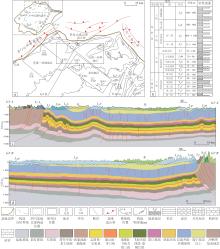
Fig.1
Schematic diagrams showing the locations of 3D acreages and orogenic belts in the northern Sichuan Basin (base map: present-day structural map of the bottom boundary of the Upper Triassic Xujiahe Formation)"


Fig.2
Characteristics of the Jurassic normal faults in the Longgang area, northern Sichuan Basin"


Fig.3
Characteristics of the Jurassic normal faults in the Cangxi-Jian’ge area, northern Sichuan Basin"

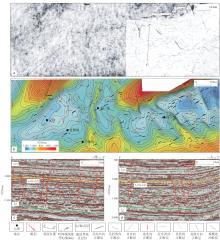
Fig.4
Characteristics of the Jurassic normal faults in the Yuanba-Heba area, northern Sichuan Basin"

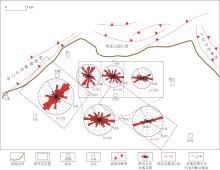
Fig.5
Statistical map of normal fault strikes of the Jurassic normal faults in the Shaximiao Formation in different areas of the northwestern Sichuan Basin"


Fig.6
Schematic diagram showing the genetic mechanisms of the Jurassic normal faults in the northwestern Sichuan Basin"

| 1 | WU Xiaoqi, YANG Jun, WANG Ping, et al. Gas source of the Middle Jurassic Shaximiao Formation in the Zhongjiang large gas field of Western Sichuan Depression: Constraints from geochemical characteristics of light hydrocarbons[J]. Energy Geoscience, 2024, 5(2): 100263. |
| 2 | 方锐, 蒋裕强, 杨长城, 等. 四川盆地侏罗系凉高山组不同岩性组合页岩油赋存状态及可动性[J]. 石油与天然气地质, 2024, 45(3): 752-769. |
| FANG Rui, JIANG Yuqiang, YANG Changcheng, et al. Occurrence states and mobility of shale oil in different lithologic assemblages in the Jurassic Lianggaoshan Formation, Sichuan Basin[J]. Oil & Gas Geology, 2024, 45(3): 752-769. | |
| 3 | 刘景东, 任成刚, 王小娟, 等. 川中地区中侏罗统沙溪庙组断层输导有效性定量评价[J]. 石油与天然气地质, 2024, 45(6): 1705-1719. |
| LIU Jingdong, REN Chenggang, WANG Xiaojuan, et al. Quantitative assessment of hydrocarbon transport effectiveness along faults in the Middle Jurassic Shaximiao Formation, central Sichuan Basin[J]. Oil & Gas Geology, 2024, 45(6): 1705-1719. | |
| 4 | 陈冬霞, 王雷, 庞雄奇, 等. 断裂对川西坳陷致密砂岩气藏天然气运聚的控制作用[J]. 现代地质, 2013, 27(5): 1137-1146. |
| CHEN Dongxia, WANG Lei, PANG Xiongqi, et al. The controlling of fault on the tight sandstone gas migration and accumulation in west Sichuan Depression[J]. Geoscience, 2013, 27(5): 1137-1146. | |
| 5 | 李忠平, 冉令波, 黎华继, 等. 窄河道远源致密砂岩气藏断层特征及天然气富集规律——以四川盆地中江气田侏罗系沙溪庙组气藏为例[J]. 天然气工业, 2016, 36(7): 1-7. |
| LI Zhongping, RAN Lingbo, LI Huaji, et al. Fault features and enrichment laws of narrow-channel distal tight sandstone gas reservoirs: A case study of the Jurassic Shaximiao Fm gas reservoir in the Zhongjiang Gas Field, Sichuan Basin[J]. Natural Gas Industry, 2016, 36(7): 1-7. | |
| 6 | 曾焱, 黎华继, 周文雅, 等. 川西坳陷东坡中江气田沙溪庙组复杂“窄”河道致密砂岩气藏高产富集规律[J]. 天然气勘探与开发, 2017, 40(4): 1-8. |
| ZENG Yan, LI Huaji, ZHOU Wenya, et al. High-yield enrichment laws of Shaximiao Formation tight sandstone gas reservoir of complex “narrow” channel in Zhongjiang Gas Field, in the eastern slope of west Sichuan Depression[J]. Natural Gas Exploration and Development, 2017, 40(4): 1-8. | |
| 7 | 张本健, 潘珂, 吴长江, 等. 四川盆地金秋气田侏罗系沙溪庙组多期砂组天然气复合成藏机理及模式[J]. 天然气工业, 2022, 42(1): 51-61. |
| ZHANG Benjian, PAN Ke, WU Changjiang, et al. Compound gas accumulation mechanism and model of Jurassic Shaximiao Formation multi-stage sandstone formations in Jinqiu Gas Field of the Sichuan Basin[J]. Natural Gas Industry, 2022, 42(1): 51-61. | |
| 8 | 张道伟, 杨雨. 四川盆地陆相致密砂岩气勘探潜力与发展方向[J]. 天然气工业, 2022, 42(1): 1-11. |
| ZHANG Daowei, YANG Yu. Exploration potential and development direction of continental tight sandstone gas in the Sichuan Basin[J]. Natural Gas Industry, 2022, 42(1): 1-11. | |
| 9 | 苏楠, 陈竹新, 杨威, 等. 川中北部侏罗系正断层特征及有利勘探方向[J]. 天然气地球科学, 2023, 34(9): 1581-1594. |
| SU Nan, CHEN Zhuxin, YANG Wei, et al. Features of normal faults in Jurassic strata in northern central Sichuan Basin and favorable exploration direction[J]. Natural Gas Geoscience, 2023, 34(9): 1581-1594. | |
| 10 | 贾东, 陈竹新, 贾承造, 等. 龙门山前陆褶皱冲断带构造解析与川西前陆盆地的发育[J]. 高校地质学报, 2003, 9(3): 402-410. |
| JIA Dong, CHEN Zhuxin, JIA Chengzao, et al. Structural features of the Longmenshan fold and thrust belt and development of the western Sichuan foreland basin, Central China[J]. Geological Journal of China Universities, 2003, 9(3): 402-410. | |
| 11 | 陈竹新, 李本亮, 贾东, 等. 龙门山冲断带北段前锋带新生代构造变形[J]. 地质学报, 2008, 82(9): 1178-1185. |
| CHEN Zhuxin, LI Benliang, JIA Dong, et al. The Cenozoic structural deformation in the northern Longmenshan front belt[J]. Acta Geologica Sinica, 2008, 82(9): 1178-1185. | |
| 12 | 魏国齐, 贾东, 杨威, 等. 四川盆地构造特征与油气[M]. 北京: 科学出版社, 2019: 175-190. |
| WEI Guoqi, JIA Dong, YANG Wei, et al. Structural characteristics and oil and gas in the Sichuan Basin[M]. Beijing: Science Press, 2019: 175-190. | |
| 13 | 常远, 许长海, REINERS P W, 等. 米仓山—汉南隆起白垩纪以来的剥露作用: 磷灰石(U-Th)/He年龄记录[J]. 地球物理学报, 2010, 53(4): 912-919. |
| CHANG Yuan, XU Changhai, REINERS P W, et al. The exhumation evolution of the Micang Shan-Hannan uplift since Cretaceous: Evidence from apatite (U-Th)/He dating[J]. Chinese Journal of Geophysics, 2010, 53(4): 912-919. | |
| 14 | 田云涛, 朱传庆, 徐明, 等. 白垩纪以来米仓山-汉南穹窿剥蚀过程及其构造意义:磷灰石裂变径迹的证据[J]. 地球物理学报, 2010, 53(4): 920-930. |
| TIAN Yuntao, ZHU Chuanqing, XU Ming, et al. Exhumation history of the Micangshan-Hannan dome since Cretaceous and its tectonic significance: Evidences from apatite fission track analysis[J]. Chinese Journal of Geophysics, 2010, 53(4): 920-930. | |
| 15 | YANG Zhao, RATSCHBACHER L, JONCKHEERE R, et al. Late-stage foreland growth of China’s largest orogens (Qinling, Tibet): Evidence from the Hannan-Micang crystalline massifs and the northern Sichuan Basin, central China[J]. Lithosphere, 2013, 5(4): 420-437. |
| 16 | 李智武. 中-新生代大巴山前陆盆地-冲断带的形成演化[D]. 成都: 成都理工大学, 2006. |
| LI Zhiwu. Meso-Cenozoic evolution of Dabashan foreland basin-thrust belt, central China[D]. Chengdu: Chengdu University of Technology, 2006. | |
| 17 | 张岳桥, 施炜, 李建华, 等. 大巴山前陆弧形构造带形成机理分析[J]. 地质学报, 2010, 84(9): 1300-1315. |
| ZHANG Yueqiao, SHI Wei, LI Jianhua, et al. Formation mechanism of the Dabashan foreland arc-shaped structural belt[J]. Acta Geologica Sinica, 2010, 84(9): 1300-1315. | |
| 18 | WANG Ruirui, XU Zhiqin, SANTOSH M, et al. Formation of Dabashan arcuate structures: Constraints from Mesozoic basement deformation in South Qinling Orogen, China[J]. Journal of Structural Geology, 2019, 118: 135-149. |
| 19 | 胡迪, 沈传波, 刘泽阳. 川东北地区埋藏-剥露历史分析——来自盆地模拟和热年代的制约[J]. 大地构造与成矿学, 2016, 40(6): 1145-1153. |
| HU Di, SHEN Chuanbo, LIU Zeyang. Basin modeling and thermochronological constrains on the burial and denudational history of the northeast Sichuan Basin[J]. Geotectonica et Metallogenia, 2016, 40(6): 1145-1153. | |
| 20 | 陈龙博, 何登发, 王贝, 等. 川东北地区通南巴背斜中三叠世以来构造变形时间厘定及其地质意义[J]. 大地构造与成矿学, 2017, 41(3): 433-445. |
| CHEN Longbo, HE Dengfa, WANG Bei, et al. Dating the tectonic deformation since the Middle Triassic for the Tongnanba anticline in the northeastern Sichuan Basin and its geological implications[J]. Geotectonica et Metallogenia, 2017, 41(3): 433-445. | |
| 21 | SHEN Chuanbo, MEI Lianfu, XU Sihuang. Fission track dating of Mesozoic sandstones and its tectonic significance in the eastern Sichuan Basin, China[J]. Radiation Measurements, 2009, 44(9/10): 945-949. |
| 22 | YANG Zhao, SHEN Chuanbo, RATSCHBACHER L, et al. Sichuan Basin and beyond: Eastward foreland growth of the Tibetan Plateau from an integration of Late Cretaceous-Cenozoic fission track and (U-Th)/He ages of the eastern Tibetan Plateau, Qinling, and Daba Shan[J]. Journal of Geophysical Research: Solid Earth, 2017, 122(6): 4712-4740. |
| 23 | ISSOUFOU ABOUBACAR M S, CAI Zhongxian, HAROUNA M, et al. Thermo-tectonic history of the northeast Sichuan Basin, Southwest China, using apatite fission-track analysis, vitrinite reflectance, and basin modelling: Implications for hydrocarbon prospectivity[J]. Geological Journal, 2020, 55(9): 6049-6065. |
| 24 | 杜思清, 魏显贵, 刘援朝, 等. 汉南-米仓山区叠加东西向隆坳的北东向推覆构造[J]. 成都理工大学学报, 1998, 25(3): 369-374. |
| DU Siqing, WEI Xiangui, LIU Yuanchao, et al. The NE-SW nappe tectonic of superposed e w structure in Hannan-Micangshan area[J]. Journal of Chengdu University of Technology, 1998, 25(3): 369-374. | |
| 25 | 魏显贵, 杜思清, 何政伟, 等. 米仓山地区构造演化[J]. 矿物岩石, 1997, 17(): 110-116. |
| WEI Xiangui, DU Siqing, HE Zhengwei, et al. The tectonic evolution of Micangshan area[J]. Mineralogy and Petrology, 1997, 17(S1): 110-116. | |
| 26 | 吴德超, 魏显贵, 杜思清, 等. 米仓山叠加型推覆构造几何结构及演化[J]. 矿物岩石, 1998, 18(): 22-26. |
| WU Dechao, WEI Xiangui, DU Siqing, et al. The geometrical texture and structural evolution of Micangshan superposed nappe structure[J]. Mineralogy and Petrology, 1998, 18(S1): 22-26. | |
| 27 | 孙东. 米仓山构造带构造特征及中—新生代构造演化[D]. 成都: 成都理工大学, 2011. |
| SUN Dong. The structural character and Meso-Cenozoic evolution of Micang Mountain Structural Zone, northern Sichuan Basin, China[D]. Chengdu: Chengdu University of Technology, 2011. | |
| 28 | 朱晨曦. 米仓山-大巴山冲断带构造变形与演化研究[D]. 北京: 中国石油大学(北京), 2021. |
| ZHU Chenxi. Research on structural deformation and evolution of the Micang Shan-Daba Shan thrust belt[D]. Beijing: China University of Petroleum(Beijing), 2021. | |
| 29 | SU Nan, ZOU Lejun, SHEN Xiaohua, et al. Fracture patterns in successive folding in the western Sichuan Basin, China[J]. Journal of Asian Earth Sciences, 2014, 81: 65-76. |
| 30 | SU Nan, ZOU Lejun, SHEN Xiaohua, et al. Identification of fracture development period and stress field analysis based on fracture fabrics in tectonic superposition areas[J]. Arabian Journal of Geosciences, 2014, 7(10): 3983-3994. |
| 31 | RAMSAY J G, HUBER M I. Folds and fractures[C]//RAMSAY J G, HUBER M I. The Techniques of Modern Structural Geology. London: Academic Press, 1987: 381. |
| 32 | 苏楠. 基于节理组构的应变分析及其在碎屑岩褶皱中的应用[D]. 杭州: 浙江大学, 2013. |
| SU Nan. Strain analysis based on fracture fabrics and its application in folds in clastic rock zone[D]. Hangzhou: Zhejiang University, 2013. | |
| 33 | ENGELDER T, PEACOCK D C P. Joint development normal to regional compression during flexural-flow folding: The Lilstock buttress anticline, Somerset, England[J]. Journal of Structural Geology, 2001, 23(2/3): 259-277. |
| 34 | SMART K J, FERRILL D A, MORRIS A P. Impact of interlayer slip on fracture prediction from geomechanical models of fault-related folds[J]. AAPG Bulletin, 2009, 93(11): 1447-1458. |
| 35 | 许建红. 西昆仑前陆冲断带固满褶皱的断弯褶皱变形、弯矩正断层作用与强震[D]. 北京: 中国地震局地质研究所, 2022. |
| XU Jianhong. Guman fault-bending folding and bending-moment normal faulting and related strong earthquake in the western Kunlun foreland basin[D]. Beijing: Institute of Geology, China Earthquake Administrator, 2022. | |
| 36 | BURBANK D W, ANDERSON R S. Tectonic geomorphology[M]. 2nd ed. Chichester: Wiley-Blackwell, 2012. |
| 37 | LIVIO F, KETTERMANN M, REICHERTER K, et al. Growth of bending-moment faults due to progressive folding: Insights from sandbox models and paleoseismological implications[J]. Geomorphology, 2019, 326: 152-166. |
| 38 | 冉崎, 雷程, 陈康, 等. 四川盆地西北地区构造变形特征、演化及油气地质意义[J]. 地质科学, 2023, 58(1): 18-35. |
| RAN Qi, LEI Cheng, CHEN Kang, et al. Structural styles, evolution and their oil-gas geological significance in the northwestern Sichuan Basin[J]. Chinese Journal of Geology, 2023, 58(1): 18-35. | |
| 39 | 沈传波, 梅廉夫, 汤济广, 等. 大巴山逆冲推覆带构造扩展变形的年代学制约[J]. 原子能科学技术, 2008, 42(6): 574-576. |
| SHEN Chuanbo, MEI Lianfu, TANG Jiguang, et al. Geochronology evidences for tectonic deformation of Dabashan fold-thrust belt in central China[J]. Atomic Energy Science and Technology, 2008, 42(6): 574-576. |
| Viewed | ||||||
|
Full text |
|
|||||
|
Abstract |
|
|||||
