

Oil & Gas Geology ›› 2025, Vol. 46 ›› Issue (3): 809-826.doi: 10.11743/ogg20250308
• Petroleum Geology • Previous Articles Next Articles
Qian TAN1,2( ), Haifeng YUAN1,2(), Tao WANG2, Zili MA2, Bojun TANG2, Qiu PENG3, Wenjie LI1,2
Received:2024-12-30
Revised:2025-04-14
Online:2025-06-30
Published:2025-06-26
Contact:
Haifeng YUAN
E-mail:799285676@qq.com;yuanhaifeng08@cdut.cn
CLC Number:
Qian TAN, Haifeng YUAN, Tao WANG, Zili MA, Bojun TANG, Qiu PENG, Wenjie LI. Genesis and impact of dissolution in deep dolomite reservoirs: A case of the 2nd member of the Sinian Dengying Formation, Penglai area, central Sichuan Basin[J]. Oil & Gas Geology, 2025, 46(3): 809-826.
Add to citation manager EndNote|Reference Manager|ProCite|BibTeX|RefWorks
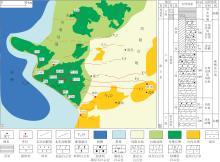
Fig.1
Sedimentary facies distribution of the Deng 2 Member (a) and composite stratigraphic column (b) of the Penglai area, central Sichuan Basin (modified after references [11,23])"

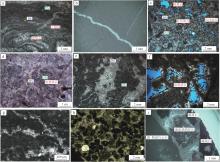
Fig.2
Micrographs showing the petrological characteristics of dolomite reservoirs in the Deng 2 Member, Penglai area, central Sichuan Basin"

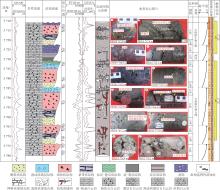
Fig.3
Sedimentary sequence and the developmental characteristics of various pores and vugs in the Deng 2 Member in well PT101, Penglai area, central Sichuan Basin"

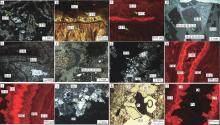
Fig.4
Thin-section micrographs showing the filling characteristics of various pores and vugs in the Deng 2 Member, Penglai area, central Sichuan Basin"

Fig.5
Carbon-oxygen (a) and carbon-strontium (b) isotopes characteristics of various dolomites in the Deng 2 Member, Penglai area, central Sichuan BasinDm. 泥晶白云石;Bs.粉晶白云石;CD.粗晶白云石;FSD.纤维状正延性白云石;RSD.放射状正延性白云石;FFD.纤维状负延性白云石;RFD.放射状负延性白云石;FMD.细-中晶白云石"
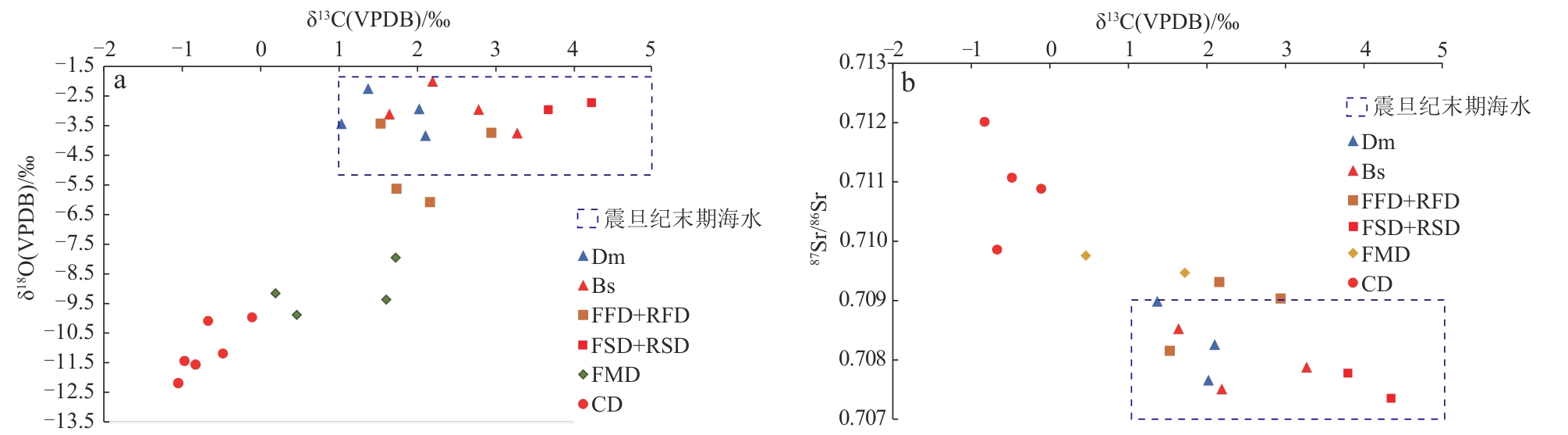
Fig.6
PASS-normalized patterns of REEs in various dolomites in the Deng 2 Member, Penglai area, central Sichuan Basin"


Fig.7
In situ U-Pb isotopic dating via laser ablation for various dolomites in the Deng 2 Member, Penglai area, central Sichuan Basin"
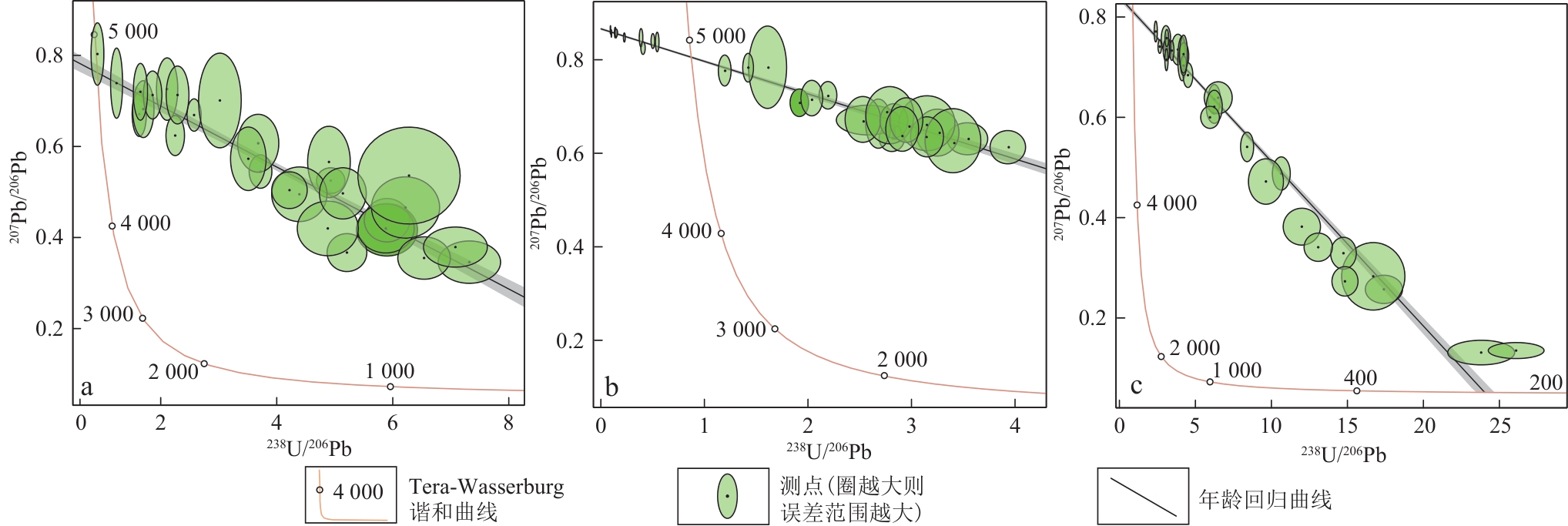
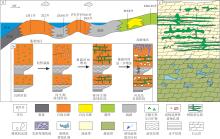
Fig.8
Schematic diagrams showing the developmental pattern and genesis of syngenetic to penecontemporaneous exposure and dissolution in the Deng 2 Member, Penglai area, central Sichuan Basin[11]"


Fig.9
Schematic diagrams showing the developmental pattern and genesis of weathered-crust karstification in the Deng 2 Member, Penglai area, central Sichuan Basin"

Table 1
Characteristics and reservoir-controlling effects of multistage dissolution in the Deng 2 Member, Penglai area, central Sichuan Basin"
| 溶蚀作用类型 | 储层岩石学特征 | 分布规律 | 储层空间类型 | 典型胶结物类型 | 溶蚀机理 | 控储效应 |
|---|---|---|---|---|---|---|
| 同生期—准同生期溶蚀 | 向上变浅的沉积旋回的叠层石白云岩、凝块石白云岩和泡沫状绵层石白云岩 | 在台缘和台内丘滩广泛分布,呈多套叠置、韵律性分布 | 组构选择性溶蚀孔和网格状溶蚀孔洞 | FFD+RFD+晶粒白云石 | 周期性海平面变化驱动的短暂暴露;溶蚀流体以大气淡水和混合水为主 | 形成孔隙-孔洞型储层,是储层形成的基础 |
| 风化壳岩溶 | 岩溶角砾白云岩、凝块石白云岩、泡沫状绵层石白云岩和砂屑白云岩 | 主要分布岩溶斜坡之下的丘滩沉积中 | 溶洞和蜂窝状溶蚀孔洞 | FSD+RSD+晶粒白云石 | 桐湾运动引起的长时间暴露;溶蚀流体为大气淡水 | 形成孔洞型储层,是储层形成的关键 |
| 热液溶蚀 | 构造角砾白云岩、凝块石白云岩、泡沫状绵层石白云岩和砂屑白云岩 | 主要分布在东西向走滑断裂附近的丘滩沉积中 | 高角度缝洞 | 粗晶白云石+石英+萤石、方铅矿和闪锌矿 | 与峨眉山火山活动引起的热事件有关;溶蚀流体为富CO2热液 | 形成缝洞型储层,是储集空间重新分配的重要控制因素 |
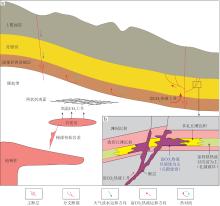
Fig.10
Schematic diagrams showing the mechanism and model of CO2-rich hydrothermal dissolution in the Deng 2 Member, Penglai area, central Sichuan Basin"
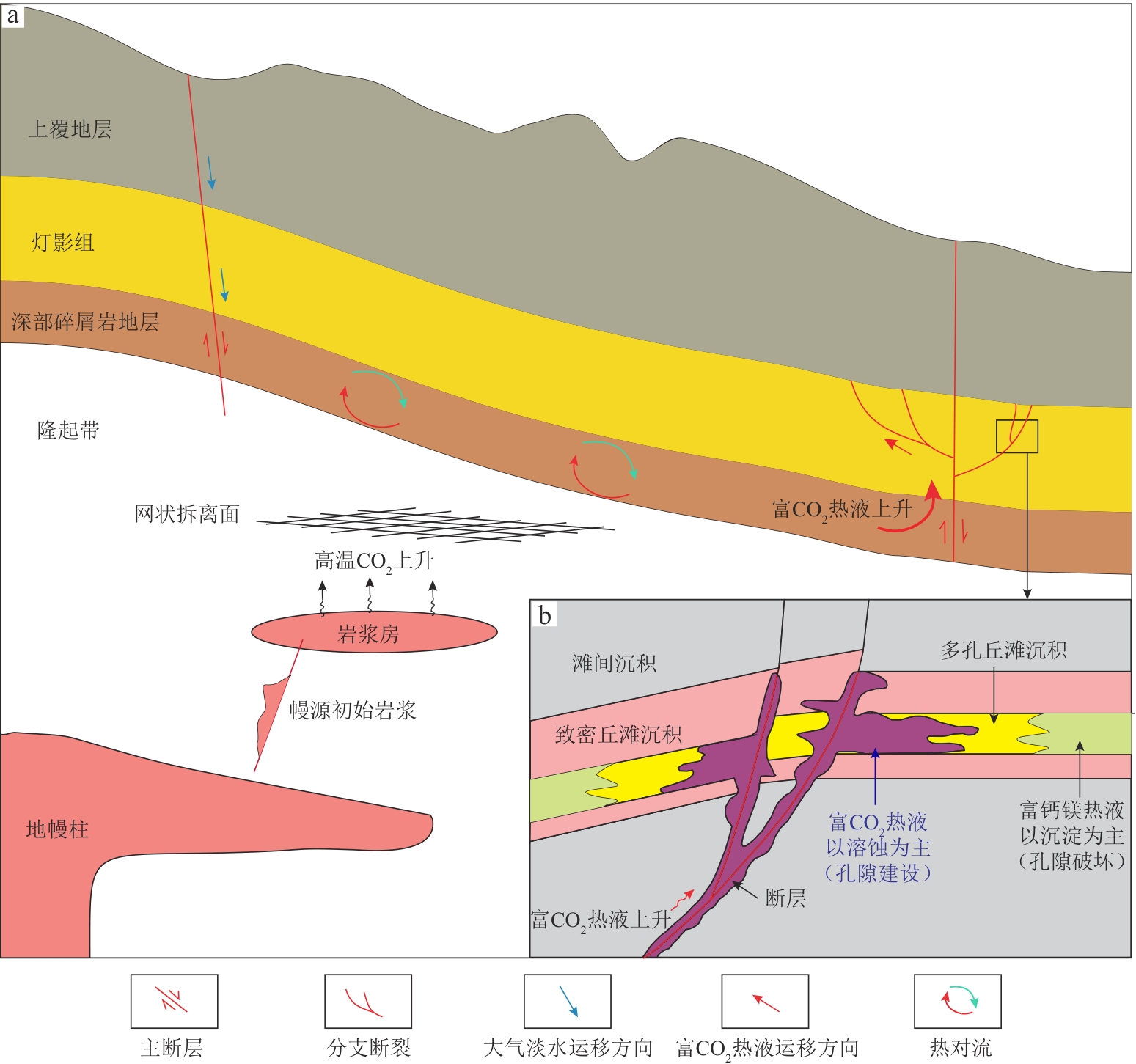

Fig.11
Mapping and assessment of reservoirs in the upper sub-member of Deng 2 Member, Penglai area, central Sichuan Basin"

| 1 | 赵文智, 沈安江, 郑剑锋, 等. 塔里木、四川及鄂尔多斯盆地白云岩储层孔隙成因探讨及对储层预测的指导意义[J]. 中国科学: 地球科学, 2014, 44(9): 1925-1939. |
| ZHAO Wenzhi, SHEN Anjiang, ZHENG Jianfeng, et al. The porosity origin of dolostone reservoirs in the Tarim, Sichuan and Ordos basins and its implication to reservoir prediction[J]. Science China Earth Sciences, 2014, 44(9): 1925-1939. | |
| 2 | 周进高, 徐哲航, 黄世伟, 等. 碳酸盐岩沉积储层研究前沿与未来发展方向[J]. 石油与天然气地质, 2024, 45(4): 929-953. |
| ZHOU Jingao, XU Zhehang, HUANG Shiwei, et al. Frontiers and trends in the research on carbonate sedimentology and reservoir geology[J]. Oil & Gas Geology, 2024, 45(4): 929-953. | |
| 3 | 李阳, 薛兆杰, 程喆, 等. 中国深层油气勘探开发进展与发展方向[J]. 中国石油勘探, 2020, 25(1): 45-57. |
| LI Yang, XUE Zhaojie, CHENG Zhe, et al. Progress and development directions of deep oil and gas exploration and development in China[J]. China Petroleum Exploration, 2020, 25(1): 45-57. | |
| 4 | 马永生, 黎茂稳, 蔡勋育, 等. 中国海相深层油气富集机理与勘探开发:研究现状、关键技术瓶颈与基础科学问题[J]. 石油与天然气地质, 2020, 41(4): 655-672, 683. |
| MA Yongsheng, LI Maowen, CAI Xunyu, et al. Mechanisms and exploitation of deep marine petroleum accumulations in China: Advances, technological bottlenecks and basic scientific problems[J]. Oil & Gas Geology, 2020, 41(4): 655-672, 683. | |
| 5 | 邹才能, 杜金虎, 徐春春, 等. 四川盆地震旦系—寒武系特大型气田形成分布、资源潜力及勘探发现[J]. 石油勘探与开发, 2014, 41(3): 278-293. |
| ZOU Caineng, DU Jinhu, XU Chunchun, et al. Formation, distribution, resource potential and discovery of the Sinian-Cambrian giant gas field, Sichuan Basin, SW China[J]. Petroleum Exploration and Development, 2014, 41(3): 278-293. | |
| 6 | EHRENBERG S N, WALDERHAUG O, BJØRLYKKE K. Carbonate porosity creation by mesogenetic dissolution: Reality or illusion?[J]. AAPG Bulletin, 2012, 96(2): 217-233. |
| 7 | CAI Chunfang, HU Guoyi, LI Hongxia, et al. Origins and fates of H2S in the Cambrian and Ordovician in Tazhong area: Evidence from sulfur isotopes, fluid inclusions and production data[J]. Marine and Petroleum Geology, 2015, 67: 408-418. |
| 8 | HAO Fang, ZHANG Xuefeng, WANG Cunwu, et al. The fate of CO2 derived from thermochemical sulfate reduction (TSR) and effect of TSR on carbonate porosity and permeability, Sichuan Basin, China[J]. Earth-Science Reviews, 2015, 141: 154-177. |
| 9 | BIEHL B C, REUNING L, SCHOENHERR J, et al. Impacts of hydrothermal dolomitization and thermochemical sulfate reduction on secondary porosity creation in deeply buried carbonates: A case study from the Lower Saxony Basin, northwest Germany[J]. AAPG Bulletin, 2016, 100(4): 597-621. |
| 10 | TAN Qian, SHI Zejin, HU Xiuquan, et al. Diagenesis of microbialites in the Lower Cambrian Qingxudong Formation, South China: Implications for the origin of porosity in deep microbial carbonates[J]. Journal of Natural Gas Science and Engineering, 2018, 51: 166-182. |
| 11 | 张自力, 乔艳萍, 豆霜, 等. 四川盆地蓬莱气区震旦系灯影组二段岩溶古地貌与控储模式[J]. 石油与天然气地质, 2024, 45(1): 200-214. |
| ZHANG Zili, QIAO Yanping, DOU Shuang, et al. Karst paleogeomorphology and reservoir control model of the 2nd member of Dengying Formation in Penglai gas area, Sichuan Basin, China[J]. Oil & Gas Geology, 2024, 45(1): 200-214. | |
| 12 | 杨雨, 黄先平, 张健, 等. 四川盆地寒武系沉积前震旦系顶界岩溶地貌特征及其地质意义[J]. 天然气工业, 2014, 34(3): 38-43. |
| YANG Yu, HUANG Xianping, ZHANG Jian, et al. Features and geologic significances of the top Sinian karst landform before the Cambrian deposition in the Sichuan Basin[J]. Natural Gas Industry, 2014, 34(3): 38-43. | |
| 13 | 刘宏, 罗思聪, 谭秀成, 等. 四川盆地震旦系灯影组古岩溶地貌恢复及意义[J]. 石油勘探与开发, 2015, 42(3): 283-293. |
| LIU Hong, LUO Sicong, TAN Xiucheng, et al. Restoration of paleokarst geomorphology of Sinian Dengying Formation in Sichuan Basin and its significance, SW China[J]. Petroleum Exploration and Development, 2015, 42(3): 283-293. | |
| 14 | 陈娅娜, 沈安江, 潘立银, 等. 微生物白云岩储集层特征、成因和分布——以四川盆地震旦系灯影组四段为例[J]. 石油勘探与开发, 2017, 44(5): 704-715. |
| CHEN Yana, SHEN Anjiang, PAN Liyin, et al. Features, origin and distribution of microbial dolomite reservoirs: A case study of 4th Member of Sinian Dengying Formation in Sichuan Basin, SW China[J]. Petroleum Exploration and Development, 2017, 44(5): 704-715. | |
| 15 | 王文之, 杨跃明, 文龙, 等. 微生物碳酸盐岩沉积特征研究——以四川盆地高磨地区灯影组为例[J]. 中国地质, 2016, 43(1): 306-318. |
| WANG Wenzhi, YANG Yueming, WEN Long, et al. A study of sedimentary characteristics of microbial carbonate: A case study of the Sinian Dengying Formation in Gaomo area, Sichuan Basin[J]. Geology in China, 2016, 43(1): 306-318. | |
| 16 | 宋金民, 刘树根, 李智武, 等. 四川盆地上震旦统灯影组微生物碳酸盐岩储层特征与主控因素[J]. 石油与天然气地质, 2017, 38(4): 741-752. |
| SONG Jinmin, LIU Shugen, LI Zhiwu, et al. Characteristics and controlling factors of microbial carbonate reservoirs in the Upper Sinian Dengying Formation in the Sichuan Basin, China[J]. Oil & Gas Geology, 2017, 38(4): 741-752. | |
| 17 | 刘树根, 宋金民, 罗平, 等. 四川盆地深层微生物碳酸盐岩储层特征及其油气勘探前景[J]. 成都理工大学学报(自然科学版), 2016, 43(2): 129-152. |
| LIU Shugen, SONG Jinmin, LUO Ping, et al. Characteristics of microbial carbonate reservoir and its hydrocarbon exploring outlook in the Sichuan Basin, China[J]. Journal of Chengdu University of Technology(Science & Technology Edition), 2016, 43(2): 129-152. | |
| 18 | 马兵山, 梁瀚, 邬光辉, 等. 四川盆地中部地区多期次走滑断层的形成及演化[J]. 石油勘探与开发, 2023, 50(2): 333-345. |
| MA Bingshan, LIANG Han, WU Guanghui, et al. Formation and evolution of the strike-slip faults in the central Sichuan Basin, SW China[J]. Petroleum Exploration and Development, 2023, 50(2): 333-345. | |
| 19 | 蒋裕强, 谷一凡, 朱讯, 等. 四川盆地川中地区震旦系灯影组热液白云岩储集相[J]. 天然气工业, 2017, 37(3): 17-24. |
| JIANG Yuqiang, GU Yifan, ZHU Xun, et al. Hydrothermal dolomite reservoir facies in the Sinian Dengying Fm, Central Sichuan Basin[J]. Natural Gas Industry, 2017, 37(3): 17-24. | |
| 20 | 冯明友, 强子同, 沈平, 等. 四川盆地高石梯—磨溪地区震旦系灯影组热液白云岩证据[J]. 石油学报, 2016, 37(5): 587-598. |
| FENG Mingyou, QIANG Zitong, SHEN Ping, et al. Evidences for hydrothermal dolomite of Sinian Dengying Formation in Gaoshiti-Moxi area, Sichuan Basin[J]. Acta Petrolei Sinica, 2016, 37(5): 587-598. | |
| 21 | 刘树根, 孙玮, 罗志立, 等. 兴凯地裂运动与四川盆地下组合油气勘探[J]. 成都理工大学学报(自然科学版), 2013, 40(5): 511-520. |
| LIU Shugen, SUN Wei, LUO Zhili, et al. Xingkai taphrogenesis and petroleum exploration from Upper Sinian to Cambrian Strata in Sichuan Basin, China[J]. Journal of Chengdu University of Technology(Science & Technology Edition), 2013, 40(5): 511-520. | |
| 22 | 刘静江, 刘慧荣, 李文皓, 等. 四川盆地裂陷槽研究新进展——关于裂陷槽成因机制与形成时间的探讨[J]. 地质论评, 2021, 67(3): 767-786. |
| LIU Jingjiang, LIU Huirong, LI Wenhao, et al. New progress in the study of aulacogen in Sichuan Basin——A discussion on the genetic mechanism and formation time of the aulacogen[J]. Geological Review, 2021, 67(3): 767-786. | |
| 23 | 张本健, 马华灵, 李文正, 等. 四川盆地蓬莱气区灯二段储集层特征及主控因素[J]. 天然气地球科学, 2023, 34(11): 1899-1915. |
| ZHANG Benjian, MA Hualing, LI Wenzheng, et al. Reservoir characteristics and main controlling factors in the second member of the Dengying Formation in the Penglai Gas Field, Sichuan Basin[J]. Natural Gas Geoscience, 2023, 34(11): 1899-1915. | |
| 24 | 张玺华, 彭瀚霖, 文龙, 等. 四川盆地西北部灯影组深水沉积的发现及油气地质意义[J]. 天然气勘探与开发, 2020, 43(4): 10-21. |
| ZHANG Xihua, PENG Hanlin, WEN Long, et al. Discovery of deep-water deposits in Northwest Sichuan Basin during Dengyingian period: Implications for petroleum geology[J]. Natural Gas Exploration and Development, 2020, 43(4): 10-21. | |
| 25 | 聂晶, 周刚, 张亚, 等. 川中古隆起北斜坡灯影组二段储层成岩流体演化及成储效应[J]. 地质学报, 2025, 99(3): 879-896. |
| NIE Jing, ZHOU Gang, ZHANG Ya, et al. Diagenetic fluid evolution and reservoir formation effect of the second member of Dengying Formation in the northern slope of central Sichuan paleo-uplift[J]. Acta Geologica Sinica, 2025, 99(3): 879-896. | |
| 26 | GODEAU N, DESCHAMPS P, GUIHOU A, et al. U-Pb dating of calcite cement and diagenetic history in microporous carbonate reservoirs: Case of the Urgonian Limestone, France[J]. Geology, 2018, 46(3): 247-250. |
| 27 | FURUYAMA S, KANO A, KUNIMITSU Y, et al. Diagenetic overprint to a negative carbon isotope anomaly associated with the Gaskiers glaciation of the Ediacaran Doushantuo Formation in South China[J]. Precambrian Research, 2016, 276: 110-122. |
| 28 | VEIZER J, ALA D, AZMY K, et al. 87Sr/86Sr, δ13C and δ18O evolution of Phanerozoic seawater[J]. Chemical Geology, 1999, 161(1/3): 59-88. |
| 29 | WARREN J. Dolomite: Occurrence, evolution and economically important associations[J]. Earth-Science Reviews, 2000, 52(1/3): 1-81. |
| 30 | HU Yongjie, CAI Chunfang, LIU Dawei, et al. Formation, diagenesis and palaeoenvironmental significance of Upper Ediacaran fibrous dolomite cements[J]. Sedimentology, 2020, 67(2): 1161-1187. |
| 31 | WANG Jingbin, HE Zhiliang, ZHU Dongya, et al. Petrological and geochemical characteristics of the botryoidal dolomite of Dengying Formation in the Yangtze Craton, South China: Constraints on terminal Ediacaran “dolomite seas”[J]. Sedimentary Geology, 2020, 406: 105722. |
| 32 | NOTHDURFT L D, WEBB G E, KAMBER B S. Rare earth element geochemistry of Late Devonian reefal carbonates, Canning Basin, Western Australia: Confirmation of a seawater REE proxy in ancient limestones[J]. Geochimica et Cosmochimica Acta, 2004, 68(2): 263-283. |
| 33 | LING Hongfei, CHEN Xi, LI Da, et al. Cerium anomaly variations in Ediacaran-earliest Cambrian carbonates from the Yangtze Gorges area, South China: Implications for oxygenation of coeval shallow seawater[J]. Precambrian Research, 2013, 225: 110-127. |
| 34 | 赵彦彦, 李三忠, 李达, 等. 碳酸盐(岩)的稀土元素特征及其古环境指示意义[J]. 大地构造与成矿学, 2019, 43(1): 141-167. |
| ZHAO Yanyan, LI Sanzhong, LI Da, et al. Rare earth element geochemistry of carbonate and its paleoenvironmental implications[J]. Geotectonica et Metallogenia, 2019, 43(1): 141-167. | |
| 35 | 沈安江, 胡安平, 程婷, 等. 激光原位U-Pb同位素定年技术及其在碳酸盐岩成岩-孔隙演化中的应用[J]. 石油勘探与开发, 2019, 46(6): 1062-1074. |
| SHEN Anjiang, HU Anping, CHENG Ting, et al. Laser ablation in situ U-Pb dating and its application to diagenesis-porosity evolution of carbonate reservoirs[J]. Petroleum Exploration and Development, 2019, 46(6): 1062-1074. | |
| 36 | 沈安江, 赵文智, 胡安平, 等. 碳酸盐矿物定年和定温技术及其在川中古隆起油气成藏研究中的应用[J]. 石油勘探与开发, 2021, 48(3): 476-487. |
| SHEN Anjiang, ZHAO Wenzhi, HU Anping, et al. The dating and temperature measurement technologies for carbonate minerals and their application in hydrocarbon accumulation research in the paleo-uplift in central Sichuan Basin, SW China[J]. Petroleum Exploration and Development, 2021, 48(3): 476-487. | |
| 37 | 何治亮, 高志前, 张军涛, 等. 层序界面类型及其对优质碳酸盐岩储层形成与分布的控制[J]. 石油与天然气地质, 2014, 35(6): 853-859. |
| HE Zhiliang, GAO Zhiqian, ZHANG Juntao, et al. Types of sequence boundaries and their control over formation and distribution of quality carbonate reservoirs[J]. Oil & Gas Geology, 2014, 35(6): 853-859. | |
| 38 | 谭秀成, 肖笛, 陈景山, 等. 早成岩期喀斯特化研究新进展及意义[J]. 古地理学报, 2015, 17(4): 441-456. |
| TAN Xiucheng, XIAO Di, CHEN Jingshan, et al. New advance and enlightenment of eogenetic karstification[J]. Journal of Palaeogeography (Chinese Edition), 2015, 17(4): 441-456. | |
| 39 | VACHER H L, MYLROIE J E. Eogenetic karst from the perspective of an equivalent porous medium[J]. Carbonates and Evaporites, 2002, 17(2): 182-196. |
| 40 | 由雪莲, 孙枢, 朱井泉, 等. 微生物白云岩模式研究进展[J]. 地学前缘, 2011, 18(4): 52-64. |
| YOU Xuelian, SUN Shu, ZHU Jingquan, et al. Progress in the study of microbial dolomite model[J]. Earth Science Frontiers, 2011, 18(4): 52-64. | |
| 41 | DUPRAZ C, REID R P, BRAISSANT O, et al. Processes of carbonate precipitation in modern microbial mats[J]. Earth-Science Reviews, 2009, 96(3): 141-162. |
| 42 | PERRI E, TUCKER M. Bacterial fossils and microbial dolomite in Triassic stromatolites[J]. Geology, 2007, 35(3): 207-210. |
| 43 | CORSETTI F A, KIDDER D L, MARENCO P J. Trends in oolite dolomitization across the Neoproterozoic-Cambrian boundary: A case study from Death Valley, California[J]. Sedimentary Geology, 2006, 191(3/4): 135-150. |
| 44 | 汪泽成, 姜华, 王铜山, 等. 四川盆地桐湾期古地貌特征及成藏意义[J]. 石油勘探与开发, 2014, 41(3): 305-312. |
| WANG Zecheng, JIANG Hua, WANG Tongshan, et al. Paleo-geomorphology formed during Tongwan tectonization in Sichuan Basin and its significance for hydrocarbon accumulation[J]. Petroleum Exploration and Development, 2014, 41(3): 305-312. | |
| 45 | 杨帅, 陈洪德, 钟怡江, 等. 川西南地区晚震旦世微生物岩及其对桐湾运动Ⅰ幕的响应[J]. 岩石学报, 2017, 33(4): 1148-1158. |
| YANG Shuai, CHEN Hongde, ZHONG Yijiang, et al. Microbolite of Late Sinian and its response for Tongwan movement episode Ⅰ in southwest Sichuan, China[J]. Acta Petrologica Sinica, 2017, 33(4): 1148-1158. | |
| 46 | SHUSTER A M, WALLACE M W, VAN SMEERDIJK HOOD A, et al. The Tonian beck spring dolomite: Marine dolomitization in a shallow, anoxic sea[J]. Sedimentary Geology, 2018, 368: 83-104. |
| 47 | HOOD A V S, WALLACE M W, DRYSDALE R N. Neoproterozoic aragonite-dolomite seas? Widespread marine dolomite precipitation in Cryogenian reef complexes[J]. Geology, 2011, 39(9): 871-874. |
| 48 | CUI Huan, XIAO Shuhai, CAI Yaoping, et al. Sedimentology and chemostratigraphy of the terminal Ediacaran Dengying Formation at the Gaojiashan section, South China[J]. Geological Magazine, 2019, 156(11): 1924-1948. |
| 49 | XIAO Di, TAN Xiucheng, XI Aihua, et al. An inland facies-controlled eogenetic karst of the carbonate reservoir in the Middle Permian Maokou Formation, southern Sichuan Basin, SW China[J]. Marine and Petroleum Geology, 2016, 72: 218-233. |
| 50 | DAVIES G R, SMITH L B, Jr. Structurally controlled hydrothermal dolomite reservoir facies: An overview[J]. AAPG Bulletin, 2006, 90(11): 1641-1690. |
| 51 | 左银辉, 郑紫芸, 邵大力, 等. 二氧化碳成因、成藏主控因素及脱气模式研究综述[J]. 科学技术与工程, 2021, 21(29): 12356-12367. |
| ZUO Yinhui, ZHENG Ziyun, SHAO Dali, et al. Reviews on CO2 genesis, controlling factors of hydrocarbon accumulation and degassing model[J]. Science Technology and Engineering, 2021, 21(29): 12356-12367. | |
| 52 | ZHANG Tongwei, ZHANG Mingjie, BAI Baojun, et al. Origin and accumulation of carbon dioxide in the Huanghua Depression, Bohai Bay Basin, China[J]. AAPG Bulletin, 2008, 92(3): 341-358. |
| 53 | 朱联强, 柳广弟, 宋泽章, 等. 川中古隆起北斜坡不同地区灯影组天然气差异及其影响因素——以蓬探1井和中江2井为例[J]. 石油科学通报, 2021, 6(3): 344-355. |
| ZHU Lianqiang, LIU Guangdi, SONG Zezhang, et al. The differences in natural gas from the Dengying Formation in different areas of the north slope of the central Sichuan Paleo-uplift and its controlling factors-Taking Pengtan-1 and Zhongjiang-2 wells as examples[J]. Petroleum Science Bulletin, 2021, 6(3): 344-355. |
| Viewed | ||||||
|
Full text |
|
|||||
|
Abstract |
|
|||||
