

石油与天然气地质 ›› 2025, Vol. 46 ›› Issue (2): 510-529.doi: 10.11743/ogg20250212
谢文泉1( ), 谭静强2(), 贾建亮3, 曹涛涛1, 王勇4
收稿日期:2024-11-12
修回日期:2025-02-05
出版日期:2025-04-30
发布日期:2025-04-27
通讯作者:
谭静强
E-mail:1224894986@qq.com;tanjingqiang@csu.edu.cn
第一作者简介:谢文泉(1990—),男,讲师,油页岩资源评价与成矿机理。E-mail: 1224894986@qq.com。
基金项目:
Wenquan XIE1(), Jingqiang TAN2(), Jianliang JIA3, Taotao CAO1, Yong WANG4
Received:2024-11-12
Revised:2025-02-05
Online:2025-04-30
Published:2025-04-27
Contact:
Jingqiang TAN
E-mail:1224894986@qq.com;tanjingqiang@csu.edu.cn
摘要:
气候对湖泊生物发育以及沉积环境具有重要影响,是影响油页岩成矿的重要因素。在中侏罗世晚期,柴达木盆地气候经历了一次由湿润向干旱的重大转变。在此气候转折期,盆地沉积了一套连续稳定的湖相油页岩。以该套油页岩为研究对象,利用孢粉学和地球化学等手段,探究了气候干旱化与油页岩成矿的协同演化关系。研究表明:①石门沟组页岩段油页岩沉积于不同的干湿气候背景,下部黑色块状油页岩沉积于相对湿润气候背景下的淡水湖泊,而上部纹层状油页岩形成于干旱气候背景下的咸化湖泊。②湿润气候时期繁盛的陆地植被与高的陆源通量向湖泊输入了丰富的陆源有机质和陆源碎屑,导致了其混合的有机质来源和贫氧的有机质保存环境,形成了生烃潜力好的中等品质油页岩。③干旱气候时期萎缩的陆地植被以及藻类勃发造就了藻类为主的有机质来源,而缺氧和高盐的底水环境极大地提高了有机质的保存效率,形成了具有良好生烃潜力的中等偏高品质油页岩。④此次气候干旱化引发的湖盆咸化是驱动这两种油页岩成矿模式转变的关键。该研究不仅有助于揭示气候干旱化与油页岩成矿富集的耦合机制,也可为柴达木盆地优质油页岩矿产预测提供重要依据。
中图分类号:

图1
柴达木盆地及邻区构造简图(a)和柴北缘构造分区图及钻井取样位置(b)(修改自文献[20])"

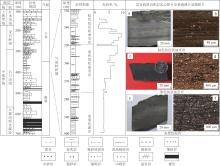
图2
柴达木盆地北缘鱼油页1井岩心综合柱状图和页岩段典型岩相a.棕色纹层状油页岩,埋深342.2 m,岩心;b.有机质、黏土纹层与碳酸盐纹层,埋深342.2 m,普通薄片, 正交偏光;c.黑色块状油页岩,埋深351.5 m,岩心;d.分散状有机质,埋深351.5 m,普通薄片, 单偏光;e.黑色泥岩,埋深370.5 m,岩心;f.分散状有机质与石英,埋深370.5 m,普通薄片, 单偏光"

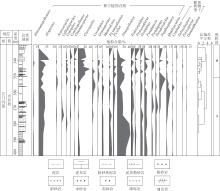
图3
柴达木盆地北缘鱼油页1井石门沟组页岩段主要孢粉含量以及孢粉组合"

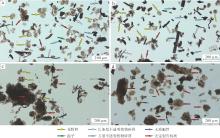
图4
柴达木盆地北缘鱼油页1井石门沟组页岩段不同孢粉相透射光镜下特征a.泥岩,见丰富的孢型和植物碎屑,埋深387.0 m;b.黑色块状油页岩,见丰富的孢型、植物碎屑以及无定型有机质,埋深356.5 m;c.纹层状油页岩,以无定型有机质为主,见少量孢型,埋深350.5 m;d.纹层状油页岩,以无定型有机质为主,见少量植物碎屑,埋深342.0 m"

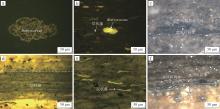
图5
柴达木盆地北缘鱼油页1井石门沟组页岩段泥岩与油页岩显微组分典型照片a.泥岩,埋深395.5 m,全岩光片,反射荧光;b.块状油页岩,埋深358.5 m,全岩光片,反射荧光;c.块状油页岩,埋深360.5 m,全岩光片,反射白光;d.纹层状油页岩,埋深342.5 m,全岩光片,反射荧光;e.纹层状油页岩,埋深342.0 m,全岩光片,反射荧光;f.纹层状油页岩,埋深342.5 m,全岩光片,反射白光"

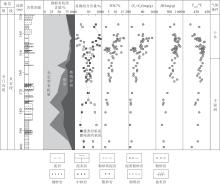
图6
柴达木盆地北缘鱼油页1井石门沟组页岩段孢粉有机质相对含量与有机地球化学参数(TOC为总有机碳含量;S1+S2为生烃潜量;HI为氢指数;Tmax为最高热解峰温。)"

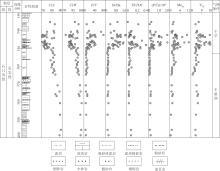
图7
柴达木盆地北缘鱼油页1井石门沟组页岩段元素地球化学参数(CIA为化学蚀变指数;CIW为化学风化指数;ICV为成分变异指数;Sr/Ba和P/Ti为元素含量比值;总含硫量(TS)/TOC为MoEF为Mo元素富集因子;UEF为U元素富集因子。)"

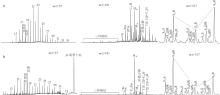
图8
柴达木盆地北缘鱼油页1井石门沟组典型油页岩样品生物标志化合物质量色谱a.黑色块状油页岩,埋深359.2 m;b.棕色纹层状油页岩,埋深346.5 m"
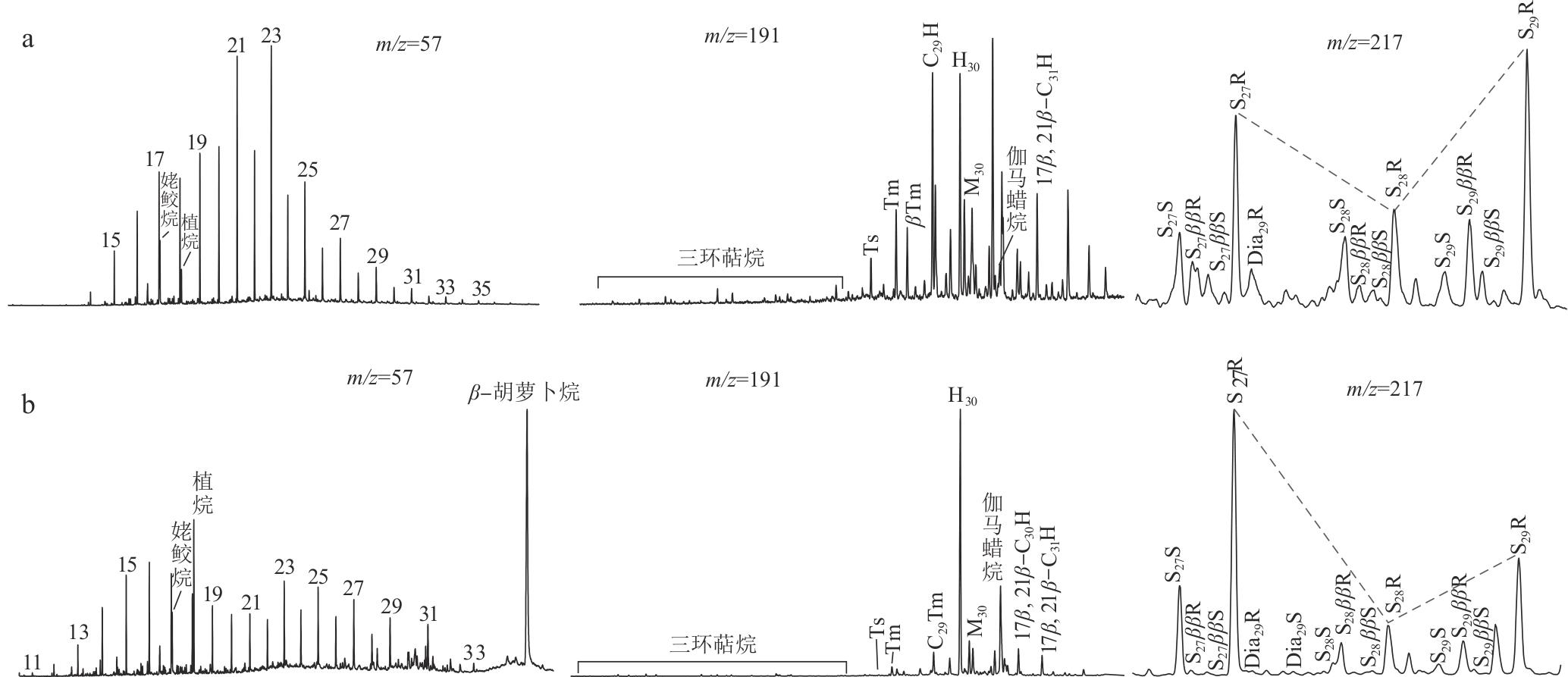
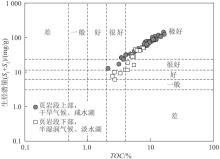
图9
柴达木盆地北缘鱼油页1井石门沟组页岩段TOC与S1+S2交汇图(图版据文献[37]修改)"
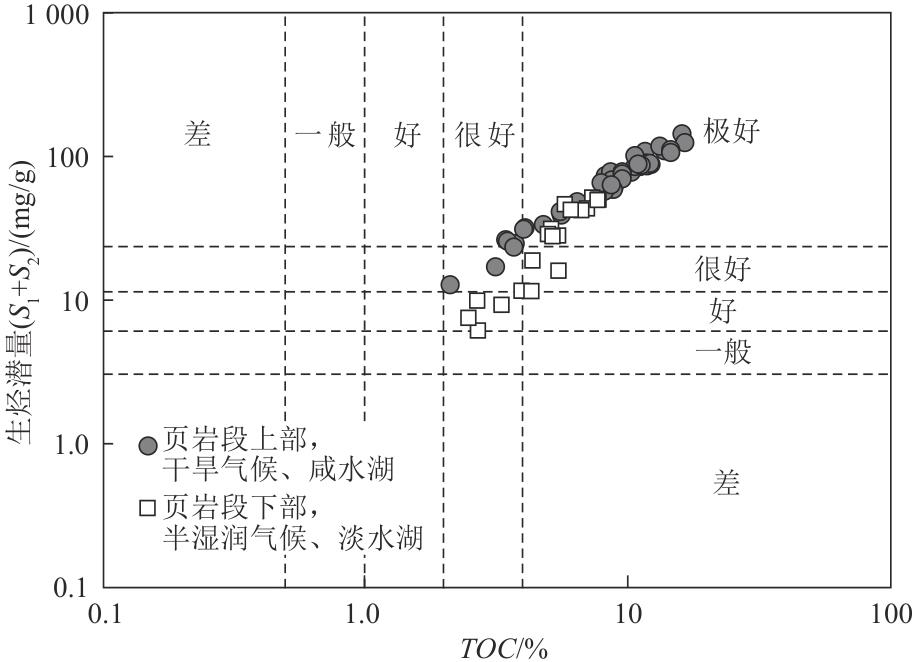
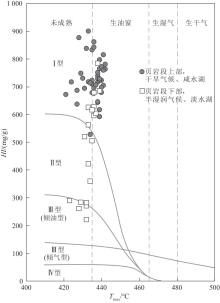
图10
柴达木盆地北缘鱼油页1井石门沟组页岩段HI-Tmax关系图版(HI为氢指数;Tmax为最高热解峰温。)"
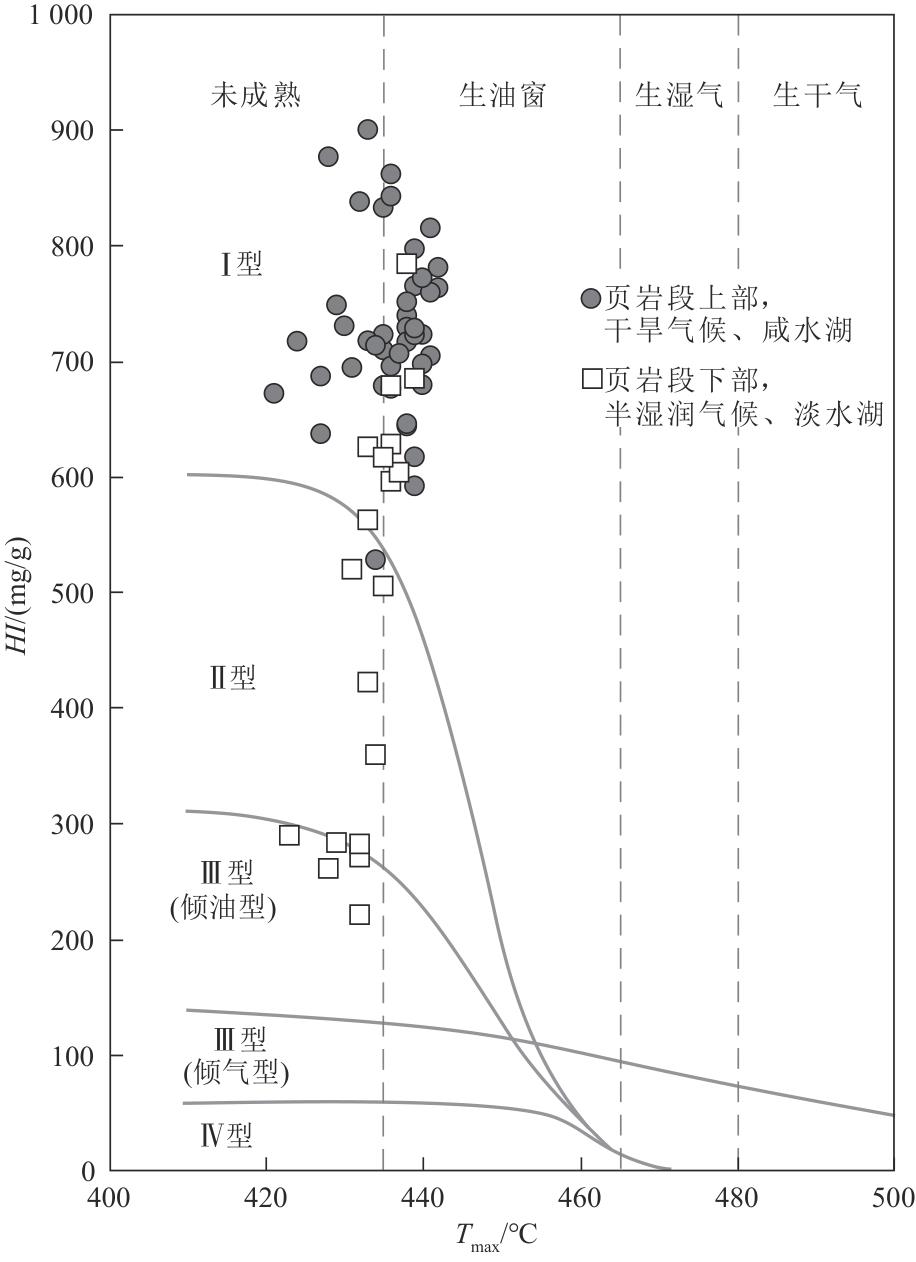
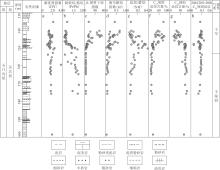
图11
柴达木盆地北缘鱼油页1井石门沟组页岩段饱和烃生物标志化合物参数"

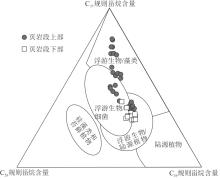
图12
柴达木盆地北缘鱼油页1井石门沟组页岩段C27,C28和C29规则甾烷含量分布三角图(图版据文献[10]修改)"
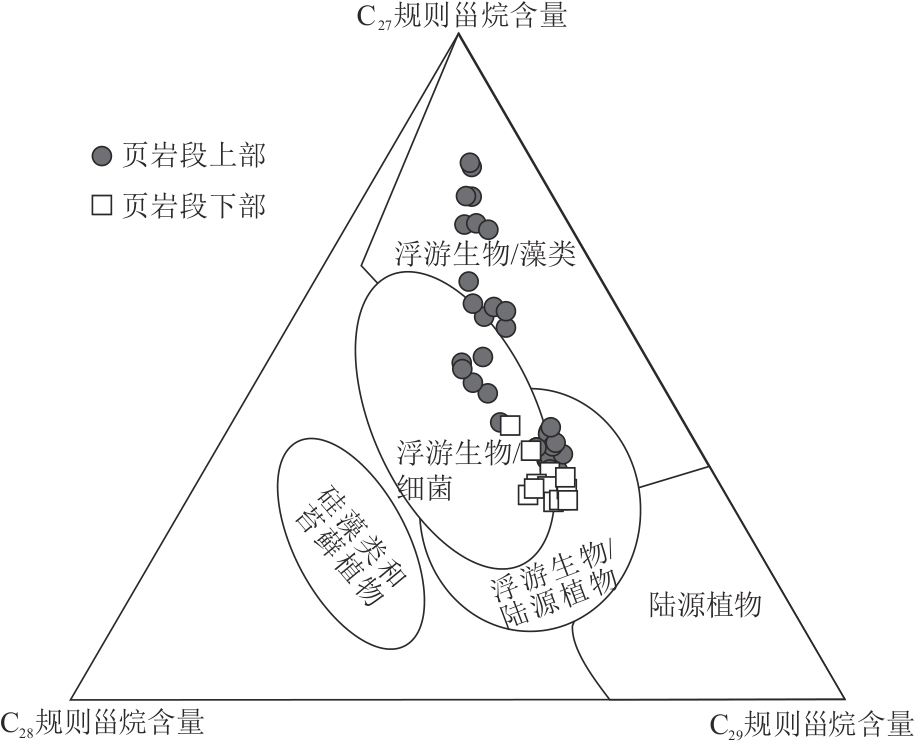
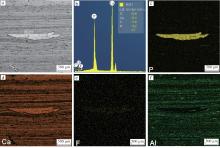
图13
柴达木盆地北缘鱼油页1井石门沟组页岩段纹层状油页岩样品(埋深346.8 m)能谱图与元素面分析图a.纹层状油页岩背散射照片;b.纹层状油页岩能谱图;c.磷(P)元素面扫描图;d.钙(Ca)元素面扫描图;e.氟(F)元素面扫描图;f.铝(Al)元素面扫描图"

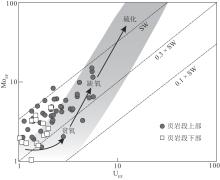
图14
柴达木盆地北缘鱼油页1井石门沟组页岩段MoEF-UEF协变关系(MoEF为Mo元素富集因子;UEF为U元素富集因子。)"
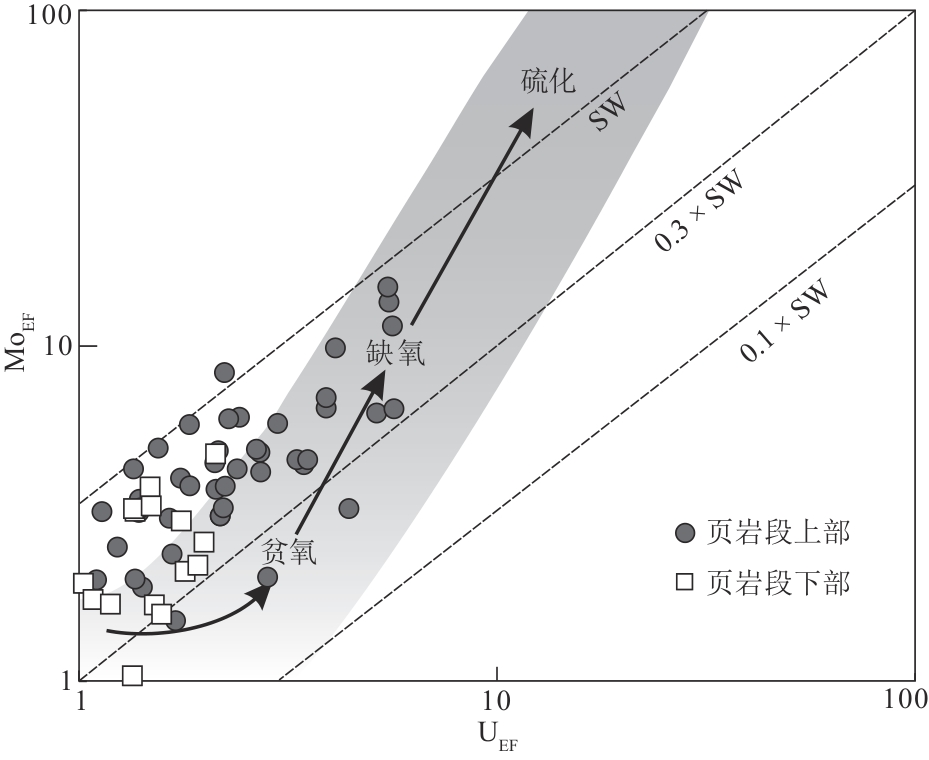
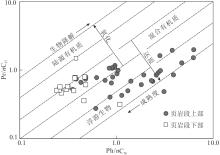
图15
柴达木盆地北缘鱼油页1井石门沟组页岩段Pr/nC17与Ph/nC18交汇图(Pr/nC17为姥鲛烷/nC17;Ph/nC18为植烷/nC18。)"
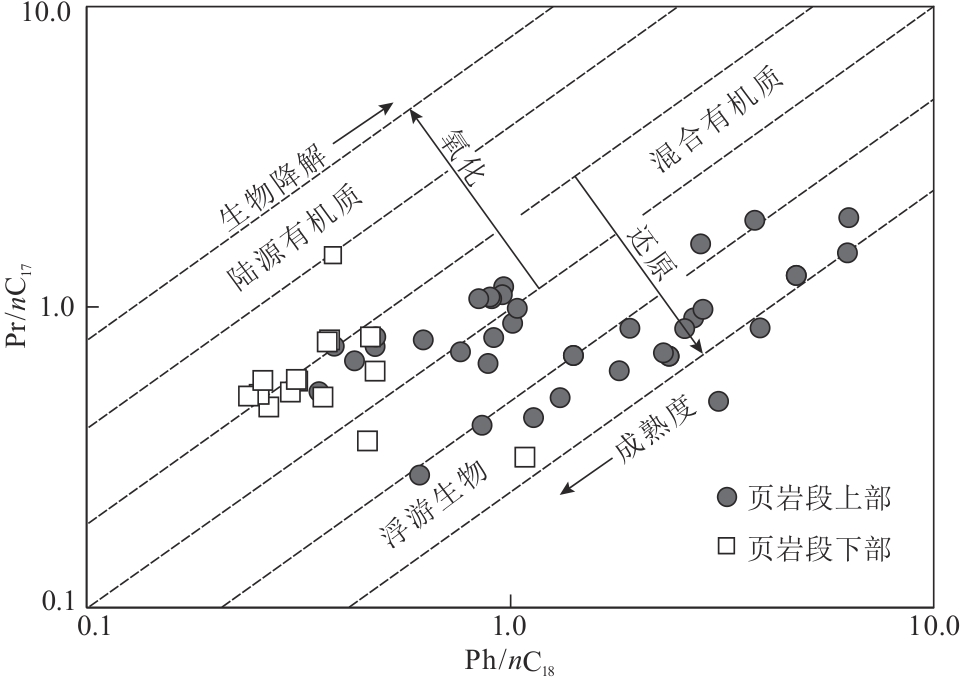
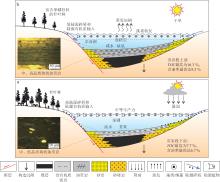
图16
柴达木盆地中侏罗世晚期气候转折期油页岩成矿模式示意图a.页岩段下部沉积时期;b.页岩段上部沉积时期"

| 1 | 刘招君, 董清水, 叶松青, 等. 中国油页岩资源现状[J]. 吉林大学学报(地球科学版), 2006, 36(6): 869-876. |
| LIU Zhaojun, DONG Qingshui, YE Songqing, et al. The situation of oil shale resources in China[J]. Journal of Jilin University (Earth Science Edition), 2006, 36(6): 869-876. | |
| 2 | 刘招君, 孟庆涛, 柳蓉. 中国陆相油页岩特征及成因类型[J]. 古地理学报, 2009, 11(1): 105-114. |
| LIU Zhaojun, MENG Qingtao, LIU Rong. Characteristics and genetic types of continental oil shales in China[J]. Journal of Palaeogeography (Chinese Edition), 2009, 11(1): 105-114. | |
| 3 | 柳蓉, 张坤, 刘招君, 等. 中国油页岩富集与地质事件研究[J]. 沉积学报, 2021, 39(1): 10-28. |
| LIU Rong, ZHANG Kun, LIU Zhaojun, et al. Oil shale mineralization and geological events in China[J]. Acta Sedimentologica Sinica, 2021, 39(1): 10-28. | |
| 4 | 刘招君, 孙平昌. 中国陆相盆地油页岩形成环境与成矿机制[J]. 古地理学报, 2021, 23(1): 1-17. |
| LIU Zhaojun, SUN Pingchang. Formation environment and mineralization mechanism of oil shale in continental basins of China[J]. Journal of Palaeogeography (Chinese Edition), 2021, 23(1): 1-17. | |
| 5 | 许圣传, 刘招君, 董清水, 等. 抚顺煤田始新统沉积演化及其对煤和油页岩发育的控制[J]. 中国石油大学学报(自然科学版), 2012, 36(2): 45-52, 67. |
| XU Shengchuan, LIU Zhaojun, DONG Qingshui, et al. Eocene sedimentary evolution and its control over coal & oil shale development in Fushun Coalfield[J]. Journal of China University of Petroleum (Edition of Natural Science), 2012, 36(2): 45-52, 67. | |
| 6 | SUN Pingchang, SACHSENHOFER R F, LIU Zhaojun, et al. Organic matter accumulation in the oil shale- and coal-bearing Huadian Basin (Eocene; NE China)[J]. International Journal of Coal Geology, 2013, 105: 1-15. |
| 7 | WANG Xiaolin, ZHU Xiaomin, LAI Jin, et al. Paleoenvironmental reconstruction and organic matter accumulation of the Paleogene Shahejie oil shale in the Zhanhua Sag, Bohai Bay Basin, eastern China[J]. Petroleum Science, 2024, 21(3): 1552-1568. |
| 8 | QIAO Jinqi, LUO Qingyong, ZHANG Kuihua, et al. Geochemistry and organic petrography of the Middle Permian Lucaogou alkaline lacustrine oil shale in the southern Junggar Basin, China: Implications for formation conditions and organic matter accumulation[J]. International Journal of Coal Geology, 2023, 268: 104198. |
| 9 | JIA Jianliang, BECHTEL A, LIU Zhaojun, et al. Oil shale formation in the Upper Cretaceous Nenjiang Formation of the Songliao Basin (NE China): Implications from organic and inorganic geochemical analyses[J]. International Journal of Coal Geology, 2013, 113: 11-26. |
| 10 | ZHANG Kun, LIU Rong, DING Wenjing, et al. The influence of Early Cretaceous paleoclimate warming event on sedimentary environment evolution and organic matter sources in Yin’e Basin: Evidence from petrology and molecular geochemistry[J]. International Journal of Coal Geology, 2022, 254: 103972. |
| 11 | PAN Yongshuai, HUANG Zhilong, LI Tianjun, et al. Environmental response to volcanic activity and its effect on organic matter enrichment in the Permian Lucaogou Formation of the Malang Sag, Santanghu Basin, northwest China[J]. Palaeogeography, Palaeoclimatology, Palaeoecology, 2020, 560: 110024. |
| 12 | XU Chuan, SHAN Xuanlong, HE Wentong, et al. The influence of paleoclimate and a marine transgression event on organic matter accumulation in lacustrine black shales from the Late Cretaceous, southern Songliao Basin, northeast China[J]. International Journal of Coal Geology, 2021, 246: 103842. |
| 13 | ZHANG Kun, LIU Rong, LIU Zhaojun, et al. Influence of palaeoclimate and hydrothermal activity on organic matter accumulation in lacustrine black shales from the Lower Cretaceous Bayingebi Formation of the Yin’e Basin, China[J]. Palaeogeography, Palaeoclimatology, Palaeoecology, 2020, 560: 110007. |
| 14 | LI Yuanji, SUN Pingchang, LIU Zhaojun, et al. Factors controlling the distribution of oil shale layers in the Eocene Fushun Basin, NE China[J]. Marine and Petroleum Geology, 2021, 134: 105350. |
| 15 | FRENCH K L, BIRDWELL J E, VANDEN BERG M D. Biomarker similarities between the saline lacustrine Eocene Green River and the Paleoproterozoic Barney Creek Formations[J]. Geochimica et Cosmochimica Acta, 2020, 274: 228-245. |
| 16 | LIU Bo, BECHTEL A, SACHSENHOFER R F, et al. Depositional environment of oil shale within the second member of Permian Lucaogou Formation in the Santanghu Basin, northwest China[J]. International Journal of Coal Geology, 2017, 175: 10-25. |
| 17 | 冯德浩, 刘成林, 杨海波, 等. 准噶尔盆地东部中二叠统咸化湖相烃源岩生气潜力及天然气勘探意义[J]. 石油与天然气地质, 2024, 45(5): 1289-1304. |
| FENG Dehao, LIU Chenglin, YANG Haibo, et al. Gas-generating potential of the Middle Permian saline lacustrine source rocks and significance for natural gas exploration in the eastern Junggar Basin[J]. Oil & Gas Geology, 2024, 45(5): 1289-1304. | |
| 18 | WARREN J. Evaporites[M]//WHITE W M. Encyclopedia of Geochemistry. Cham: Springer, 2018: 464-471. |
| 19 | 邓胜徽, 卢远征, 赵怡, 等. 中国侏罗纪古气候分区与演变[J]. 地学前缘, 2017, 24(1): 106-142. |
| DENG Shenghui, LU Yuanzheng, ZHAO Yi, et al. The Jurassic palaeoclimate regionalization and evolution of China[J]. Earth Science Frontiers, 2017, 24(1): 106-142. | |
| 20 | XIE Wenquan, TAN Jingqiang, WANG Wenhui, et al. Record of middle Jurassic wildfire and its incidental mercury emissions in northern Qaidam Basin, China: Evidence from the inertinite and mercury anomalies in coal[J]. International Journal of Coal Geology, 2022, 261: 104078. |
| 21 | QIN Jing, WANG Shuangqing, SANEI H, et al. Revelation of organic matter sources and sedimentary environment characteristics for shale gas formation by petrographic analysis of middle Jurassic Dameigou Formation, northern Qaidam Basin, China[J]. International Journal of Coal Geology, 2018, 195: 373-385. |
| 22 | 谢文泉, 刘招君, 肖丽佳, 等. 柴北缘鱼卡地区中侏罗统石门沟组油页岩资源潜力[J]. 特种油气藏, 2018, 25(5): 78-83. |
| XIE Wenquan, LIU Zhaojun, XIAO Lijia, et al. Oil shale resource potential of the Middle Jurassic Shimengou Formation in Yuka of the North Rim in Qaidam Basin[J]. Special Oil & Gas Reservoirs, 2018, 25(5): 78-83. | |
| 23 | MENG Qingtao, LIU Zhaojun, SUN Pingchang, et al. Characteristic and accumulation model of Middle Jurassic oil shale in the Yuqia area, northern Qaidam Basin, northwest China[J]. Oil Shale, 2018, 35(1): 1-25. |
| 24 | YUAN Jinglian, LIU Yongjiang, LI Weimin, et al. Reconstruction of the Early-Middle Jurassic source-to-sink system in the western Qaidam Basin (North Tibet): Constraints from zircon U-Pb ages of Jurassic sediments and granites[J]. Journal of Asian Earth Sciences, 2022, 232: 105164. |
| 25 | 阮壮, 徐睿, 王杰, 等. 柴达木盆地马海东地区古近系砂岩储层微观孔隙结构特征及微观致密区成因[J]. 石油与天然气地质, 2024, 45(4): 1032-1045. |
| RUAN Zhuang, XU Rui, WANG Jie, et al. Micro-pore structure characteristics of the Paleogene sandstone reservoirs and genesis of microscopic tight zones in the Mahaidong area, Qaidam Basin[J]. Oil & Gas Geology, 2024, 45(4): 1032-1045. | |
| 26 | 魏学斌, 马新民, 杨梅, 等. 柴达木盆地英雄岭构造带新生代隆升过程与油气成藏效应[J]. 特种油气藏, 2024, 31(2): 19-27. |
| WEI Xuebin, MA Xinmin, YANG Mei, et al. Cenozoic uplift processes and hydrocarbon accumulation effects in the Yingxiongling tectonic belt in Qaidam Basin[J]. Special Oil & Gas Reservoirs, 2024, 31(2): 19-27. | |
| 27 | LI Meng, SHAO Longyi, LIU Lei, et al. Lacustrine basin evolution and coal accumulation of the Middle Jurassic in the Saishiteng coalfield, northern Qaidam Basin, China[J]. Journal of Palaeogeography, 2016, 5(3), 205-220. |
| 28 | 胡俊杰, 马寅生, 吴祎, 等. 柴达木盆地旺尕秀地区上侏罗统—下白垩统风成砂的发现及其意义[J]. 古地理学报, 2018, 20(5): 776-786. |
| HU Junjie, MA Yinsheng, WU Yi, et al. Discovery and significance of the Upper Jurassic-Lower Cretaceous Eolian sands in Wanggaxiu area, Qaidam Basin[J]. Journal of Palaeogeography(Chinese Edition), 2018, 20(5): 776-786. | |
| 29 | WANG Yongdong, MOSBRUGGER V, ZHANG Hong. Early to Middle Jurassic vegetation and climatic events in the Qaidam Basin, northwest China[J]. Palaeogeography, Palaeoclimatology, Palaeoecology, 2005, 224(1/3): 200-216. |
| 30 | 谢文泉, 贾建亮, 刘招君. 柴达木盆地北缘中侏罗统石门沟组煤中多环芳烃分布特征及其地质意义[J]. 地质学报, 2023, 97(7): 2363-2377. |
| XIE Wenquan, JIA Jianliang, LIU Zhaojun. Distribution and geological significance of polycyclic aromatic hydrocarbons in coal from the Shimengou Formation of Middle Jurassic in the northern Qaidam Basin[J]. Acta Geologica Sinica, 2023, 97(7): 2363-2377. | |
| 31 | 王君贤. 柴达木盆地团鱼山地区中侏罗统石门沟组油页岩特征及资源评价[D]. 长春: 吉林大学, 2018. |
| WANG Junxian. Characteristics and resource evaluation of oil shale in the Middle Jurassic Shimen Gou Formation in Tuyu Shan area of Qaidam Basin[D]. Changchun: Jilin University, 2018. | |
| 32 | 李猛. 柴达木盆地北缘侏罗系沉积体系与页岩气富集规律[D]. 北京: 中国矿业大学(北京), 2014. |
| LI Meng. Sedimentology and shale gas accumulation of the Jurassic in the northern Qaidam Basin[D]. Beijing: China University of Mining and Technology (Beijing), 2014: . | |
| 33 | 杨平, 杨玉芹, 马立协, 等. 柴达木盆地北缘侏罗系沉积环境演变及其石油地质意义[J]. 石油勘探与开发, 2007, 34(2): 160-164. |
| YANG Ping, YANG Yuqin, MA Lixie, et al. Evolution of the Jurassic sedimentary environment in northern margin of Qaidam Basin and its significance in petroleum geology[J]. Petroleum Exploration and Development, 2007, 34(2): 160-164. | |
| 34 | 白悦悦, 刘招君, 孙平昌, 等. 柴北缘鱼卡地区中侏罗统石门沟组沉积相特征研究[J]. 矿产勘查, 2020, 11(7): 1321-1333. |
| BAI Yueyue, LIU Zhaojun, SUN Pingchang, et al. Sedimentary facies characteristics in Middle Jurassic Shimengou Formation, Yuqia area, North Qaidam Basin[J]. Mineral Exploration, 2020, 11(7): 1321-1333. | |
| 35 | 党洪量. 柴达木盆地北缘中侏罗统石门沟组二段油页岩特征及赋存规律[D]. 长春: 吉林大学, 2019. |
| DANG Hongliang. Characteristics and occurrence regularity of oil shales in the second of Middle Jurassic Shimengou Formation in northern Qaidam Basin[D]. Changchun: Jilin University, 2019. | |
| 36 | TYSON R V. Sedimentary organic matter: Organic facies and palynofacies[M]. London: Chapman & Hall, 1995. |
| 37 | PETERS K E, CASSA M R. Applied source rock geochemistry[M]//MAGOON L B, DOW W G. The Petroleum System—from Source to Trap. Tulsa: American Association of Petroleum Geologists, 1994: 93-120. |
| 38 | 贾建亮, 刘招君, 孟庆涛, 等. 中国陆相油页岩含油率与总有机碳的响应机理[J]. 吉林大学学报(地球科学版), 2020, 50(2): 368-377. |
| JIA Jianliang, LIU Zhaojun, MENG Qingtao, et al. Response mechanism between oil yield and total organic carbon of non-marine oil shale in China[J]. Journal of Jilin University (Earth Science Edition), 2020, 50(2): 368-377. | |
| 39 | International Committee for Coal and Organic Petrology (ICCP). The new vitrinite classification (ICCP System 1994)[J]. Fuel, 1998, 77(5): 349-358. |
| 40 | 陶明华, 崔周旗, 陈国强. 中国东北部中生代孢粉组合序列及古气候演变[J]. 微体古生物学报, 2013, 30(3): 275-287. |
| TAO Minghua, CUI Zhouqi, CHEN Guoqiang. Mesozoic sporo-pollen assemblages and climate fluctuations in northeast China[J]. Acta Micropalaeontologica Sinica, 2013, 30(3): 275-287. | |
| 41 | GALLOWAY J M, SWEET A R, SWINDLES G T, et al. Middle Jurassic to Lower Cretaceous paleoclimate of Sverdrup Basin, Canadian Arctic archipelago inferred from the palynostratigraphy[J]. Marine and Petroleum Geology, 2013, 44: 240-255. |
| 42 | LI Liqin, WANG Yongdong. Late Triassic palynofloras in the Sichuan Basin, South China: Synthesis and perspective[J]. Palaeoworld, 2016, 25(2): 212-238. |
| 43 | SANTOS A A, JAIN S, DIEZ J B. Upper Jurassic palynology from the Blue Nile Basin (Ethiopia)[J]. Review of Palaeobotany and Palynology, 2021, 285: 104361. |
| 44 | VAKHRAMEEV V A. Jurassic and Cretaceous floras and climates of the earth[M]. LITVINOV J V, translated. Cambridge: Cambridge University Press, 1991. |
| 45 | LI Liqin, WANG Yongdong, VAJDA V, et al. Late Triassic ecosystem variations inferred by palynological records from Hechuan, southern Sichuan Basin, China[J]. Geological Magazine, 2018, 155(8): 1793-1810. |
| 46 | 杜圳, 张明震, 王森, 等. 甘肃窑街中侏罗统煤系沉积的孢粉记录及其古气候意义[J]. 微体古生物学报, 2018, 35(4): 403-416. |
| DU Zhen, ZHANG Mingzhen, WANG Sen, et al. Palynological records of the coal-bearing deposition from the Middle Jurassic in Yaojie, Gansu Province, northwest China and its palaeoclimatic significance[J]. Acta Micropalaeontologica Sinica, 2018, 35(4): 403-416. | |
| 47 | 刘松欣, 辛存林, 王晶菁, 等. 甘肃宝积山盆地中侏罗世植物群特征及古生态、古气候研究[J]. 地质学报, 2021, 95(12): 3592-3605. |
| LIU Songxin, XIN Cunlin, WANG Jingjing, et al. Characteristics of the Middle Jurassic flora in the Baojishan Basin, Gansu Province, and its study on paleoecology and paleoclimate[J]. Acta Geologica Sinica, 2021, 95(12): 3592-3605. | |
| 48 | WANG Ping, DU Yuansheng, YU Wenchao, et al. The chemical index of alteration (CIA) as a proxy for climate change during glacial-interglacial transitions in Earth history[J]. Earth-Science Reviews, 2020, 201: 103032. |
| 49 | WEI Wei, ALGEO T J. Elemental proxies for paleosalinity analysis of ancient shales and mudrocks[J]. Geochimica et Cosmochimica Acta, 2020, 287: 341-366. |
| 50 | NESBITT H W, YOUNG G M. Early Proterozoic climates and plate motions inferred from major element chemistry of lutites[J]. Nature, 1982, 299(5885): 715-717. |
| 51 | MCLENNAN S M. Weathering and global denudation[J]. The Journal of Geology, 1993, 101(2): 295-303. |
| 52 | HARNOIS L. The CIW index: A new chemical index of weathering[J]. Sedimentary Geology, 1988, 55(3/4): 319-322. |
| 53 | COX R, LOWE D R, CULLERS R L. The influence of sediment recycling and basement composition on evolution of mudrock chemistry in the southwestern United States[J]. Geochimica et Cosmochimica Acta, 1995, 59(14): 2919-2940. |
| 54 | WARREN J K. Evaporites: Sediments, resources and hydrocarbons[M]. Berlin: Springer, 2006. |
| 55 | BURAZER N, ŠAJNOVIĆ A, SPAHIĆ D, et al. Unveiling the paleosalinity constraints on southern peri-Pannonian Lower Miocene lacustrine systems in Serbia and Bosnia and Herzegovina: Lopare (Dinaride Lake System) versus Toplica Basin (Serbian Lake System)[J]. Chemical Geology, 2025, 671: 122475. |
| 56 | WANG Dongyong, LI Meijun, CHEN Jianfa, et al. The biological source and paleoenvironment implication of rare short-chain lanostanes in alkaline lacustrine sediments[J]. Organic Geochemistry, 2023, 186: 104705. |
| 57 | DING Wenjing, HOU Dujie, JIANG Lian, et al. High abundance of carotanes in the brackish-saline lacustrine sediments: A possible cyanobacteria source?[J]. International Journal of Coal Geology, 2020, 219: 103373. |
| 58 | FRENCH K L, BIRDWELL J E, VANDEN BERG M D. Biomarker similarities between the saline lacustrine Eocene Green River and the Paleoproterozoic Barney Creek Formations[J]. Geochimica et Cosmochimica Acta, 2020, 274: 228-245. |
| 59 | MARTINS L L, SCHULZ H M, SEVERIANO RIBEIRO H J P, et al. Organic geochemical signals of freshwater dynamics controlling salinity stratification in organic-rich shales in the Lower Permian Irati Formation (Paraná Basin, Brazil)[J]. Organic Geochemistry, 2020, 140: 103958. |
| 60 | MANSOUR A, GENTZIS T, CARVAJAL-ORTIZ H, et al. Geochemistry and palynology of the Upper Albian at the Abu Gharadig Basin, southern Tethys: Constraints on the oceanic anoxic event 1d[J]. Geological Journal, 2020, 55(9): 6338-6360. |
| 61 | TANG Quehui, PENG Liang, YANG Yang, et al. Total phosphorus-precipitation and Chlorophyll a-phosphorus relationships of lakes and reservoirs mediated by soil iron at regional scale[J]. Water Research, 2019, 154: 136-143. |
| 62 | TRIBOVILLARD N, ALGEO T J, LYONS T, et al. Trace metals as paleoredox and paleoproductivity proxies: An update[J]. Chemical Geology, 2006, 232(1/2): 12-32. |
| 63 | 袁伟, 柳广弟, 罗文斌, 等. 鄂尔多斯盆地长7段富有机质页岩中磷灰石类型及其成因[J]. 天然气地球科学, 2016, 27(8): 1399-1408. |
| YUAN Wei, LIU Guangdi, LUO Wenbin, et al. Species and formation mechanism of apatites in the 7th member of Yanchang Formation organic-rich shale of Ordos Basin, China[J]. Natural Gas Geoscience, 2016, 27(8): 1399-1408. | |
| 64 | SCHOEPFER S D, SHEN Jun, WEI Hengye, et al. Total organic carbon, organic phosphorus, and biogenic barium fluxes as proxies for paleomarine productivity[J]. Earth-Science Reviews, 2015, 149: 23-52. |
| 65 | 许圣传, 董清水, 闫丽萍, 等. 山东黄县断陷盆地油页岩特征及生成机制[J]. 吉林大学学报(地球科学版), 2006, 36(6): 954-958. |
| XU Shengchuan, DONG Qingshui, YAN Liping, et al. The characteristics and the formation mechanism of the oil shale in Huangxian faulted basin, Shandong Province[J]. Journal of Jilin University (Earth Science Edition), 2006, 36(6): 954-958. | |
| 66 | VOLKMAN J K. Lipids of geochemical interest in microalgae[M]//WILKES H. Hydrocarbons, Oils and Lipids: Diversity, Origin, Chemistry and Fate. Cham: Springer, 2020: 159-191. |
| 67 | 张慧芳, 吴欣松, 王斌, 等. 陆相湖盆沉积有机质富集机理研究进展[J]. 沉积学报, 2016, 34(3): 463-477. |
| ZHANG Huifang, WU Xinsong, WANG Bin, et al. Research progress of the enrichment mechanism of sedimentary organics in lacustrine basin[J]. Acta Sedimentologica Sinica, 2016, 34(3): 463-477. | |
| 68 | MORT H P, ADATTE T, FÖLLMI K B, et al. Phosphorus and the roles of productivity and nutrient recycling during oceanic anoxic event 2[J]. Geology, 2007, 35(6): 483-486. |
| 69 | LU Yangbo, JIANG Shu, LU Yongchao, et al. Productivity or preservation? The factors controlling the organic matter accumulation in the late Katian through Hirnantian Wufeng organic-rich shale, South China[J]. Marine and Petroleum Geology, 2019, 109: 22-35. |
| 70 | ALGEO T J, LI Chao. Redox classification and calibration of redox thresholds in sedimentary systems[J]. Geochimica et Cosmochimica Acta, 2020, 287: 8-26. |
| 71 | TRIBOVILLARD N, ALGEO T J, LYONS T, et al. Trace metals as paleoredox and paleoproductivity proxies: An update[J]. Chemical Geology, 2006, 232(1/2): 12-32. |
| 72 | TAYLOR S R, MCCLENNAN S M. The continental crust: its composition and evolution[M]. Oxford: Blackwell Scientific, 1985. |
| 73 | ALGEO T J, LI Chao. Redox classification and calibration of redox thresholds in sedimentary systems[J]. Geochimica et Cosmochimica Acta, 2020, 287: 8-26. |
| 74 | MENG Q T, BECHTEL A, SACHSENHOFER R F, et al. Hydrocarbon potential and palaeo-depositional environment of lacustrine source rocks: Middle Jurassic Shimengou Formation, northern Qaidam Basin, NW China[J]. Journal of Petroleum Geology, 2019, 42(1): 37-58. |
| 75 | PETERS K E, WALTERS C C, MOLDOWAN J M. The Biomarker Guide: Volume 2, Biomarkers and isotopes in petroleum exploration and earth history[M]. Cambridge: Cambridge University Press, 2005. |
| 76 | LIANG Chao, YANG Bo, CAO Yingchang, et al. Salinization mechanism of lakes and controls on organic matter enrichment: From present to deep-time records[J]. Earth-Science Reviews, 2024, 251: 104720. |
| 77 | SINNINGHE DAMSTÉ J S, KENIG F, KOOPMANS M P, et al. Evidence for gammacerane as an indicator of water column stratification[J]. Geochimica et Cosmochimica Acta, 1995, 59(9): 1895-1900. |
| 78 | 杨平, 谢宗奎, 袁秀君, 等. 柴达木盆地北缘侏罗纪古生态特征及其古地理意义[J]. 古地理学报, 2006, 8(2): 165-173. |
| YANG Ping, XIE Zongkui, YUAN Xiujun, et al. Palaeoecological characteristics and its palaeogeographic significance of the Jurassic in northern margin of Qaidam Basin[J]. Journal of Palaeogeography (Chinese Edition), 2006, 8(2): 165-173. | |
| 79 | 胡晓峰, 刘招君, 柳蓉, 等. 桦甸盆地始新统桦甸组黏土矿物和无机地球化学特征及其古环境意义[J]. 煤炭学报, 2012, 37(3): 416-423. |
| HU Xiaofeng, LIU Zhaojun, LIU Rong, et al. Clay mineral and inorganic geochemical characteristics of Eocene Huadian Formation in Huadian Basin and their paleoenvironment implications[J]. Journal of China Coal Society, 2012, 37(3): 416-423. |
| [1] | 张洪, 冯有良, 刘畅, 杨智, 伍坤宇, 龙国徽, 姚健欢, 孟博文, 邢浩婷, 蒋文琦, 王小妮, 魏琪钊. 柴达木盆地干柴沟地区古近系下干柴沟组上段页岩层系优势岩相及其控储因素[J]. 石油与天然气地质, 2024, 45(5): 1305-1320. |
| [2] | 冯潇飞, 赵晓明, 张喜, 葛家旺, 杨长城, 梁岳立, Bouchakour Massine. 川中地区中侏罗世早期天文驱动下的湖平面波动及沉积物分布规律[J]. 石油与天然气地质, 2024, 45(5): 1368-1382. |
| [3] | 刘国勇, 薛建勤, 吴松涛, 伍坤宇, 张博策, 邢浩婷, 张娜, 庞鹏, 朱超. 柴达木盆地柴西坳陷古近系-新近系石油地质特征与油气环带状分布模式[J]. 石油与天然气地质, 2024, 45(4): 1007-1017. |
| [4] | 陈琰, 张永庶, 徐兆辉, 姜营海, 朱超, 张静, 张彩燕. 柴达木盆地干柴沟地区勘探突破及启示[J]. 石油与天然气地质, 2024, 45(4): 1018-1031. |
| [5] | 阮壮, 徐睿, 王杰, 常秋红, 王大华, 王建东, 周广清, 于炳松. 柴达木盆地马海东地区古近系砂岩储层微观孔隙结构特征及微观致密区成因[J]. 石油与天然气地质, 2024, 45(4): 1032-1045. |
| [6] | 施振生, 周天琪. 海相细粒沉积成因机制与有机质富集模式研究进展[J]. 石油与天然气地质, 2024, 45(4): 910-928. |
| [7] | 蒲秀刚, 董姜畅, 柴公权, 宋舜尧, 时战楠, 韩文中, 张伟, 解德录. 渤海湾盆地沧东凹陷古近系孔店组二段页岩高丰度有机质富集模式[J]. 石油与天然气地质, 2024, 45(3): 696-709. |
| [8] | 翟常博, 林良彪, 尤东华, 刘冯斌, 刘思雨. 川西南地区中二叠统茅口组一段沉积微相特征及有机质富集模式[J]. 石油与天然气地质, 2024, 45(2): 440-456. |
| [9] | 张瑞, 金之钧, 朱如凯, 李明松, 惠潇, 魏韧, 贺翔武, 张谦. 中国陆相富有机质页岩沉积速率研究及其页岩油勘探意义[J]. 石油与天然气地质, 2023, 44(4): 829-845. |
| [10] | 张天舒, 朱如凯, 蔡毅, 王华建, 吕丹, 周海燕, 付秀丽, 刘畅, 崔坤宁, 张素荣, 王浡, 吴松涛, 张婧雅, 姜晓华, 冯有良, 刘合. 松辽盆地古龙凹陷白垩系青山口组页岩层序等时格架下的有机质分布规律[J]. 石油与天然气地质, 2023, 44(4): 869-886. |
| [11] | 朱如凯, 李梦莹, 杨静儒, 张素荣, 蔡毅, 曹琰, 康缘. 细粒沉积学研究进展与发展方向[J]. 石油与天然气地质, 2022, 43(2): 251-264. |
| [12] | 李剑, 曾联波, 林煜, 刘国平, 曹东升, 王兆生. 柴达木盆地西部新生界水平裂缝及其构造意义[J]. 石油与天然气地质, 2020, 41(6): 1222-1232. |
| [13] | 张玉玺, 陈建文, 周江羽. 苏北地区早寒武世黑色页岩地球化学特征与有机质富集模式[J]. 石油与天然气地质, 2020, 41(4): 838-851. |
| [14] | 焦小芹, 牛花朋, 谢庆宾, 张永庶, 李俊巍, 吴志雄, 王波, 李欣. 柴达木盆地尖北斜坡基岩储层特征及天然气成藏条件[J]. 石油与天然气地质, 2020, 41(2): 305-315. |
| [15] | 田继先, 李剑, 曾旭, 孔骅, 王鹏, 沙威, 王牧, 石正灏, 宋德康. 柴北缘深层天然气成藏条件及有利勘探方向[J]. 石油与天然气地质, 2019, 40(5): 1095-1105. |
| 阅读次数 | ||||||
|
全文 |
|
|||||
|
摘要 |
|
|||||
