

Oil & Gas Geology ›› 2025, Vol. 46 ›› Issue (2): 443-461.doi: 10.11743/ogg20250208
• Petroleum Geology • Previous Articles Next Articles
Zuhui YOU1,2( ), Jianhua ZHAO1,2(), Xiugang PU3, Keyu LIU1,2, Wei ZHANG3, Zhihao WANG1,2, Zhannan SHI3, Wenzhong HAN3, Quansheng GUAN3, Jiyang WANG1,2
Received:2024-10-14
Revised:2025-01-16
Online:2025-04-30
Published:2025-04-27
Contact:
Jianhua ZHAO
E-mail:1520490182@qq.com;zhaojh@upc.edu.cn
CLC Number:
Zuhui YOU, Jianhua ZHAO, Xiugang PU, Keyu LIU, Wei ZHANG, Zhihao WANG, Zhannan SHI, Wenzhong HAN, Quansheng GUAN, Jiyang WANG. Controlling factors in oil-bearing properties and shale oil enrichment patterns of the 1st sub-member of the 3rd member of the Paleogene Shahejie Formation, Qibei Sub-sag, Huanghua Depression, Bohai Bay Basin[J]. Oil & Gas Geology, 2025, 46(2): 443-461.
Add to citation manager EndNote|Reference Manager|ProCite|BibTeX|RefWorks
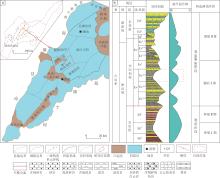
Fig. 1
Map showing the structural units of the Huanghua Depression and stratigraphic column of the Paleogene strata in the Qibei Sub-sag[19,32-33]"

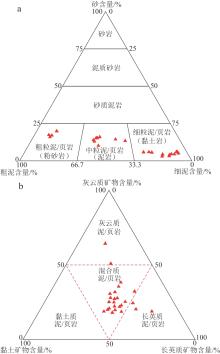
Fig. 2
Ternary diagrams of grain sizes (a) and mineral composition (b) of mudstones/shales in the Es3(1), Qibei Sub-sag"

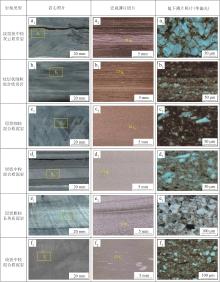
Fig. 3
Lithofacies types of the Es3(1), Qibei Sub-sag"

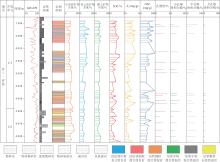
Fig. 4
Composite stratigraphic column of the Es3(1) in well Q1, Qibei Sub-sag"

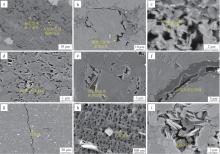
Fig. 5
Reservoir space types of mudstones/shales in the Es3(1), Qibei Sub-sag (SEM)"

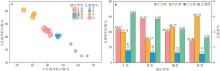
Fig. 6
Reservoir type classification (a) and pore characteristics (b) of the mudstones/shales in the Es3(1), Qibei Sub-sag"

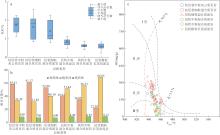
Fig. 7
TOC content (a), maceral content (b), and organic matter types (c) of varying lithofacies in the Es3(1), Qibei Sub-sag"

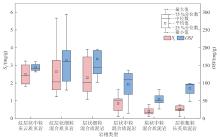
Fig. 8
Pyrolysis-derived free hydrocarbon content (S1) and oil saturation index (OSI) values across varying lithofacies of shales in the Es3(1), Qibei Sub-sag"

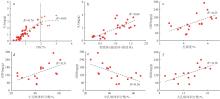
Fig. 9
Correlations of the oil-bearing properties with organic matter and pore throat characteristics of mudstones/shales in the Es3(1), Qibei Sub-sag"

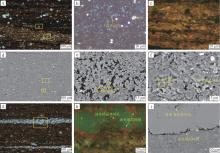
Fig. 10
Differences in organic matter filled in various pore types of mudstones/shales in the Es3(1), Qibei Sub-sag"


Fig. 11
Correlations of the constituent minerals with the TOC content, porosity, and S1 of mudstones/shales in the Es3(1), Qibei Sub-sag"

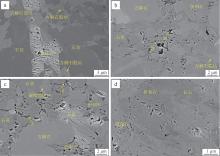
Fig. 12
Characteristics of clay minerals associated with pore development and hydrocarbon occurrence of mudstones/shales in the Es3(1), Qibei Sub-sag (SEM)"


Fig. 13
Correlations of the lamina density with the TOC content (a), porosity (b), and S1 (c) of mudstones/shales in the Es3(1), Qibei Sub-sag"

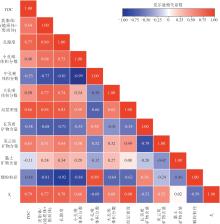
Fig. 14
Correlation matrix of shale oil enrichment factors for shale oil enrichment in the Es3(1), Qibei Sub-sag"

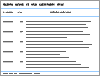
Table 1
TOC content, organic matter types, reservoir types, lamina density, and oil content of varying lithofacies in the Es3(1), Qibei Sub-sag"
| 岩相类型 | TOC/% | 有机质类型 | 储层类型 | 纹层线密度/(条/cm) | S1/(mg/g) |
|---|---|---|---|---|---|
| 纹层状中粒灰云质页岩 | 1.74 | Ⅱ1 | Ⅰ | 35.50 | 2.48 |
| 纹层状细粒混合质页岩 | 1.65 | Ⅱ1 | Ⅰ | 39.43 | 2.64 |
| 层状细粒混合质泥岩 | 1.41 | Ⅱ1 | Ⅱ | — | 2.30 |
| 层状中粒混合质泥岩 | 0.87 | Ⅱ2 | Ⅲ | 2.55 | 0.86 |
| 块状中粒混合质泥岩 | 0.62 | Ⅲ | Ⅲ | 1.32 | 0.40 |
| 层状粗粒长英质泥岩 | 0.57 | Ⅲ | Ⅳ | 0.06 | 0.51 |
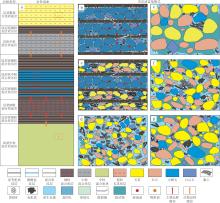
Fig. 15
Shale oil enrichment patterns in mudstones/shales of the Es3(1), Qibei Sub-sag"

| 1 | 金之钧, 王冠平, 刘光祥, 等. 中国陆相页岩油研究进展与关键科学问题[J]. 石油学报, 2021, 42(7): 821-835. |
| JIN Zhijun, WANG Guanping, LIU Guangxiang, et al. Research progress and key scientific issues of continental shale oil in China[J]. Acta Petrolei Sinica, 2021, 42(7): 821-835. | |
| 2 | 杨雷, 金之钧. 全球页岩油发展及展望[J]. 中国石油勘探, 2019, 24(5): 553-559. |
| YANG Lei, JIN Zhijun. Global shale oil development and prospects[J]. China Petroleum Exploration, 2019, 24(5): 553-559. | |
| 3 | Energy Information Administration U.S.. Drilling productivity report: For key tight oil and shale gas regions[R]. Washington, D.C.: EIA Independent Statistics and Analysis, 2020. |
| 4 | LOPATIN N V, ZUBAIRAEV S L, KOS I M, et al. Unconventional oil accumulations in the Upper Jurassic Bazhenov black shale formation, west Siberian Basin: A self-sourced reservoir system[J]. Journal of Petroleum Geology, 2003, 26(2): 225-244. |
| 5 | JARVIE D M. Shale resource systems for oil and gas: Part 1—Shale-gas resource systems[M]//BREYER J A. Shale Reservoirs— Giant Resources for the 21st Century. Tulsa: American Association of Petroleum Geologists, 2012: 69-87. |
| 6 | JARVIE D M. Shale resource systems for oil and gas: Part 2—shale-oil resource systems[M]//BREYER J A. Shale Reservoirs—Giant Resources for the 21st Century. Tulsa: American Association of Petroleum Geologists, 2012: 89-119. |
| 7 | EIA. Technically recoverable shale oil and shale gas resources: an assessment of 137 shale formations in 41 countries outside the United States[R]. Washington, D.C.: U.S. Department of Energy, 2013. |
| 8 | Energy Information Administration U.S.. World shale resource assessments[EB/OL]. (2015-09-24)[引用日期不详]. . |
| 9 | 金之钧, 白振瑞, 高波, 等. 中国迎来页岩油气革命了吗?[J]. 石油与天然气地质, 2019, 40(3): 451-458. |
| JIN Zhijun, BAI Zhenrui, GAO Bo, et al. Has China ushered in the shale oil and gas revolution?[J]. Oil & Gas Geology, 2019, 40(3): 451-458. | |
| 10 | 杜金虎, 胡素云, 庞正炼, 等. 中国陆相页岩油类型、潜力及前景[J]. 中国石油勘探, 2019, 24(5): 560-568. |
| DU Jinhu, HU Suyun, PANG Zhenglian, et al. The types, potentials and prospects of continental shale oil in China[J]. China Petroleum Exploration, 2019, 24(5): 560-568. | |
| 11 | ZOU Caineng, PAN Songqi. HAO Qun. On the connotation, challenge and significance of China’s “energy independence” strategy[J]. Petroleum Exploration and Development, 2020, 47(2): 449-462. |
| 12 | 赵文智, 胡素云, 侯连华, 等. 中国陆相页岩油类型、资源潜力及与致密油的边界[J]. 石油勘探与开发, 2020, 47(1): 1-10. |
| ZHAO Wenzhi, HU Suyun, HOU Lianhua, et al. Types and resource potential of continental shale oil in China and its boundary with tight oil[J]. Petroleum Exploration and Development, 2020, 47(1): 1-10. | |
| 13 | 柳波, 石佳欣, 付晓飞, 等. 陆相泥页岩层系岩相特征与页岩油富集条件——以松辽盆地古龙凹陷白垩系青山口组一段富有机质泥页岩为例[J]. 石油勘探与开发, 2018, 45(5): 828-838. |
| LIU Bo, SHI Jiaxin, FU Xiaofei, et al. Petrological characteristics and shale oil enrichment of lacustrine fine-grained sedimentary system: A case study of organic-rich shale in first member of Cretaceous Qingshankou Formation in Gulong Sag, Songliao Basin, NE China[J]. Petroleum Exploration and Development, 2018, 45(5): 828-838. | |
| 14 | 刘成林, 李冰, 吴林强, 等. 松辽盆地上白垩统页岩油地质条件评价[M]. 北京: 地质出版社, 2016. |
| LIU Chenglin, LI Bing, WU Linqiang, et al. Evaluation of geological conditions of Upper Cretaceous shale oil in Songliao Basin[M]. Beijing: Geological Publishing House, 2016. | |
| 15 | 赵贤正, 周立宏, 蒲秀刚, 等. 断陷湖盆湖相页岩油形成有利条件及富集特征——以渤海湾盆地沧东凹陷孔店组二段为例[J]. 石油学报, 2019, 40(9): 1013-1029. |
| ZHAO Xianzheng, ZHOU Lihong, PU Xiugang, et al. Favorable formation conditions and enrichment characteristics of lacustrine facies shale oil in faulted lake basin: A case study of Member 2 of Kongdian Formation in Cangdong Sag, Bohai Bay Basin[J]. Acta Petrolei Sinica, 2019, 40(9): 1013-1029. | |
| 16 | ZHAO Xianzheng, ZHOU Lihong, PU Xiugang, et al. Exploration breakthroughs and geological characteristics of continental shale oil: A case study of the Kongdian Formation in the Cangdong Sag, China[J]. Marine and Petroleum Geology, 2019, 102: 544-556. |
| 17 | 赵贤正, 周立宏, 蒲秀刚, 等. 湖相页岩滞留烃形成条件与富集模式——以渤海湾盆地黄骅坳陷古近系为例[J]. 石油勘探与开发, 2020, 47(5): 856-869. |
| ZHAO Xianzheng, ZHOU Lihong, PU Xiugang, et al. Formation conditions and enrichment model of retained petroleum in lacustrine shale: A case study of the Paleogene in Huanghua Depression, Bohai Bay Basin, China[J]. Petroleum Exploration and Development, 2020, 47(5): 856-869. | |
| 18 | 赵贤正, 周立宏, 蒲秀刚, 等. 歧口凹陷歧北次凹沙河街组三段页岩油地质特征与勘探突破[J]. 石油学报, 2020, 41(6): 643-657. |
| ZHAO Xianzheng, ZHOU Lihong, PU Xiugang, et al. Geological characteristics and exploration breakthrough of shale oil in Member 3 of Shahejie Formation of Qibei subsag, Qikou sag[J]. Acta Petrolei Sinica, 2020, 41(6): 643-657. | |
| 19 | 冯家乐, 杨升宇, 胡钦红, 等. 沧东凹陷孔二段页岩生排烃效率及对含油性的影响[J]. 中国石油大学学报(自然科学版), 2024, 48(2): 45-56. |
| FENG Jiale, YANG Shengyu, HU Qinhong, et al. Hydrocarbon generation and expulsion efficiency and influence on oil bearing property of shale in the second member of Paleogene Kongdian Formation in Cangdong Sag[J]. Journal of China University of Petroleum (Edition of Natural Science), 2024, 48(2): 45-56. | |
| 20 | 宋明水, 刘惠民, 王勇, 等. 济阳坳陷古近系页岩油富集规律认识与勘探实践[J]. 石油勘探与开发, 2020, 47(2): 225-235. |
| SONG Mingshui, LIU Huimin, WANG Yong, et al. Enrichment rules and exploration practices of Paleogene shale oil in Jiyang Depression, Bohai Bay Basin, China[J]. Petroleum Exploration and Development, 2020, 47(2): 225-235. | |
| 21 | 米立军, 徐建永, 李威. 渤海海域页岩油资源潜力[J]. 石油与天然气地质, 2023, 44(6): 1366-1377. |
| MI Lijun, XU Jianyong, LI Wei. Shale oil resource potential in the Bohai Sea area[J]. Oil & Gas Geology, 2023, 44(6): 1366-1377. | |
| 22 | 高和群, 高玉巧, 何希鹏, 等. 苏北盆地古近系阜宁组二段页岩油储层岩石力学特征及其控制因素[J]. 石油与天然气地质, 2024, 45(2): 502-515. |
| GAO Hequn, GAO Yuqiao, HE Xipeng, et al. Rock mechanical properties and controlling factors for shale oil reservoirs in the second member of the Paleogene Funing Formation, Subei Basin[J]. Oil & Gas Geology, 2024, 45(2): 502-515. | |
| 23 | 高玉巧, 何希鹏, 程熊, 等. 陆相咸化湖盆“低TOC”烃源岩高生烃效率探讨——以苏北盆地溱潼凹陷阜宁组二段泥页岩为例[J]. 油气藏评价与开发, 2024, 14(5): 678-687. |
| GAO Yuqiao, HE Xipeng, CHENG Xiong, et al. Discussion on high hydrocarbon generation efficiency of saline lacustrine source rocks with low TOC: A case study of the second member of Funing Formation, Qintong Sag, Subei Basin[J]. Petroleum Reservoir Evaluation and Development, 2024, 14(5): 678-687. | |
| 24 | 李乐, 王自翔, 郑有恒, 等. 江汉盆地潜江凹陷潜三段盐韵律层页岩油富集机理[J]. 地球科学, 2019, 44(3): 1012-1023. |
| LI Le, WANG Zixiang, ZHENG Youheng, et al. Mechanism of shale oil enrichment from the salt cyclotherm in Qian3 member of Qianjiang Sag, Jianghan Basin[J]. Earth Science, 2019, 44(3): 1012-1023. | |
| 25 | 邹才能, 董大忠, 王玉满, 等. 中国页岩气特征、挑战及前景(二)[J]. 石油勘探与开发, 2016, 43(2): 166-178. |
| ZOU Caineng, DONG Dazhong, WANG Yuman, et al. Shale gas in China: Characteristics, challenges and prospects (Ⅱ)[J]. Petroleum Exploration and Development, 2016, 43(2): 166-178. | |
| 26 | 马永生, 蔡勋育, 赵培荣. 中国页岩气勘探开发理论认识与实践[J]. 石油勘探与开发, 2018, 45(4): 561-574. |
| MA Yongsheng, CAI Xunyu, ZHAO Peirong. China’s shale gas exploration and development: Understanding and practice[J]. Petroleum Exploration and Development, 2018, 45(4): 561-574. | |
| 27 | HU Zongquan, LIU Zengqin, DU Wei, et al. Key geological factors governing sweet spots in the Wufeng-Longmaxi shales of the Sichuan Basin, China[J]. Energy Geoscience, 2024, 5(3): 100268. |
| 28 | 杨华, 梁晓伟, 牛小兵, 等. 陆相致密油形成地质条件及富集主控因素——以鄂尔多斯盆地三叠系延长组7段为例[J]. 石油勘探与开发, 2017, 44(1): 12-20. |
| YANG Hua, LIANG Xiaowei, NIU Xiaobing, et al. Geological conditions for continental tight oil formation and the main controlling factors for the enrichment: A case of Chang 7 Member, Triassic Yanchang Formation, Ordos Basin, NW China[J]. Petroleum Exploration and Development, 2017, 44(1): 12-20. | |
| 29 | 葸克来, 李克, 操应长, 等. 鄂尔多斯盆地三叠系延长组长73亚段富有机质页岩纹层组合与页岩油富集模式[J]. 石油勘探与开发, 2020, 47(6): 1244-1255. |
| XI Kelai, LI Ke, CAO Yingchang, et al. Laminae combination and shale oil enrichment patterns of Chang 73 sub-member organic-rich shales in the Triassic Yanchang Formation, Ordos Basin, NW China[J]. Petroleum Exploration and Development, 2020, 47(6): 1244-1255. | |
| 30 | BIAN Ruikang. The formation and evolutionary characteristics of organic matter and pyrites in the continental shales of the 3rd submember of Chang 7 member, Yanchang Formation, Ordos Basin, China[J]. Energy Geoscience, 2024, 5(2): 100250. |
| 31 | 郭旭光, 何文军, 杨森, 等. 准噶尔盆地页岩油“甜点区”评价与关键技术应用——以吉木萨尔凹陷二叠系芦草沟组为例[J]. 天然气地球科学, 2019, 30(8): 1168-1179. |
| GUO Xuguang, HE Wenjun, YANG Sen, et al. Evaluation and application of key technologies of“sweet area”of shale oil in Junggar Basin: Case study of Permian Lucaogou Formation in Jimusar Depression[J]. Natural Gas Geoscience, 2019, 30(8): 1168-1179. | |
| 32 | 支东明, 唐勇, 何文军, 等. 准噶尔盆地玛湖凹陷风城组常规-非常规油气有序共生与全油气系统成藏模式[J]. 石油勘探与开发, 2021, 48(1): 38-51. |
| ZHI Dongming, TANG Yong, HE Wenjun, et al. Orderly coexistence and accumulation models of conventional and unconventional hydrocarbons in Lower Permian Fengcheng Formation, Mahu sag, Junggar Basin[J]. Petroleum Exploration and Development, 2021, 48(1): 38-51. | |
| 33 | 邹才能, 朱如凯, 董大忠, 等. 页岩油气科技进步、发展战略及政策建议[J]. 石油学报, 2022, 43(12): 1675-1686. |
| ZOU Caineng, ZHU Rukai, DONG Dazhong, et al. Scientific and technological progress, development strategy and policy suggestion regarding shale oil and gas[J]. Acta Petrolei Sinica, 2022, 43(12): 1675-1686. | |
| 34 | 周立宏, 韩国猛, 杨飞, 等. 渤海湾盆地歧口凹陷沙河街组三段一亚段地质特征与页岩油勘探实践[J]. 石油与天然气地质, 2021, 42(2): 443-455. |
| ZHOU Lihong, HAN Guomeng, YANG Fei, et al. Geological characteristics and shale oil exploration of Es3(1) in Qikou Sag, Bohai Bay Basin[J]. Oil & Gas Geology, 2021, 42(2): 443-455. | |
| 35 | 赵贤正, 蒲秀刚, 金凤鸣, 等. 黄骅坳陷页岩型页岩油富集规律及勘探有利区[J]. 石油学报, 2023, 44(1): 158-175. |
| ZHAO Xianzheng, PU Xiugang, JIN Fengming, et al. Enrichment law and favorable exploration area of shale-type shale oil in Huanghua depression[J]. Acta Petrolei Sinica, 2023, 44(1): 158-175. | |
| 36 | 赵贤正, 蒲秀刚, 周立宏, 等. 深盆湖相区页岩油富集理论、勘探技术及前景——以渤海湾盆地黄骅坳陷古近系为例[J]. 石油学报, 2021, 42(2): 143-162. |
| ZHAO Xianzheng, PU Xiugang, ZHOU Lihong, et al. Enrichment theory, exploration technology and prospects of shale oil in lacustrine facies zone of deep basin: A case study of the Paleogene in Huanghua Depression, Bohai Bay Basin[J]. Acta Petrolei Sinica, 2021, 42(2): 143-162. | |
| 37 | 姜文亚, 柳飒. 层序地层格架中优质烃源岩分布与控制因素——以歧口凹陷古近系为例[J]. 中国石油勘探, 2015, 20(2): 51-58. |
| JIANG Wenya, LIU Sa. Distribution and controlling factors of high-quality hydrocarbon source rock in sequential stratigraphic framework——Taking Paleogene system in Qikou Depression for instance[J]. China Petroleum Exploration, 2015, 20(2): 51-58. | |
| 38 | 王振升, 滑双君, 于学敏, 等. 歧口凹陷沙河街组烃源岩分级评价及优质烃源岩分布[J]. 天然气地球科学, 2014, 25(12): 1896-1902. |
| WANG Zhensheng, HUA Shuangjun, YU Xuemin, et al. Grading evaluation and high quality source rock distribution in Qikou Sag[J]. Natural Gas Geoscience, 2014, 25(12): 1896-1902. | |
| 39 | LAZAR O R, BOHACS K M, SCHIEBER J, et al. Mudstone nomenclature[M]//BOHACS K M, LAZAR R. Sequence Stratigraphy: Applications to Fine-Grained Rocks. Tulsa: The American Association of Petroleum Geologists, 2022: 21-33. |
| 40 | 张顺, 刘惠民, 王永诗, 等. 东营凹陷古近系页岩成岩事件及其对页岩储集空间发育特征的影响[J]. 油气地质与采收率, 2019, 26(1): 109-118. |
| ZHANG Shun, LIU Huimin, WANG Yongshi, et al. Diagenetic event of Paleogene shale and its influence on development characteristics of shale pore space in Dongying Sag[J]. Petroleum Geology and Recovery Efficiency, 2019, 26(1): 109-118. | |
| 41 | 张顺, 刘惠民, 宋国奇, 等. 东营凹陷页岩油储集空间成因及控制因素[J]. 石油学报, 2016, 37(12): 1495-1507, 1527. |
| ZHANG Shun, LIU Huimin, SONG Guoqi, et al. Genesis and control factors of shale oil reserving space in Dongying Sag[J]. Acta Petrolei Sinica, 2016, 37(12): 1495-1507, 1527. | |
| 42 | 王勇. 济阳坳陷古近系沙三下—沙四上亚段咸化湖盆证据及页岩油气地质意义[J]. 中国石油大学学报(自然科学版), 2024, 48(3): 27-36. |
| WANG Yong. Evidence of paleogene saline lake basin in the 3rd and 4th members of Shahejie Formation in Jiyang Depression and geological significance of shale oil and gas[J]. Journal of China University of Petroleum (Edition of Natural Science), 2024, 48(3): 27-36. | |
| 43 | 孔祥鑫. 湖相含碳酸盐细粒沉积岩特征、成因与油气聚集[D]. 北京: 中国地质大学(北京), 2020. |
| KONG Xiangxin. Sedimentary characteristics, origin and hydrocarbon accumulation of lacustrine carbonate-bearing fine-grained sedimentary rocks[D]. Beijing: China University of Geosciences(Beijing), 2020. | |
| 44 | LOUCKS R G, REED R M, RUPPEL S C, et al. Spectrum of pore types and networks in mudrocks and a descriptive classification for matrix-related mudrock pores[J]. AAPG Bulletin, 2012, 96(6): 1071-1098. |
| 45 | LIU Bei, SCHIEBER J, MASTALERZ M. Combined SEM and reflected light petrography of organic matter in the New Albany Shale (Devonian-Mississippian) in the Illinois Basin: A perspective on organic pore development with thermal maturation[J]. International Journal of Coal Geology, 2017, 184: 57-72. |
| 46 | 薛海涛, 田善思, 卢双舫, 等. 页岩油资源定量评价中关键参数的选取与校正——以松辽盆地北部青山口组为例[J]. 矿物岩石地球化学通报, 2015, 34(1): 70-78. |
| XUE Haitao, TIAN Shansi, LU Shuangfang, et al. Selection and verification of key parameters in the quantitative evaluation of shale oil: A case study at the Qingshankou Formation, northern Songliao Basin[J]. Bulletin of Mineralogy, Petrology and Geochemistry, 2015, 34(1): 70-78. | |
| 47 | 金芸芸, 李楚雄, 王勇, 等. 南襄盆地泌阳凹陷古近系核桃园组页岩含油性及烃类赋存特征[J]. 石油实验地质, 2024, 46(2): 354-365. |
| JIN Yunyun, LI Chuxiong, WANG Yong, et al. Oil-bearing potential and hydrocarbon occurrence characteristics of shale in Paleogene Hetaoyuan Formation in Biyang Sag, Nanxiang Basin[J]. Petroleum Geology and Experiment, 2024, 46(2): 354-365. | |
| 48 | 陈建平, 邓春萍, 王汇彤, 等. 中国西北侏罗纪煤系显微组分生烃潜力、产物地球化学特征及其意义[J]. 地球化学, 2006, 35(1): 81-87. |
| CHEN Jianping, DENG Chunping, WANG Huitong, et al. Genetic potential and geochemical features of pyrolysis oils of macerals from Jurassic coal measures, Northwest China[J]. Geochimica, 2006, 35(1): 81-87. | |
| 49 | 蒋启贵, 王勤, 承秋泉, 等. 不同组分烃源岩生烃动力学特征浅析[J]. 石油实验地质, 2005, 27(5): 512-518, 533. |
| JIANG Qigui, WANG Qin, CHENG Qiuquan, et al. Discussion on the kinetic characteristics of hydrocarbon generation of different maceral source rocks[J]. Petroleum Geology & Experiment, 2005, 27(5): 512-518, 533. | |
| 50 | 王圣柱, 梅文科, 熊峥嵘, 等. 准噶尔盆地东北缘石炭系烃源岩生烃演化特征及其石油地质意义[J]. 石油实验地质, 2023, 45(4): 667-680. |
| WANG Shengzhu, MEI Wenke, XIONG Zhengrong, et al. Hydrocarbon generation and evolution characteristics of Carboniferous source rocks on the northeastern margin of the Junggar Basin and its petroleum geological significance[J]. Petroleum Geology and Experiment, 2023, 45(4): 667-680. | |
| 51 | STABEL H H. Calcite precipitation in Lake Constance: Chemical equilibrium, sedimentation, and nucleation by algae[J]. Limnology and Oceanography, 1986, 31(5): 1081-1094. |
| 52 | DITTRICH M, MÜLLER B, MAVROCORDATOS D, et al. Induced calcite precipitation by cyanobacterium synechococcus[J]. Acta Hydrochimica et Hydrobiologica, 2003, 31(2): 162-169. |
| 53 | GIERLOWSKI-KORDESCH E H. Chapter 1 lacustrine carbonates[J]. Developments in Sedimentology, 2010, 61: 1-101. |
| 54 | ZHANG Fangfu, XU Huifang, KONISHI H, et al. Polysaccharide-catalyzed nucleation and growth of disordered dolomite: A potential precursor of sedimentary dolomite[J]. American Mineralogist, 2012, 97(4): 556-567. |
| 55 | BAI Luheng, SHI Wanzhong, POGGE VON STRANDMANN P A E, et al. Sedimentology and geochemistry of the Upper Permian transitional shale, Western Guizhou, China: Implications for the environmental effect of the Emeishan large igneous province and organic matter accumulation[J]. Geoenergy Science and Engineering, 2024, 233: 212580. |
| 56 | YANG Yunlai, APLIN A C. A permeability-porosity relationship for mudstones[J]. Marine and Petroleum Geology, 2010, 27(8): 1692-1697. |
| 57 | APLIN A C, MACQUAKER J H S. Mudstone diversity: Origin and implications for source, seal, and reservoir properties in petroleum systems[J]. AAPG Bulletin, 2011, 95(12): 2031-2059. |
| 58 | WANG Fenglan, FENG Zihui, WANG Xue, et al. Effect of organic matter, thermal maturity and clay minerals on pore formation and evolution in the Gulong Shale, Songliao Basin, China[J]. Geoenergy Science and Engineering, 2023, 223: 211507. |
| 59 | 张顺, 刘惠民, 王敏, 等. 东营凹陷页岩油储层孔隙演化[J]. 石油学报, 2018, 39(7): 754-766. |
| ZHANG Shun, LIU Huimin, WANG Min, et al. Pore evolution of shale oil reservoirs in Dongying sag[J]. Acta Petrolei Sinica, 2018, 39(7): 754-766. | |
| 60 | 卢双舫, 黄文彪, 陈方文, 等. 页岩油气资源分级评价标准探讨[J]. 石油勘探与开发, 2012, 39(2): 249-256. |
| LU Shuangfang, HUANG Wenbiao, CHEN Fangwen, et al. Classification and evaluation criteria of shale oil and gas resources: Discussion and application[J]. Petroleum Exploration and Development, 2012, 39(2): 249-256. | |
| 61 | 宋国奇, 徐兴友, 李政, 等. 济阳坳陷古近系陆相页岩油产量的影响因素[J]. 石油与天然气地质, 2015, 36(3): 463-471. |
| SONG Guoqi, XU Xingyou, LI Zheng, et al. Factors controlling oil production from Paleogene shale in Jiyang Depression[J]. Oil & Gas Geology, 2015, 36(3): 463-471. | |
| 62 | XIN Bixiao, ZHAO Xianzheng, HAO Fang, et al. Laminae characteristics of lacustrine shales from the Paleogene Kongdian Formation in the Cangdong Sag, Bohai Bay Basin, China: Why do laminated shales have better reservoir physical properties?[J]. International Journal of Coal Geology, 2022, 260: 104056. |
| Viewed | ||||||
|
Full text |
|
|||||
|
Abstract |
|
|||||
