

Oil & Gas Geology ›› 2025, Vol. 46 ›› Issue (2): 407-426.doi: 10.11743/ogg20250206
• Petroleum Geology • Previous Articles Next Articles
Zhuoyi LI1( ), Min XIE2
Received:2024-09-30
Revised:2024-12-20
Online:2025-04-30
Published:2025-04-27
CLC Number:
Zhuoyi LI, Min XIE. Hydrocarbon accumulation models of buried hills in the Dongpu Sag, Bohai Bay Basin[J]. Oil & Gas Geology, 2025, 46(2): 407-426.
Add to citation manager EndNote|Reference Manager|ProCite|BibTeX|RefWorks

Fig.1
Stratigraphic column (a)[25] and unconformity distribution (b) of the Dongpu Sag"

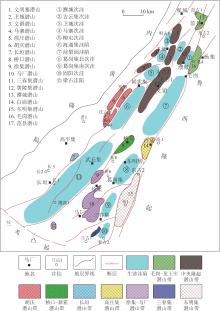
Fig.2
Map showing the buried hill locations and structural units of the Dongpu Sag"

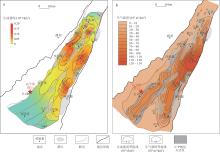
Fig.3
Hydrocarbon-generating intensity of sources rocks in the middle part of the 3rd member of the Shahejie Formation (a)[14] and gas-generating intensity of the Carboniferous-Permian coal-measure source rocks (b)[32] in the Dongpu Sag"

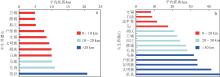
Fig.4
Distances from the Mesozoic buried hills to the source kitchen of the 3rd Member of the Shahejie Formation (a) and from the Paleozoic buried hills to the hydrocarbon kitchen of coal-measure source rocks (b) in the Dongpu Sag"
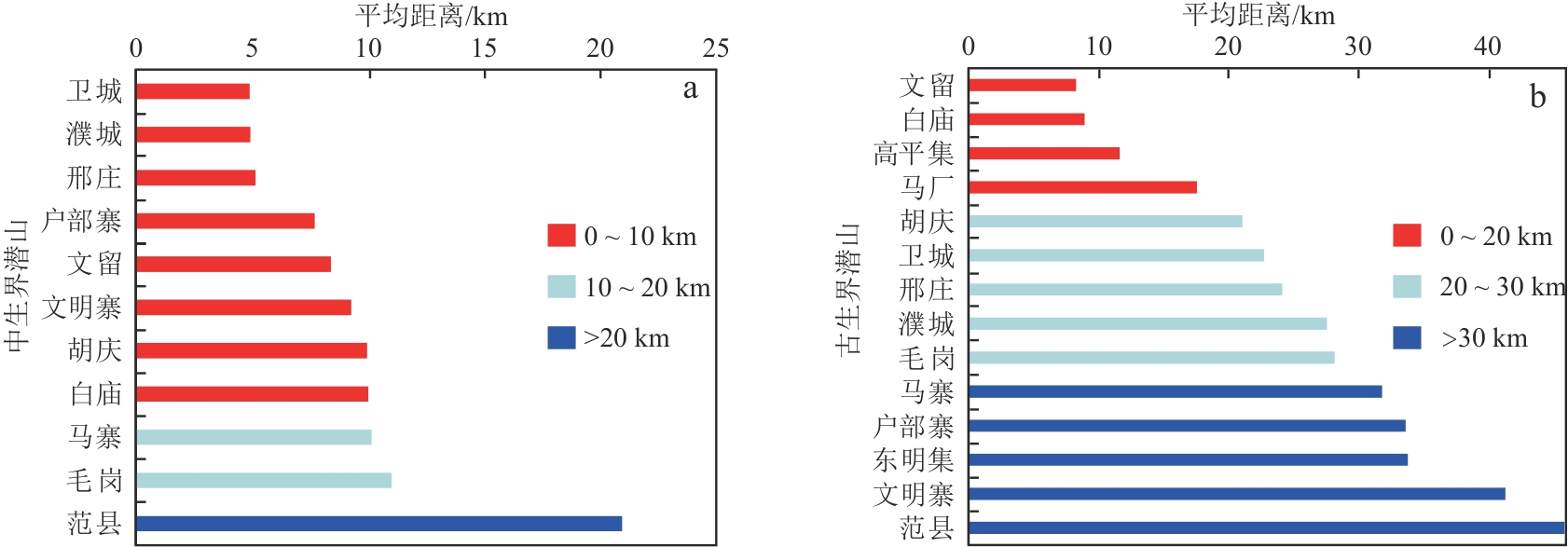
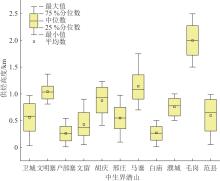
Fig.5
Box plot showing the distribution of the hydrocarbon supply heights of source rocks in the 3rd member of the Shahejie Formation to the Mesozoic buried hills in the Dongpu Sag"

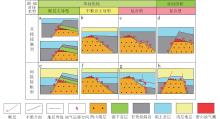
Fig.6
Source rock-reservoir contact relationships and fault-sand body-unconformity carrier systems in the Dongpu Sag"
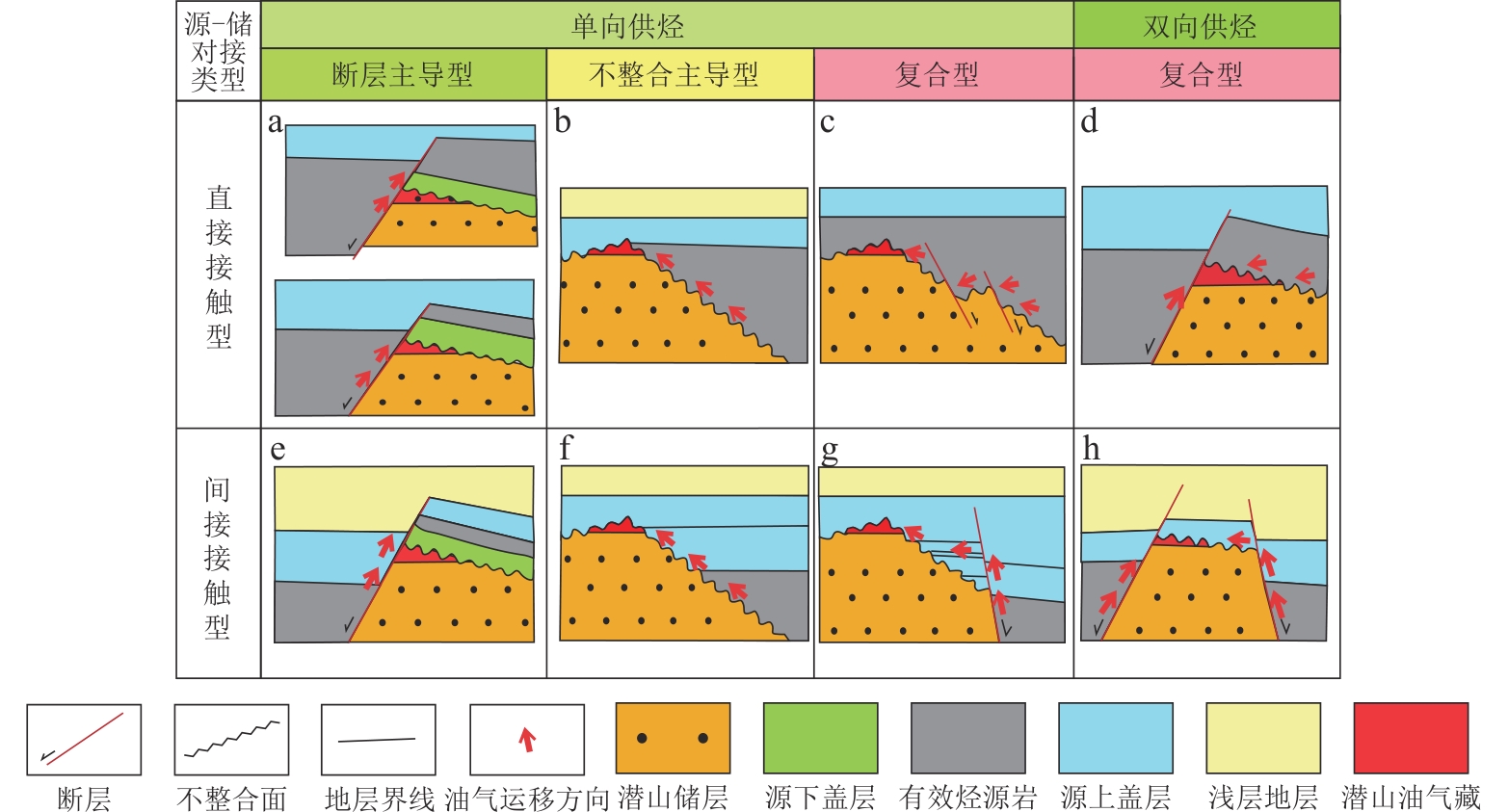
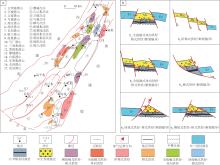
Fig.7
Planar distribution of hydrocarbon supply modes for buried-hill reservoirs in the Dongpu Sag"

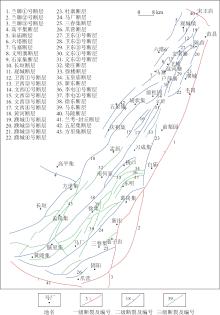
Fig.8
Map showing the distribution of faults in the Dongpu Sag"

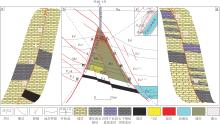
Fig.9
Oil reservoir profile and fault-caprock configurations in the southern block of K40 in the Qingnan buried hill in the Dongpu Sag"

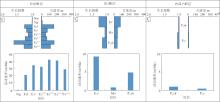
Fig.10
Activity assessment of faults in the southern block of K40 in the Dongpu Sag"
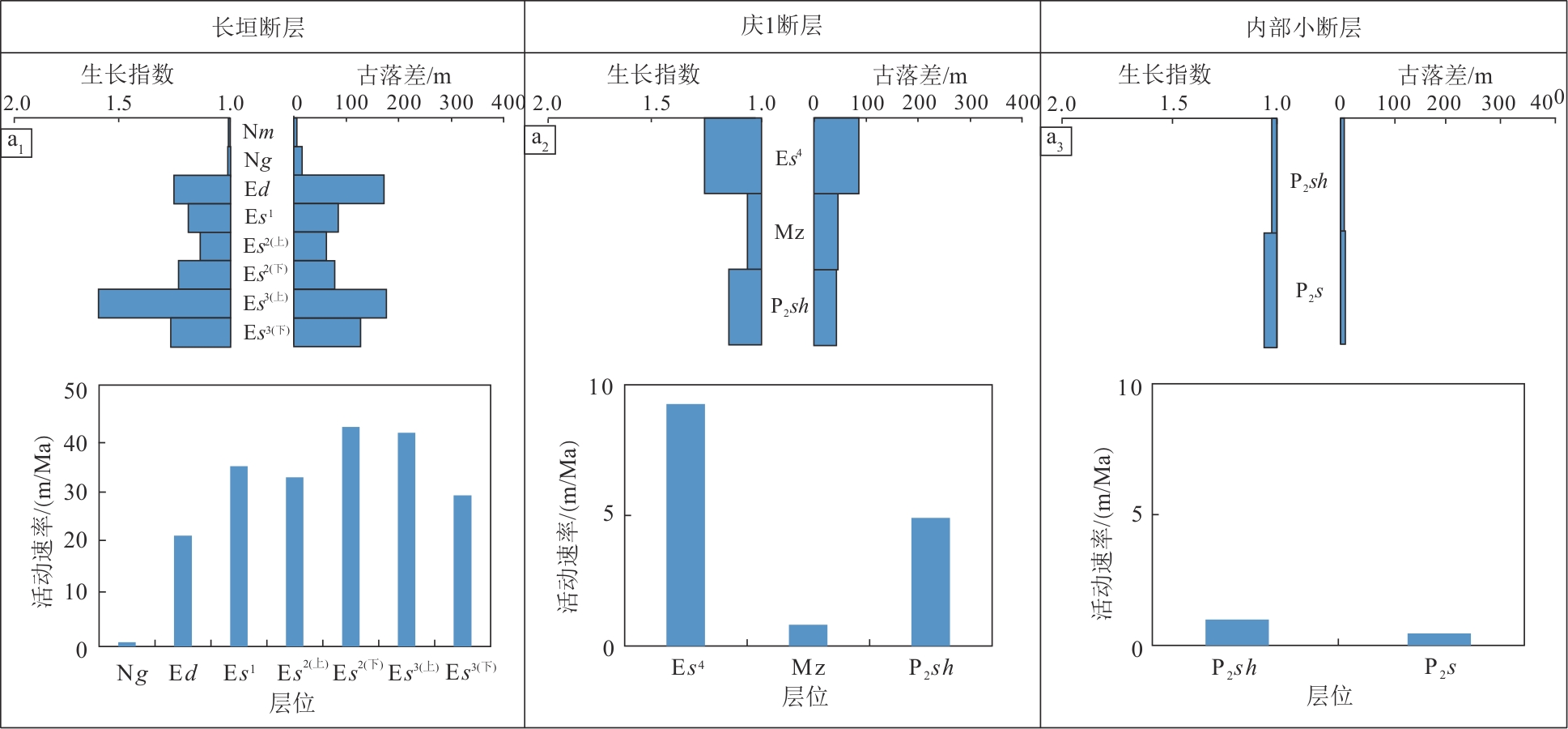

Fig.11
Fluid inclusion characteristics and the timing of hydrocarbon accumulation in the southern block of K40 in the Dongpu Sag"


Fig.12
Influential factors (a)[41] and assessment results (b) of lateral hydrocarbon transport coefficients of fault-sandstone carrier beds"
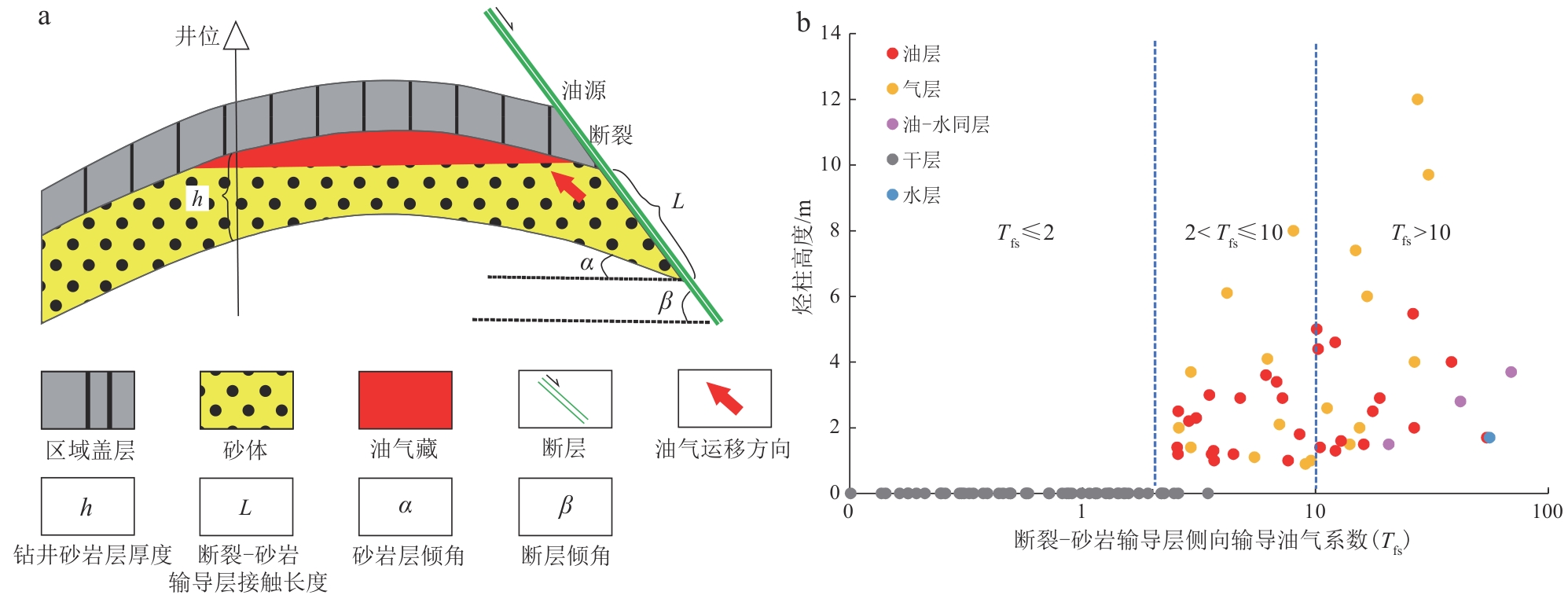

Fig.13
Well-correlation section (a) and assessment results of lateral hydrocarbon transport coefficients of fault-sandstone carrier beds (b) of the Wenliu buried hill in the Dongpu Sag"

Fig.14
T fs (a), SGR (b), and cumulative thickness of hydrocarbon-bearing layers (c) in varying intervals of the southern block of K40 in the Dongpu Sag"
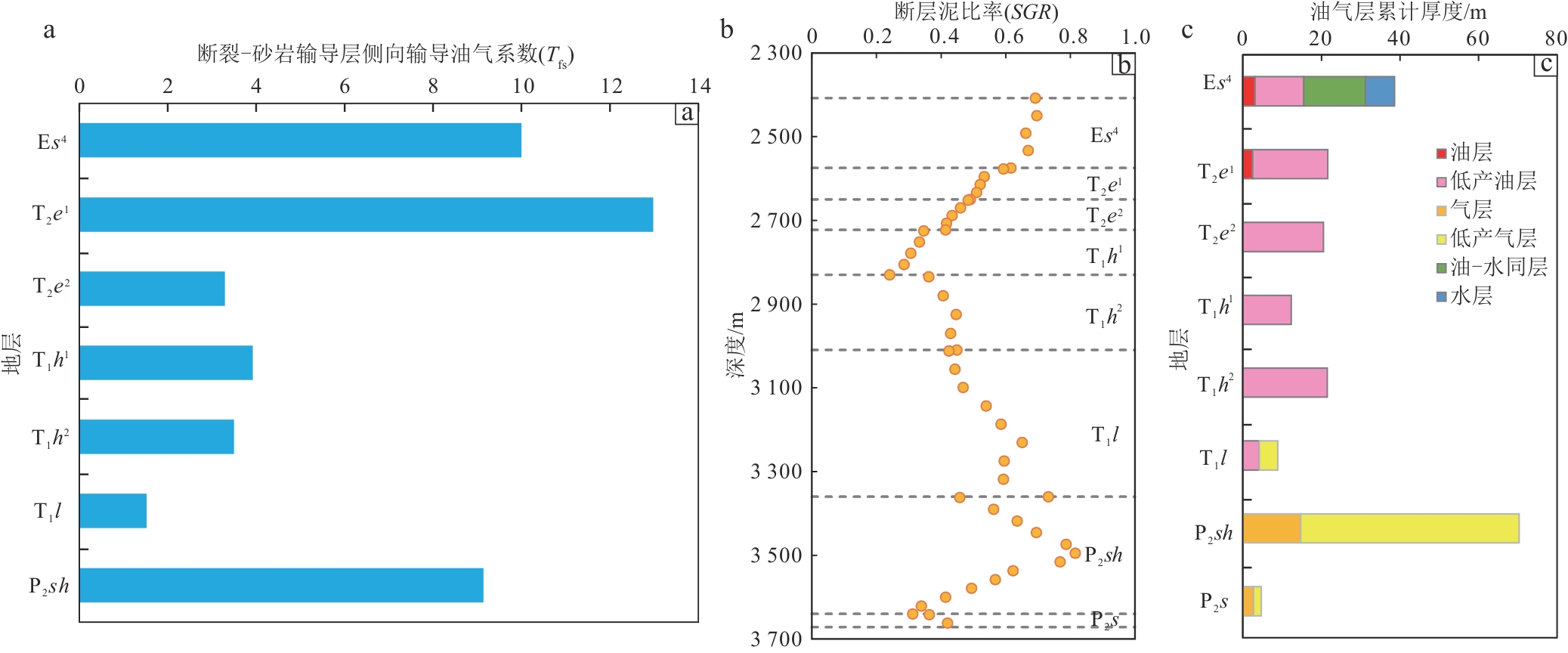
Fig.15
Hydrocarbon accumulation model of the southern block of K40 in the Dongpu Sag under the control of the fault-sandstone carrier system"
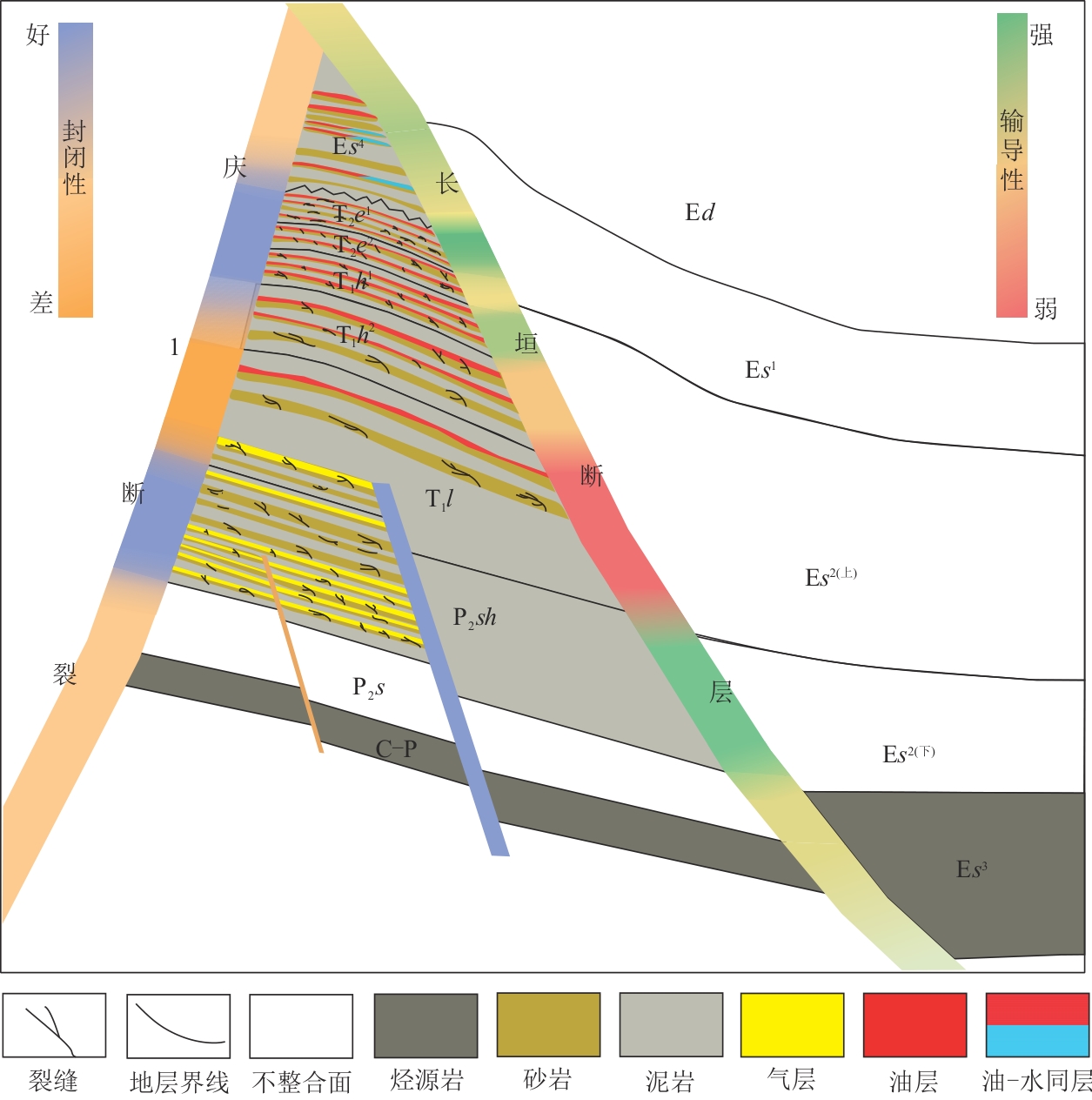
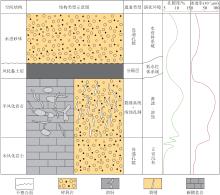
Fig.16
Conceptual diagram illustrating the unconformity architecture in buried hills[33]"


Fig.17
Relationships of the thickness of semi-weathered rocks (a) and the linear density of fractures (b) in the unconformity architecture with the hydrocarbon-bearing reservoir thickness near unconformities in the Weicheng area, Dongpu Sag"
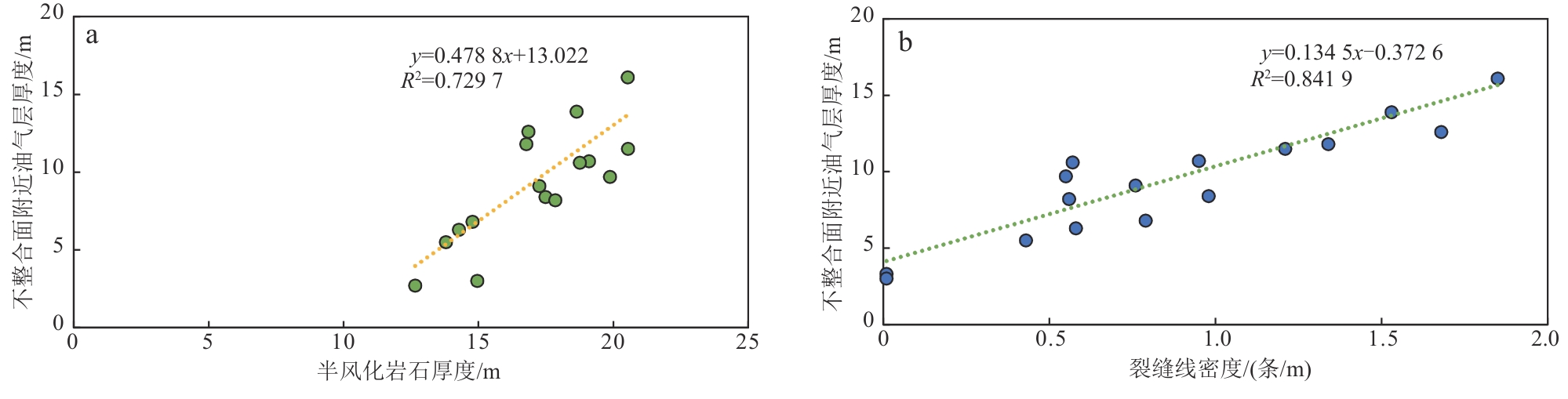
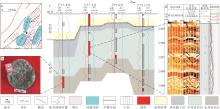
Fig.18
Typical unconformity architecture and the characteristics of oil and gas shows in the northern Weicheng area, Dongpu Sag"
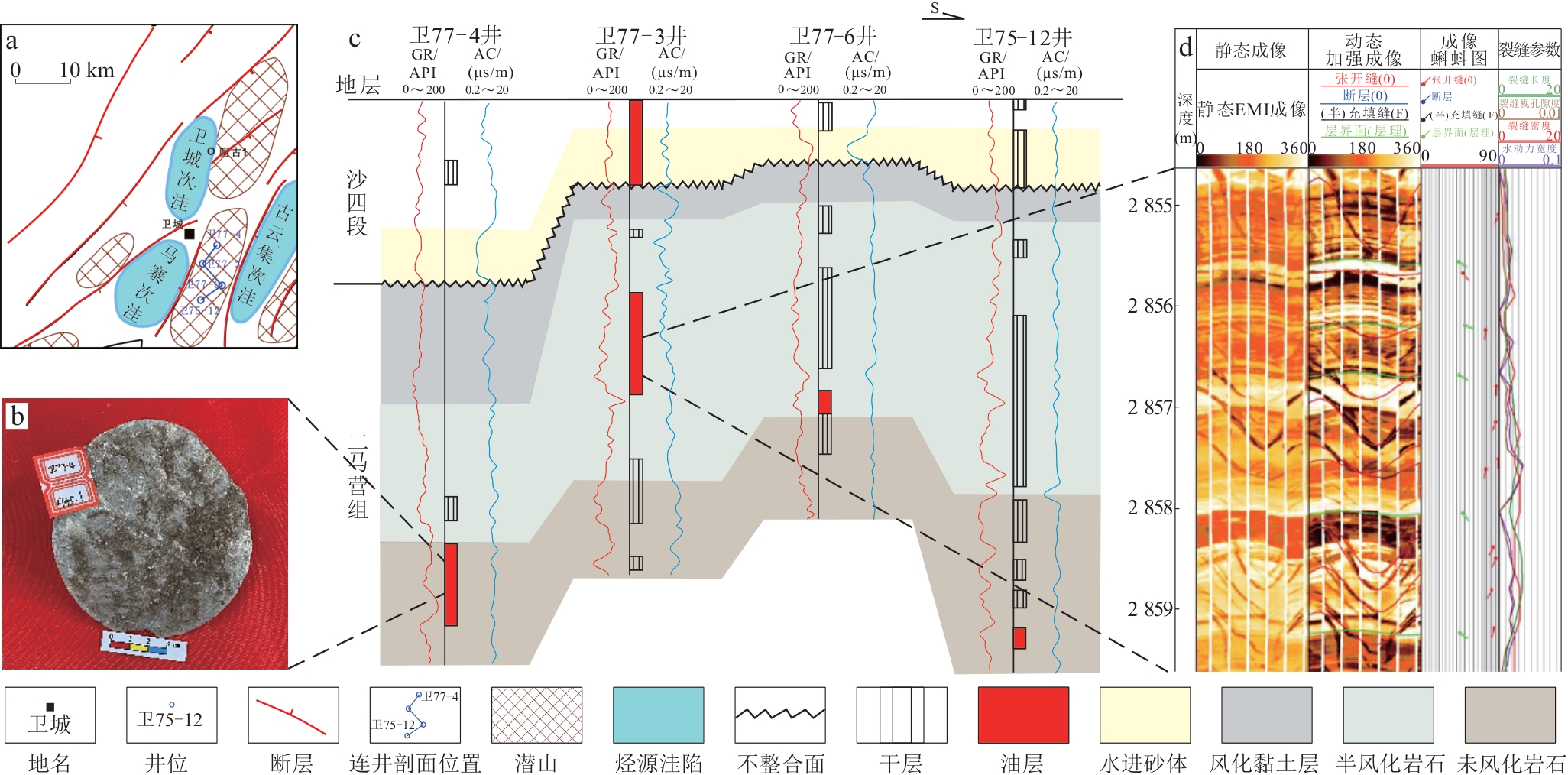
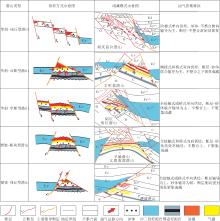
Fig.19
Hydrocarbon enrichment models of varying buried hill types in the Dongpu Sag"

| 1 | 杨仁超, 李阳, 汪勇, 等. 渤海湾盆地济阳坳陷北部石炭系—二叠系残留地层沉积相[J]. 古地理学报, 2021, 23(3): 525-538. |
| YANG Renchao, LI Yang, WANG Yong, et al. Sedimentary facies of the Carboniferous-Permian residual strata in northern Jiyang Depression, Bohai Bay Basin[J]. Journal of Palaeogeography (Chinese Edition), 2021, 23(3): 525-538. | |
| 2 | 刘惠民, 高阳, 秦峰, 等. 渤海湾盆地济阳坳陷油气勘探新领域、新类型及资源潜力[J]. 石油学报, 2023, 44(12): 2141-2159. |
| LIU Huimin, GAO Yang, QIN Feng, et al. New fields, new types and resource potentials of hydrocarbon exploration in Jiyang Depression, Bohai Bay Basin[J]. Acta Petrolei Sinica, 2023, 44(12): 2141-2159. | |
| 3 | 倪良田, 杜玉山, 蒋龙, 等. 渤海湾盆地济阳坳陷陆相断陷湖盆中-低成熟度页岩“富烃-成储-富集-高产”的理论认识与开发实践[J]. 石油与天然气地质, 2024, 45(5): 1417-1430. |
| NI Liangtian, DU Yushan, JIANG Long, et al. Theoretical understanding and development practice of “hydrocarbon enrichment-reservoir formation-enrichment-high production” in medium-low maturity shale within continental rift lake basins: A case study of Jiyang Depression, Bohai Bay Basin[J]. Oil and Gas Geology, 2024, 45(5): 1417-1430. | |
| 4 | 朱筱敏, 王晓琳, 张美洲, 等. 中国典型陆相盆地细粒沉积环境和岩相特征[J]. 石油与天然气地质, 2024, 45(4): 873-892. |
| ZHU Xiaomin, WANG Xiaolin, ZHANG Meizhou, et al. Fine-grained sedimentary environments and lithofacies characteristics in typical Chinese continental basins[J]. Petroleum Exploration and Development, 2024, 45 (4): 873-892. | |
| 5 | 张波, 王永诗, 黄铮, 等. 济阳坳陷沾化东部古——中生界潜山构造样式与成藏模式[J]. 中国石油勘探, 2024, 29(2): 46-57. |
| ZHANG Bo, WANG Yongshi, HUANG Zheng, et al. Structural style and hydrocarbon accumulation pattern in the Paleozoic Mesozoic buried hills in the eastern Zhanhua Sag, Jiyang Depression[J]. China Petroleum Exploration, 2024, 29(2): 46-57. | |
| 6 | SHI Menglin, XIE Xinong, DU Xiaofeng, et al. Formation mechanism and evolution model of buried hill reservoir in BZ19-6 structural belt, Bozhong Sag, Bohai Bay, East China[J]. Geological Journal, 2024, 59(2): 497-514. |
| 7 | LU Junjie, SHAN Xuanlong, YI Jian, et al. Characteristics, controlling factors and reservoir quality implications of inner fracture zones in buried hills of Archean covered metamorphic rock in Block 13-2, Bozhong Depression[J]. Energies, 2024, 17(6): 1345. |
| 8 | 杜昕, 范廷恩, 樊鹏军, 等. 潜山裂缝储层地震多尺度裂缝带预测方法研究[J]. 地球物理学报, 2024, 67(8): 3184-3195. |
| DU Xin, FAN Tingen, FAN Pengjun, et al. Seismic prediction method of multi-scale fracture zone for buried-hill fractured reservoir[J]. Chinese Journal of Geophysics, 2024, 67(8): 3184-3195. | |
| 9 | 徐长贵, 周家雄, 杨海风, 等. 渤海海域油气勘探新领域、新类型及资源潜力[J]. 石油学报, 2024, 45(1): 163-182. |
| XU Changgui, ZHOU Jiaxiong, YANG Haifeng, et al. New fields, new types and resource potentials of oil-gas exploration in Bohai Sea[J]. Acta Petrolei Sinica, 2024, 45(1): 163-182. | |
| 10 | 朱圣文. 东濮凹陷潜山油气藏测井评价技术研究[D]. 青岛: 中国石油大学(华东), 2007. |
| ZHU Shengwen. Study on log-evaluation technique for buried-hill reservoirs in Dongpu Depression[D]. Qingdao: China University of Petroleum(East China), 2007. | |
| 11 | 赵俊峰, 李凤琴, 凌志红. 东濮凹陷古潜山致密砂岩油气层测井识别方法[J]. 特种油气藏, 2014, 21(2): 46-50. |
| ZHAO Junfeng, LI Fengqin, LING Zhihong. Logging identification methodology of buried hill type tight sandstone oil-gas bearing formation in the Dongpu sag[J]. Special Oil & Gas Reservoirs, 2014, 21(2): 46-50. | |
| 12 | 官大勇, 王昕, 刘朋波, 等. 渤海南部碳酸盐岩潜山储层特征及发育模式——以渤中28-29区为例[J].东北石油大学学报, 2024, 48(3): 1-13, 131. |
| GUAN Dayong, WANG Xin, LIU Pengbo, et al. The characteristics and development pattern of carbonate buried hill reservoirs in the southern Bohai Sea: A case study of Bozhong 28-29 area[J]. Journal of Northeast Petroleum University, 2014, 48(3): 1-13, 131. | |
| 13 | 徐田武, 张成富, 杨斌, 等. 渤海湾盆地东濮凹陷天然气成因及分布特征[J]. 断块油气田, 2024, 31(2): 276-282. |
| XU Tianwu, ZHANG Chengfu, YANG Bin, et al. Genesis and distribution characteristics of natural gas in Dongpu Depression, Bohai Bay Basin[J]. Fault-Block Oil & Gas Field, 2024, 31(2): 276-282. | |
| 14 | 张磊, 李莎, 罗波波, 等. 东濮凹陷北部古近系沙三段超压岩性油气藏成藏机理[J]. 岩性油气藏, 2024, 36(4): 57-70. |
| ZHANG Lei, LI Sha, LUO Bobo, et al. Accumulation mechanism of overpressured lithologic reservoirs of the third member of Paleogene Shahejie Formation in northern Dongpu Sag[J]. Lithologic Reservoirs, 2024, 36(4): 57-70. | |
| 15 | 潘中亮, 沈忠民, 罗小平, 等. 东濮凹陷潜山构造油气藏特征研究[J]. 四川地质学报, 2009, 29(1): 29-32. |
| PAN Zhongliang, SHEN Zhongmin, LUO Xiaoping, et al. Characteristics of buried hill oil-gas reservoir in the Dongpu Depression[J]. Acta Geologica Sichuan, 2009, 29(1): 29-32. | |
| 16 | 高航. 东濮凹陷潜山致密砂岩储层成岩演化特征[J]. 断块油气田, 2021, 28(3): 295-299, 317. |
| GAO Hang. Diagenesis and evolution characteristics of tight sandstone reservoirs of buried hill in Dongpu Depression[J]. Fault-Block Oil & Gas Field, 2021, 28(3): 295-299, 317. | |
| 17 | 王永诗, 张鹏飞, 王学军, 等. 济阳坳陷古生界潜山油气成藏新认识与攻关方向[J]. 油气地质与采收率, 2024, 31(6): 1-17. |
| WANG Yongshi, ZHANG Pengfei, WANG Xuejun, et al. New Understandings and Research Directions on Oil and Gas Accumulation in Paleozoic Hidden Hills of Jiyang Sag[J]. Petroleum Geology and Recovery Efficiency, 2024, 31(6): 1-17. | |
| 18 | 臧明峰, 吴孔友, 崔永谦, 等. 冀中坳陷潜山油气藏输导体系及运移方式[J]. 特种油气藏, 2009, 16(6): 22-25. |
| ZANG Mingfeng, WU Kongyou, CUI Yongqian, et al. Hydrocarbon transporting system and migration pattern in the buried hill reservoir of Jizhong Depression[J]. Special Oil & Gas Reservoirs, 2009, 16(6): 22-25. | |
| 19 | 王勇, 熊伟, 林会喜, 等. 济阳坳陷下古生界潜山油气藏特征及成藏模式[J]. 石油学报, 2020, 41(11): 1334-1347. |
| WANG Yong, XIONG Wei, LIN Huixi, et al. The reservoir characteristics and hydrocarbon accumulation model of Lower Paleozoic buried-hill in Jiyang Depression[J]. Acta Petrolei Sinica, 2020, 41(11): 1334-1347. | |
| 20 | 杨晓利, 王政军, 高文中, 等. 渤海湾盆地南堡凹陷深层碳酸盐岩潜山地质特征与勘探实践[J]. 石油实验地质, 2022, 44(3): 425-432. |
| YANG Xiaoli, WANG Zhengjun, GAO Wenzhong, et al. Geological characteristics and exploration practice of deep carbonate buried hills in Nanpu Sag, Bohai Bay Basin[J]. Petroleum Geology and Experiment, 2022, 44(3): 425-432. | |
| 21 | 谢文彦, 孟卫工, 张占文, 等. 辽河坳陷潜山内幕多期裂缝油藏成藏模式[J]. 石油勘探与开发, 2006(6): 649-652. |
| XIE Wenyan, MENG Weigong, ZHANG Zhanwen, et al. Formation model of multi-stage fracture reservoirs inside the buried hills in Liaohe Depression[J]. Petroleum Exploration and Development, 2006(6): 649-652. | |
| 22 | 赵贤正, 金凤鸣, 王余泉, 等. 冀中坳陷长洋淀地区“古储古堵”潜山成藏模式[J]. 石油学报, 2008, 29(4): 489-493, 498. |
| ZHAO Xianzheng, JIN Fengming, WANG Yuquan, et al. Buried-hill reservoir-forming mode of “old reservoir-old sealing formation” in Changyangdian area of Jizhong Depression[J]. Acta Petrolei Sinica, 2008, 29(4): 489-493, 498. | |
| 23 | 黄远鑫, 鱼占文, 张骜, 等. 束鹿凹陷西斜坡潜山成藏主控因素 与成藏模式[J]. 特种油气藏, 2018, 25(6): 60-64. |
| HUANG Yuanxin, YU Zhanwen, ZHANG Ao, et al. Main-controlling factors and hydrocarbon accumulation patterns of the buried-hill reservoirs in the western slope of Shulu Sag[J]. Special Oil & Gas Reservoirs, 2018, 25(6): 60-64. | |
| 24 | 余海波. 东濮凹陷多断多凸多洼构造特征及成因[J]. 石油地质与工程, 2024, 38(3): 1-8. |
| YU Haibo. T characteristics and genetic analysis of multi-fault, multi-convex and multi-depression structure in Dongpu Sag[J]. Petroleum Geology and Engineering, 2024, 38(3): 1-8. | |
| 25 | 李令喜, 刘爱永, 胡志成, 等. 东濮凹陷濮卫地区油气输导特征及精细勘探方向 [J]. 断块油气田, 2023, 30 (1): 96-99. |
| LI Lingxi, LIU Aiyong, HU Zhicheng, et al. Characteristics of Hydrocarbon Migration and High-Resolution Exploration Direction in the Puhui Area of the Dongpu Depression [J]. Fault-Block Hydrocarbon Fields, 2023, 30 (1): 96-99. | |
| 26 | 梁富康, 汪新文, 于兴河, 等. 东濮凹陷马厂地区潜山构造与成藏特点[J]. 东华理工大学学报(自然科学版), 2009, 32(3): 231-235. |
| LIANG Fukang, WANG Xinwen, YU Xinghe, et al. Buried hill structure and its oil accumulation in Machang region, Dongpu Depression[J]. Journal of East China University of Technology(Natural Science), 2009, 32(3): 231-235. | |
| 27 | 柯昌炜, 李素梅, 张洪安, 等. 东濮凹陷盐湖相烃源岩有机硫同位素分布特征及其地球化学意义[J]. 现代地质, 2021, 35(2): 301-314. |
| KE Changwei, LI Sumei, ZHANG Hongan, et al. Distribution characteristics and geochemical significances of the compound specific sulfur isotope of saline lacustrine source rocks from the north Dongpu Depression, Bohai Bay Basin[J]. Geoscience, 2021, 35(2): 301-314. | |
| 28 | 胡洪瑾, 蒋有录, 刘景东, 等. 东濮凹陷石炭-二叠系煤系烃源岩生气演化及潜力分析[J]. 地球科学, 2018, 43(2): 610-621. |
| HU Hongjin, JIANG Youlu, LIU Jingdong, et al. Gas generation evolution and potential analysis of Carboniferous-Permian coal-measured source rocks in Dongpu Depression[J]. Earth Science, 2018, 43(2): 610-621. | |
| 29 | 徐田武, 张成富, 杨斌, 等. 渤海湾盆地东濮凹陷天然气成因及分布特征[J]. 断块油气田, 2024, 31 (2): 276-282. |
| XU Tianwu, ZHANG Chengfu, YANG Bin, et al. Genesis and Distribution Characteristics of Natural Gas in the Dongpu Depression, Bohai Bay Basin[J]. Fault-Block Oil and Gas Fields, 2024, 31 (2): 276-282. | |
| 30 | 王学军, 朱宁, 夏斌峰, 等. 东濮凹陷上古生界致密砂岩优质储层发育特征及主控因素[J]. 高校地质学报, 2021, 27(5): 604-615. |
| WANG Xuejun, ZHU Ning, XIA Binfeng, et al. Characteristics and main controlling factors of high-quality tight sandstone reservoirs in the Upper Paleozoic of Dongpu Depression[J]. Geological Journal of China Universities, 2021, 27(5): 604-615. | |
| 31 | 何子江, 袁先春. 东濮凹陷下古生界碳酸盐岩储集层发育特征研究[J]. 煤田地质与勘探, 2003, 31(3): 16-19. |
| HE Zijiang, YUAN Xianchun. Study of development characteristics of carbinate reserevoirs in the Lower Pleaozoic Dongpu Depression[J]. Coal Geology & Exploration, 2003, 31(3): 16-19. | |
| 32 | LI Yuanfeng, ZENG Xiang, CAI Jincong, et al. Mudrocks lithofacies characteristics and north-south hydrocarbon generation difference of the Shahejie Formation in the Dongpu Sag[J]. Minerals, 2021, 11(5): 535. |
| 33 | 胡洪瑾, 蒋有录, 刘景东, 等. 东濮凹陷煤成气成藏主控因素定量分析[J]. 中国石油大学学报(自然科学版), 2019, 43(2): 1-12. |
| HU Hongjin, JIANG Youlu, LIU Jingdong, et al. Quantitative analysis of the main controlling factors for coal-formed gas accumulation in Dongpu Depression[J]. Journal of China University of Petroleum(Edition of Natural Science), 2019, 43(2): 1-12. | |
| 34 | 赵勇, 戴俊生. 应用落差分析研究生长断层[J]. 石油勘探与开发, 2003, 30(3): 13-15. |
| ZHAO Yong, DAI Junsheng. Identification of growth fault by fault fall analysis[J]. Petroleum Exploration and Development, 2003, 30(3): 13-15. | |
| 35 | THORSEN C E. Age of growth faulting in southeast Louisiana[J]. Gulf Coast Association of Geological Societies Transactions, 1963, 13: 103-110. |
| 36 | 娄瑞, 孙永河, 张中巧. 渤海湾盆地渤南低凸起西段低角度正断层分段生长特征及其油气地质意义[J]. 石油与天然气地质, 2024, 45(3): 710-721. |
| LOU Rui, SUN Yonghe, ZHANG Zhongqiao. Segmented growth of low-angle normal faults in the western Bonan swell, Bohai Bay Basin and its petroleum geological significance[J]. Petroleum and Natural Gas Geology, 2024, 45(3): 710-721 | |
| 37 | LOU Rui, SUN Yonghe, JIANG Fujie, et al. Structure and evolution of multi-trend faults in BZ19-6 buried hill of the Bohai Bay Basin, eastern China[J]. Journal of Marine Science and Engineering, 2024, 12(10): 1727. |
| 38 | 吕延防, 万军, 沙子萱, 等. 被断裂破坏的盖层封闭能力评价方法及其应用[J]. 地质科学, 2008, 43(1): 162-174. |
| Yanfang LYU, WAN Jun, SHA Zixuan, et al. Evaluation method for seal ability of cap rock destructed by faulting and its application[J]. Chinese Journal of Geology, 2008, 43(1): 162-174. | |
| 39 | 刘丽, 任战利. 东濮凹陷热演化史研究[J]. 石油勘探与开发, 2007, 34(4): 419-423, 444. |
| LIU Li, REN Zhanli. Thermal evolution of Dongpu Sag[J]. Petroleum Exploration and Development, 2007, 34(4): 419-423, 444. | |
| 40 | 姚合法, 任玉林, 申本科. 渤海湾盆地中原地区古地温梯度恢复研究[J]. 地学前缘, 2006, 13(3): 135-140. |
| YAO Hefa, REN Yulin, SHEN Benke. Reconstruction of the paleogeothermal gradient in the Zhongyuan area, Bohai Bay Basin, East China[J]. Earth Science Frontiers, 2006, 13(3): 135-140. | |
| 41 | LINDSAY N G, MURPHY F C, WALSH J J, et al. Outcrop studies of shale smears on fault surface[C]//FLINT S S, BRYANT I D. The Geological Modelling of Hydrocarbon Reservoirs and Outcrop Analogues. Oxford: Blackwell Scientific Publications, 1993: 113-123. |
| 42 | 孙同文. 含油气盆地输导体系特征及其控藏作用研究[D]. 大庆: 东北石油大学, 2014. |
| SUN Tongwen. Research on characteristics and control function of reservoir forming of hydrocarbon pathway system in petroliferous basins[D]. Daqing: Northeast Petroleum University, 2014. | |
| 43 | YIELDING G, FREEMAN B, NEEDHAM D T. Quantitative fault seal prediction[J]. AAPG Bulletin, 1997, 81(6): 897-917. |
| 44 | 杨德相, 李振明, 田建章, 等. 廊固凹陷奥陶系潜山不整合输导特征与油气优势运聚方向[J]. 地质学报, 2021, 95(8): 2575-2589. |
| YANG Dexiang, LI Zhenming, TIAN Jianzhang, et al. Unconformity characteristics and the dominant migration and accumulation direction of the Ordovician buried hill in the Langgu Depression[J]. Acta Geologica Sinica, 2021, 95(8): 2575-2589. | |
| 45 | LIU Ruijuan, WANG Guozhi, WANG Yongshi, et al. Characteristics and reservoir development model of the unconformity caused by Huaiyuan movement in Bohai Bay Basin, China: A case study of Chengdao-Zhuanghai buried hill in Jiyang Depression[J]. Journal of Marine Science and Engineering, 2024, 12(5): 804. |
| 46 | 吴孔友, 查明, 洪梅. 准噶尔盆地不整合结构的地球物理响应及油气成藏意义[J]. 石油实验地质, 2003, 25(4): 328-332. |
| WU Kongyou, ZHA Ming, HONG Mei. Relationship of reservoir formation with unconformities and their geophysical respondence in the Junggar Basin[J]. Petroleum Geology & Experiment, 2003, 25(4): 328-332. | |
| 47 | 郭维华, 牟中海, 赵卫军, 等. 准噶尔盆地不整合类型与油气运聚关系研究[J]. 西南石油学院学报, 2006, 28(2): 1-3. |
| GUO Weihua, MOU Zhonghai, ZHAO Weijun, et al. Research on the relation of unconformity type with oil and gas migration-accumulation at Zhuengaer Basin[J]. Journal of Southwest Petroleum Institute, 2006, 28(2): 1-3. | |
| 48 | 吴康军, 刘洛夫, 曾丽媛, 等. 准噶尔盆地车排子周缘白垩系底部不整合面的形成及其油气输导作用[J]. 现代地质, 2013, 27(5): 1153-1160. |
| WU Kangjun, LIU Luofu, ZENG Liyuan, et al. Formation of unconformity surface at Cretaceous bottom and its significance for hydrocarbon migration in Chepaizi and its surrounding areas of Junggar Basin[J]. Geoscience, 2013, 27(5): 1153-1160. | |
| 49 | 何登发. 不整合面的结构与油气聚集[J]. 石油勘探与开发, 2007, 34(2): 142-149, 201. |
| HE Dengfa. Structure of unconformity and its control on hydrocarbon accumulation[J]. Petroleum Exploration and Development, 2007, 34(2): 142-149, 201. | |
| 50 | 高长海, 查明. 不整合运移通道类型及输导油气特征[J]. 地质学报, 2008, 82(8): 1113-1120. |
| GAO Changhai, ZHA Ming. The types of unconformity migration passages and characteristics of hydrocarbon transport[J]. Acta Geologica Sinica, 2008, 82(8): 1113-1120. |
| Viewed | ||||||
|
Full text |
|
|||||
|
Abstract |
|
|||||
