

石油与天然气地质 ›› 2025, Vol. 46 ›› Issue (4): 1281-1298.doi: 10.11743/ogg20250417
胡耀1,2,3( ), 贾承造1,4, 庞雄奇1,2(), 宋永3, 何文军1,2,5, 陈宏飞1,2,6, 鲍李银1,2, 陈玮岩3, 赵文3, 肖惠译1,2, 李才俊1,2, 徐帜1,2
收稿日期:2025-05-08
修回日期:2025-07-23
出版日期:2025-08-30
发布日期:2025-09-06
通讯作者:
庞雄奇
E-mail:hy_geology0626@163.com;pangxq@cup.edu.cn
第一作者简介:胡耀(1997—),男,博士研究生,油气成藏与分布规律。E‑mail: hy_geology0626@163.com。
基金项目:
Yao HU1,2,3(), Chengzao JIA1,4, Xiongqi PANG1,2(), Yong SONG3, Wenjun HE1,2,5, Hongfei CHEN1,2,6, Liyin BAO1,2, Weiyan CHEN3, Wen ZHAO3, Huiyi XIAO1,2, Caijun LI1,2, Zhi XU1,2
Received:2025-05-08
Revised:2025-07-23
Online:2025-08-30
Published:2025-09-06
Contact:
Xiongqi PANG
E-mail:hy_geology0626@163.com;pangxq@cup.edu.cn
摘要:
全油气系统理论为油气勘探提供了全新研究视角,在多个盆地勘探实践中成效显著。实际地质条件下,油气藏受多种动力耦合作用而呈现出复杂的形成过程,定量识别全油气系统内复杂油气藏的形成动力类型及其相对贡献,成为当前油气成藏研究面临的重要挑战。准噶尔盆地玛湖凹陷三叠系百口泉组致密砂砾岩储层作为全油气系统内特殊的远源型致密油气藏,是国内外罕见的储量丰富的砂砾岩油区。基于全油气系统浮力成藏下限判别新技术,明确玛湖凹陷百口泉组浮力成藏下限对应的孔隙度和渗透率的临界条件分别为12%和1 × 10⁻³ μm2,据此识别出百口泉组砂砾岩油藏运聚动力包括浮力(Ⅰ)、非浮力(Ⅱ)、构造应力(Ⅲ1)和地质流体活动(Ⅲ2)4类,对已探明储量的贡献量分别为13.10%,45.32%,37.44%和4.14%。依据主要动力贡献量,确定百口泉组砂砾岩油藏属于非浮力和构造应力改造2种动力联合成藏类型。岩相学和流体包裹体实验分析显示,百口泉组油藏在早侏罗世和早白垩世经历了2期关键的油气充注事件,第一成藏期在毛管压力和浮力作用下分别形成致密油藏和常规油藏,第二成藏期则形成毛管压力主导驱动的致密油藏。现今油藏演变为毛管压力驱动的低孔-低渗致密油藏与构造应力驱动的低孔-高渗裂缝型油藏。通过剖析关键成藏期多种地质要素耦合关系,总结出玛湖凹陷百口泉组砂砾岩油藏“多动力-多期次-多岩相”复合成藏模式。远源型致密油气藏成藏动力机制的揭示,为此类油气藏高效的勘探开发提供了新思路,并为完善全油气系统理论提供了重要的实践依据。
中图分类号:
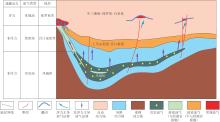
图1
准噶尔盆地玛湖凹陷二叠系全油气系统成藏模式示意图(据文献[17]修改)"

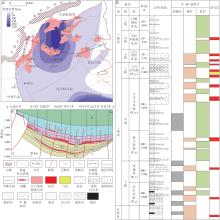
图2
玛湖凹陷构造特征及勘探概况a. 风城组烃源岩厚度与百口泉组勘探成果叠合图;b. 地层综合柱状图(修改自文献[35]);c. 百口泉组油藏剖面分布特征"


图3
全油气系统浮力成藏下限判别[39-41]a. 油气动力场边界与动力场控常规和非常规油气联合分布模式;b. 物理模拟实验力平衡原理;c1—c3.分别为常规/非常规储层孔隙度、渗透率和孔喉半径浮力成藏下限判别标准(C代表在自由动力场中形成的常规油气藏:C1—C5分别为背斜圈闭油气藏、断块圈闭油气藏、岩性圈闭油气藏、地层圈闭油气藏和水动力圈闭油气藏;U代表在局限动力场或束缚动力场中形成的非常规油气藏:U1—U5分别为致密圈闭油气藏、致密深盆油气藏、致密复合油气藏、页岩油气藏和煤型油气藏;R代表外力改造形成的油气藏:R1—R5分别为裂缝改造型油气藏、溶洞改造型油气藏、缝洞复合改造型油气藏、氧化改造型油气藏和热解改造型油气藏。)"


图4
不同地区浮力成藏下限临界条件及油气成藏动力判别图版[40]a. 鄂尔多斯盆地上古生界砂岩气藏;b. 准噶尔盆地二叠系砂岩油藏(Ⅰ,Ⅱ,Ⅲ1和Ⅲ2分别指浮力、非浮力、构造应力和地质流体活动主导形成的油气藏;n为样本个数。)"

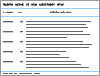
表1
不同驱动力形成的油气藏孔隙度与渗透率条件对比"
| 油气藏类型 | 形成驱动力 | 孔隙度(Φ)/% | 渗透率(K)/(× 10⁻³μm²) |
|---|---|---|---|
| 常规类油气藏 | 浮力驱动 | Φ ≥ a | K ≥ b |
| 致密类油气藏 | 非浮力驱动 | Φ < a | K < b |
| 裂缝型油气藏 | 构造应力驱动 | Φ < a | K ≥ b |
| 孔洞型油气藏 | 流体活动驱动 | Φ ≥ a | K < b |
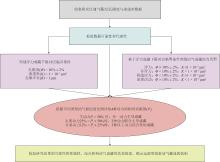
图5
远源型致密油气藏成因机制与成藏动力贡献量评价流程图(修改自文献[42])"

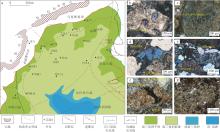
图6
玛湖凹陷百口泉组沉积相分布[35]与砂砾岩储层岩石学特征显微照片(铸体薄片,单偏光)a. 百口泉组沉积相平面分布特征;b. 长石粒内溶孔,玛湖42井,埋深4 652.47 m;c. 火山岩屑粒内溶孔,玛中6井,埋深4 468.43 m;d. 粒间溶孔和长石粒内溶孔,玛湖42井,埋深4 652.47 m;e. 粒间溶孔和长石粒内溶孔,玛湖42井,埋深4 652.47 m;f.颗粒边缘微裂缝、长石粒内溶孔和凝灰质杂基粒间溶孔,艾湖1井,埋深3 827.50 m;g. 杂基含量高,分选差,压实作用强烈,储层致密,玛131井,埋深3 139.20 m"

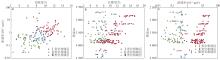
图7
玛湖凹陷百口泉组3类岩相储层物性特征a. 孔隙度和渗透率相关性;b. 孔隙度随埋深变化;c. 渗透率随埋深变化"
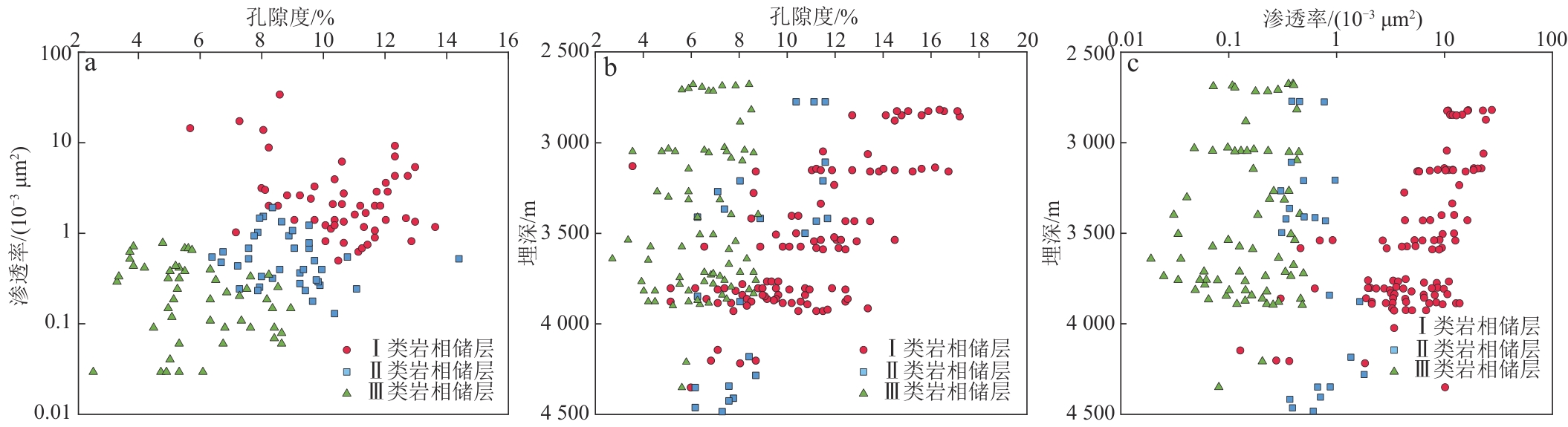

图 8
玛湖凹陷艾湖1井百口泉组砂砾岩储层流体包裹体镜下特征照片a. 石英颗粒中黄色荧光油包裹体,埋深3 860.45 m,单偏光;b.石英颗粒中黄色荧光油包裹体,埋深3 860.45 m,紫外光;c. 石英颗粒中定向状排列的黄色荧光油包裹体,埋深3 824.03 m,紫外光;d. 石英颗粒中黄色荧光油包裹体与串珠状盐水包裹体,埋深3 860.45 m,单偏光;e. 长石溶蚀孔内蓝白色荧光油包裹体,埋深3 860.90 m,单偏光;f. 长石溶蚀孔内蓝白色荧光油包裹体,埋深3 860.90 m,紫外光"

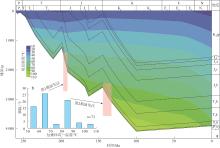
图9
玛湖凹陷艾湖1井百口泉组砂砾岩储层埋藏史-热演化史(a)及油气充注时期(b)K1tg.吐谷鲁群;J2t.头屯河组;J2x.西山窑组;J1s.三工河组;J1b.八道湾组;T3b.白碱滩组;T2k.克拉玛依组;T1b.百口泉组;P2w.下乌尔禾组;n.样本个数"

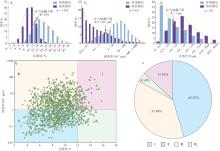
图10
玛湖凹陷百口泉组砂砾岩常规储层和非常规储层物性特征与成藏驱动力相对贡献量评价结果a1—a3. 分别为储层孔隙度、渗透率和孔喉半径频率分布直方图;b. 孔隙度-渗透率交会图;c. 4种驱动力相对贡献量评价结果饼状图(Ф为孔隙度;K为渗透率;R为孔喉半径;n为样本个数;Ⅰ为浮力;Ⅱ为非浮力;Ⅲ1为构造应力;Ⅲ2为地质流体活动。)"

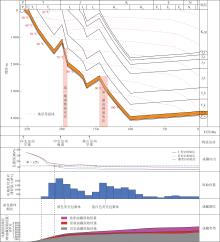
图11
玛湖凹陷百口泉组“多动力-多期次-多岩相”复合成藏模式K1tg.吐谷鲁群;J2t.头屯河组;J2x.西山窑组;J1s.三工河组;J1b.八道湾组;T3b.白碱滩组;T2k.克拉玛依组;T1b.百口泉组;P2w.下乌尔禾组;Ф.孔隙度"


图12
玛湖凹陷东西向成藏演化剖面(剖面位置见图2a)a.晚二叠世;b.早侏罗世;c.晚侏罗世;d.现今(C为石炭系。)"

| [1] | 贾承造, 郑民, 张永峰. 非常规油气地质学重要理论问题[J]. 石油学报, 2014, 35(1): 1-10. |
| JIA Chengzao, ZHENG Min, ZHANG Yongfeng. Four important theoretical issues of unconventional petroleum geology[J]. Acta Petrolei Sinica, 2014, 35(1): 1-10. | |
| [2] | 贾承造. 论非常规油气对经典石油天然气地质学理论的突破及意义[J]. 石油勘探与开发, 2017, 44(1): 1-11. |
| JIA Chengzao. Breakthrough and significance of unconventional oil and gas to classical petroleum geological theory[J]. Petroleum Exploration and Development, 2017, 44(1): 1-11. | |
| [3] | 庞雄奇, 贾承造, 宋岩, 等. 全油气系统定量评价:方法原理与实际应用[J]. 石油学报, 2022, 43(6): 727-759. |
| PANG Xiongqi, JIA Chengzao, SONG Yan, et al. Quantitative evaluation of whole petroleum system: Principle and application[J]. Acta Petrolei Sinica, 2022, 43(6): 727-759. | |
| [4] | 贾承造, 庞雄奇, 宋岩. 论非常规油气成藏机理: 油气自封闭作用与分子间作用力[J]. 石油勘探与开发, 2021, 48(3): 437-452. |
| JIA Chengzao, PANG Xiongqi, SONG Yan. The mechanism of unconventional hydrocarbon formation: Hydrocarbon self-containment and intermolecular forces[J]. Petroleum Exploration and Development, 2021, 48(3): 437-452. | |
| [5] | PANG Xiongqi, LIU Keyu, MA Zhongzhen, et al. Dynamic field division of hydrocarbon migration, accumulation and hydrocarbon enrichment rules in sedimentary basins[J]. Acta Geologica Sinica (English Edition), 2012, 86(6): 1559-1592. |
| [6] | PANG Xiongqi, JIA Chengzao, PANG Hong, et al. Destruction of hydrocarbon reservoirs due to tectonic modifications: Conceptual models and quantitative evaluation on the Tarim Basin, China[J]. Marine and Petroleum Geology, 2018, 91: 401-421. |
| [7] | JIA Chengzao, PANG Xiongqi, SONG Yan. Whole petroleum system and ordered distribution pattern of conventional and unconventional oil and gas reservoirs[J]. Petroleum Science, 2023, 20(1): 1-19. |
| [8] | 唐勇, 曹剑, 何文军, 等. 从玛湖大油区发现看全油气系统地质理论发展趋势[J]. 新疆石油地质, 2021, 42(1): 1-9. |
| TANG Yong, CAO Jian, HE Wenjun, et al. Development tendency of geological theory of total petroleum system: Insights from the discovery of Mahu large oil province[J]. Xinjiang Petroleum Geology, 2021, 42(1): 1-9. | |
| [9] | 唐勇, 雷德文, 曹剑, 等. 准噶尔盆地二叠系全油气系统与源内天然气勘探新领域[J]. 新疆石油地质, 2022, 43(6): 654-662. |
| TANG Yong, LEI Dewen, CAO Jian, et al. Total petroleum system and inner-source natural gas exploration in Permian strata of Junggar Basin[J]. Xinjiang Petroleum Geology, 2022, 43(6): 654-662. | |
| [10] | 唐勇, 宋永, 何文军, 等. 准噶尔叠合盆地复式油气成藏规律[J]. 石油与天然气地质, 2022, 43(1): 132-148. |
| TANG Yong, SONG Yong, HE Wenjun, et al. Characteristics of composite hydrocarbon accumulation in a superimposed basin, Junggar Basin[J]. Oil & Gas Geology, 2022, 43(1): 132-148. | |
| [11] | 何文军, 钱永新, 赵毅, 等. 玛湖凹陷风城组全油气系统勘探启示[J]. 新疆石油地质, 2021, 42(6): 641-655. |
| HE Wenjun, QIAN Yongxin, ZHAO Yi, et al. Exploration implications of total petroleum system in Fengcheng Formation, Mahu Sag, Junggar Basin[J]. Xinjiang Petroleum Geology, 2021, 42(6): 641-655. | |
| [12] | 何文军, 宋永, 汤诗棋, 等. 玛湖凹陷二叠系风城组全油气系统成藏机理[J]. 新疆石油地质, 2022, 43(6): 663-673. |
| HE Wenjun, SONG Yong, TANG Shiqi, et al. Hydrocarbon accumulation mechanism of total petroleum system in Permian Fengcheng Formation, Mahu Sag[J]. Xinjiang Petroleum Geology, 2022, 43(6): 663-673. | |
| [13] | 支东明, 唐勇, 何文军, 等. 准噶尔盆地玛湖凹陷风城组常规-非常规油气有序共生与全油气系统成藏模式[J]. 石油勘探与开发, 2021, 48(1): 38-51. |
| ZHI Dongming, TANG Yong, HE Wenjun, et al. Orderly coexistence and accumulation models of conventional and unconventional hydrocarbons in Lower Permian Fengcheng Formation, Mahu Sag, Junggar Basin[J]. Petroleum Exploration and Development, 2021, 48(1): 38-51. | |
| [14] | 姜福杰, 贾承造, 庞雄奇, 等. 鄂尔多斯盆地上古生界全油气系统成藏特征与天然气富集地质模式[J]. 石油勘探与开发, 2023, 50(2): 250-261. |
| JIANG Fujie, JIA Chengzao, PANG Xiongqi, et al. Upper Paleozoic total petroleum system and geological model of natural gas enrichment in Ordos Basin, NW China[J]. Petroleum Exploration and Development, 2023, 50(2): 250-261. | |
| [15] | 张赫, 王小军, 贾承造, 等. 松辽盆地北部中浅层全油气系统特征与油气成藏聚集模式[J]. 石油勘探与开发, 2023, 50(4): 683-694. |
| ZHANG He, WANG Xiaojun, JIA Chengzao, et al. Total petroleum system and hydrocarbon accumulation model in shallow and medium strata in northern Songliao Basin, NW China[J]. Petroleum Exploration and Development, 2023, 50(4): 683-694. | |
| [16] | 彭光荣, 庞雄奇, 徐帜, 等. 珠江口盆地陆丰南地区古近系全油气系统特征与油气藏有序分布[J]. 地球科学, 2022, 47(7): 2494-2508. |
| PENG Guangrong, PANG Xiongqi, XU Zhi, et al. Characteristics of Paleogene whole petroleum system and orderly distribution of oil and gas reservoirs in south Lufeng Depression, pearl river mouth basin[J]. Earth Science, 2022, 47(7): 2494-2508. | |
| [17] | 贾承造, 庞雄奇, 宋岩. 全油气系统理论基本原理[J]. 石油勘探与开发, 2024, 51(4): 679-691. |
| JIA Chengzao, PANG Xiongqi, SONG Yan. Basic principles of the whole petroleum system[J]. Petroleum Exploration and Development, 2024, 51(4): 679-691. | |
| [18] | 贾承造, 姜林, 赵文. 全油气系统中的致密油气: 成藏机理、富集规律与资源前景[J]. 石油学报, 2025, 46(1): 1-16, 47. |
| JIA Chengzao, JIANG Lin, ZHAO Wen. Tight oil and gas in Whole Petroleum System: Accumulation mechanism, enrichment regularity, and resource prospect[J]. Acta Petrolei Sinica, 2025, 46(1): 1-16, 47. | |
| [19] | 何登发, 张磊, 吴松涛, 等. 准噶尔盆地构造演化阶段及其特征[J]. 石油与天然气地质, 2018, 39(5): 845-861. |
| HE Dengfa, ZHANG Lei, WU Songtao, et al. Tectonic evolution stages and features of the Junggar Basin[J]. Oil & Gas Geology, 2018, 39(5): 845-861. | |
| [20] | 周路, 朱江坤, 宋永, 等. 玛湖凹陷玛中—玛东地区三叠系百口泉组断裂特征及控藏作用分析[J]. 地学前缘, 2019, 26(1): 248-261. |
| ZHOU Lu, ZHU Jiangkun, SONG Yong, et al. Analysis of fault characteristics and reservoir control in Triassic Baikouquan Formation in central and eastern Mahu depression[J]. Earth Science Frontiers, 2019, 26(1): 248-261. | |
| [21] | 匡立春, 唐勇, 雷德文, 等. 准噶尔盆地玛湖凹陷斜坡区三叠系百口泉组扇控大面积岩性油藏勘探实践[J]. 中国石油勘探, 2014, 19(6): 14-23. |
| KUANG Lichun, TANG Yong, LEI Dewen, et al. Exploration of fan-controlled large-area lithologic oil reservoirs of Triassic Baikouquan Formation in slope zone of Mahu Depression in Junggar Basin[J]. China Petroleum Exploration, 2014, 19(6): 14-23. | |
| [22] | 唐勇, 徐洋, 李亚哲, 等. 玛湖凹陷大型浅水退覆式扇三角洲沉积模式及勘探意义[J]. 新疆石油地质, 2018, 39(1): 16-22. |
| TANG Yong, XU Yang, LI Yazhe, et al. Sedimentation model and exploration significance of large-scaled shallow retrogradation fan delta in Mahu Sag[J]. Xinjiang Petroleum Geology, 2018, 39(1): 16-22. | |
| [23] | 孟祥超, 陈能贵, 苏静, 等. 砂砾岩体不同岩相油气充注期储集性能差异及成藏意义——以玛湖凹陷西斜坡区百口泉组油藏为例[J]. 沉积学报, 2016, 34(3): 606-614. |
| MENG Xiangchao, CHEN Nenggui, SU Jing, et al. Reservoir property diversity of different lithofacies in sandy conglomerate during oil-gas injection period and reservoir-formation significance: A case from Baikouquan Formation in west slope of Mahu Depression, Junggar Basin[J]. Acta Sedimentologica Sinica, 2016, 34(3): 606-614. | |
| [24] | 靳军, 康逊, 胡文瑄, 等. 准噶尔盆地玛湖凹陷西斜坡百口泉组砂砾岩储层成岩作用及对储集性能的影响[J]. 石油与天然气地质, 2017, 38(2): 323-333, 406. |
| JIN Jun, KANG Xun, HU Wenxuan, et al. Diagenesis and its influence on coarse clastic reservoirs in the Baikouquan Formation of western slope of the Mahu Depression, Junngar Basin[J]. Oil & Gas Geology, 2017, 38(2): 323-333, 406. | |
| [25] | 肖萌, 袁选俊, 吴松涛, 等. 准噶尔盆地玛湖凹陷百口泉组砾岩储层特征及其主控因素[J]. 地学前缘, 2019, 26(1): 212-224. |
| XIAO Meng, YUAN Xuanjun, WU Songtao, et al. Conglomerate reservoir characteristics of and main controlling factors for the Baikouquan Formation, Mahu sag, Junggar Basin[J]. Earth Science Frontiers, 2019, 26(1): 212-224. | |
| [26] | 曹剑, 雷德文, 李玉文, 等. 古老碱湖优质烃源岩:准噶尔盆地下二叠统风城组[J]. 石油学报, 2015, 36(7): 781-790. |
| CAO Jian, LEI Dewen, LI Yuwen, et al. Ancient high-quality alkaline lacustrine source rocks discovered in the Lower Permian Fengcheng Formation, Junggar Basin[J]. Acta Petrolei Sinica, 2015, 36(7): 781-790. | |
| [27] | 胡涛, 庞雄奇, 于飒, 等. 准噶尔盆地风城地区风城组烃源岩生排烃特征及致密油资源潜力[J]. 中南大学学报(自然科学版), 2017, 48(2): 427-439. |
| HU Tao, PANG Xiongqi, YU Sa, et al. Hydrocarbon generation and expulsion characteristics of P1f source rocks and tight oil accumulation potential of Fengcheng area on northwest margin of Junggar Basin, Northwest China[J]. Journal of Central South University(Science and Technology), 2017, 48(2): 427-439. | |
| [28] | 王小军, 王婷婷, 曹剑. 玛湖凹陷风城组碱湖烃源岩基本特征及其高效生烃[J]. 新疆石油地质, 2018, 39(1): 9-15. |
| WANG Xiaojun, WANG Tingting, CAO Jian. Basic characteristics and highly efficient hydrocarbon generation of alkaline-lacustrine source rocks in Fengcheng Formation of Mahu Sag[J]. Xinjiang Petroleum Geology, 2018, 39(1): 9-15. | |
| [29] | 刘得光, 周路, 李世宏, 等. 玛湖凹陷风城组烃源岩特征与生烃模式[J]. 沉积学报, 2020, 38(5): 946-955. |
| LIU Deguang, ZHOU Lu, LI Shihong, et al. Characteristics of source rocks and hydrocarbon generation models of Fengcheng Formation in Mahu Depression[J]. Acta Sedimentologica Sinica, 2020, 38(5): 946-955. | |
| [30] | 齐雯, 潘建国, 王国栋, 等. 准噶尔盆地玛湖凹陷斜坡区百口泉组储层流体包裹体特征及油气充注史[J]. 天然气地球科学, 2015, 26(): 64-71. |
| QI Wen, PAN Jianguo, WANG Guodong, et al. Fluid inclusion and hydrocarbon charge history for the reservoir of Baikouquan Formation in the Mahu Sag, Junggar Basin[J]. Natural Gas Geoscience, 2015, 26(S1): 64-71. | |
| [31] | 尹路, 许多年, 乐幸福, 等. 准噶尔盆地玛湖凹陷三叠系百口泉组储层特征及油气成藏规律[J]. 岩性油气藏, 2024, 36(1): 59-68. |
| YIN Lu, XU Duonian, YUE Xingfu, et al. Reservoir characteristics and hydrocarbon accumulation rules of Triassic Baikouquan Formation in Mahu Sag, Junggar Basin[J]. Lithologic Reservoirs, 2024, 36(1): 59-68. | |
| [32] | 雷德文, 瞿建华, 安志渊, 等. 玛湖凹陷百口泉组低渗砂砾岩油气藏成藏条件及富集规律[J]. 新疆石油地质, 2015, 36(6): 642-647. |
| LEI Dewen, QU Jianhua, AN Zhiyuan, et al. Hydrocarbon accumulation conditions and enrichment regularity of low-permeability glutenite reservoirs of Baikouquan Formation in Mahu Sag, Junggar Basin[J]. Xinjiang Petroleum Geology, 2015, 36(6): 642-647. | |
| [33] | 支东明, 吴孔友, 阿布力米提·依明, 等. 玛湖凹陷西斜坡断裂结构及其对油气成藏的控制作用[M]. 北京: 石油工业出版社, 2017. |
| ZHI Dongming, WU Kongyou, YIMING Abulimiti, et al. Fault zone architecture and its controlling effects on hydrocarbon in the western slope of Mahu Depression[M]. Beijing: Petroleum Industry Press, 2017. | |
| [34] | 李军, 唐勇, 吴涛, 等. 准噶尔盆地玛湖凹陷砾岩大油区超压成因及其油气成藏效应[J]. 石油勘探与开发, 2020, 47(4): 679-690. |
| LI Jun, TANG Yong, WU Tao, et al. Overpressure origin and its effects on petroleum accumulation in the conglomerate oil province in Mahu Sag, Junggar Basin, NW China[J]. Petroleum Exploration and Development, 2020, 47(4): 679-690. | |
| [35] | 唐勇, 宋永, 郭旭光, 等. 准噶尔盆地玛湖凹陷源上致密砾岩油富集的主控因素[J]. 石油学报, 2022, 43(2): 192-206. |
| TANG Yong, SONG Yong, GUO Xuguang, et al. Main controlling factors of tight conglomerate oil enrichment above source kitchen in Mahu Sag, Junggar Basin[J]. Acta Petrolei Sinica, 2022, 43(2): 192-206. | |
| [36] | 匡立春, 唐勇, 雷德文, 等. 准噶尔盆地玛湖凹陷斜坡区三叠系百口泉组扇控大面积岩性油藏勘探实践[J]. 中国石油勘探, 2014, 19(6): 14-23. |
| KUANG Lichun, TANG Yong, LEI Dewen, et al. Exploration of fan-controlled large-area lithologic oil reservoirs of Triassic Baikouquan Formation in slope zone of Mahu Depression in Junggar Basin[J]. China Petroleum Exploration, 2014, 19(6): 14-23. | |
| [37] | 雷德文, 陈刚强, 刘海磊, 等. 准噶尔盆地玛湖凹陷大油(气)区形成条件与勘探方向研究[J]. 地质学报, 2017, 91(7): 1604-1619. |
| LEI Dewen, CHEN Gangqiang, LIU Hailei, et al. Study on the forming conditions and exploration fields of the Mahu giant oil (gas) province, Junggar Basin[J]. Acta Geologica Sinica, 2017, 91(7): 1604-1619. | |
| [38] | 宋永, 唐勇, 何文军, 等. 准噶尔盆地油气勘探新领域、新类型及勘探潜力[J]. 石油学报, 2024, 45(1): 52-68. |
| SONG Yong, TANG Yong, HE Wenjun, et al. New fields, new types and exploration potentials of oil-gas exploration in Junggar Basin[J]. Acta Petrolei Sinica, 2024, 45(1): 52-68. | |
| [39] | PANG Xiongqi, SHAO Xinhe, LI Maowen, et al. Correlation and difference between conventional and unconventional reservoirs and their unified genetic classification[J]. Gondwana Research, 2021, 97: 73-100. |
| [40] | PANG Xiongqi, JIA Chengzao, WANG Wenyang, et al. Buoyance-driven hydrocarbon accumulation depth and its implication for unconventional resource prediction[J]. Geoscience Frontiers, 2021, 12(4): 101133. |
| [41] | PANG Xiongqi, JIA Chengzao, CHEN Junqing, et al. A unified model for the formation and distribution of both conventional and unconventional hydrocarbon reservoirs[J]. Geoscience Frontiers, 2021, 12(2): 695-711. |
| [42] | PANG Bo, PANG Xiongqi, LI Caijun, et al. A novel method for quantitatively identifying driving forces and evaluating their contributions to oil and gas accumulation[J]. Geoscience Frontiers, 2024, 15(4): 101801. |
| [43] | 庞雄奇, 林会喜, 郑定业, 等. 中国深层和超深层碳酸盐岩油气藏形成分布的基本特征与动力机制及发展方向[J]. 地质力学学报, 2020, 26(5): 673-695. |
| PANG Xiongqi, LIN Huixi, ZHENG Dingye, et al. Basic characteristics, dynamic mechanism and development direction of the formation and distribution of deep and ultra-deep carbonate reservoirs in China[J]. Journal of Geomechanics, 2020, 26(5): 673-695. | |
| [44] | WHITE I C. The geology of natural gas[J]. Science, 1885, 5(125): 521-522. |
| [45] | 万玲, 孙岩, 魏国齐. 确定储集层物性参数下限的一种新方法及其应用——以鄂尔多斯盆地中部气田为例[J]. 沉积学报, 1999, 17(3): 454-457. |
| WAN Ling, SUN Yan, WEI Guoqi. A new method used to determine the lower limit of the petrophysical parameters for reservoir and its application: A case study on Zhongbu Gas Field in Ordos Basin[J]. Acta Sedimentologica Sinica, 1999, 17(3): 454-457. | |
| [46] | 魏新善, 陈娟萍, 吕奇奇, 等. 白云岩与砂岩致密储集体质量的差异性[J]. 石油与天然气地质, 2019, 40(2): 294-301. |
| WEI Xinshan, CHEN Juanping, Qiqi LYU, et al. Quality differences between dolomite and tight sandstone reservoirs[J]. Oil & Gas Geology, 2019, 40(2): 294-301. | |
| [47] | 马永生. 四川盆地普光超大型气田的形成机制[J]. 石油学报, 2007, 28(2): 9-14, 21. |
| MA Yongsheng. Generation mechanism of Puguang Gas Field in Sichuan Basin[J]. Acta Petrolei Sinica, 2007, 28(2): 9-14, 21. | |
| [48] | 沈卫兵, 庞雄奇, 张宝收, 等. 塔中地区碳酸盐岩与碎屑岩储层物性差异及主控因素[J]. 高校地质学报, 2015, 21(1): 138-146. |
| SHEN Weibing, PANG Xiongqi, ZHANG Baoshou, et al. Physical properties differences and key controlling factors of the clasolite reservoirs and carbonate reservoirs in Tazhong area[J]. Geological Journal of China Universities, 2015, 21(1): 138-146. | |
| [49] | GUO Yingchun, PANG Xiongqi, LI Zongxing, et al. The critical buoyancy threshold for tight sandstone gas entrapment: Physical simulation, interpretation, and implications to the Upper Paleozoic Ordos Basin[J]. Journal of Petroleum Science and Engineering, 2017, 149: 88-97. |
| [50] | 朱涛, 李娜, 邹阳, 等. 准噶尔盆地玛湖凹陷艾湖油田原油地球化学特征与油源对比[J]. 地球学报, 2024, 45(6): 1013-1022. |
| ZHU Tao, LI Na, ZOU Yang, et al. Geochemical characteristics and oil-source rock correlation of crude oil in Aihu Oilfield, Junggar Basin[J]. Acta Geoscientica Sinica, 2024, 45(6): 1013-1022. | |
| [51] | 饶松, 朱亚珂, 胡迪, 等. 准噶尔盆地热史恢复及其对早—中二叠世时期盆地构造属性的约束[J]. 地质学报, 2018, 92(6): 1176-1195. |
| RAO Song, ZHU Yake, HU Di, et al. The thermal history of Junggar Basin: Constraints on the tectonic attribute of the Early-Middle Permian Basin[J]. Acta Geologica Sinica, 2018, 92(6): 1176-1195. | |
| [52] | 蒋文龙, 阿布力米提·依明, 李卉, 等. 准噶尔盆地玛东斜坡区百口泉组-下乌尔禾组混源油地球化学特征及定量判识[J]. 地球化学, 2021, 50(2): 185-198. |
| JIANG Wenlong, YIMING Abulimiti, LI Hui, et al. Geochemical characteristics and identification of mixed crude oil of the Baikouquan Formation Lower Wuerhe Formation on the East slope of the Mahu Sag, Junggar Basin[J]. Geochimica, 2021, 50(2): 185-198. | |
| [53] | 张水昌, 朱光有, 杨海军, 等. 塔里木盆地北部奥陶系油气相态及其成因分析[J]. 岩石学报, 2011, 27(8): 2447-2460. |
| ZHANG Shuichang, ZHU Guangyou, YANG Haijun, et al. The phases of Ordovician hydrocarbon and their origin in the Tabei uplift, Tarim Basin[J]. Acta Petrologica Sinica, 2011, 27(8): 2447-2460. | |
| [54] | PANG Hong, PANG Xiongqi, YANG Haijun, et al. Alteration and reformation of hydrocarbon reservoirs and prediction of remaining potential resources in superimposed basins[J]. Acta Geologica Sinica (English Edition), 2010, 84(5): 1078-1096. |
| [1] | 贾承造, 庞雄奇, 宋岩, 崔新璇, 胡耀, 徐帜, 姜林, 蒲庭玉, 姜福杰, 沈彬. 全油气系统的4种基本类型及其资源开发领域[J]. 石油与天然气地质, 2025, 46(4): 1019-1038. |
| [2] | 庞雄奇, 崔新璇, 贾承造, 鲍李银, 李才俊, 黎茂稳, 徐帜, 肖惠译, 郑定业, 金玉洁, 施砍园, 张思佳. 全油气系统理论在实用中面临的几个问题与解决方法[J]. 石油与天然气地质, 2025, 46(4): 1039-1054. |
| [3] | 刘可禹, 张思佳, 刘建良, 赵振丞, 金玉洁, 张婷, 林昊. 全油气系统:油气地质学研究新方向和油气勘探新范式[J]. 石油与天然气地质, 2025, 46(4): 1055-1070. |
| [4] | 陈君青, 贾承造, 姜林, 庞宏, 火勋港, 陈冬霞, 施砍园, 胡涛, 杨晓斌, 冉钧. 全油气系统非常规油气成藏过程中自封闭作用的主要类型与定量表征[J]. 石油与天然气地质, 2025, 46(4): 1071-1091. |
| [5] | 肖惠译, 庞雄奇, 李才俊, 胡涛, 徐帜, 林孝飞, 胡耀, 王雷, 崔新璇, 施砍园, 蒲庭玉, 鲍李银. 全油气系统形成演化过程中常规与非常规油气藏转化机制及模式[J]. 石油与天然气地质, 2025, 46(4): 1092-1106. |
| [6] | 施砍园, 庞雄奇, 陈君青, 陈掌星, 王雷, 蒲庭玉, 鲍李银, 惠沙沙, 肖惠译, 崔新璇. 全油气系统中储层润湿性与界面张力等关键参数变化特征及其分子动力学模拟[J]. 石油与天然气地质, 2025, 46(4): 1107-1122. |
| [7] | 庞宏, 刘国勇, 贾承造, 姜福杰, 姜林, 王建伟, 马学峰, 陈迪, 陈君青. 陆相断陷盆地全油气系统成藏动力场特征与有序分布模式——以渤海湾盆地南堡凹陷为例[J]. 石油与天然气地质, 2025, 46(4): 1136-1151. |
| [8] | 徐田武, 李素梅, 陈湘飞, 马学峰, 邓硕, 张莹莹. 渤海湾盆地东濮凹陷全油气系统特征及其成藏模式[J]. 石油与天然气地质, 2025, 46(4): 1152-1168. |
| [9] | 胡涛, 熊智明, 肖惠译, 徐田武, 徐云龙, 李素梅, 姜福杰, 黎茂稳, 姜林. 断陷湖盆全油气系统油气藏有序分布特征及差异富集机制——以渤海湾盆地东濮凹陷古近系沙河街组为例[J]. 石油与天然气地质, 2025, 46(4): 1169-1182. |
| [10] | 李素梅, 刘佳, 马学峰, 庞秋菊, 赵知非. 渤海湾盆地辽河坳陷西部凹陷全油气系统特征与勘探潜力[J]. 石油与天然气地质, 2025, 46(4): 1183-1199. |
| [11] | 周能武, 初众, 卢双舫, 张鹏飞, 王民, 林子智, 王军杰, 姜新雨, 刘阳, 陈国辉, 李文镖. 致密气与页岩气耦合成藏机制及其定量评价——以松辽盆地徐家围子断陷白垩系沙河子组为例[J]. 石油与天然气地质, 2025, 46(4): 1200-1214. |
| [12] | 陈冬霞, 王翘楚, 熊亮, 王小娟, 杨映涛, 雷文智, 张玲, 潘珂, 庞宏. 川西—川中地区陆相层系全油气系统常规和非常规有效储层成因机制与分类评价[J]. 石油与天然气地质, 2025, 46(4): 1215-1232. |
| [13] | 康逊, 谭静强, 胡文瑄, 靳军, 胡瑞璞, 曹剑. 准噶尔盆地玛湖凹陷全油气系统成储机制差异性[J]. 石油与天然气地质, 2025, 46(4): 1250-1266. |
| [14] | 鲍李银, 庞雄奇, 邹亮, 陈宏飞, 林昊, 张婷, 沈彬, 王凯, 王睿. 全油气系统油气成藏动力判别与贡献量评价——以准噶尔盆地玛湖凹陷二叠系风城组为例[J]. 石油与天然气地质, 2025, 46(4): 1267-1280. |
| [15] | 曹鹏, 赵振丞, 庞雄奇, 李才俊, 庞宏, 林会喜, 杨海军, 马奎友, 张思佳. 塔里木盆地台盆区下古生界全油气系统碳酸盐岩油气藏改造特征与成因模式[J]. 石油与天然气地质, 2025, 46(4): 1299-1315. |
| 阅读次数 | ||||||
|
全文 |
|
|||||
|
摘要 |
|
|||||
