

石油与天然气地质 ›› 2025, Vol. 46 ›› Issue (4): 1152-1168.doi: 10.11743/ogg20250409
徐田武1( ), 李素梅2,3, 陈湘飞4, 马学峰5, 邓硕5, 张莹莹1
收稿日期:2025-05-06
修回日期:2025-06-19
出版日期:2025-08-30
发布日期:2025-09-06
第一作者简介:徐田武(1981—),男,正高级工程师,地质学。E-mail: 359329306@qq.com。
基金项目:
Tianwu XU1(), Sumei LI2,3, Xiangfei CHEN4, Xuefeng MA5, Shuo DENG5, Yingying ZHANG1
Received:2025-05-06
Revised:2025-06-19
Online:2025-08-30
Published:2025-09-06
摘要:
渤海湾盆地东濮凹陷作为典型的古近系-新近系盐湖相富油气凹陷,目前油气勘探工作正处于颈瓶期。综合运用地质与地球化学研究方法,系统解析了该区油气的生成条件、成因机制与成藏差异特征。研究结果表明: 该凹陷发育5套烃源岩与4套膏盐岩层系,具有多断裂-多隆起-多洼陷的构造格局。储集层非均质性显著、油气性质及其成因类型多样,构成中、浅层常规油气藏类型完整、深层致密油气与页岩油气成藏条件优越的大型全油气系统。区内油气性质与空间分布受9个洼陷控制,形成了北部盐湖相、中间过渡相和南部淡水湖相3大类共9个小类油气,发育11种成藏模式;其中,含盐区中央隆起带或洼中隆构造带是油气最富集区,且多为常规油气藏。基于全油气系统理论,建立了受不同类型动力场控制的油气成藏综合模式,明确了常规油气、致密油气和页岩油气的有利分布区,为研究区下一步油气勘探部署提供了科学依据。
中图分类号:

图1
渤海湾盆地东濮凹陷区域构造与油气分布(据Ke Changwei等,2020改编)[16]"

图2
渤海湾盆地东濮凹陷不同层系烃源岩有机质类型划分图版a.Tmax-氢指数判识图版;b.Tmax-降解率判识图版(Tmax为最高热解峰温。)"
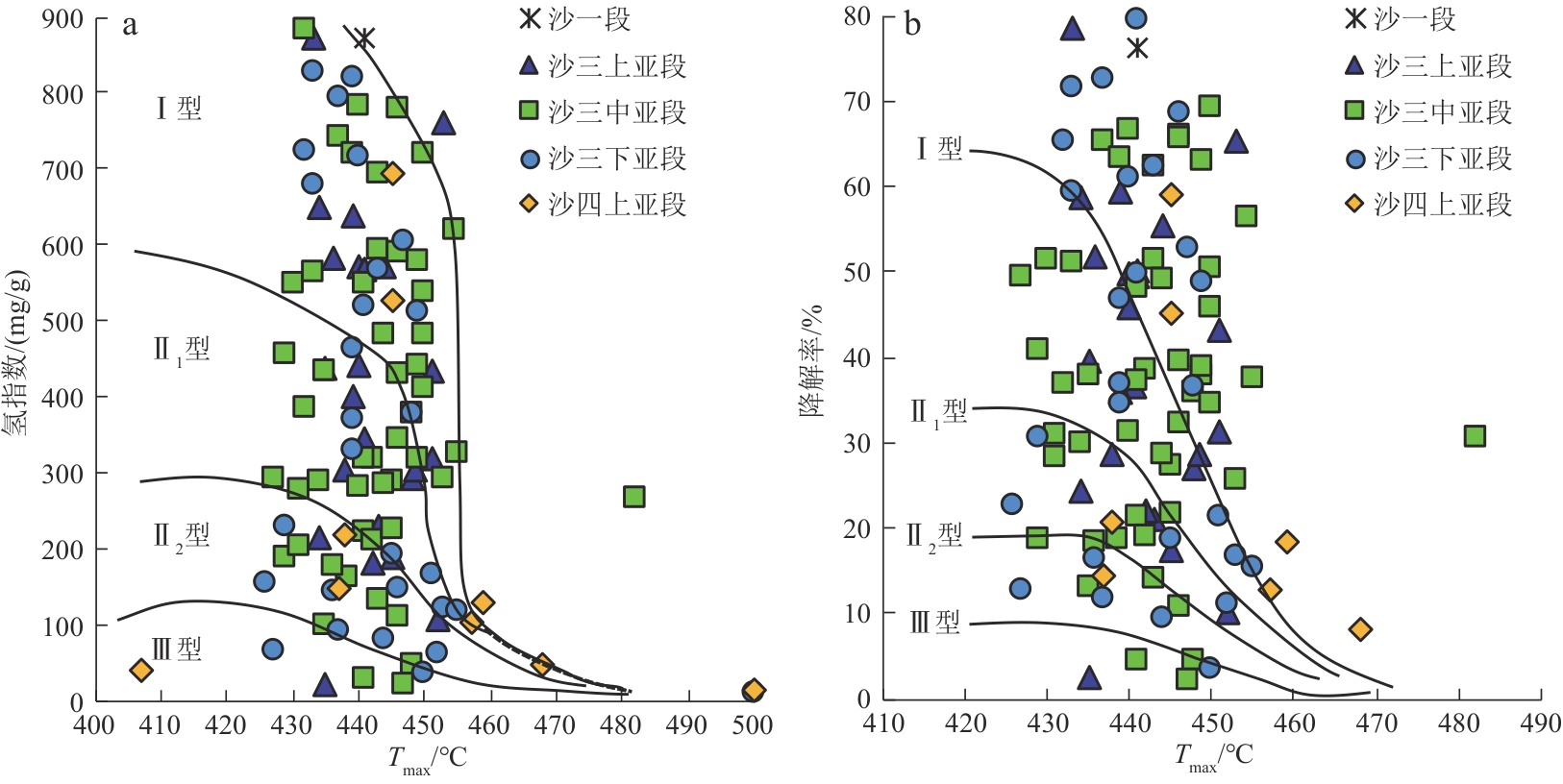
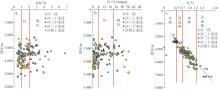
图3
渤海湾盆地东濮凹陷不同层系烃源岩有机质丰度与成熟度特征a.总有机碳含量(TOC)与埋深关系;b.生烃潜量(S1+S2)与埋深关系;c.镜质体反射率(Ro)与埋深关系(S1为游离烃含量;S2为裂解烃含量。)"


图4
渤海湾盆地东濮凹陷文留油田储层孔隙度(a)和渗透率(b)与埋深的关系"

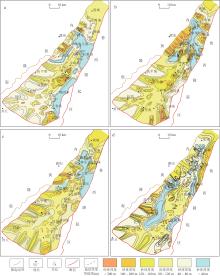
图5
渤海湾盆地东濮凹陷古近系沙河街组砂体厚度等值线图a.沙三下亚段;b.沙三中亚段;c.沙三上亚段;d.沙二下亚段"

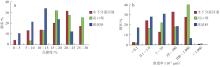
图6
渤海湾盆地东濮凹陷有利沉积微相储层物性频率分布直方图a.储层孔隙度;b.储层渗透率"
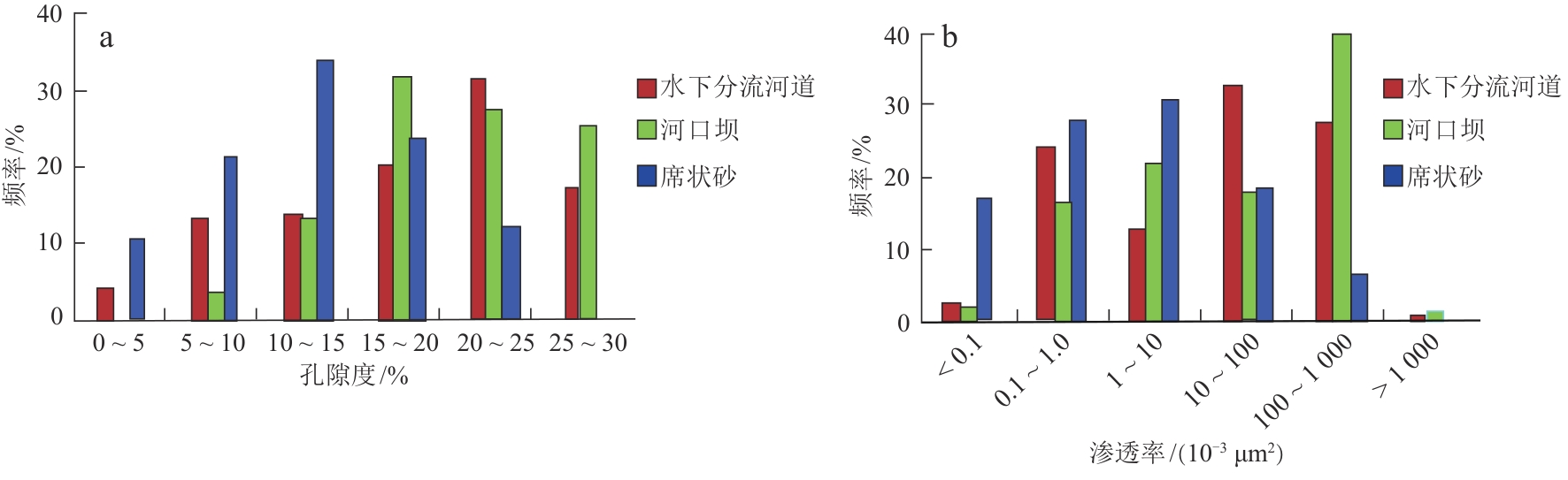
图7
渤海湾盆地东濮凹陷生烃洼陷与油气分布关系"

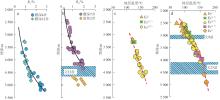
图8
渤海湾盆地东濮凹陷盐区与无盐区热演化特征对比(据陈湘飞等,2018 改编)[21]a.杜寨无盐区Ro与埋深关系;b.文留盐区Ro与埋深关系;c.杜寨无盐区地层温度与埋深关系;d.文留盐区地层温度与埋深关系Ro为镜质体反射率;Es3(上).沙三上亚段;Es3(中).沙三中亚段;Es3(下).沙三下亚段"

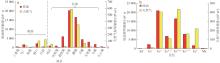
图9
渤海湾盆地东濮凹陷原油(a)和天然气(b)探明储量分布柱状图Ed.东营组;Es1.沙一段;Es2.沙二段;Es3(上).沙三上亚段;Es3(中).沙三中亚段;Es3(下).沙三下亚段;Es4.沙四段;Mz.中生界"
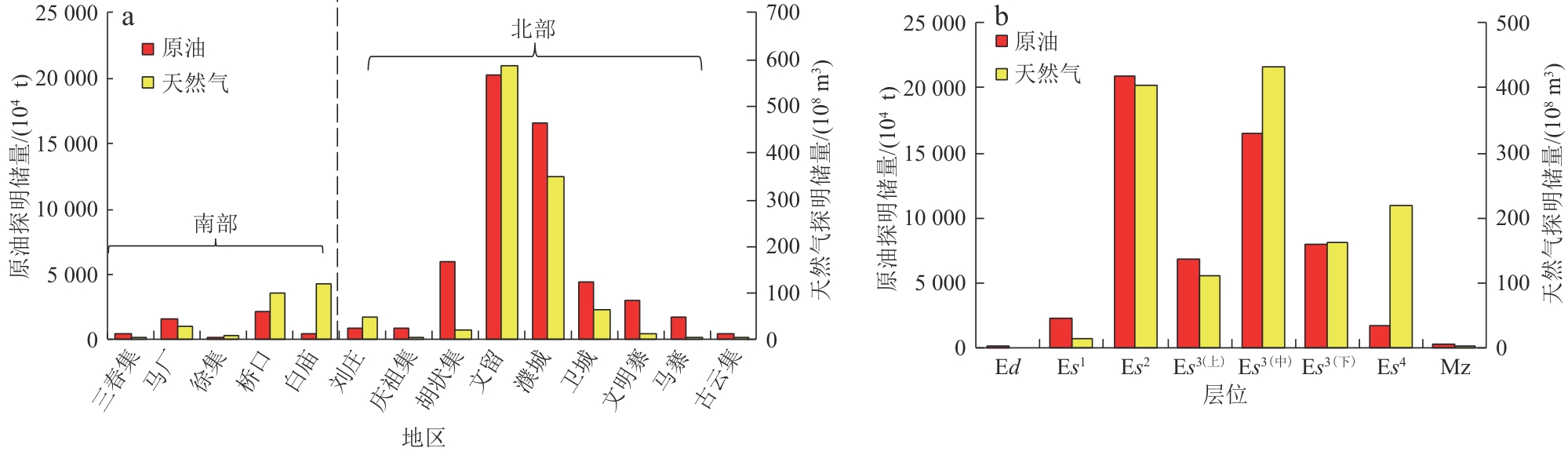

图10
渤海湾盆地东濮凹陷原油聚类分析(a)及成熟度评价(b)图版(蓝色虚线为北部、过渡带与南部地区之间的分界线;DBT/P为二苯并噻吩/菲含量比值;Pr/Ph为姥鲛烷/植烷含量比值"

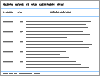
表1
渤海湾盆地东濮凹陷北部盐湖相原油地球化学特征及成因分类"
指标 类型 | 编号 | 参 数 | 1类 | 2类 | 3类 | 4类 | 5类 | 6类 | 7类 | |
|---|---|---|---|---|---|---|---|---|---|---|
文明寨— 卫城 | 古云集 | 马寨 | 濮—卫 过渡带 | 濮城 | 文留深层 Es3(中)-Es3(下) | 文留浅层 Es1—Es3(上) | ||||
沉积 环境 | 1 | 姥鲛烷/植烷 | 低值 | 高值 | 低值 | 高值 | 低-中值 | 中-高值 | 中-低值 | |
| 2 | 伽马蜡烷/C30藿烷 | 中值 | 中值 | 低值 | 低值 | 中-低值 | 较低值 | 中-低值 | ||
| 3 | C35/C34藿烷 | 高值 | 低值 | 高值 | 超低值 | 中值 | 中-低值 | 中-低值 | ||
| 4 | 有机硫化合物含量 | 高值 | 低值 | 中-低值 | 低值 | 低值 | 低值 | 较高值 | ||
| 5 | 氧芴/三芴 | 较高值 | 中值 | 中-低值 | 中-低值 | 较高值 | 低-较低值 | — | ||
| 生源 | 6 | C29甾烷/C30藿烷 | 中值 | 低值 | 中值 | 低值 | 中-高 | 较低值 | 较低值 | |
| 7 | 奥利烷/C30藿烷 | 中值 | 低值 | 低值 | 低值 | 较高值 | 较高值 | 中-低值 | ||
| 8 | 4-甲基甾烷/规则甾烷 | 中值 | 高值 | 高值 | 高值 | 中值 | 较低值 | 中-高值 | ||
| 9 | 惹烯相对丰度(%) | 中值 | 中值 | 中值 | 高值 | 中值 | 较高值 | 较低值 | ||
| 岩性 | 10 | C29藿烷/C30藿烷 | 中值 | 较高值 | 较低值 | 较高值 | 中-低值 | 低-高值 | 较高值 | |
| 11 | 重排甾烷、重排藿烷含量 | 低值 | 低值 | 低值 | 中-低值 | 低值 | 较高值 | 中-低值 | ||
| 同位素 | 12 | 单体烃碳同位素值曲线 | 两段式 | — | 近平行线 | 缓斜线型 | 斜直线 | 缓斜直线 | — |

图11
渤海湾盆地东濮凹陷北区不同构造带原油地球化学特征差异分布a. 原油姥鲛烷/植烷含量比值(Pr/Ph)平面分布;b.原油二苯并噻吩/菲含量比值(DBT/P)平面分布"

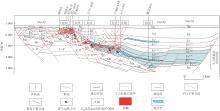
图12
渤海湾盆地东濮凹陷北部缓坡带文明寨-卫城油田油气成藏模式Nm+Q.第四系—新近系;Ng.馆陶组;Ed.东营组;Es1.沙一段;Es2(上).沙二上亚段;Es2(下).沙二下亚段;Es3(上).沙三上亚段;Es3(中).沙三中亚段;Es3(下).沙三下亚段;Es4(上).沙四上亚段;Es4(下).沙四下亚段;Mz.中生界;C-P.石炭系-二叠系"

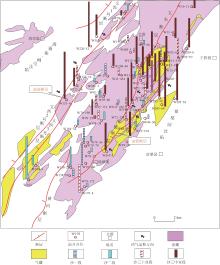
图13
渤海湾盆地东濮凹陷中央隆起带—文留构造带油气充注模式地球化学示踪图——基于芘相对丰度的侧向充注证据"

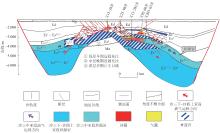
图14
渤海湾盆地东濮凹陷中央隆起带—文留构造带油气垂向运移与成藏模式Ng.馆陶组;Ed.东营组;Es1.沙一段;Es2.沙二段;Es2(上).沙二上亚段;Es2(下).沙二下亚段;Es3(上).沙三上亚段;Es3(中).沙三中亚段;Es3(下).沙三下亚段;Es4.沙四段;Mz.中生界"

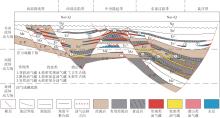
图15
渤海湾盆地东濮凹陷油气成藏演化综合模式Nm+Q.新近系明化镇组—第四系平原组;Ng.馆陶组;Ed.东营组;Es1.沙一段;Es2.沙二段;Es3.沙三段;Es4.沙四段;Mz.中生界;C-P.石炭系-二叠系"

| [1] | 张洪安, 李素梅, 徐田武, 等. 东濮凹陷北部盐湖相原油特征与成因[J]. 现代地质, 2017, 31(4): 768-778. |
| ZHANG Hongan, LI Sumei, XU Tianwu, et al. Characteristics and formation mechanism for the saline lacustrine oil from the north Dongpu Sag[J]. Geoscience, 2017, 31(4): 768-778. | |
| [2] | 万中华. 东濮凹陷濮卫地区盐湖相高压薄层油气藏成藏机理研究[D]. 北京: 中国石油大学(北京), 2017. |
| WAN Zhonghua. Formation mechanism of high-pressure thin reservoirs in the tertiary saline lacustrine facies in the Puwei area, Dongpu Sag[D]. Beijing: China University of Petroleum (Beijing), 2017. | |
| [3] | 申潜玲, 夏竹君, 肖伟, 等. 东濮凹陷薄储层测井评价方法研究[J]. 石油仪器, 2014, 28(3): 58-60, 63. |
| SHEN Qianling, XIA Zhujun, XIAO Wei, et al. Logging evaluation method research of the thin reservoir in Dongpu Sag[J]. Petroleum Tubular Goods & Instruments, 2014, 28(3): 58-60, 63. | |
| [4] | 张宝君, 卢齐军, 梁国胜. 东濮凹陷薄砂岩储层有效识别技术[J]. 煤田地质与勘探, 2014, 42(1): 76-78. |
| ZHANG Baojun, LU Qijun, LIANG Guosheng. The effective identification technique of thin sandstone reservoir in Dongpu Depression[J]. Coal Geology & Exploration, 2014, 42(1): 76-78. | |
| [5] | 常振恒, 陈中红, 张玉体, 等. 东濮凹陷卫城—文明寨地区原油地球化学特征[J]. 断块油气田, 2007, 14(4): 1-3. |
| CHANG Zhenheng, CHEN Zhonghong, ZHANG Yuti, et al. Investigation on geochemistry characteristics of crude oil from Weicheng-Wenmingzhai area in Dongpu Depression[J]. Fault-Block Oil & Gas Field, 2007, 14(4): 1-3. | |
| [6] | 张云献, 沈忠民, 刘海燕. 东濮凹陷西部斜坡带油藏地球化学特征[J]. 成都理工大学学报(自然科学版), 2007, 34(5): 531-537. |
| ZHANG Yunxian, SHEN Zhongmin, LIU Haiyan. Characteristics of the reservoir geochemistry of the west slope in the Dongpu Depression, Henan, China[J]. Journal of Chengdu University of Technology (Science & Technology Edition), 2007, 34(5): 531-537. | |
| [7] | 张云献, 沈忠民, 王英, 等. 东濮凹陷东营组原油地球化学特征与成藏期分析[J]. 石油学报, 2008, 29(3): 345-349. |
| ZHANG Yunxian, SHEN Zhongmin, WANG Ying, et al. Analysis of geochemical characteristics and oil accumulation period in Dongying Formation of Dongpu Sag[J]. Acta Petrolei Sinica, 2008, 29(3): 345-349. | |
| [8] | 张庆峰, 沈忠民, 罗小平, 等. 东濮凹陷地区东营组低熟原油地球化学特征及油源分析[J]. 成都理工大学学报(自然科学版), 2010, 37(1): 44-49. |
| ZHANG Qingfeng, SHEN Zhongmin, LUO Xiaoping, et al. Geochemical characteristics of crude oil and the analysis of oil sources of Dongying Formation in Wenliu area of Dongpu Depression, China[J]. Journal of Chengdu University of Technology (Science & Technology Edition), 2010, 37(1): 44-49. | |
| [9] | 陈湘飞. 东濮凹陷盐湖相含膏盐岩层系成烃与成藏效应[D]. 北京: 中国石油大学(北京), 2017. |
| CHEN Xiangfei. Hydrocarbon generation and accumulation effect of saline lacustrine strata bearing gypsum-salt rock in Dongpu Sag, Bohai Bay Basin[D]. Beijing: China University of Petroleum (Beijing), 2017. | |
| [10] | 贾承造, 庞雄奇, 宋岩. 全油气系统理论基本原理[J]. 石油勘探与开发, 2024, 51(4): 679-691. |
| JIA Chengzao, PANG Xiongqi, SONG Yan. Basic principles of the whole petroleum system[J]. Petroleum Exploration and Development, 2024, 51(4): 679-691. | |
| [11] | 宋岩, 贾承造, 姜林, 等. 全油气系统内涵与研究思路[J]. 石油勘探与开发, 2024, 51(6): 1199-1210, 1226. |
| SONG Yan, JIA Chengzao, JIANG Lin, et al. Connotation and research strategy of the whole petroleum system[J]. Petroleum Exploration and Development, 2024, 51(6): 1199-1210, 1226. | |
| [12] | 庞雄奇, 贾承造, 郭秋麟, 等. 全油气系统理论用于常规和非常规油气资源评价的盆地模拟技术原理及应用[J]. 石油学报, 2023, 44(9): 1417-1433. |
| PANG Xiongqi, JIA Chengzao, GUO Qiulin, et al. Principle and application of basin modeling technology for evaluation of conventional and unconventional oil-gas resource based on whole petroleum system theory[J]. Acta Petrolei Sinica, 2023, 44(9): 1417-1433. | |
| [13] | JIA Chengzao, PANG Xiongqi, SONG Yan. Whole petroleum system and ordered distribution pattern of conventional and unconventional oil and gas reservoirs[J]. Petroleum Science, 2023, 20(1): 1-19. |
| [14] | 庞雄奇. 全油气系统定量评价[M]. 北京: 科学出版社, 2023: 217-324. |
| PANG Xiongqi. Quantitative evaluation of the whole petroleum system[M]. Beijing: Science Press, 2023: 217-324. | |
| [15] | 贾承造, 姜林, 赵文. 全油气系统中的致密油气: 成藏机理、富集规律与资源前景[J]. 石油学报, 2025, 46(1): 1-16, 47. |
| JIA Chengzao, JIANG Lin, ZHAO Wen. Tight oil and gas in Whole Petroleum System: Accumulation mechanism, enrichment regularity, and resource prospect[J]. Acta Petrolei Sinica, 2025, 46(1): 1-16, 47. | |
| [16] | TANG Yong, CAO Jian, HE Wenjun, et al. The whole petroleum system with ordered coexistence of conventional and unconventional hydrocarbons: Case from the Junggar Basin, China[J]. AAPG Bulletin, 2024, 108(7): 1261-1290. |
| [17] | 高红灿, 郑荣才, 陈发亮, 等. 渤海湾盆地东濮凹陷古近系沙河街组层序地层[J]. 石油与天然气地质, 2011, 32(6): 839-850. |
| GAO Hongcan, ZHENG Rongcai, CHEN Faliang, et al. Sequence stratigraphy of the Paleogene Shahejie Formation in Dongpu Sag, Bohai Bay Basin[J]. Oil & Gas Geology, 2011, 32(6): 839-850. | |
| [18] | 蒋有录, 房磊, 谈玉明, 等. 渤海湾盆地东濮凹陷不同区带油气成藏期差异性及主控因素[J]. 地质论评, 2015, 61(6): 1321-1331. |
| JIANG Youlu, FANG Lei, TAN Yuming, et al. Differences and main controlling factors of accumulation periods in Dongpu Sag, Bohai Bay Basin[J]. Geological Review, 2015, 61(6): 1321-1331. | |
| [19] | 刘景东, 蒋有录, 谈玉明, 等. 渤海湾盆地东濮凹陷膏盐岩与油气的关系[J]. 沉积学报, 2014, 32(1): 126-137. |
| LIU Jingdong, JIANG Youlu, TAN Yuming, et al. Relationship between gypsum-salt rock and oil-gas in Dongpu Depression of Bohai Gulf Basin[J]. Acta Sedimentologica Sinica, 2014, 32(1): 126-137. | |
| [20] | XU Jianyong, LI Wei. Origin of Condensate Oil and Natural Gas in Bozhong 19-6 Gas Field, Bohai Bay Basin[J]. Energy Geoscience, 2024, 5(1): 100200. |
| [21] | 杨子杰, 陈冬霞, 王翘楚, 等. 基于人工神经网络方法预测油气资源丰度——以渤海湾盆地东濮凹陷文留地区古近系沙河街组三段为例[J]. 石油实验地质, 2024, 46(2): 428-440. |
| YANG Zijie, CHEN Dongxia, WANG Qiaochu, et al. Prediction of petroleum resource abundance based on artificial neural network method: A case study of third member of Paleogene Shahejie Formation in Wenliu area of Dongpu Sag, Bohai Bay Basin[J]. Petroleum Geology & Experiment, 2024, 46(2): 428-440. | |
| [22] | 万涛, 谈玉明, 苏惠, 等. 东濮凹陷濮城地区沙三中亚段古地貌与沉积相关系[J]. 中国地质, 2014, 41(1): 206-214. |
| WAN Tao, TAN Yuming, SU Hui, et al. Palaeogeomorphology of Middle Es3 Formation in Pucheng area of Dongpu Depression and its relationship with sedimentary facies[J]. Geology in China, 2014, 41(1): 206-214. | |
| [23] | DING Qunfeng, CHEN Yuhang, CHEN Lei, et al. The Control of Differential Tectonics on the Formation of Deep Reservoirs in Lacustrine Rift Basins: An Insight of the Bodong Low Uplift in the Bohai Bay Basin, East China[J]. Energy Geoscience, 2025b, 6(2): 100381. |
| [24] | 刘卫彬, 张世奇, 李世臻, 等. 东濮凹陷沙三段异常高孔带发育特征及成因机制[J]. 地质论评, 2017, 63(): 77-78. |
| LIU Weibin, ZHANG Shiqi, LI Shizhen, et al. Characteristics and origin of anomalously high porosity zones in the 3rd member of the Shahejie Formation, Eocene (Es3) in the Dongpu Depression[J]. Geological Review, 2017, 63(S1): 77-78. | |
| [25] | MA Lichi, SONG Mingshui, WANG Yongshi, et al. Exploration Progress of the Paleogene in Jiyang Depression, Bohai Bay Basin[J]. Energy Geoscience, 2023a, 4(1): 42-50. |
| [26] | 余海波. 东濮凹陷多断多凸多洼构造特征及成因[J]. 石油地质与工程, 2024, 38(3): 1-8. |
| YU Haibo. T characteristics and genetic analysis of multi-fault, multi-convex and multi-depression structure in Dongpu Sag[J]. Petroleum Geology and Engineering, 2024, 38(3): 1-8. | |
| [27] | 余海波, 程秀申, 徐田武, 等. 东濮凹陷古近系构造特征及其对油气成藏的控制作用[J]. 油气地质与采收率, 2021, 28(3): 42-52. |
| YU Haibo, CHENG Xiushen, XU Tianwu, et al. Paleogene tectonic characteristics and their controlling effect on hydrocarbon accumulation in Dongpu Sag[J]. Petroleum Geology and Recovery Efficiency, 2021, 28(3): 42-52. | |
| [28] | 王永诗, 巩建强, 陈冬霞, 等. 渤海湾盆地东营凹陷盐家地区深层砂砾岩油气藏相态演化及成藏过程[J]. 石油与天然气地质, 2023, 44(5): 1159-1172. |
| WANG Yongshi, GONG Jianqiang, CHEN Dongxia, et al. Phase evolution and accumulation mode of hydrocarbons in deep coarse-grained clastic reservoirs in the Yanjia area, Dongying Sag, Bohai Bay Basin[J]. Oil & Gas Geology, 2023, 44(5): 1159-1172. | |
| [29] | 孙波, 蒋有录, 石小虎, 等. 渤海湾盆地东濮凹陷压力演化与超压形成机制[J]. 中国石油大学学报(自然科学版), 2013, 37(2): 28-35. |
| SUN Bo, JIANG Youlu, SHI Xiaohu, et al. Pressure evolution and formation mechanism of overpressure in Dongpu depression, Bohaiwan Basin[J]. Journal of China University of Petroleum (Edition of Natural Science), 2013, 37(2): 28-35. | |
| [30] | PETERS K E, WALTERS C C, MOLDOWAN J M. The biomarker guide: Volume 2, biomarkers and isotopes in petroleum exploration and earth history[M]. Cambridge: Cambridge University Press, 2007. |
| [31] | 贾承造, 庞雄奇. 深层油气地质理论研究进展与主要发展方向[J]. 石油学报, 2015, 36(12): 1457-1469. |
| JIA Chengzao, PANG Xiongqi. Research processes and main development directions of deep hydrocarbon geological theories[J]. Acta Petrolei Sinica, 2015, 36(12): 1457-1469. | |
| [32] | 蒋有录, 李宗亮, 谈玉明, 等. 断陷盆地天然气运聚成藏史研究——以东濮凹陷文23气田为例[J]. 石油学报, 2008, 29(5): 633-638. |
| JIANG Youlu, LI Zongliang, TAN Yuming, et al. Research on history of gas migration and accumulation in fault basin: Taking Wen 23 Gas Field of Dongpu Depression as an example[J]. Acta Petrolei Sinica, 2008, 29(5): 633-638. | |
| [33] | 刘景东, 蒋有录. 东濮凹陷北部地区古近系烃源岩热演化特征及其主控因素[J]. 中国地质, 2013, 40(2): 498-507. |
| LIU Jingdong, JIANG Youlu. Thermal evolution characteristics of Paleogene source rocks and their main controlling factors in northern part of Dongpu Depression[J]. Geology in China, 2013, 40(2): 498-507. | |
| [34] | 刘宣威, 王学军, 李红磊, 等. 东濮凹陷古近系烃源岩特征及其形成环境分析[J]. 断块油气田, 2021, 28(4): 452-474. |
| LIU Xuanwei, WANG Xuejun, LI Honglei, et al. Characteristics and formation environment of Paleogene source rocks in Dongpu Sag[J]. Fault-Block Oil & Gas Field, 2021, 28(4): 452-474. | |
| [35] | 耿师江, 徐田武, 鹿坤, 等. 东濮凹陷南部湖相油气特征与成因机制[J]. 断块油气田, 2020, 27(2): 137-142. |
| GENG Shijiang, XU Tianwu, LU Kun, et al. Characteristics and genetic mechanism of lacustrine hydrocarbons in southern Dongpu Sag[J]. Fault-Block Oil & Gas Field, 2020, 27(2): 137-142. | |
| [36] | 贾承造, 邹才能, 李建忠, 等. 中国致密油评价标准、主要类型、基本特征及资源前景[J]. 石油学报, 2012, 33(3): 343-350. |
| JIA Chengzao, ZOU Caineng, LI Jianzhong, et al. Assessment criteria, main types, basic features and resource prospects of the tight oil in China[J]. Acta Petrolei Sinica, 2012, 33(3): 343-350. | |
| [37] | 郭秋麟, 陈宁生, 吴晓智, 等. 致密油资源评价方法研究[J]. 中国石油勘探, 2013, 18(2): 67-76. |
| GUO Qiulin, CHEN Ningsheng, WU Xiaozhi, et al. Method for assessment of tight oil resources[J]. China Petroleum Exploration, 2013, 18(2): 67-76. | |
| [38] | 徐田武, 张成富, 杨斌, 等.渤海湾盆地东濮凹陷天然气成因及分布特征[J]. 断块油气田, 2024, 31(2): 276-282. |
| XU Tianwu, ZHANG Chengfu, YANG Bin, et al. Genetic types and distribution characteristics of natural gas in Dongpu Sag, Bohai Bay Basin[J]. Fault-Block Oil & Gas Field, 2024, 31(2): 276-282. | |
| [39] | 徐田武, 张成富, 金爱民, 等. 东濮凹陷北部流体作用与油气运聚[J]. 断块油气田, 2022, 29(2): 152-156. |
| XU Tianwu, ZHANG Chengfu, JIN Aimin, et al. Fluid activity and hydrocarbon migration-accumulation in northern Dongpu Sag[J]. Fault-Block Oil & Gas Field, 2022, 29(2): 152-156. |
| [1] | 贾承造, 庞雄奇, 宋岩, 崔新璇, 胡耀, 徐帜, 姜林, 蒲庭玉, 姜福杰, 沈彬. 全油气系统的4种基本类型及其资源开发领域[J]. 石油与天然气地质, 2025, 46(4): 1019-1038. |
| [2] | 庞雄奇, 崔新璇, 贾承造, 鲍李银, 李才俊, 黎茂稳, 徐帜, 肖惠译, 郑定业, 金玉洁, 施砍园, 张思佳. 全油气系统理论在实用中面临的几个问题与解决方法[J]. 石油与天然气地质, 2025, 46(4): 1039-1054. |
| [3] | 刘可禹, 张思佳, 刘建良, 赵振丞, 金玉洁, 张婷, 林昊. 全油气系统:油气地质学研究新方向和油气勘探新范式[J]. 石油与天然气地质, 2025, 46(4): 1055-1070. |
| [4] | 陈君青, 贾承造, 姜林, 庞宏, 火勋港, 陈冬霞, 施砍园, 胡涛, 杨晓斌, 冉钧. 全油气系统非常规油气成藏过程中自封闭作用的主要类型与定量表征[J]. 石油与天然气地质, 2025, 46(4): 1071-1091. |
| [5] | 肖惠译, 庞雄奇, 李才俊, 胡涛, 徐帜, 林孝飞, 胡耀, 王雷, 崔新璇, 施砍园, 蒲庭玉, 鲍李银. 全油气系统形成演化过程中常规与非常规油气藏转化机制及模式[J]. 石油与天然气地质, 2025, 46(4): 1092-1106. |
| [6] | 施砍园, 庞雄奇, 陈君青, 陈掌星, 王雷, 蒲庭玉, 鲍李银, 惠沙沙, 肖惠译, 崔新璇. 全油气系统中储层润湿性与界面张力等关键参数变化特征及其分子动力学模拟[J]. 石油与天然气地质, 2025, 46(4): 1107-1122. |
| [7] | 杨海风, 王飞龙, 胡安文, 关超, 滑彦岐. 渤海湾盆地页岩油勘探现状、进展及展望[J]. 石油与天然气地质, 2025, 46(4): 1123-1135. |
| [8] | 庞宏, 刘国勇, 贾承造, 姜福杰, 姜林, 王建伟, 马学峰, 陈迪, 陈君青. 陆相断陷盆地全油气系统成藏动力场特征与有序分布模式——以渤海湾盆地南堡凹陷为例[J]. 石油与天然气地质, 2025, 46(4): 1136-1151. |
| [9] | 胡涛, 熊智明, 肖惠译, 徐田武, 徐云龙, 李素梅, 姜福杰, 黎茂稳, 姜林. 断陷湖盆全油气系统油气藏有序分布特征及差异富集机制——以渤海湾盆地东濮凹陷古近系沙河街组为例[J]. 石油与天然气地质, 2025, 46(4): 1169-1182. |
| [10] | 李素梅, 刘佳, 马学峰, 庞秋菊, 赵知非. 渤海湾盆地辽河坳陷西部凹陷全油气系统特征与勘探潜力[J]. 石油与天然气地质, 2025, 46(4): 1183-1199. |
| [11] | 周能武, 初众, 卢双舫, 张鹏飞, 王民, 林子智, 王军杰, 姜新雨, 刘阳, 陈国辉, 李文镖. 致密气与页岩气耦合成藏机制及其定量评价——以松辽盆地徐家围子断陷白垩系沙河子组为例[J]. 石油与天然气地质, 2025, 46(4): 1200-1214. |
| [12] | 陈冬霞, 王翘楚, 熊亮, 王小娟, 杨映涛, 雷文智, 张玲, 潘珂, 庞宏. 川西—川中地区陆相层系全油气系统常规和非常规有效储层成因机制与分类评价[J]. 石油与天然气地质, 2025, 46(4): 1215-1232. |
| [13] | 康逊, 谭静强, 胡文瑄, 靳军, 胡瑞璞, 曹剑. 准噶尔盆地玛湖凹陷全油气系统成储机制差异性[J]. 石油与天然气地质, 2025, 46(4): 1250-1266. |
| [14] | 鲍李银, 庞雄奇, 邹亮, 陈宏飞, 林昊, 张婷, 沈彬, 王凯, 王睿. 全油气系统油气成藏动力判别与贡献量评价——以准噶尔盆地玛湖凹陷二叠系风城组为例[J]. 石油与天然气地质, 2025, 46(4): 1267-1280. |
| [15] | 胡耀, 贾承造, 庞雄奇, 宋永, 何文军, 陈宏飞, 鲍李银, 陈玮岩, 赵文, 肖惠译, 李才俊, 徐帜. 远源型致密油气藏运聚动力与成藏模式——以准噶尔盆地玛湖凹陷三叠系百口泉组砂砾岩油藏为例[J]. 石油与天然气地质, 2025, 46(4): 1281-1298. |
| 阅读次数 | ||||||
|
全文 |
|
|||||
|
摘要 |
|
|||||
